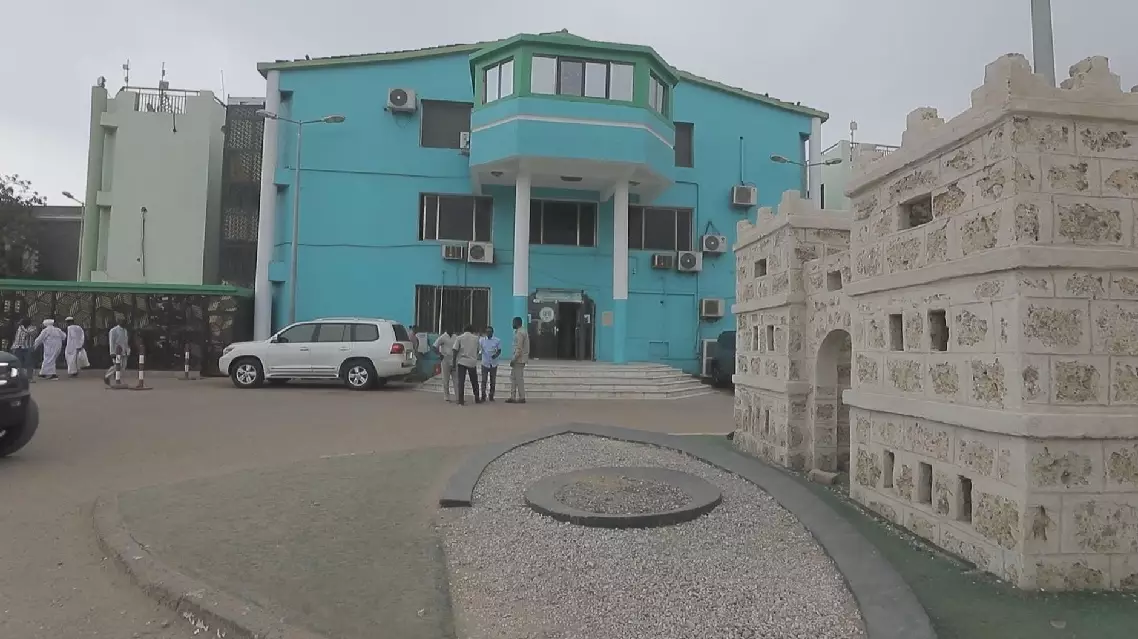
Sudan is moving forward with a nationwide digital transformation, introducing new administrative services on an online platform.
The Baladna platform is designed to bring procedures that once required long queues and in-person visits into a single centralized digital system, allowing applications, registrations, and official transactions to be handled online.
In Port Sudan -- a city relatively untouched by the ongoing civil war -- officials say the Baladna platform is already making daily operations more efficient and cutting bureaucratic delays.
But the rollout faces hurdles in a country where infrastructure remains a major challenge.
"The platform works effectively and the progress is seen frequently. Despite all of the technical and logistical challenges, this digitalized approach shall impact the customs work positively by saving time and shorten procedures. It shall also reduce smuggling and making verification of documents easier. That will impact e-commerce and all trade sectors. It shall link customs and tariffs with all economic activities and governmental services," said Majdi Madani, head of Technology at the Sudanese Customs Administration. The Baladna initiative was unveiled in December 2025 as Sudan's national portal for public administration.
Officials describe it as part of a broader effort to digitize government institutions, including plans for a national data center and expanded 4G infrastructure to improve access.
The platform promises quicker services for businesses and citizens, but some users say it needs improvements.
"I'm using the platform now from Port Sudan and can track the progress of a pending transaction. As a businessman, digitizing procedures should have a positive impact by reducing the role of brokers that slowed the old paperwork system. It also brings together the authorities we deal with -- from the central bank to the trade ministry, customs and ports -- on a single platform. Connectivity can be challenging at times, which is understandable in the context of war, but we're hoping for faster and more stable performance," said Basheer Hashim, a businessman.
Technology experts say launching a centralized digital system during an ongoing conflict is ambitious but risky.
"The biggest challenges face such projects are the infrastructure and the stability. Although Sudan now possesses stable networking and alternatives to face the challenges, but at some point, you need a lot of cooperation and coordination to link all institutions together amid the current conditions," said Mohamed Ashraf, an ICT developer.
While digitization can protect records and improve efficiency, there are concerns about cybersecurity and infrastructure resilience.
Whether Baladna can deliver consistent access across Sudan may ultimately depend on how quickly the country can stabilize its communications networks.
Sudan digitizes public services despite infrastructure, security hurdles
A solar-powered borehole drilling program supported by China has expanded water access across Zimbabwe's rural and peri-urban communities, strengthening disaster recovery and sustaining livelihoods since Cyclone Idai struck in 2019.
Tropical Cyclone Idai entered Zimbabwe from neighboring Mozambique, triggering floods and causing tragic losses of life and property.
Launched under a Chinese government initiative to restore water and sanitation services after cyclones and drought, the program has delivered lasting benefits.
At Mahusekwa Growth Point, where boreholes were drilled last year, reliable water now sustains dozens of small businesses and households, underscoring how the intervention continues to shape community resilience seven years on.
"We now have clean water to wash our products and for customers to wash their hands before they eat. We also fetch water to use at our homes because there is an intermittent supply," said Cynthia Garan'nga, a market vendor.
Reliable water access has also created employment opportunities, especially for young entrepreneurs such as car wash owner Loveness Marabwanya.
"Maybe I was going to get people to fetch water for me from the river, but it's very far and I was going to pay more for that. To imagine that the water is just like a few meters away, it's very easy and convenient for me," she said.
The borehole is solar powered, which means the community can access water at any hour of the day, and that refers to greater reliability and sustainability. There are no longer any limitations of fuel costs or power cuts.
Mahusekwa is one of more than 300 communities nationwide benefiting from boreholes drilled under Chinese disaster assistance. Around 60 of them are in Mashonaland East, where water shortages had long slowed development and undermined food security.
"These boreholes came at the right time. Remember the last two or three years we have been having droughts," said Jeremiah Gwanzura, chairperson of Marondera Rural District Council.
Gwanzura says the availability of water is sustaining livelihoods and boosting production, even during prolonged dry spells.
"We have livelihoods in terms of livestock cattle, people are doing boilers behind the scenes, road runners, goats, piggery projects within the rural set-up, and if there is the missing link of water, it means we are going nowhere. Some of the areas in the rural areas are using it for nutritional gardens, going to the market, so they will be watering their vegetables, they will be watering their plants," he said.
At a national level, authorities say the boreholes reflect a shift from emergency response to long-term resilience.
"In any disaster recovery programme, what we always talk about is building-back better. And I'm sure this principle of building-back better, you can actually see it in the way that we are establishing these boreholes in Chimanimani, Masvingo, Midlands and Mashonaland East," said Nathan Nkomo, chief director of the Civil Protection Department.
Beyond water access, China has also supported food security through agricultural training, helping communities rebuild stronger and more sustainably in the years since Cyclone Idai.
China-supported borehole program expands water access, strengthens Zimbabwe's disaster recovery