LIVIGNO, Italy (AP) — Miro Tabanelli sped down the steep incline before launching into a spin that expanded the limits of what is possible for daredevils on skis.
Six-and-a-half dizzying rotations later, all completed in a near blur to the naked eye, the 21-year-old Italian slammed his skis into the snow in Aspen, Colorado, and thrust his arms skyward. He had just become the first skier to land a 2340-degree jump in competition. That, not surprisingly, earned him a gold medal in big air at the 2025 Winter X Games.
Click to Gallery
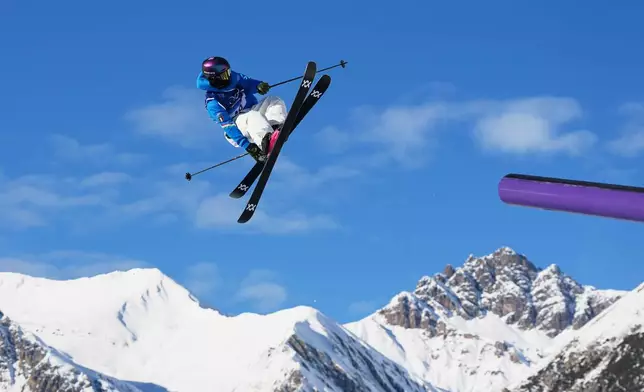
Italy's Miro Tabanelli competes during men's freestyle skiing slopestyle qualifications at the 2026 Winter Olympics, in Livigno, Italy, Saturday, Feb. 7, 2026. (AP Photo/Gregory Bull)
Italy's Miro Tabanelli reacts during men's freestyle skiing slopestyle qualifications at the 2026 Winter Olympics, in Livigno, Italy, Saturday, Feb. 7, 2026. (AP Photo/Lindsey Wasson)
Italy's Flora Tabanelli practices during a slopestyle training session at the 2026 Winter Olympics, in Livigno, Italy, Wednesday, Feb. 4, 2026. (AP Photo/Lindsey Wasson)
Italy's Flora Tabanelli practices during a freestyle skiing slopestyle training session at the 2026 Winter Olympics, in Livigno, Italy, Thursday, Feb. 5, 2026. (AP Photo/Lindsey Wasson)
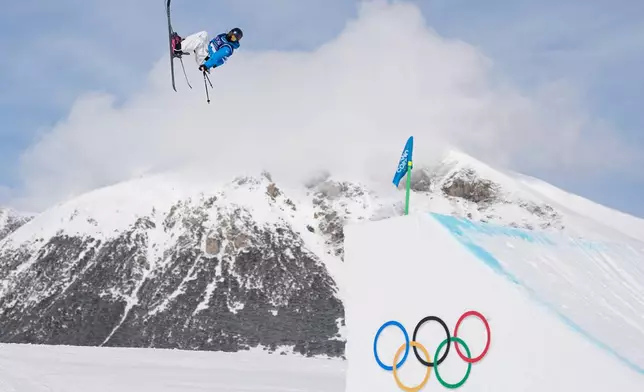
Italy's Miro Tabanelli practices during a freestyle skiing slopestyle training session at the 2026 Winter Olympics, in Livigno, Italy, Thursday, Feb. 5, 2026. (AP Photo/Lindsey Wasson)
As the ecstatic television commentator put it: “Miro Tabanelli has spun into the future!”
Tabanelli reflected on his feat almost a year later as he was set to compete in the Milan Cortina Olympics in his home country.
“It was a milestone I reached after a long time of preparation,” the 21-year-old Tabanelli told The Associated Press.
Beneath the nonchalant attitude that freestyle skiers and snowboarders are known for, Tabanelli said he put countless hours into nailing his unprecedented airborne twirl.
“Nothing happens by chance,” he said. “I’d been doing it in training for a while, but it was about getting a certain level of consistency before doing it in competition. At the X Games everything was perfect, and the 2340 gave me a wonderful victory.”
He said it was all about hard work, belief — and letting go.
“It’s a wonderful feeling when you manage to make such a leap, which requires no thought, just a lot of practice and a lot of confidence.”
Japan's Hiroto Ogiwara executed the first 2340 jump on a snowboard at the same X Games last year.
Tabanelli will compete in freestyle big air qualifying on Sunday. As of Saturday, the host country had exceeded expectations by winning 18 medals, including six golds.
Tabanelli's rise has been paralleled by that of his younger sister, Flora Tabanelli, herself a breakout freestyle skier.
The siblings practically grew up in the snow. Their parents managed a mountain refuge at 1800 meters in the Tuscan-Emilian Apennines.
And they were peaking together after both won a World Cup event in France last March.
The siblings also participated in a publicity stunt at the 2024 Giro d’Italia cycling race, when they soared over the road while cyclist Tadej Pogacar was pedaling underneath during a stage that finished in Livigno, the site of the Olympic freestyle and snowboarding events.
Their chances of competing together at the Milan Cortina Games appeared to be gone when Flora Tabanelli injured the ACL in her right knee in November, just before her 18th birthday.
She was expected to miss the Games, but she recovered in time to participate in Saturday's big air qualification.
Flora Tabanelli also has medal hopes. She won gold in big air at last season’s world championships and became the World Cup champion in the discipline.
For his part, Miro Tabanelli said he's fully prepared.
“The preparation went well. We worked hard on the physical training, but also on perfecting the tricks.”
Speaking of tricks, will he try to add another twist his 2340?
That, he said, “is a secret!”
This story has been corrected. A previous version reported incorrectly that Flora Tabanelli would not be competing at the Milan Cortina Games because of injury. She is competing.
AP Olympics: https://apnews.com/hub/milan-cortina-2026-winter-olympics

Italy's Miro Tabanelli competes during men's freestyle skiing slopestyle qualifications at the 2026 Winter Olympics, in Livigno, Italy, Saturday, Feb. 7, 2026. (AP Photo/Gregory Bull)

Italy's Miro Tabanelli reacts during men's freestyle skiing slopestyle qualifications at the 2026 Winter Olympics, in Livigno, Italy, Saturday, Feb. 7, 2026. (AP Photo/Lindsey Wasson)

Italy's Flora Tabanelli practices during a slopestyle training session at the 2026 Winter Olympics, in Livigno, Italy, Wednesday, Feb. 4, 2026. (AP Photo/Lindsey Wasson)
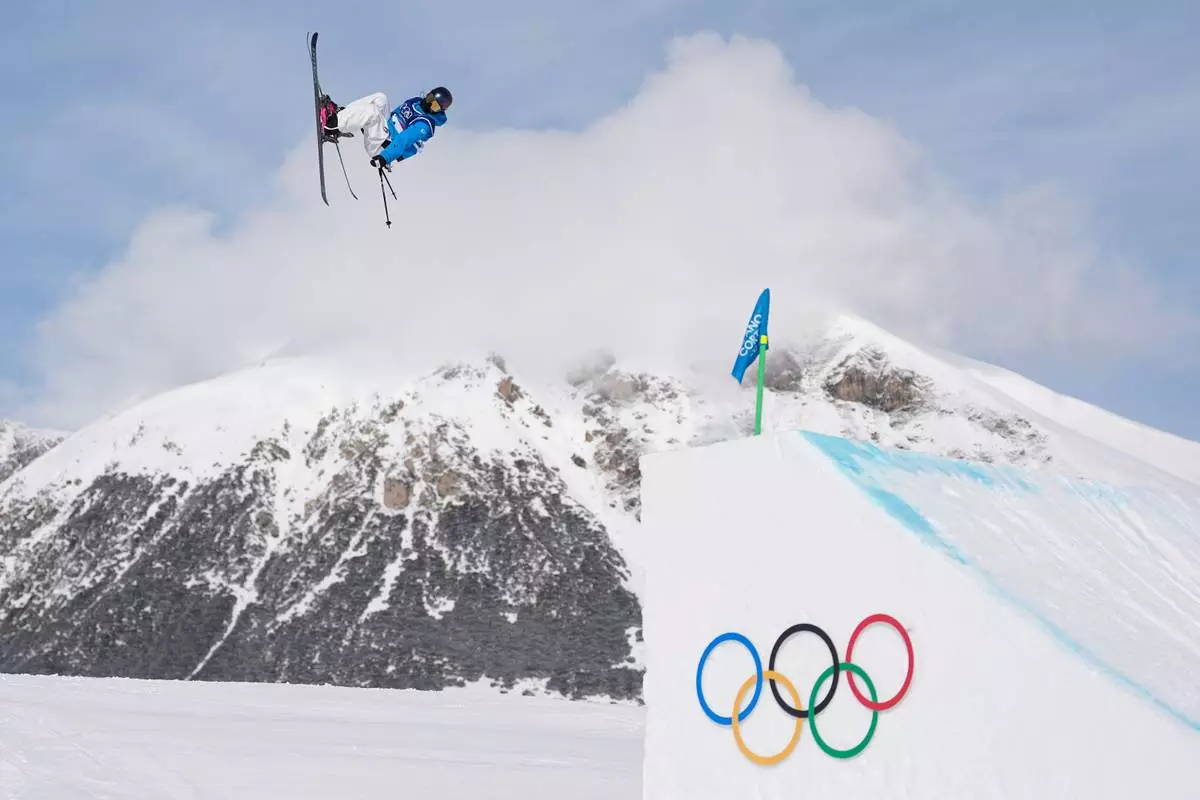
Italy's Flora Tabanelli practices during a freestyle skiing slopestyle training session at the 2026 Winter Olympics, in Livigno, Italy, Thursday, Feb. 5, 2026. (AP Photo/Lindsey Wasson)

Italy's Miro Tabanelli practices during a freestyle skiing slopestyle training session at the 2026 Winter Olympics, in Livigno, Italy, Thursday, Feb. 5, 2026. (AP Photo/Lindsey Wasson)
UNITED NATIONS (AP) — The majority of Iran’s highly enriched uranium is likely still at its Isfahan nuclear complex, which was bombarded by airstrikes last year and faced less intense attacks in this year's U.S.-Israeli war, the head of the U.N. nuclear agency told The Associated Press.
Rafael Grossi said in an interview on Tuesday that the International Atomic Energy Agency has satellite images showing the effects of the latest U.S.-Israeli airstrikes against Iran and that “we continue to get information.”
IAEA inspections ended at Isfahan when Israel last June launched a 12-day war that saw the United States bomb three Iranian nuclear sites.
The U.N. nuclear watchdog believes a large percentage of Iran's highly enriched uranium “was stored there in June 2025 when the 12-day war broke out, and it has been there ever since,” Grossi said.
“We haven't been able to inspect or to reject that the material is there and that the seals — the IAEA seals — remain there,” he said. “I hope we'll be able to do that, so what I tell you is our best estimate.”
Images from an Airbus satellite show a truck loaded with 18 blue containers going into a tunnel at the Isfahan Nuclear Technology Center on June 9, 2025, just before the start of the June war. Those containers, believed to contain highly enriched uranium, likely remain there.
The IAEA also wants to inspect Iran's nuclear facilities at Natanz and Fordo, where there is also some nuclear material, the IAEA director-general added.
Iran is a party to the Nuclear Nonproliferation Treaty, whose five-year review is underway at U.N. headquarters. Under its provisions, Iran is required to open its nuclear facilities to IAEA inspection, Grossi said.
Iran has 440.9 kilograms (972 pounds) of uranium that is enriched up to 60% purity, a short, technical step from weapons-grade levels of 90%, according to the agency. Grossi has said the IAEA believes roughly 200 kilograms (about 440 pounds) is stored in tunnels at the Isfahan site.
The Iranian stockpile could allow the country to build as many as 10 nuclear bombs, should it decide to weaponize its program, Grossi told the AP last year, should Iran choose to rush for the bomb.
Tehran long has insisted its nuclear program is peaceful. President Donald Trump said one of the major reasons the United States went to war was to deny Iran the ability to develop nuclear weapons even as he has insisted that the strikes last June “obliterated” the country's atomic program.
Grossi said the IAEA has discussed with Russia and others the possibility of sending Iran's highly enriched uranium out of the country — a complex operation that would require either a political agreement or a major U.S. military operation in hostile territory.
“What's going to be important is that that material leaves Iran” or is blended to reduce its enrichment, he said.
Grossi said the IAEA participated in the last cycle of U.S.-Iran nuclear talks in February but hasn’t been part of recent ceasefire negotiations mediated by Pakistan. He said the agency has been in discussions separately with the U.S. and informally with Iran.
The latest proposal from Iran would postpone discussions on its nuclear program but end its chokehold on the Strait of Hormuz, a crucial sea route for oil and natural gas shipments, if the U.S. lifts its blockade and ends the war.
Grossi described that as an indication that Iran wants to sequence how it confronts the objectives mandated by the U.S., including curbing its ballistic missile program and dealing with its proxies Hezbollah in Lebanon, Hamas in Gaza and the Houthis in Yemen.
“What is indispensable is that we address it,” the IAEA director-general said of Iran’s nuclear program.
This will take “political will” from Tehran, he said, stressing that “Iran has to be convinced that it is important to negotiate.”
Iran's leaders say they are willing to negotiate and so does the Republican U.S. president, Grossi said, but “where the frustration kicks in, apparently for both, is that they do not seem to come to agreement, or be at an eye-to-eye level on what needs to be done first, or on how.”
Calling himself a negotiator who likes to see a “flicker of hope,” Grossi noted that “one important thing is that there is apparently an interest on both sides to come to an agreement.”
Secretary of State Marco Rubio told Fox News Channel this week that preventing Iran from attaining a nuclear weapon “remains the core issue” that must be confronted.
Asked if he thinks the Iranians are serious about making a deal, Rubio said that they are skilled negotiators looking to buy time and that any agreement must be "one that definitively prevents them from sprinting towards a nuclear weapon at any point.”
Grossi said in any political agreement, full IAEA inspections of Iran's nuclear facilities must take place.
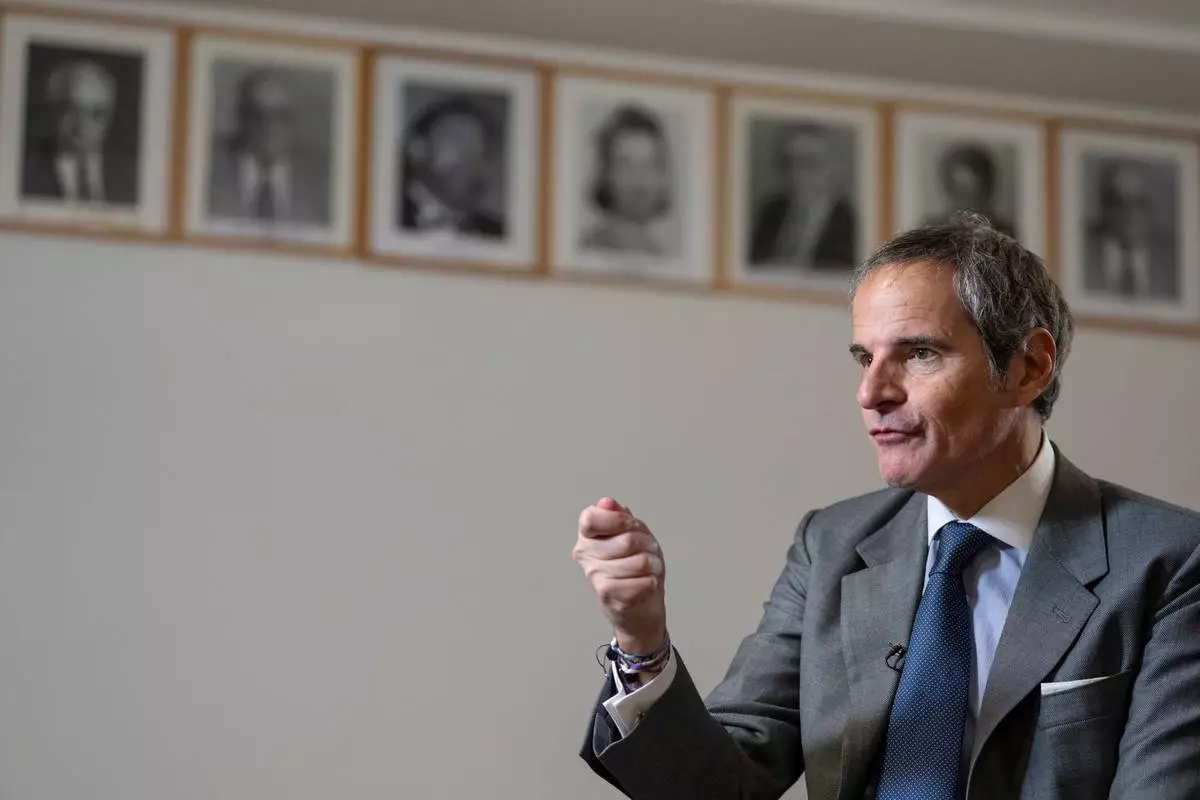
Rafael Grossi, International Atomic Energy Agency (IAEA) Director General and a candidate for United Nations Secretary-General, speaks during an interview at U.N. headquarters, Tuesday, April 28, 2026. (AP Photo/Yuki Iwamura)

Rafael Grossi, International Atomic Energy Agency (IAEA) Director General and a candidate for United Nations Secretary-General, speaks during an interview at U.N. headquarters, Tuesday, April 28, 2026. (AP Photo/Yuki Iwamura)
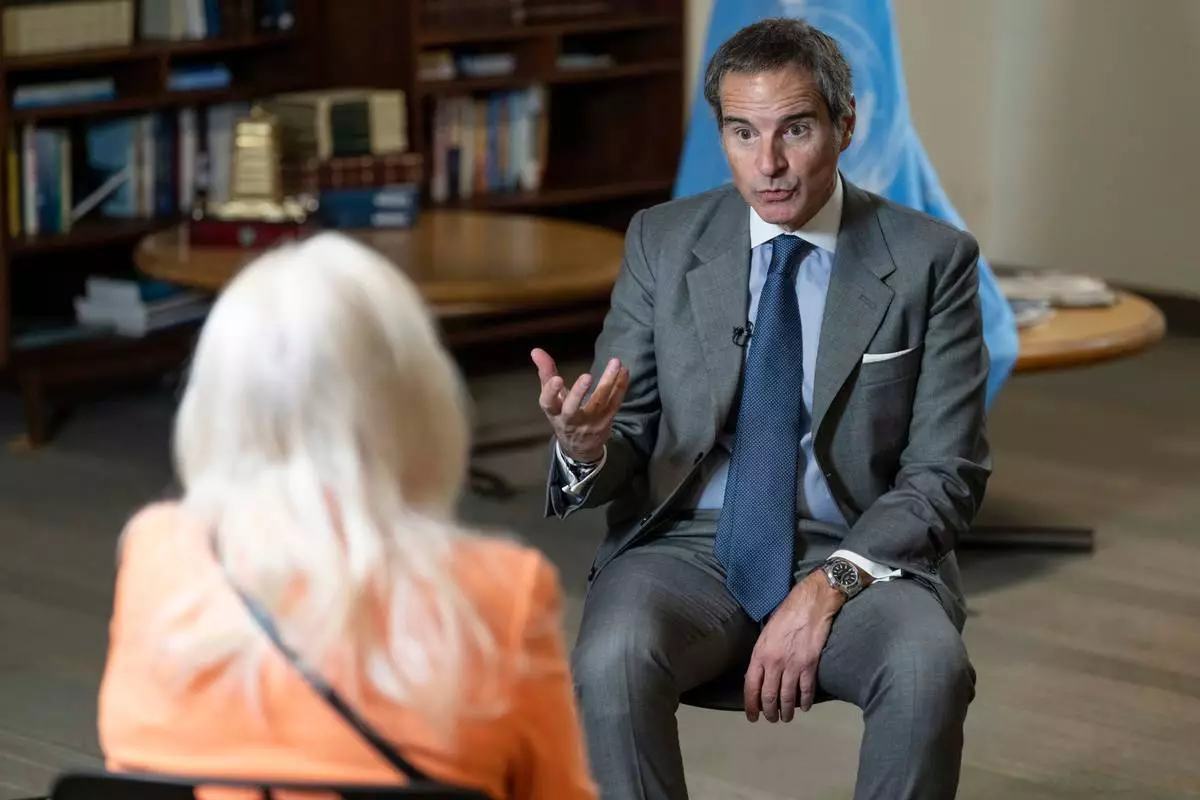
Rafael Grossi, International Atomic Energy Agency (IAEA) Director General and a candidate for United Nations Secretary-General, speaks during an interview at U.N. headquarters, Tuesday, April 28, 2026. (AP Photo/Yuki Iwamura)
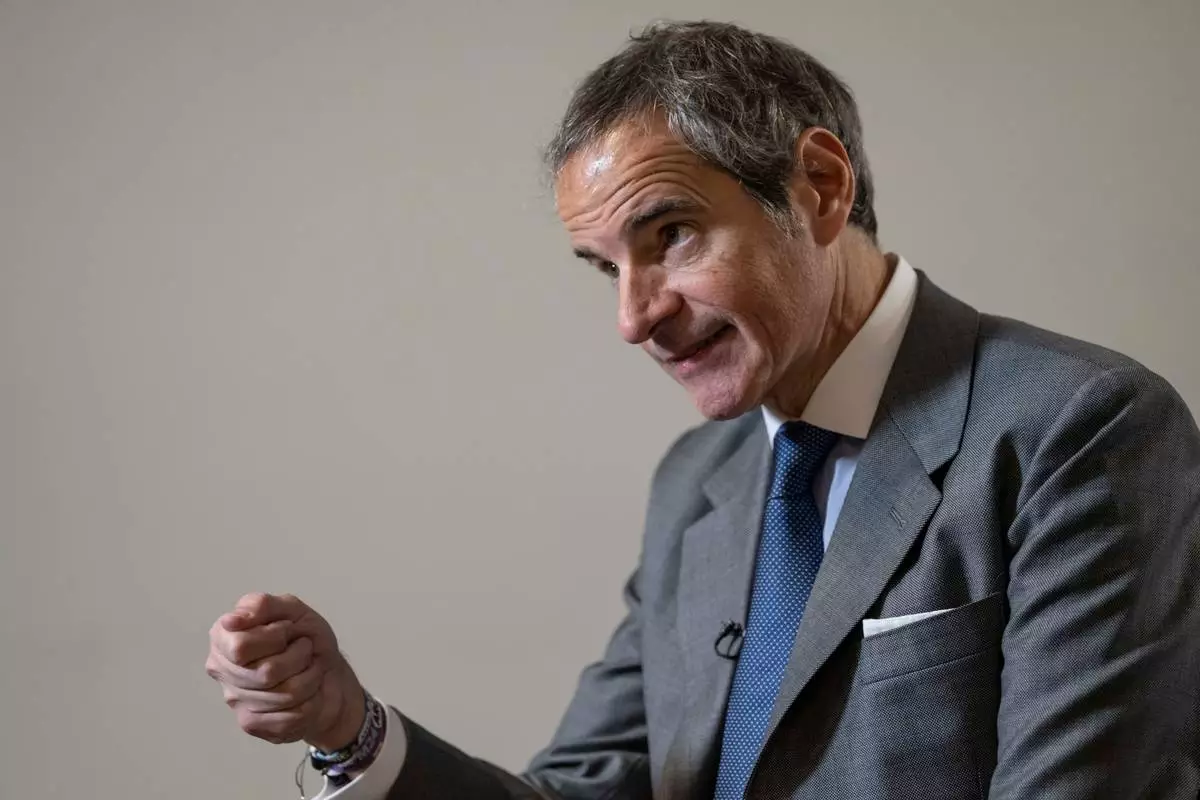
Rafael Grossi, International Atomic Energy Agency (IAEA) Director General and a candidate for United Nations Secretary-General, speaks during an interview at U.N. headquarters, Tuesday, April 28, 2026. (AP Photo/Yuki Iwamura)
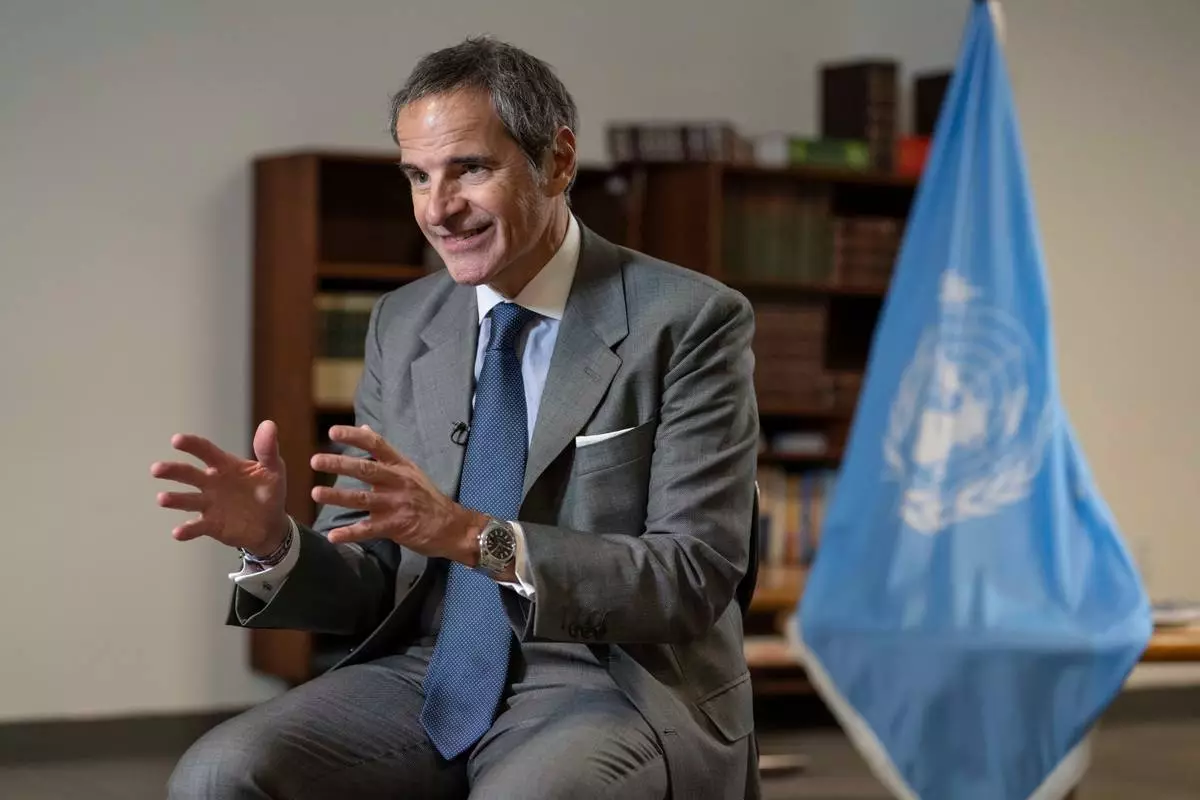
Rafael Grossi, International Atomic Energy Agency (IAEA) Director General and a candidate for United Nations Secretary-General, speaks during an interview at U.N. headquarters, Tuesday, April 28, 2026. (AP Photo/Yuki Iwamura)
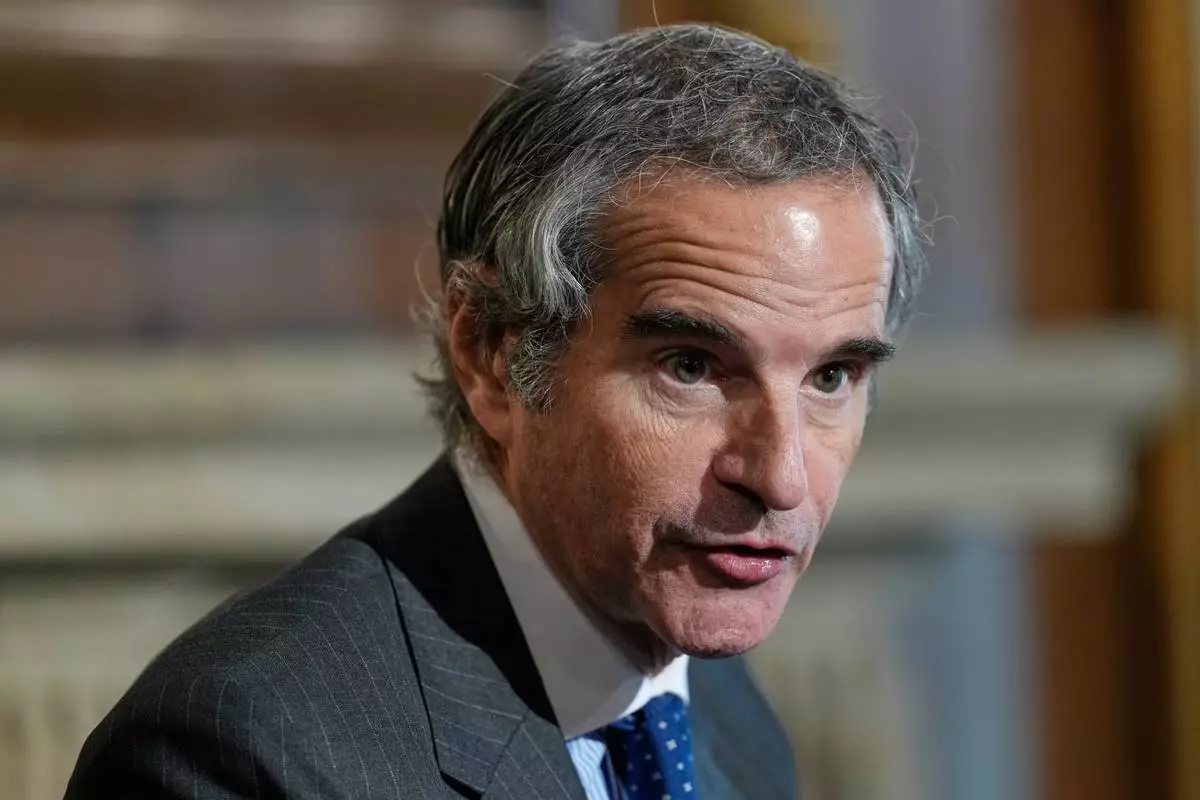
FILE - Rafael Grossi speaks during an event at the Council on Foreign Relations in New York, April 23, 2026. (AP Photo/Seth Wenig, File)