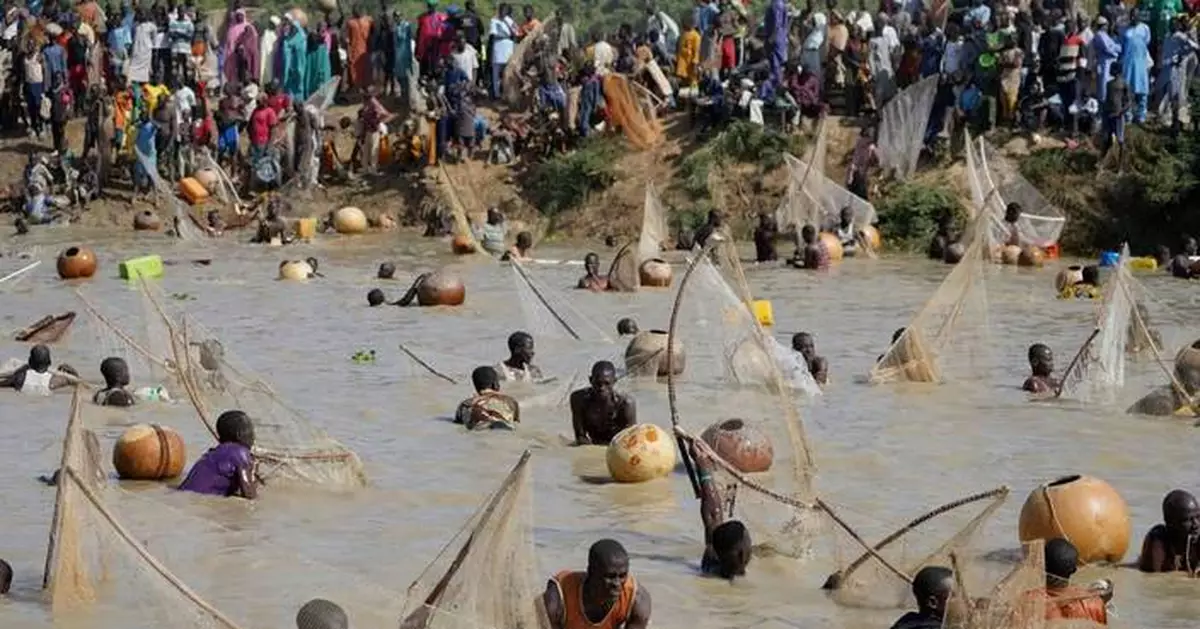
Thousands of fishermen descended Saturday on the milky waters of the Matan Fadan river, a UNESCO heritage site that snakes through lush vegetation at the town of Argungu in Nigeria’s northwest.
Several thousand onlookers, including President Bola Tinubu, cheered them on as they competed to hook the biggest fish, even as security issues kept some people away. Competitors used only traditional angling techniques, such as hand-woven nets and large calabash gourds. Some used their bare hands to demonstrate their skills.
Click to Gallery
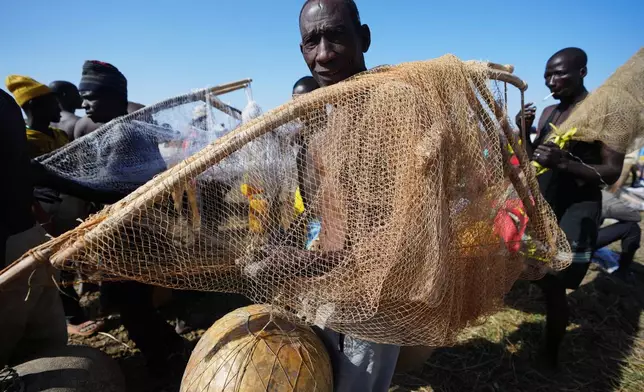
Fishermen wait for the start of the Argungu cultural fishing festival in Argungu, Kebbi , Northern Nigeria, Saturday, Feb.14, 2026. (AP Photo/Sunday Alamba)
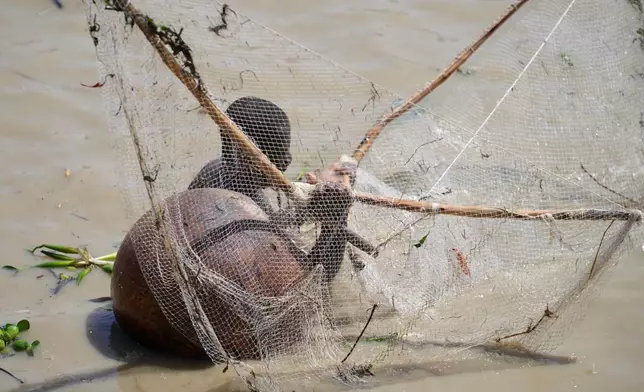
A fishermen searches for fish during the Argungu cultural fishing festival in Argungu, Kebbi , Northern Nigeria, Saturday, Feb.14, 2026. (AP Photo/Sunday Alamba)
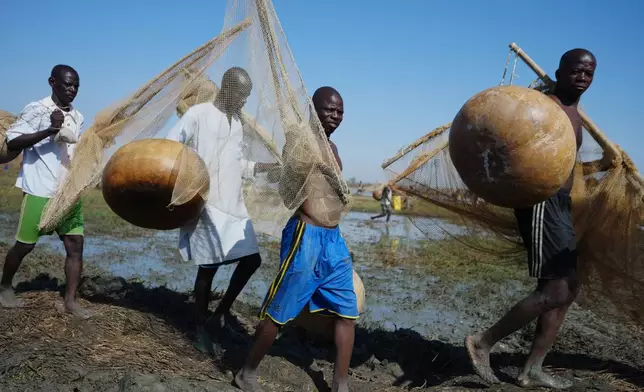
Fishermen arrive for the Argungu cultural fishing festival in Argungu, Kebbi , Northern Nigeria, Saturday, Feb.14, 2026. (AP Photo/Sunday Alamba)
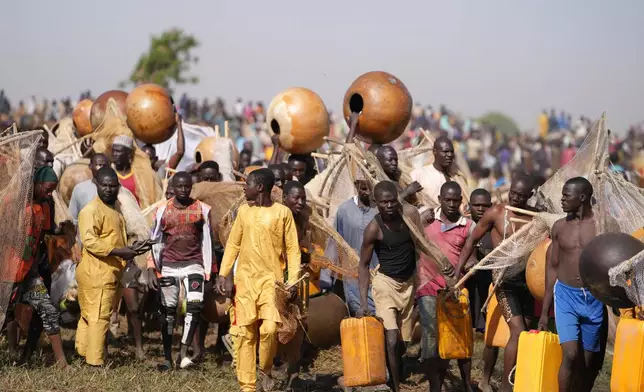
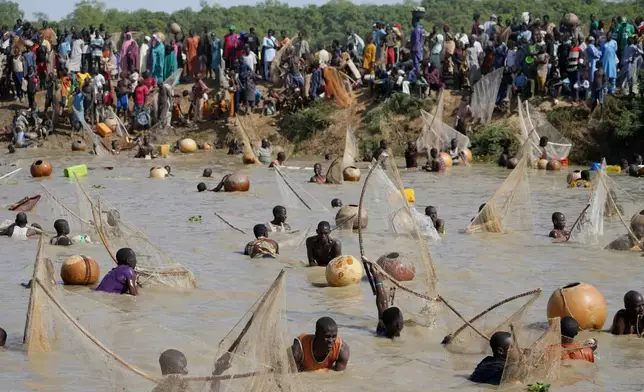
Fishermen search for fish during the Argungu cultural fishing festival in Argungu, Kebbi , Northern Nigeria, Saturday, Feb.14, 2026. (AP Photo/Sunday Alamba)
The waterway in Kebbi state was filled with woven nets and canoes as the fishermen forded the river. This year's winner caught a croaker fish weighing 59 kilograms (130 pounds). The winner is paid a cash prize, and the other participants get to sell their catch, boosting the local economy.
The small river is closed for the rest of the year and maintained by a titled chief called Sarkin Ruwa, the chief of the water.
The fishing competition was the culmination of the annual international fishing festival that featured cultural events, including traditional wrestling and music.
“I thank God that I got something to take home to my family to eat. I am very happy that I came,” Aliyu Muhammadu, a 63-year-old fisherman who participated in the competition, told The Associated Press.
The festival dates back to 1934, when nearly 100 years of hostility between the ancient Sokoto Caliphate — a sprawling 19th-century Islamic empire reaching from Nigeria to parts of modern-day Burkina Faso — and a holdout Argungu emirate ended.
The fishing festival is regarded as a symbol of unity, and it has run for decades until it was paused in 2010 following infrastructural problems and because of festering insecurity in Nigeria’s northern region. The festival returned in 2020 but was paused again until this year.
Nigeria is facing a complex security crisis, especially in the north, which for years has witnessed attacks that have left several thousand people dead. The attacks have been blamed on fighters with Islamist insurgent groups and criminal armed groups. The attacks are now spreading to the southern region.
Tinubu said the festival is a return to stability but for many the festival's return restores a sense of communal pride.
“Our challenge now is that people are scared of coming. A lot of people don’t attend the event like before because of insecurity," Hussein Mukwashe, the Sarkin Ruwa of Argungu, told The Associated Press.
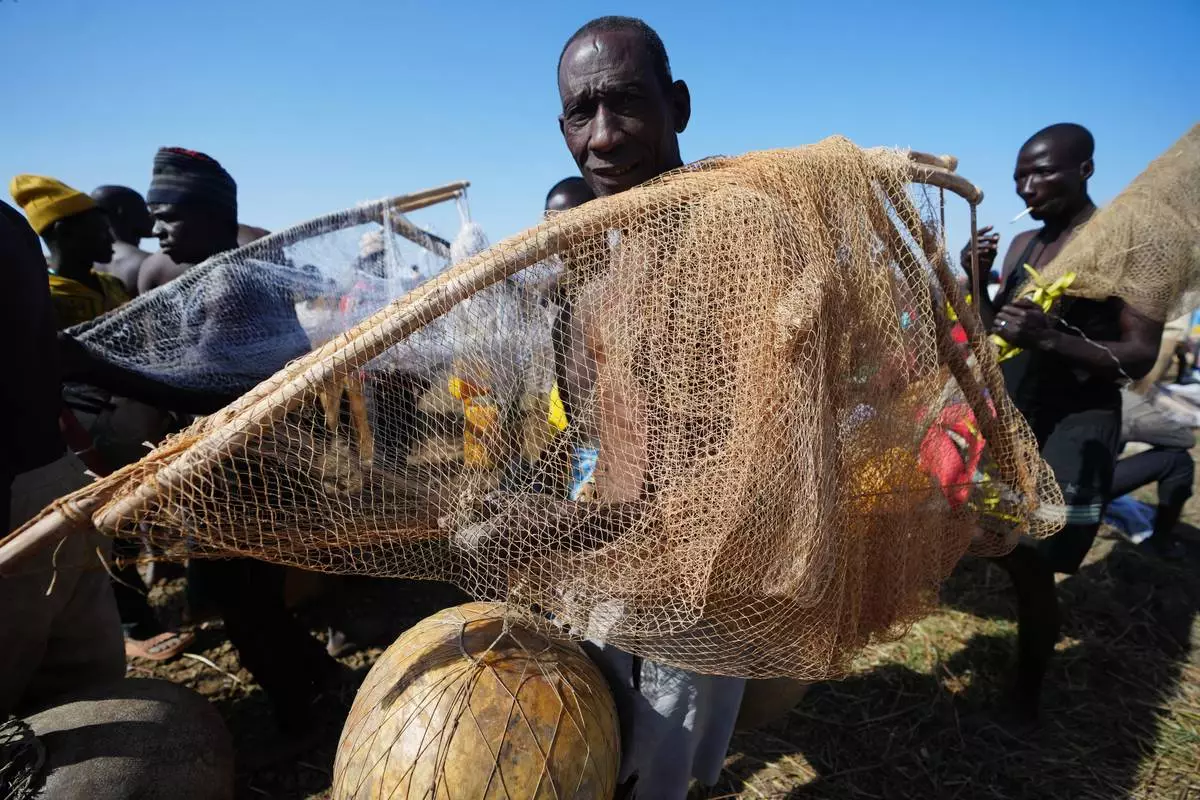
Fishermen wait for the start of the Argungu cultural fishing festival in Argungu, Kebbi , Northern Nigeria, Saturday, Feb.14, 2026. (AP Photo/Sunday Alamba)
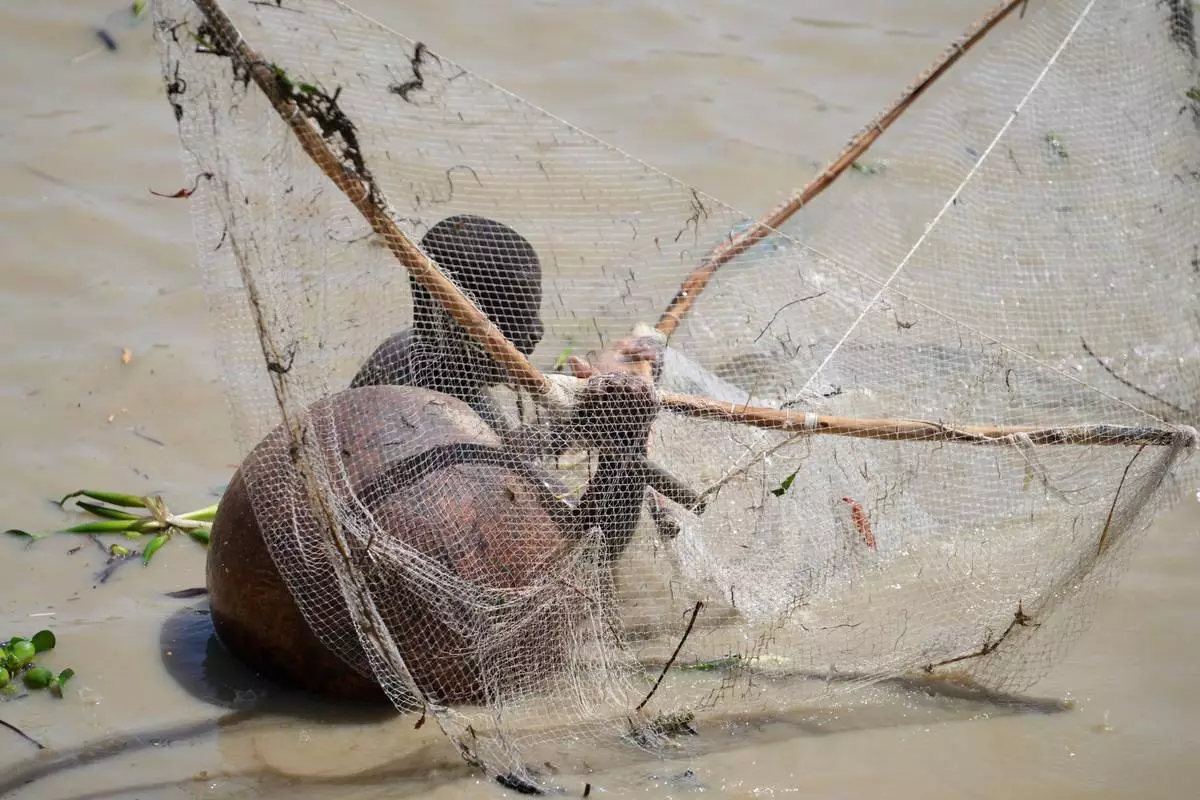
A fishermen searches for fish during the Argungu cultural fishing festival in Argungu, Kebbi , Northern Nigeria, Saturday, Feb.14, 2026. (AP Photo/Sunday Alamba)
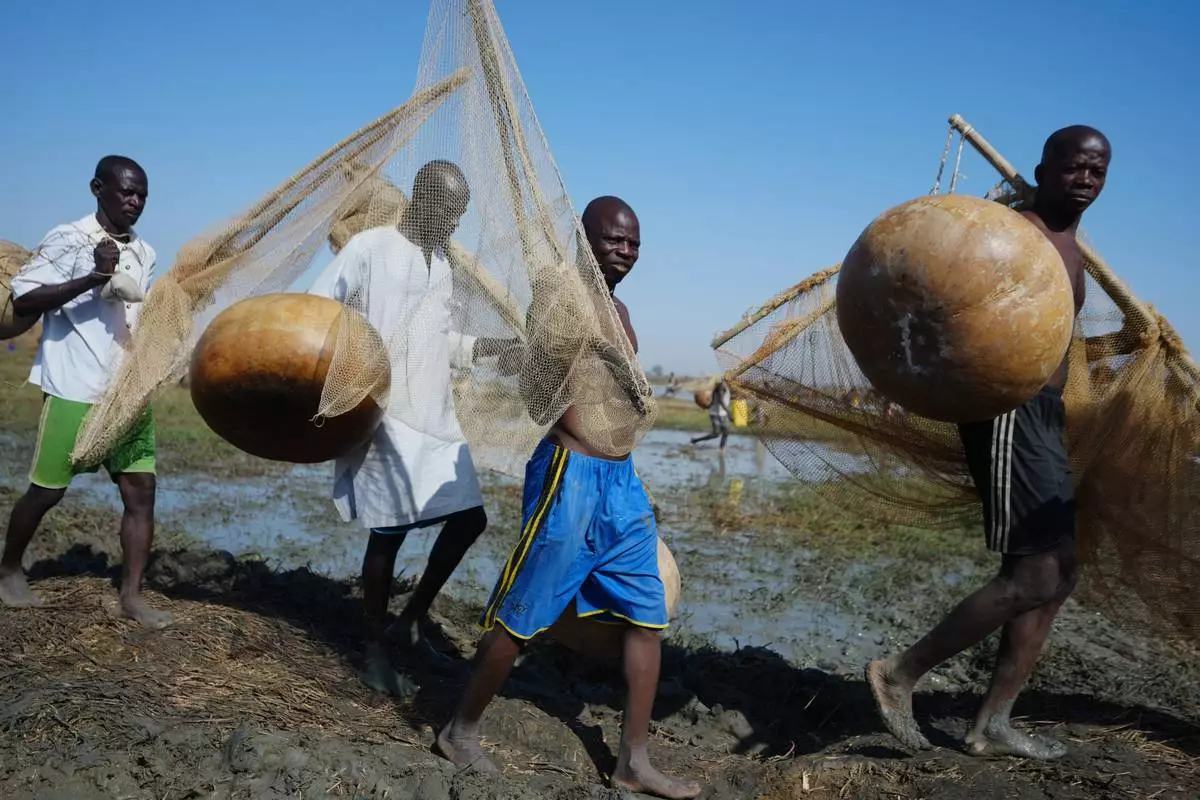
Fishermen arrive for the Argungu cultural fishing festival in Argungu, Kebbi , Northern Nigeria, Saturday, Feb.14, 2026. (AP Photo/Sunday Alamba)
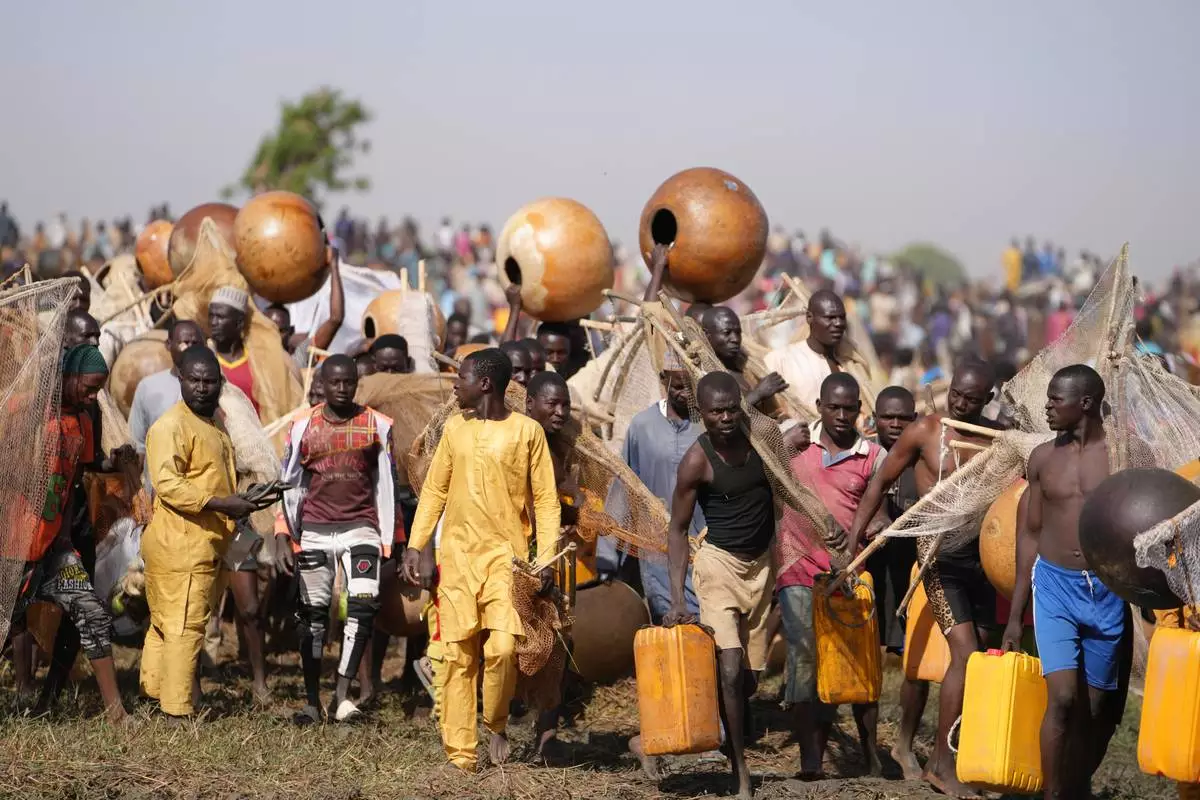
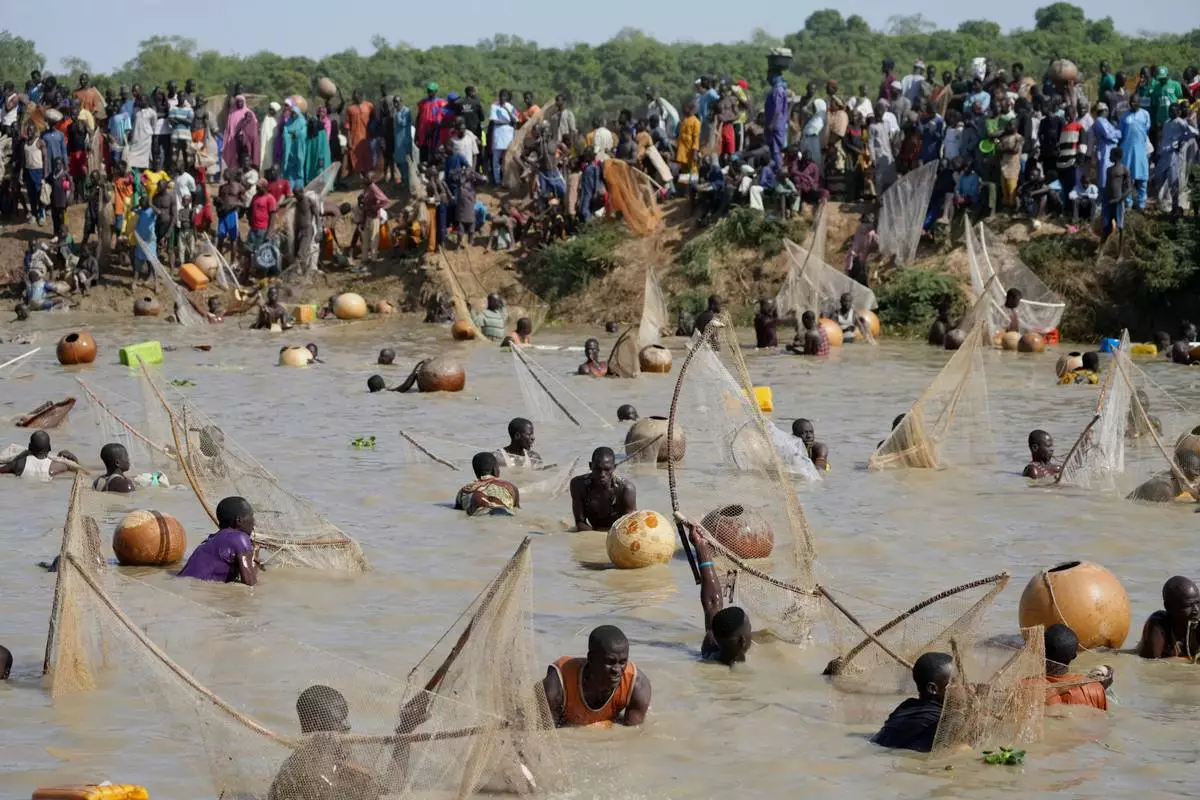
Fishermen search for fish during the Argungu cultural fishing festival in Argungu, Kebbi , Northern Nigeria, Saturday, Feb.14, 2026. (AP Photo/Sunday Alamba)

LIVIGNO, Italy (AP) — After Eileen Gu secured her spot in the Winter Olympics big air final Saturday, she said she was disappointed that Games organizers wouldn't make accommodations to allow her the same amount of training as the rest of the skiers in her third and final event, the halfpipe.
Gu, who won silver in slopestyle earlier in the week, is the only female freeskier signed up for all three disciplines — slopestyle, halfpipe and big air. The big air final Monday overlaps with the first of three, three-hour halfpipe training sessions for that event scheduled later next week.
The 22-year-old Gu, one of the biggest names at the Milan Cortina Games, told reporters she reached out to organizers at the International Ski and Snowboard Federation (FIS), which sets the schedule.
She said she wasn't asking for special treatment, just the same amount of practice as everyone else was getting, and she even looked for compromises, like joining the snowboarders' training on the halfpipe. FIS told her it couldn't make a change for one athlete because it wouldn't be fair to the rest.
“I’m disappointed in FIS,” Gu said. “I think the Olympics should epitomize aspiration, and I think being able to do something that’s beyond the ordinary should be celebrated instead of punished.”
FIS scheduled three training sessions before qualifying, compared to two for a typical World Cup event. Spokesman Bruno Sassi said “every effort has been made to facilitate the best possible training” for the athletes.
“But as we have already seen at these Games, for athletes who choose to compete in multiple disciplines and/or multiple events, conflicts can sometimes be inevitable,” he said.
Earlier in the Olympics, Ester Ledecka had to choose between defending her snowboard title and entering her favorite skiing event, the downhill, some five hours away in Cortina d’Ampezzo. She picked snowboarding (where she finished fifth) and instead skied in the super-G (where she crashed and did not finish).
Gu — who was born in the United States but competes for China — hasn't skied on a halfpipe since a World Cup event in December. She hasn't competed in big air since winning the gold medal in the discipline four years ago in Beijing. That was part of her three-medal haul in China — something she's on track to repeat in Italy.
Big air and slopestyle are essentially cousins — the big jumps on the big air course aren't unlike the three big jumps in slopestyle. But halfpipe is a different and more dangerous undertaking. Of Gu's 20 World Cup victories, 15 have come in that event.
“Halfpipe is an entirely different event,” Gu said. “It's like sprinting and a marathon. They're both running but they're completely different sports.”
At the last Olympics, Gu's slopestyle contest ended a few hours before halfpipe training began. She chowed on a chive pancake at the bottom of the hill as she wound her way through interviews, then hurried back up the lift to start training for the third part of her Olympic journey.
This time, Gu came close to not having to worry about the scheduling conflict. She fell during her second jump in big air qualifying, turning the last attempt into an all-or-nothing jump to make the final. It was similar to what happened in slopestyle and, just as in slopestyle, she came through.
“Even though I haven't done it in four years, I still know how to ski,” she said. “I still know my body and I can still do flips, and I'm not really thinking about a medal, or any color of medal.”
She is, however, thinking about her schedule — which will be breakneck with or without that first halfpipe training session.
After Monday's big air final, the halfpipe qualifiers are Thursday. The final is Saturday. It means Gu will headline the last of the 25 medal events scheduled in the action-sports park.
“I think it’s really unfair. I think it’s punishing excellence, to be completely honest with you,” Gu said. “Because I dare to do three events, and this is making it completely impossible to train fairly for the third event.”
Associated Press writer Joseph Wilson contributed to this report.
AP Olympics: https://apnews.com/hub/milan-cortina-2026-winter-olympics
China's Eileen Gu warms up before the women's freestyle skiing big air qualifications at the 2026 Winter Olympics, in Livigno, Italy, Saturday, Feb. 14, 2026. (AP Photo/Lindsey Wasson)
China's Eileen Gu smiles as she waits for her score while competing in the women's freestyle skiing big air qualifications at the 2026 Winter Olympics, in Livigno, Italy, Saturday, Feb. 14, 2026. (AP Photo/Abbie Parr)
China's Eileen Gu gets up after crashing as she competes in the women's freestyle skiing big air qualifications at the 2026 Winter Olympics, in Livigno, Italy, Saturday, Feb. 14, 2026. (AP Photo/Abbie Parr)
China's Eileen Gu crashes as she competes in the women's freestyle skiing big air qualifications at the 2026 Winter Olympics, in Livigno, Italy, Saturday, Feb. 14, 2026. (AP Photo/Abbie Parr)
China's Eileen Gu, left, gets a hug from her mother Yan Gu as she competes in the women's freestyle skiing big air qualifications at the 2026 Winter Olympics, in Livigno, Italy, Saturday, Feb. 14, 2026. (AP Photo/Abbie Parr)