The China Media Group (CMG), the country's flagship broadcaster, has opened its audience seats of the highly anticipated Spring Festival Gala to members of the public from across the country.
The move aims to have more people experience up close the festive and auspicious atmosphere of the nation's most-watched annual television program.
Among the invited audience to a recent gala rehearsal was Ding Yuling, a rural primary school teacher from Fuyang, east China's Anhui Province.
Acting as the "eyes" of her students in the countryside, she attended the rehearsal to witness the innovative performances on the gala stage.
"Watching the Spring Festival Gala rehearsal live at the venue was truly breathtaking. What impressed me most was an acrobatic performance, which was different from the traditional acrobatics I had seen before, as modern technology was well combined with acrobatics. It's hard to put into words how I feel, it's simply stunning and beautiful. My students knew I was coming to watch the rehearsal, and they even gave me an assignment: to tell them what it's like behind the scenes. I will share with them my feelings at this very moment," said Ding.
The gala, set to be aired on Chinese New Year's Eve on February 16 this year, will combine traditional Chinese culture with modern stagecraft, as well as cross-cultural performances featuring international artists.
Commonly known as "Chunwan" in Chinese, the gala has been broadcast live every Chinese New Year's Eve since 1983 and has been recognized by Guinness World Records as the most-watched annual television program on the planet.
Just over a year ago, the Spring Festival itself was inscribed on UNESCO's Representative List of the Intangible Cultural Heritage of Humanity.
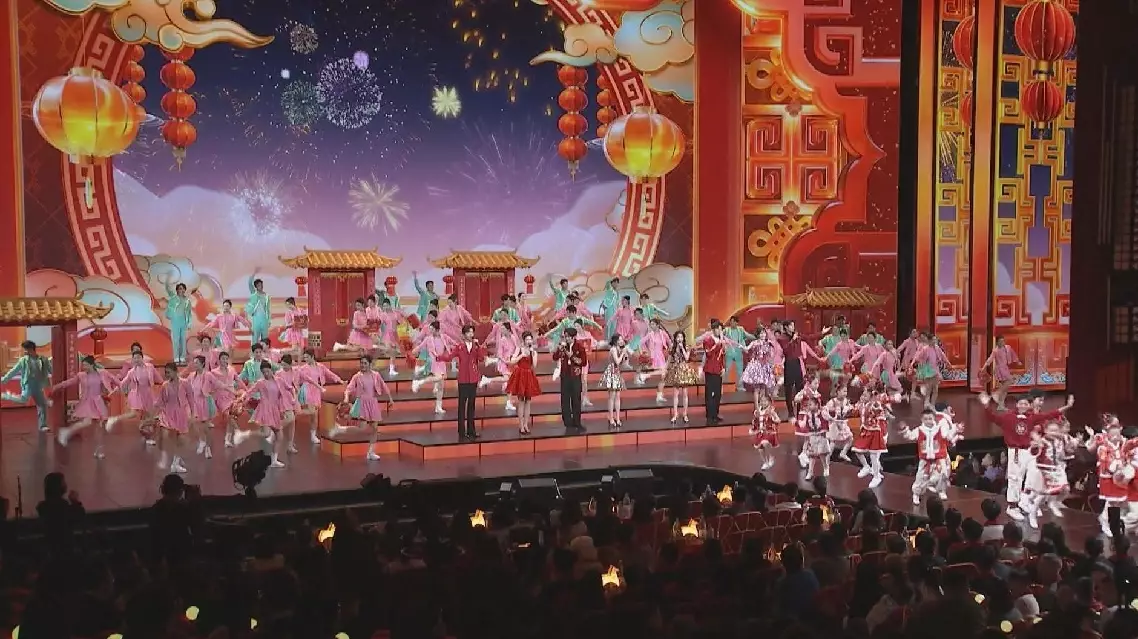
Rural teacher shares excitement after attending Spring Festival Gala rehearsal
The 32nd Asia-Pacific Economic Cooperation (APEC) Ministers Responsible for Trade Meeting concluded in east China's Suzhou on Saturday, yielding fruitful results and laying significant groundwork for the APEC Economic Leaders' Meeting in November.
The trade ministers' meeting focused on "building an open and predictable regional and multilateral economic and trade order" and "fostering new engines of innovative and dynamic trade and investment cooperation."
Chinese Commerce Minister Wang Wentao briefed the media on the meeting's outcomes at a press conference.
Wang said the meeting issued a joint statement titled the Suzhou Statement, and approved the latest edition of the APEC Roadmap for Innovative, Competitive and Resilient Services.
All parties agreed to advance policy innovation and reform in services trade, build an open and predictable investment environment, improve regional trade facilitation and supply chain resilience, strengthen standards coordination, and enhance intellectual property protection, Wang told the media.
He also said that substantial progress was made on a framework document for regional digital trade cooperation and the ministers emphasized promoting inclusive AI development, strengthening AI-related trade, and bridging the digital divide to ensure shared benefits from digital transformation.
The minister noted that the outcomes of the meeting demonstrated strong cooperation willingness, highlighted an innovation-oriented approach, and reflected inclusiveness and shared benefits. "The fact that Asia-Pacific economies can come together, uphold the original aspiration of promoting trade and investment liberalization and facilitation while supporting economic growth and prosperity, and engage in in-depth discussions on the important issue of 'where multilateral and regional economic and trade cooperation is headed,' fully demonstrates that open regionalism and true multilateralism enjoy broad support, and that mutual success and shared development serve the fundamental interests of all economies," Wang said.
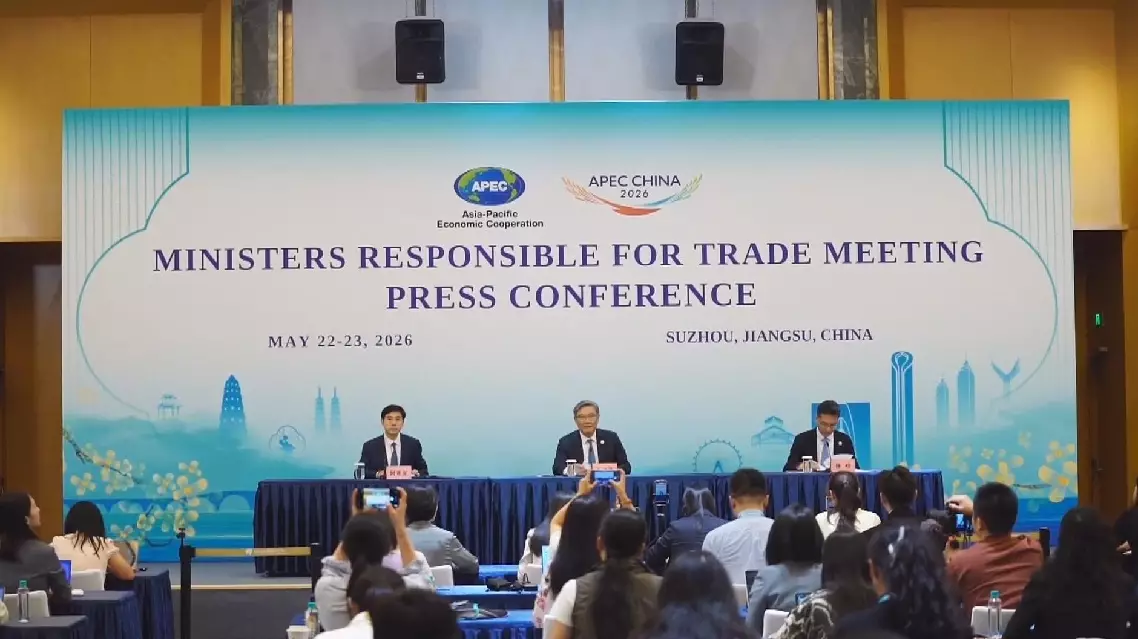
2026 APEC trade ministers' meeting concludes with fruitful results