AYER, Mass. (AP) — Connor Murphy walked in circles around his dad, then flopped down on the kitchen floor, got up and walked in circles again.
His dad turned the 9-year-old’s repetitive behavior into a chance to connect. “Want me to pick you up?” Matthew Murphy asked, lifting, tickling and spinning with his son.
Click to Gallery
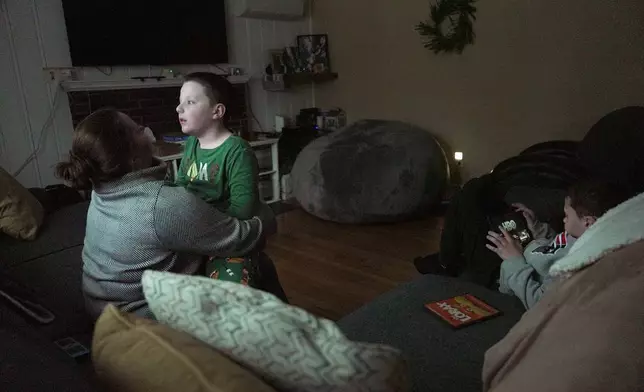
Ronan Murphy snuggles with his mom, Andrea, while looking at the snow falling outside his home while brother, Connor sits nearby in Ayer, Mass., on Saturday, Jan. 17, 2026. (AP Photo/Shelby Lum)
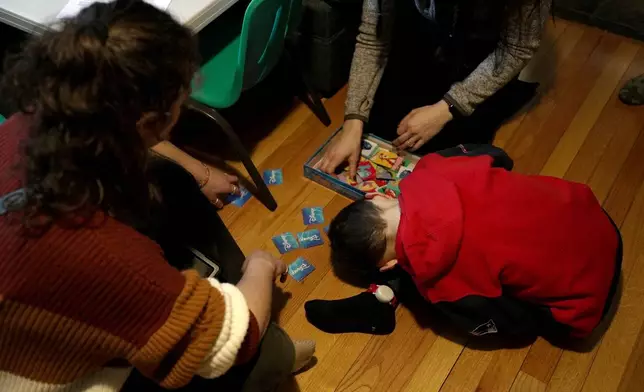
Connor Murphy takes a break from a matching problem during an applied behavior analysis after school in his home in Ayer, Mass., on Friday, Jan. 16, 2026. (AP Photo/Shelby Lum)
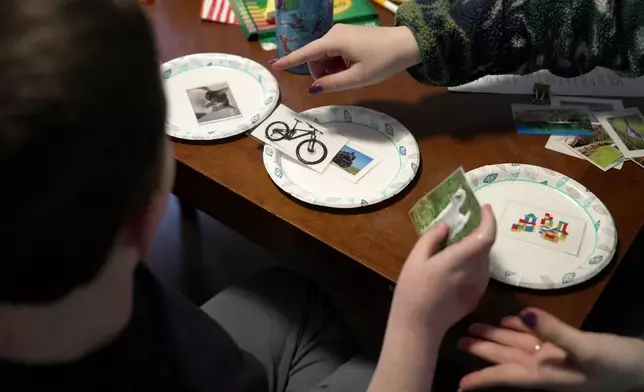
Ronan Murphy works on a sorting problem during an applied behavior analysis after school in his home in Ayer, Mass., on Friday, Jan. 16, 2026. (AP Photo/Shelby Lum)
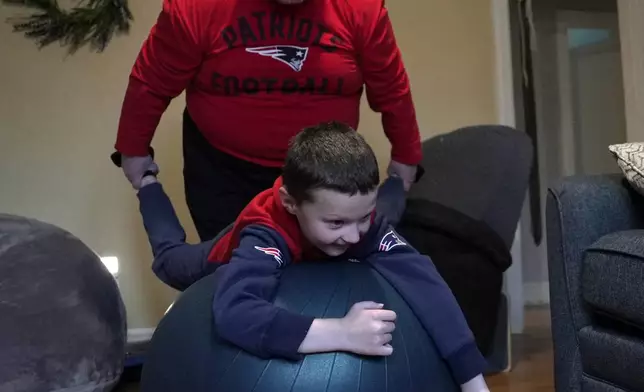
Matthew Murphy plays with his son, Connor, on a balance ball at home in Ayer, Mass., on Friday, Jan. 16, 2026. (AP Photo/Shelby Lum)
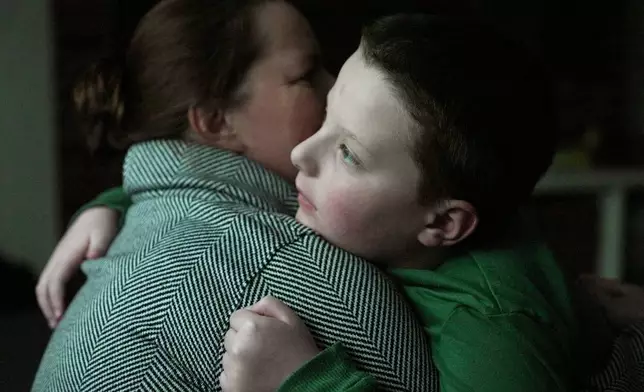
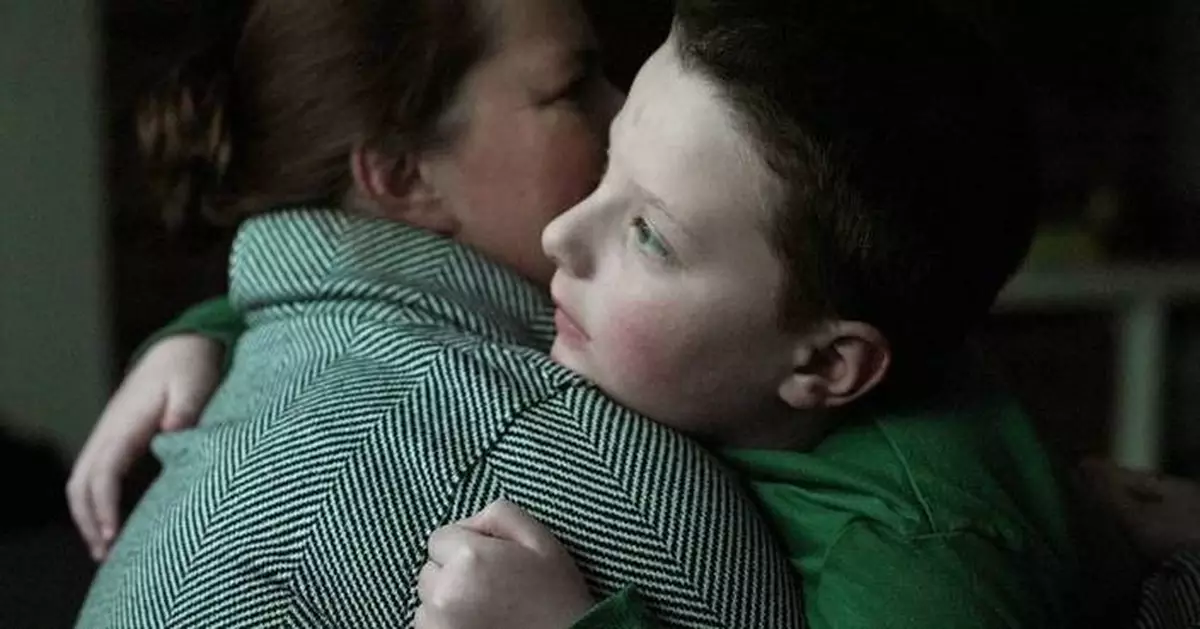
Ronan Murphy hugs his mother, Andrea, while looking at the snow falling outside their home in Ayer, Mass., on Saturday, Jan. 17, 2026. (AP Photo/Shelby Lum)
Such spontaneous moments are common in the Murphy household, which revolves around the needs of Connor and his twin brother Ronan, who both have profound autism.
“They’re going to need 24-7 care for the rest of their lives,” their father said. “Life will be a challenge for them, and we have to prepare them as best we can.”
Autism rates have been rising for decades, and two of the main reasons for the increase have, in a strange twist, taken some of the focus off helping people with round-the-clock needs. The diagnosis of autism spectrum disorder, adopted in 2013, is now very broad, including many people with low support needs. Also, better awareness of the condition has helped many more children get diagnosed than in the past — and most of those cases are relatively mild.
At the same time, the Trump Administration is promoting unproven and debunked claims about what causes autism, which experts say muddles efforts to understand the condition and fuels misinformation that threatens public health, even as officials funnel more money into research.
There's now a growing push to separate profound autism — in which people need constant care for life, have a certain level of intellectual disability and are nonspeaking or minimally verbal — into its own diagnosis. The hope is that it would help ensure that people like Connor and Ronan get the support and services they need and that research includes them.
In the United States, an estimated 1 in 31 children have autism spectrum disorder. Researchers estimate around a quarter have “profound autism,” a term introduced in 2021 by a group of experts, the Lancet Commission, to describe people most disabled by the developmental condition.
But some in the autism community worry that creating a separate diagnosis would reduce attention on the broader spectrum and the individual needs of everyone on it.
Andy Shih, chief science officer for Autism Speaks, said no matter where people fall on the debate, “there’s absolutely no doubt that we need to elevate awareness about the needs of this group.”
The Murphys knew early on that their children had a greater-than-average chance of having neurodevelopmental disabilities. Twin births are associated with a higher risk. Some studies suggest the type of in vitro fertilization they used is too.
The boys arrived nearly a month early. At first, the couple wasn’t too concerned that the babies missed developmental milestones; twins born prematurely tend to run a bit behind. But when the boys weren’t walking at around 1 ½ years old, the Murphys sought an evaluation and began speech and occupational therapy. At age 4, the boys were officially diagnosed with level 3 autism, representing the highest level of need, like profound autism.
Now, at 9, they often speak in one- to three-word sentences. They need reminders and intense guidance with daily activities like showering and brushing their teeth. They perform academically at the level of 3½-year-olds and like Sesame Street and preschool toys. And they require the same vigilance as preschoolers because they’re vulnerable to dangers like darting into busy streets.
Last summer, Connor briefly left the house in his pajamas, without shoes, and walked half a mile.
“Our number one concern is their safety,” said their mom, Andrea Murphy, 47.
The Murphys have taken creative steps to protect the twins, including putting GPS locators in their shoes, sensors with alarms on all the windows and doors to the outside and locks requiring thumbprints on doors to the basement and a food cabinet. They worked to get the boys’ schoolyard fenced in and raised money for their local police to have Project Lifesaver, a search-and-rescue program.
Still, they are hypervigilant whenever their children are with them and awake. “If that’s at three in the morning, it’s at three in the morning,” their dad said.
But safety concerns don’t stop them from taking the boys out into the community.
One snowy Saturday, the family headed to Target. On the ride over, Ronan rocked back and forth in his seat. Inside the store, Andrea Murphy put her hand on Connor’s back to make him feel secure as he walked behind the shopping cart.
Meanwhile, her husband made his way down a toy aisle with Ronan, who spotted Bluey figurines. The toys went in the cart, but then back on the shelf because the family already has the same ones at home. This upset Ronan, and he collapsed on the floor. As other shoppers walked by, his dad quietly calmed him, holding his hands to help him up.
Despite such challenges, the Murphys view these outings as beneficial -- for them, the boys and the community that sees them.
“We can’t live our lives in a bubble,” said Matthew Murphy, 48. “We want them to experience life.”
Wherever they are, the Murphys focus on the joy amid the struggles. They nurture Ronan’s artistic, outdoorsy, boisterous personality and Connor’s quiet and reserved nature. And they savor the affection both boys shower on them -- like when Connor nuzzled into his mom as they sang “You Are My Sunshine” together.
“They bring a light to you no matter how bad of a day you’re having,” their dad said. “It's all unconditional love.”
In the past, the boys may have been diagnosed with autistic disorder -- one of five subtypes, along with Asperger’s, of a diagnosis called pervasive developmental disorders. But in 2013, the American Psychiatric Association removed that diagnosis and created autism spectrum disorder.
Judith Ursitti, president of the Profound Autism Alliance, is among those who now want profound autism separated out. People in this category lack appropriate treatments, supports and enough providers trained to handle their level of care, she said. And the vast majority of clinical research doesn’t include them.
“If you don’t have research, you won’t have treatments. You won’t have achievable services and supports,” said Ursitti, whose adult son has profound autism. “There are people across the spectrum who have high support needs that are intermittent. The difference with our population is they’re constant.”
But Dena Gassner of Drexel University’s autism institute -- an autistic senior research scientist and mother of an autistic adult with moderate support needs -- said she struggles with the idea of assigning someone the label of profound autism. She said it could be stigmatizing.
She said there’s nothing wrong with being autistic; the problem lies in “the massive lack of supports and services” in our society. “We need to come together in a unified voice to talk about services for the entirety of the spectrum.”
Matthew Murphy doesn’t see the harm in a new label to identify a separate level of need.
In the meantime, he and his wife do all they can to help their children thrive.
That includes arranging for professionals from The Autism Community Therapists in Acton to come to the house for three hours of applied behavior analysis every weekday after school.
One evening, Ronan sat with Julia Orareo at the kitchen table, practicing his language skills by giving her instructions on how to draw an elephant.
“Draw a body,” he said, and she did.
“How about an eye?” she prompted.
He thought for a second, then replied: “Draw an eye.”
“Good sentence!” she said.
Minutes later, he implored, “Do a hug?” And they did.
Connor, who was practicing language and matching skills in the living room, soon joined his brother at the kitchen table. They began a long process of trying new foods designed to expand their limited diets -- cherry tomatoes for Connor and broccoli for Ronan.
“Seeing that on the plate is kind of step one. Step two is actually touching it. Step three would be kind of either smelling it or putting it to their lips,” Andrea Murphy said, explaining that there are even more steps after that.
The long-term goal of such lessons is to help the boys become more independent.
A deadline of sorts looms: age 22, when public educational support for children ends in Massachusetts. The Murphys both work full-time -- Matthew at a nonprofit that helps injured veterans and Andrea in health care -- but they don’t know how they can possibly earn enough to provide for their children throughout adulthood.
And they fear what will happen when they're gone.
“You never know when God is gonna take you off this green earth,” Matthew Murphy said. “The thing that keeps me awake at night is what their future looks like … That’s the great unknown.”
The Associated Press Health and Science Department receives support from the Howard Hughes Medical Institute’s Department of Science Education and the Robert Wood Johnson Foundation. The AP is solely responsible for all content.
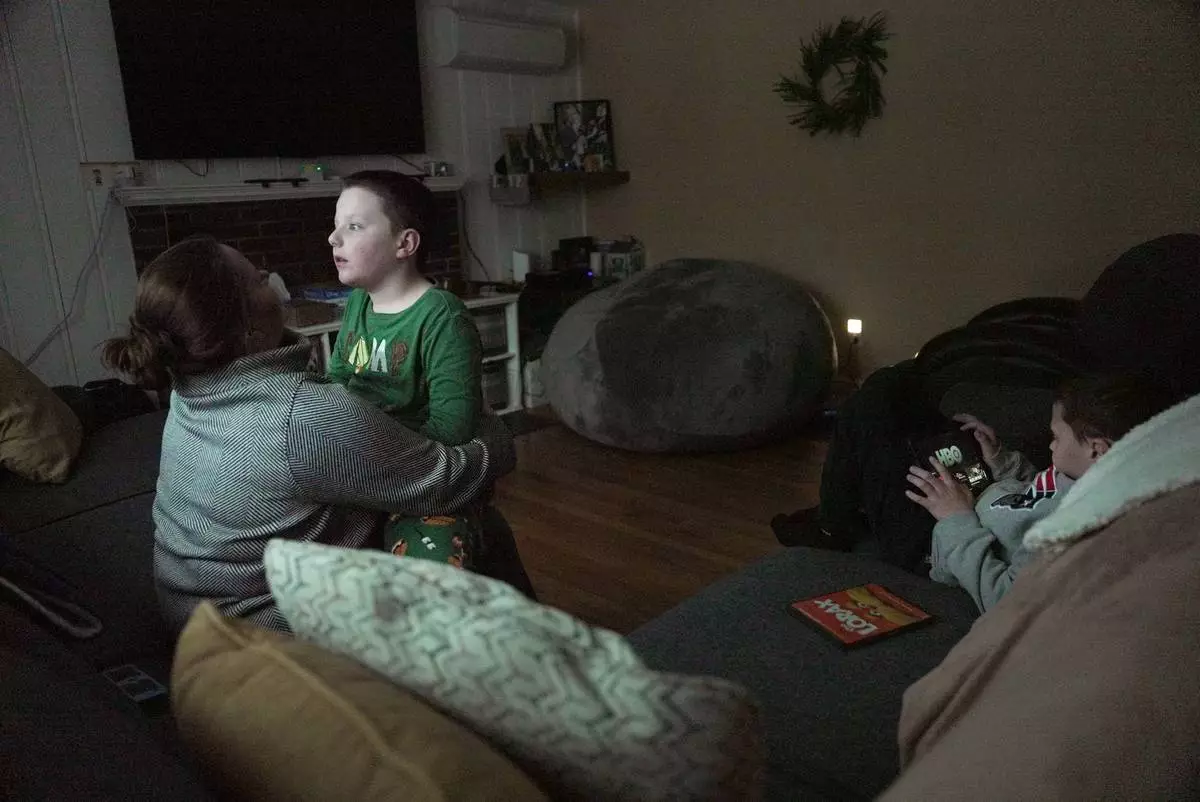
Ronan Murphy snuggles with his mom, Andrea, while looking at the snow falling outside his home while brother, Connor sits nearby in Ayer, Mass., on Saturday, Jan. 17, 2026. (AP Photo/Shelby Lum)
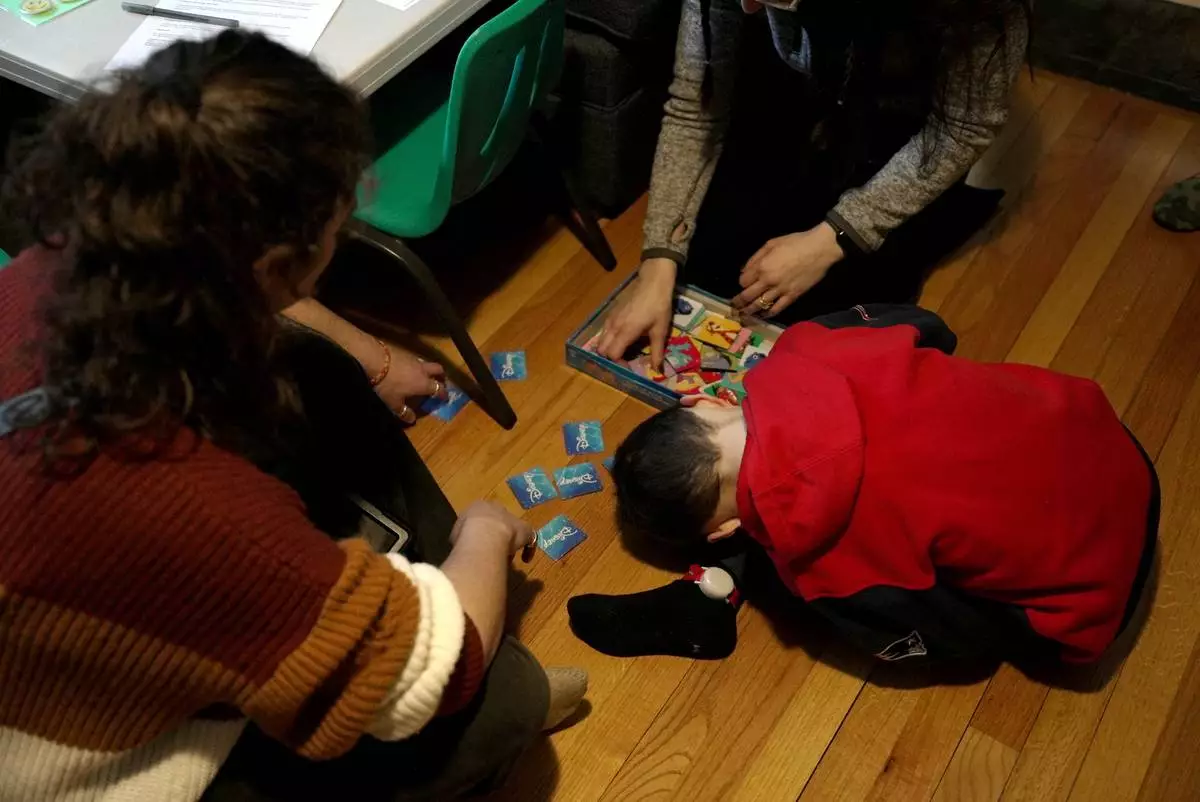
Connor Murphy takes a break from a matching problem during an applied behavior analysis after school in his home in Ayer, Mass., on Friday, Jan. 16, 2026. (AP Photo/Shelby Lum)
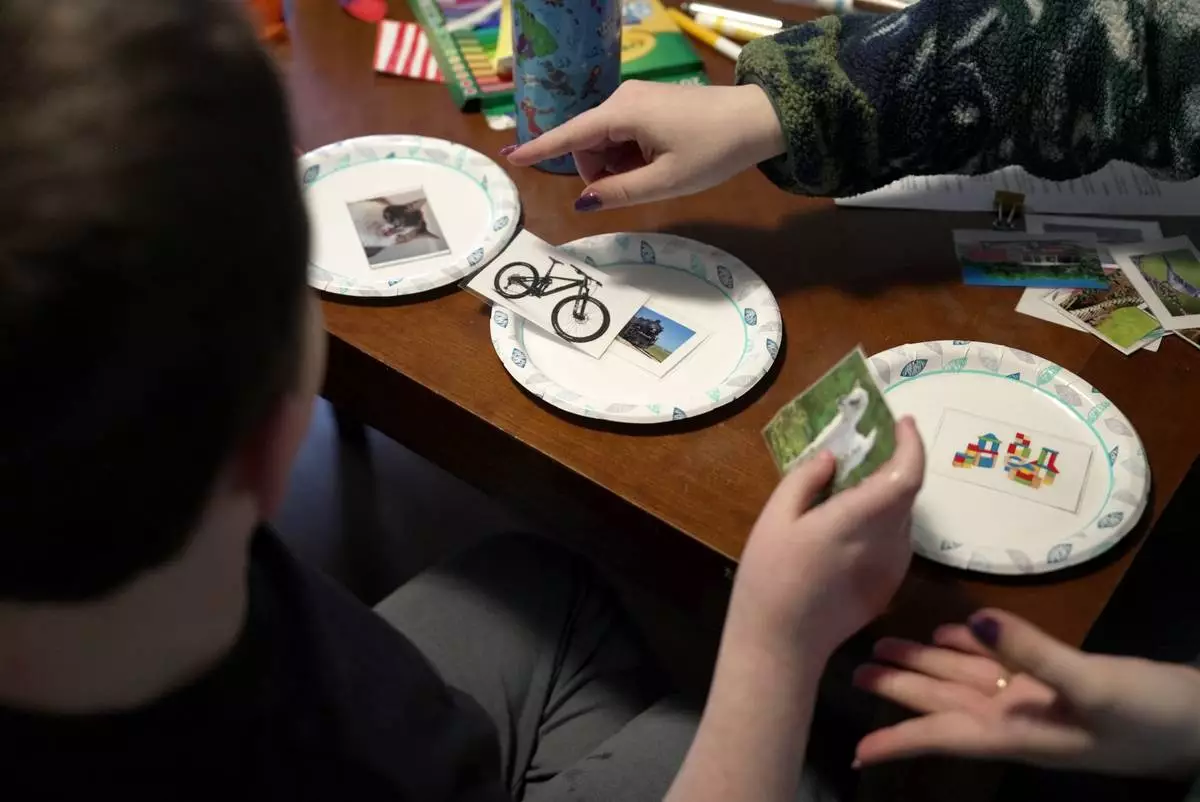
Ronan Murphy works on a sorting problem during an applied behavior analysis after school in his home in Ayer, Mass., on Friday, Jan. 16, 2026. (AP Photo/Shelby Lum)
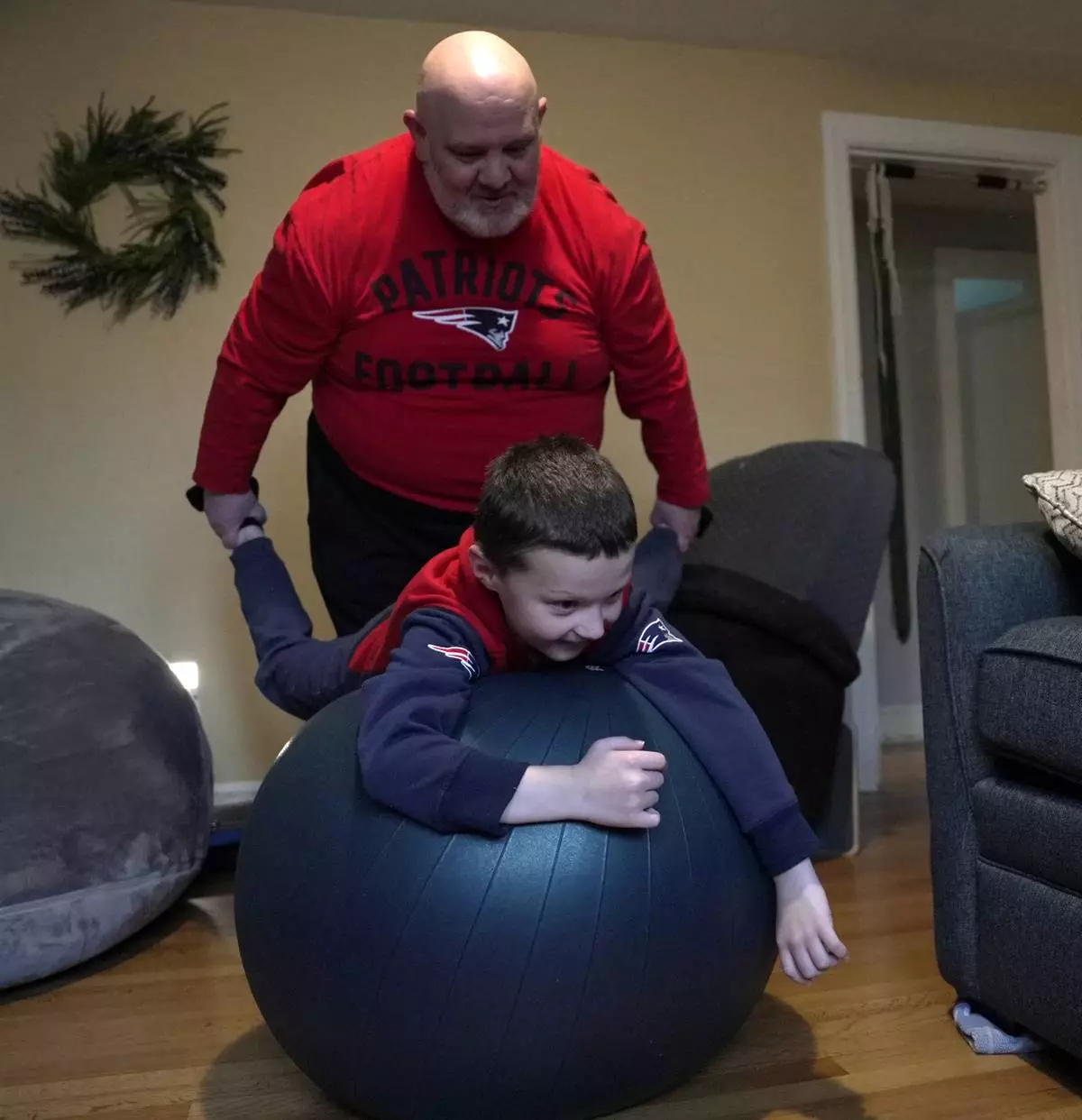
Matthew Murphy plays with his son, Connor, on a balance ball at home in Ayer, Mass., on Friday, Jan. 16, 2026. (AP Photo/Shelby Lum)
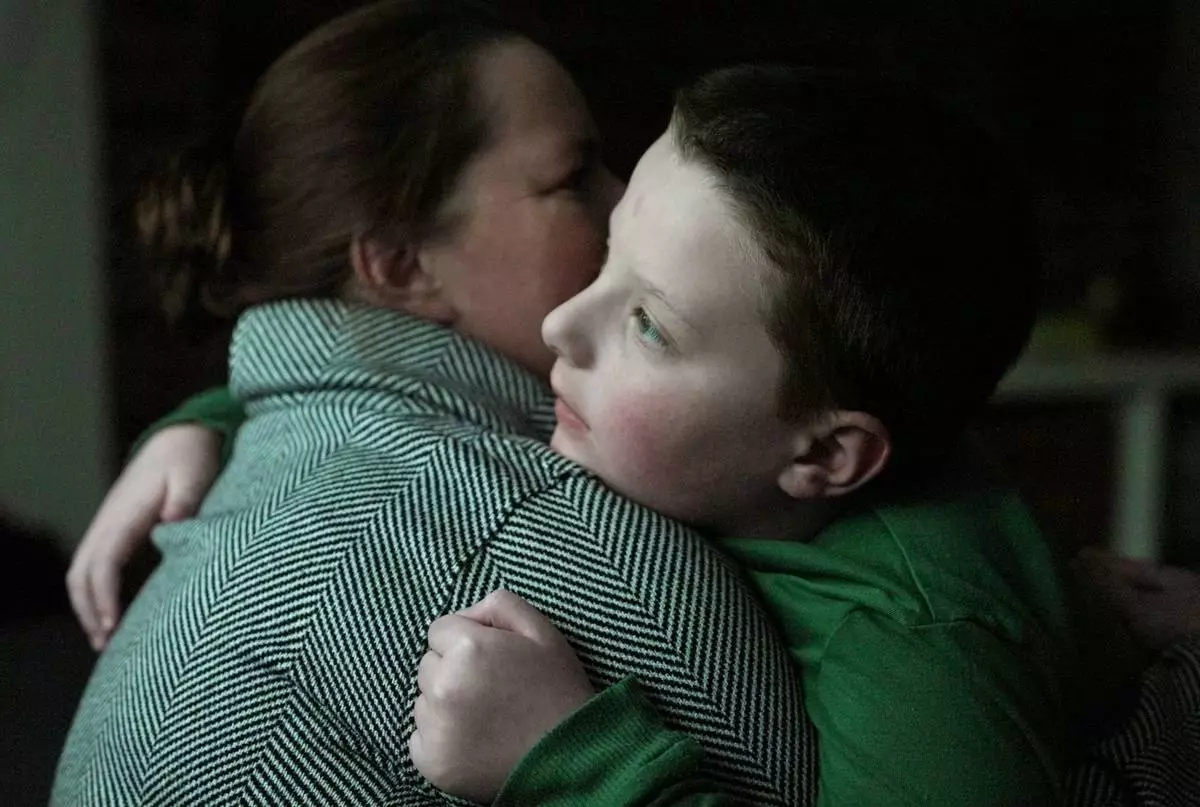
Ronan Murphy hugs his mother, Andrea, while looking at the snow falling outside their home in Ayer, Mass., on Saturday, Jan. 17, 2026. (AP Photo/Shelby Lum)