As the definition of autism has widened, there’s been a growing push to create a new diagnosis, called profound autism, for those who need constant and lifelong care.
The reason? To ensure that they get the support and services they need.
Judith Ursitti, president of the Profound Autism Alliance, said people in this category now lack appropriate treatments, support and enough providers trained to handle their level of care. And the vast majority of clinical research doesn’t include them.
“If you don’t have research, you won’t have treatments. You won’t have achievable services and supports,” said Ursitti, whose adult son has profound autism. “There are people across the spectrum who have high support needs that are intermittent. The difference with our population is they’re constant.”
Autism rates have been rising for decades, and two of the main reasons for the increase have, in a strange twist, taken some of the focus off of helping people with round-the-clock needs. The diagnosis of autism spectrum disorder is now very broad, including many people with low support needs. Also, better awareness of the condition has helped many more children get diagnosed than in the past — and most of those cases are relatively mild.
At the same time, the Trump Administration is promoting unproven and debunked claims about what causes autism, which experts say muddles efforts to understand the condition and fuels misinformation that threatens public health, even as officials funnel more money into research.
Overall in the U.S., an estimated 1 in 31 children has autism spectrum disorder.
Researchers estimate around a quarter have “profound autism,” a term introduced in 2021 by a group of experts, the Lancet Commission. It describes people who need constant care for life, have a certain level of intellectual disability and are nonverbal or minimally verbal.
In the past, these people may have been diagnosed with autistic disorder – one of five subtypes, along with Asperger’s, of a diagnosis called pervasive developmental disorders. But in 2013, the American Psychiatric Association removed that diagnosis and created autism spectrum disorder.
Some in the autism community worry that creating a separate diagnosis of profound autism would reduce attention on the broader spectrum and the individual needs of everyone on it.
Dena Gassner, an autistic senior research scientist at Drexel University and mother of an autistic adult with moderate support needs, said she struggles with the idea of assigning someone the label of profound autism. She said it could be stigmatizing.
She said there’s nothing wrong with being autistic; the problem lies in “the massive lack of supports and services” in our society. “We need to come together in a unified voice to talk about services for the entirety of the spectrum.”
Andy Shih, chief science officer for Autism Speaks, said no matter where people fall on the debate about profound autism, “there’s absolutely no doubt that we need to elevate awareness about the needs of this group.”
The Associated Press Health and Science Department receives support from the Howard Hughes Medical Institute’s Department of Science Education and the Robert Wood Johnson Foundation. The AP is solely responsible for all content.
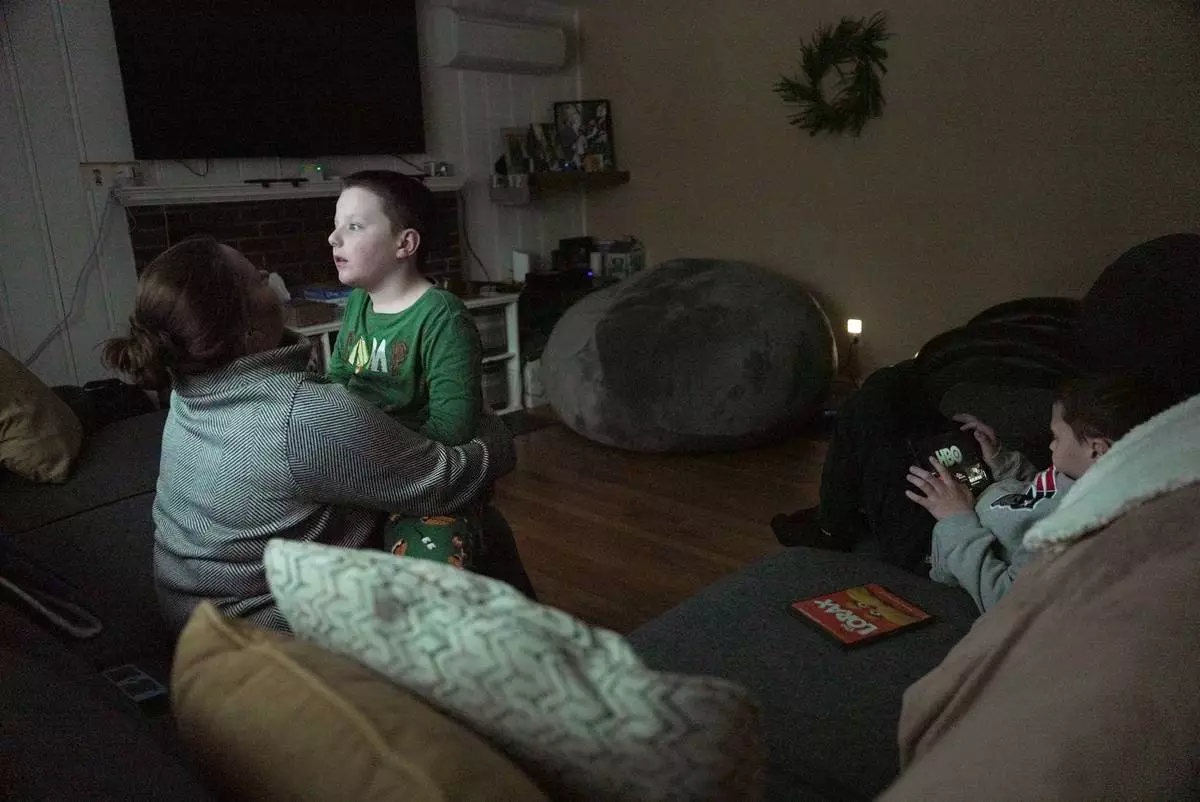
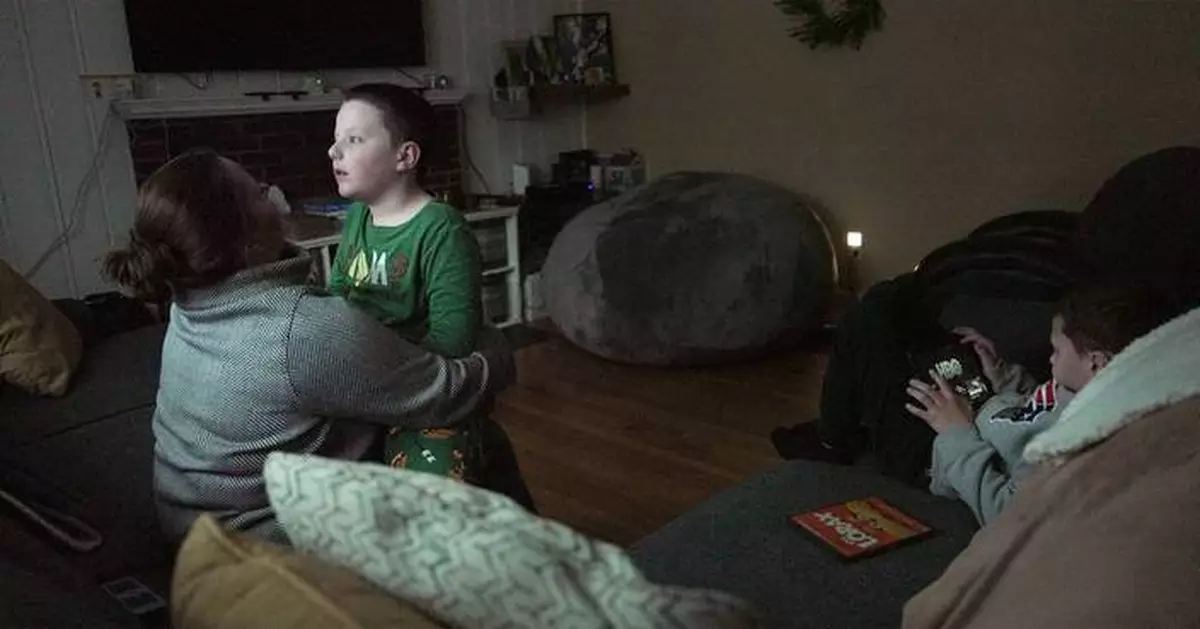
Ronan Murphy snuggles with his mom, Andrea, while looking at the snow falling outside his home while brother, Connor sits nearby in Ayer, Mass., on Saturday, Jan. 17, 2026. (AP Photo/Shelby Lum)
MILWAUKEE (AP) — Giannis Antetokounmpo says he’s healthy and wants to play even as the Milwaukee Bucks continue to say the two-time MVP is too injured to take the floor.
Antetokounmpo missed a 10th straight game on Friday night against the Boston Celtics due to what the team has described as a left knee hyperextension and bone bruise. Antetokounmpo hasn’t played since landing awkwardly during a March 15 victory over the Indiana Pacers.
“I’m healthy,” Antetokounmpo told the Milwaukee Journal Sentinel and The Athletic before Friday’s game. “I hate it when people force me to do things against my nature. I’m a player. I get paid to play.”
For the last couple of weeks, Antetokounmpo has participated in pregame warmups without showing any apparent signs of injury.
Antetokounmpo also noted that the Bucks should have known this about him since the 31-year-old has spent his entire 13-year career in Milwaukee.
Throughout that time, Antetokounmpo has had a reputation for rapid returns from injury, most notably when he hyperextended his knee during Milwaukee’s 2021 playoff run but missed two games before returning to lead the Bucks to their first title in half a century.
“You know who you’re dealing with,” Antetokounmpo told reporters. “So, for somebody to come and tell me to not play or to not compete, it’s like a slap in my face.”
The Bucks still had a remote chance of earning a 10th straight playoff berth at the time of that Indiana game, but they were officially eliminated from contention last week. There’s also the possibility of Antetokounmpo getting hurt again if he returns to action — he has missed a career-high 41 games this season and had two extended absences due to calf strains.
“I understand the circumstances — yes, we’re not going to be in the playoffs,” Antetokounmpo said. “For some people’s eyes, it’s not worth it for me to be out there. But for me, it’s something that goes against my nature.”
Antetokounmpo also wanted the opportunity to play alongside his younger brother, Alex, who made his NBA debut Sunday. There was a possibility of three Antetokounmpo brothers playing alongside each other in the same game, since Giannis’ older brother, Thanasis, also is on the Bucks.
“When my dad passed away, I pretty much raised (Alex),” Antetokounmpo said. “He’s able to be on the team and suit up and chase an opportunity to be great. You really think I don’t want to suit up and play with my brother? Anybody who thinks that is an idiot.”
Antetokounmpo’s desire to play — and the Bucks’ wishes to rest him — drew the attention of the National Basketball Players Association last month.
“The Player Participation Policy was designed by the league to hold teams accountable and ensure that when an All-Star like Giannis Antetokounmpo is healthy and ready to play, he is on the court,” the union said in a statement. “Unfortunately, anti-tanking policies are only as effective as their enforcement; fans, broadcast partners, and the integrity of the game itself will continue to suffer as long as ownership goes unchecked. We look forward to collaborating with the NBA on meaningful new proposals that will directly address and discourage tanking.”
This dispute between Antetokounmpo and the Bucks comes at a time when his future in Milwaukee is uncertain. Antetokounmpo’s name dominated league-wide discussions leading up to the trade deadline, though the Bucks ultimately kept him.
Antetokounmpo becomes eligible to sign a four-year contract extension worth up to $275 million in October. If he doesn’t sign the extension, Antetokounmpo could become a free agent after the 2026-27 season, or the Bucks could decide to trade him beforehand.
Now they find themselves at odds over how to handle the rest of this season.
“I don’t know where the relationship goes from there,” Antetokounmpo said. “We’ve got to go to couples therapy.”
AP NBA: https://apnews.com/hub/nba
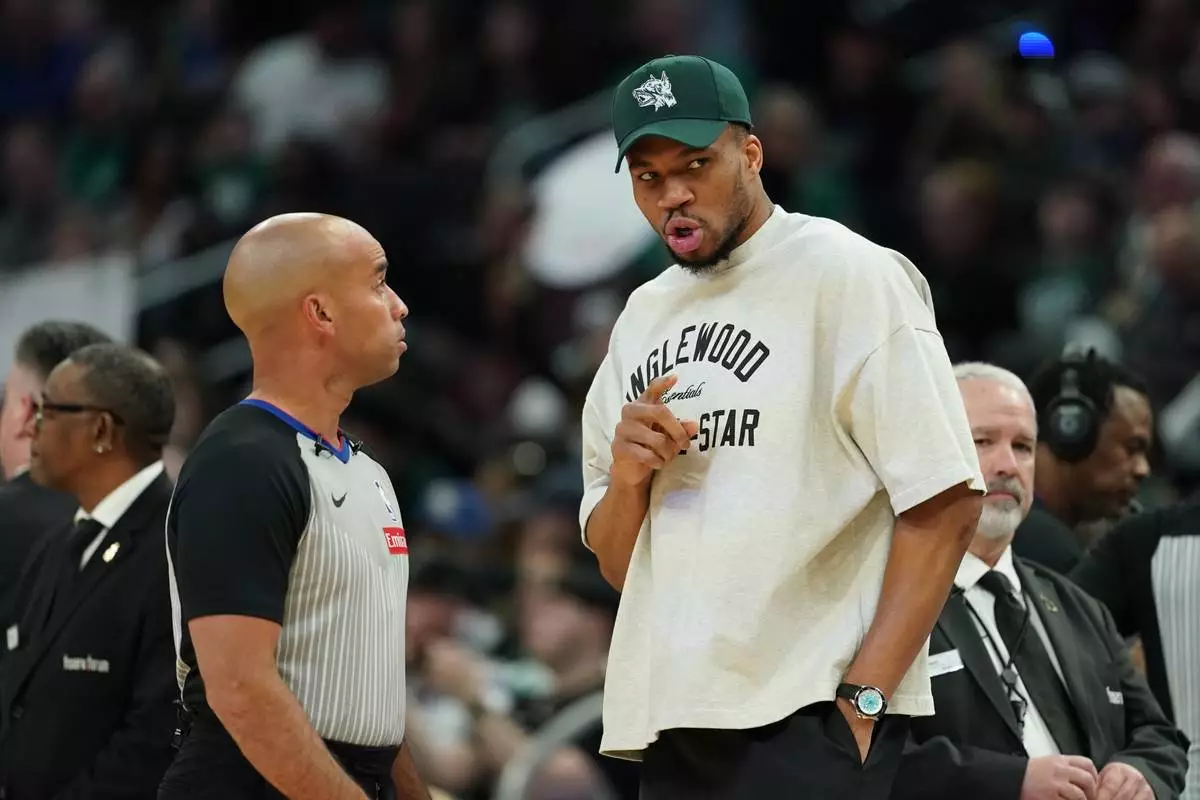
Injured Milwaukee Bucks' Giannis Antetokounmpo, center right, talks with an official, center left, during the first half of an NBA basketball game against the Boston Celtics, Friday, April 3, 2026, in Milwaukee. (AP Photo/Aaron Gash)