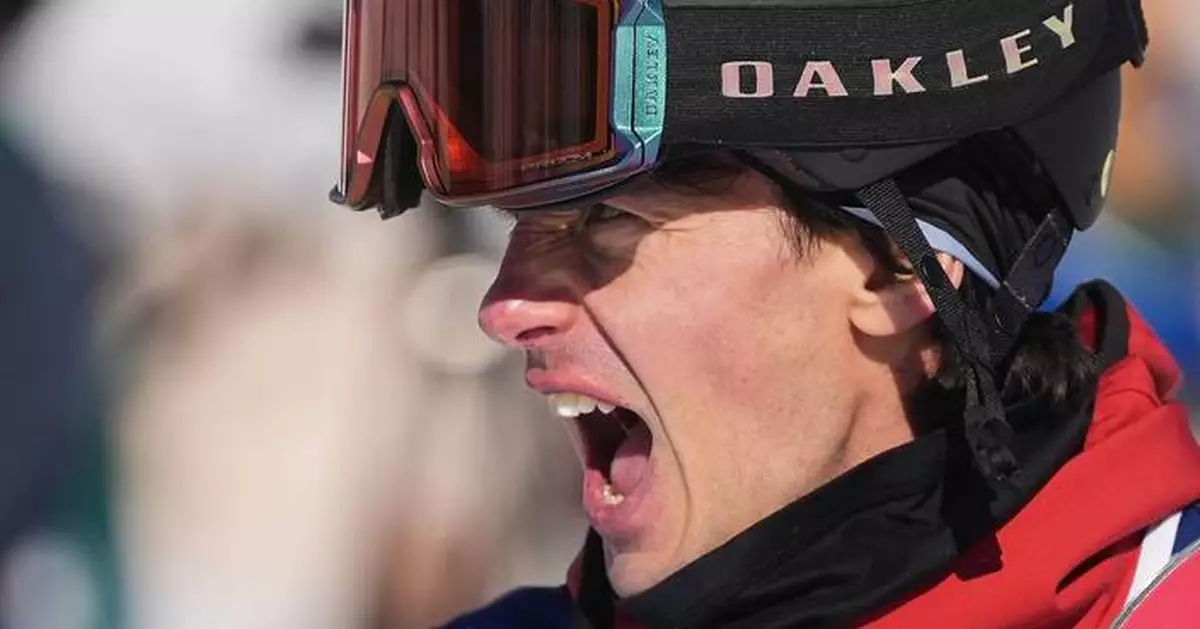
LIVIGNO, Italy (AP) — Canadian snowboarder Mark McMorris looked unfazed by the injury that opened his stay in Italy or by the late schedule change that scrambled slopestyle qualifying, finishing third among 29 riders Sunday to give himself a chance for a fourth Olympic medal.
Joining McMorris in the final, currently scheduled for Wednesday, will be 2018 champion Red Gerard and 2022 silver medalist Su Yiming.
Click to Gallery
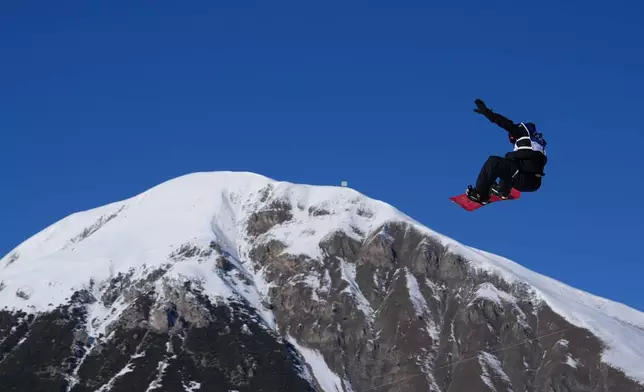
New Zealand's Zoi Sadowski-Synnott during the women's snowboarding slopestyle qualifications at the 2026 Winter Olympics, in Livigno, Italy, Sunday, Feb. 15, 2026. (AP Photo/Julia Demaree Nikhinson)
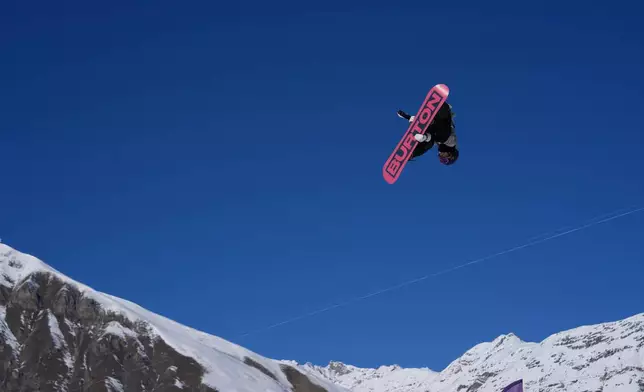
Austria's Anna Gasser competes during the women's snowboarding slopestyle qualifications at the 2026 Winter Olympics, in Livigno, Italy, Sunday, Feb. 15, 2026. (AP Photo/Julia Demaree Nikhinson)
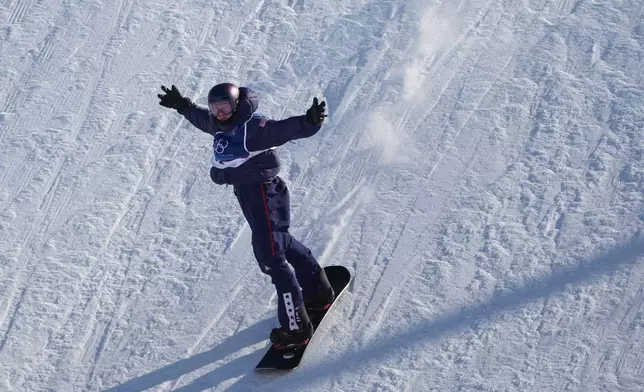
United States' Redmond Gerard reacts during the men's snowboarding slopestyle qualifications at the 2026 Winter Olympics, in Livigno, Italy, Sunday, Feb. 15, 2026. (AP Photo/Lindsey Wasson)
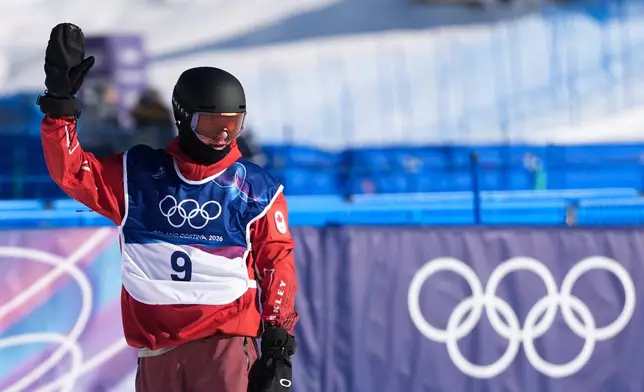
Canada's Mark McMorris reacts during the men's snowboarding slopestyle qualifications at the 2026 Winter Olympics, in Livigno, Italy, Sunday, Feb. 15, 2026. (AP Photo/Lindsey Wasson)
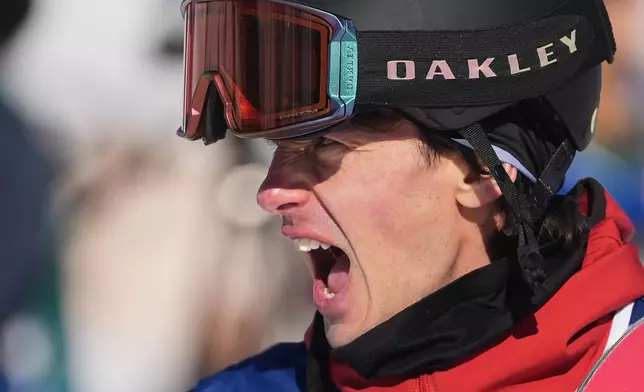
Canada's Mark McMorris reacts during the men's snowboarding slopestyle qualifications at the 2026 Winter Olympics, in Livigno, Italy, Sunday, Feb. 15, 2026. (AP Photo/Lindsey Wasson)
Also in what's looking like a stacked 12-man field are eight-time X Games champion Marcus Kleveland, 17-year-old American Ollie Martin and top qualifier Dane Menzies of the burgeoning land of action sports, New Zealand.
The women's qualifier, also bumped up by a day, featured another Kiwi, defending champion Zoi Sadowski-Synnott, finishing first, while Anna Gasser came in fifth and will have a chance to add a third Olympic medal — her first in slopestyle — in her last appearance at the Games.
Most of the news in slopestyle, however, revolved around McMorris and a schedule change.
The 32-year-old Canadian, the three-time bronze medalist in this event, got knocked out after a nasty fall in big air qualifying on Feb. 4. He was cleared to compete this week and was planning to hit the starting gate Monday. But with a big storm approaching, organizers pushed the qualifier up by a day, scrambling plans and costing everyone a day of training.
“It made for a better level of riding,” McMorris said of the ability to ski on a bluebird day in Livigno. “But I was in the mindset of where, like, as many days as I can have, the better. But I practiced hard those two days I had confidence from the team doc that I'd passed all the tests and I knew I could ride with full intensity.”
He got the drama over with early, stomping landings on a 1620-degree spin, a triple cork and another 1440-degree spin, which placed him in the top three.
For Gerard, a different story.
He came off a rail early on his first run and nearly put his hand down after landing a jump on the second. Still, both trips involved a series of difficult tricks that were otherwise clean, which left the American shaking his head when his score popped up on the second run. It was a 70 that was ultimately good for 11th and forced him to sweat out the qualifier from wire to wire.
Gerard wasn't happy with judging at the last Olympics, where the panel's failure to notice a missed grab by the eventual gold medalist, Max Parrot, kept him off the podium. He said the way runs were scored in Sunday's qualie will make him rethink his plan for the final.
“Definitely relook at probably the top section of the course, the rails,” he said. “And try to go look at other people's runs and see what they liked. Just do a little more homework maybe.”
How much time will there be for homework? Anybody's guess.
The women's final is scheduled for Tuesday and the men's is set for Wednesday, but storms are coming in. Slopestyle is the snowboarding event most susceptible to weather — it's hard to get speed or judge jumps when snow and wind are blowing — and the riders now know they might have to change plans with little notice.
“I found out in the sauna,” Menzies said of the change on the qualifier. “I was doing some stretches and I was like, ‘Oh, here we go. Guess we need to go get this done.’”
AP Winter Olympics: https://apnews.com/hub/milan-cortina-2026-winter-olympics
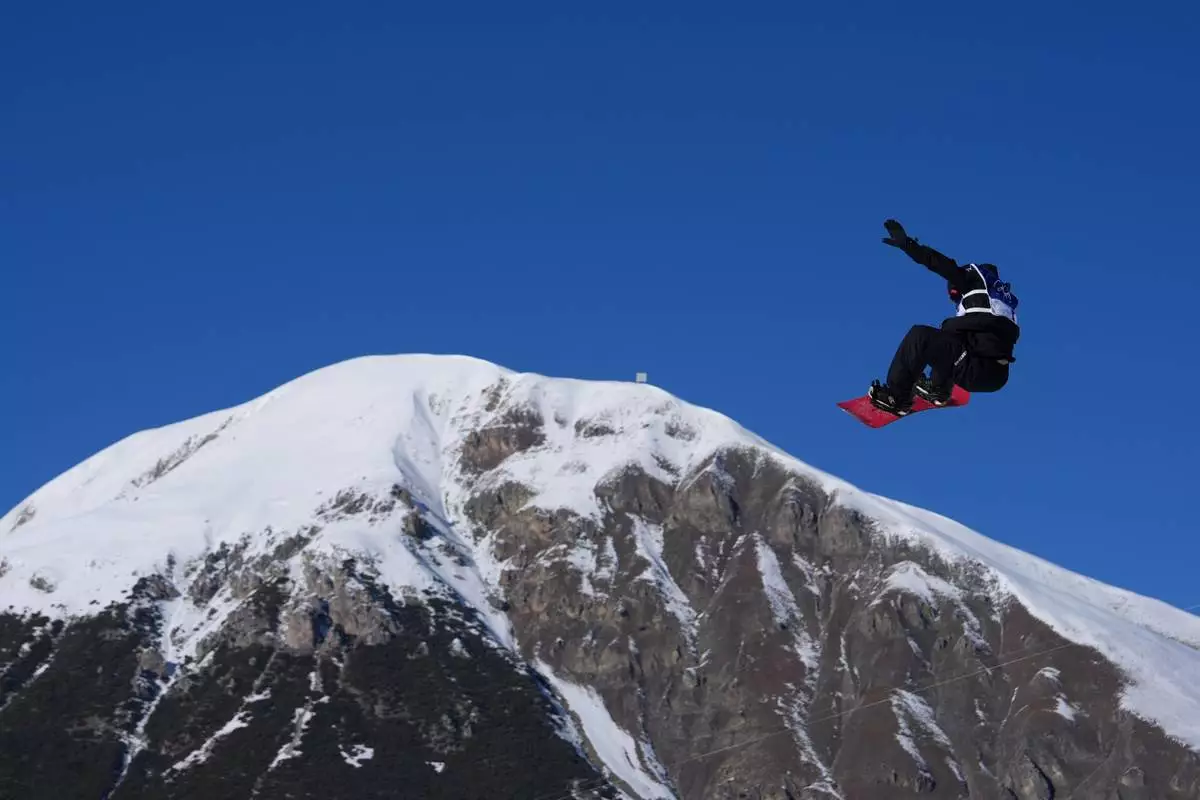
New Zealand's Zoi Sadowski-Synnott during the women's snowboarding slopestyle qualifications at the 2026 Winter Olympics, in Livigno, Italy, Sunday, Feb. 15, 2026. (AP Photo/Julia Demaree Nikhinson)
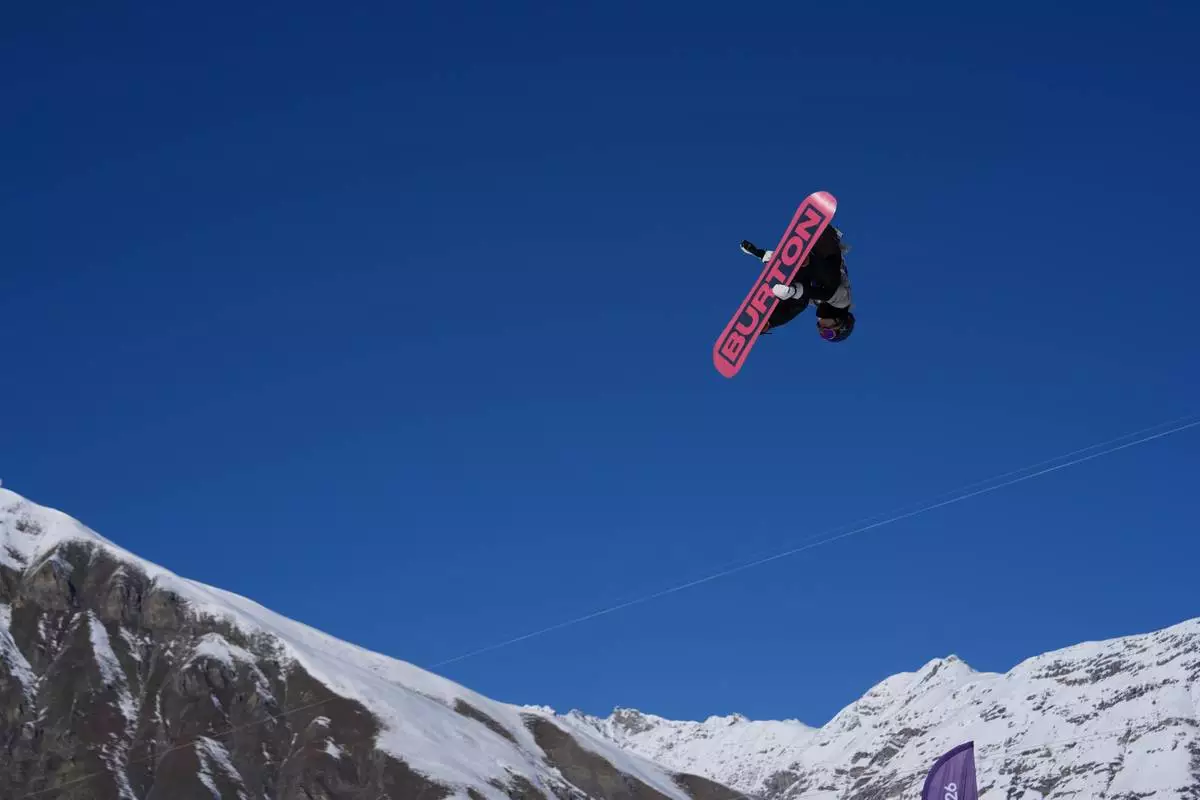
Austria's Anna Gasser competes during the women's snowboarding slopestyle qualifications at the 2026 Winter Olympics, in Livigno, Italy, Sunday, Feb. 15, 2026. (AP Photo/Julia Demaree Nikhinson)
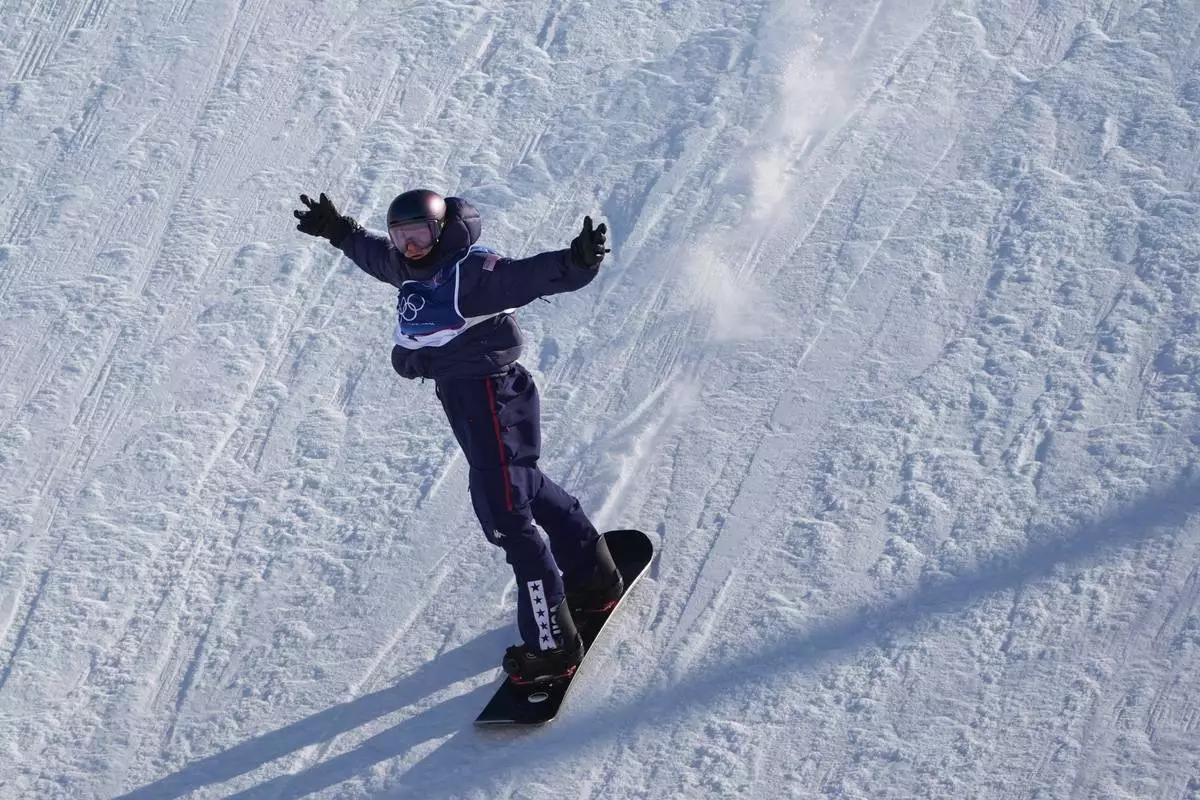
United States' Redmond Gerard reacts during the men's snowboarding slopestyle qualifications at the 2026 Winter Olympics, in Livigno, Italy, Sunday, Feb. 15, 2026. (AP Photo/Lindsey Wasson)
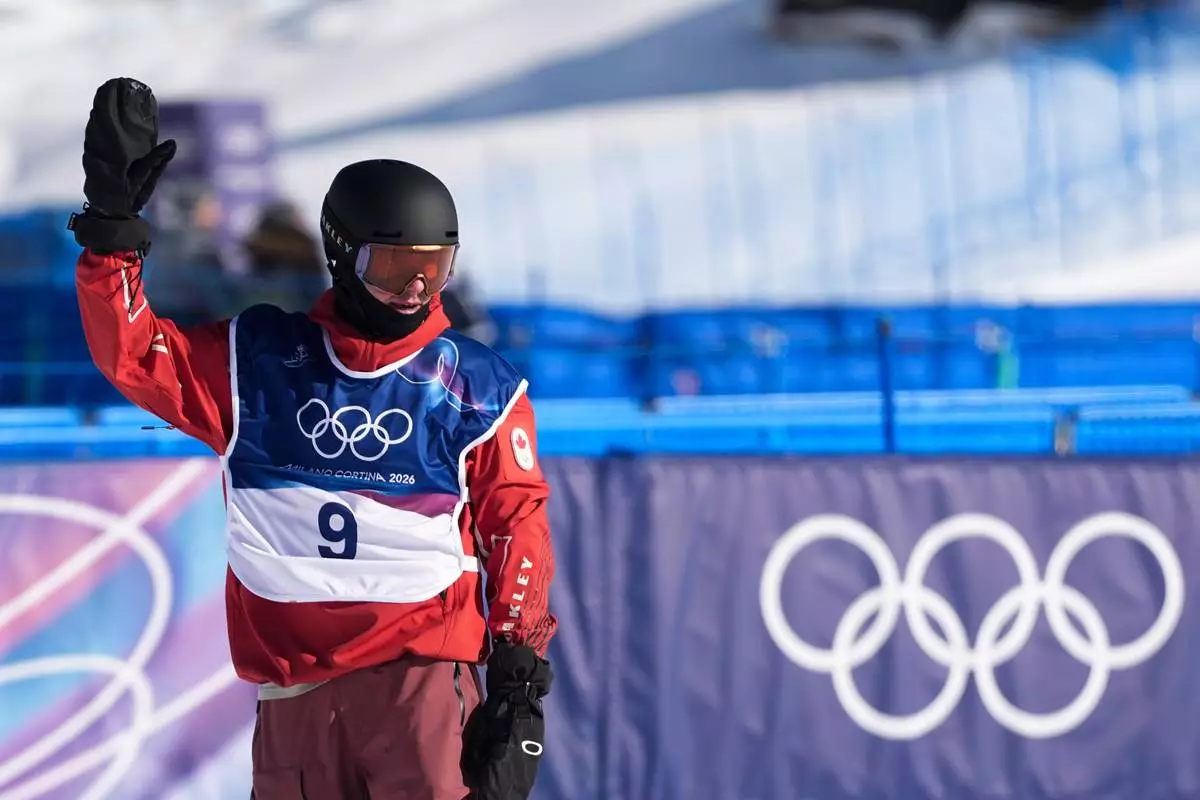
Canada's Mark McMorris reacts during the men's snowboarding slopestyle qualifications at the 2026 Winter Olympics, in Livigno, Italy, Sunday, Feb. 15, 2026. (AP Photo/Lindsey Wasson)
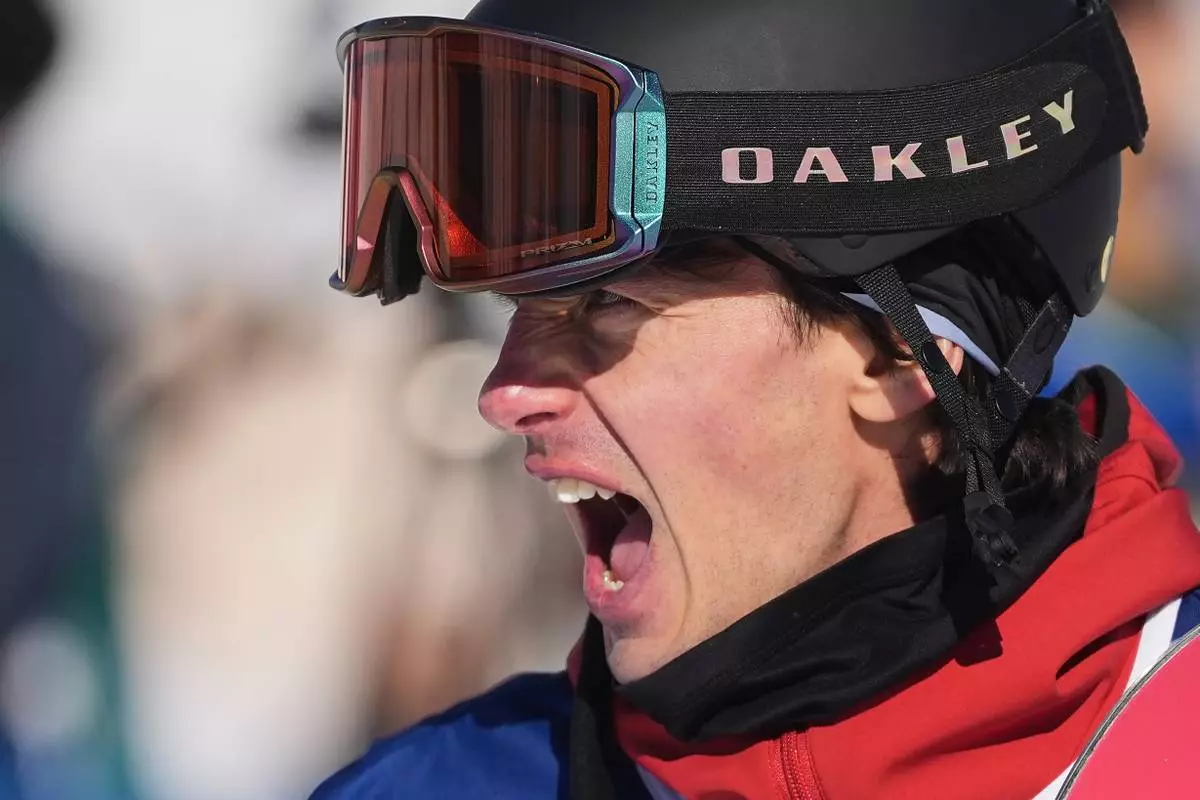
Canada's Mark McMorris reacts during the men's snowboarding slopestyle qualifications at the 2026 Winter Olympics, in Livigno, Italy, Sunday, Feb. 15, 2026. (AP Photo/Lindsey Wasson)