A new artificial intelligence video generator from Beijing-based ByteDance, the creator of TikTok, is drawing the ire of Hollywood organizations that say Seedance 2.0 “blatantly” violates copyright and uses the likeness of actors and others without permission.
Seedance 2.0, which is only available in China for now, lets users generate high-quality AI videos using simple text prompts. The tool quickly gained condemnation from the movie and TV industry.
The Motion Picture Association said Seedance 2.0 “has engaged in unauthorized use of U.S. copyrighted works on a massive scale.”
“By launching a service that operates without meaningful safeguards against infringement, ByteDance is disregarding well-established copyright law that protects the rights of creators and underpins millions of American jobs. ByteDance should immediately cease its infringing activity,” Charles Rivkin, chairman and CEO of the MPA, said in a statement Tuesday.
Screenwriter Rhett Rheese, who wrote the “Deadpool” movies, said on X last week that “I hate to say it. It’s likely over for us.” His post was in response to Irish director Ruairí Robinson's post of a Seedance 2.0 video that shows AI versions Tom Cruise and Brad Pitt fighting in a post-apocalyptic wasteland.
Actors union SAG-AFTRA said Friday it “stands with the studios in condemning the blatant infringement” enabled by Seedance 2.0.
“The infringement includes the unauthorized use of our members’ voices and likenesses. This is unacceptable and undercuts the ability of human talent to earn a livelihood,” SAG-AFTRA said in a statement. “Seedance 2.0 disregards law, ethics, industry standards and basic principles of consent. Responsible AI development demands responsibility, and that is nonexistent here."
ByteDance said in a statement Sunday that it respects intellectual property rights.
"(We) have heard the concerns regarding Seedance 2.0. We are taking steps to strengthen current safeguards as we work to prevent the unauthorized use of intellectual property and likeness by users,” the company said.

FILE - Women wearing masks to pass by the headquarters of ByteDance, owners of TikTok, in Beijing, China, Aug. 7, 2020. (AP Photo/Ng Han Guan, File)
RIVERSIDE, Calif. (AP) — Crews battled a smoky and fast-growing wildfire Friday in windy Southern California that forced some residents to evacuate and a community college to temporarily close its doors.
The Springs Fire broke out around 11 a.m. Friday and by the evening had grown to about 6.5 square miles (16.8 square kilometers). The cause of the fire east of Moreno Valley in Riverside County is under investigation. It was not immediately known how many households were under evacuation warnings or orders.
With hundreds of people battling the blaze — using helicopters, engines and water tenders — crews started to contain the blaze by Friday night.
The fire was burning in a populated — but not densely so — unincorporated part of Riverside County in a recreational area near the city of Moreno Valley, which has a population of roughly 200,000. The city is 10 miles (16 kilometers) southeast of Riverside and 64 miles (103 kilometers) east of Los Angeles.
“It’s windy out there,” said Maggie Cline De La Rosa, a public information officer for the California Department of Forestry and Fire Protection in Riverside County.
Alex Izaguirre, a spokesperson for the Cal Fire Riverside County, said the wind is “spreading the smoke,” prompting concerned calls from residents in neighboring cities who can see and smell it.
Moreno Valley College's main campus was shuttered Friday and Saturday due to the fire impacting the air quality.
“All students, faculty, and staff are being directed to leave campus immediately,” the school said in a post on Instagram.
California U.S. Rep. Raul Ruiz said in a social media post that he was closely monitoring the blaze.
“If you are under an evacuation order, please leave immediately,” he said.
The National Weather Service issued a wind advisory for San Bernardino and Riverside County valleys through Saturday afternoon, with gusts of up to 50 mph (80 kph) expected.
“Tree limbs could be blown down and a few power outages may result,” the advisory read.
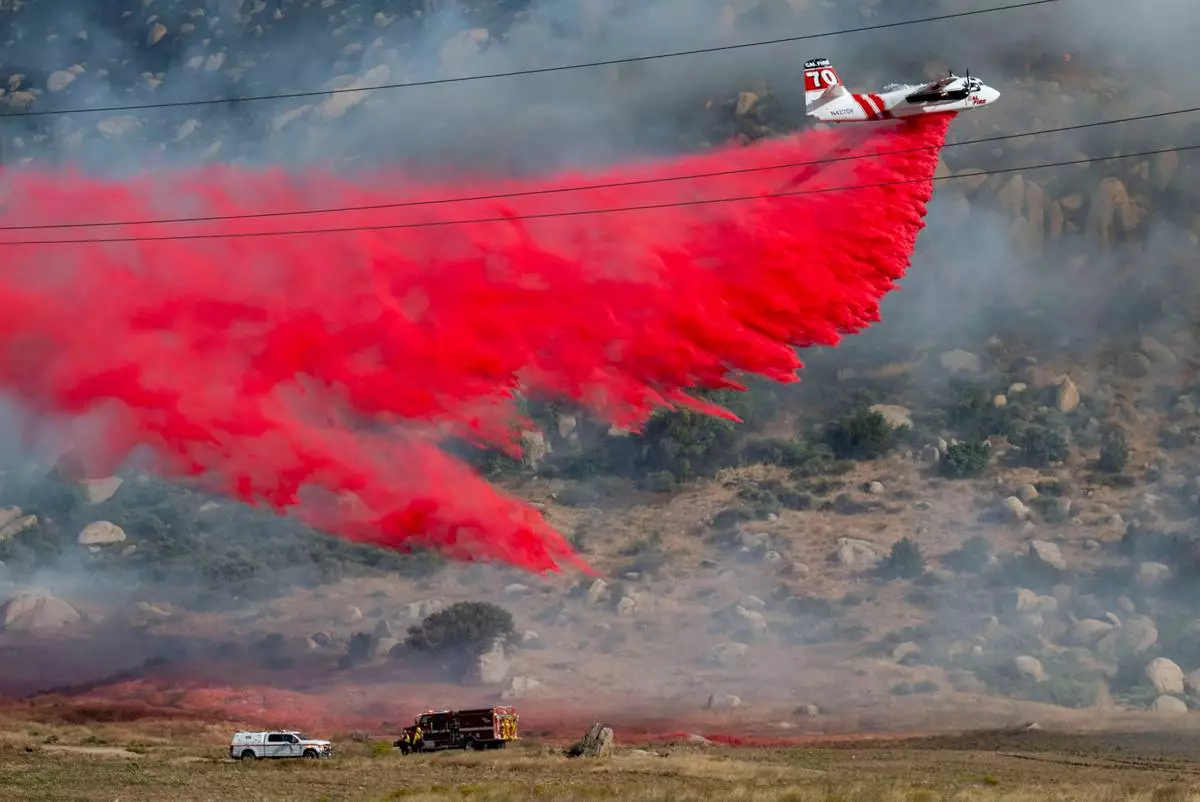
Cal Fire tanker 70 makes a fire retardant dump battling the Springs Fire in the Moreno Valley area Friday, April 3, 2026, in Riverside County, Calif. (Terry Pierson/The Orange County Register via AP)
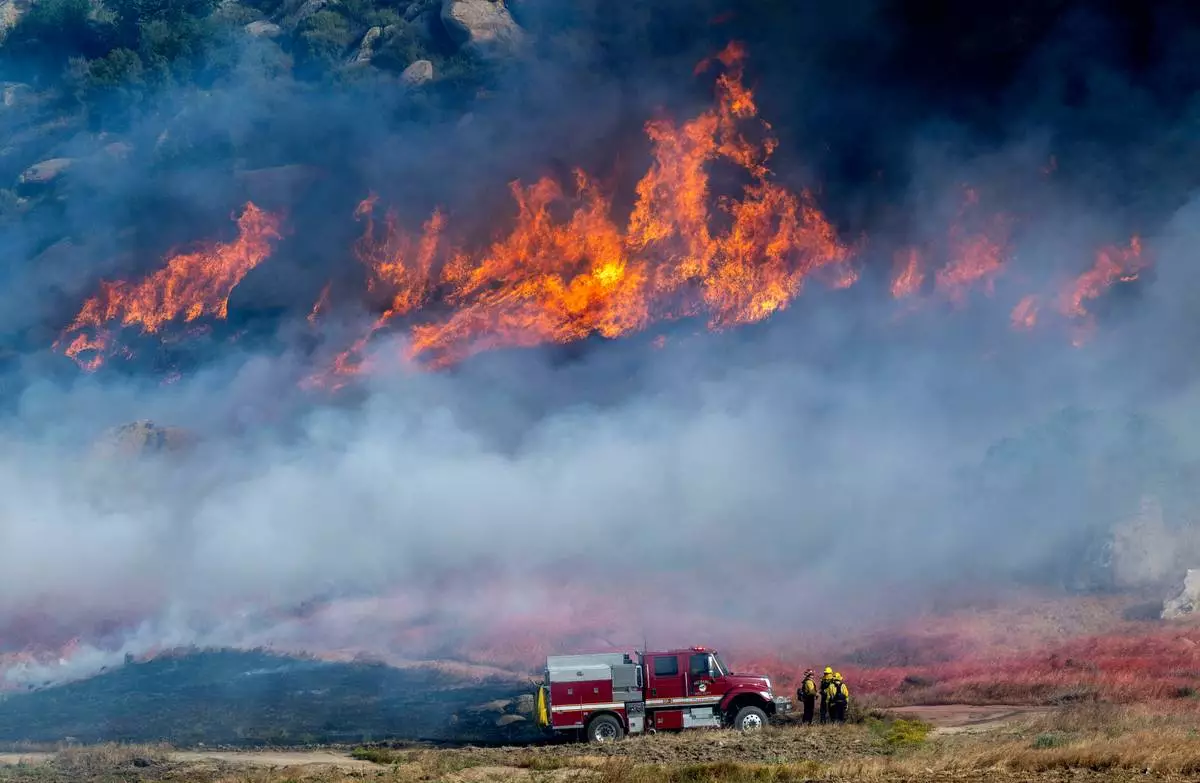
Pechanga Fire Department firefighters monitor the smoky and fast-growing wildfire Springs Fire in Moreno Valley, Calif., Friday, April 3, 2026. (Terry Pierson /The Orange County Register via AP)