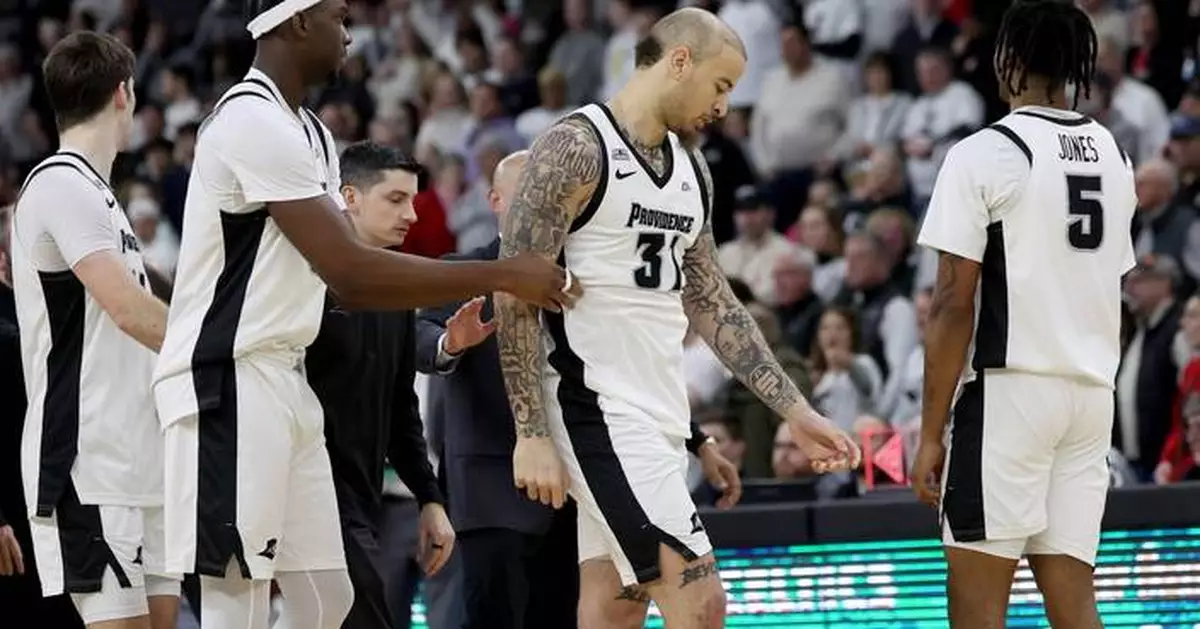
NEW YORK (AP) — Providence forward Duncan Powell was suspended two additional games by the Big East on Sunday, meaning he will miss three games for his flagrant foul that sparked a fight in a game against St. John's.
Powell already faced an automatic one-game ban for fighting by NCAA rules, but the conference tacked on an additional penalty stemming from the 17th-ranked Red Storm's 79-69 victory Saturday that featured seven ejections.
It started when Powell flagrantly fouled Bryce Hopkins — who played three seasons in Providence — from behind as he went up for a fast-break layup. Powell was automatically ejected for the flagrant 2 foul.
“Providence College holds its student-athletes and coaches to the highest standards,” athletic director Steve Napolillo said. “We fully support the suspension that the Big East has issued to Duncan Powell. His actions were unacceptable and do not reflect the values, discipline, or sportsmanship expected of anyone representing Providence College.”
The Big East said in its ruling that officials determined that Powell “engaged in additional combative actions that constituted a fighting act subsequent to the flagrant foul.”
He will sit out next Saturday at DePaul, followed by a Feb. 24 home game against Xavier and a game at Creighton on Feb. 28.
Get poll alerts and updates on the AP Top 25 throughout the season. Sign up here and here (AP mobile app). AP college basketball: https://apnews.com/hub/ap-top-25-college-basketball-poll and https://apnews.com/hub/college-basketball
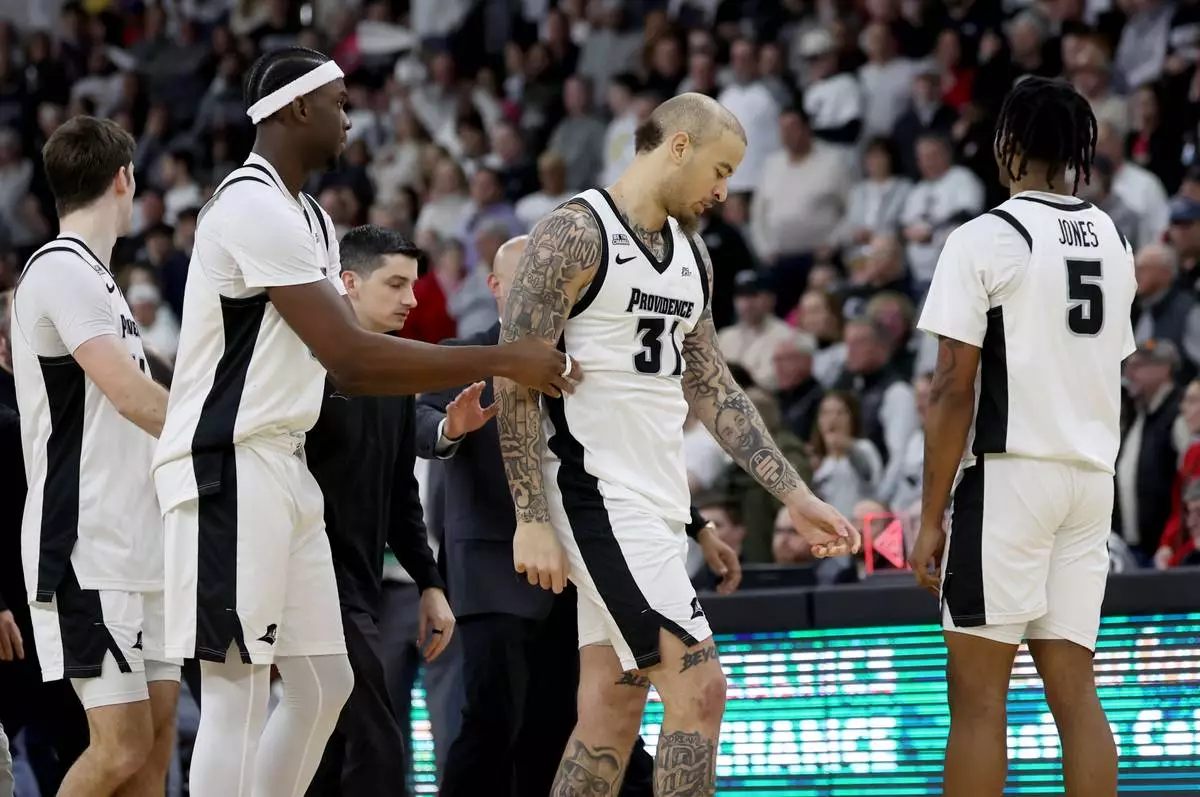
Providence forward Duncan Powell (31) is escorted off the court after getting ejected following a fight during the second half of an NCAA college basketball game against St. John's, Saturday, Feb. 14, 2026, in Providence, R.I. (AP Photo/Mark Stockwell)
KYIV, Ukraine (AP) — Russia hammered civilian areas across Ukraine with drones and missiles Thursday, killing at least 16 people and wounding more than 100 others in the worst aerial attack in weeks, Ukrainian authorities said.
Nearly 700 drones and dozens of ballistic and cruise missiles were used, as Ukrainian officials acknowledged that vital stocks of advanced interceptors are running low.
Tetiana Sokol, a 54-year-old Kyiv resident, said two missiles hit near her home and she took cover with her dog in the hallway as flashes lit up the night and windows shattered from the blast wave.
“On the third attack everything broke, everything flew, we were shocked, we didn’t know where to run. I grabbed whatever came to hand and ran away with the dog,” she told The Associated Press.
Moscow's forces have hit civilian areas almost daily since its all-out invasion of its neighbor more than four years ago, with the regular assaults occasionally punctuated by massive attacks. More than 15,000 Ukrainian civilians have died in the strikes, the United Nations says.
Russia's Defense Ministry maintained the operation was launched against military-related targets “in retaliation” for Ukrainian strikes deep inside Russia against oil refineries and weapons plants.
European Council President António Costa described Thursday's strikes in Ukraine as “yet another horrendous attack” while people slept in their homes.
The attacks came in the wake of Ukrainian President Volodymyr Zelenskyy's 48-hour trip this week to Germany, Norway and Italy in an urgent search for more air defense systems that can stop Russian missiles.
Ukraine has developed a significant domestic arms industry, especially in the production of drones and missiles, but cannot yet match the sophistication of U.S. Patriot air defense systems.
Yuriy Ihnat, head of communications for the Ukrainian air force, said the Russian attack made extensive use of ballistic missiles, which only Patriot systems can reliably shoot down.
“We desperately need more missiles for the Patriot systems," Ihnat told Ukraine’s private TV channel 1+1.
Ukraine fears the Iran war is depleting stockpiles of the advanced American-made air defense systems it needs, and strongly opposes a U.S. pause on Russian oil sanctions.
“Another night has proven that Russia does not deserve any easing of global policy or lifting of sanctions,” Zelenskyy said on X.
Thursday's strikes killed four people in Kyiv, including a 12-year-old, with more than 50 others injured, authorities said. Attacks killed nine people in the southern port city of Odesa and four in the central Dnipro region.
The central city of Cherkasy declared a day of mourning Thursday for the funeral of eight-year-old Bohdan Serhiiev, killed in a Russian drone strike earlier this week.
Mourners left flowers and stuffed toys next to the open casket before the burial, while friends and classmates held white balloons and a sign reading “Eternal Memory.”
“He was such a happy kid. He was always running around and he loved me so much,” Bohdan’s 15-year-old brother Denys Zhuk, told the AP. "We played together, went to soccer l together. I love my younger brother so much. I just wish he was here with me.”
Hanna Arhirova and Derek Gatopoulos in Kyiv contributed.
Follow AP’s coverage of the war in Ukraine at https://apnews.com/hub/russia-ukraine
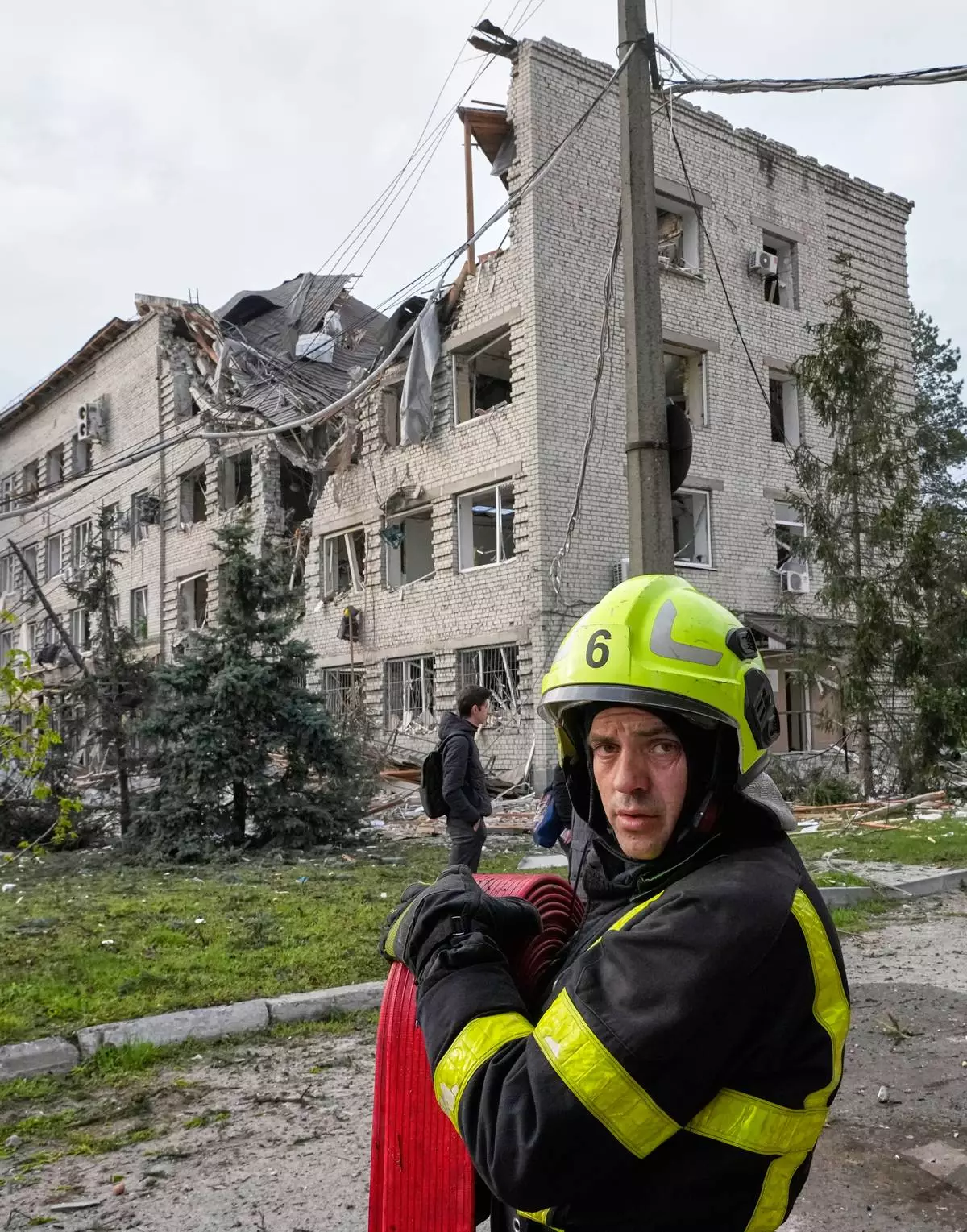
A firefighter works at a damaged building following Russia's missile attack in Kyiv, Ukraine, Thursday, April 16, 2026. (AP Photo/Efrem Lukatsky)
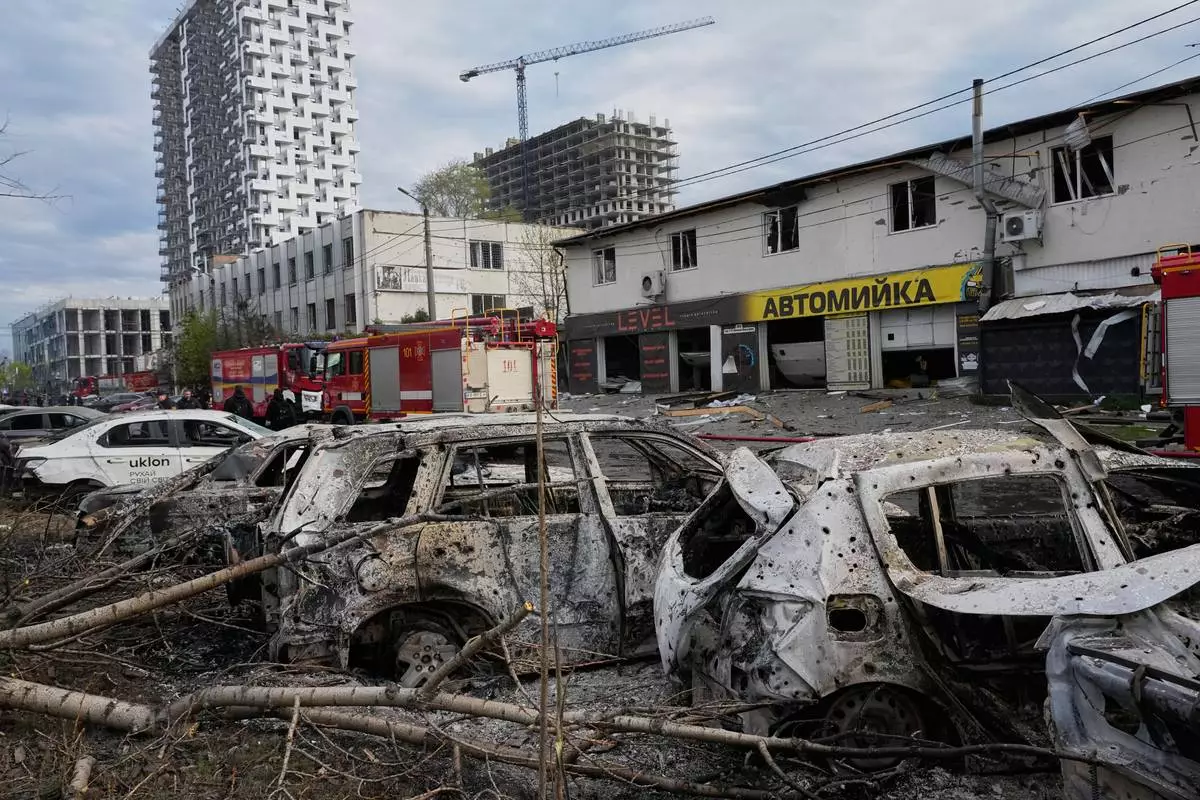
Burnt private cars on a damaged parking site following Russia's missile attack in Kyiv, Ukraine, Thursday, April 16, 2026. (AP Photo/Efrem Lukatsky)
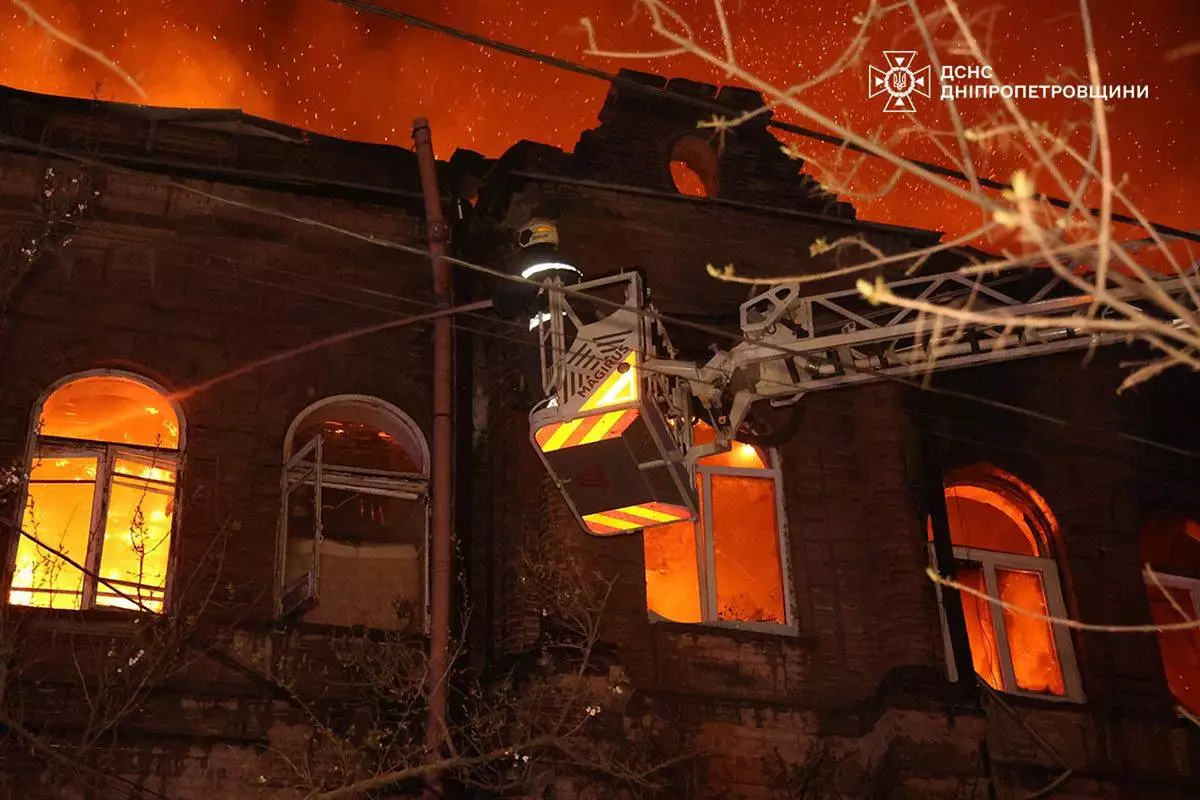
In this photo provided by the Ukrainian Emergency Service, firefighters put out a fire following a Russian attack in Dnipro, Ukraine, Thursday, April 16, 2026. (Ukrainian Emergency Service via AP)
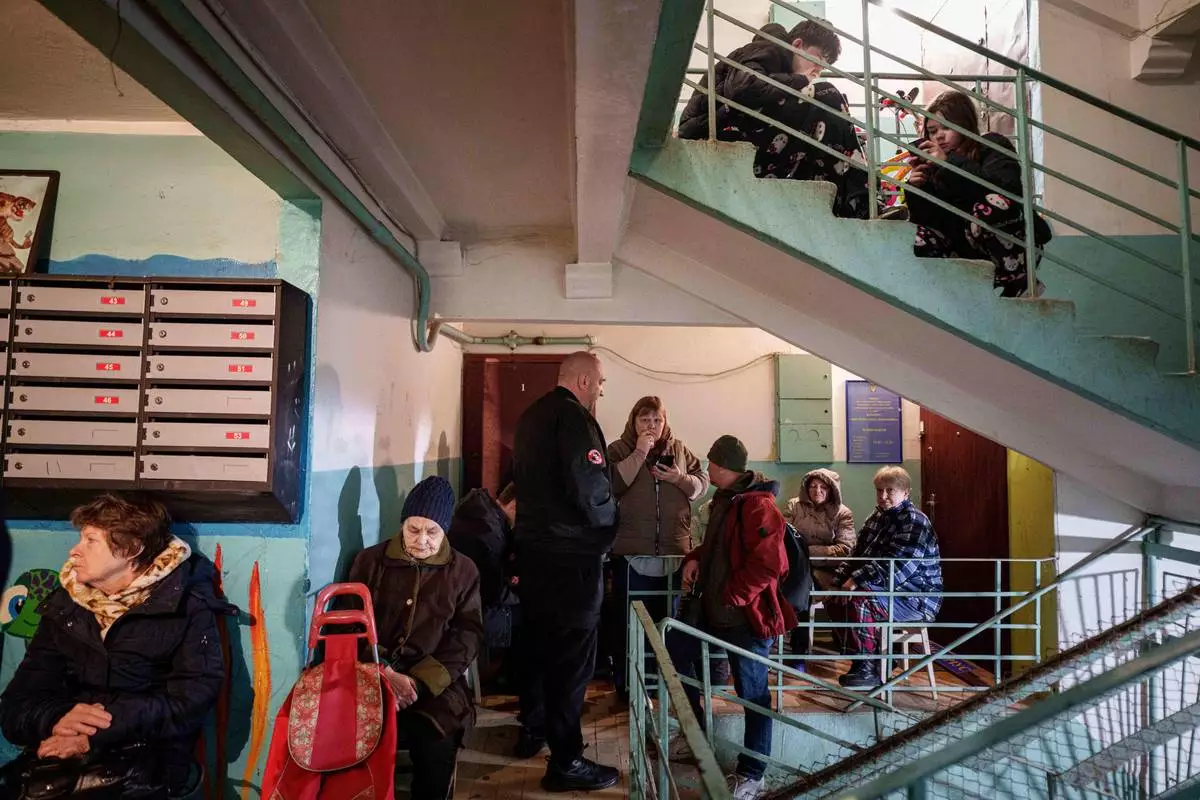
People take shelter inside a house damaged after a Russian strike on residential area in Kyiv, Ukraine, on Thursday, April 16, 2026. (AP Photo/Evgeniy Maloletka)
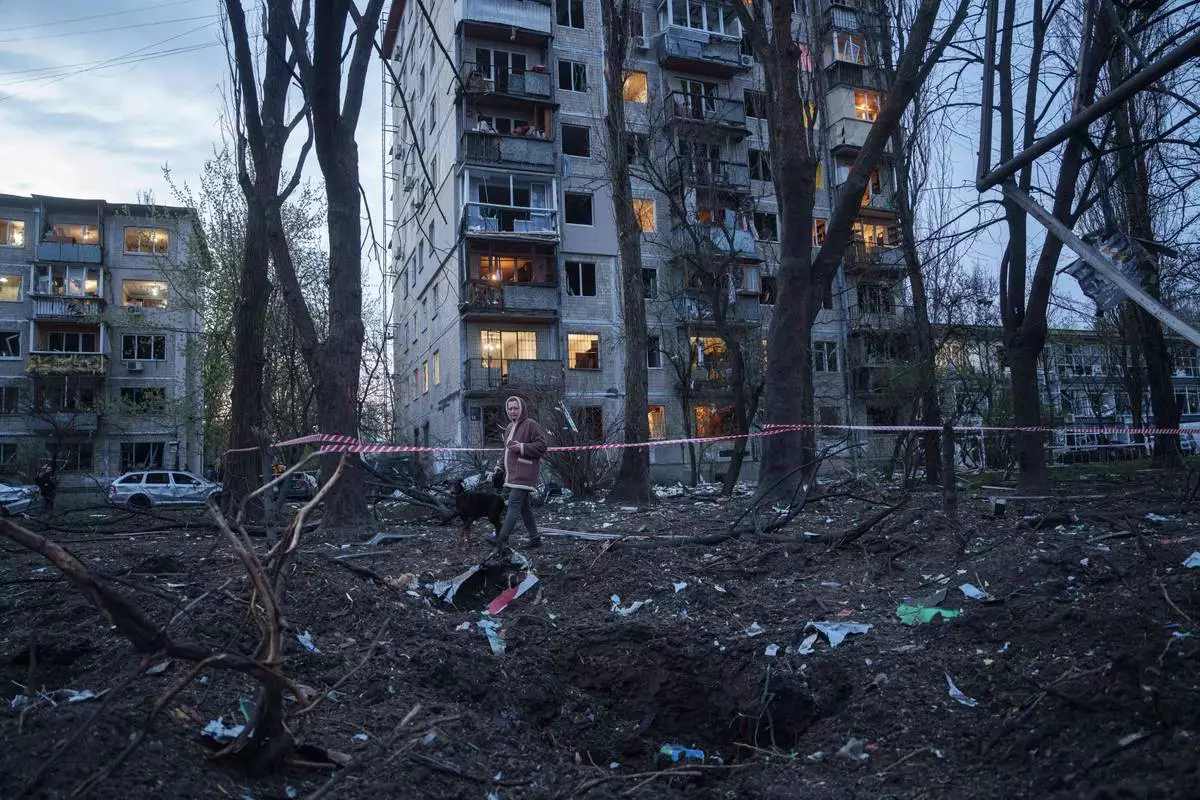
A woman with a dog walks among the rubble of a house damaged after a Russian strike on residential area in Kyiv, Ukraine, on Thursday, April 16, 2026. (AP Photo/Evgeniy Maloletka)