BOSTON (AP) — More than a decade before he became the country's first president, George Washington was leading a critical campaign in the early days of the American Revolution. The Siege of Boston was his first campaign as commander-in-chief of the Continental Army and, in many ways, set the stage for his military and political successes — celebrated on Presidents Day.
Following the Battles of Lexington and Concord, militias had pinned down the British in Boston in April 1775. The Continental Congress, recognizing the need for a more organized military effort, selected Washington to lead the newly formed army.
Click to Gallery
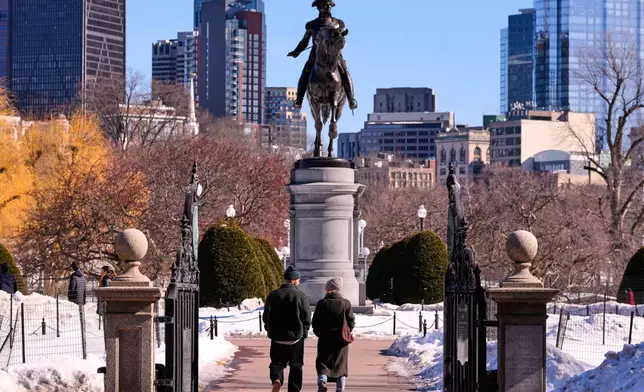
A couple walks toward a statue of George Washington on horseback at the Public Garden, Friday, Feb. 13, 2026, in Boston. (AP Photo/Charles Krupa)
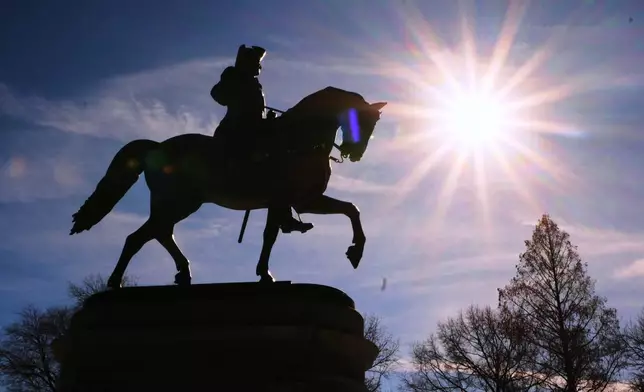
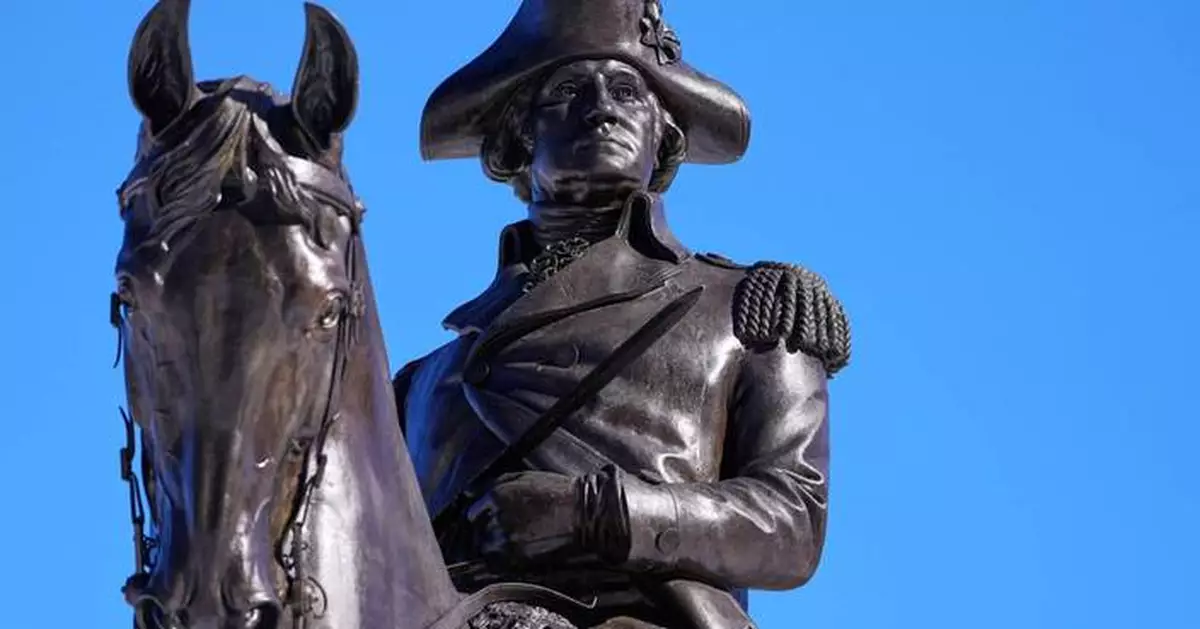
The sun shines over a statue of George Washington on horseback at the Public Garden, Friday, Feb. 13, 2026, in Boston. (AP Photo/Charles Krupa)
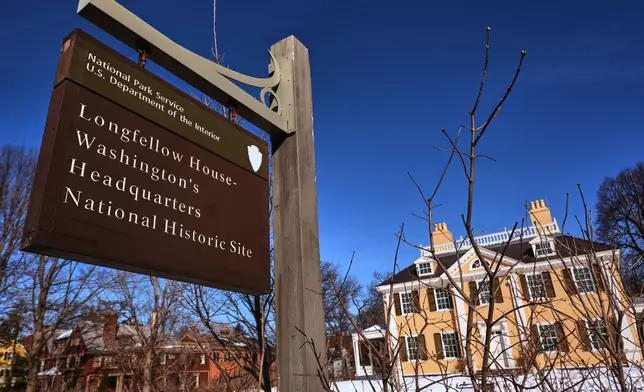
A sign hangs outside the Longfellow House, which was George Washington's headquarters during the Siege of Boston in the mid-1770's, Friday, Feb. 13, 2026, in Cambridge, Mass. (AP Photo/Charles Krupa)
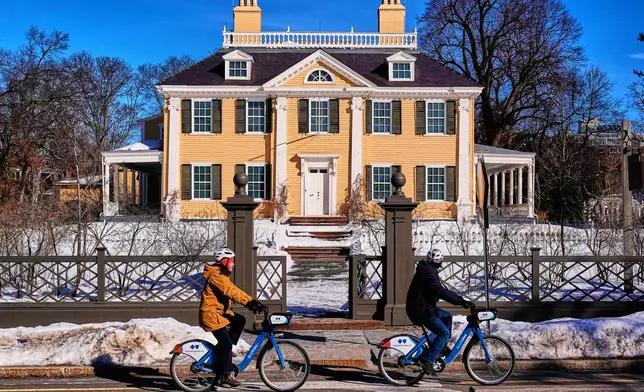
Cyclists pass the Longfellow House, which was George Washington's headquarters during the Siege of Boston in the mid-1770's, Friday, Feb. 13, 2026, in Cambridge, Mass. (AP Photo/Charles Krupa)
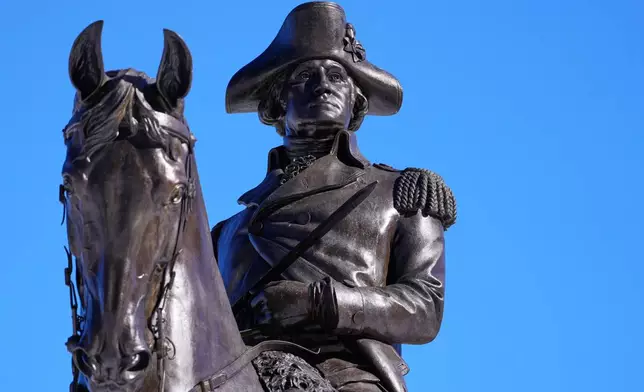
A statue of George Washington on horseback is displayed at the Public Garden, Friday, Feb. 13, 2026, in Boston. (AP Photo/Charles Krupa)
On this day 250 years ago, Washington would have been nearing the end of an almost yearlong siege that bottled up as many as 11,000 British troops and hundreds more loyalists. The British were occupying Boston at the time, and the goal of the siege was to force them out.
A critical decision made by Washington was sending Henry Knox, a young bookseller, to Fort Ticonderoga in New York to retrieve dozens of cannons. The cannons, transported hundreds of miles in the dead of winter, were eventually used to fire on British positions. That contributed to the decision by the British, facing dwindling supplies, to abandon the city by boat on March 17, 1776.
Historians argue that the British abandoning their positions, celebrated in Boston as Evacuation Day, rid the city of loyalists at a critical time, denied the British access to an important port and gave patriots a huge morale boost.
“The success of the Siege of Boston gave new life and momentum to the Revolution,” Chris Beagan, the site manager at Longfellow House in Cambridge, a National Historic Site that served as Washington's headquarters during the American Revolution. “Had it failed, royal control of New England would have continued, and the Continental Army likely would have dissolved."
The siege was also a critical test for Washington. A surveyor and farmer, Washington had been out of the military for nearly 20 years after commanding troops for the British during the French and Indian War. His successful campaign ensured Washington remained the commander-in-chief for the remainder of the revolution.
Doug Bradburn, president of George Washington’s Mount Vernon, said Washington took the first steps to creating a geographically diverse army that included militiamen from Massachusetts to Virginia and, by the end of the war, a fighting force with significant Black and Native American representation. It was the most integrated military until President Harry S. Truman’s desegregated the armed forces in 1948, he said.
Washington, a slave owner who depended on hundreds of slaves on his Mount Vernon estate, was initially opposed to admitting formerly enslaved and free Black soldiers into the army. But short of men, Washington came to realize “there are free Blacks who want to enlist and he needs them to keep the British from breaking out” during the siege, Bradburn said.
Ridding Boston of the British also turned Washington into one of the country's most popular political figures.
“He comes to embody the cause in a time before you have a nation, before you have a Declaration of Independence, before you’re really sure what is the goal of this struggle,” Bradburn said. “He becomes the face of the revolutionary movement.”
Commanding the military for more than eight years also prepared Washington for the presidency, Pulitzer Prize-winning military historian Rick Atkinson said. “Perhaps most important, it gave him a sense that Americans could and should be a single people, rather than denizens of thirteen different entities.”
His rise to prominence also led to plenty of myths about Washington, many which persist to this day.
One of the most popular is the cherry tree myth. It was invented by one of Washington's first biographers, according to George Washington’s Mount Vernon, who created the story after his death. Supposedly, a 6-year-old Washington took an ax to a cherry tree and admitted as much when caught by his father, famously saying “I cannot tell a lie … I did cut it with my hatchet."
The second one is the wooden teeth myth. It was rumored that Washington had wooden dentures and scholars, well into the 20th century, were quoted as saying his false teeth were made from wood. Not true. He never wore wooden dentures, instead using those with ivory, gold and even human teeth.
During his lifetime, Washington had myriad pursuits. He was known as an innovative farmer, according to the George Washington’s Mount Vernon, and an advocate for Western expansion, buying up to 50,000 acres of land in several Mid-Atlantic states. After returning to Mount Vernon, he built a whiskey distillery that became one of the largest in the country.
His connection to slavery was complicated. He advocated for ending slavery, and his will called for freeing all the slaves he owned after the death of his wife, Martha Washington. But he didn't own all the slaves at Mount Vernon so he couldn't legally free all of them.
For fans of George Washington, Presidents Day is their Super Bowl. Originated to celebrate Washington's birthday, which falls on Feb. 22, the holiday has become associated with good deals at the mall. Still, there are plenty of places celebrating all things Washington on this day.
There will be a wreath-laying ceremony at Washington's tomb at Mount Vernon, and there will be a Continental Army encampment. There will be a parade honoring Washington in Alexandria, Virginia, and, in Laredo, Texas, a monthlong celebration features a carnival, pageants, an air show and jalapeno festival.
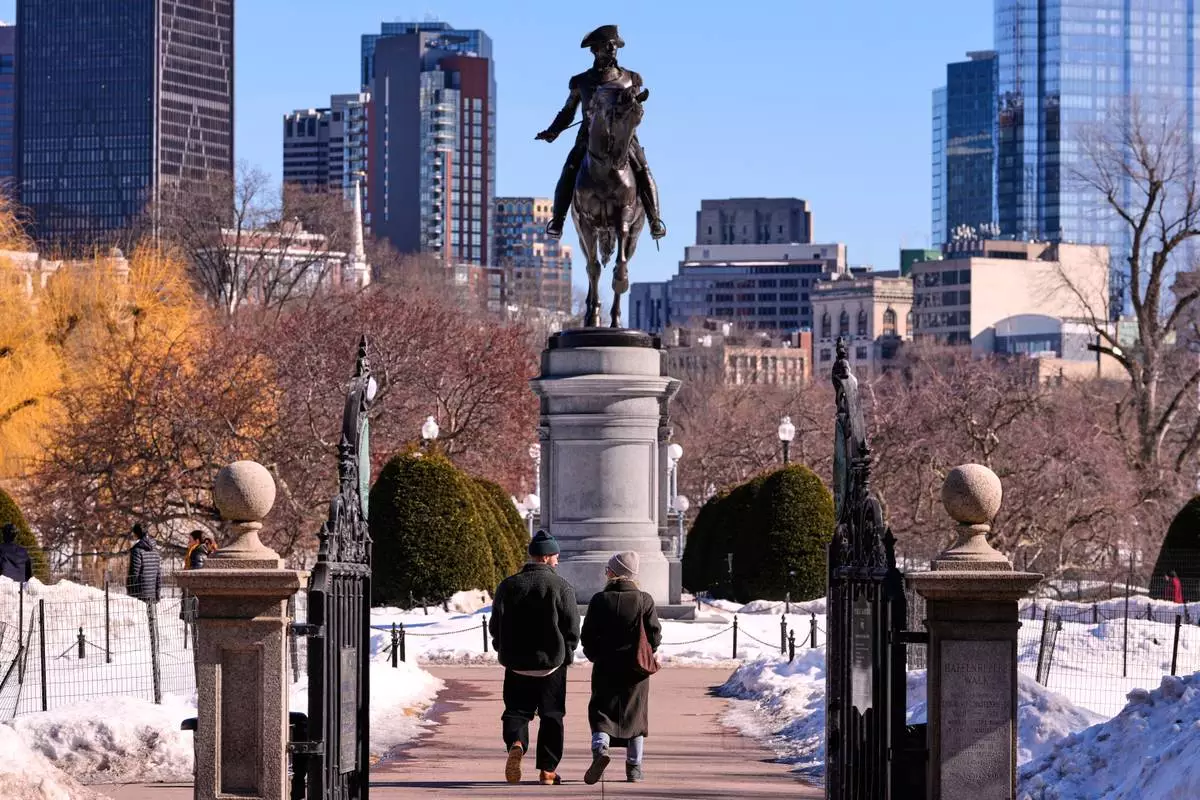
A couple walks toward a statue of George Washington on horseback at the Public Garden, Friday, Feb. 13, 2026, in Boston. (AP Photo/Charles Krupa)
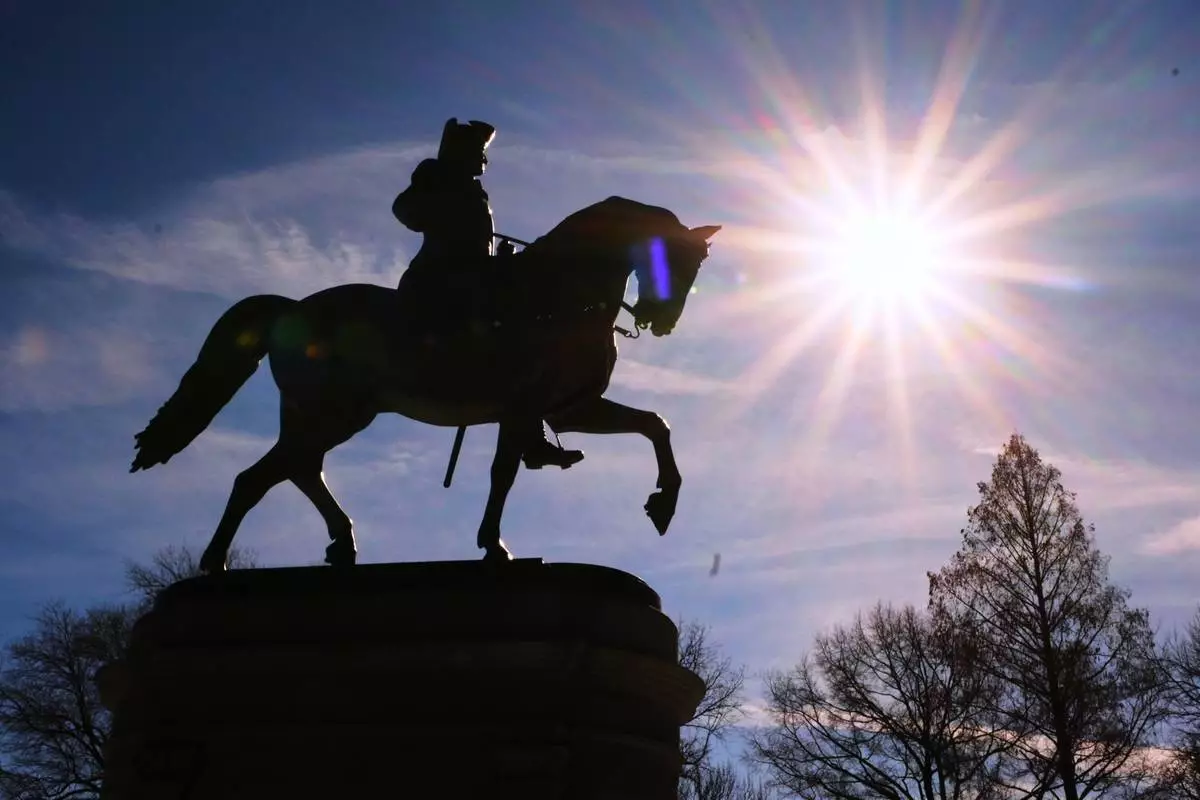
The sun shines over a statue of George Washington on horseback at the Public Garden, Friday, Feb. 13, 2026, in Boston. (AP Photo/Charles Krupa)
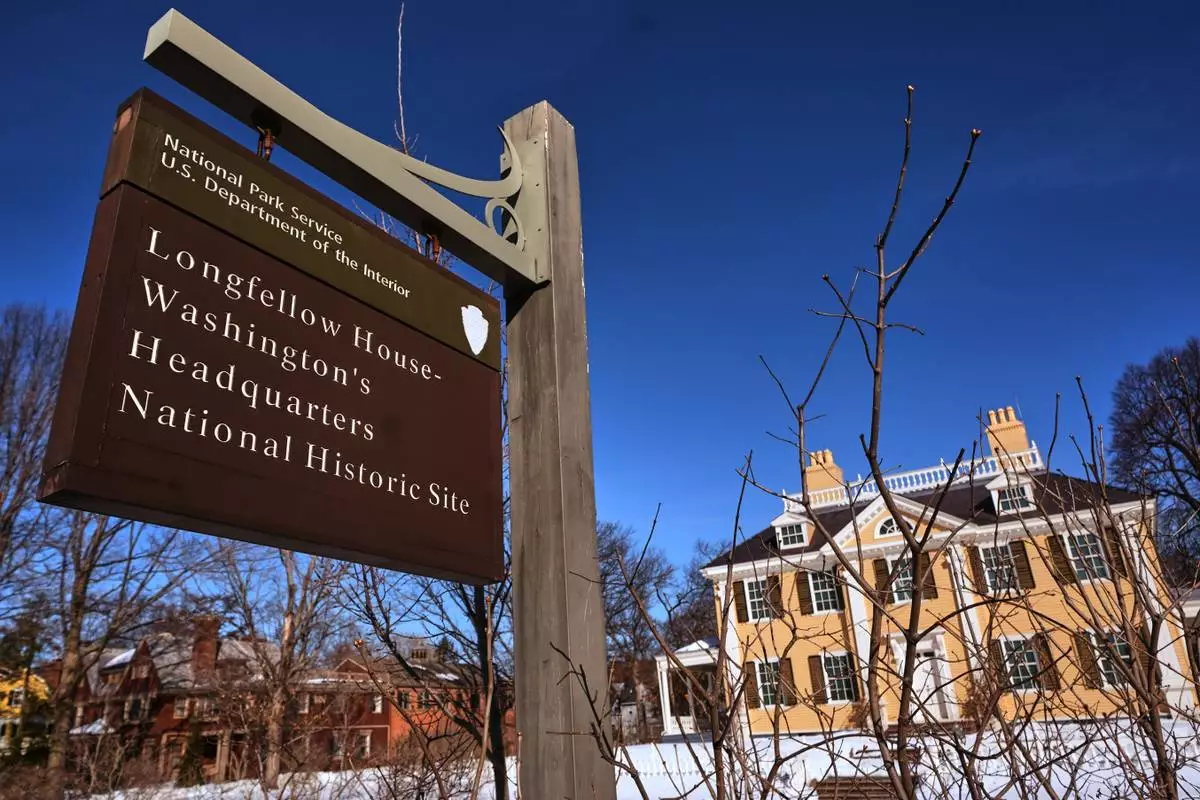
A sign hangs outside the Longfellow House, which was George Washington's headquarters during the Siege of Boston in the mid-1770's, Friday, Feb. 13, 2026, in Cambridge, Mass. (AP Photo/Charles Krupa)
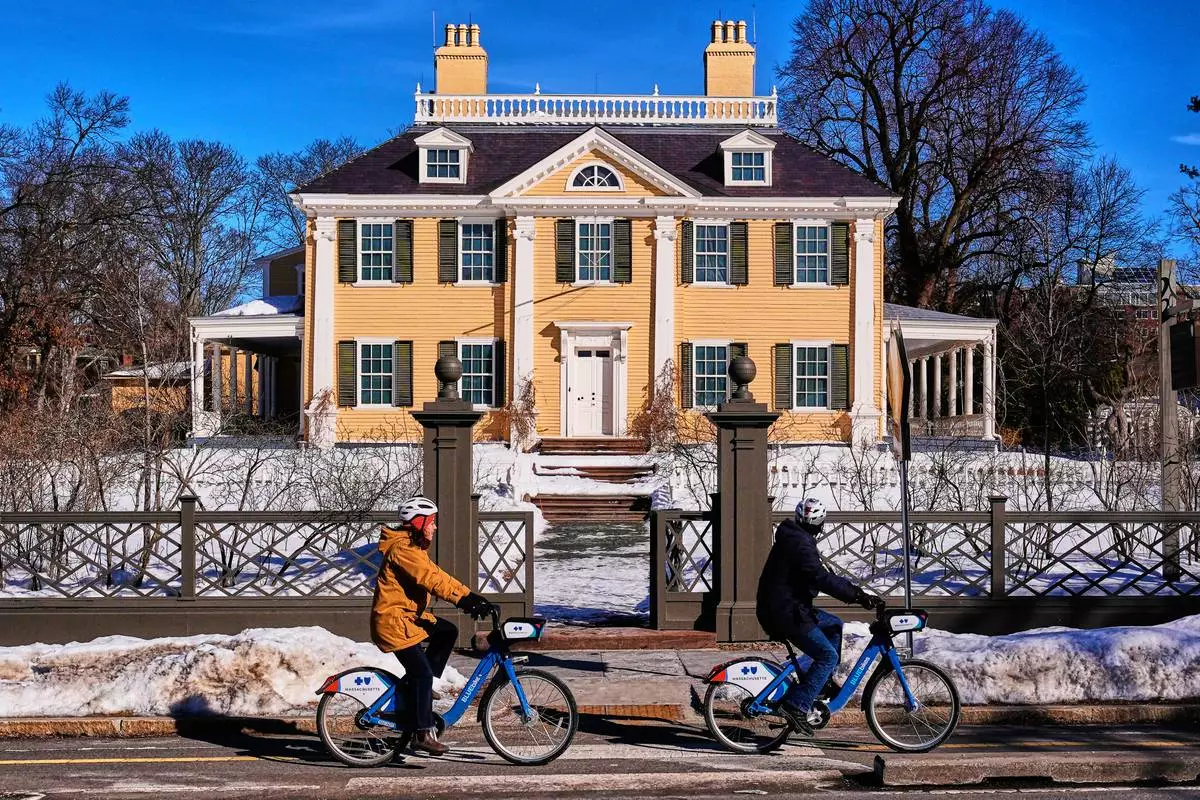
Cyclists pass the Longfellow House, which was George Washington's headquarters during the Siege of Boston in the mid-1770's, Friday, Feb. 13, 2026, in Cambridge, Mass. (AP Photo/Charles Krupa)
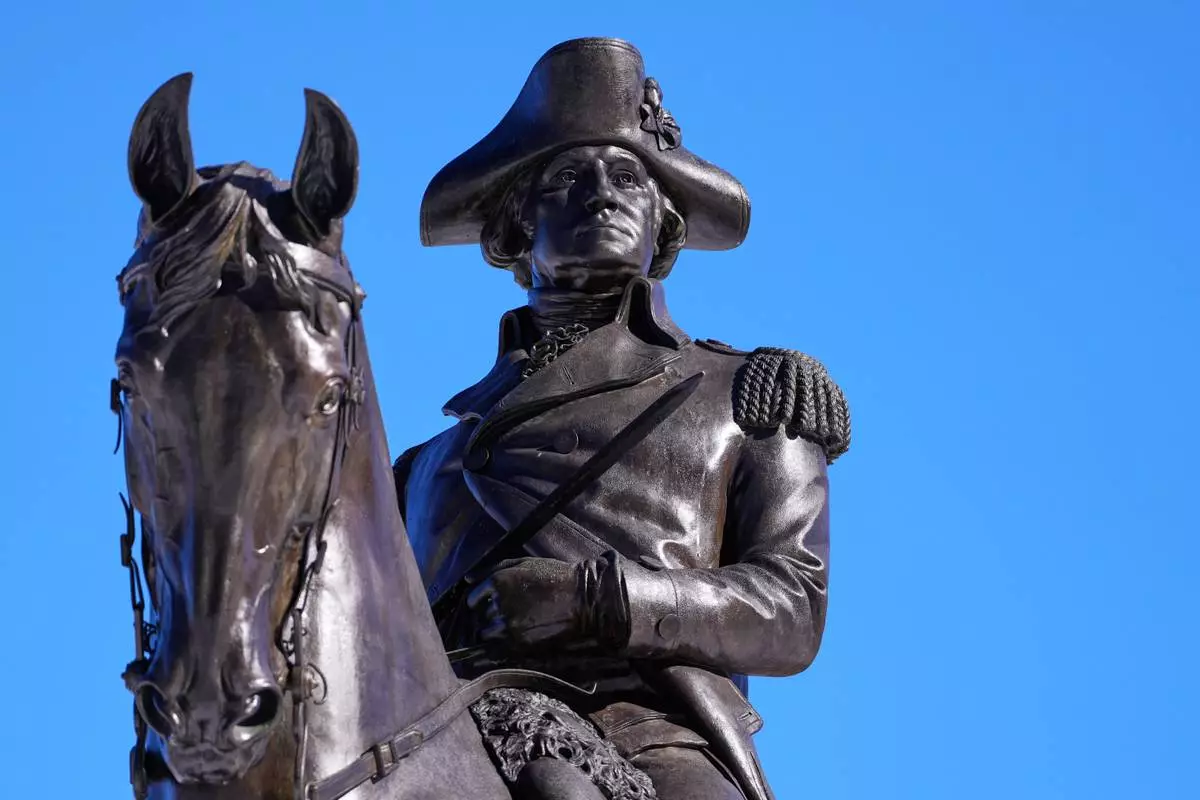
A statue of George Washington on horseback is displayed at the Public Garden, Friday, Feb. 13, 2026, in Boston. (AP Photo/Charles Krupa)