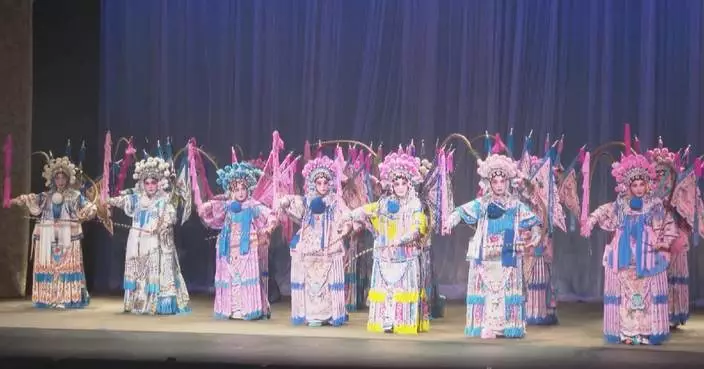
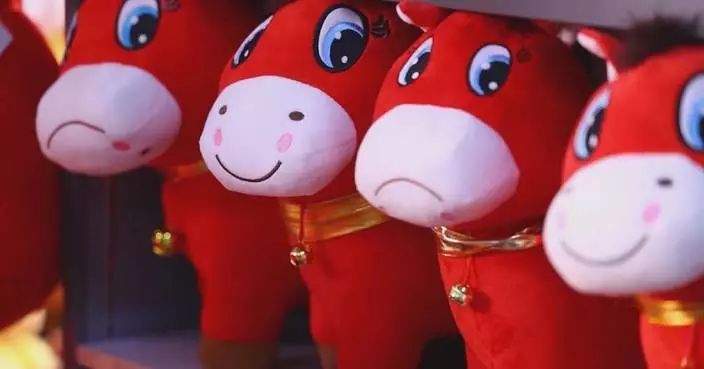
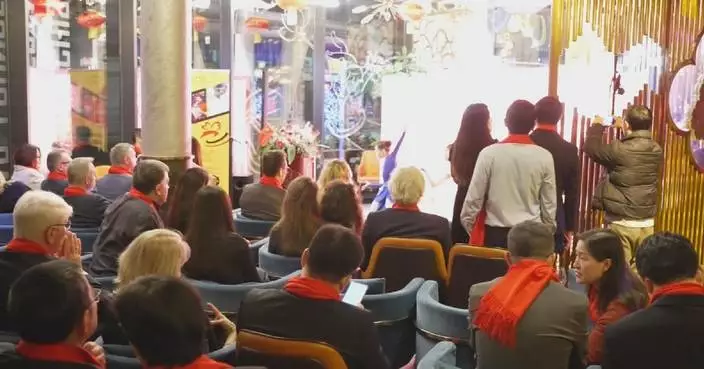
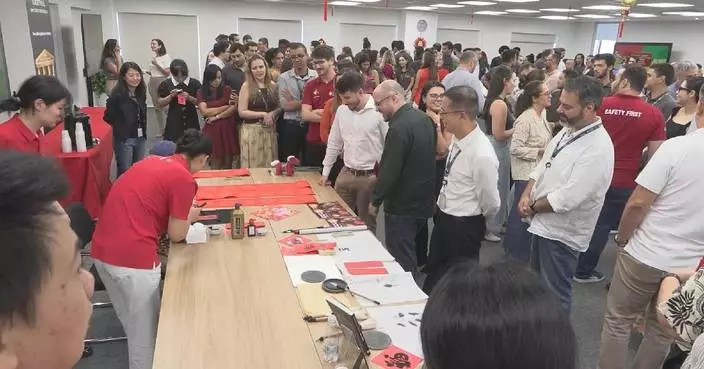
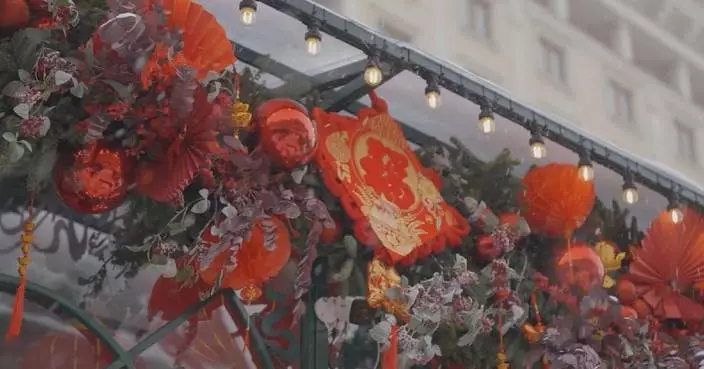
A Mexican family adorned their home with red lanterns and horse-themed decorations, mirroring traditional Chinese preparations for the Spring Festival. This reflects the growing "Become Chinese" trend, in which people worldwide adopt elements of Chinese lifestyle and customs, a phenomenon that has gained significant traction on social media platforms.
Many people are embracing what they call the "very Chinese time of my life" by drinking warm water, cooking Chinese meals, and wearing slippers at home. Chinese netizens echoed that the phenomenon reflects a universal desire for health, balance and a better quality of life.
As a devoted admirer of Chinese culture, Mauro Arturo Salazar Zavala from Mexico visited his local Chinese supermarket for festival shopping, eager to immerse himself in the atmosphere of the approaching Spring Festival, which falls on February 17 this year.
"Hello everyone. I am a native Mexican. All along, I have been very interested in Chinese culture. Today, we are going to visit a Chinese store here in my hometown and buy some goods from China. The Chinese Spring Festival is coming soon. This year is the Year of the Horse," he said.
He purchased an array of festive items to adorn his home. Among the purchases were traditional red envelopes, known as hongbao, which he noted carry a special significance akin to gift-giving customs in Mexico.
"On Chinese New Year's Eve, the children will receive lucky money placed in envelopes, which implies that 'may all your wishes come true.' In Mexico, when it comes to Christmas Day on December 25, the children will also receive gifts," he said.
The color red, symbolizing good fortune in Chinese culture, is now a central part of his home decor. He carefully hung Chinese-style lanterns, finding a parallel in his own New Year's preparations.
"On New Year's Eve, the Chinese people will decorate their homes in the bright and festive color of red. Similarly, Mexicans also clean their houses and decorate them anew to welcome the New Year," he said.
The e-commerce specialist furnished his house with lanterns, horse-themed decorations and even red envelopes for his family.
"This is called hongbao or red envelope. People put the lucky money in it and give it to the person they love," he said.
"We bought these Chinese-style lanterns. Now we are going to decorate the house to welcome the Chinese New Year. The lanterns are all set. Let's see. Look! How beautiful they are! " he added.
Different from China with red being the dominant color decorating homes, in Mexico, people use a lot of ribbons to adorn the house in various colors.
"These are the pendants of the Year of the Horse that I bought. This is a horse, representing strength. Down here it says: Hao Yun Lian Lian! It means 'wish you good luck forever'," he said.
While embracing Chinese customs, he also treasures the traditions of his own heritage, including the distinctive Mexican customs of eating 12 grapes at the stroke of midnight on New Year's Eve.
"The traditional custom of Mexico for welcoming the New Year is when it's twelve o'clock, the bell rings. It rings a total of 12 times. People eat one grape every time the bell rings. Every time you eat a grape, you make a wish," he said.
Ultimately, he finds that despite the different customs, the core of the celebration remains the same on both sides of the Pacific.
"Whether it is the Chinese Spring Festival or the New Year in Mexico, I think the best way to celebrate is just being with family," he said.
The Spring Festival, or the Chinese New Year, is the most important traditional holiday for Chinese people. It falls on the first day of the first month of the Chinese calendar and involves a variety of social practices to usher in the new year, pray for good fortune, celebrate family reunions and promote community harmony. It has been inscribed into the List of the Intangible Cultural Heritage of Humanity by the UNESCO in 2024.
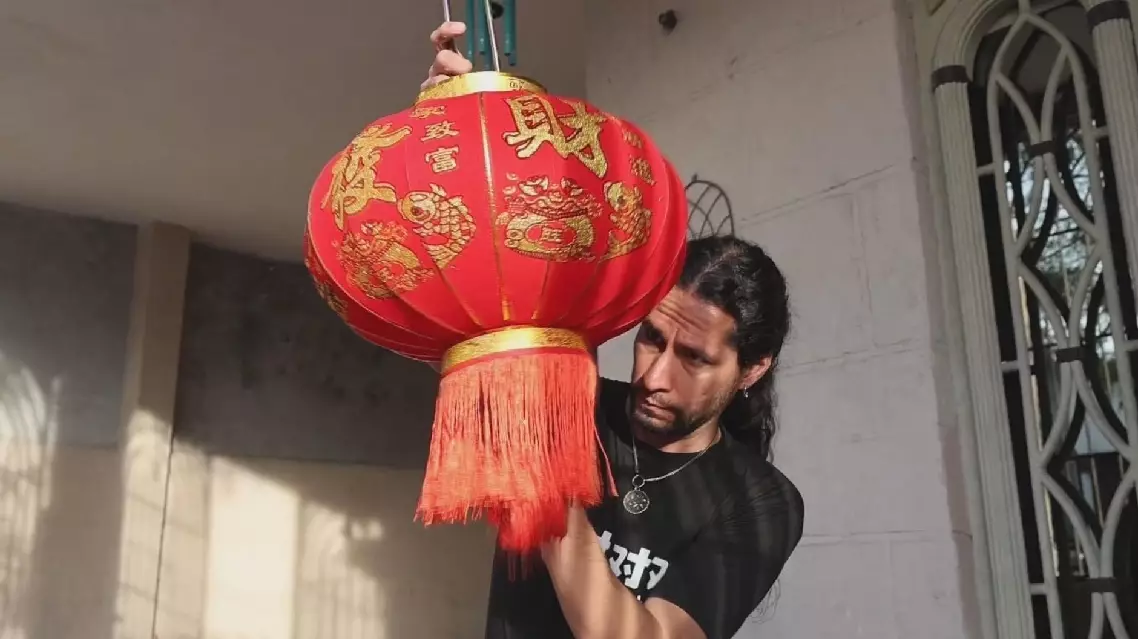
Mexican family embraces Chinese tradition of celebrating Chinese Spring Festival