CORTINA D'AMPEZZO, Italy (AP) — The curling drama at the Winter Olympics sent the sport's governing body scrambling to address a growing controversy and curb conflicting accounts of rule-breaking. The backpedaling came less than 24 hours later.
A day after World Curling ramped up monitoring of the matches, it pulled the plug, saying umpires would retreat and be available on request but not by default.
Click to Gallery
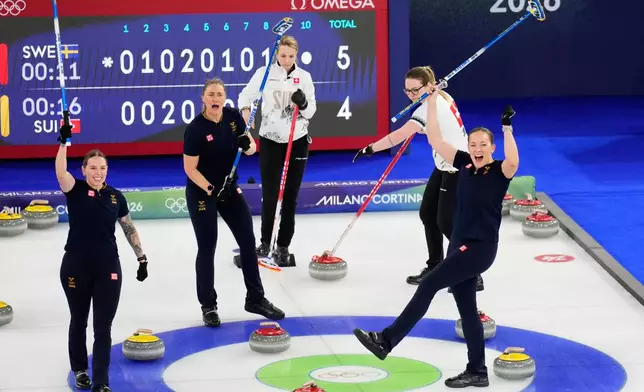
Sweden's Sara McManus, Agnes Knochenhauer and Sofia Scharback celebrate after beating Switzerland during a women's curling round robin match at the 2026 Winter Olympics, in Cortina d'Ampezzo, Italy, Monday, Feb. 16, 2026. (AP Photo/David J. Phillip)
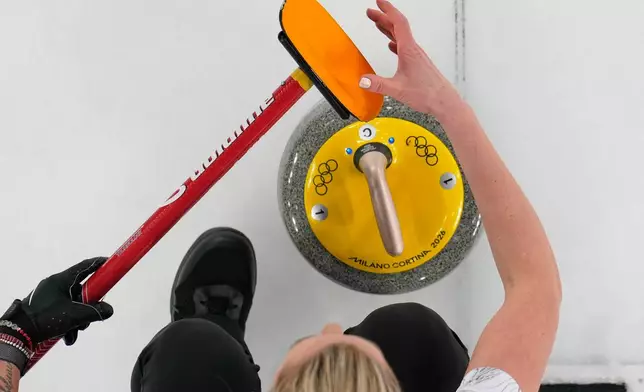
Canada's Emma Miskew prepares to deliver the stone during a women's curling round robin match against China at the 2026 Winter Olympics, in Cortina d'Ampezzo, Italy, Monday, Feb. 16, 2026. (AP Photo/David J. Phillip)
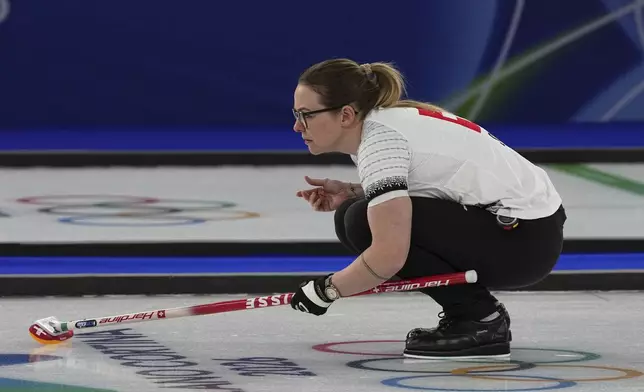
Switzerland's Alina Paetz in action during the women's curling round robin session against Sweden at the 2026 Winter Olympics, in Cortina d'Ampezzo, Italy, Monday, Feb. 16, 2026. (AP Photo/Fatima Shbair)
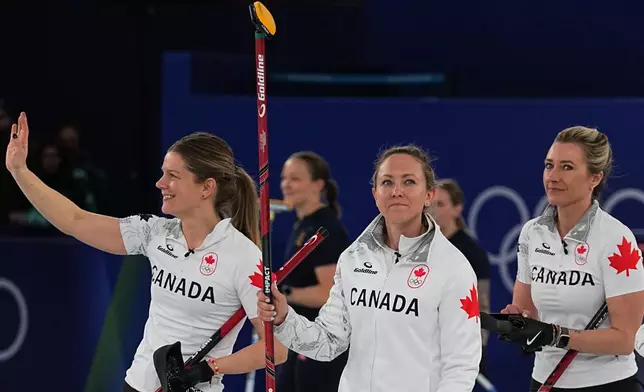
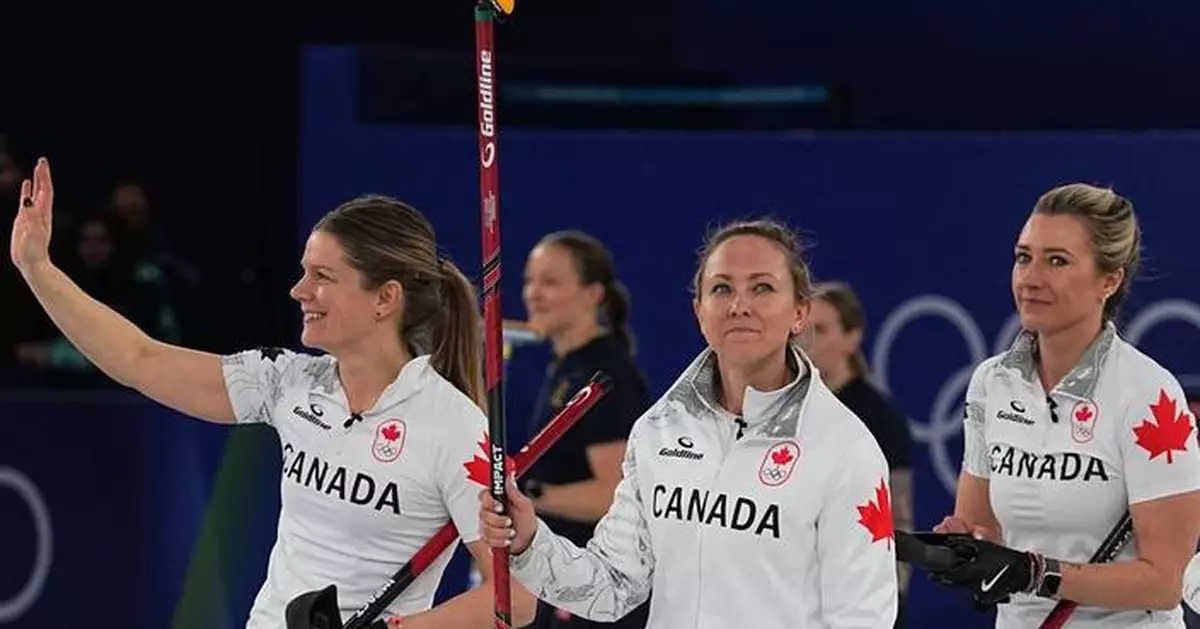
Canada's Rachel Homan, Sarah Wilkes and Emma Miskew react after the women's curling round robin session against China at the 2026 Winter Olympics, in Cortina d'Ampezzo, Italy, Monday, Feb. 16, 2026. (AP Photo/Fatima Shbair)
The move came after a quick meeting between national curling federations and World Curling on Sunday in which curlers expressed dissatisfaction with the increased surveillance. Athletes wanted less monitoring, not more.
Why would Olympic curlers, playing a sport where mere centimeters can make the difference between a winning and losing stone, choose to send the umps away? The answer may have to do with the longstanding spirit of the game, which some athletes are clinging to even as it grows more popular — and professional.
“I think there’s a lot of pride in trying to be a sport that kind of officiates ourselves a little bit, so to speak,” said Nolan Thiessen, CEO of Curling Canada, whose teams have been at the heart of the uproar over the past several days. “I think it was just everybody taking a deep breath and going, OK, let’s just finish this Olympics the way we know our sport is to be played.”
The saga began Friday, when Sweden's Oskar Eriksson accused Canadian Marc Kennedy of breaking the rules by touching the rock again after initially releasing it down the sheet of ice. Kennedy's expletive-laden outburst drew widespread attention, as did the sport, which tends to fall off the radar outside the Olympics.
World Curling decided it needed to double down on game surveillance, even though it was already midway through the Olympic men’s and women’s round-robin competition.
From then on, the federation said, two umpires would step out from behind the courtside table and watch the “hog line” — the point at which curlers must release the granite stone down the sheet of ice — from close proximity. That way, they’d be able to more closely check for illegal double-touches.
In just a day, officials called two double-touch infractions, by Rachel Homan of Canada and Bobby Lammie of Britain, removing their stones from play.
It is rare for stones to be removed from competition so frequently.
By Sunday afternoon, players and coaches were fed up, and World Curling changed its policy after the meeting.
“When the players started complaining, it puts them in a tough position because they want to do their jobs and listen to the players that think that there’s a problem out there,” said Emma Miskew of Canada. “I’m happy with how the discussion went and what the ruling came to.”
Several Olympic curlers said that double-touching did not necessarily reveal a nefarious desire to cheat, and that penalizing a quick and accidental graze of the granite could be over the top.
“If you get a hog line violation, it’s not cheating,” Homan said Monday.
Miskew added that it was rare to hear the accusation, at least in women's curling, while Alina Paetz of Switzerland agreed with Homan that it is a minor infraction.
“If you do it, it’s not allowed, but I think they blew it up a little bit, so it’s a bigger thing than it actually is,” Paetz said. “It’s the Olympics, there’s emotion in it. I don’t think it is actually that big of a deal.”
AP Winter Olympics: https://apnews.com/hub/milan-cortina-2026-winter-olympics
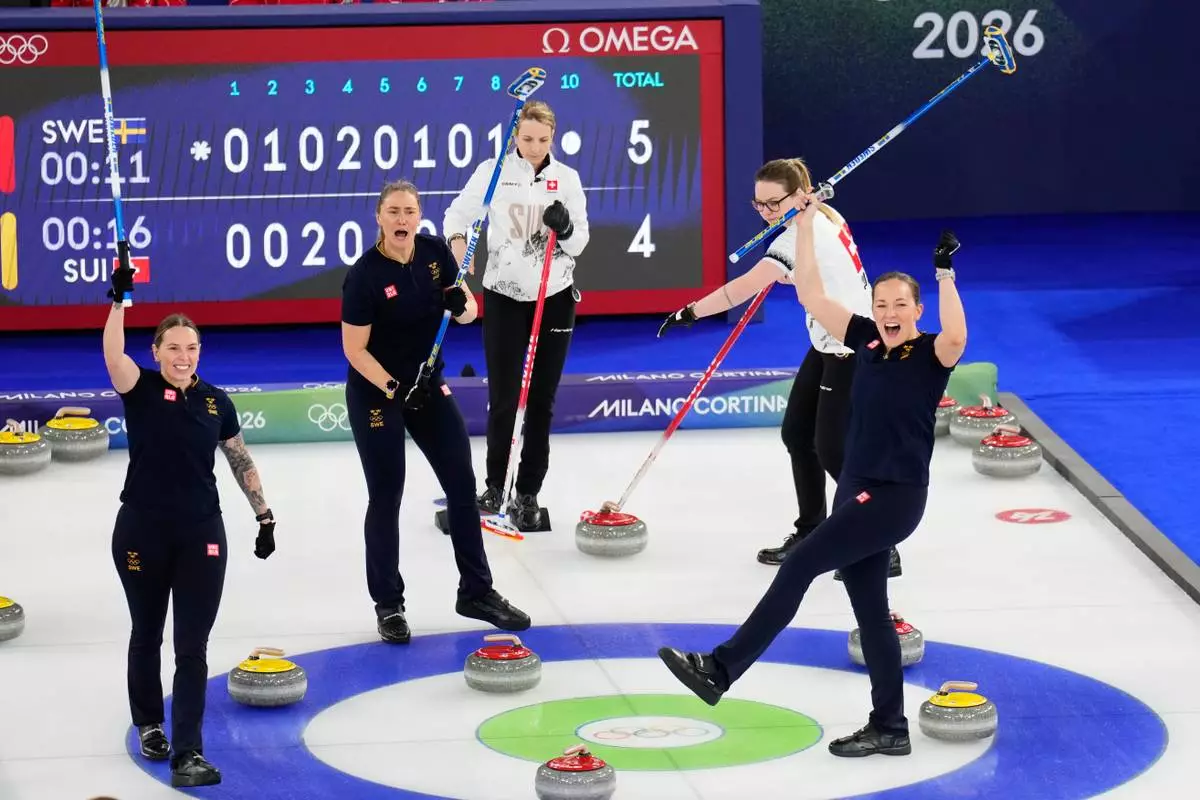
Sweden's Sara McManus, Agnes Knochenhauer and Sofia Scharback celebrate after beating Switzerland during a women's curling round robin match at the 2026 Winter Olympics, in Cortina d'Ampezzo, Italy, Monday, Feb. 16, 2026. (AP Photo/David J. Phillip)
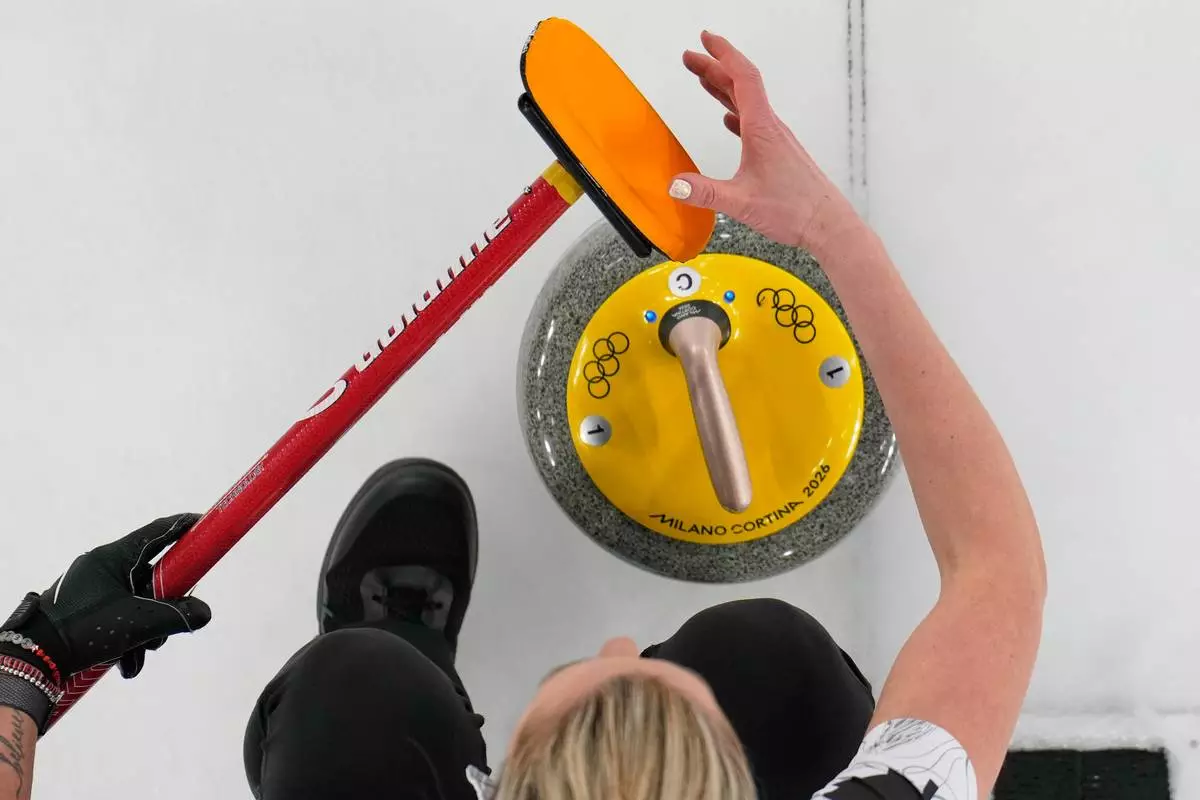
Canada's Emma Miskew prepares to deliver the stone during a women's curling round robin match against China at the 2026 Winter Olympics, in Cortina d'Ampezzo, Italy, Monday, Feb. 16, 2026. (AP Photo/David J. Phillip)
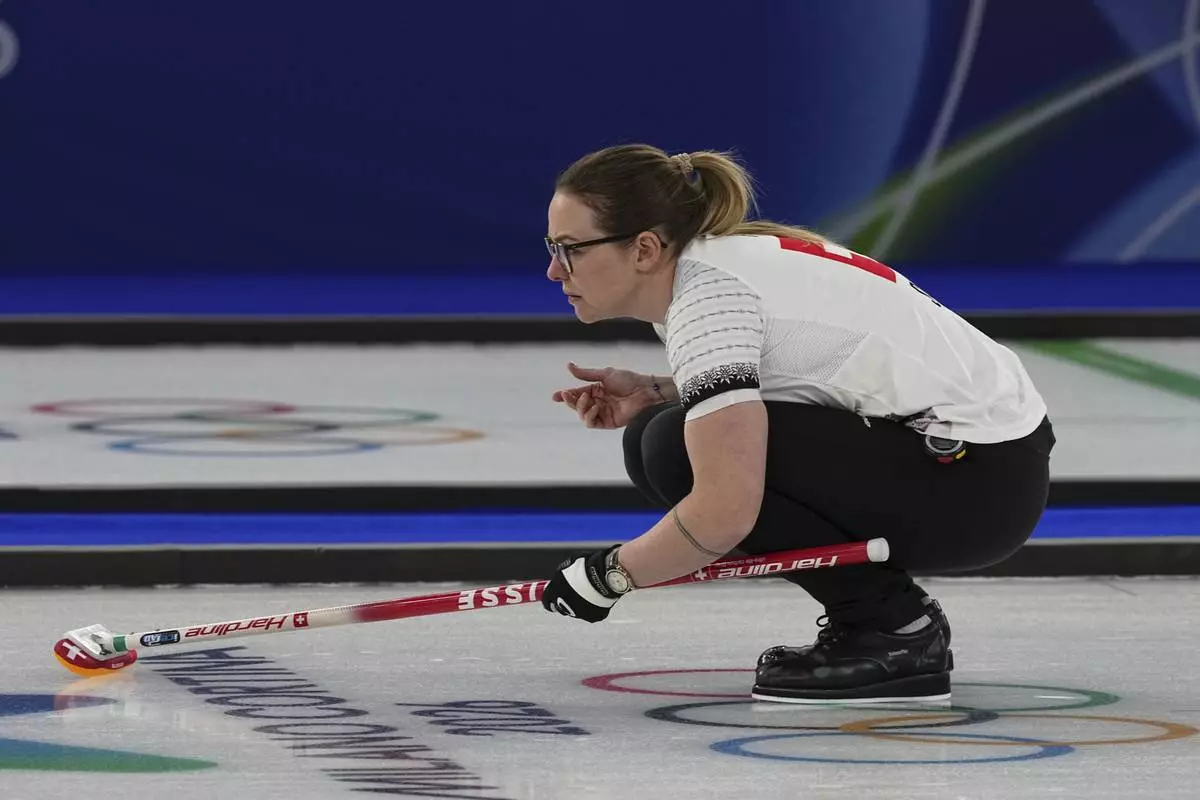
Switzerland's Alina Paetz in action during the women's curling round robin session against Sweden at the 2026 Winter Olympics, in Cortina d'Ampezzo, Italy, Monday, Feb. 16, 2026. (AP Photo/Fatima Shbair)
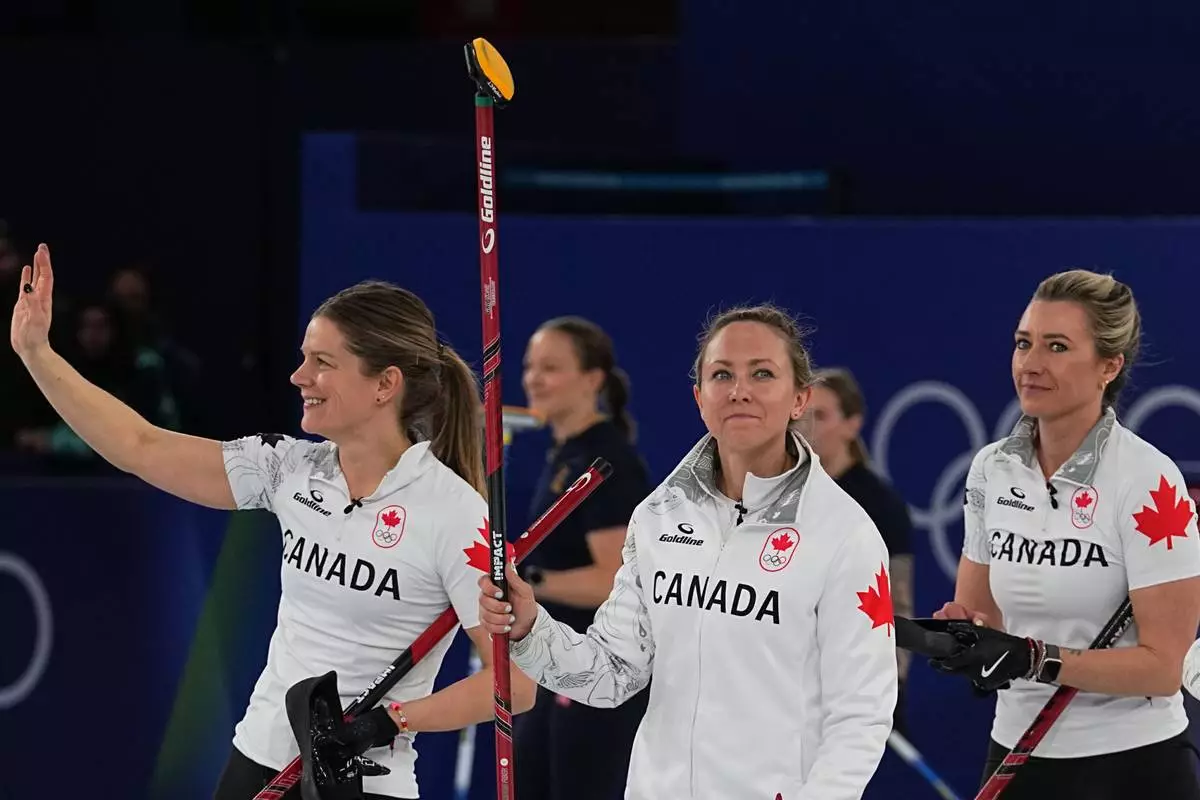
Canada's Rachel Homan, Sarah Wilkes and Emma Miskew react after the women's curling round robin session against China at the 2026 Winter Olympics, in Cortina d'Ampezzo, Italy, Monday, Feb. 16, 2026. (AP Photo/Fatima Shbair)