RAMALLAH, West Bank (AP) — Israeli prosecutors said Monday that they plan to charge a settler in the killing of a Palestinian activist during a confrontation that was caught on video, opening a rare prosecution of violence by Jewish settlers in the occupied West Bank.
Attacks from settlers and home demolitions by authorities have spiked dramatically over the past two years, but the death in July of Awdah Hathaleen has drawn particular attention due to his involvement in the 2025 Oscar-winning film “No Other Land,” which chronicled Palestinian villagers’ fight to stay on their land. The case also stands out because the confrontation between Palestinians and Yinon Levi, an internationally sanctioned settler, was captured on video from multiple vantage points.
In a video that family members say was taken by Hathaleen himself, Levi could be seen firing toward the person holding the camera. Another showed Levi firing two shots without showing where the bullets struck.
An Israeli judge released Levi from custody six months ago, citing a lack of evidence that he fired the shots that killed Hathaleen.
Israel’s State Attorney General’s office confirmed in a statement Monday that it had initiated proceedings to indict Levi. It did not specify the charges.
Eitan Peleg, an attorney for Hathaleen’s family, said the office had informed them it planned to indict Levi for reckless homicide, triggering a process that allows Levi to contest charges before they’re formally filed.
“Enforcement of the law in cases like this involving Palestinians in the West Bank is very rare, so this is unique,” Peleg told The Associated Press on Monday.
Israel’s military referred questions on the indictment to police, who have not yet responded. Both bodies enforce laws in the area.
More than 3.4 million Palestinians and 700,000 Israelis live in the occupied West Bank and east Jerusalem, territories captured by Israel in 1967 and sought by Palestinians for a future state. The international community overwhelmingly considers Israeli settlement construction in these areas to be illegal and an obstacle to peace.
Palestinians and rights groups say authorities routinely fail to prosecute settlers or hold them accountable for violence. Under National Security Minister Itamar Ben Gvir, investigations into settler attacks have plummeted, according to the Israeli rights group Yesh Din.
Khalil Hathaleen, Awdah’s brother, said the family was glad some measure of justice was being pursued but felt the charge of “reckless homicide” was insufficient.
“It was an intentional killing in broad daylight, with prior intent and premeditation,” he said.
Levi’s attorney, Avichai Hajbi, declined Monday to comment on the coming indictment, which he said he hadn’t received. After the shooting, he told The Associated Press that Levi acted in self-defense, without elaborating. Levi did not answer phone calls Monday.
Video released last year by B’Tselem, an Israeli human rights group showed Levi firing a gun toward the person filming. At the moment that B’Tselem says Hathaleen collapsed, the visuals are jostled but moans of pain can be heard. The group said it obtained the video from the family of Hathaleen, who said he filmed it.
Additional footage obtained by the AP last year showed Levi waving a pistol during the standoff in Umm al-Khair that was with a group of Palestinians over an excavator that had rolled down from a nearby settlement and damaged Palestinian property earlier in the day.
Alaa Hathaleen, a cousin who filmed the encounter, told AP at the time that he had approached Levi to tell him the group was unarmed and to stop the bulldozing.
In the video, one Palestinian insults Levi and another challenges him to shoot. Levi shoves someone just out of the frame, demands to know who threw stones, and later fires a shot, seemingly away from the crowd. He then fires again and yells toward the crowd to get away from the excavator.
The footage did not show where bullets struck, though other relatives said they saw Awdah Hathaleen fall immediately after shots were fired.
Levi was detained before being released to house arrest. That condition was eventually lifted, too.
Levi was among the Israeli settlers sanctioned by the United States and other Western countries over allegations of violence toward Palestinians in 2024. President Donald Trump lifted the U.S. sanctions after taking office the following year.
Activists and crew members on the film “No Other Land” have said settler attacks have intensified on the village portrayed since the movie won the Oscar.
Hamdan Ballal, one of the film’s directors, said his family home in Umm al-Khair was subject to another attack on Sunday. Four relatives were arrested during the confrontation, he said.
Ballal said a soldier, who came to their home accompanied by another soldier and a settler-herder, grabbed his brother by the neck and tried to choke him. Neither the army nor the police responded to requests for comment on the incident.
“The year after I won the Oscar, the assaults increased significantly. On a daily basis, settlers come and destroy the fields, destroy the trees, destroy the crops around the house,” he said.
As prosecutors move to indict Levi and violence persists across the West Bank, Israel is moving ahead with measures to deepen its control over land in the occupied territory.
On Sunday, it announced it would resume a land registration process across the West Bank to require anyone with a claim to land to submit documents proving ownership. Rights groups say the process could strip Palestinians of land they've lived on and farmed for generations and transfer vast swaths of land to Israeli state control.
Israel’s Foreign Ministry said the steps countered Palestinian Authority land registration efforts in areas where Israel maintains civil and military control.
The measures follow years of accusations by Palestinians that actions by settlers and the military — campaigns of violence, harassment and demolitions — have pushed them from their land.
The decisions have drawn widespread condemnation as violations of international law, including from countries involved in the ceasefire process in the Gaza Strip and Trump's Board of Peace.
Saudi Arabia’s Foreign Ministry in a statement on Monday said the measures were part of Israel’s effort to impose a “new legal and administrative reality” that undermines prospects for peace and stability. Egypt’s Foreign Ministry called the move a “flagrant violation” of international law, warning it would escalate tensions in the Palestinian territories and across the region.
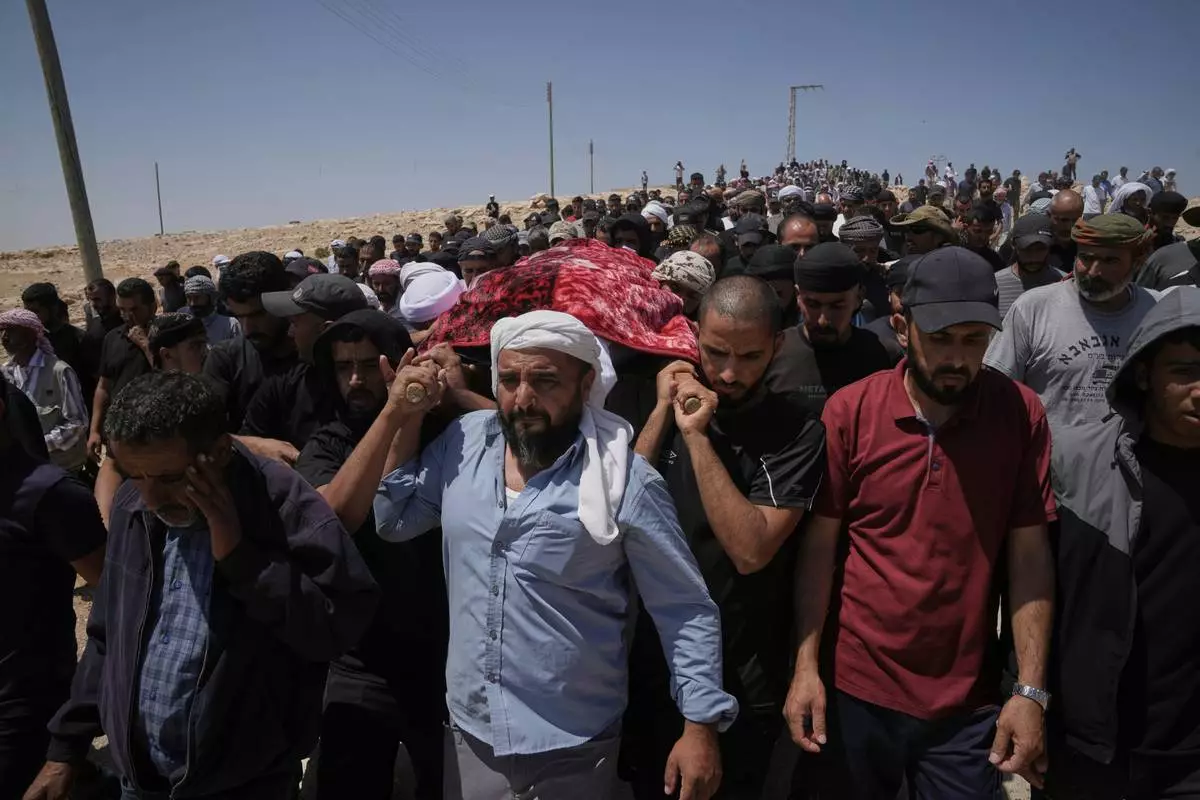
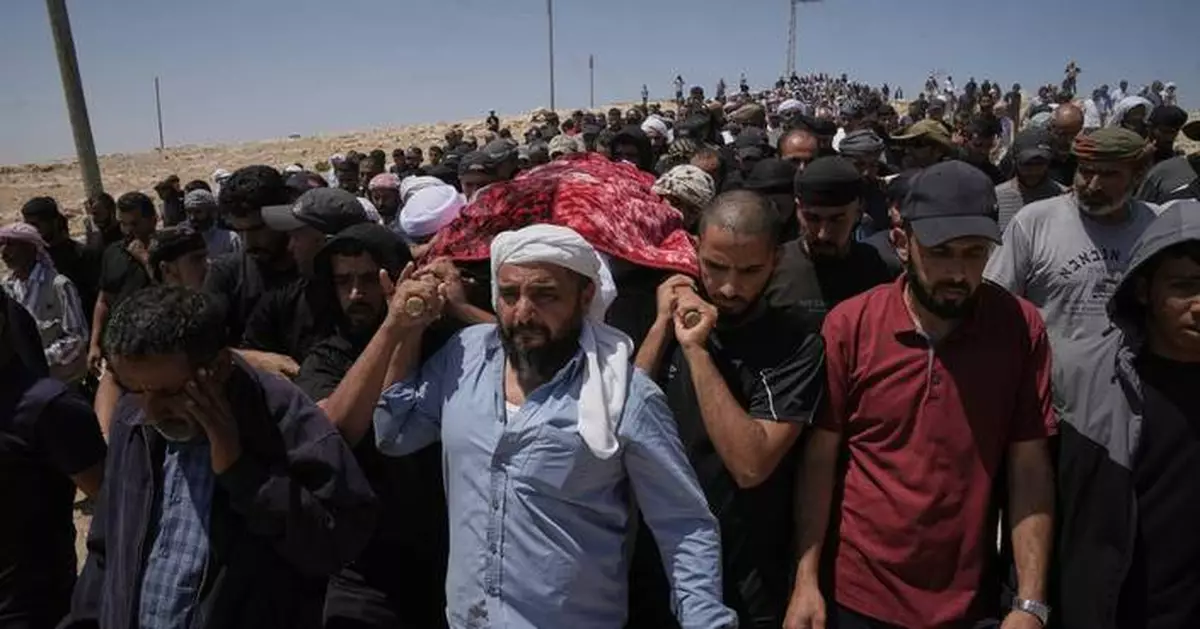
FILE - Mourners carry the body of Palestinian activist Awdah Hathaleen during his funeral in the West Bank Bedouin village of Umm al-Khair, Aug. 7, 2025. (AP Photo/Mahmoud Illean, file)
CORTINA D'AMPEZZO, Italy (AP) — The world of curling has spent decades trying to figure out a way to raise its profile beyond the “once-every-four-years” curiosity it becomes during the Winter Olympics.
Turns out, all it took was a graze of a finger on a 40ish-pound piece of granite, an allegation caught on camera followed by an impassioned expletive-laden response.
Social media and the white-hot spotlight that only the Games provide did the rest.
The animated back-and-forth between Sweden's Oskar Eriksson and Canada’s Marc Kennedy during a match Saturday night — when Eriksson accused Kennedy of an illegal “double touch” — managed to do in a handful of seconds what years of promotion by those within the sport that looks like a combination of shuffleboard, chess and vacuuming the living room could not: cut through the noise to push it to the front of the line, ahead of the skiers and skaters and snowboarders that typically dominate the conversation whenever the Games roll around.
Alina Paetz watched the proof unfold in real time. The longtime Swiss curler was scrolling on her phone over the weekend when she ran across a headline about it from celebrity-focused “People" magazine, not exactly considered a go-to for all things curling.
“That's pretty new,” Paetz said.
A lot of this kind of is.
Here is the delicate part for those within a sport that dates back centuries and is steadily cultivating a larger fanbase. Does it matter that the gateway for many into curling is two guys snapping at each other and not an exquisite takeout or a dramatic hammer that decides a match?
“I think that for curling, to grow the sport, publicity is good,” said Canadian Emma Miskew, a three-time world champion whose own skip — Rachel Homan — was accused of the same “double touch” violation as Kennedy. “But in this situation, it just was a little blown up. It was a little too far.”
On that, Mishew is right. The conversation grew so intense online that Nolan Thiessen, CEO of Curling Canada, told The Associated Press there have been “disgusting” emails directed toward family members of the Canadian team.
“That’s where it’s going to stop, right? We keep it on the ice,” Thiessen said. “If you want to hate our teams, that’s your right as a sports fan.”
Thiessen, however, also recognizes the opportunity all this has provided. The pushback by self-appointed curling experts — many of whom likely didn't know the hog line even existed until a few days ago — is tough to stomach. At the same time, curling has never been such a prominent part of the Olympic conversation.
“It's both sides of it, right?” he said. “You get the people reaching out that are really upset about the rules infraction. And then you get the people that are reaching out about the drama between the two teams.”
That second part is not nothing. There are many paths to fandom. Almost all of them have the same starting point: exposure. This time, the exposure seems to be wrapped up in what could best be described as Olympic catnip.
The fact that the teams at the Cortina Curling Center compete under the flag of the country they represent means there are built-in allegiances. Throw in a sport whose nuances are largely a mystery, mic up the athletes to provide an intimate glimpse, put national pride on the line in the form of Olympic medals and you've got all the ingredients necessary to get a foot in the door.
“I think that there’s value in creating people watching curling, people getting interested in curling,” said Kristian Heldin Lindstrom, manager of Sweden's women's Olympic team. “And if you start watching it, maybe you’re going to keep watching it because it is a very interesting sport, there is a lot of complexity to it.”
Nic Sulsky is kind of banking on it. The CEO of The Curling Group acquired the rights to the Grand Slam of Curling in 2024 in hopes of creating a sustainable professional league.
The organization pointed to the spring of 2026 as a potential launch date from the second it took over the Grand Slam. The Rock League will kick off with a one-week event in Toronto in April, when six teams of 10 curlers (five men and five women) will face off.
The calculus was easy. Sulsky, a Montreal native whose background is in gambling ventures, knew there would be a spike in interest in curling once the Olympics began, just like there always is.
The sport's ubiquity during the Games — the competition actually began two days before the opening ceremony and will wrap up with the women's gold-medal match just hours before the closing ceremony starts — combined with its relatability as one of the few Winter Olympic disciplines where danger isn't imminent, makes it a fun hang.
Sulsky felt April would be a chance to strike while the rock is hot. He just didn't envision it being quite this hot or being talked about in quite this way.
“Would we have all preferred if the world fell in love with curling because of an incredible curling shot? Sure," Sulsky told The AP. “But what do fans love more than anything else? They love personality, they love stars.”
And there was a realness in the exchange between Ericksson and Kennedy that wouldn't have been out of place on a soccer pitch or a hockey rink.
“All this has done is just shine a light on how competitive, how emotional and how interesting these athletes are,” he said.
The reality is, Ericksson and Kennedy's spat isn't that uncommon, particularly when it comes to double-touching.
The rule that bars those curling the stone from touching it with their fingers once they release it can be difficult to police. There's typically an honors system involved. There is no official video replay available to sort it out, leaving it up to the officials or the competitors themselves. It can lead to messily authentic moments like the one that went viral on Saturday night.
Given the massive stir it has created, maybe Kennedy and Ericksson were on to something.
Asked if this means curling could one day borrow a page from professional wrestling and give competitors microphones where they can cut promos before and after matches to create storylines in hopes of keeping a foothold in the public consciousness, Paetz laughed.
“I don’t know,” she said. “Who knows how it looks in five years? I think maybe it just stays the way it is right now."
And that might be more than enough.
Associated Press writer Julia Frankel contributed to this report.
AP Winter Olympics: https://apnews.com/hub/milan-cortina-2026-winter-olympics
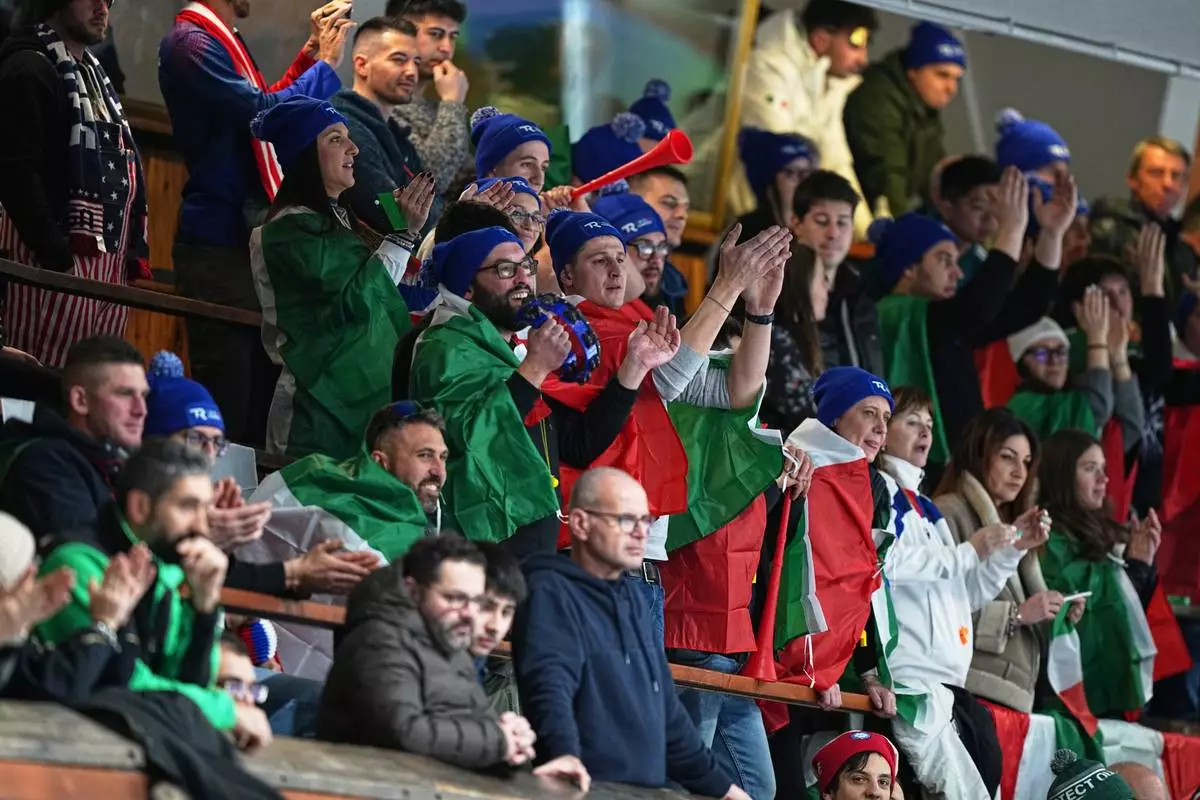
Italy fans watch the men's curling round robin session against Britain, at the 2026 Winter Olympics, in Cortina d'Ampezzo, Italy, Friday, Feb. 13, 2026. (AP Photo/Fatima Shbair)
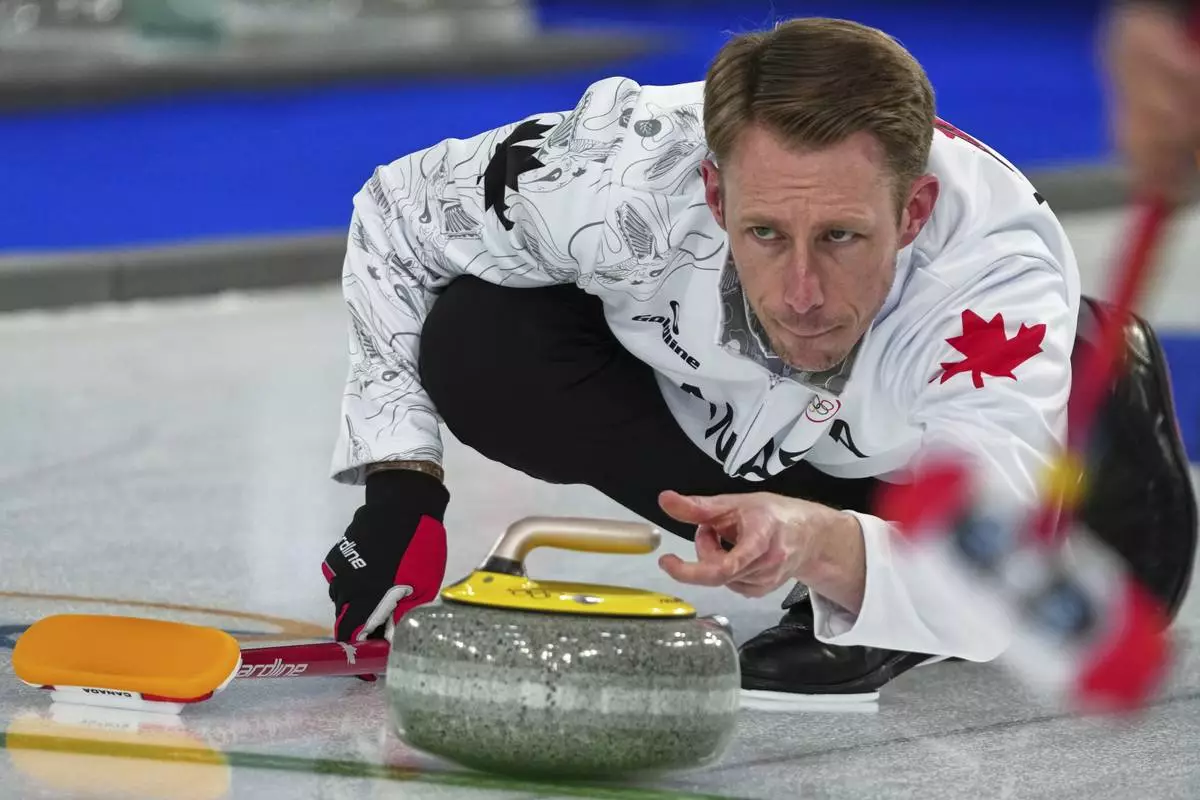
Canada's Marc Kennedy in action during the men's curling round robin session against China, at the 2026 Winter Olympics, in Cortina d'Ampezzo, Italy, Sunday, Feb. 15, 2026. (AP Photo/Misper Apawu)
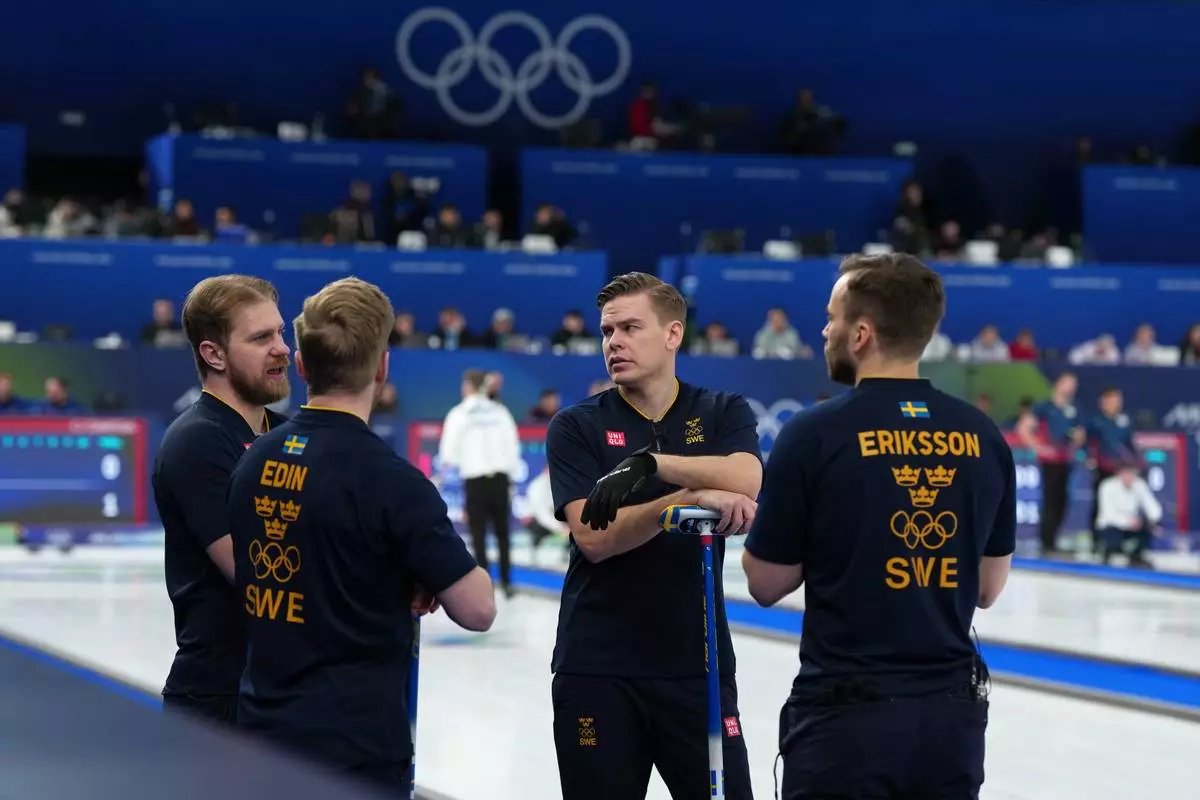
Sweden's Oskar Eriksson, right, Christoffer Sundgren, second right, Rasmus Wranaa, left, and Niklas Edin, second left, in action during the men's curling round robin session against Italy, at the 2026 Winter Olympics, in Cortina d'Ampezzo, Italy, Wednesday, Feb. 11, 2026. (AP Photo/Misper Apawu)

South Korea's Seol Ye-eun in action during the women's curling round robin session against Denmark, at the 2026 Winter Olympics, in Cortina d'Ampezzo, Italy, Saturday, Feb.14, 2026. (AP Photo/Fatima Shbair)