Skip to Content Facebook Feature Image

Rap to rev up, soul to calm down: Freestyle skiers pick their soundtracks at the Winter Olympics

Sport

Rap to rev up, soul to calm down: Freestyle skiers pick their soundtracks at the Winter Olympics
Sport

Sport

Rap to rev up, soul to calm down: Freestyle skiers pick their soundtracks at the Winter Olympics

2026-02-17 01:51 Last Updated At:12:52

LIVIGNO, Italy (AP) — Standing atop a makeshift 15-story tower, moments before hurtling down a nauseatingly steep slope for the big air jump at the Winter Olympics, freestyle skier Evan McEachran still needed that little extra burst of adrenaline.

So it’s time to crank up the tunes.

More Images
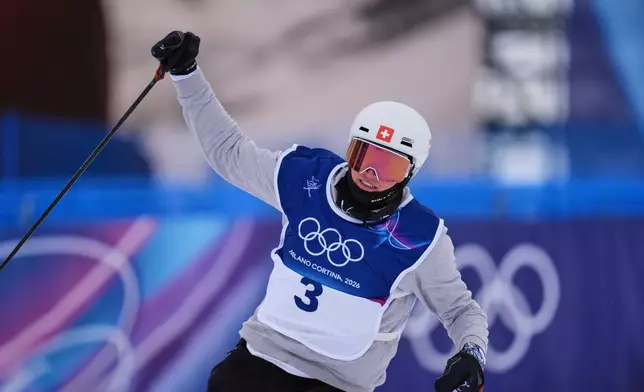
Switzerland's Andri Ragettli celebrates his run during the men's freestyle skiing slopestyle finals at the 2026 Winter Olympics, in Livigno, Italy, Tuesday, Feb. 10, 2026. (AP Photo/Abbie Parr)
Switzerland's Andri Ragettli celebrates his run during the men's freestyle skiing slopestyle finals at the 2026 Winter Olympics, in Livigno, Italy, Tuesday, Feb. 10, 2026. (AP Photo/Abbie Parr)

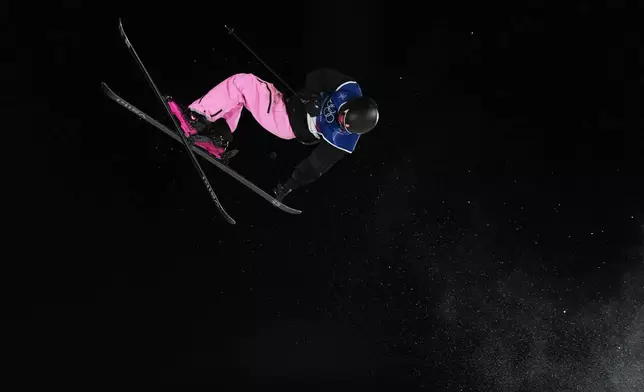
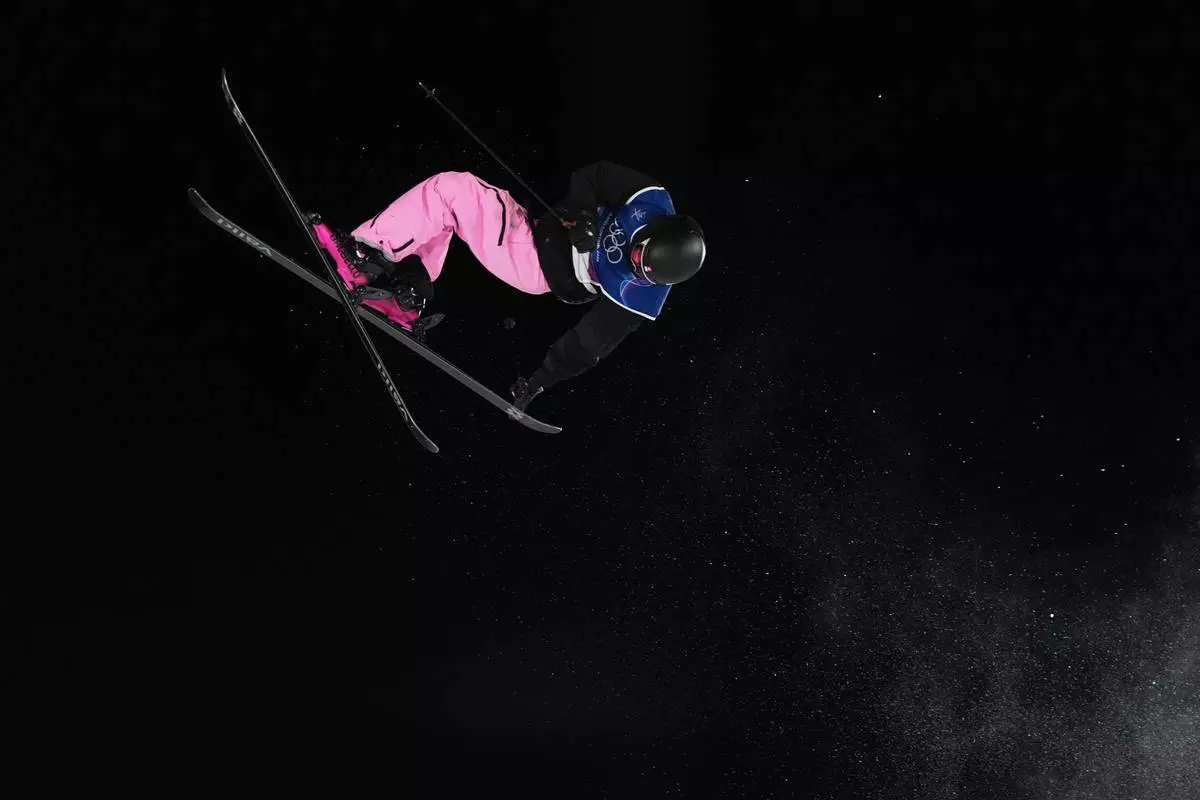
Switzerland's Andri Ragettli competes during the men's freestyle skiing big air qualifications at the 2026 Winter Olympics, in Livigno, Italy, Sunday, Feb. 15, 2026. (AP Photo/Julia Demaree Nikhinson)
Switzerland's Andri Ragettli competes during the men's freestyle skiing big air qualifications at the 2026 Winter Olympics, in Livigno, Italy, Sunday, Feb. 15, 2026. (AP Photo/Julia Demaree Nikhinson)

Canada's Evan McEachran reacts during men's freestyle skiing slopestyle qualifications at the 2026 Winter Olympics, in Livigno, Italy, Saturday, Feb. 7, 2026. (AP Photo/Lindsey Wasson)
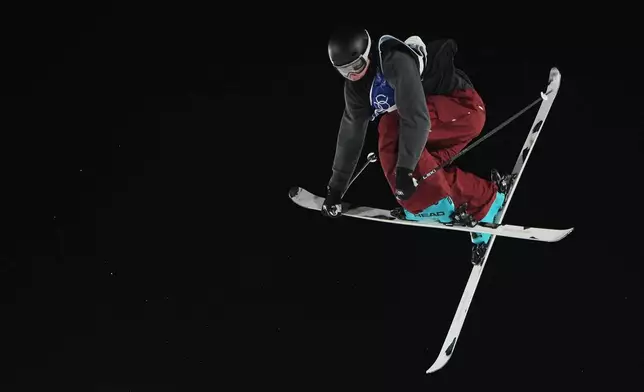
Canada's Evan McEachran reacts during men's freestyle skiing slopestyle qualifications at the 2026 Winter Olympics, in Livigno, Italy, Saturday, Feb. 7, 2026. (AP Photo/Lindsey Wasson)

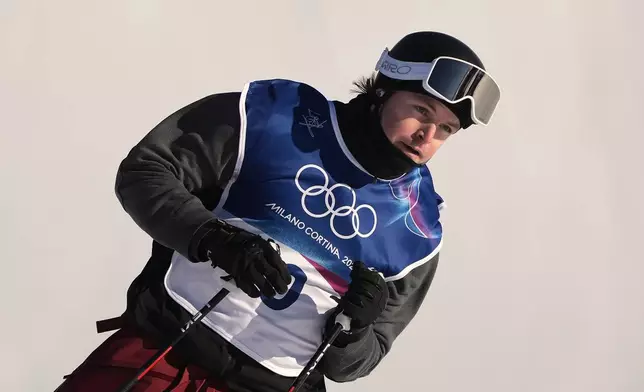
Canada's Evan McEachran competes during the men's freestyle skiing big air qualifications at the 2026 Winter Olympics, in Livigno, Italy, Sunday, Feb. 15, 2026. (AP Photo/Lindsey Wasson)
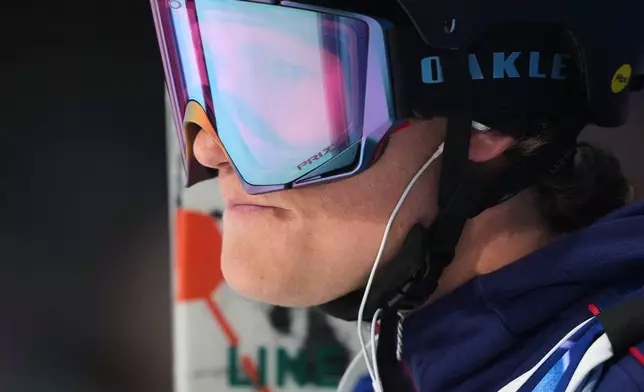
Canada's Evan McEachran competes during the men's freestyle skiing big air qualifications at the 2026 Winter Olympics, in Livigno, Italy, Sunday, Feb. 15, 2026. (AP Photo/Lindsey Wasson)

United States' Konnor Ralph looks on during the men's freestyle skiing big air qualifications at the 2026 Winter Olympics, in Livigno, Italy, Sunday, Feb. 15, 2026. (AP Photo/Lindsey Wasson)

United States' Konnor Ralph looks on during the men's freestyle skiing big air qualifications at the 2026 Winter Olympics, in Livigno, Italy, Sunday, Feb. 15, 2026. (AP Photo/Lindsey Wasson)

Earphones snug inside his crash helmet, McEachran got revved up listening to some rap while mentally going through the routine of acrobatic twists and turns he was about to perform while flying through the frosty night air in the Italian Alps.

“Tonight I had a little bit of hardcore rap music going to get motivated and to push me,” the Canadian skier said after Sunday’s qualifying session for the men’s big air final.

“You can hear the crowd erupting," he said. "But I needed all the help I could get just to be fired up and try to send it off the jump.”

In the big air event, skiers gain momentum sliding down a huge ramp before they jump and perform complex tricks. Judges score the flips and spins, including pretzel-like shapes with skis splayed or crossed, before the skiers pull up at the last split second and slam skis-first into the landing area, kicking up a spray of snow.

And for some skiers like McEachran, a pair of earphones connected to a smart phone is as indispensable as his skis, poles and helmet.

He even carries a backup pair of earphones just in case.

“If I’m feeling like I’m a little low on energy, I’ll put on some high-tempo music," he said. "That fires me up and gives me a little jolt."

McEachran is among the not-insignificant number of freestyle skiers and snowboarders who brought tunes to Livigno, the host of the Winter Olympic action sports.

And within that special group of music-loving daredevils, each has their own reason for applying a soundtrack to their death-defying jumps.

Swiss skier Nils Rhyner joined McEachran in needing some extra oomph.

His music of choice? The totally non-relaxing Swiss hard core punk, “The Dog’s Revenge.”

“I just listen to the song that taps me up the most every contest,” Rhyner said. “It kind of helps me to be by myself."

For McEachran, the musical choice varies with the event he is competing in.

While big air’s all-or-nothing, Hail Mary-style jump demands to be accompanied by some do-or-die track, he goes for something soothing when doing his slopestyle routine.

Slopestyle, whereby skiers perform a series of tricks over a course of rails and jumps, requires a sense of flow, and for that, McEachran often turns to some smooth Frank Ocean soul, or perhaps just some good old country.

“If I’m feel a little overwhelmed then it’s the calm stuff you know,” he said. “Happy vibes.”

Athletes chilling out, grooving with huge headphones before competing has become a common sight across sports, from basketball to soccer and even swimming. But actually keeping the party going once the action starts is another thing.

That said, a good number of freestyle skiers fly through the air with their ears empty.

Matej Svancer of Austria, who finished Sunday’s qualifying with the second-best time, said he likes good music as much as the next freestyle skier, but he thinks listening to music hurts his ability to orient his body while doing tricks.

“Because if you got the earplugs in there, it’s like a sense that you’re shutting down because you can’t feel the speed anymore,” he said. “You’re shutting down the balance as well. So you can’t orient that well in the air.”

Defending big air gold medalist Birk Ruud used to listen to music while competing earlier in his career, but the 25-year-old said that over time he felt it was just a distraction from what he realized was the only way to do deal with the pressure of the moment.

“When I compete, I want to stay present and aware and hear whatever the noise or hear all my surroundings," Ruud said after qualifying second. "And you will do your best when you are fully, like, present.”

Still, for some skiers, music helps ground them, especially when the seconds count down until their turn to launch themselves down the big air ramp.

“When you’re waiting up there, let’s say the last two minutes, it can make you very, very nervous," Swiss skier Andri Ragettli said. “The music brings you in the zone, and the time goes by.”

And in any case, he said, once you make the leap, you only register the sound of silence — even if the music is still blaring.

“As soon as I’m going into the in-run,” Ragettli said, “the music is gone."

AP Winter Olympics: https://apnews.com/hub/milan-cortina-2026-winter-olympics
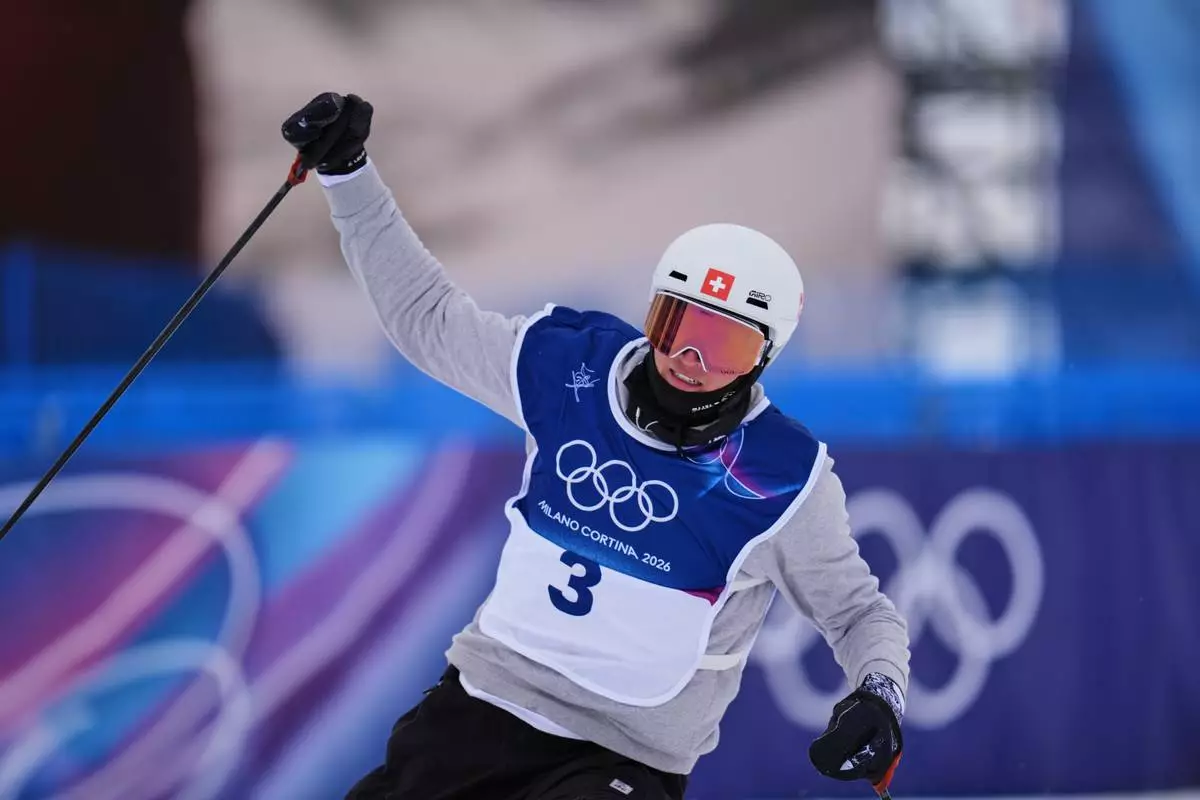
Switzerland's Andri Ragettli celebrates his run during the men's freestyle skiing slopestyle finals at the 2026 Winter Olympics, in Livigno, Italy, Tuesday, Feb. 10, 2026. (AP Photo/Abbie Parr)
Switzerland's Andri Ragettli celebrates his run during the men's freestyle skiing slopestyle finals at the 2026 Winter Olympics, in Livigno, Italy, Tuesday, Feb. 10, 2026. (AP Photo/Abbie Parr)

Switzerland's Andri Ragettli competes during the men's freestyle skiing big air qualifications at the 2026 Winter Olympics, in Livigno, Italy, Sunday, Feb. 15, 2026. (AP Photo/Julia Demaree Nikhinson)
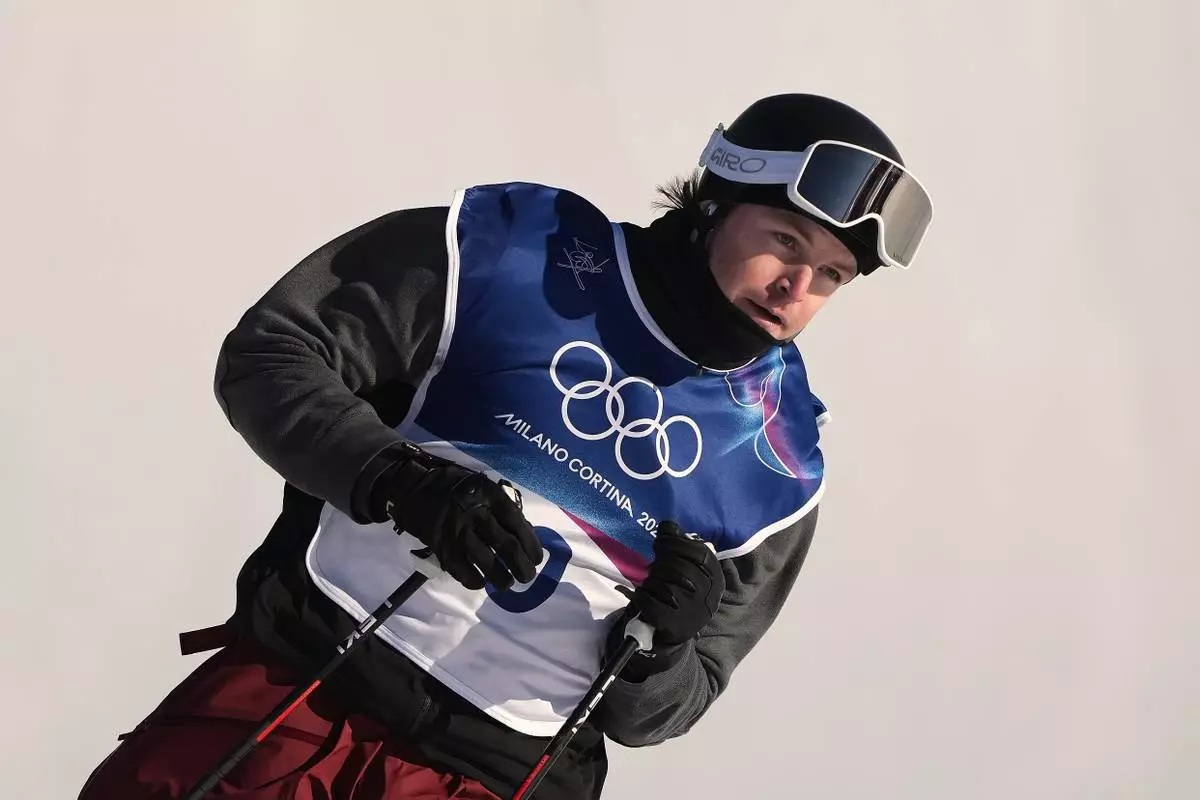
Switzerland's Andri Ragettli competes during the men's freestyle skiing big air qualifications at the 2026 Winter Olympics, in Livigno, Italy, Sunday, Feb. 15, 2026. (AP Photo/Julia Demaree Nikhinson)

Canada's Evan McEachran reacts during men's freestyle skiing slopestyle qualifications at the 2026 Winter Olympics, in Livigno, Italy, Saturday, Feb. 7, 2026. (AP Photo/Lindsey Wasson)
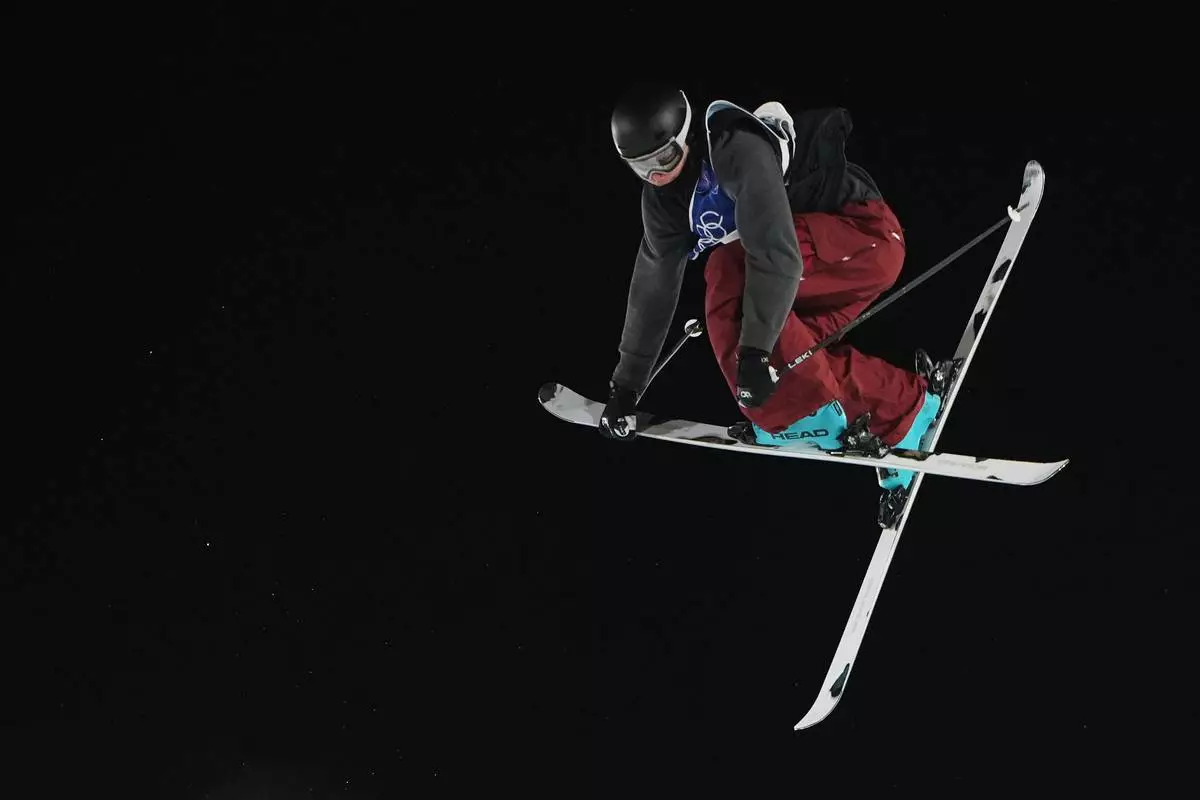
Canada's Evan McEachran reacts during men's freestyle skiing slopestyle qualifications at the 2026 Winter Olympics, in Livigno, Italy, Saturday, Feb. 7, 2026. (AP Photo/Lindsey Wasson)

Canada's Evan McEachran competes during the men's freestyle skiing big air qualifications at the 2026 Winter Olympics, in Livigno, Italy, Sunday, Feb. 15, 2026. (AP Photo/Lindsey Wasson)
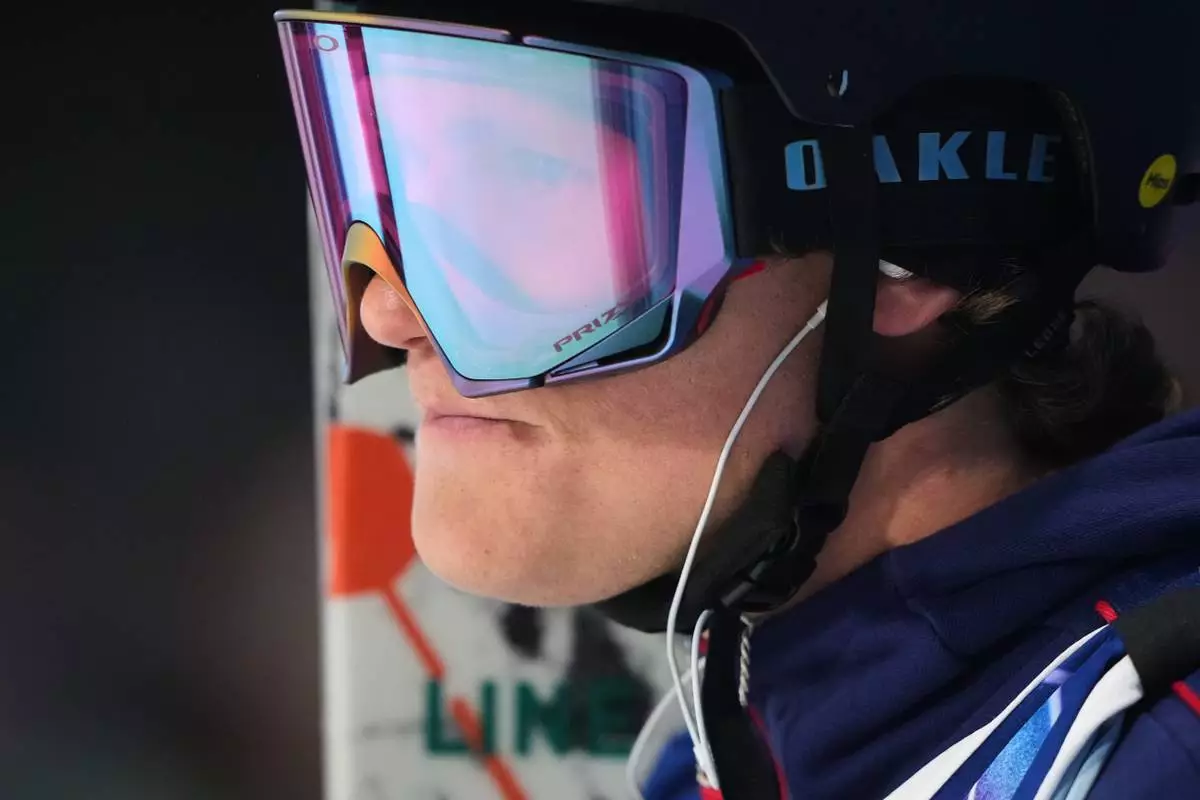
Canada's Evan McEachran competes during the men's freestyle skiing big air qualifications at the 2026 Winter Olympics, in Livigno, Italy, Sunday, Feb. 15, 2026. (AP Photo/Lindsey Wasson)
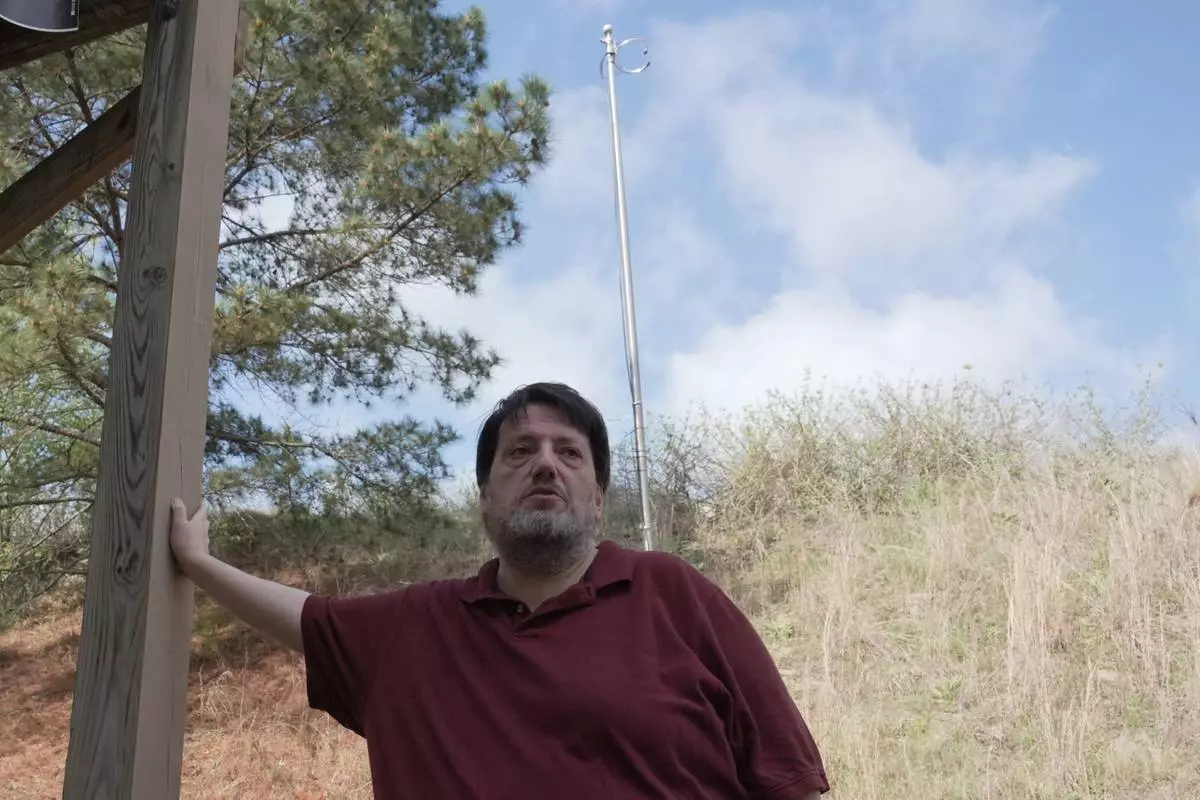
United States' Konnor Ralph looks on during the men's freestyle skiing big air qualifications at the 2026 Winter Olympics, in Livigno, Italy, Sunday, Feb. 15, 2026. (AP Photo/Lindsey Wasson)
United States' Konnor Ralph looks on during the men's freestyle skiing big air qualifications at the 2026 Winter Olympics, in Livigno, Italy, Sunday, Feb. 15, 2026. (AP Photo/Lindsey Wasson)
RALEIGH, N.C. (AP) — Hold on to those Thanksgiving turkeys! WKRP is coming to Cincinnati — for real this time.

“I cannot, by contract, tell you when. I cannot tell you who. But I can tell you, direct to the camera, WKRP, after 48 years, is coming to Cincinnati,” D.P. McIntire, who runs the media nonprofit that is auctioning the famous call letters, told The Associated Press. “Book it! It’s done!”

The call sign was made famous by “WKRP in Cincinnati,” a CBS television sitcom that ran from 1978 to 1982. It made stars of actors like Loni Anderson and Richard Sanders, whose bumbling newsman Les Nessman reported on a Thanksgiving promotion gone bad when live but flightless turkeys were dropped from a helicopter.

McIntire remembers watching the show’s first episode — featuring disc jockeys Dr. Johnny Fever (Howard Hesseman) and Venus Flytrap (Tim Reid) — in the living room with his parents and older sister.

“And at the end of the 30-minute episode,” he said, “I got up and I proclaimed, `I’m going to be in radio. And if I ever have the opportunity, I’m going to run a station called WKRP.’”

McIntire said he got his first on-air job at 13 as a news anchor at WNQQ “Wink FM” in Blairsville, Pennsylvania.

Fast forward to 2014, when his North Carolina-based nonprofit acquired the call sign from the Federal Communications Commission. Stations in Dallas, Georgia, and Alexandria, Tennessee, previously bore the letters.

McIntire laughs as he recalls his chat with a woman in the agency’s audio division.

He had two sets of call letters in mind. She told him he needed a third.

“Being the jokester that I am, I said, `Well, if you need three, and if it’s available, we’ll take WKRP,’” he said. “And 90 seconds later, she came back and she said, `Mr. McIntire. Congratulations. You’re the general manager of WKRP in Raleigh, North Carolina.’”

WKRP-LP — 101.9 on the FM dial — went live Nov. 30, 2015. The LP stands for “low power,” a class of station created to serve more local audiences that didn’t want mass-market content.

“Our format is what radio used to be 35 years ago in small-town America,” he said. "There is Greats of the ‘80s, Sounds of the ’70s, '90s Rewind," as well as local news and “specialty programming.”

LPFM is restricted to nonprofit organizations like his Oak City Media, and it’s definitely local.

“Your broadcast capacity is limited to 100 watts,” McIntire said. “So, your average range is between, depending on your terrain and circumstances, 4 and 12 miles (6 and 19 kilometers) in any direction. Enough to cover a small town.”

And, by necessity, it’s a low-budget affair.

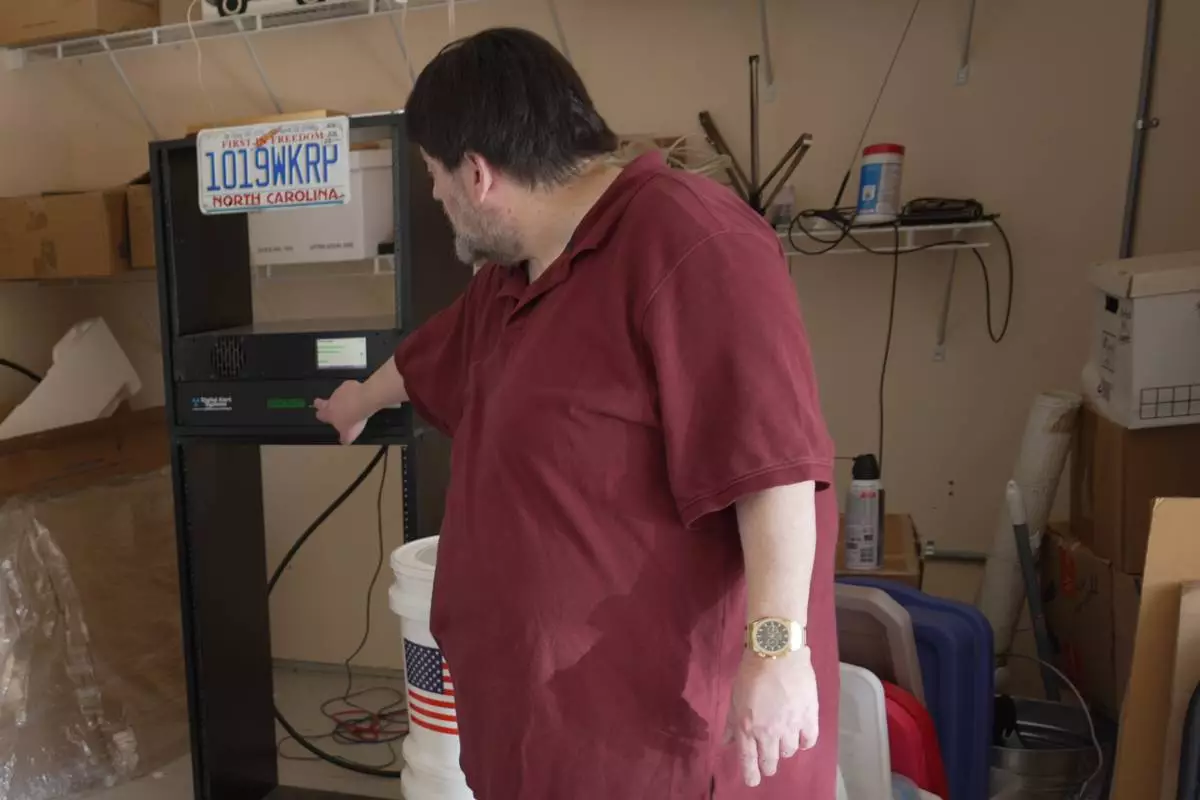
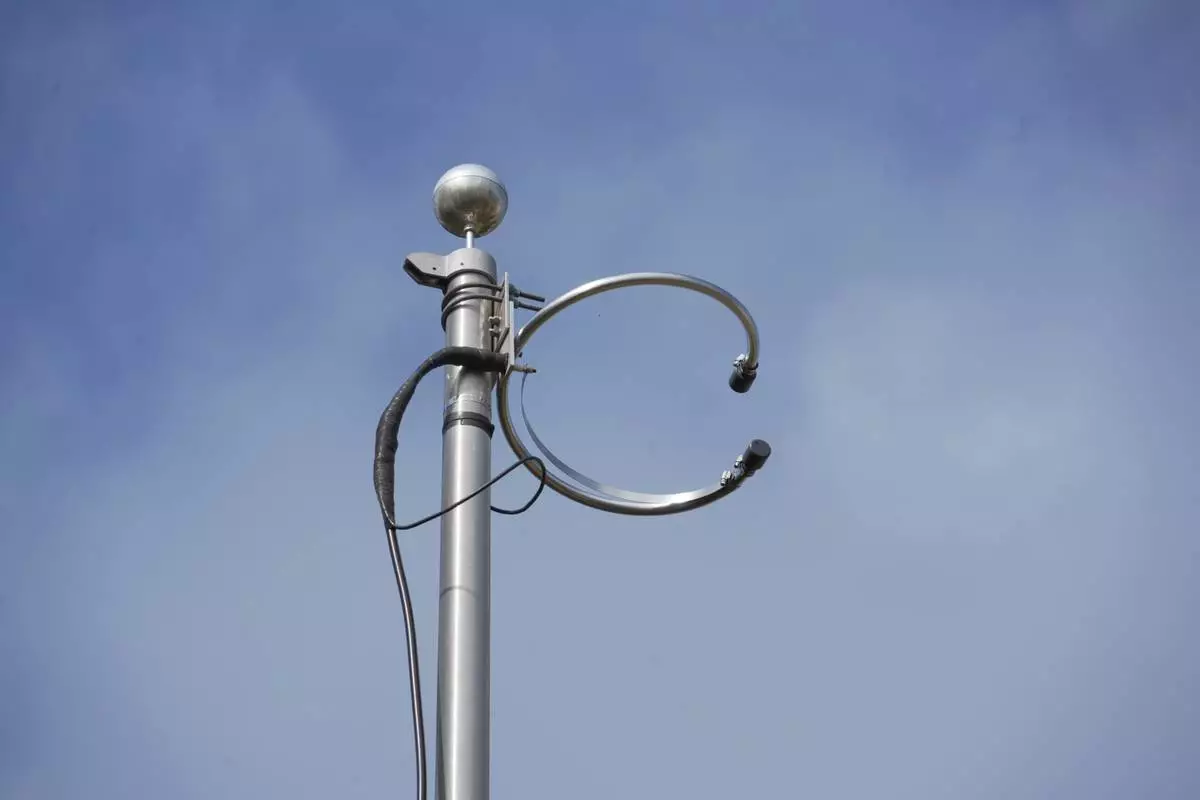
The transmitter is in a corner of McIntire’s garage, between a recycling bin and the cleaning supplies. The broadcast antenna sits atop a 25-foot (7.62-meter) metal flagpole in the backyard. The studio — microphones and a mixing board hooked up to a computer — is on the first floor of McIntire’s home.

Like the WKRP of television, McIntire and his partners set out to be “irreverent.” One of their offerings is a two-hour show called “Weird Al and Friends,” focusing on the satirical works of Weird Al Yankovic.

They even had an annual Thanksgiving turkey giveaway. But don’t call the American Society for the Prevention of Cruelty to Animals — they hand out gift certificates to a local grocery store.

“We don’t toss them out of helicopters,” he said with a laugh.

This news comes hot on the heels of the decision to shutter CBS News Radio after nearly a century in operation. After more than a decade on the air, the 56-year-old McIntire decided it was time to pass the reins.

“We’re in a position where the older members like me who started the station are turning the leadership over to younger members,” he said. “They’re not interested in radio.”

They put out a call for bids to use the call letters on FM and AM radio, as well as television and digital television.

They intend to use the proceeds for a new nonprofit venture called Independent Broadcast Consultants. He said IBC will be “geared specifically toward helping these new broadcasters get up and running, get the consulting that they need in order to be, hopefully, more successful than we have been.”

Oak City Media was all set to hand off the television-related suffixes — WKRP-TV and WKRP-DT — when another group defaulted on the agreement, McIntire said. But he said the Cincinnati deal is in the bag, he just can’t legally discuss it.

“It will be radio,” he said. “But that’s all I can tell you at this time.”

Robert Thompson, who uses a season 2 episode of “WKRP” in his TV history class at Syracuse University, said it’s telling that people see real value in a fictional station whose call letters invoke the word “crap.”

“The value comes from the love of the characters for each other,” he said. “And now by buying this thing, the value comes from our love of the characters themselves.”

Whatever they do with the call sign, McIntire hopes they will be true to the show that inspired it.

“It has a special place in the hearts of an awful lot of people,” he said. “And we have been very, very, very proud to have been a steward of that legacy.”

This story has been updated to correct that the studio is on the first floor of the home, not the basement.

D.P. McIntire leans against a deck beneath the WKRP radio antenna in the backyard of his home in Raleigh, N.C., on Thursday, April 2, 2026. (AP Photo/Allen G. Breed)

D.P. McIntire leans against a deck beneath the WKRP radio antenna in the backyard of his home in Raleigh, N.C., on Thursday, April 2, 2026. (AP Photo/Allen G. Breed)

D.P. McIntire points to the transmitter for WKRP radio in a corner of his garage in Raleigh, N.C., on Thursday, April 2, 2026. (AP Photo/Allen G. Breed)

D.P. McIntire points to the transmitter for WKRP radio in a corner of his garage in Raleigh, N.C., on Thursday, April 2, 2026. (AP Photo/Allen G. Breed)

The WKRP radio antenna sits atop a 25-foot flagpole behind D.P. McIntire's home in Raleigh, N.C., on Thursday, April 2, 2026. (AP Photo/Allen G. Breed)

The WKRP radio antenna sits atop a 25-foot flagpole behind D.P. McIntire's home in Raleigh, N.C., on Thursday, April 2, 2026. (AP Photo/Allen G. Breed)

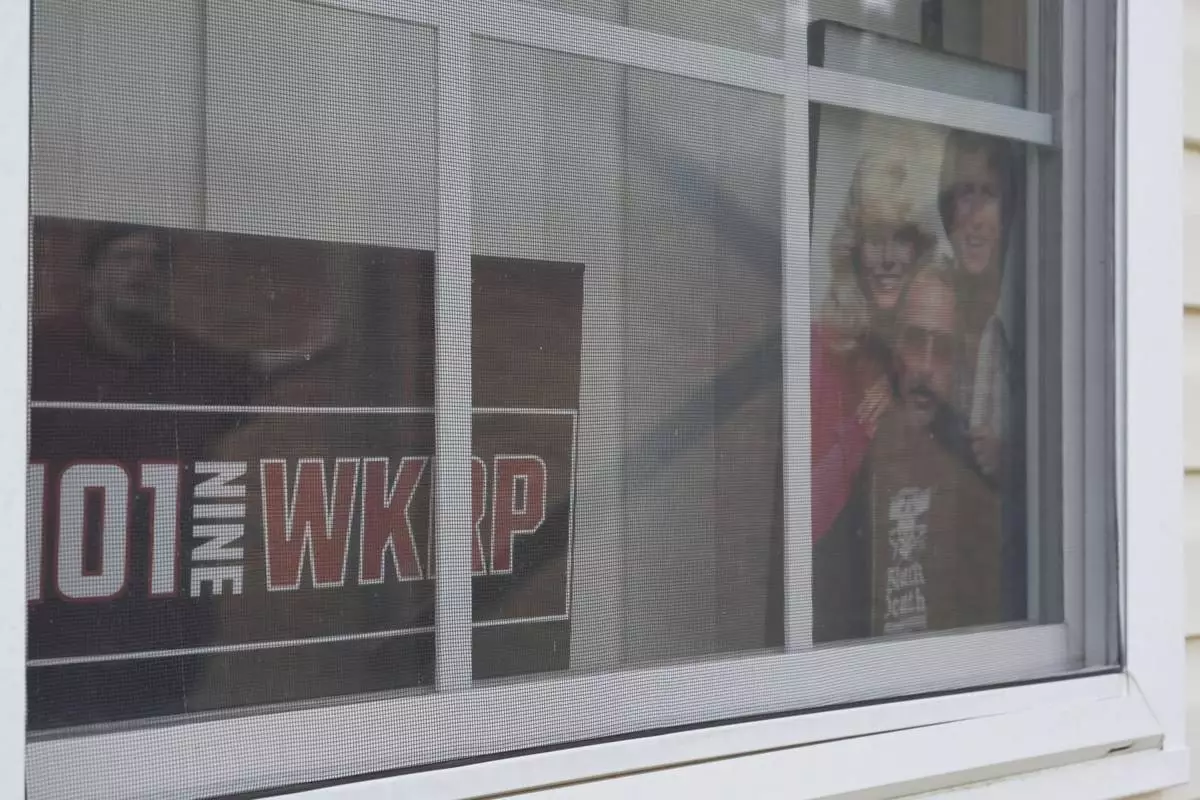
A photo of the cast members of the sitcom "WKRP in Cincinnati" sits in a window at the home of D.P. McIntire in Raleigh, N.C., on Thursday, April 2, 2026. (AP Photo/Allen G. Breed)

A photo of the cast members of the sitcom "WKRP in Cincinnati" sits in a window at the home of D.P. McIntire in Raleigh, N.C., on Thursday, April 2, 2026. (AP Photo/Allen G. Breed)

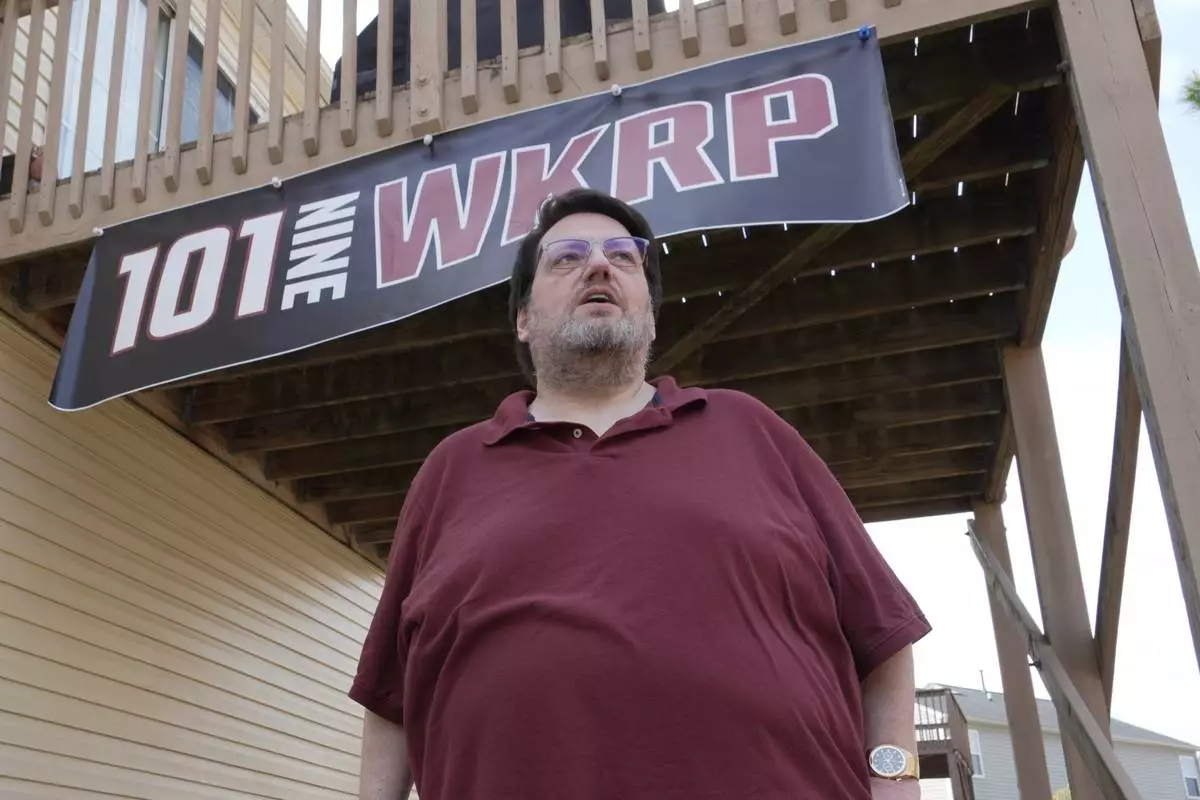
D.P. McIntire stands beneath a WKRP banner in the backyard of his home in Raleigh, N.C., on Thursday, April 2, 2026. (AP Photo/Allen G. Breed)

D.P. McIntire stands beneath a WKRP banner in the backyard of his home in Raleigh, N.C., on Thursday, April 2, 2026. (AP Photo/Allen G. Breed)

Recommended Articles