SAN FRANCISCO--(BUSINESS WIRE)--Feb 17, 2026--
Sphinx, the company building browser-native compliance agents for financial institutions, today announced it has raised a $7.1 million seed round led by Cherry Ventures, with participation from Y Combinator, Rebel Fund, Deel Ventures, and Singularity Capital. The funding will be used to scale Sphinx’s agentic compliance workforce as banks and fintechs increasingly rely on it for core AML, KYC, and KYB operations.
This press release features multimedia. View the full release here: https://www.businesswire.com/news/home/20260217308151/en/
Unlike traditional RegTech software, Sphinx does not ask teams to adopt another system. Its agents work directly inside the tools institutions already use, including case management systems, third-party portals, PDFs, email, and internal dashboards, to perform the work of a human compliance analyst. Agents review alerts, conduct AML and KYB checks, gather supporting research, draft RFIs, and capture their reasoning in a complete, regulator-ready audit trail. Teams typically go live in days, without integrations or system replacements.
“Compliance today is mostly human glue between systems that were never designed to work together,” said Alexandre Berkovic, Co-Founder and CEO. “Sphinx takes on that work directly so analysts can focus on the judgment calls — and institutions finally get a complete, defensible record of how every decision was made.”
Sphinx’s browser-native architecture has allowed it to operate globally from day one, adapting to different workflows and regulatory requirements across more than a dozen regions. Customers include banks, public companies, and fast-growing fintechs that use Sphinx to eliminate manual review work, reduce backlogs, and scale operations without hiring additional analysts.
“Sphinx isn’t just a software, it’s critical operational infrastructure that meets teams where they are: in their systems, procedures, and day-to-day reality,” said Filip Dames, Founding Partner at Cherry Ventures. “Very few products can function inside that level of complexity. That’s what’s driving such rapid adoption across banks and fintechs.”
In production, Sphinx agents have already handled millions of alerts and hundreds of thousands of cases, clearing months-long backlogs in days. Customers report dramatic reductions in manual reviews, faster onboarding, and materially lower exposure to compliance errors and fines. Equals Money saw a 94% reduction in false positives while catching more true positives, and several institutions now operate internationally without expanding compliance headcount, cutting operational costs by up to 4x.
Sphinx seeks to tackle the $200B+ spent every year on compliance teams and outsourced review houses doing work software was never built to do. Institutions don’t need another dashboard, they need the work done.
Sphinx reflects the backgrounds of its founders, Alexandre Berkovic and Chrisjan Wüst, and the team they’ve brought together. Chrisjan built AML and onboarding infrastructure for 15M+ users as the first employee at RelyComply, while Alex specialized in AI research at Imperial and MIT. This is their second company together, following a prior exit. Sphinx’s early team includes ex-operators, PhDs, and former compliance officers from global banks.
About Sphinx Sphinx builds customizable, browser-native intelligent agents that run on top of existing systems to automate compliance operations end-to-end, with no engineering work required. Every decision is logged and explainable by design, making automated compliance auditable, scalable, and ultimately insurable. Sphinx works with large banks, global fintechs, and neobanks to eliminate manual reviews, reduce operational risk, and enable fast, compliant expansion across markets. https://sphinxhq.com/

Chrisjan Wüst (left), Co-Founder and CTO, and Alexandre Berkovic (right), Co-Founder and CEO of Sphinx
GENEVA (AP) — The U.S. and Iran held their second round of talks about Iran’s nuclear program on Tuesday in Geneva as Iran said it will close the Strait of Hormuz for several hours for live fire military exercises and the United States ramps up its military forces in the region.
As the talks began, Iranian media announced that Iran had fired live missiles toward the Strait of Hormuz, and said it will close the Strait for several hours for “safety and maritime concerns.”
This is the first time that Iran has closed parts of the Strait, an essential international waterway, since the U.S. began threatening Iran with military action. Iran on Monday announced a maritime military exercise in waterways that are crucial international trade routes through which 20% of the world’s oil passes. Iran previously held a live fire drill in the Strait of Hormuz several weeks ago but did not announce closures.
The semi-official Tasnim news agency, which is close to the paramilitary Revolutionary Guard, said missiles launched inside Iran and along its coast had struck their targets in the Strait of Hormuz.
Iranian state TV later reported that the latest round of talks had ended after almost three hours.
Iranian state TV reported Tuesday that the negotiations with the U.S. will be indirect and will focus only on Iran’s nuclear program, not domestic policies including its bloody crackdown on protesters last month.
U.S. President Donald Trump has repeatedly threatened to use force to compel Iran to agree to constrain its nuclear program. Iran has said it would respond with an attack of its own. Trump has also threatened Iran over its deadly crackdown on recent nationwide protests.
The first round of talks Feb. 6 were held in Oman, a sultanate on the eastern edge of the Arabian Peninsula, and were indirect. Similarly to the last round of talks, the Iranians appeared to be meeting with Omani mediators separately from the Americans on Tuesday.
Trump’s envoys Steve Witkoff and Jared Kushner were traveling for the new round of talks.
Iranian Foreign Minister Abbas Araghchi, who is leading the talks for Iran, met with the head of the U.N. nuclear watchdog agency Monday in Geneva.
“I am in Geneva with real ideas to achieve a fair and equitable deal,” Araghchi wrote on X. “What is not on the table: submission before threats.”
Talking to reporters Monday night aboard Air Force One on his way to Washington, U.S. President Donald Trump said he planned to be involved in the talks, at least indirectly. “I think they want to make a deal. I don’t think they want the consequences of not making a deal," he said.
The U.S. is also hosting talks between envoys from Russia and Ukraine in Geneva on Tuesday and Wednesday, days ahead of the fourth anniversary of the all-out Russian invasion of its neighbor.
Iran announced that the Revolutionary Guard started a drill early Monday morning in the Strait of Hormuz, the Persian Gulf and the Gulf of Oman, which are crucial international shipping routes. It was the second time in recent weeks that Iran has held a live fire drill in the Strait of Hormuz.
Iran's Supreme Leader Ayatollah Ali Khamenei stepped up his warnings to the U.S. over its buildup of military forces in the Middle East.
“Of course a warship is a dangerous apparatus, but more dangerous than the warship is the weapon that can sink the warship into the depths of the sea,” Khamanei said, Iranian state TV reported.
He also warned the U.S. that “forcing the result of talks in advance is a wrong and foolish job."
Last week, Trump said the USS Gerald R. Ford, the world’s largest aircraft carrier, was being sent from the Caribbean Sea to the Mideast to join other warships and military assets the U.S. has built up in the region.
The Ford, whose new deployment was first reported by The New York Times, will join the USS Abraham Lincoln and its accompanying guided-missile destroyers, which have been in the region for over two weeks. U.S. forces already have shot down an Iranian drone that approached the Lincoln on the same day last week that Iran tried to stop a U.S.-flagged ship in the Strait of Hormuz.
Gulf Arab nations have warned any attack could spiral into another regional conflict in a Mideast still reeling from the Israel-Hamas war in the Gaza Strip.
The Trump administration is seeking a deal to limit Iran’s nuclear program and ensure it does not develop nuclear weapons. Iran says it is not pursuing weapons and has so far resisted demands that it halt uranium enrichment or hand over its supply of uranium.
The U.S. and Iran were in the middle of months of meetings when Israel’s launch of a 12-day war against Iran back in June instantly halted the talks. The U.S. bombed Iranian nuclear sites during that war, likely destroying many of the centrifuges that spun uranium to near weapons-grade purity. Israel’s attacks decimated Iran’s air defenses and targeted its ballistic missile arsenal as well.
Iran has insisted its nuclear program is for peaceful purposes. Before the June war, Iran had been enriching uranium up to 60% purity, a short, technical step away from weapons-grade levels.
Iran is marking 40 days, the traditional Muslim mourning period, since one of the deadliest days in the crackdown on protests that swept the country last month. Activists say at least 7,015 people have been killed, many in a bloody crackdown overnight between Jan. 8 and 9.
The U.S.-based Human Rights Activists News Agency, which offered the latest figures, has been accurate in counting deaths during previous rounds of unrest in Iran and relies on a network of activists in the country to verify deaths.
The Associated Press has been unable to independently assess the death toll, given authorities have disrupted internet access and international calls in Iran.
Iran’s state news agency said the government would hold a memorial marking 40 days at the Grand Mosalla mosque in Tehran, and blamed the demonstrations on “violent actions by armed groups allegedly directed by foreign intelligence agencies.”
Liechtenstein reported from Vienna. Associated Press writer Melanie Lidman contributed from Tel Aviv, Israel.
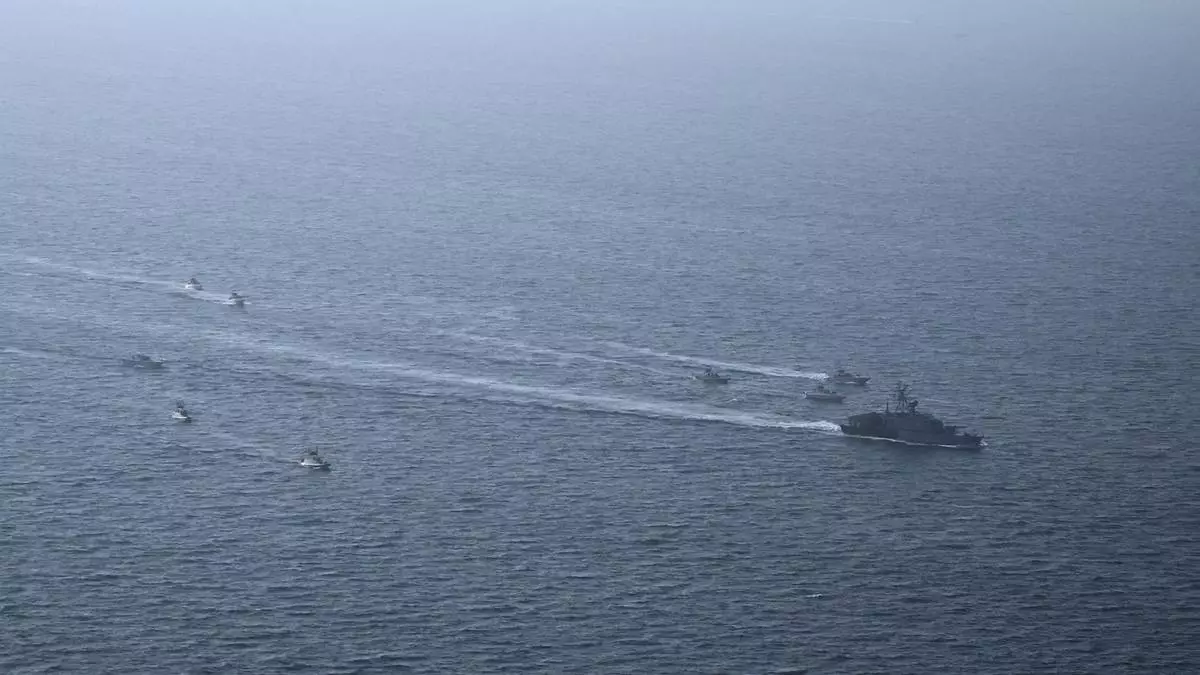
In this image provided by Sepahnews of the Iranian Revolutionary Guard on Feb. 16, 2026, shows the Iranian Revolutionary Guard's drill in the Persian Gulf on Monday, Feb. 16, 2026. (Sepahnews via AP)
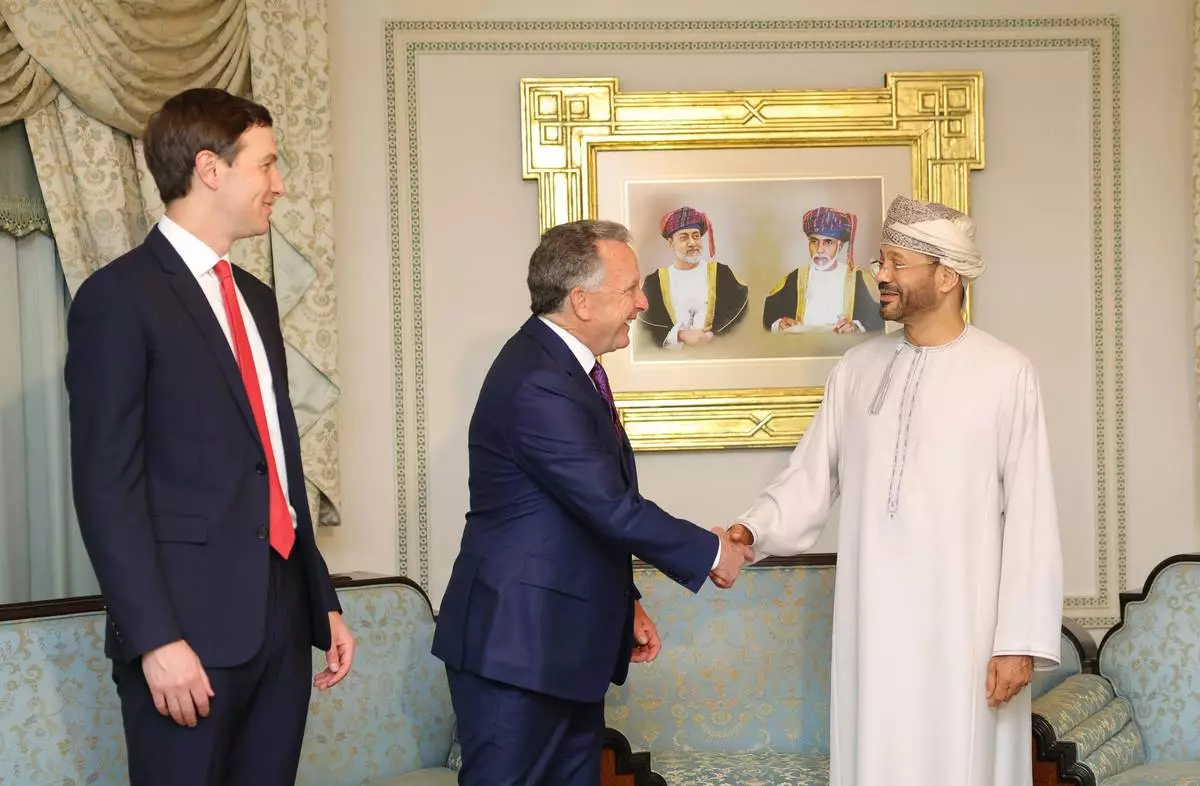
FILE - In this photo released by the Oman's Foreign Ministry, Steve Witkoff, White House special envoy, center, shakes hands with Oman's Foreign Minister Sayyid Badr Albusaidi, accompanied by Jared Kushner, left, during a meeting prior to Iran and U.S. negotiations in Muscat, Oman, Friday, Feb. 6, 2026. (Oman Foreign Ministry via AP, File)
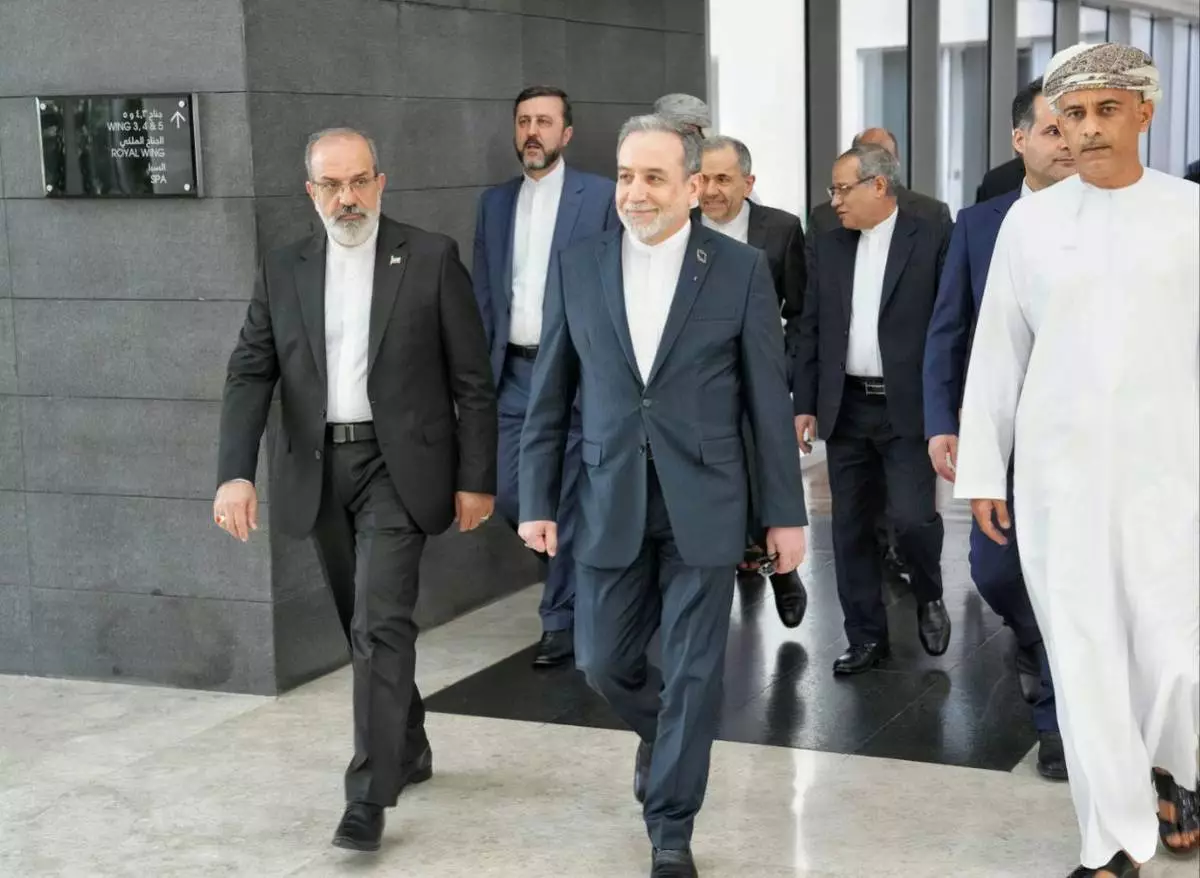
FILE - In this photo released by the Iranian Foreign Ministry, Iranian Foreign Minister Abbas Araghchi, center, heads to the venue for talks between Iran and the U.S., in Muscat, Oman, Friday, Feb. 6, 2026. (Iranian Foreign Ministry via AP, File)
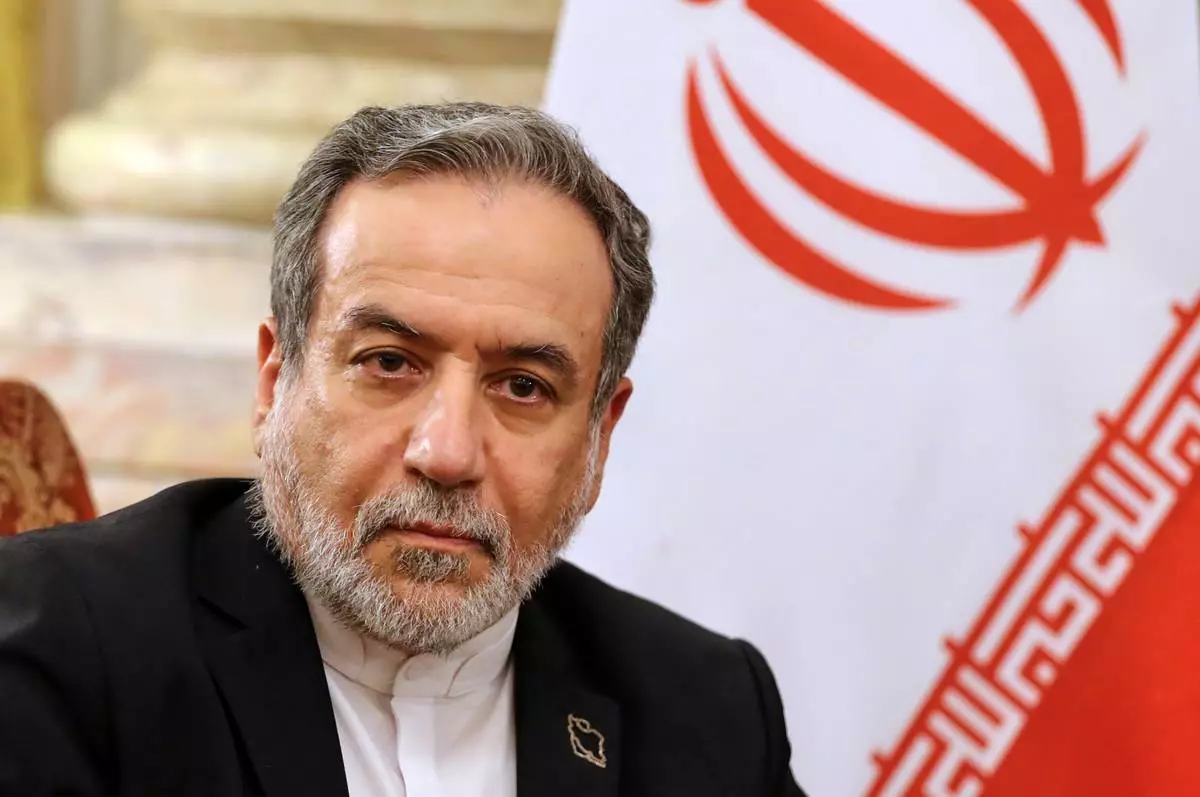
FILE - Iranian Foreign Minister Abbas Araghchi looks on during a meeting with Director General of the International Atomic Energy Agency (IAEA) Rafael Grossi, and Egyptian Foreign Minister Badr Abdelatty, at Tahrir Palace in Cairo, Tuesday, Sept. 9, 2025. (AP Photo/Khaled Elfiqi, File)
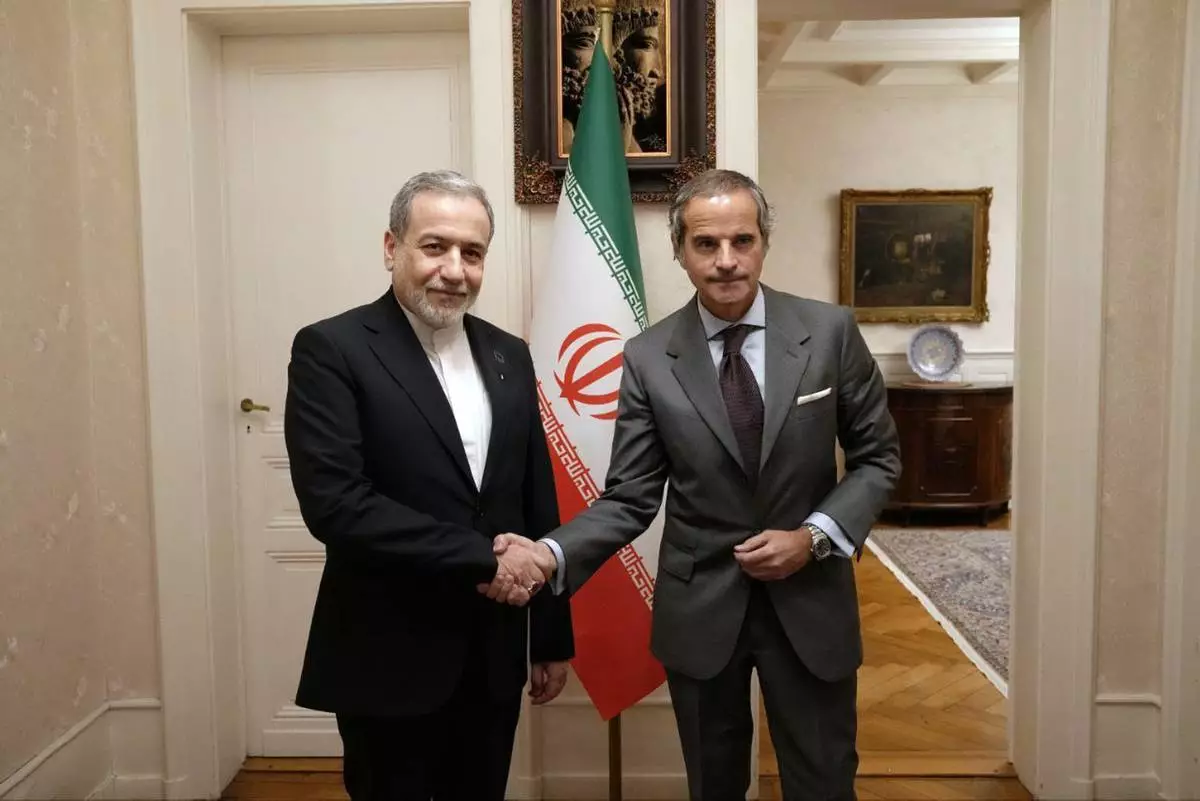
In this photo released by the Iranian Foreign Ministry, Iranian Foreign Minister Abbas Araghchi, left, shakes hands with International Atomic Energy Agency (IAEA) Director-General Rafael Grossi during their meeting in Geneva, Switzerland, Monday, Feb. 16, 2026. (Iranian Foreign Ministry via AP)
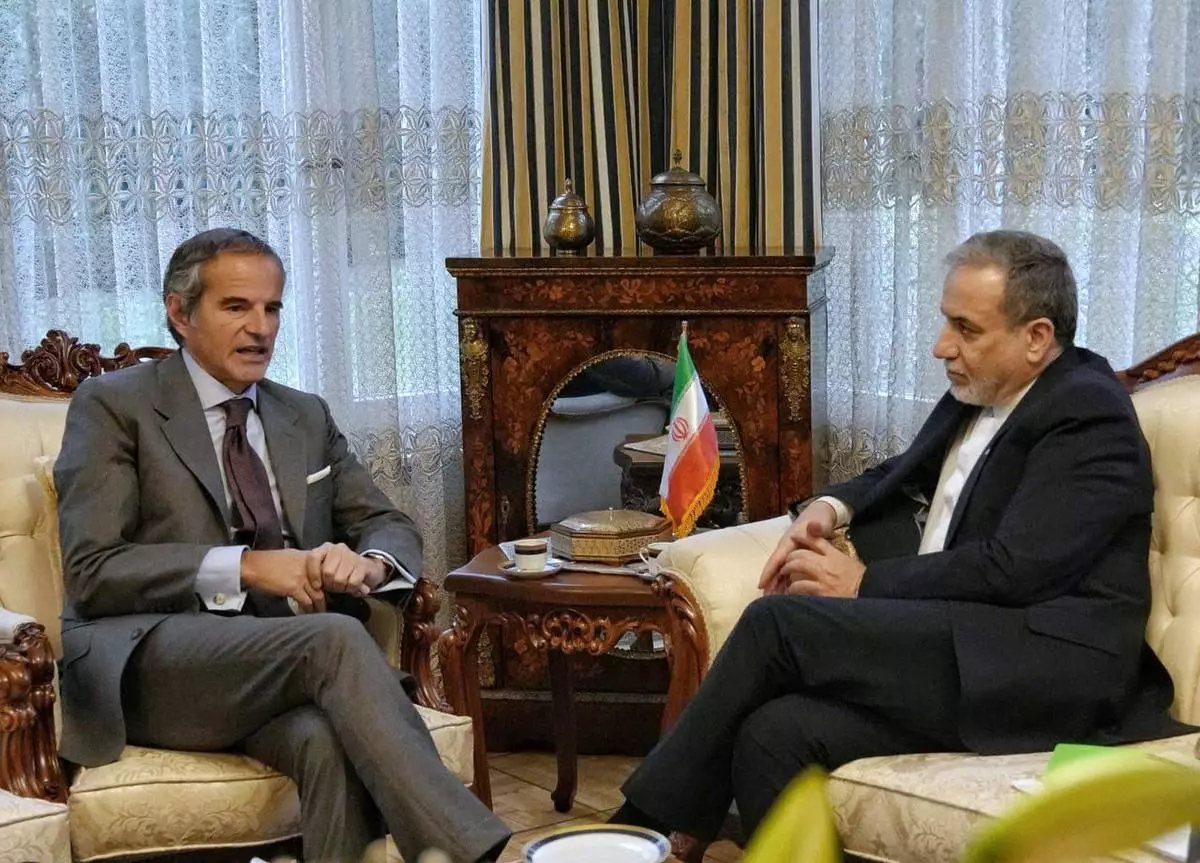
In this photo released by the Iranian Foreign Ministry, Iranian Foreign Minister Abbas Araghchi, right, and International Atomic Energy Agency (IAEA) Director-General Rafael Grossi, left, hold a meeting in Geneva, Switzerland, Monday, Feb. 16, 2026. (Iranian Foreign Ministry via AP)