European soccer must avoid going in the direction of microscopic VAR intervention, UEFA refereeing director Roberto Rosetti said on Tuesday.
Technology was introduced to erase clear and obvious errors, but supporters have become frustrated that it is causing matches to be re-refereed.
Rosetti did not criticise any one competition, although he shared the general concern that VAR was at risk of going too far.
“I believe we forgot the reason why VAR was introduced," Rosetti said. "We forgot a little bit. Everywhere. You remember, eight years ago, I came to London (to brief journalists). We discussed ‘what VAR stands for’.
“We spoke about clear mistakes. Why we spoke about clear and obvious mistakes. Technology works so well in factual decisions. For interpretations, subjective evaluation is more difficult.
"I believe that we need, at the end of the season in our meetings, to speak about this. We cannot go in this direction of microscopic VAR intervention. We love football like it is. When you are watching (a) situation with a super slow motion, you can find a lot of things.”
Rosetti also said more work was needed to come up with a common interpretation of the handball law across Europe, and said he would speak again to referees’ chiefs around the continent about it.
“We must speak only one technical language (on handball),” he said. “We were speaking a lot for sure before the season, we need to speak again (and have) only one uniform and consistent interpretation. We are working for this.”
Rosetti said European soccer's governing body was delighted with the new captain-referee communication protocol that was introduced ahead of Euro 2024.
“We are very happy with this,” he said. “It’s about respect and about protecting the image of the game.”
The UEFA Champions League resumes later on Tuesday with four knockout round playoff matches.
AP soccer: https://apnews.com/hub/soccer
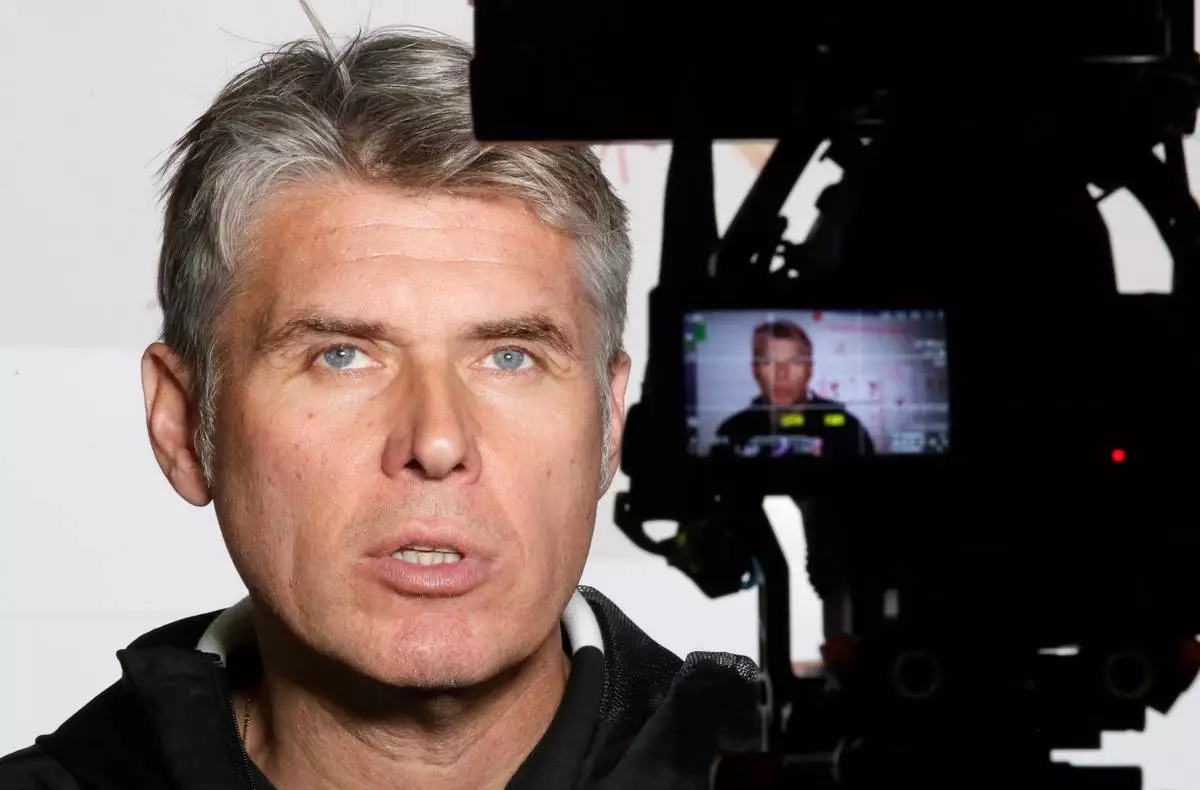
FILE - Video Assistant Referee (VAR) Project Leader Roberto Rosetti speaks to the media at the 2018 World Cup International Broadcast Centre in Moscow, Russia, June 9, 2018. (AP Photo/Dmitri Lovetsky, File)
CORTINA D'AMPEZZO, Italy (AP) — Mikaela Shiffrin likes to invoke the adage from tennis great Billie Jean King that “pressure is a privilege.” Even if, at times, it doesn't quite feel like it.
And it might not at the moment for the American skiing star as she prepares for her third and final race at the Milan Cortina Olympics.
Shiffrin heads into Wednesday's slalom still looking for her first medal at Tofane and her first Olympic medal in a staggering eight years. A bafflingly slow performance in the slalom during women's combined last week cost Shiffrin and teammate Breezy Johnson a spot on the podium.
The winningest ski racer in history felt faster and more confident during the giant slalom a few days later, with her 11th-place finish more a testament to what she described as the “greatest show” GS had put on in quite some time than her actual performance. Shiffrin was just three-tenths of a second off the podium, a razor-thin margin in an event where the time gap between the winners and the rest of the field is usually far greater.
Shiffrin's meticulous preparation for her signature discipline — she's already wrapped up a record ninth World Cup series title in slalom with two races remaining — included reacclimating herself to the singular rhythm of an event where tempo is everything.
You'd think after 71 slalom wins — including seven this year alone — that would be no big deal. At this point in the 30-year-old's career, it's not.
“No matter how many runs of slalom I do it never gets easier,” said Shiffrin, who collected her first Olympic gold in the event as a teenager in Sochi a dozen years ago. “It only gets like you become more aware of how challenging it is.”
And that's just the physical part. The mental side is another matter entirely.
Shiffrin carries the burden of expectations that are part of the deal — fairly or unfairly — when you cut and paste your name all over your sport's record book. She has been characteristically transparent while discussing wrangling with those expectations, even though in many ways they're well outside of her control.
She arrived in the Dolomite Mountains confident those forgettable days in Beijing four years ago, when she failed to medal in any of the six events she entered, were behind her. The uncharacteristically slow run in the women's combined left her mystified and subdued. The aggressiveness she displayed in the GS left her upbeat and optimistic.
Still, when she stands in the starter's house during the final women's alpine race of these Olympics, the standard set for her will be different from everyone else, including reigning gold medalistPetra Vlhova of Slovakia.
“I can imagine what she’s feeling right now,” Vlhova said. “But … she’s strong and I believe she can make it. It takes a lot of energy but I believe that she can do it.”
Vlhova has taken her own winding path back to this moment. She shredded multiple ligaments in her right knee in January 2024 and didn't return to competition until the women's combined on Feb. 10. She didn't finish her run but it also in a way didn't matter as she hits what she described as the “restart” button.
During Vlhova's absence, Shiffrin has cemented her legacy. Her career World Cup wins in all disciplines currently stands at 108 and counting, including eight in her last nine slalom starts dating to the end of last season.
She is, by every measure, the best skier in the field. Yet the course is a little flatter and perhaps a little easier than what they usually encounter. There's a very real chance things could be just as tight on Wednesday as they were during the GS. Maybe even closer.
It means Shiffrin's margin for error during her two runs might be smaller than usual, and she knows it. Her run in the women's combined, when she was 15th, her worst ranking in a slalom race she's started and finished since 2012, caught her off guard.
A dedicated student of her craft, Shiffrin believes her skis got misaligned a few times. The flat light on a gray afternoon played a factor, too. So did a mentality that she admitted didn't match the moment, something she'll try to address as she aims to end her fourth trip to the Olympics on an up note.
“I’m kind of going into it with my eyes open that we can see a very similar situation and I will try to handle it differently in my head,” she said.
Such is the challenge that is unique to this once-every-four-years spectacle. There is little debate that Shiffrin is the Greatest of All Time. Her struggles under this specific spotlight, however, have put her in a strange and perhaps unenviable spot.
She has tried to handle it with grace. U.S. Skiing and Snowboarding president Sophie Goldschmidt called Shiffrin “the ultimate role model” and, even as she grappled with how a spot on the podium in the combined got away, she made it a point to give longtime teammates Jackie Wiles and Paula Moltzan their flowers after earning their first Olympic medals.
Whatever happens, those who know Shiffrin well believe she will leave it all out there. If she does that she can make peace with the result, whatever it may be.
“She has a lot of experience,” Vlhova said. “She knows how to deal with it and as I said, I believe that she can make it.”
AP Sports Writer Andrew Dampf contributed to this story.
AP Olympics: https://apnews.com/hub/milan-cortina-2026-winter-olympics
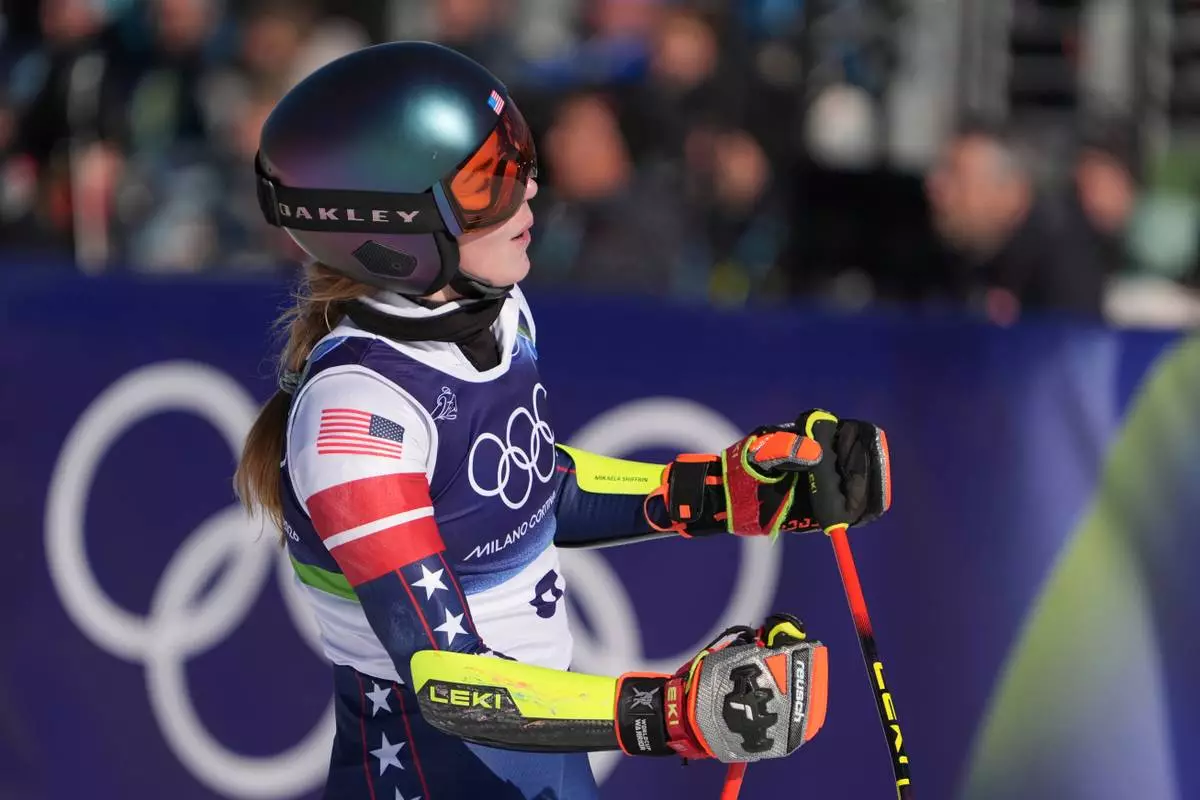
United States' Mikaela Shiffrin at the finish area of an alpine ski, women's giant slalom race, at the 2026 Winter Olympics, in Cortina d'Ampezzo, Italy, Sunday, Feb. 15, 2026. (AP Photo/Jacquelyn Martin)
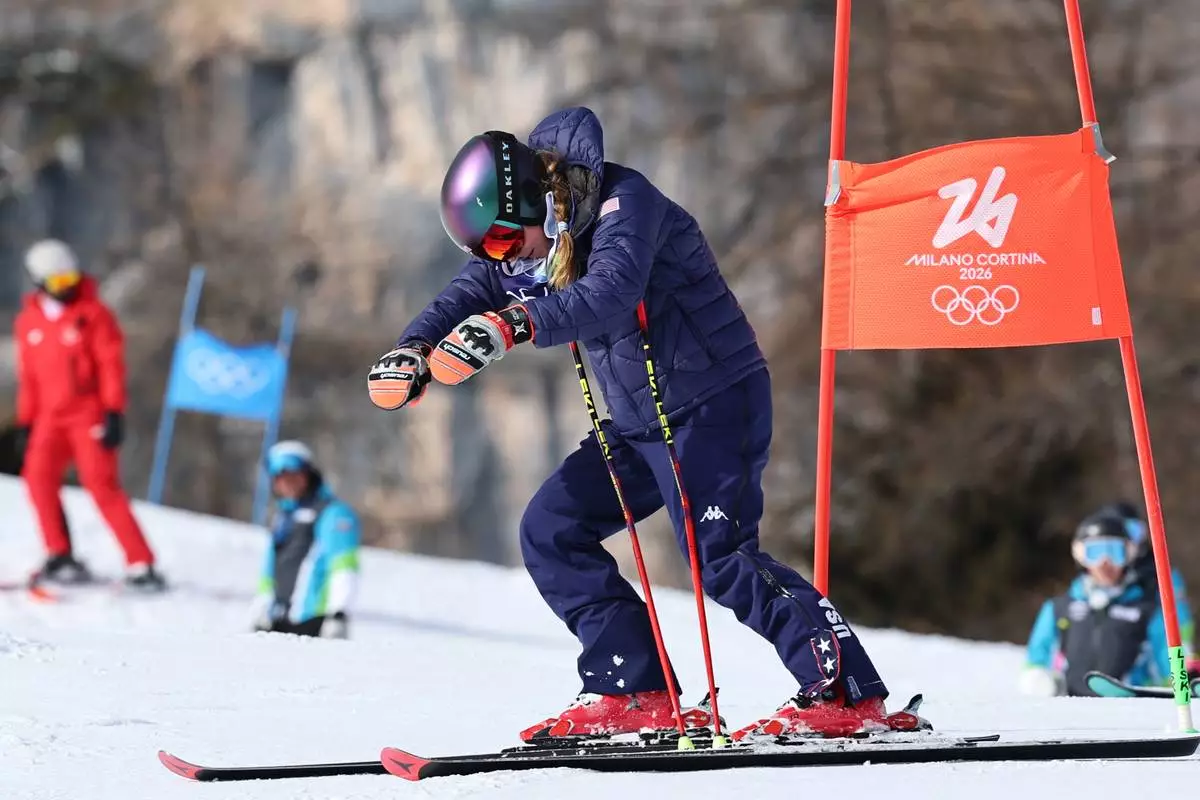
United States' Mikaela Shiffrin visualizes the course ahead of the second run of an alpine ski, women's giant slalom race, at the 2026 Winter Olympics, in Cortina d'Ampezzo, Italy, Sunday, Feb. 15, 2026. (AP Photo/Marco Trovati)
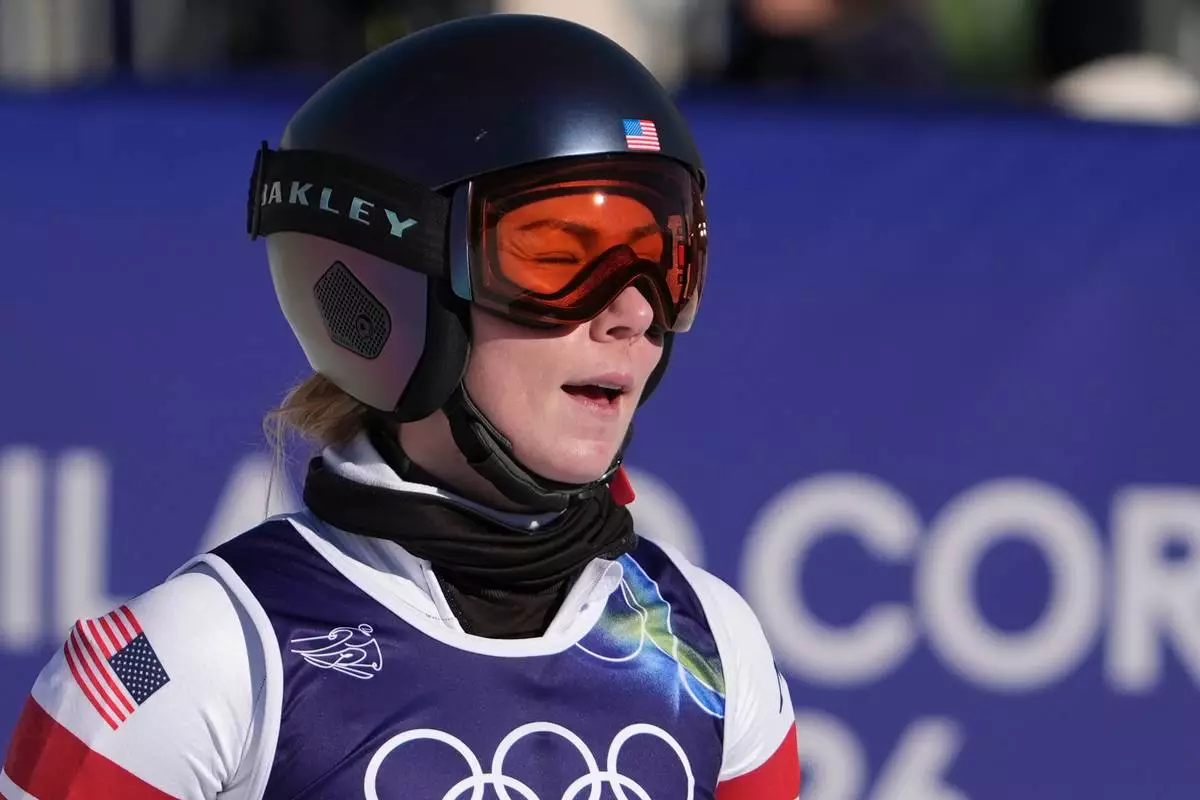
United States' Mikaela Shiffrin at the finish area of an alpine ski, women's giant slalom race, at the 2026 Winter Olympics, in Cortina d'Ampezzo, Italy, Sunday, Feb. 15, 2026. (AP Photo/Jacquelyn Martin)