Eulogies are pouring in after the death of the Rev. Jesse L. Jackson, who led the U.S. Civil Rights Movement for decades. The protege of the Rev. Martin Luther King Jr. and two-time presidential candidate was 84.
“He was a gifted negotiator and a courageous bridge‑builder, serving humanity by bringing calm into tense rooms and creating pathways where none existed.
Click to Gallery
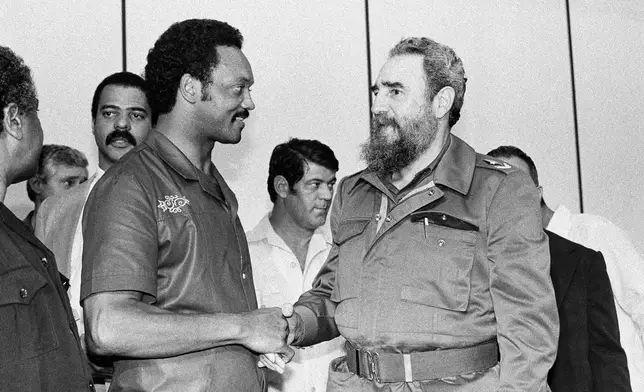
FILE - Democratic Presidential candidate Rev. Jesse Jackson and Cuban President Fidel Castro shake hands following a post-midnight news conference in Havana, Cuba, where the two leaders outlined a plan for improving relations between the U.S. and Cuba, June 7, 1984. (AP Photo/J. Scott Applewhite, File)
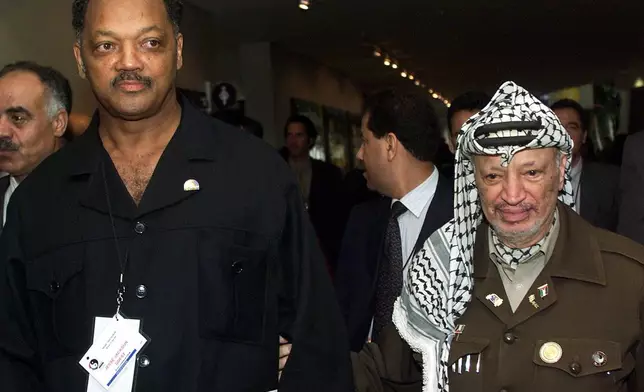
FILE - Civil rights activist Jesse Jackson, left, walks with Palestinian leader Yasser Arafat after the opening ceremony of the World Conference Against Racism in Durban, South Africa, Aug. 31, 2001. (AP Photo/Jose Goitia, File)
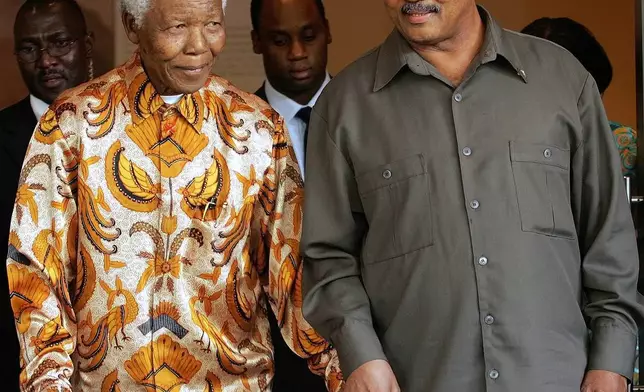
FILE - Former South African President Nelson Mandela, left, walks with the Rev. Jesse Jackson after their meeting in Johannesburg, South Africa, Oct. 26, 2005. (AP Photo/Themba Hadebe, File)
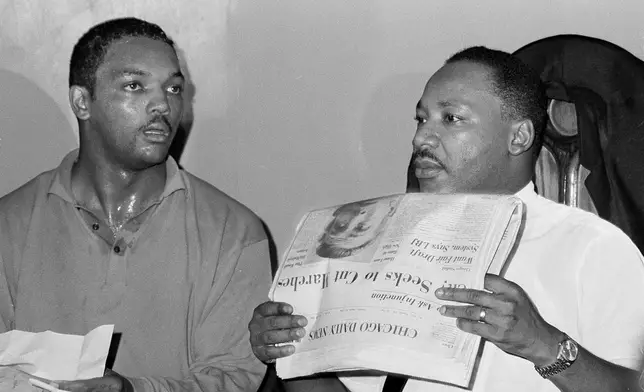
FILE - Civil rights leader Dr. Martin Luther King, Jr., right, and his aide Rev. Jesse Jackson are seen in Chicago, Aug. 19, 1966. (AP Photo/Larry Stoddard, File)
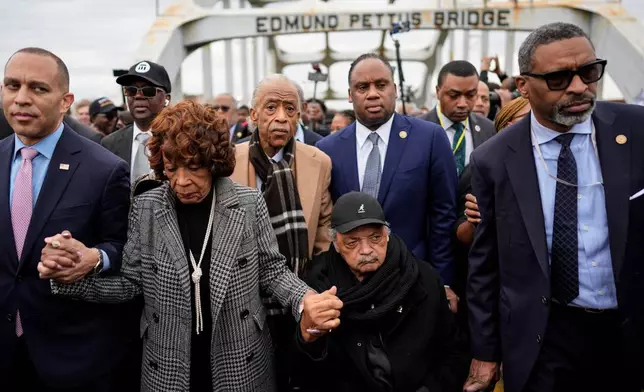
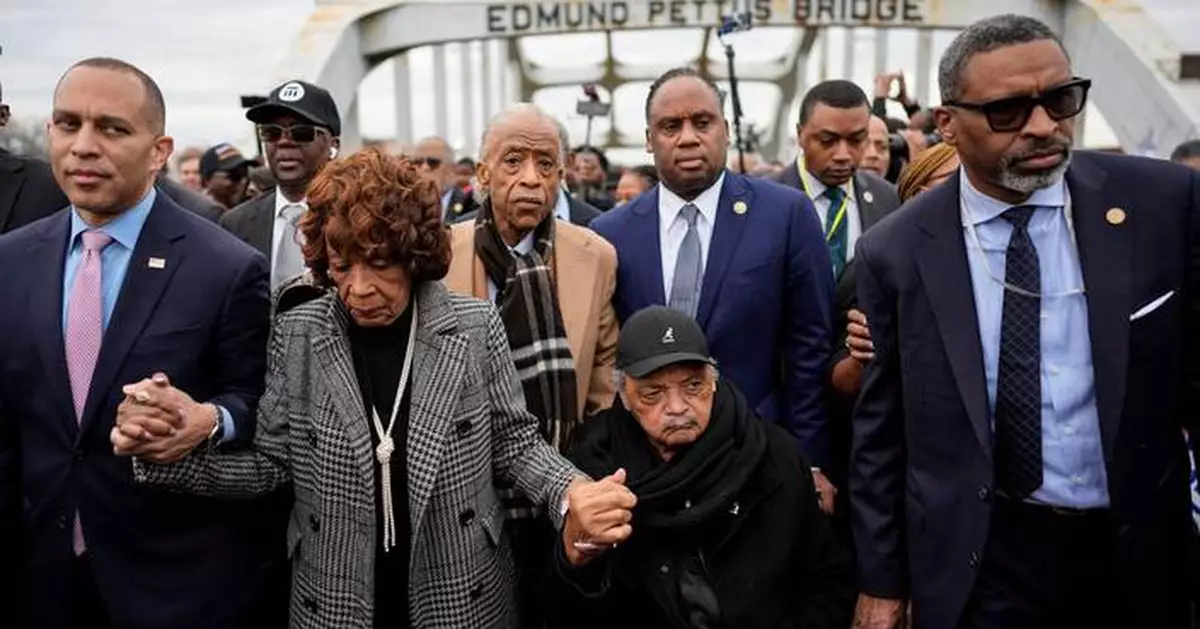
FILE - U.S. Rep. Hakeem Jeffries, D-NY, U.S. Rep. Maxine Waters, D-Calif., Rev. Al Sharpton, Rev. Jesse Jackson and NAACP President Derrick Johnson march across the Edmund Pettus bridge during the 60th anniversary of the march to ensure that African Americans could exercise their constitutional right to vote, March 9, 2025, in Selma, Ala. (AP Photo/Mike Stewart, File)
“My family shares a long and meaningful history with him, rooted in a shared commitment to justice and love. As we grieve, we give thanks for a life that pushed hope into weary places.”
“Today, I lost the man who first called me into purpose when I was just twelve years old. And our nation lost one of its greatest moral voices. The Reverend Jesse Louis Jackson was not simply a civil rights leader; he was a movement unto himself. He carried history in his footsteps and hope in his voice. One of the greatest honors of my life was learning at his side. He reminded me that faith without action is just noise. He taught me that protest must have purpose, that faith must have feet, and that justice is not seasonal, it is daily work.”
"Reverend Jackson helped lead some of the most significant movements for change in human history. ... Reverend Jackson also created opportunities for generations of African Americans and inspired countless more, including us. Michelle got her first glimpse of political organizing at the Jacksons’ kitchen table when she was a teenager. And in his two historic runs for president, he laid the foundation for my own campaign to the highest office in the land.”
“I knew him well, long before becoming President. He was a good man, with lots of personality, grit, and ‘street smarts.’ He was very gregarious - Someone who truly loved people! ... Jesse was a force of nature like few others before him.”
“We were friends for almost fifty years since we met in 1977 at the 20th anniversary of the integration of Little Rock Central High. ... Reverend Jackson championed human dignity and helped create opportunities for countless people to live better lives. Throughout it all, he kept marching to the music of his conscience, his convictions, and his causes.”
“The Reverend Jackson lent his powerful voice to the U.N. to work against racism, against apartheid, and for human rights, including taking part in a number of events here at U.N. headquarters.” — in a statement from U.N. spokesman Stephane Dujarric.
“Reverend Jackson believed in his bones the promise of America: that we are all created equal in the image of God and deserve to be treated equally throughout our lives. While we’ve never fully lived up to that promise, he dedicated his life to ensuring we never fully walked away from it either.”
“The Reverend taught me so many things through the enormity of his leadership, his passion, and his endless sacrifices for ‘the least of these.’ ... He taught everybody that we are SOMEBODY, and his spirit will endure forever."
“He was a frequent presence during our April 4th commemorations of Dr. King’s assassination at the Lorraine Motel, not as a guest, but as a witness to history and a steward of King’s unfinished work. His words, presence, and leadership during those solemn remembrances reminded us all of the price of freedom and the urgency of our continued struggle.” — The National Civil Rights Museum is located on the site of the former motel where King was assassinated
“Reverend Jesse Jackson was not only a civil rights icon—he was family to the NAACP. His work advanced Black America at every turn. He challenged this nation to live up to its highest ideals, and he reminded our movement that hope is both a strategy and a responsibility. His historic run for president inspired millions and brought race to the forefront of American politics." — NAACP Chairman Leon W. Russell, Vice Chair Karen Boykin Towns and President & CEO Derrick Johnson
“His campaigns for an end to apartheid included disinvestment from the apartheid economy and challenging the support the regime enjoyed in certain circles and institutions internationally.
“We are deeply indebted to the energy, principled clarity and personal risk with which he supported our struggle and campaigned for freedom and equality in other parts of the world.”
“Of the generation that took up the mantle directly from Dr. King, Jesse Jackson stood among the last standard-bearers. ... He created what he often called ‘productive tension,’ forcing the nation to confront its conscience and act.” — Morial is the National Urban League president and CEO
“His historic presidential campaigns paved the way for generations of Black leaders to imagine ourselves in rooms we were once told were closed to us. Reverend Jackson also stood up when it mattered; when it wasn’t easy and when it wasn’t popular. His support for marriage equality and for LGBTQ+ people affirmed a simple, powerful truth: our liberation is bound together.” — Robinson is president of the Human Rights Campaign, a national LGBTQ+ rights organization
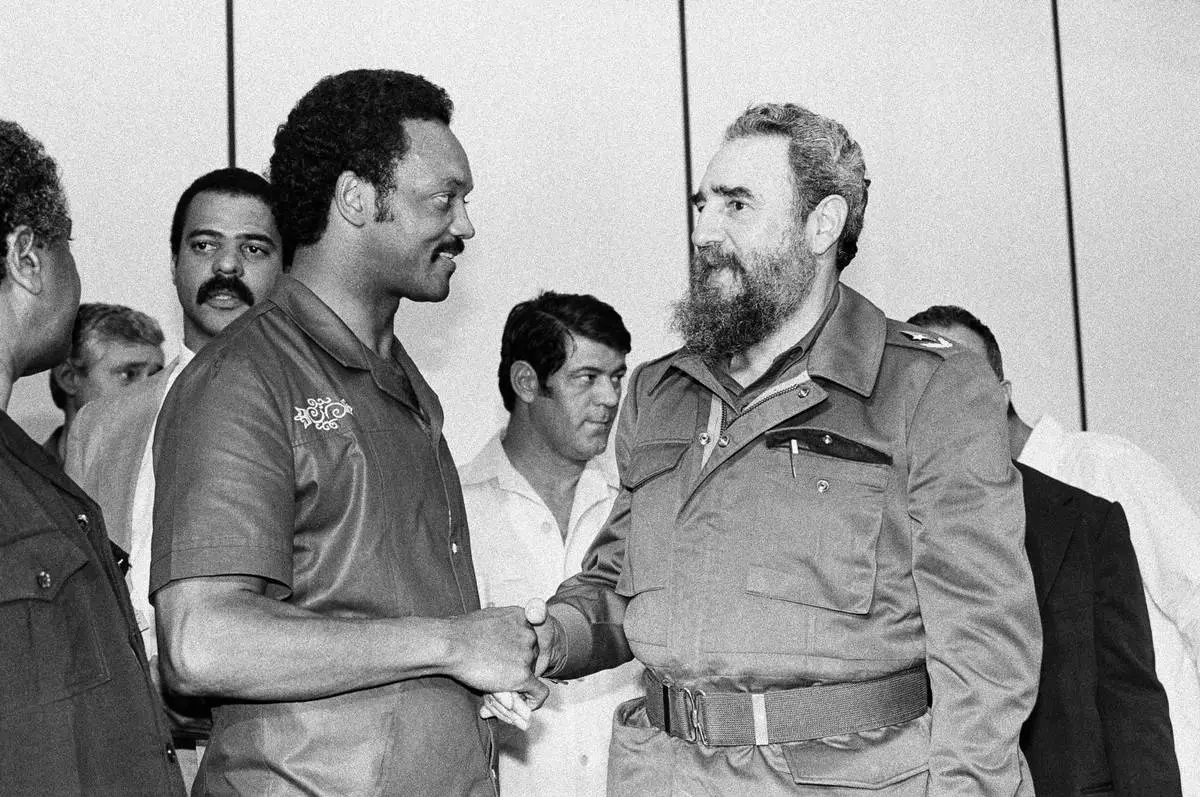
FILE - Democratic Presidential candidate Rev. Jesse Jackson and Cuban President Fidel Castro shake hands following a post-midnight news conference in Havana, Cuba, where the two leaders outlined a plan for improving relations between the U.S. and Cuba, June 7, 1984. (AP Photo/J. Scott Applewhite, File)
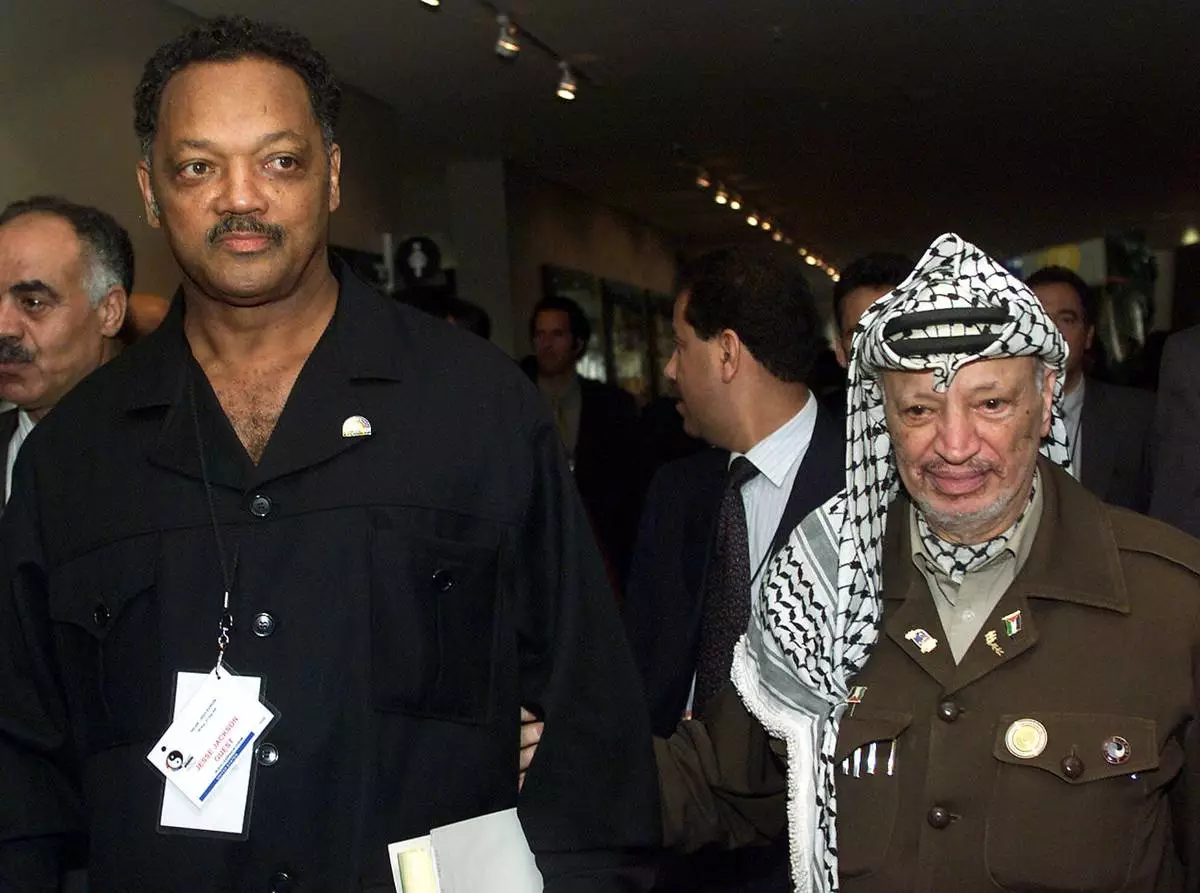
FILE - Civil rights activist Jesse Jackson, left, walks with Palestinian leader Yasser Arafat after the opening ceremony of the World Conference Against Racism in Durban, South Africa, Aug. 31, 2001. (AP Photo/Jose Goitia, File)
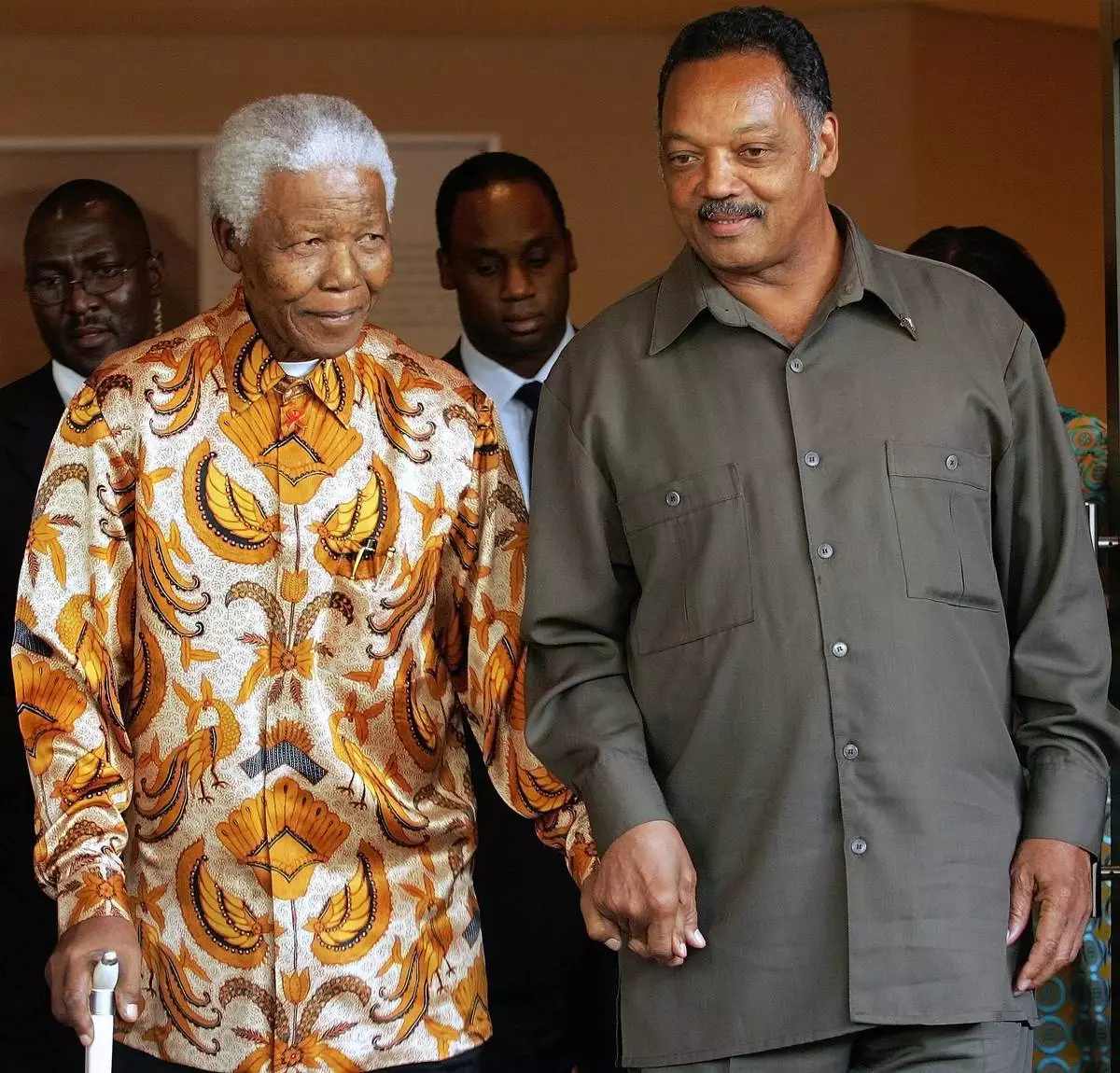
FILE - Former South African President Nelson Mandela, left, walks with the Rev. Jesse Jackson after their meeting in Johannesburg, South Africa, Oct. 26, 2005. (AP Photo/Themba Hadebe, File)
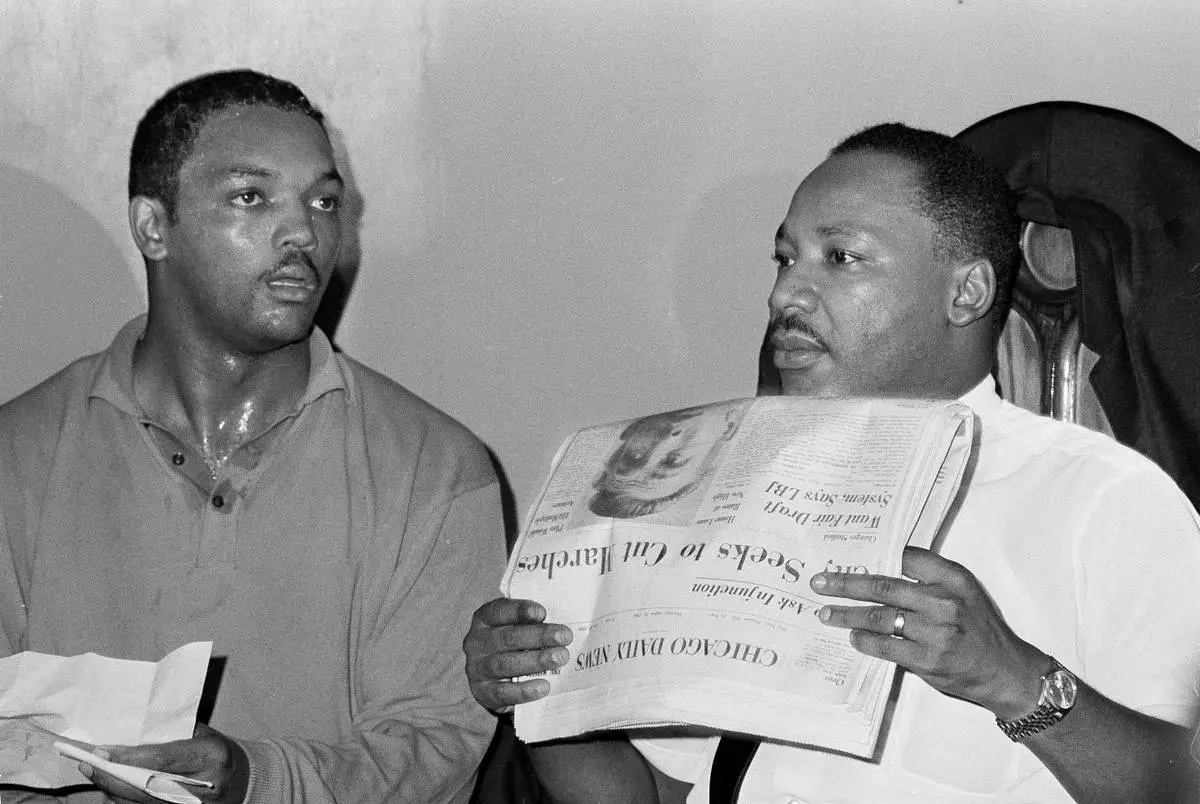
FILE - Civil rights leader Dr. Martin Luther King, Jr., right, and his aide Rev. Jesse Jackson are seen in Chicago, Aug. 19, 1966. (AP Photo/Larry Stoddard, File)
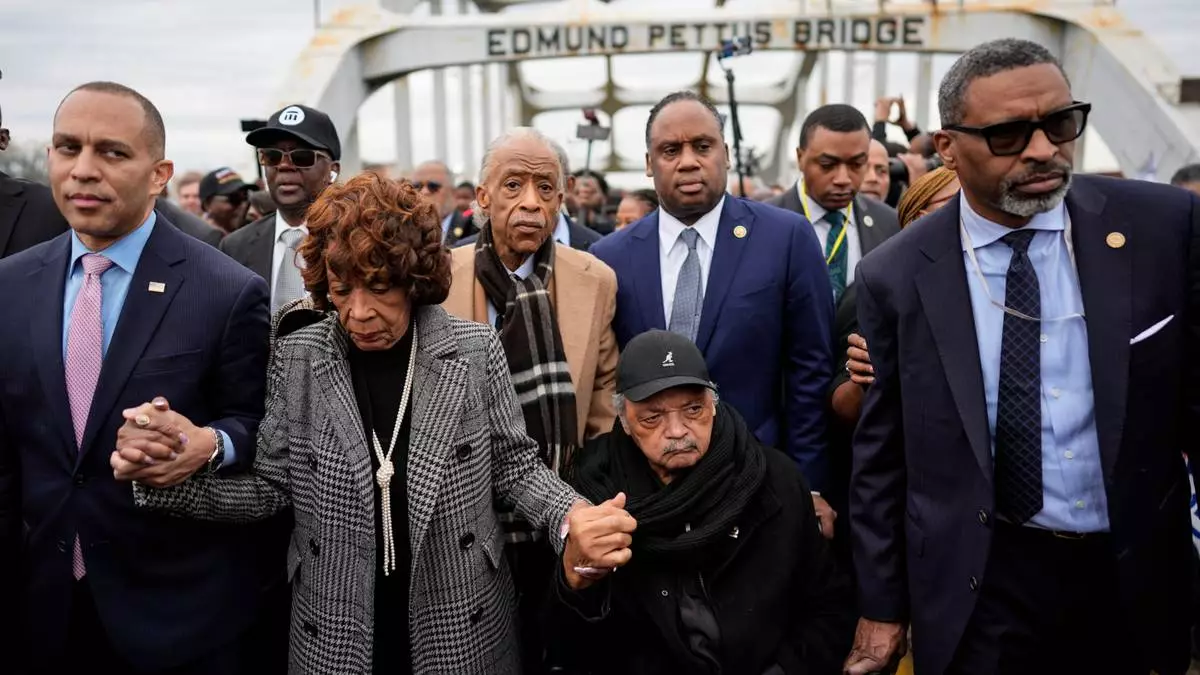
FILE - U.S. Rep. Hakeem Jeffries, D-NY, U.S. Rep. Maxine Waters, D-Calif., Rev. Al Sharpton, Rev. Jesse Jackson and NAACP President Derrick Johnson march across the Edmund Pettus bridge during the 60th anniversary of the march to ensure that African Americans could exercise their constitutional right to vote, March 9, 2025, in Selma, Ala. (AP Photo/Mike Stewart, File)