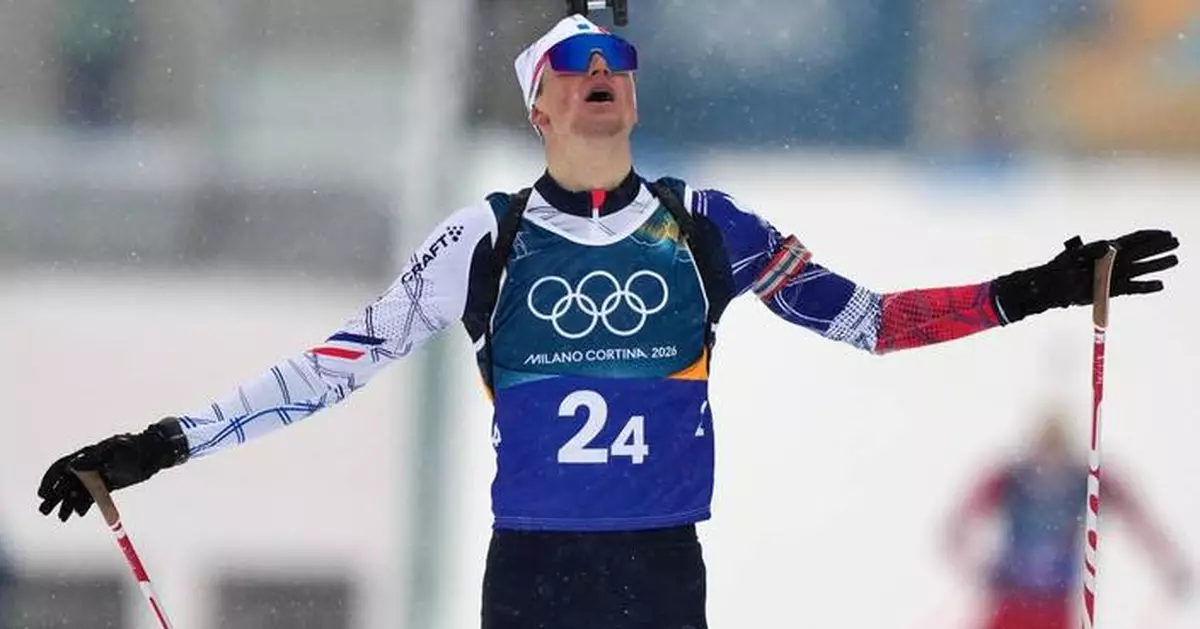
ANTERSELVA, Italy (AP) — France came from last place to win the Olympic men’s biathlon relay for the first time on Tuesday by less than 10 seconds from stunned world and defending champion Norway.
Sweden hung on for the bronze, less than a minute ahead of Germany.
Click to Gallery
Sturla Holm Laegreid, of Norway, right, Martin Ponsiluoma, of Sweden, left, and Quentin Fillon Maillet, of France, compete in the men's 4x7.5-kilometer relay biathlon race at the 2026 Winter Olympics in Anterselva, Italy, Tuesday, Feb. 17, 2026. (AP Photo/Mosa'ab Elshamy)
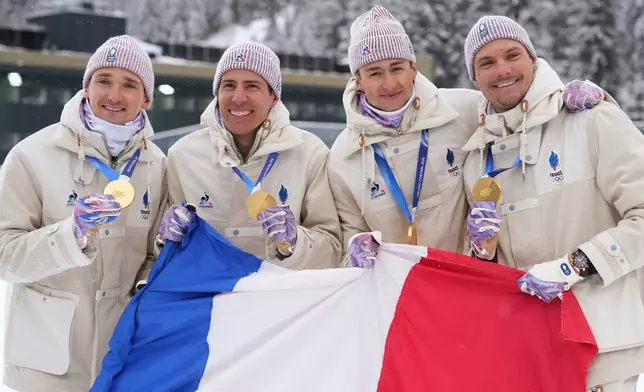
France's Eric Perrot, Quentin Fillon Maillet, Emilien Jacquelin and Fabien Claude pose with the gold medal for the men's 4x7.5-kilometer relay biathlon race at the 2026 Winter Olympics in Anterselva, Italy, Tuesday, Feb. 17, 2026. (AP Photo/Andrew Medichini)
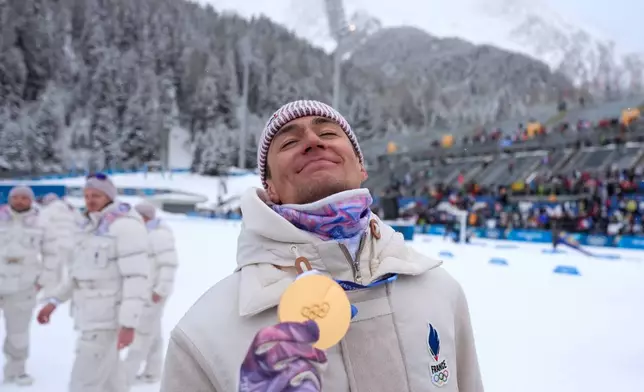
Eric Perrot, of France, poses with his gold medal for the men's 4x7.5-kilometer relay biathlon race at the 2026 Winter Olympics in Anterselva, Italy, Tuesday, Feb. 17, 2026. (AP Photo/Mosa'ab Elshamy)
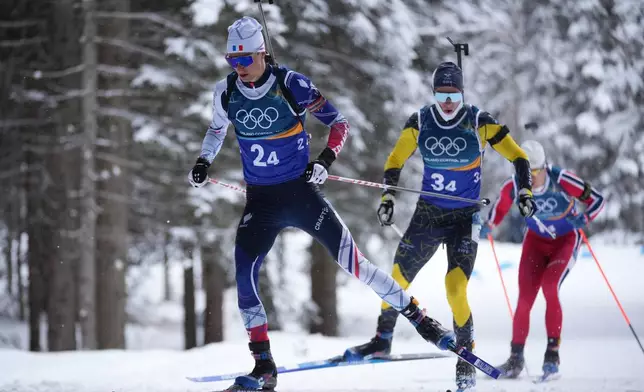
Eric Perrot, of France, competes in the men's 4x7.5-kilometer relay biathlon race at the 2026 Winter Olympics in Anterselva, Italy, Tuesday, Feb. 17, 2026. (AP Photo/Andrew Medichini)
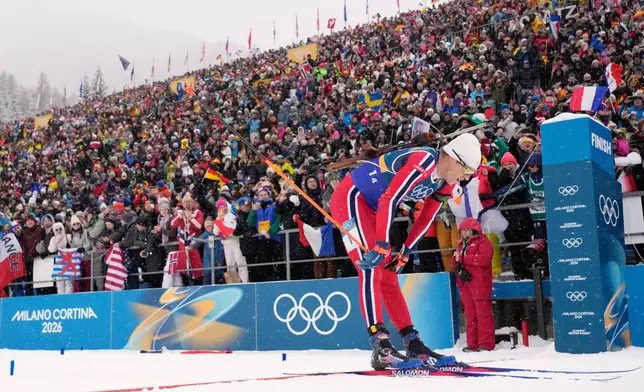
Vetle Sjaastad Christiansen, of Norway, crosses the finish line for silver in the men's 4x7.5-kilometer relay biathlon race at the 2026 Winter Olympics in Anterselva, Italy, Tuesday, Feb. 17, 2026. (AP Photo/David J. Phillip)
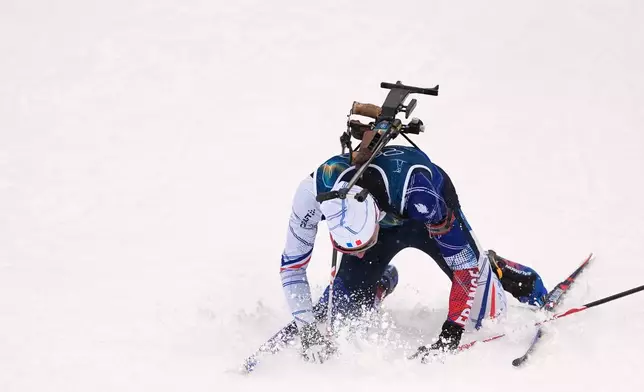
Eric Perrot, of France, reacts in the finish area after winning gold in the men's 4x7.5-kilometer relay biathlon race at the 2026 Winter Olympics in Anterselva, Italy, Tuesday, Feb. 17, 2026. (AP Photo/Andrew Medichini)
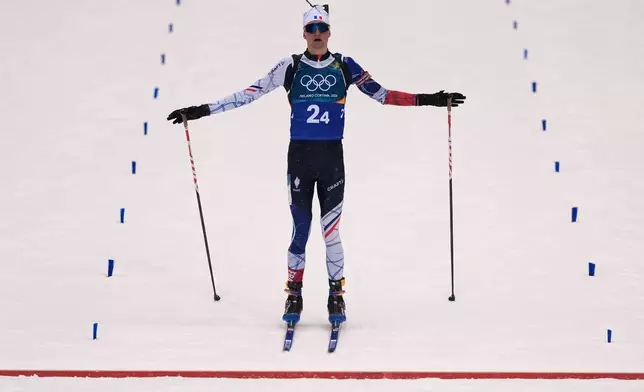
Eric Perrot, of France, skis to the finish line for gold in the men's 4x7.5-kilometer relay biathlon race at the 2026 Winter Olympics in Anterselva, Italy, Tuesday, Feb. 17, 2026. (AP Photo/Andrew Medichini)
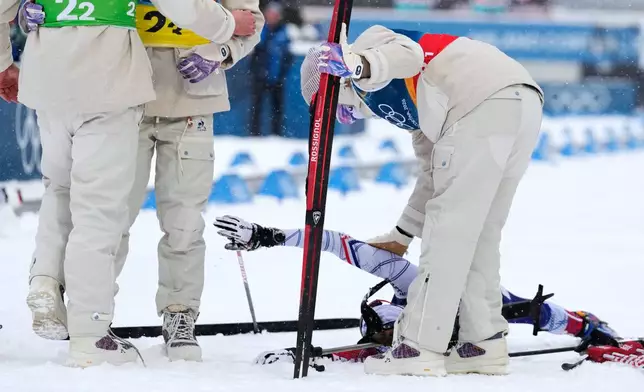
Eric Perrot, of France, reaches up in the finish area after winning gold in the men's 4x7.5-kilometer relay biathlon race at the 2026 Winter Olympics in Anterselva, Italy, Tuesday, Feb. 17, 2026. (AP Photo/Mosa'ab Elshamy)
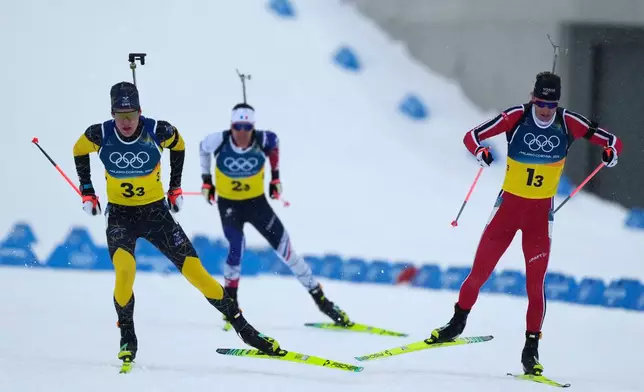
Sturla Holm Laegreid, of Norway, right, Martin Ponsiluoma, of Sweden, left, and Quentin Fillon Maillet, of France, compete in the men's 4x7.5-kilometer relay biathlon race at the 2026 Winter Olympics in Anterselva, Italy, Tuesday, Feb. 17, 2026. (AP Photo/Mosa'ab Elshamy)
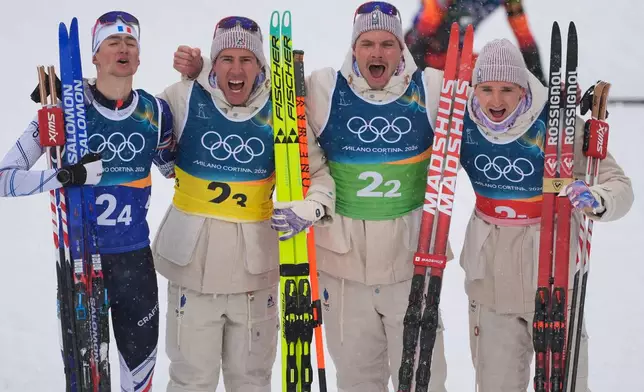
France's Eric Perrot, from left, Quentin Fillon Maillet, Emilien Jacquelin and Fabien Claude react after winning gold in the men's 4x7.5-kilometer relay biathlon race at the 2026 Winter Olympics in Anterselva, Italy, Tuesday, Feb. 17, 2026. (AP Photo/Andrew Medichini)
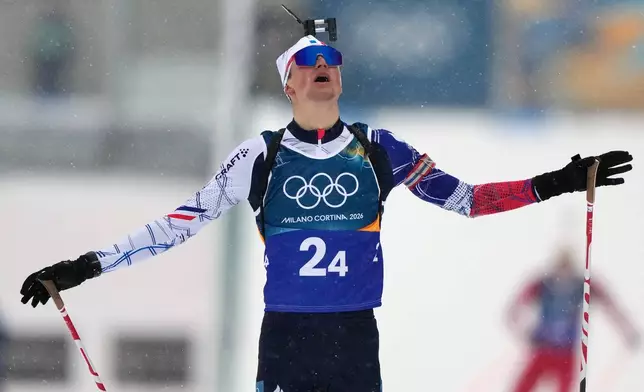
Eric Perrot, of France, reacts as he crosses the finish line to win gold in the men's 4x7.5-kilometer relay biathlon race at the 2026 Winter Olympics in Anterselva, Italy, Tuesday, Feb. 17, 2026. (AP Photo/Mosa'ab Elshamy)
World Cup champion Eric Perrot was France's final leg skier. He missed two shots in his last standing shoot and was only seven seconds ahead of Norway's Vetle Sjaastad Christiansen as they headed out to the ski tracks packed with fresh snow.
After nearly 80 minutes, Perrot led his team of Fabien Claude, Emilien Jacquelin and Quentin Fillon Maillet across the line first, 9.8 seconds ahead of Christiansen.
The French avenged the 2022 Olympics finish outside Beijing where Christiansen shot clean and beat Fillon Maillet home by 28 seconds.
“It is so big for me, for the whole team,” Perrot said. “The French biathlon team has for so many years pushed really hard to win the relay gold medal, and today we represent all those guys who pushed hard for it. I am so proud to be a part of this team.”
Perrot and Fillon Maillet won Olympic gold in the mixed relay on Feb. 8 with Lou Jeanmonnot and Julia Simon. Perrot also won silver in the individual race; Fillon Maillet won gold in the sprint and Jacquelin won bronze in the pursuit.
Christiansen skied the fourth leg for the Norway team consisting of Martin Uldal, Johan-Olav Botn and Sturla Holm Laegreid. Christiansen and Laegreid were on the 2022 gold medal team in Beijing.
“Today our eyes were set on gold,” Laegreid said. “To get silver is almost like losing gold.”
Sebastian Samuelsson anchored Sweden's team of Viktor Brandt, Jesper Nelin and Martin Ponsiluoma. Samuelsson and Nelin were relay gold medalists in 2018 at Pyeongchang. Ponsiluoma won gold in the pursuit race on Sunday.
The United States was fifth, 2 1/2 minutes off the pace.
The U.S. was 16th after Sean Doherty's first leg, Maxime Germain and Paul Schommer slowly pulled the team forward and Campbell Wright in the last leg brought them from 11th to fifth.
The U.S. has never won an Olympic medal in biathlon but Wright gave the team hope after winning silver medals in the sprint and pursuit at last year’s world championships.
“As a men’s team, we’ve struggled a bit at these Olympics,” Wright said. “I’ve managed to get away with a few good results but the other guys have caught the worst end of bad luck. I’m really happy we can get fifth as a team here and everyone can kind of get a win before the Games finish.”
Things didn't look promising for France at the start.
The team was 20th after the second shoot when Claude missed one target despite using three extra rounds and had to ski a penalty lap. He tagged off to Jacquelin, who moved the team up to fifth with only one miss out of 10 shots and then to first place by the time he tagged off to Fillon Maillet.
Sweden, Norway and France stayed together on the tracks and the range, taking turns at the front. But when Norway and Sweden missed one on the prone shoot on the last leg, Perrot shot clean and left in first place.
The women's relay is scheduled for Wednesday afternoon.
AP Winter Olympics: https://apnews.com/hub/milan-cortina-2026-winter-olympics
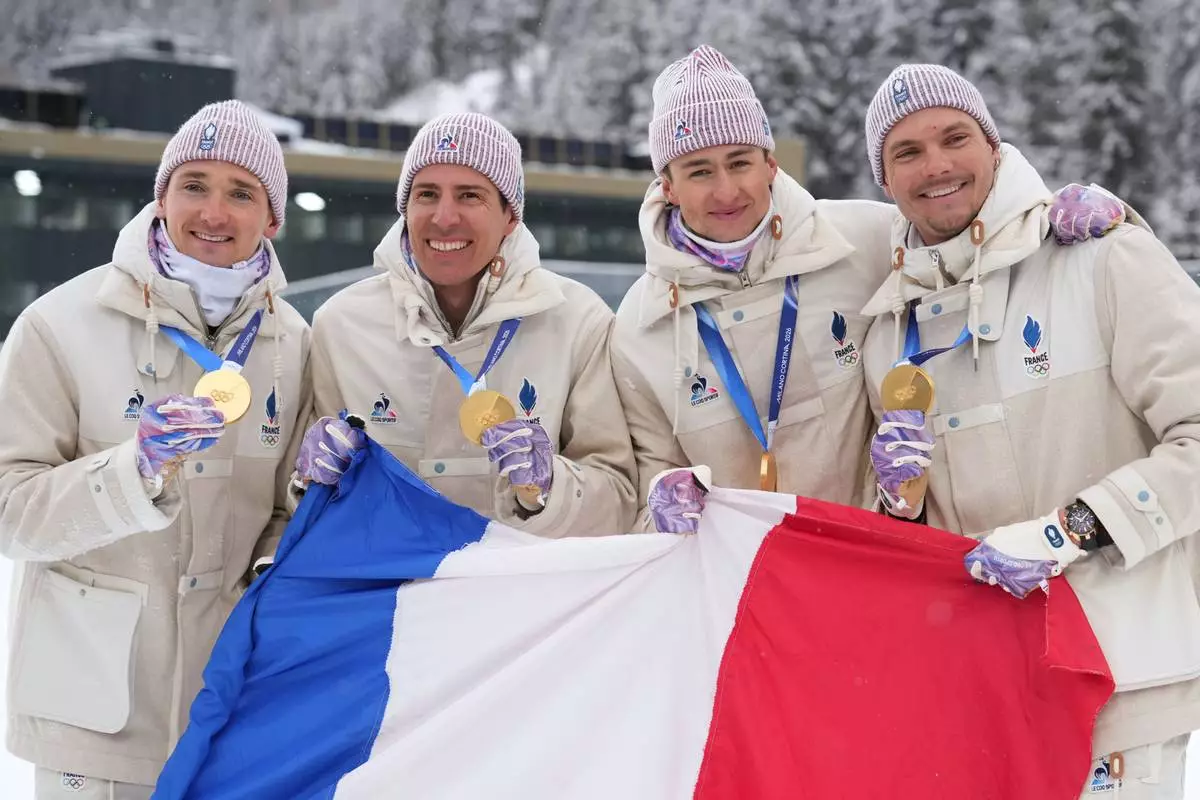
France's Eric Perrot, Quentin Fillon Maillet, Emilien Jacquelin and Fabien Claude pose with the gold medal for the men's 4x7.5-kilometer relay biathlon race at the 2026 Winter Olympics in Anterselva, Italy, Tuesday, Feb. 17, 2026. (AP Photo/Andrew Medichini)
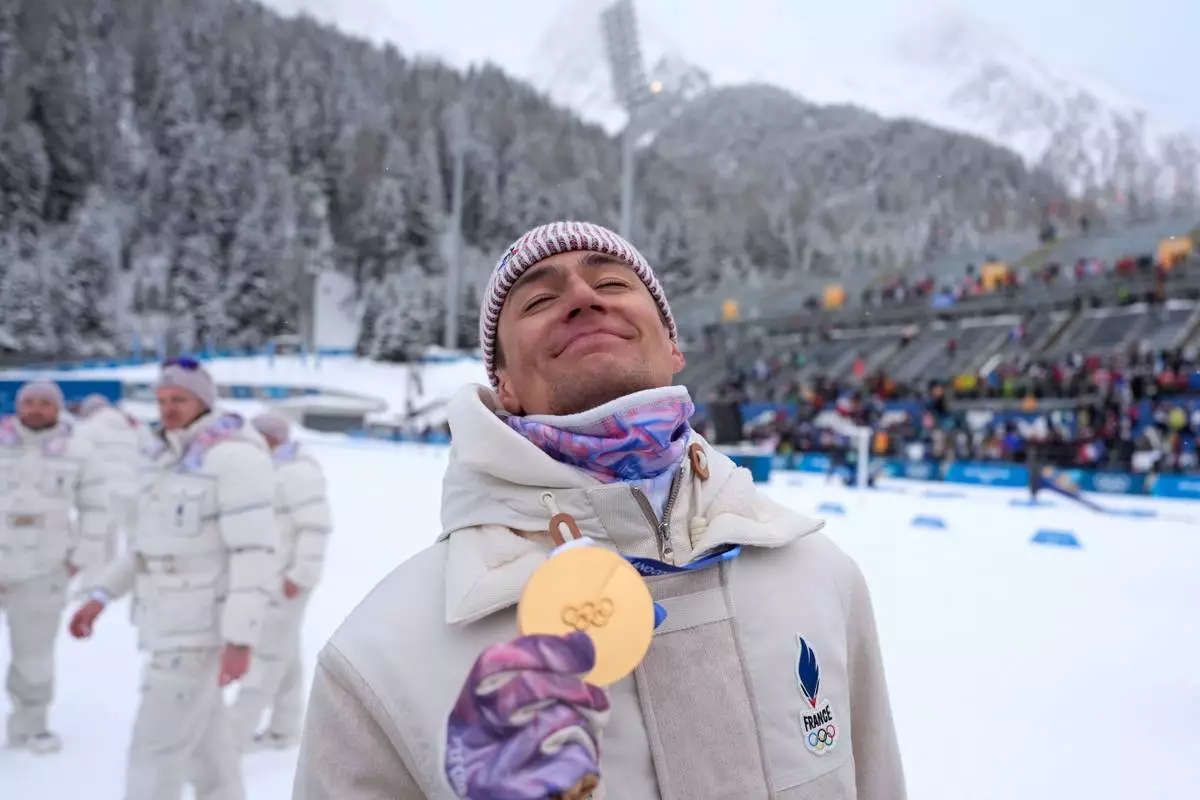
Eric Perrot, of France, poses with his gold medal for the men's 4x7.5-kilometer relay biathlon race at the 2026 Winter Olympics in Anterselva, Italy, Tuesday, Feb. 17, 2026. (AP Photo/Mosa'ab Elshamy)
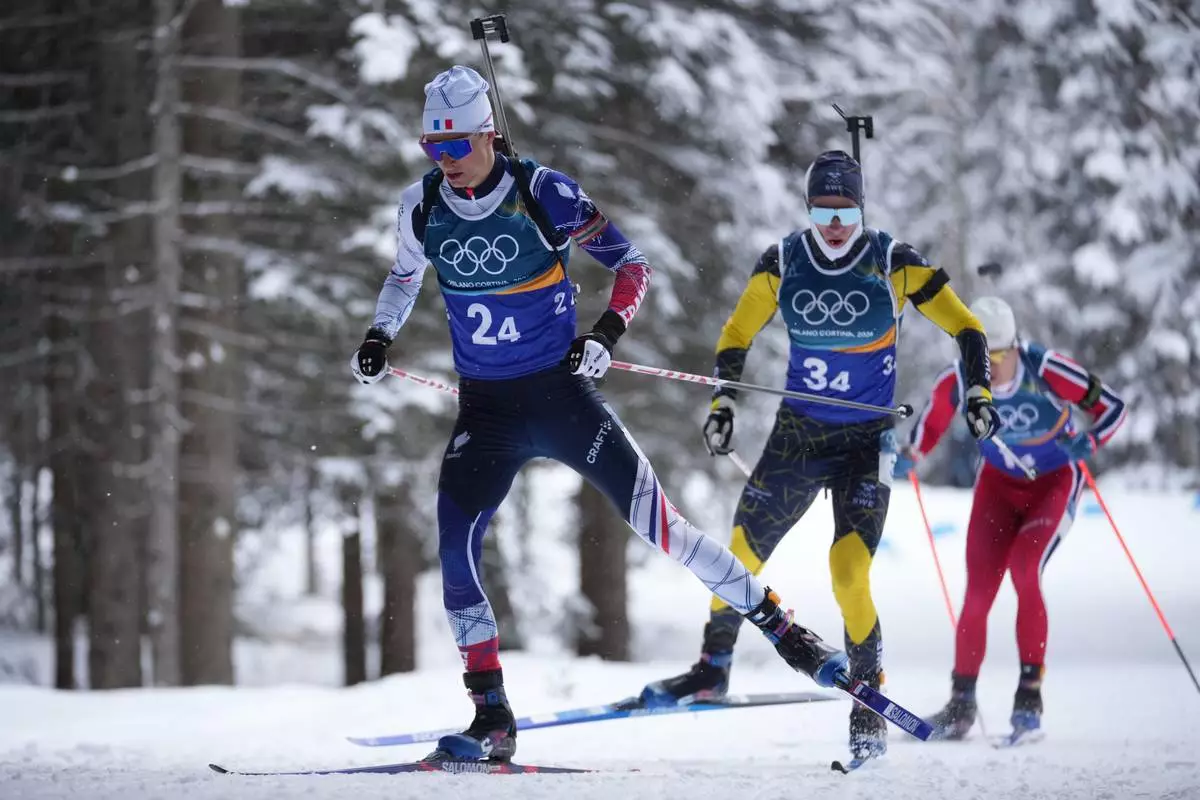
Eric Perrot, of France, competes in the men's 4x7.5-kilometer relay biathlon race at the 2026 Winter Olympics in Anterselva, Italy, Tuesday, Feb. 17, 2026. (AP Photo/Andrew Medichini)
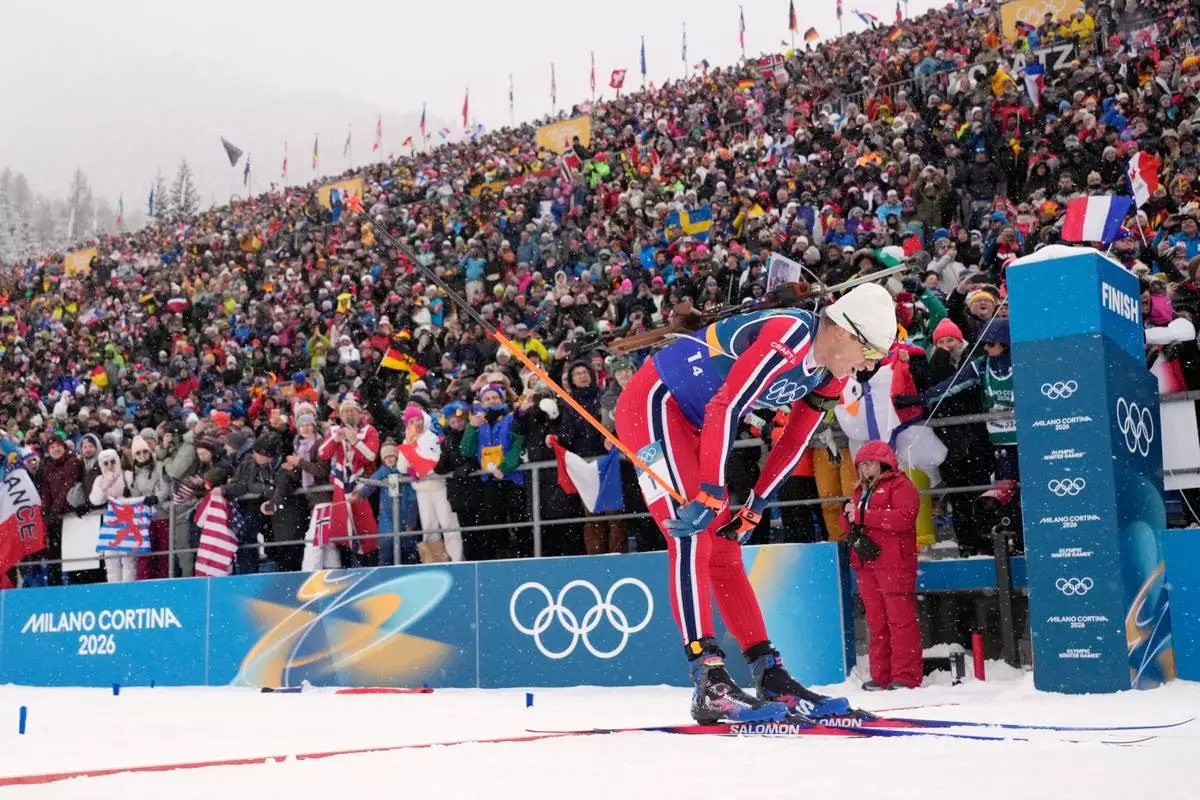
Vetle Sjaastad Christiansen, of Norway, crosses the finish line for silver in the men's 4x7.5-kilometer relay biathlon race at the 2026 Winter Olympics in Anterselva, Italy, Tuesday, Feb. 17, 2026. (AP Photo/David J. Phillip)
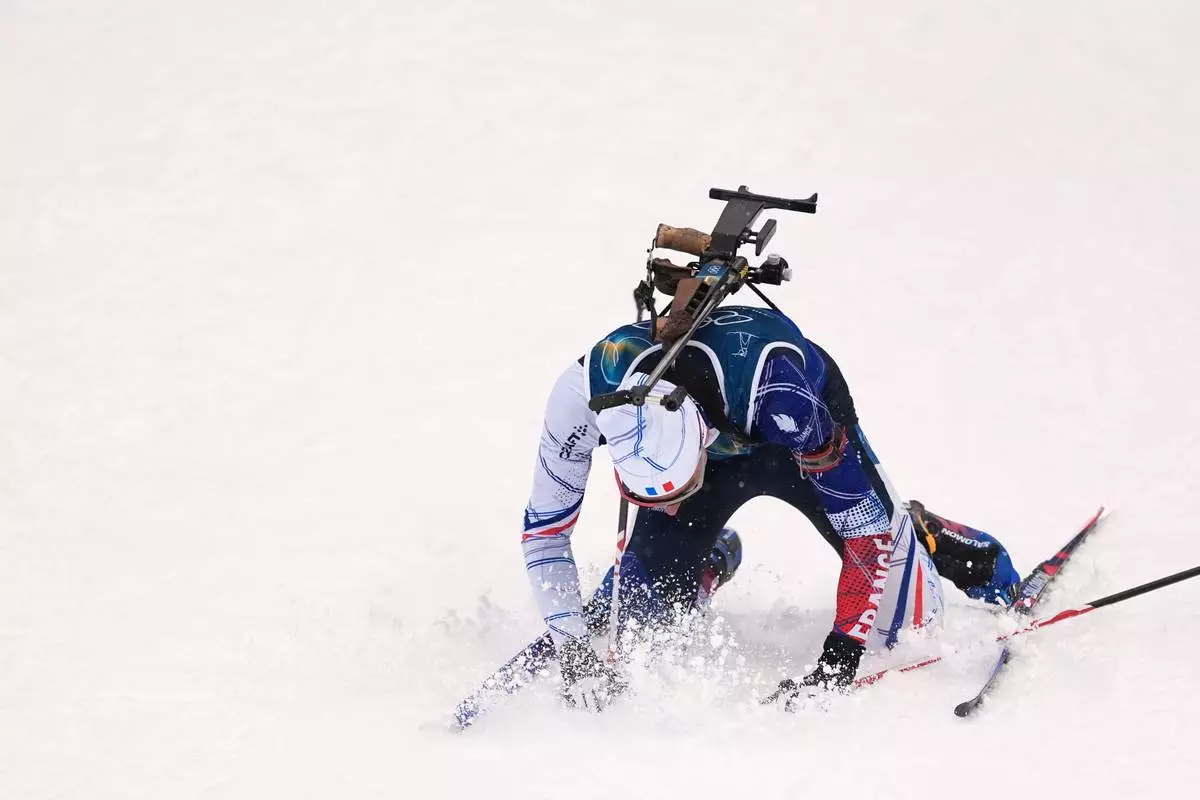
Eric Perrot, of France, reacts in the finish area after winning gold in the men's 4x7.5-kilometer relay biathlon race at the 2026 Winter Olympics in Anterselva, Italy, Tuesday, Feb. 17, 2026. (AP Photo/Andrew Medichini)
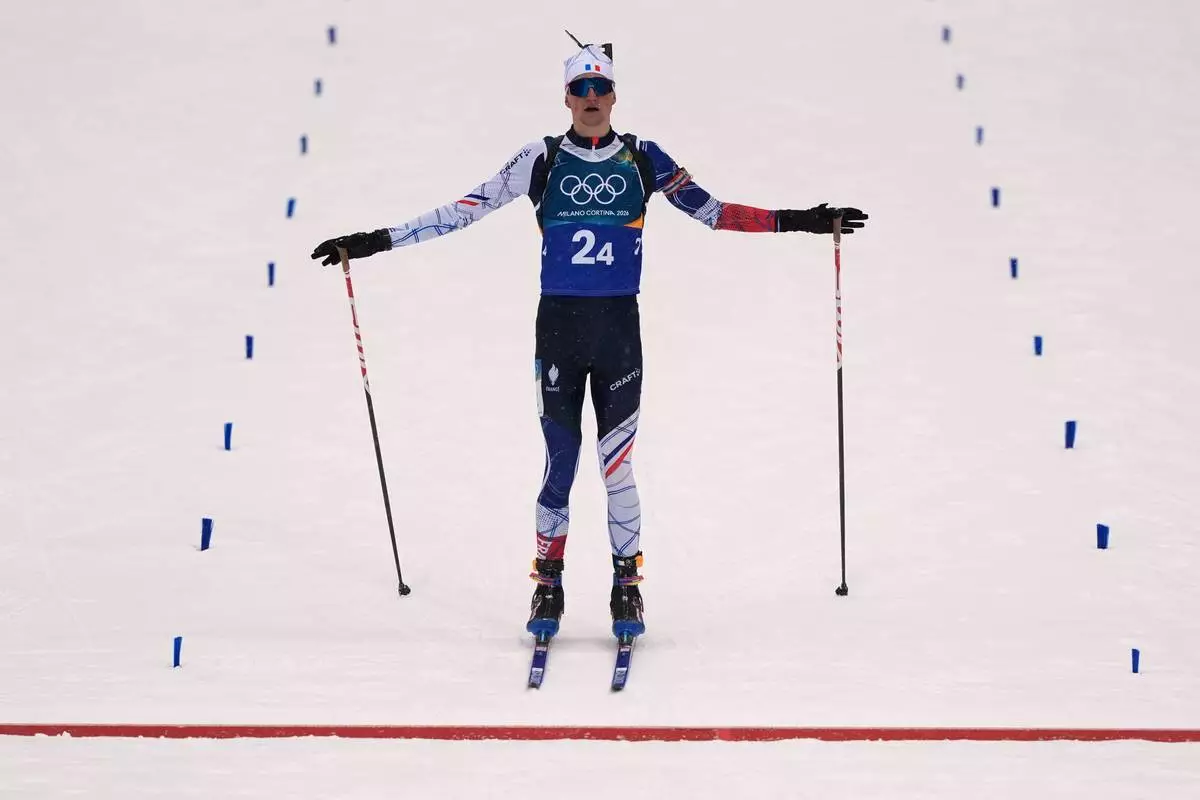
Eric Perrot, of France, skis to the finish line for gold in the men's 4x7.5-kilometer relay biathlon race at the 2026 Winter Olympics in Anterselva, Italy, Tuesday, Feb. 17, 2026. (AP Photo/Andrew Medichini)
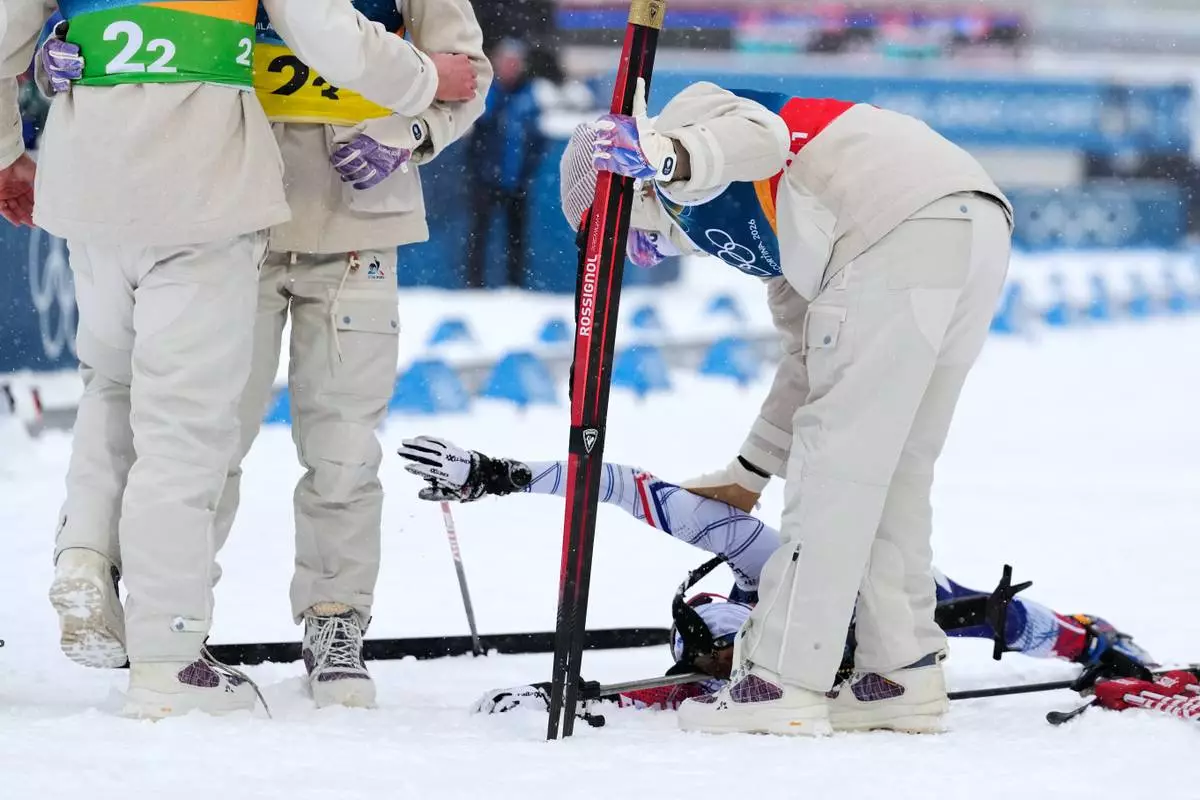
Eric Perrot, of France, reaches up in the finish area after winning gold in the men's 4x7.5-kilometer relay biathlon race at the 2026 Winter Olympics in Anterselva, Italy, Tuesday, Feb. 17, 2026. (AP Photo/Mosa'ab Elshamy)
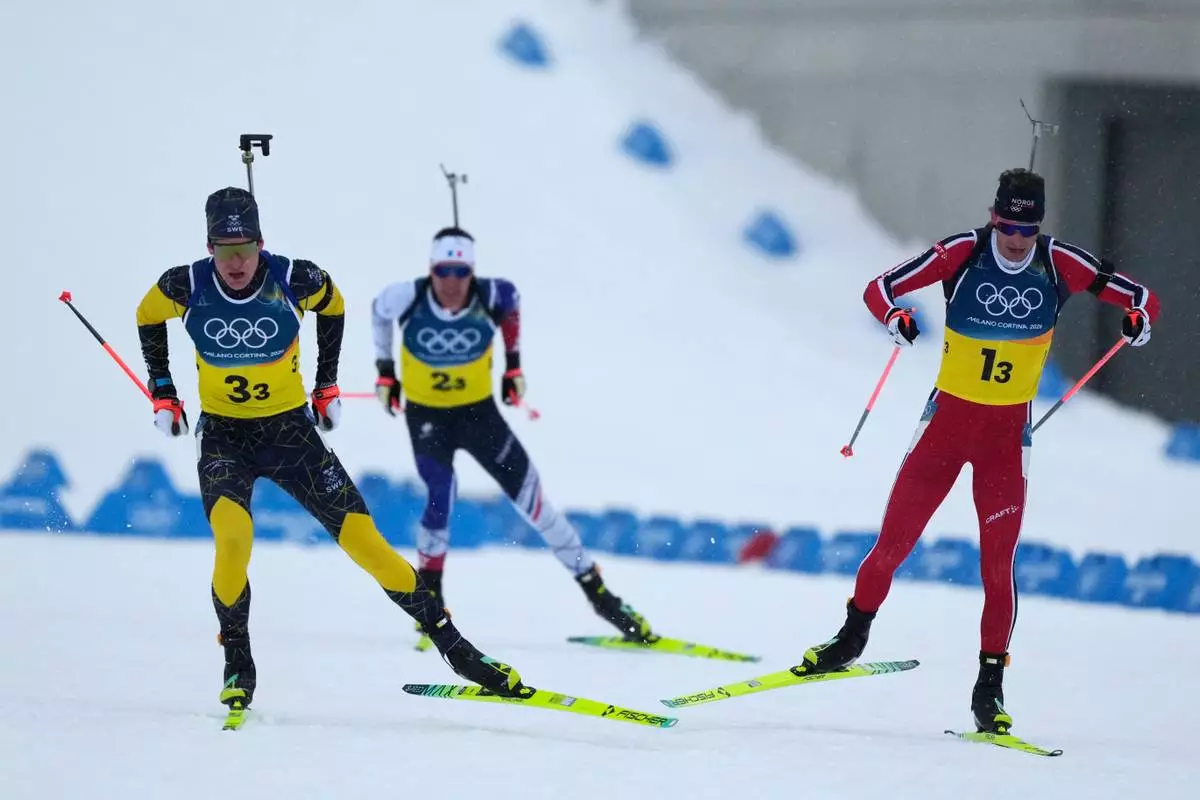
Sturla Holm Laegreid, of Norway, right, Martin Ponsiluoma, of Sweden, left, and Quentin Fillon Maillet, of France, compete in the men's 4x7.5-kilometer relay biathlon race at the 2026 Winter Olympics in Anterselva, Italy, Tuesday, Feb. 17, 2026. (AP Photo/Mosa'ab Elshamy)
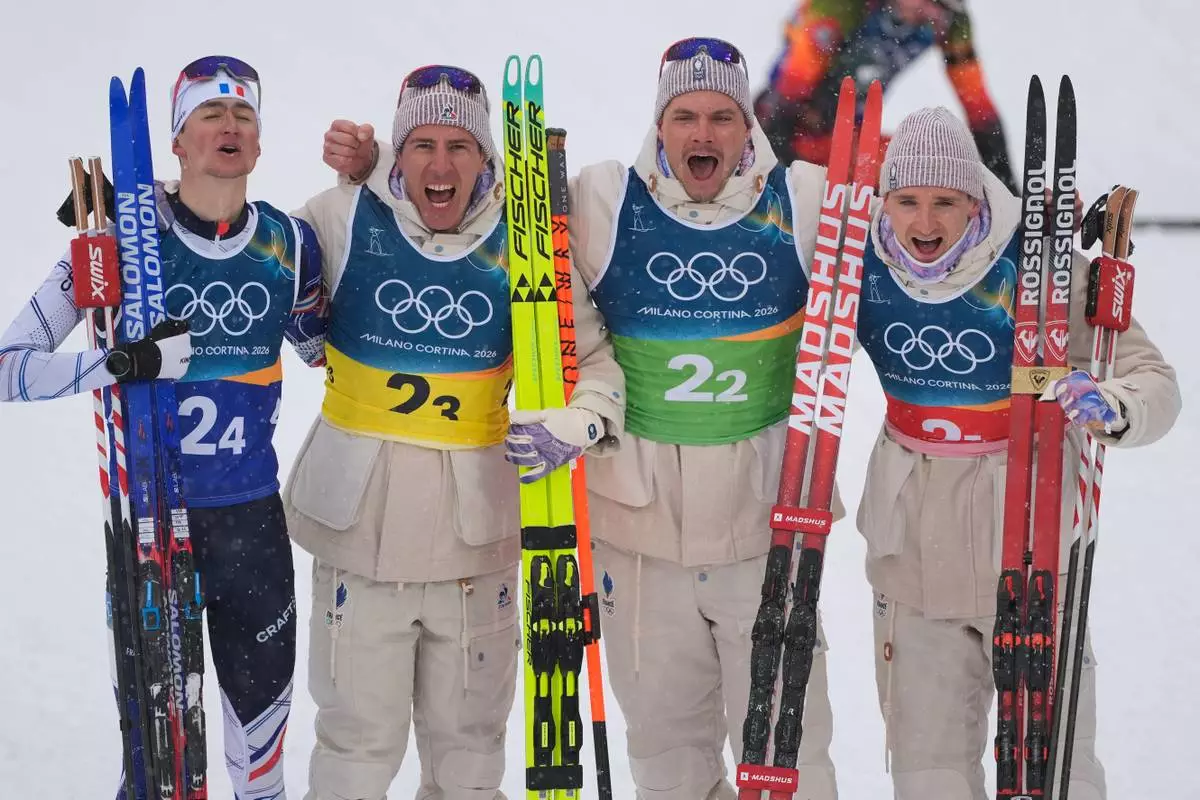
France's Eric Perrot, from left, Quentin Fillon Maillet, Emilien Jacquelin and Fabien Claude react after winning gold in the men's 4x7.5-kilometer relay biathlon race at the 2026 Winter Olympics in Anterselva, Italy, Tuesday, Feb. 17, 2026. (AP Photo/Andrew Medichini)

Eric Perrot, of France, reacts as he crosses the finish line to win gold in the men's 4x7.5-kilometer relay biathlon race at the 2026 Winter Olympics in Anterselva, Italy, Tuesday, Feb. 17, 2026. (AP Photo/Mosa'ab Elshamy)
GENEVA (AP) — Iran announced the temporary closure of the Strait of Hormuz on Tuesday for live fire drills in a rare show of force as its negotiators held another round of indirect talks with the United States over the Islamic Republic's disputed nuclear program.
It was the first time Iran has announced the closure of the key international waterway, through which 20% of the world’s oil passes, since the U.S. began threatening Iran and rushing military assets to the region. It was not immediately clear if the strait had been closed, but such a rare and perhaps unprecedented move could further escalate tensions that threaten to ignite another war in the Middle East.
As the talks began, Iran’s state media announced that Iranian forces had fired live missiles toward the strait and would close it for several hours for “safety and maritime concerns.”
Supreme Leader Ayatollah Ali Khamenei meanwhile warned that “the strongest army in the world might sometimes receive such a slap that it cannot get back on its feet."
Iran's foreign minister later adopted a different tone, expressing optimism about the talks and saying “a new window has opened" for reaching an agreement.
“We are hopeful that negotiations will lead to a sustainable and negotiated solution which can serve the interests of relevant parties and the broader region,” Abbas Araghchi told a U.N. disarmament conference after leading the Iranian delegation at the talks held in Geneva.
He added that Iran "remains fully prepared to defend itself against any threat or act of aggression,” and that the consequences of any attack on Iran would not be confined to its borders.
He made no specific mention of the military drills or the closure of the Strait of Hormuz.
U.S. President Donald Trump, who scrapped an earlier nuclear agreement with Iran during his first term, has repeatedly threatened to use force to compel Iran to agree to constrain its nuclear program. Iran has said it would respond with an attack of its own. Trump has also threatened Iran over the killing of protesters.
Trump’s envoys, Steve Witkoff and Jared Kushner, led the U.S. delegation at the latest indirect talks, held inside the residence of the Omani envoy to Geneva. Oman, a longtime regional mediator, had hosted an earlier round on Feb. 6.
There was progress in the talks but many details remained to be discussed, according to a U.S. official who was not authorized to comment publicly and spoke on condition of anonymity. The Iranian delegation said they would present more detailed proposals in the next two weeks to narrow gaps, the official said.
Araghchi, who led the Iranian side, also said he met with Director-General Rafael Grossi of the International Atomic Energy Agency on Monday in Geneva. The Iranian minister said they discussed the agency's role in helping to achieve an agreement.
Trump said Monday he planned to be involved in the talks, at least indirectly. “I think they want to make a deal. I don’t think they want the consequences of not making a deal," he told reporters.
The U.S. is also hosting talks between envoys from Russia and Ukraine in Geneva on Tuesday and Wednesday, days ahead of the fourth anniversary of the all-out Russian invasion of its neighbor.
Iran said its Revolutionary Guard started a drill early Monday in the Strait of Hormuz, the Persian Gulf and the Gulf of Oman, which are crucial international shipping routes. It was the second time in recent weeks that Iran has held a live fire drill in the Strait of Hormuz.
Iran often carries out military drills in the strait that can impede maritime traffic, but the announced closure went a step further. Danny Citrinowicz, an Iran expert at Israel’s Institute for National Security Studies, said Iran last closed the strait during the war with Iraq in the 1980s, when it mined the waterway.
He said the latest announcement was a message to the international community that any strike on Iran would have global impact.
Oil prices fell after the talks concluded. US oil was down 1.3% at $62.06 per barrel while international benchmark Brent crude was off fully 2.3% at $67.03 per barrel. Oil prices had risen several dollars per barrel after Trump began bolstering the U.S. military presence in the Middle East, but remain subdued on expectation that an eventual deal would send prices lower.
Khamenei meanwhile stepped up his warnings to the U.S. over its military buildup.
“Of course a warship is a dangerous apparatus, but more dangerous than the warship is the weapon that can sink the warship,” Khamenei said, according to Iranian state TV. He also warned the U.S. against “forcing the result of talks in advance."
Last week, Trump said the USS Gerald R. Ford, the world’s largest aircraft carrier, was being sent to the Mideast. It will join the USS Abraham Lincoln and its accompanying guided-missile destroyers, which have been in the region for three weeks.
U.S. forces shot down an Iranian drone that approached the Lincoln on the same day last week that Iran tried to stop a U.S.-flagged ship in the Strait of Hormuz.
Gulf Arab nations have warned any attack could spiral into another regional conflict in a Mideast still reeling from the Israel-Hamas war.
The Trump administration is seeking a deal to limit Iran’s nuclear program and ensure it does not develop nuclear weapons. Iran says it is not pursuing weapons and has so far resisted demands that it halt uranium enrichment on its soil or hand over its stockpile of highly-enriched uranium.
The U.S. and Iran were in the middle of months of meetings when Israel’s launch of a 12-day war against Iran back in June halted the talks. The U.S. bombed Iranian nuclear sites during that war, likely destroying many of the centrifuges that spun uranium to near weapons-grade purity. Israel’s attacks decimated Iran’s air defenses and targeted its ballistic missile arsenal as well.
Before the June war, Iran had been enriching uranium up to 60% purity, a short, technical step away from weapons-grade levels.
This story has been corrected to fix a misspelling of Khamenei.
Liechtenstein reported from Vienna. Associated Press writers Melanie Lidman in Tel Aviv, Israel, Darlene Superville in Washington, Farnoush Amiri at the United Nations and David McHugh in Frankfurt, Germany, contributed to this report.
In this photo released by an official website of the office of the Iranian supreme leader, Supreme Leader Ayatollah Ali Khamenei speaks in a meeting in Tehran, Iran, Tuesday, Feb. 17, 2026. (Office of the Iranian Supreme Leader via AP)
Iranian Foreign Minister Abbas Araghchi, speaks during the Conference on Disarmament, at the European headquarters of the United Nations in Geneva, Switzerland, Tuesday, Feb. 17, 2026. (Martial Trezzini/Keystone via AP)
Iranian Foreign Minister Abbas Araghchi, leaves during the Conference on Disarmament, at the European headquarters of the United Nations in Geneva, Switzerland, Tuesday, Feb. 17, 2026. (Martial Trezzini/Keystone via AP)
Iranian Foreign Minister Abbas Araghchi, speaks during the Conference on Disarmament, at the European headquarters of the United Nations in Geneva, Switzerland, Tuesday, Feb. 17, 2026. (Martial Trezzini/Keystone via AP)
Iranian Foreign Minister Abbas Araghchi, arrives during the Conference on Disarmament, at the European headquarters of the United Nations in Geneva, Switzerland, Tuesday, Feb. 17, 2026. (Martial Trezzini/Keystone via AP)
Iranian Foreign Minister Abbas Araghchi, leaves after speaking during the Conference on Disarmament, at the European headquarters of the United Nations in Geneva, Switzerland, Tuesday, Feb. 17, 2026. (Martial Trezzini/Keystone via AP)
In this photo released by an official website of the office of the Iranian supreme leader, Supreme Leader Ayatollah Ali Khamenei speaks in a meeting in Tehran, Iran, Tuesday, Feb. 17, 2026. (Office of the Iranian Supreme Leader via AP)
In this image provided by Sepahnews of the Iranian Revolutionary Guard on Feb. 16, 2026, shows the Iranian Revolutionary Guard's drill in the Persian Gulf on Monday, Feb. 16, 2026. (Sepahnews via AP)
FILE - In this photo released by the Oman's Foreign Ministry, Steve Witkoff, White House special envoy, center, shakes hands with Oman's Foreign Minister Sayyid Badr Albusaidi, accompanied by Jared Kushner, left, during a meeting prior to Iran and U.S. negotiations in Muscat, Oman, Friday, Feb. 6, 2026. (Oman Foreign Ministry via AP, File)
FILE - In this photo released by the Iranian Foreign Ministry, Iranian Foreign Minister Abbas Araghchi, center, heads to the venue for talks between Iran and the U.S., in Muscat, Oman, Friday, Feb. 6, 2026. (Iranian Foreign Ministry via AP, File)
FILE - Iranian Foreign Minister Abbas Araghchi looks on during a meeting with Director General of the International Atomic Energy Agency (IAEA) Rafael Grossi, and Egyptian Foreign Minister Badr Abdelatty, at Tahrir Palace in Cairo, Tuesday, Sept. 9, 2025. (AP Photo/Khaled Elfiqi, File)
In this photo released by the Iranian Foreign Ministry, Iranian Foreign Minister Abbas Araghchi, left, shakes hands with International Atomic Energy Agency (IAEA) Director-General Rafael Grossi during their meeting in Geneva, Switzerland, Monday, Feb. 16, 2026. (Iranian Foreign Ministry via AP)
In this photo released by the Iranian Foreign Ministry, Iranian Foreign Minister Abbas Araghchi, right, and International Atomic Energy Agency (IAEA) Director-General Rafael Grossi, left, hold a meeting in Geneva, Switzerland, Monday, Feb. 16, 2026. (Iranian Foreign Ministry via AP)