|
National Comprehensive Cancer Network publishes new guidelines for Pediatric Soft Tissue Sarcomas, focused on rhabdomyosarcoma.
PLYMOUTH MEETING, Pa., Feb. 18, 2026 /PRNewswire/ -- The National Comprehensive Cancer Network® (NCCN®) today published new NCCN Clinical Practice Guidelines in Oncology (NCCN Guidelines®) for Pediatric Soft Tissue Sarcomas. This is the 7th NCCN Guidelines® for a pediatric cancer, expanding the overall library to cover 91 topics in cancer care. The guidelines present the latest evidence-based, expert consensus-driven recommendations for nearly every type of cancer plus prevention, screening, survivorship, and supportive care. NCCN Guidelines are updated at least once a year and help cancer care providers worldwide to attain the best possible outcomes.
The new NCCN Guidelines® for Pediatric Soft Tissue Sarcomas is now available for free at NCCN.org. They focus on a subtype called rhabdomyosarcoma (RMS) which is the most common type of soft tissue sarcoma in people under 20. RMS represents nearly 5% of all childhood cancers.
"Most cancers that occur in children are fundamentally different from cancers occurring in adults," explained Stephen Skapek, MD, Duke Cancer Institute, Chair of the NCCN Guidelines Panel for Pediatric Soft Tissue Sarcoma. "RMS can be divided into specific subtypes that are driven by different genetic changes that can influence outcomes. Those changes and other clinical and pathology features are all incorporated into the multi-faceted treatments. That's why it was essential to form a group of leading, multi-disciplinary experts from across the country to put together a roadmap for diagnosing, risk stratifying, and treating these patients."
"Children are most likely to be diagnosed with RMS at a very young age, toddlers or early elementary school," added Panel Vice-Chair Douglas Hawkins, MD, Seattle Children's. "When treating someone so young, you are not looking to just prolong survival, the goal is a full cure with minimal side effects and zero recurrence."
RMS is tricky to diagnose; it can be located almost anywhere on the body. When it presents in the head, neck, or limb, it can show up as a lump with or without pain. Other times it occurs on an internal organ, which might cause problems for breathing or urination. There are three major risk groups with varying survival rates. The intensity of the treatment, which typically includes chemotherapy, surgery, and radiation therapy, must be tailored to the risk group as well as the age and the patient's developmental stage, which might be influenced by the treatment. The new NCCN Guidelines explain how to provide treatment in a way that balances the goal of cure with the need to minimize acute side effects, such as severe infections, and long-term effects that could bring additional problems at some point in the future.
All NCCN Guidelines are available for free download via NCCN.org or through the Virtual Library of NCCN Guidelines® App. They were downloaded more than 18.4 million times in 2025. Numerous independent studies associate guideline-concordant care with better outcomes and lower costs. Learn more at NCCN.org/guidelines.
About the National Comprehensive Cancer Network
The National Comprehensive Cancer Network® (NCCN®) is a not-for-profit alliance of leading cancer centers devoted to patient care, research, and education. NCCN is dedicated to defining and advancing quality, effective, equitable, and accessible cancer care and prevention so all people can live better lives. The NCCN Clinical Practice Guidelines in Oncology (NCCN Guidelines®) provide transparent, evidence-based, expert consensus-driven recommendations for cancer treatment, prevention, and supportive services; they are the recognized standard for clinical direction and policy in cancer management and the most thorough and frequently-updated clinical practice guidelines available in any area of medicine. The NCCN Guidelines for Patients® provide expert cancer treatment information to inform and empower patients and caregivers, through support from the NCCN Foundation®. NCCN also advances continuing education, global initiatives, policy, and research collaboration and publication in oncology. Visit NCCN.org for more information.
Media Contact:
Rachel Darwin
267-622-6624
darwin@nccn.org
National Comprehensive Cancer Network publishes new guidelines for Pediatric Soft Tissue Sarcomas, focused on rhabdomyosarcoma.
PLYMOUTH MEETING, Pa., Feb. 18, 2026 /PRNewswire/ -- The National Comprehensive Cancer Network® (NCCN®) today published new NCCN Clinical Practice Guidelines in Oncology (NCCN Guidelines®) for Pediatric Soft Tissue Sarcomas. This is the 7th NCCN Guidelines® for a pediatric cancer, expanding the overall library to cover 91 topics in cancer care. The guidelines present the latest evidence-based, expert consensus-driven recommendations for nearly every type of cancer plus prevention, screening, survivorship, and supportive care. NCCN Guidelines are updated at least once a year and help cancer care providers worldwide to attain the best possible outcomes.
The new NCCN Guidelines® for Pediatric Soft Tissue Sarcomas is now available for free at NCCN.org. They focus on a subtype called rhabdomyosarcoma (RMS) which is the most common type of soft tissue sarcoma in people under 20. RMS represents nearly 5% of all childhood cancers.
"Most cancers that occur in children are fundamentally different from cancers occurring in adults," explained Stephen Skapek, MD, Duke Cancer Institute, Chair of the NCCN Guidelines Panel for Pediatric Soft Tissue Sarcoma. "RMS can be divided into specific subtypes that are driven by different genetic changes that can influence outcomes. Those changes and other clinical and pathology features are all incorporated into the multi-faceted treatments. That's why it was essential to form a group of leading, multi-disciplinary experts from across the country to put together a roadmap for diagnosing, risk stratifying, and treating these patients."
"Children are most likely to be diagnosed with RMS at a very young age, toddlers or early elementary school," added Panel Vice-Chair Douglas Hawkins, MD, Seattle Children's. "When treating someone so young, you are not looking to just prolong survival, the goal is a full cure with minimal side effects and zero recurrence."
RMS is tricky to diagnose; it can be located almost anywhere on the body. When it presents in the head, neck, or limb, it can show up as a lump with or without pain. Other times it occurs on an internal organ, which might cause problems for breathing or urination. There are three major risk groups with varying survival rates. The intensity of the treatment, which typically includes chemotherapy, surgery, and radiation therapy, must be tailored to the risk group as well as the age and the patient's developmental stage, which might be influenced by the treatment. The new NCCN Guidelines explain how to provide treatment in a way that balances the goal of cure with the need to minimize acute side effects, such as severe infections, and long-term effects that could bring additional problems at some point in the future.
All NCCN Guidelines are available for free download via NCCN.org or through the Virtual Library of NCCN Guidelines® App. They were downloaded more than 18.4 million times in 2025. Numerous independent studies associate guideline-concordant care with better outcomes and lower costs. Learn more at NCCN.org/guidelines.
About the National Comprehensive Cancer Network
The National Comprehensive Cancer Network® (NCCN®) is a not-for-profit alliance of leading cancer centers devoted to patient care, research, and education. NCCN is dedicated to defining and advancing quality, effective, equitable, and accessible cancer care and prevention so all people can live better lives. The NCCN Clinical Practice Guidelines in Oncology (NCCN Guidelines®) provide transparent, evidence-based, expert consensus-driven recommendations for cancer treatment, prevention, and supportive services; they are the recognized standard for clinical direction and policy in cancer management and the most thorough and frequently-updated clinical practice guidelines available in any area of medicine. The NCCN Guidelines for Patients® provide expert cancer treatment information to inform and empower patients and caregivers, through support from the NCCN Foundation®. NCCN also advances continuing education, global initiatives, policy, and research collaboration and publication in oncology. Visit NCCN.org for more information.
Media Contact:
Rachel Darwin
267-622-6624
darwin@nccn.org
** The press release content is from PR Newswire. Bastille Post is not involved in its creation. **
New Guidelines from NCCN Detail Fundamental Differences in Cancer in Children Compared to Adults
SHANGHAI, April 4, 2026 /PRNewswire/ -- From April 2 to 31, the Assembly Character Toys brand Blokees made its debut at the 2026 Thailand Toy Expo. Blokees unveiled its two major categories — Blokees Model Kits and Blokees Wheels, highlighting a diverse product matrix of more than 300 products across 17 globally recognized IPs, including Ultraman, Transformers, DC, Evangelion, Naruto, Minions, Jurassic World, Hatsune Miku, and Hero Infinity. Four new model kits also made their global debut, emerging as key highlights of the event.
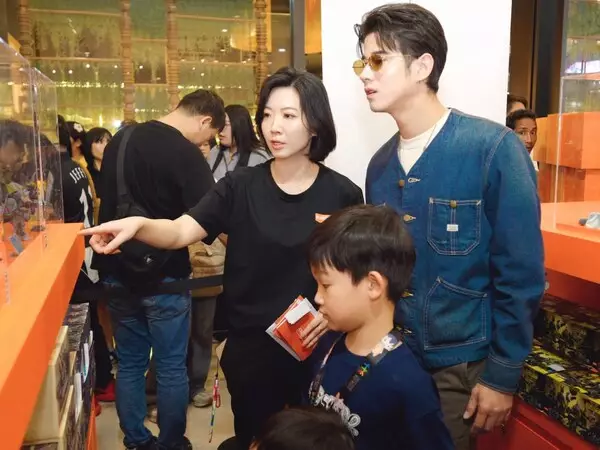
Mario Maurer attended the opening ceremony of Blokees Thailand Toy Expo as a special guest and engaged in interactive exchanges with consumers.
In the Blokees Model Kits category, Blokees exhibited its Champion, Legend, and Fantastic Series, featuring popular IPs such as Transformers, DC, Mega Man, Saint Seiya, Evangelion, and Naruto. More than 50 products were presented to consumers. Among them, four newly launched items—including Blokees Saint Seiya-Champion Class-12-Phoenix Ikki, Blokees Saint Seiya-Champion Class-14-Andromeda Shun, Blokees DC-Champion Class 05-Batman (HUSH), and Blokees DC-Champion Class 06-Catwoman (Hush)—drew strong interest from fans.
Blokees also highlighted its HERO5 and HERO10 series, featuring well-known IPs including Transformers, Saint Seiya, and Naruto, catering to consumers of hero-themed collectible models.
The DaaLaMode series introduced a range of products inspired by popular IPs such as Hatsune Miku, appealing to female consumers. Meanwhile, the TERRAVENTURE series presented nature and creature-themed model kits based on Jurassic World, further expanding Blokees' offerings across different consumer segments.
In the Blokees Wheels category, which integrates construction, play, and customization, products are organized into the C, E, and S series. The lineup includes IP-based offerings from Transformers, Ultraman, and Batman, with upcoming collaborations featuring Fast & Furious and Ford.
In addition, Blokees highlighted its global consumer ecosystem, BFC (Blokees Family Creator). Selected works from 2025 The 3rd BFC Creation Contest Stellar Season were exhibited in Thailand for the first time, reflecting strong user creativity and engagement. 2026 The 4th BFC Creation Contest Season of Awakening has officially launched, further encouraging global participation.
Under its "Universally appealing, Stepwise pricing, Globally promoting" strategy, Blokees continues to expand across Southeast Asia, Europe, North America, and Latin America. Thailand is rapidly becoming a strategic hub in its regional expansion, as the company strengthens both product innovation and community-driven growth worldwide.
** This press release is distributed by PR Newswire through automated distribution system, for which the client assumes full responsibility. **
Blokees made its debut at 2026 Thailand Toy Expo, exhibiting multiple products