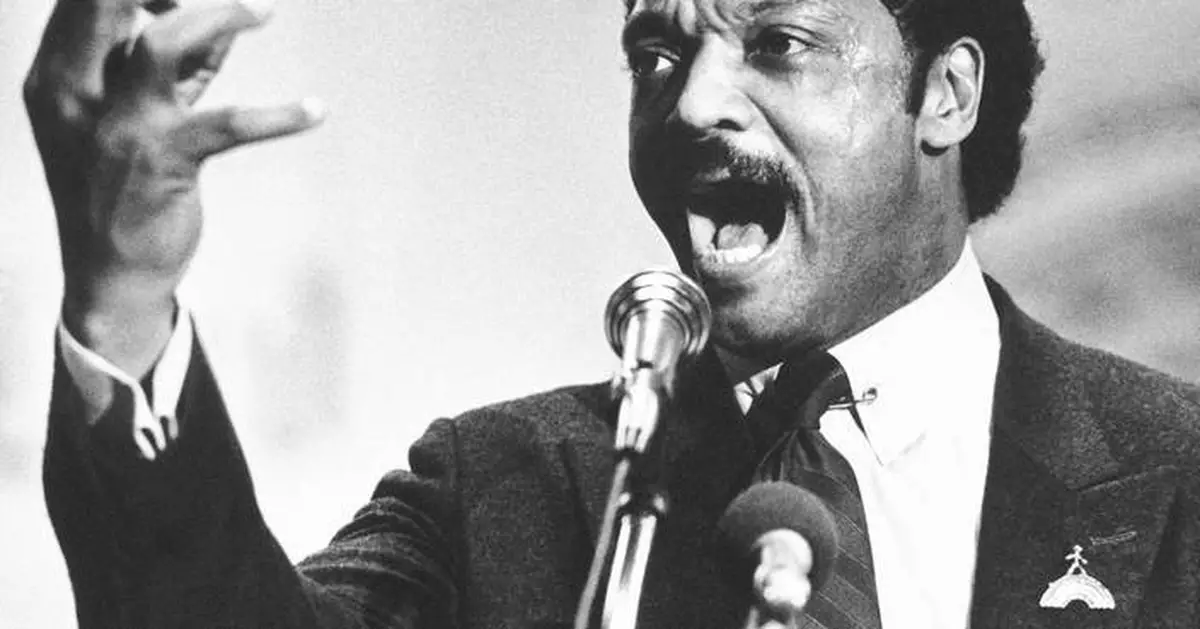
The Rev. Jesse Jackson, who died Tuesday at the age of 84, was known not just as a tireless advocate for the Civil Rights Movement but as one of its most dynamic orators. He spoke tirelessly for the poor and marginalized on issues from voting rights to housing. Jackson also gave numerous speeches as the leader of the Rainbow/PUSH Coalition and as a presidential candidate in the 1980s. Later, he did the same for the Black Lives Matter movement.
Here are some notable and defining words from Jackson.
Though not written by Jackson, this poem became synonymous with him. He turned a verse into a rallying cry at rallies in the 1960s and even on a 1972 episode of “Sesame Street.” The poem goes:
“I may be poor, / But I am Somebody. / I may be young, / But I am Somebody. / I may be on welfare, / But I am Somebody.”
With his PUSH Excel education initiative, Jackson gave a speech in Chicago in the 1970s on equity in education and voting rights.
“Senior high school graduation must be seen as a passage of rites into adulthood. On that graduation day or night, we must put a diploma in one hand symbolizing knowledge and wisdom, and put a voter registration card in that other hand symbolizing power and responsibility.”
“Both tears and sweat are salty, but they render a different result. Tears will get you sympathy; sweat will get you change.”
Jackson told the Democratic National Convention in 1984 during his first run for president:
“America is not like a blanket — one piece of unbroken cloth, the same color, the same texture, the same size. America is more like a quilt: many patches, many pieces, many colors, many sizes, all woven and held together by a common thread.”
When he nearly captured the Democratic nomination in 1988, he told the party convention:
“You must not surrender. You may or may not get there, but just know that you’re qualified and you hold on and hold out. We must never surrender. America will get better and better. Keep hope alive. Keep hope alive. Keep hope alive. On tomorrow night and beyond, keep hope alive.”
To students at Kansas State University in November 1993, he said:
“At this stage we are on the defensive as a struggle, as a humane struggle. Fear: it is pushing hope back. Cowardice is pushing courage back. Death is taking the joy of life. Dope is outdistancing hope. Escapism is outdistancing embrace. When youth come alive, you have the energy, the strength, the need, and the moral authority to make America better and the whole world more secure.”
In Virginia, at the dedication of the Martin Luther King Jr. Bridge in September 2008, he said of the new span:
“It must lead to more futures and fewer young funerals. It must embrace Dr. King’s last dream, a poor people’s campaign, where all could come together with a job, income, education, and health care. A bridge that leads us from racial battleground to economic common ground. It leads us to healing.”
To students at the Cambridge Union Society in England in December 2013, he said:
“Common ground leads to coalition, to cooperation, to reconciliation and redemption, and to higher moral and economic ground. ... I want to say to you young people especially — keep reaching beyond your grasp, keep dreaming beyond your circumstances, keep dreaming of a new Europe. When young people move, the world changes.”.”
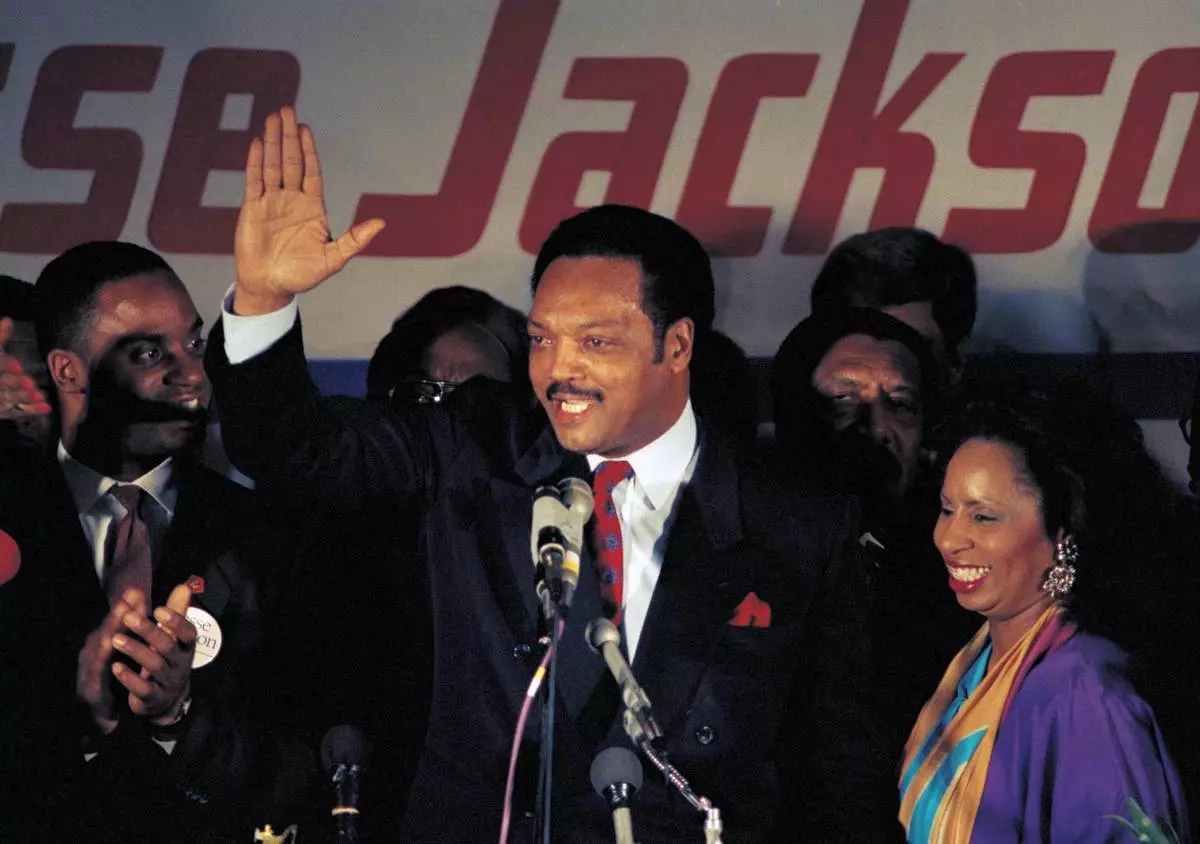
FILE - Jesse Jackson, with his wife Jacqueline, concedes defeat in the Illinois Democratic primary on March 16, 1988, in Chicago. (AP Photo/Lisa Genesen, File)
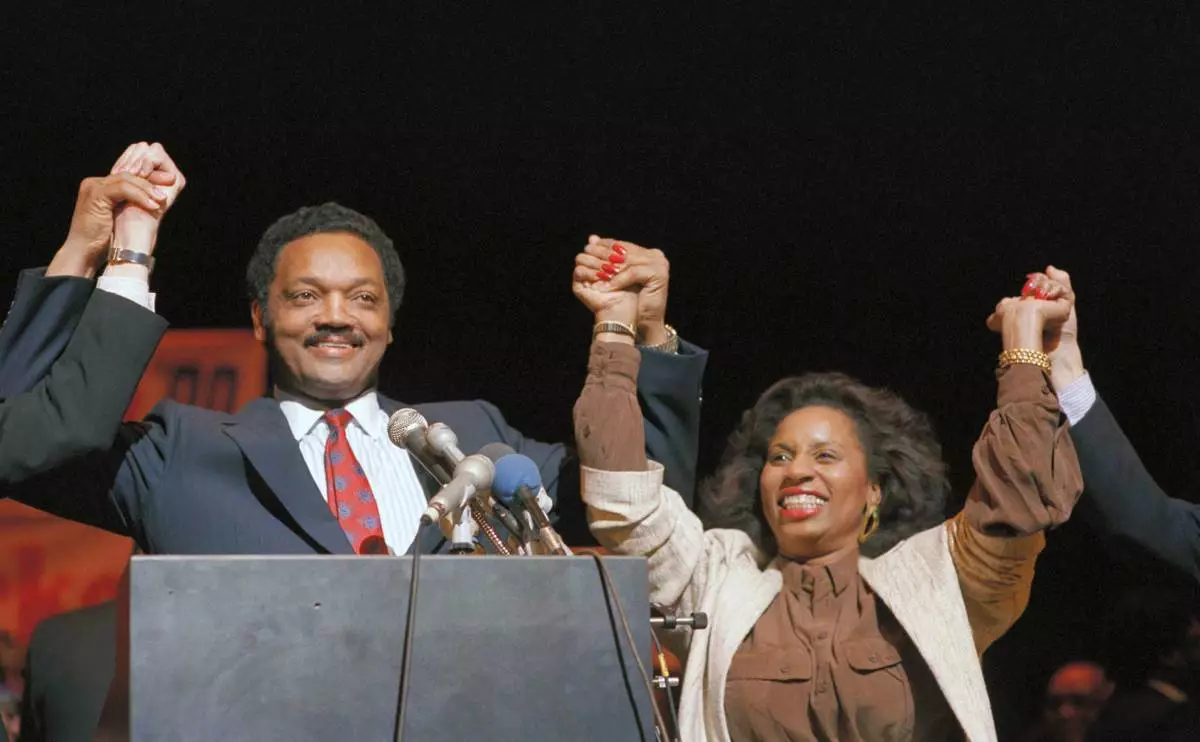
FILE - Democratic Presidential candidates Jesse Jackson and his wife Jackie hold their hands aloft during a rally at Chicago's Arie Crown theatre, March 13, 1988. (AP Photo/Lisa Genesen, File)
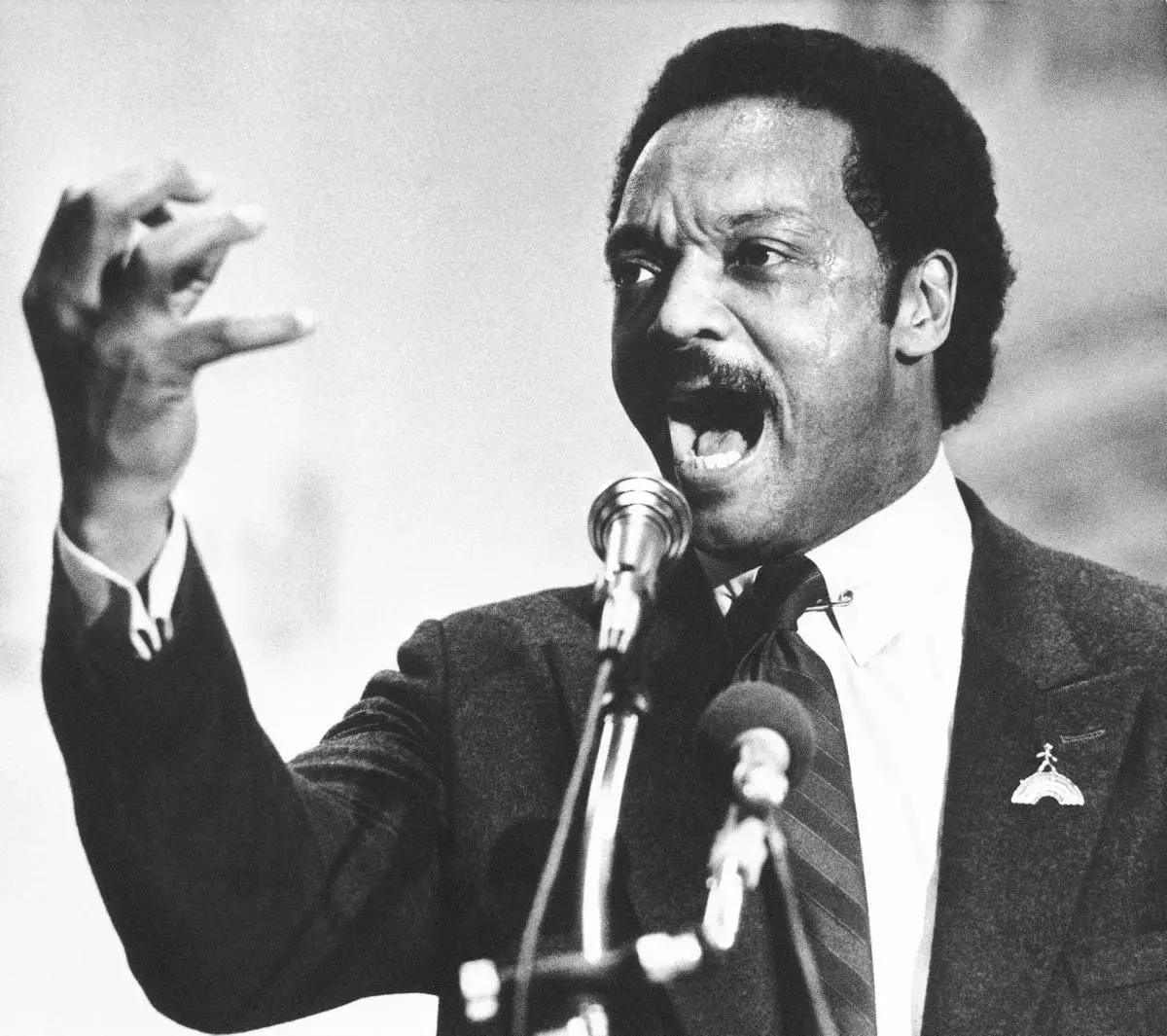
FILE - Democratic presidential primary candidate Jesse Jackson speaks to a group of his supporters at a rally held at a Baptist Church in Dayton, Ohio, April 14, 1984. (AP Photo/Rob Burns, File)