CORTINA D'AMPEZZO, Italy (AP) — Team USA skiers Lindsey Vonn and Mikaela Shiffrin, along with Italy's Federica Brignone, are among the many skiers who have expressed concern during these Olympic Games about the accelerating melt of the world’s glaciers.
And Olympic host city Cortina is a fitting place for them to be talking about climate change: Glaciers once visible from town have dramatically shrunk. Many have been reduced to tiny glaciers or residual ice patches at high elevations among the jagged peaks of the Dolomites. Any Olympian or spectator wishing to lay eyes on a major glacier would have to take a long drive on winding mountain roads to the Marmolada. It's melting rapidly, too.
The world’s top skiers train on glaciers because of the high-quality snow there, and a warming world jeopardizes the future of their sport. Vonn started skiing on glaciers in Austria when she was just 9 years old.
“Most of the glaciers that I used to ski on are pretty much gone,” 41-year-old Vonn said Feb. 3 in response to a question from The Associated Press at a prerace press conference in Cortina before she crashed on the Olympic downhill course. “So that’s very real and it’s very apparent to us.”
As athletes in snow sports, Shiffrin said, they “get a real front-row view” to the monumental changes underway atop some of the world’s highest, coldest peaks.
“It is something that’s very close to our heart, because it is the heart and soul of what we do,” Shiffrin told AP after racing Sunday. “I would really, really like to believe and hope that with strong voices and sort of broader policy changes within companies and governments, there is a hope for a future of our sport. But I think right now, it’s a little bit of a ... it’s a question.”
Italian glaciologist Antonella Senese said Italy has lost more than 200 square kilometers (77 square miles) of glacier area since the late 1950s.
“We are observing a continuous and uninterrupted decrease in glacier area and volume. In the last one to two decades, this reduction has clearly accelerated,” Senese, associate professor of physical geography in the University of Milan's environmental science and policy department, said in an interview.
Among the peaks surrounding Cortina d’Ampezzo, there are glaciers on the slopes of the Cristallo and Sorapiss mountains. The 2015 New Italian Glacier Inventory found these glaciers shrunk by about one-third since the 1959-1962 inventory.
Shortly after winning a second gold Sunday at her home Winter Olympics, Brignone told AP that skiing is “totally different” now than when she was younger. Brignone lives in the Valle d’Aosta, about six hours away.
When she sees how glaciers are retreating to higher elevations, Brignone said she’s not thinking about the future of skiing — she’s concerned for the future of the planet.
“There we have a lot of glaciers, but they are going up and up, every year, more and more,” she told AP.
Yet many people who don't frequent the mountains remain unaware of what's at stake, so the University of Innsbruck created the Goodbye Glaciers Project. The loss of glaciers has far-reaching consequences, threatening water sources, increasing mountain hazards and contributing to sea level rise.
The project shows how different warming levels change the amount of ice left on selected glaciers around the world. To be included, glaciers must have an estimated 2020 volume of at least 0.01 cubic kilometers. The Cristallo and Sorapiss glaciers no longer meet that threshold, said Patrick Schmitt, a doctoral student at the University of Innsbruck.
Some 50 kilometers (31 miles) from Cortina is the Marmolada glacier, one of the largest glaciers in Italy and the largest in the Dolomites. An apartment building-sized chunk of the glacier detached in July 2022, sparking an avalanche of debris that killed 11 hikers. The mountain is popular for hiking in summer and skiing in winter.
The University of Padua said in 2023 the glacier had been halved over 25 years.
It's expected to be mostly gone by 2034 if the world warms 2.7 Celsius (4.9 Fahrenheit), according to the Goodbye Glaciers Project. But if warming is limited to 1.5 C (2.7 F — the international goal — the glacier’s life could be extended by another six years, and around 100 glaciers in the Alps can be saved, Schmitt said.
“Cutting greenhouse gas emissions now will reduce future ice loss and soften the impacts on people and nature,” Schmitt wrote in an email. “The choices we make in this decade will decide how much ice remains in the Dolomites, across the Alps, and around the world.”
Globally, more than 7 trillion tons of ice (6.5 trillion metric tons) has been lost since 2000, according to a study last year. And the prospective impact of climate change on Olympic sport is enormous; the list of places that could host Winter Games is projected to shrink substantially in the coming years.
In Cortina, Noa Szollos, who is competing for Israel, said in an interview the state of the nearby glaciers speaks to the condition of glaciers around the world.
“I hope we can do something about it,” she said, “but it’s a hard time.”
Silja Koskinen of Finland said in an interview she can’t train on some of the glaciers she used to because of crevices, rocks and flowing water. Team USA skier AJ Hurt talked about starting the season in October on glaciers in Sölden, Austria.
“Every year, I feel like we come and there’s a little less snow. And every time, we’re like, are we really going to start in October? There’s no snow here,'” Hurt told the AP. “It is really sad and it’s hard to ignore in this sport, definitely, when we’re around it so much and it is so clear.”
Norwegian skier Nikolai Schirmer is leading an effort to stop fossil fuel companies from sponsoring winter sports. Burning coal, oil and gas is the largest contributor to global climate change by far.
In Bormio, Italy, Team USA skier River Radamus said athletes — as stewards of outdoor winter sports— should be on the forefront of trying to defend the environment as best they can.
“It’s always present in our mind that we’re on a dangerous trend unless we do something right,” Radamus said.
AP Sports Writer Pat Graham contributed from Bormio, Italy.
AP Winter Olympics coverage: https://apnews.com/hub/milan-cortina-2026-winter-olympics
The Associated Press’ climate and environmental coverage receives financial support from multiple private foundations. AP is solely responsible for all content. Find AP’s standards for working with philanthropies, a list of supporters and funded coverage areas at AP.org.

A view of the Cristallo mountain group is pictured in the Dolomites, which was once home to glaciers, seen from Olympic host city Cortina d'Ampezzo, Italy, Feb. 7, 2026 (AP Photo/ Jennifer McDermott)

A view of the Cristallo mountain group is pictured in the Dolomites, which was once home to glaciers, seen from Olympic host city Cortina d'Ampezzo, Italy, Feb. 7, 2026 (AP Photo/ Jennifer McDermott)

FILE - A view taken from a rescue helicopter of the Punta Rocca glacier near Canazei, in the Italian Alps in northern Italy, Tuesday, July 5, 2022. (AP Photo/Luca Bruno, File)
The search is on for one missing U.S. service member while another was rescued after two U.S. warplanes went down in separate incidents including the first shoot-down since the Iran war began nearly five weeks ago.
The incidents occurred just two days after President Donald Trump said in a national address that the U.S. has “beaten and completely decimated Iran.”
One fighter jet was shot down in Iran, officials said. A U.S. crew member from that plane was rescued, but a second was missing, and a U.S. military search-and-rescue operation was underway.
Separately, Iranian state media said a U.S. A-10 attack aircraft crashed in the Persian Gulf after being struck by Iranian defense forces. A U.S. official, speaking on condition of anonymity to discuss a sensitive military situation, said it was not clear if the aircraft crashed or was shot down.
The war now entering its sixth week is destabilizing economies around the world as Iran responds to the U.S. and Israeli attacks by targeting the Gulf region's energy infrastructure and tightening its grip on oil and natural gas shipments through the Strait of Hormuz.
Here is the latest:
Omar al-Waeli, head of Iraq’s Border Ports Authority, said on Saturday that the strike on the Shalamcheh border crossing killed one person and wounded five others.
Authorities did not offer further details on the strike. But trade and passenger traffic is suspended at the crossing, which is crucial for Iranian imports and Iranian pilgrims headed to Iraq’s Shiite shrines.
The Iraqi government said it was directing traders and travelers to alternative crossings.
The International Atomic Energy Agency said on Saturday that it has been informed by Iran about the strike near the premises of the Bushehr nuclear facility that killed a security guard and impacted a building in the complex.
“No increase in radiation levels was reported” following the strike, the IAEA said in a social media post.
Bahrain’s Defense Ministry reported the tally in a social media post on Saturday.
This brings the total number of projectiles fired at the country since the start of the war to 188 missiles and 453 drones.
Bahrain hosts the U.S. Navy’s 5th Fleet.
The Atomic Energy Organization of Iran said in a social media post Saturday that an airstrike near its Bushehr nuclear facility killed a security guard and damaged a support building.
It is the fourth time the facility has been targeted during the war.
The Bushehr nuclear power plant uses low-enriched uranium from Russia, along with Russian technicians, to supply about 1,000 megawatts of power for Iran.
Its pressurized-water reactor can power hundreds of thousands of homes and other businesses and industries. But it contributes only 1% to 2% of Iran’s total power needs.
Iran has been trying to expand the facility to multiple reactors. In 2019, it began a project that ultimately plans to add two additional reactors to the site, each adding another 1,000 megawatts apiece.
Italian Premier Giorgia Meloni has discussed with Saudi Prime Minister Mohammed bin Salman defensive military assistance that Italy is providing against Iranian reprisals to U.S.-Israeli attacks.
A brief statement from Meloni's office Saturday did not specify what type of assistance Italy is providing.
It also said the two discussed diplomatic efforts to end the war, the importance of opening the Strait of Hormuz and “more broadly how to promote a regional framework that can break free from the current cycle of conflict.”
Meloni will continue her visit in Qatar and the United Arab Emirates.
U.S. and Israeli warplanes continued to pound Iran Saturday, hitting several targets including a petrochemical facility, Iranian media reported.
Iran's official English-language newspaper Tehran Times reported that an airstrike hit a facility belonging to Iran’s Agriculture Ministry in the western city of Mehran.
The newspaper said another air raid struck Mahshahr Special Petrochemical Zone in the southwestern Khuzestan province.
The semiofficial Fars news agency reported several explosions heard late Saturday morning in the facility.
Mehr, another semiofficial news agency, reported that the strikes hit four companies within the zone.
Mohammad Bagher Qalibaf made the veiled threat in a social media post late Friday, asking about how busy oil tanker and container ship traffic is through the strait.
The 20-mile (32-kilometer) strait links the Red Sea with the Gulf of Aden and the Indian Ocean and is one of the busiest chokepoints in global trade, with more than a tenth of seaborne global oil and a quarter of container ships passing through it.
Iran has already greatly disrupted the flow of oil through the Strait of Hormuz, sending fuel prices skyrocketing and jolting the world economy.
Disrupting transit through the Bab el-Madeb would force shipping firms to route their vessels around the Cape of Good Hope at the southern tip of Africa, further hitting prices.
Israel’s rescue services said Saturday the man sustained glass shrapnel wounds after an Iranian missile hit the central city of Bnei Brak.
It wasn't clear if the glass shrapnel was caused by a direct strike or falling debris from an intercepted missile.
Israel’s Magen David Adom rescue services said it was taking the man to the hospital.
The Iranian judiciary's Mizan news agency said Saturday that the two men who were hanged belonged to the Iranian exile group Mujahedeen-e-Khalq.
The agency said Abul-Hassan Montazer and Vahid Bani-Amirian were convicted of “being members of a terrorist group.”
This brings to six the total number of MEK members executed since the start of the war.
Activists and rights groups say Iran routinely holds closed-door trials in which defendants are unable to challenge the accusations they face.
The Israeli military said on Saturday that its air force struck ballistic and and anti-aircraft missile storage sites in Tehran.
It said the strikes a day earlier included weapons manufacture sites as well as military research and development facilities in the Iranian capital.
It said the strikes are part of an ongoing phase to increase damage to Iran's “core systems and foundations.”
Authorities in Dubai said the facades of two buildings were damaged by debris from intercepted drones, including one belonging to U.S. tech firm Oracle. No injuries were reported.
Iran’s Revolutionary Guard has threatened to attack Oracle and 17 other U.S. companies after accusing them of being involved in “terrorist espionage” operations in Iran.
Previous Iranian drone strikes caused damage to three Amazon Web Services facilities in the United Arab Emirates and Bahrain.
As of Friday, 247 of the wounded were Army soldiers, 63 were Navy sailors, 19 were Marines and 36 were Air Force airmen, according to Pentagon data available online.
It is unclear if the data includes any of the service members involved in the downing of two combat aircraft reported Friday.
Most of the wounded — 200 — were also mid to senior enlisted troops, 85 were officers and 80 were junior enlisted service members.
The current death toll remains at 13 service members killed in combat.
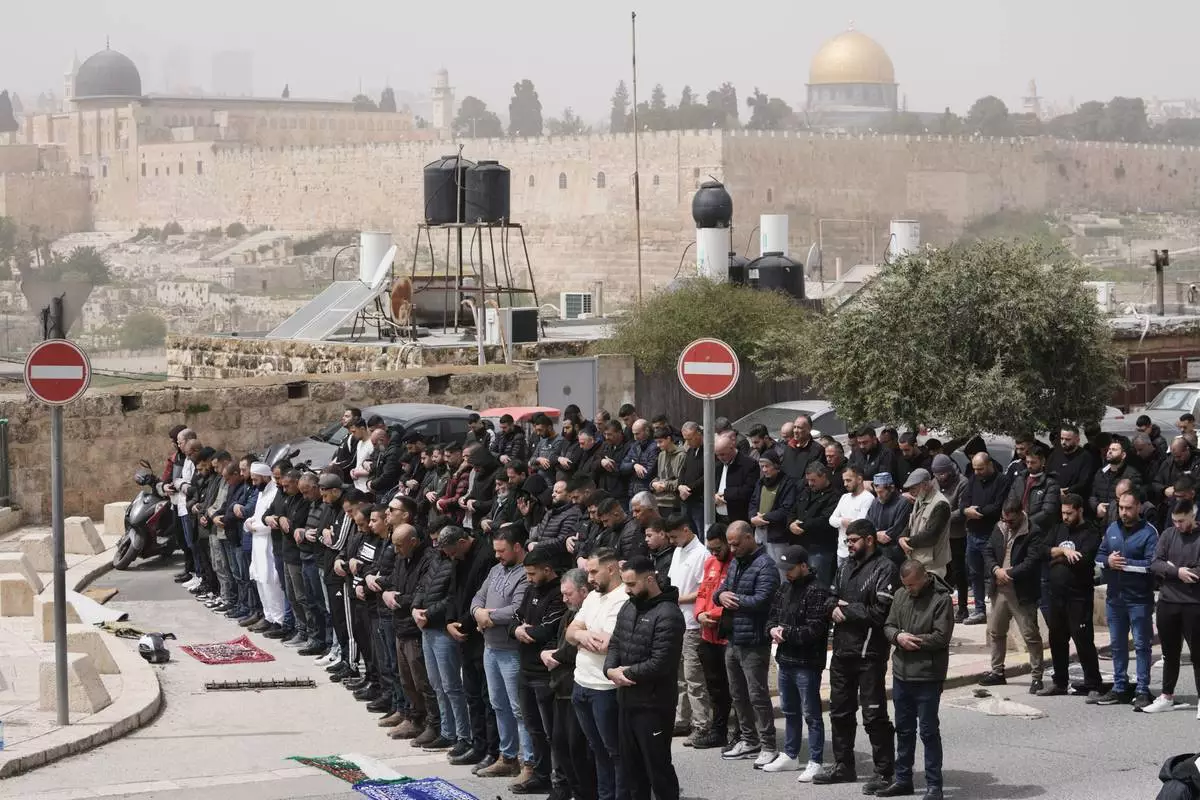
Palestinian Muslims attend Friday prayers outside Jerusalem's Old City due to restrictions linked to the Iran war, April 3, 2026. (AP Photo/Mahmoud Illean)
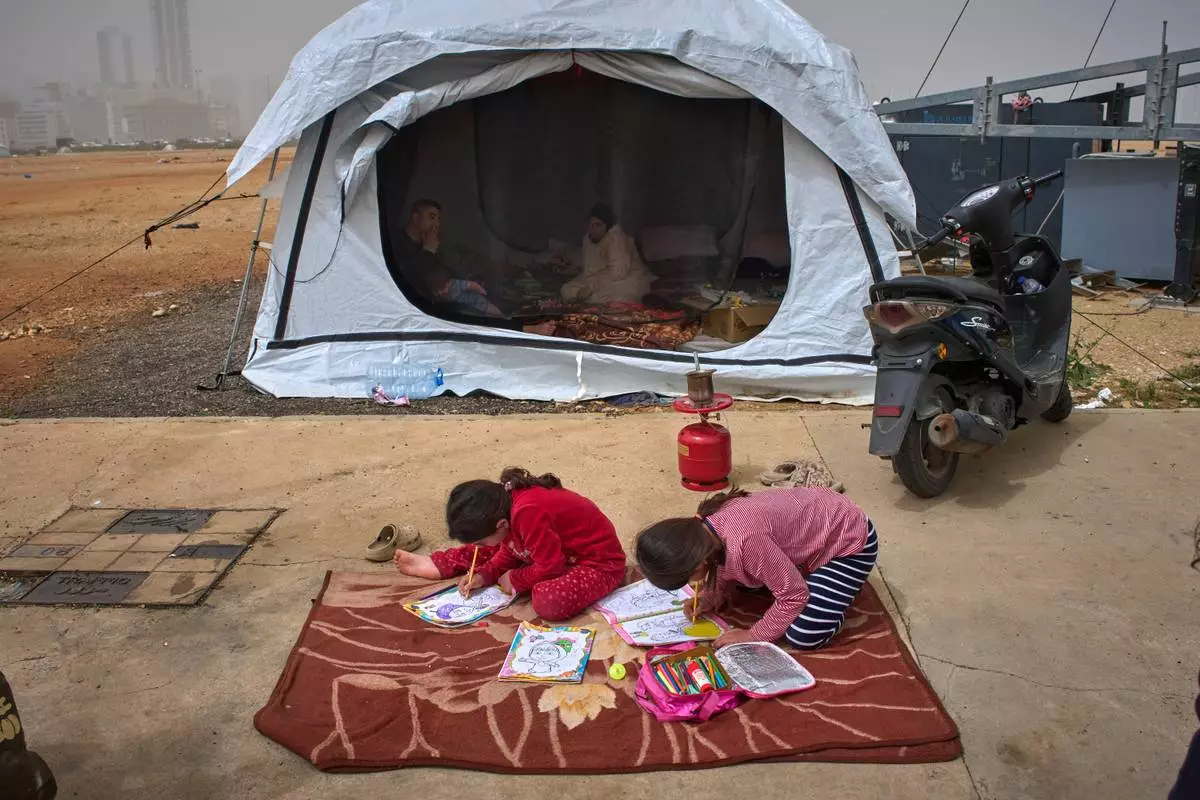
Tamara and her sister Amal color pictures on the floor as their parents, Sara and Ahmed, who fled their village of Khiyam in southern Lebanon due to Israeli bombardment, sit inside a tent used as a shelter in Beirut, Lebanon, Friday, April 3, 2026. (AP Photo/Emilio Morenatti)
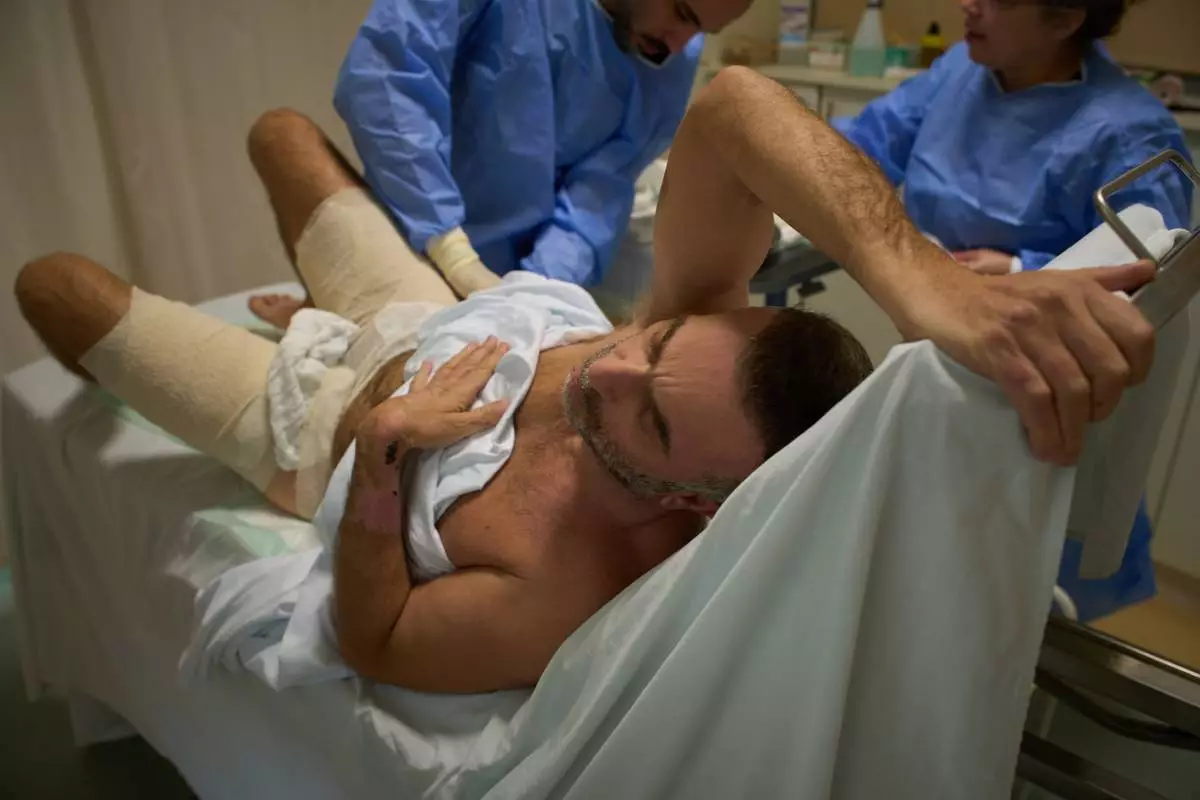
Mohammad Qubaisi, 53, with burn wounds from an Israeli airstrike on southern Lebanon undergoes surgery by Dr. Mohammed Ziara, left, and his team, at the Sidon Government Hospital in Sidon, Lebanon, Thursday, April 2, 2026. (AP Photo/Emilio Morenatti)
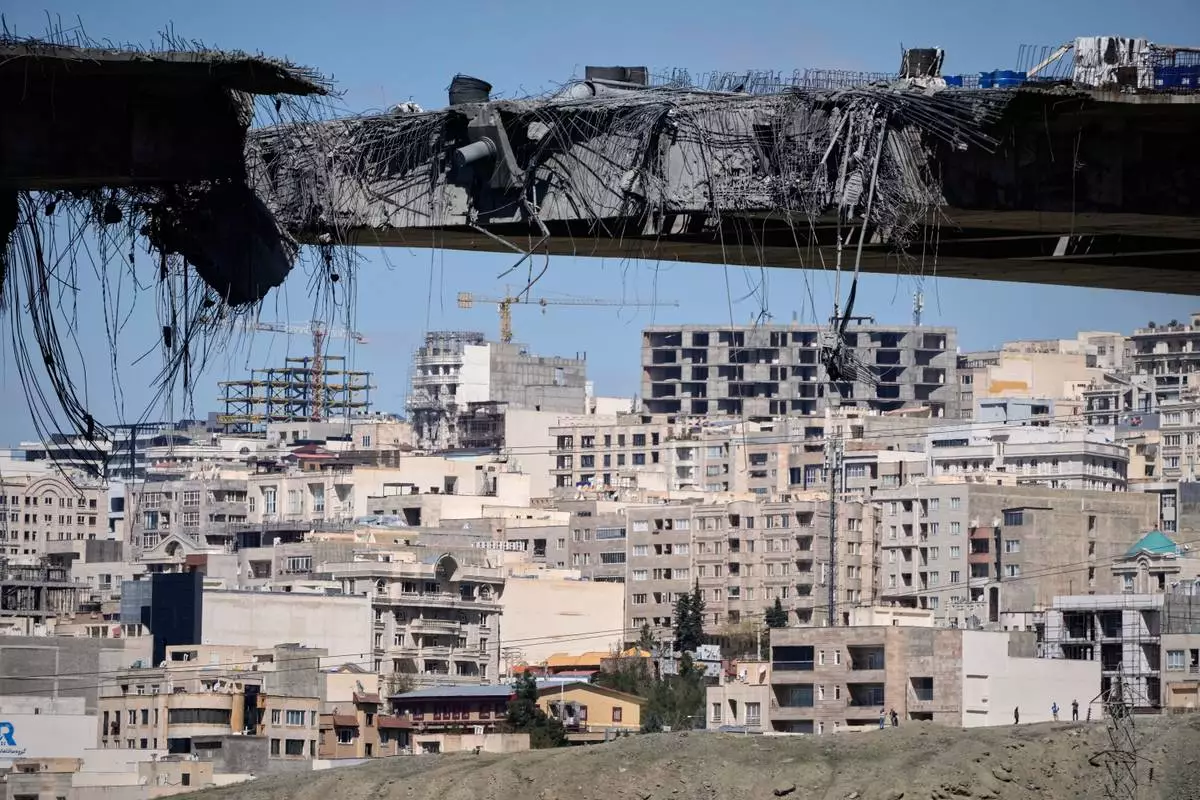
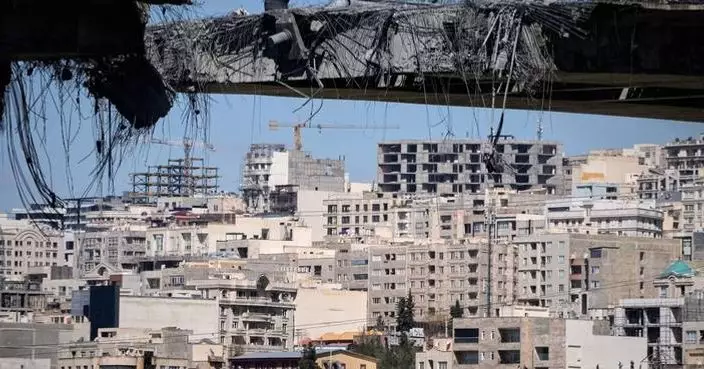
A bridge struck by U.S. airstrikes on Thursday is seen in the town of Karaj, west of Tehran, Iran, Friday, April 3, 2026. (AP Photo/Vahid Salemi)
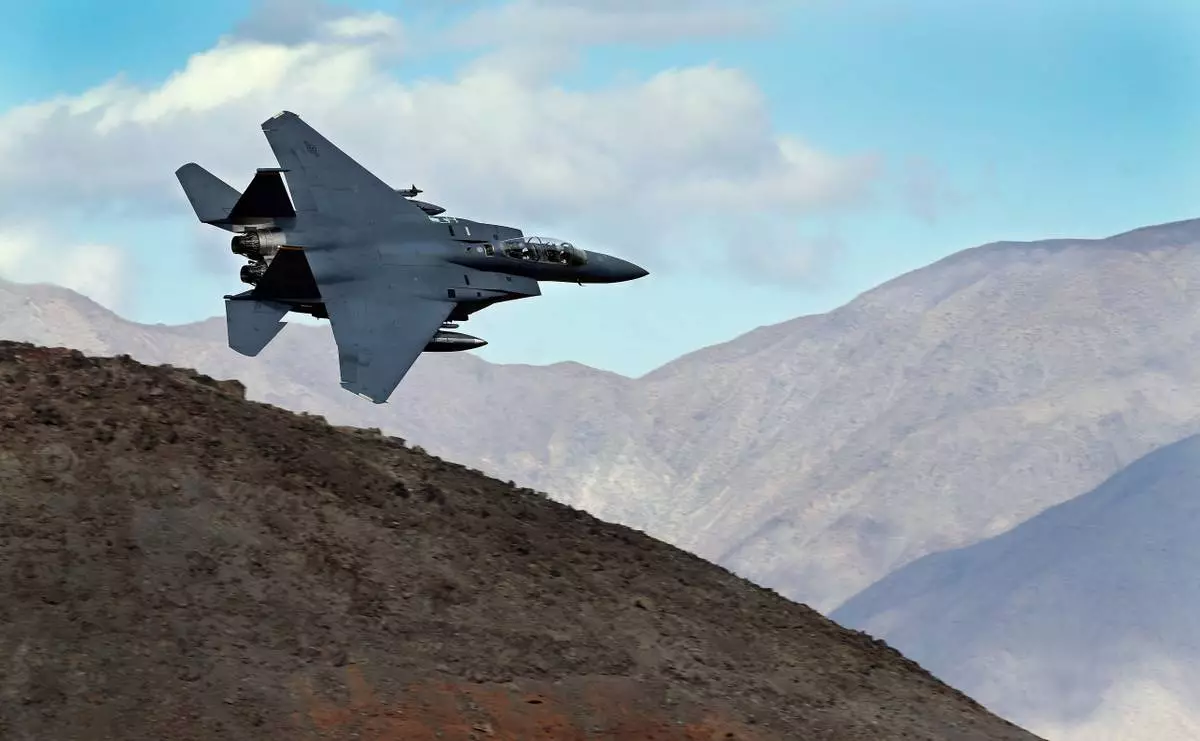
FILE - An F-15E Strike Eagle turns toward the Panamint range over Death Valley National Park, Calif., on Feb. 27, 2017. (AP Photo/Ben Margot, File)