China's technological prowess in the fast-evolving field of robotics was thrust into the spotlight in front of a huge global audience during the 2026 Spring Festival Gala, with various Chinese firms using the stage to showcase the impressive, world-leading capabilities of their machines.
Hosted by the China Media Group (CMG), the gala delivered a more than four-hour-long feast of captivating cultural performances and entertaining variety acts to usher in the Chinese New Year which arrived at midnight Tuesday.
The long-running gala show has increasingly taken on a high-tech feel in recent years and among the highlights this year was the appearance of advanced AI-embodied robots, who dazzled audiences with their innovative stage presence and remarkable physical abilities, particularly during a highly-energetic Kung Fu performance.
The knockout martial arts display was delivered by humanoid bots developed by Unitree Robotics, a leading firm located in the eastern tech hub of Hangzhou.
Unitree robots did feature in a more sedate traditional dance routine during the 2025 edition of the gala, but this year their performance went up a notch as they thrilled in a high-tempo martial arts spectacle, wielding swords and nunchucks in a thrilling coordinated sequence alongside human masters from a renowned Kung Fu school.
Wang Xingxing, the company's founder, explained how the routine had been months in the making and highlights the great advancements the company is continually making. He noted Unitree is developing several new products this year, including practical service robots designed to assist daily life, as well as innovative exploration products that push technological boundaries.
"We hope to continue pushing the boundaries of extreme robotic movements and contribute to the collective progress of the global robotics industry," said Wang.
Another Chinese robotics startup MagicLab, featured in the gala's coveted opening act and set the tone for the evening when its humanoid machines performed a groundbreaking 360-degree breakdancing move.
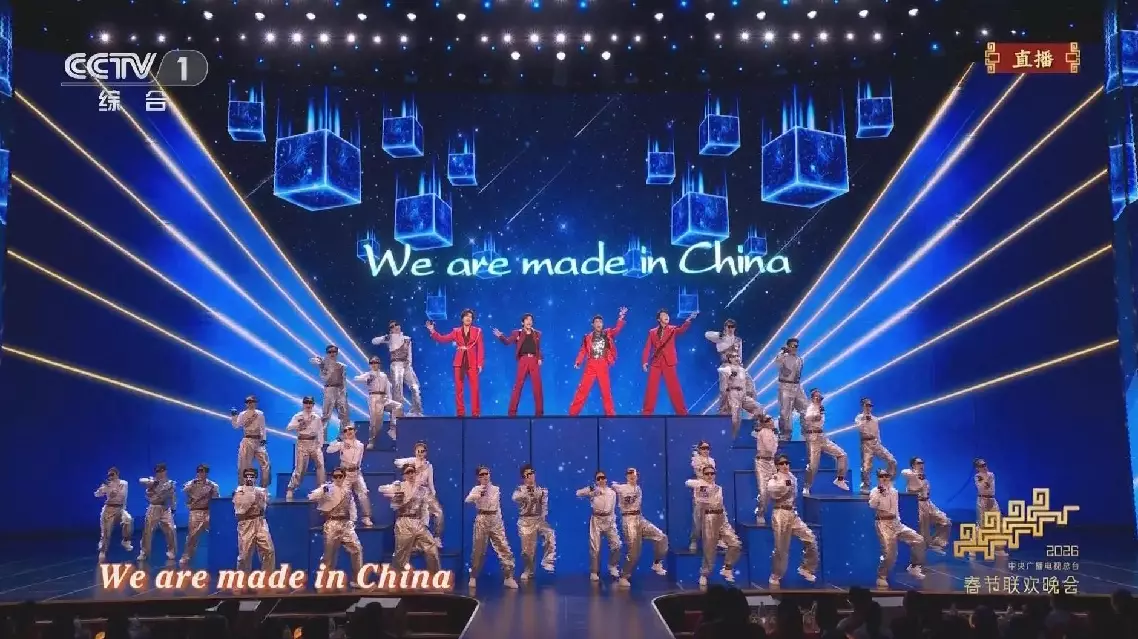
Later, six units synchronized seamlessly with pop stars on stage as they provided a well-choreographed dance routine as part of a musical number highlighting China's tech sector.
While others showcased their physical prowess, the Beijing-based Galbot demonstrated its aptitude for performing everyday tasks, from delicately cracking walnuts, picking up glass shards and retrieving items from shelves to folding clothes and skewering sausages for grilling.
The Galbot robot handled each task with dexterous, natural human-like movements. This capacity for autonomous decision-making and hand-eye coordination signaled that Chinese-designed robotics is moving beyond mere showmanship, instead pointing and shifting toward vast practical applications.
Meanwhile, robots created by the Beijing-based Noetix Robotics robots starred in a special comedy skit in a poignant throwback to a sketch that appeared in the gala 30 years ago, when an actress played a whimsical, clumsy robot. This time, she performed alongside authentic humanoids, including a stunningly accurate bionic replica of herself, which was created in just one month.
The classic comedy-of-errors narrative in this skit probed a deeper question amid the ongoing AI technology wave over where the future of human-robot relations might be headed. It ultimately affirmed the irreplaceable value of human warmth and connection, suggesting that advanced robotics, rather than replacing humanity, should instead enhance and reflect our own qualities.
China's humanoid robot industry has experienced an unprecedented expansion. As of the end of 2025, more than 140 domestic companies have entered the field, launching over 330 different robot models.
Data from a leading e-commerce platform shows that within two hours of the start of this year's Gala, the number of searches for related robot items increased by over 300 percent compared to the same period the previous day, while the number of customer service inquiries rose by 460 percent, as the order volume grew by 150 percent.
Behind this rapid growth lies a deeply rooted industry chain that is now beginning to burst into full force. China has developed an extensive ecosystem covering upstream key components, midstream manufacturing of complete robots, and downstream integration into various applications.
Data indicates that last year China produced 773,000 industrial robots, up 28 percent from the previous year, setting a new production record.
Rob Kniaz, founding partner of H-Tree Capital, a venture capital firm based in London, pinpointed China's manufacturing advantages, particularly in the high-tech sectors, which can be a real economic driver.
"China has the manufacturing base that very few parts of the world do in terms of producing all the components that go into this. So, it makes perfect sense for China to capitalize on what they can do in this space with that manufacturing. That said, I think in time in these industries, the value does tend to coalesce towards the top in the software layer. So, I think of software as sort of the last part on top over the enablement of the hardware. So, you need the hardware first to really build that base of users, or applications, then on top is where the software really tends to add more value. So, they're very hand in hand, but China's manufacturing will be what unlocks the software down the road," he said.
Kniaz also emphasized the strategic importance of cross-sector integration, as tech innovations like embodied AI are now being more readily applied across various fields.
"I think it makes a huge difference when you have the ability to move across industries with a strategy and kind of define that across many different sectors. It creates a huge opportunity for both push and pull. While on the technology side, you have the robots being invented and pushed out. And then you have the pool on the demand side where factories are demanding it, factories are ordering it, and it creates a huge velocity for then creating that kind of innovation to follow. So, very few places in the world can have that kind of vertical integration where you do have that push and pull from the top and bottom, so I don't think that can be underestimated," said Kniaz.
Spring Festival Gala highlights China's tech ambitions via robotics showcase