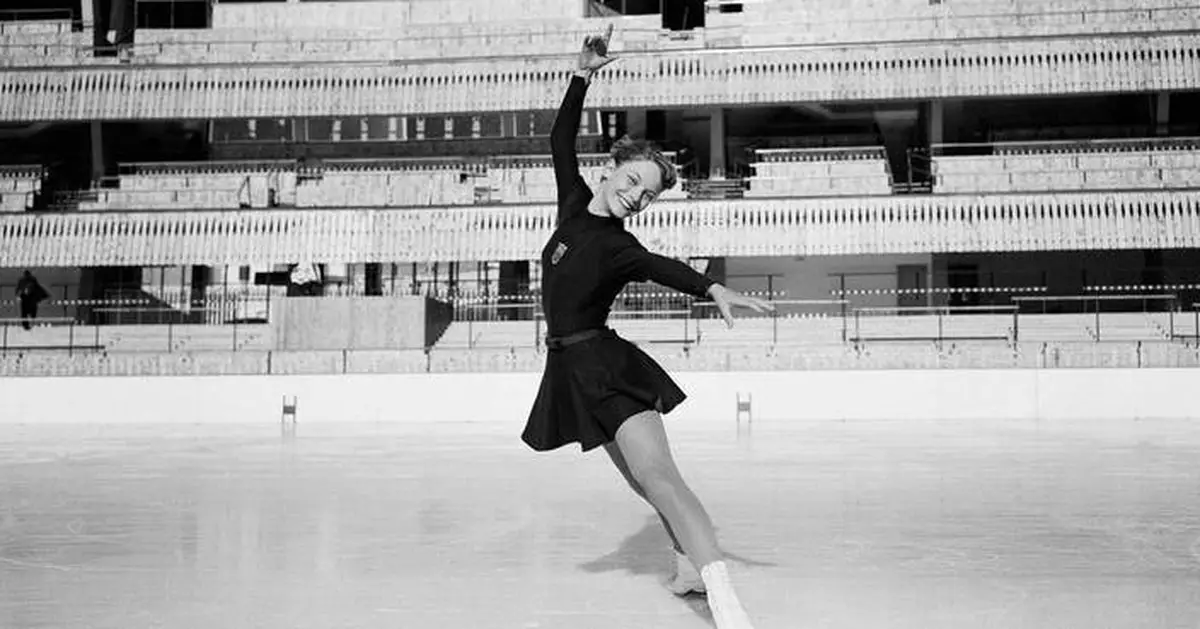
MILAN (AP) — Tenley Albright can still picture the sun setting over the Dolomites, casting half the rink in shade. She can hear the crowd, bundled up against the cold in the outdoor stadium in Cortina d'Ampezzo, humming along as the “Barcarolle” played over the speakers.
It was 70 years ago this month. It might as well have been seven days ago.
“It was so beautiful, up there in the mountains,” recalled Albright, who had won the Olympic silver medal four years earlier, and was favorite to win gold at the 1956 Games. "I remember when they started humming my music, and that really lifted me, and I took off my double axel in the sun and landed in the shade, and it was the most unbelievable thing.
“Years later," Albright said, "when I visited Cortina, it was with my daughter. It was in the afternoon, about 2 o'clock, which is exactly when I competed, and there was that line between sunlight and shadow. All these years later. It wasn't my imagination.”
Albright did win the gold medal that day, beating teammate Carol Heiss in a dominant showing by U.S. figure skaters. They won five of the nine medals at the Cortina d'Ampezzo Games, including another gold by Hayes Alan Jenkins, whom Heiss would later marry.
Albright is 90 now. Heiss turned 86 last month. Both of the figure skating legends revisited their triumphant trip to Italy in exclusive interviews with The Associated Press, just as the Olympics returned to Milan and Cortina for the first time in seven decades.
“We didn't have an Olympic Village. We all stayed in hotels, right on the main street,” Heiss recalled, “and it's just this beautiful, small ski town, and it hasn't grown much. I went back eight or nine years ago to see what it was like. It was almost the same.”
The fact that Albright even made it to the Olympics was a miracle. She had contracted polio in 1946, nearly a decade before Jonas Salk would develop his vaccine, and Albright's father — a surgeon — was concerned that it would leave her paralyzed.
She had learned to skate as a child on a homemade rink in the family's backyard. So, when Albright needed physical therapy to regain her leg strength, she turned to the nearby Skating Club of Boston, the home of two-time Olympic champion Dick Button. She began to train there, beginning a relationship with the club that exists to this day.
Albright not only recovered from polio but became one of the world's best skaters. She won five consecutive national titles beginning at the age of 16, and her two world championships in the lead-up to the 1956 Cortina D'Ampezzo Games made her the favorite.
Disaster struck in the days before the competition, though.
“I was on outdoor ice at a practice," Albright said, "and I noticed some of my competitors were having a photograph taken, so I swerved to not be in their way. My foot went into a crack and I came down, and my left leg, the heel sliced right through the skate.”
The wound was so deep that Albright wasn't sure she would be able to compete. She couldn't stand for days, much less practice her program, and the morning of the competition, “I fell flat on the simplest thing you could do,” she said
Her coaches, including the trailblazer Maribel Vinson, strapped up her ankle the best they could.
Just as Albright was about to step onto the ice, more trouble: The head of the traveling entertainment show “Ice Capades” leaned over and gave her a kiss. At the time, simply talking to a professional show person could strip you of amateur status, making you ineligible to compete for the Olympics, and a horrible thought flashed through Albright's mind.
“I didn't know him,” Albright said, “but I thought, ‘Oh, no. Everyone is seeing this! The cameras and everything.’”
The pain in her ankle and the rinkside distractions all disappeared when Jacques Offenbach's music began to play, and Albright set off on her program. The crowd began to hum along, sending her spirits soaring, and Albright made it through unscathed.
“I remember thinking, ‘I know I'm going to get through this somehow,'” she said. “I just don't know if I'll be able to get off the ice.”
Albright retired not long after winning the gold medal. She went on to graduate from Harvard Medical School and spent more than two decades as a surgeon, then became a faculty member there. She served as the chief physician for the U.S. team at the 1976 Innsbruck Olympics, became a vice president of the U.S. Olympic Committee and has continued to enjoy the sport she helped to pioneer.
There were few expectations for Heiss when she arrived in Italy for the 1956 Games. She was just a teenager. And even though she'd become the first woman to land a double axel, all of the media attention was on Albright, taking some of the pressure off her.
“For a young girl, it was just exciting to meet other athletes from different countries,” Heiss said. “We had white outfits and marched into this beautiful arena with the Dolomites behind, and I was turning 16, and I was like, ‘What a way to celebrate your birthday!’”
In fact, the U.S. Olympic team threw a surprise birthday party for her in Cortina.
Heiss remembers her event, every step and sequence. She remembers standing on the podium alongside Albright and having the silver medal draped around her neck. But when she thinks about 1956, other seemingly mundane memories come flooding back first.
“The ski jumpers used to come down to the rink," she said, "and they'd call me over and say, ‘You’re crazy to do all this stuff, jumping on this ice, this thin blade.' They've got these scrapes on their cheeks and chins. I'm like, ‘You’re the crazy one! I walked to the top of the jump, and you look down, you can't even see where you're going to land. And you say I'm crazy?'”
Her relaxed experience in Cortina was far different from four years later, at the 1960 Squaw Valley Games, when Heiss was suddenly the favorite. The pressure weighed on her like a steel anvil, especially when Hollywood actors would come over to visit.
Heiss, who would do some acting herself later in life, compartmentalized it all, and she ended up with a gold medal of her own.
“I had met Sonja Henie several times. My coach had been the Olympic champion in 1932 and ’36, and he’d tell me what the Olympics were like, even though they changed a lot,” Heiss said. “It’s hard to explain. You have such a feeling of patriotism, because in the U.S., you know, we were funded by the public. They donate for the team to go. You feel very patriotic. It’s a little overwhelming when you’re 16 and you see all these wonderful athletes. They’re the best of the best of all the countries. It was a special time.”
AP Winter Olympics: https://apnews.com/hub/milan-cortina-2026-winter-olympics
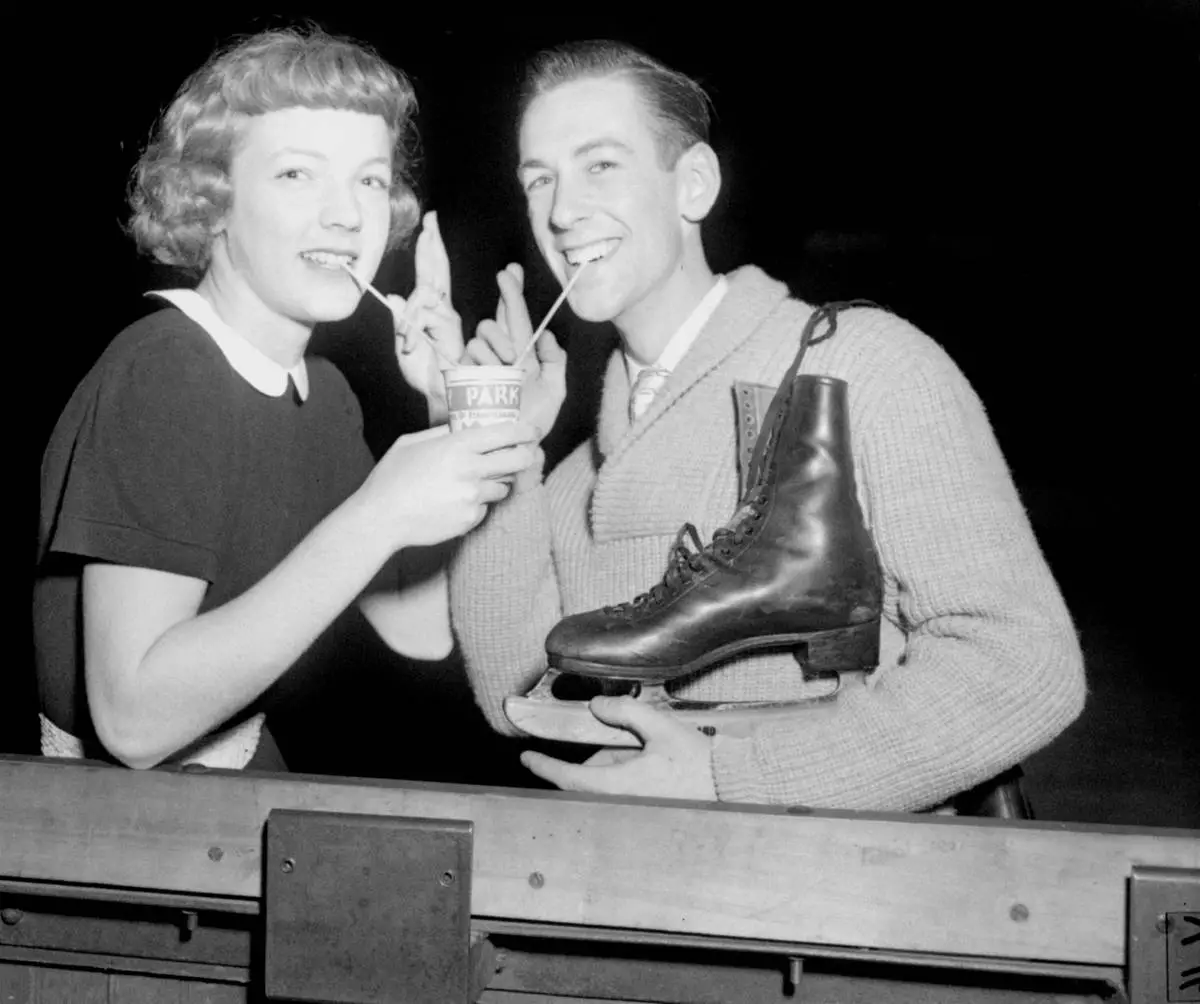
FILE - Tenley Albright, left, and Hayes Alan Jenkins, both world figure skating champions, pose for a photo, in Hershey, Pa., March 26, 1953. (AP Photo/Paul Vathis, File)
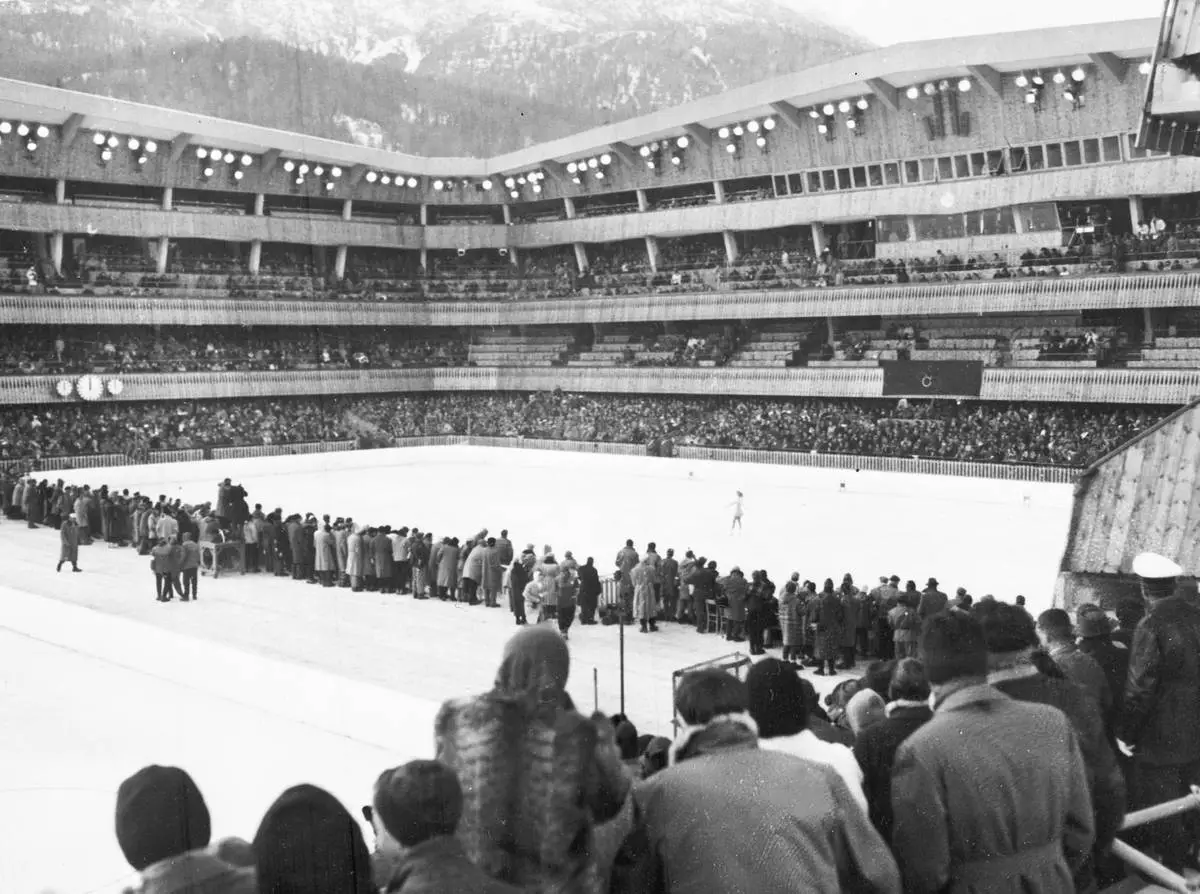
FILE - A view of the stadium as United States' Carol Heiss performs in the women's figure skating event, in the seventh Winter Olympic Games, in Cortina d'Ampezzo, Italy, Feb. 2, 1956. (AP Photo/Hans von Nolde, File)
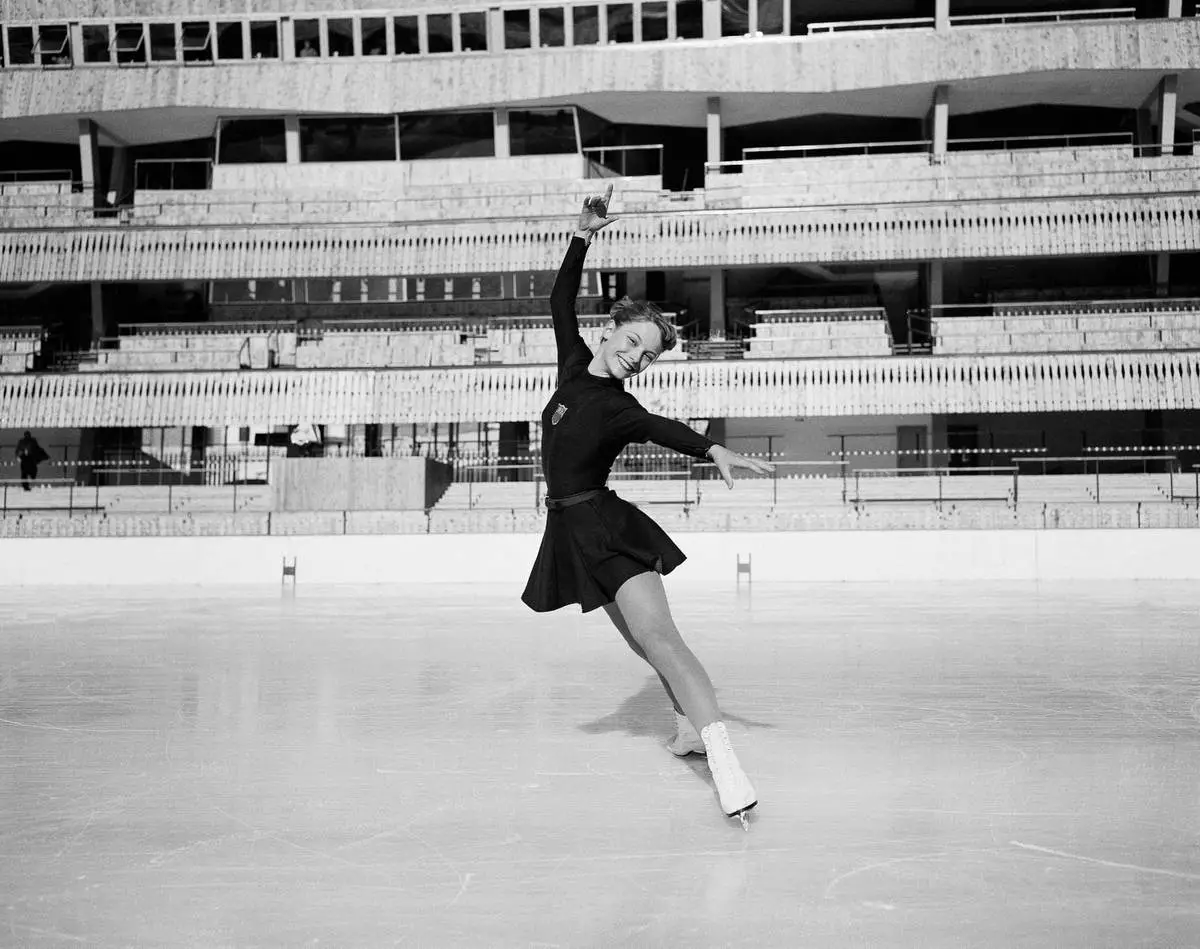
FILE - Carol Heiss warms up at the Ice Stadium, in Cortina d'Ampezzo, Italy, Jan. 21, 1956. (AP Photo/Raoul Fornezza, File)