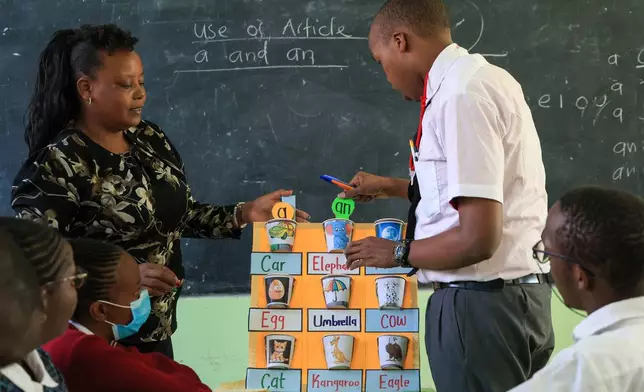
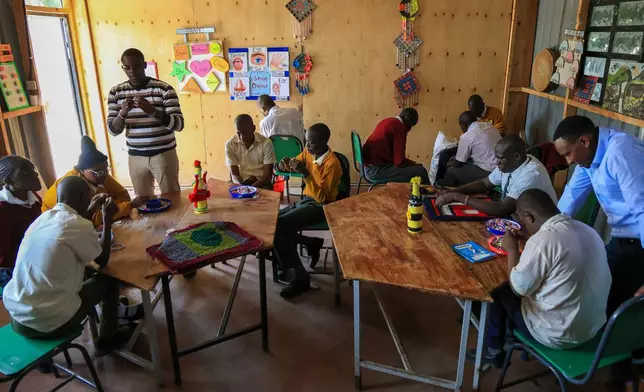
KITENGELA, Kenya (AP) — At a special school in Kenya, the classrooms look like few others. Instead of standing and lecturing at Rare Gem Talent School, teachers use hands-on lessons focused on sights, sounds, and feelings designed for a unique type of learner: students with dyslexia.
Despite increasing access to public education in Kenya, students with learning disabilities are frequently left behind. Requiring only tweaks to core curriculums, Rare Gem is one of a handful of schools in the country tailored to children with dyslexia and other learning challenges.
Click to Gallery
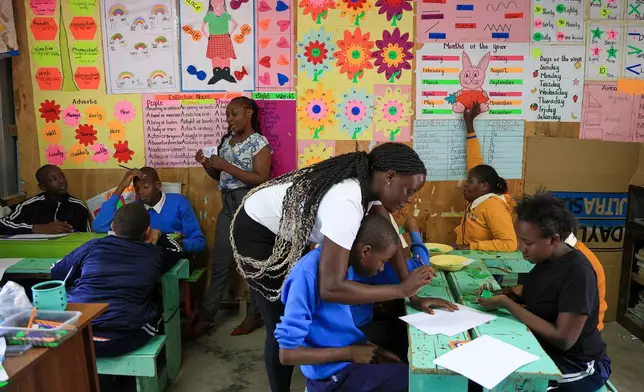
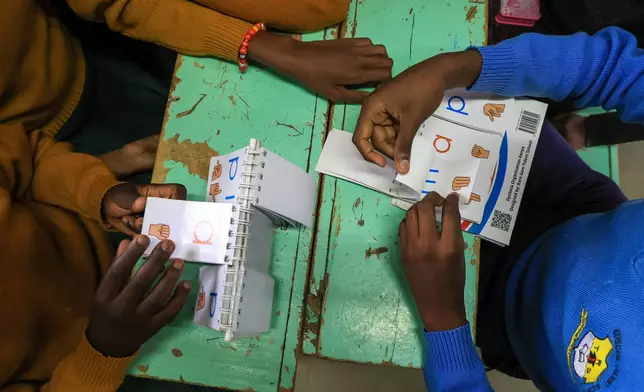
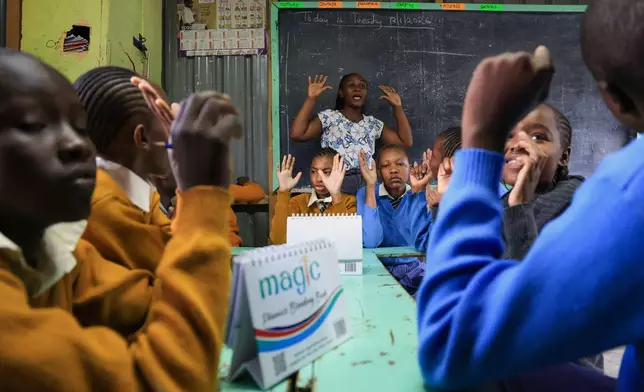
Pupils take part in an English lesson at Rare Gem Talent School, which supports students with dyslexia, in Kitengela, Kajiado County, Kenya, Tuesday, Jan. 13, 2026. (AP Photo/Andrew Kasuku)
Pupils take part in an English lesson at Rare Gem Talent School, which supports students with dyslexia, in Kitengela, Kajiado County, Kenya, Tuesday, Jan. 13, 2026. (AP Photo/Andrew Kasuku)
Dorothy Kioko, a teacher, leads a Grade 7 English lesson at Rare Gem Talent School in Kitengela, Kajiado County, Kenya, Tuesday, Jan. 13, 2026. (AP Photo/Andrew Kasuku)
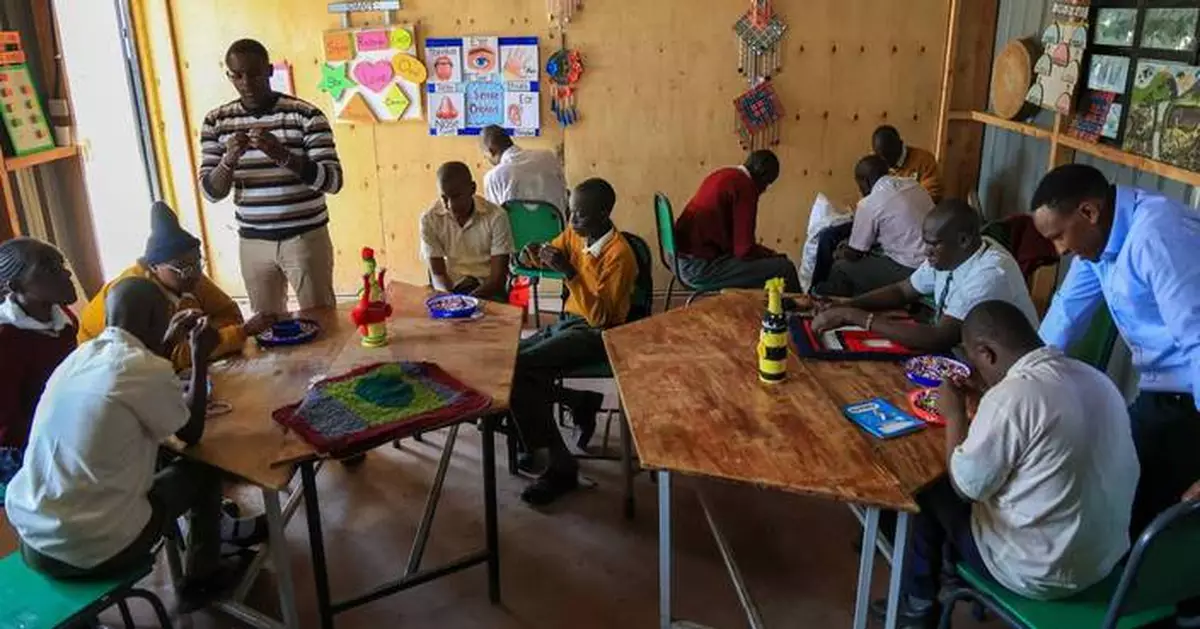
Pupils take part in an arts and crafts lesson at Rare Gem Talent School, which supports students with dyslexia, in Kitengela, Kajiado County, Kenya, Tuesday, Jan. 13, 2026. (AP Photo/Andrew Kasuku)
Pupils take part in an arts and crafts lesson at Rare Gem Talent School, which supports students with dyslexia, in Kitengela, Kajiado County, Kenya, Tuesday, Jan. 13, 2026. (AP Photo/Andrew Kasuku)
Dyslexia affects around 10% of learners and represents a stumbling block to literacy. A lack of accommodation threatens to leave behind a vast swathe of a booming youth population in Kenya — and across the continent.
At his old school, “teachers didn’t understand me,” said Rare Gem student Jason Malak Atati. “This school is much better.”
Common issues for children with dyslexia are simple errors that impede literacy, like mixing up letters like “b” and “p” or even the number “9,” said Dennis Omari, a special needs educator. “The early signs to look out for are if children have issues with phonological awareness — not able to listen to exact sounds in a particular language — and when kids fail to read,” said Omari.
Rare Gem addresses blocks through what Omari calls a multi-sensorial approach to reading, with educators honing in on alternative learning styles. These could be visual, like coding word sounds with colors, auditory — teaching spelling patterns through song — or tactile, with objects used to represent word construction that forms the foundation of reading.
“You teach step by step until the learner gets what you’re teaching, not a lecture method where the teacher stands in front,” said Dorothy Kioko, a teacher at Rare Gem. “You have to have additional knowledge on how to handle them with patience.”
Rare Gem was set up in 2012 through the Dyslexia Organisation Kenya and opened with fewer than 10 learners. Today the school hosts some 210 students, mostly with dyslexia, but also accommodates those with other learning challenges like autism.
“If they are identified early and intervention given early, they improve their skills and learn to identify their talents — and they complete school,” said Phyllis Munyi, the founder of Rare Gem, who started the school after her son faced unaddressed learning challenges from dyslexia.
The school charges tuition fees of $180 a term, less than the cost of popular high-end private schools but significantly higher than the government schools attended by most Kenyan children.
Stigma and a lack of awareness, especially among parents, are the main challenges to getting children into alternative education like Rare Gem early, said Munyi. Another major discouraging factor for students is bullying that they may have faced at their prior school.
“In other, normal schools, there was a lot of discrimination, a lot of bullying,” said Geoffrey Karani, a former student at Rare Gem. Today, Karani is an art teacher at the school who sees mentorship as a key part of his job. “I’m not only teaching, I’m showing kids that I’ve been on the same journey,” he said.
Kenya has been successful in increasing access to education in recent decades, with the number of students enrolled in primary school rising from 5.9 million in 2002 to 10.2 million in 2023—outpacing population growth.
Yet education access for those with disabilities has lagged. While 11.4% of Kenyan children have special needs, just 250,000 such students are enrolled in the country’s educational institutions, according to So They Can, a nonprofit focused on increasing education access in Africa.
Rare Gem may offer a model to increasing access without dramatic overhauls to curriculums. The curriculum at the school is not bespoke, but rather a version of Kenya’s core curriculum tweaked to meet the learning needs of students with dyslexia and other difficulties, said Munyi. She added: “The curriculum was not designed as a standalone … nor is it limited to dyslexia.”
For more on Africa and development: https://apnews.com/hub/africa-pulse
The Associated Press receives financial support for global health and development coverage in Africa from the Gates Foundation. The AP is solely responsible for all content. Find AP’s standards for working with philanthropies, a list of supporters and funded coverage areas at AP.org.
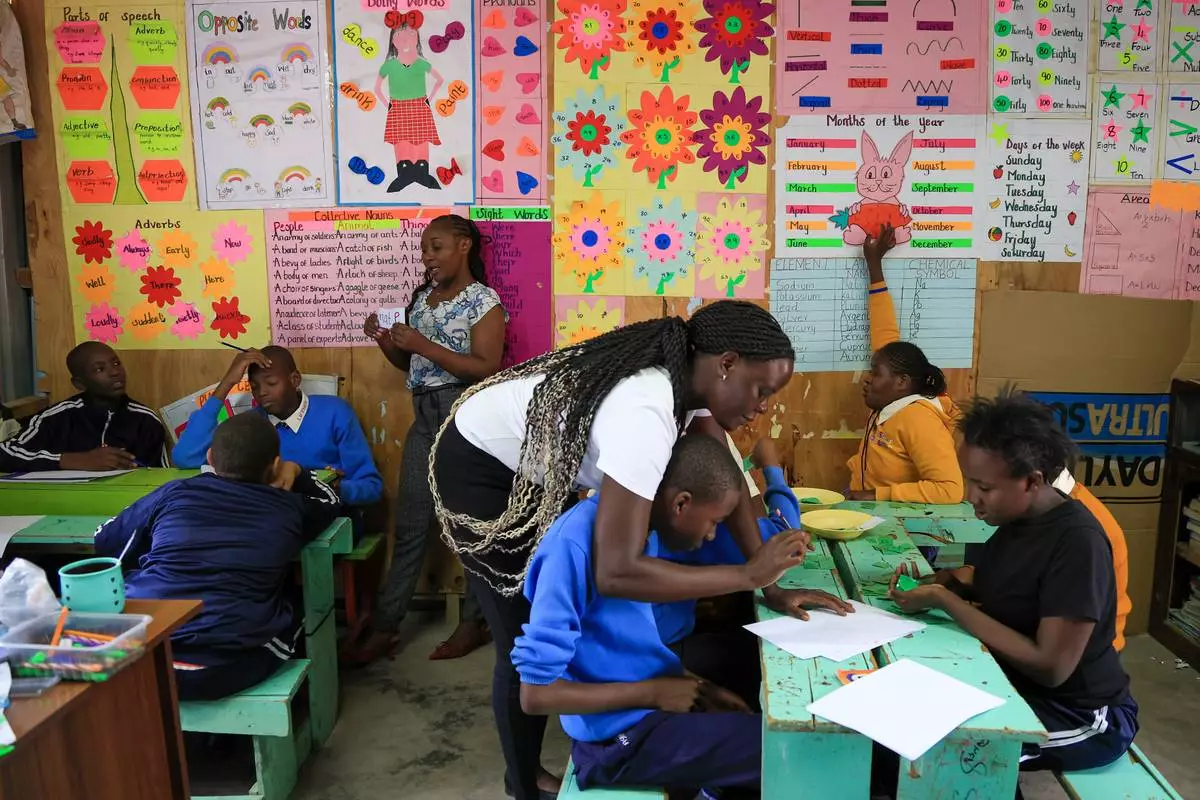
Pupils take part in an English lesson at Rare Gem Talent School, which supports students with dyslexia, in Kitengela, Kajiado County, Kenya, Tuesday, Jan. 13, 2026. (AP Photo/Andrew Kasuku)
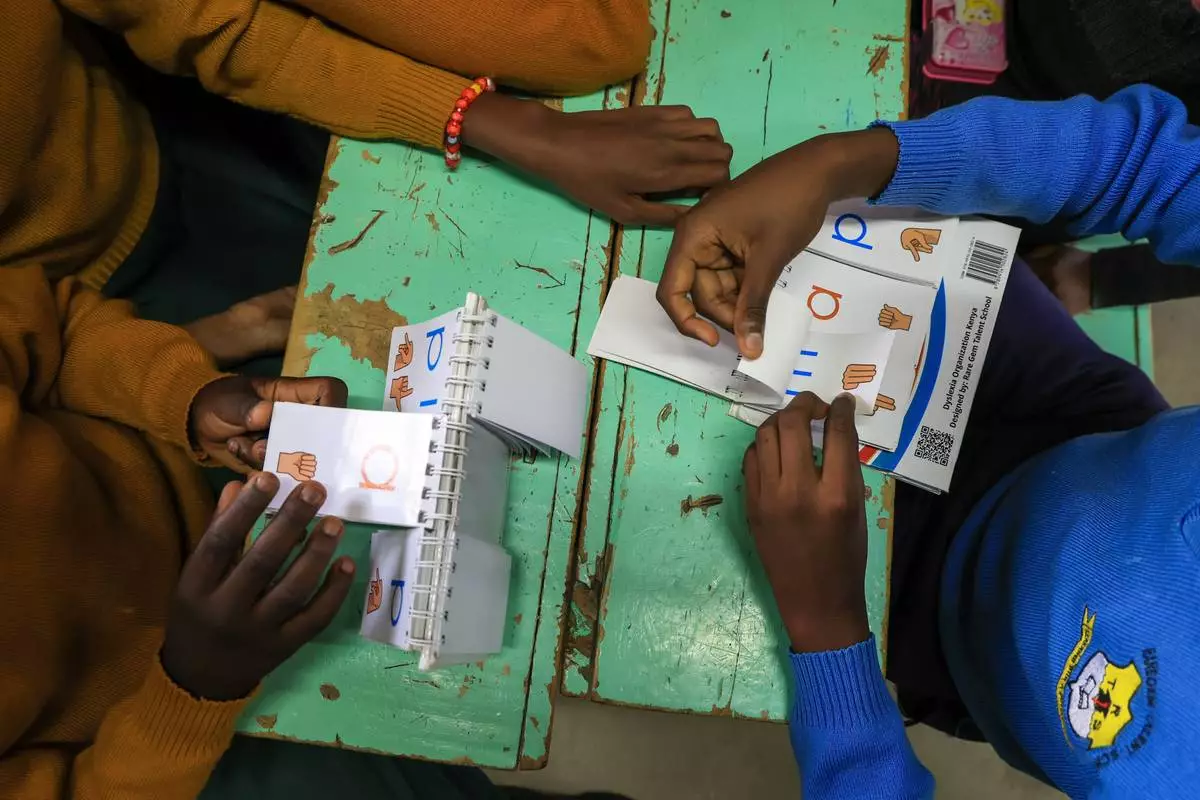
Pupils take part in an English lesson at Rare Gem Talent School, which supports students with dyslexia, in Kitengela, Kajiado County, Kenya, Tuesday, Jan. 13, 2026. (AP Photo/Andrew Kasuku)
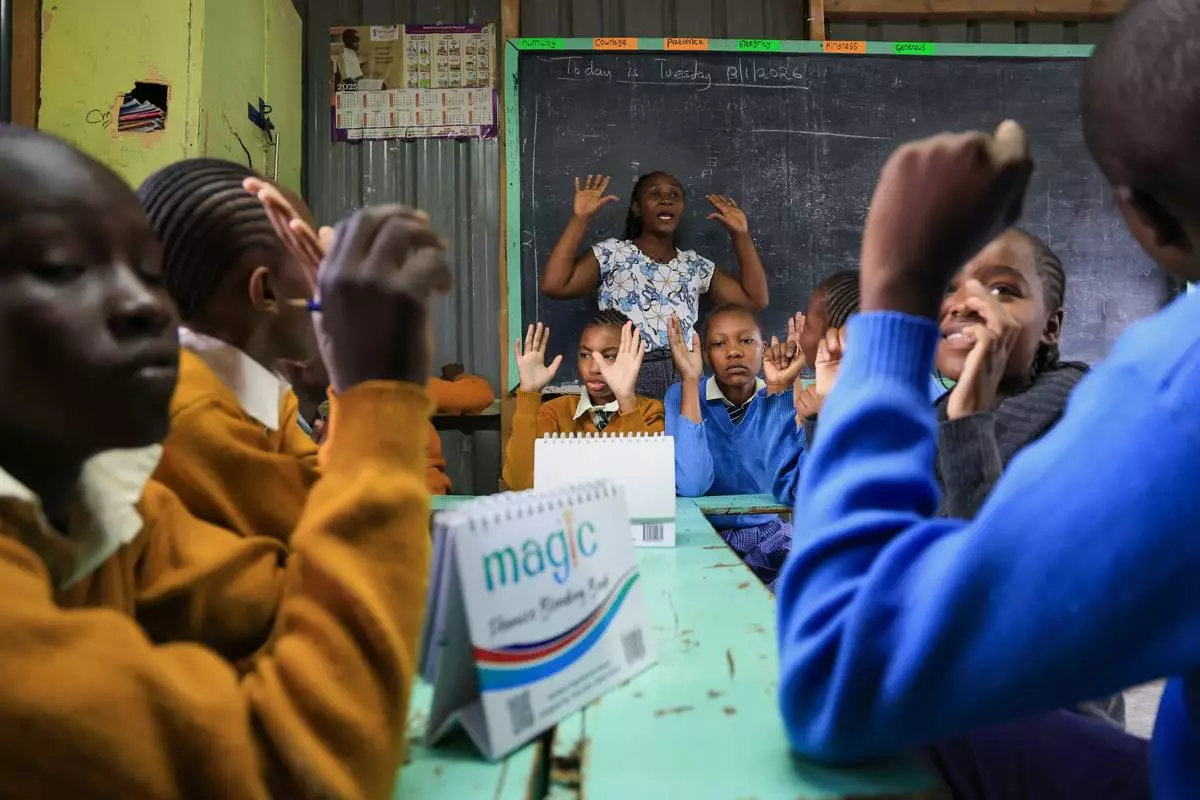
Dorothy Kioko, a teacher, leads a Grade 7 English lesson at Rare Gem Talent School in Kitengela, Kajiado County, Kenya, Tuesday, Jan. 13, 2026. (AP Photo/Andrew Kasuku)
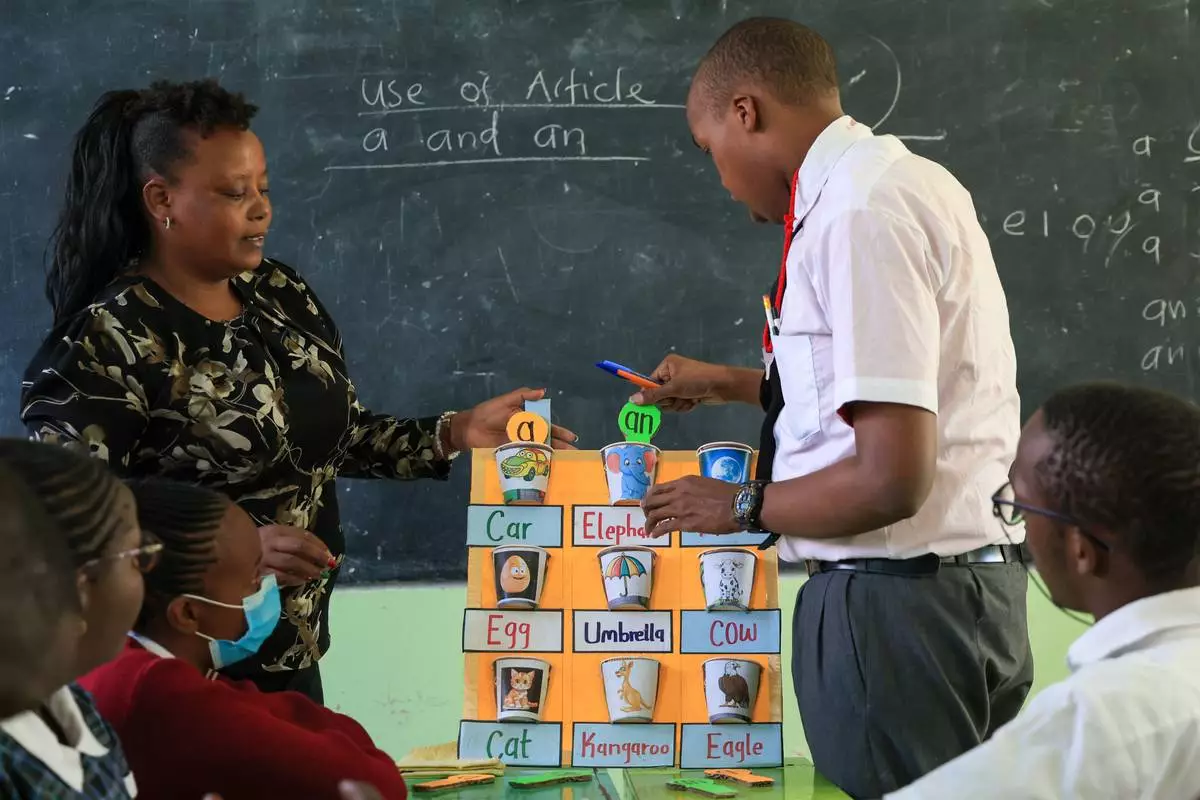
Pupils take part in an arts and crafts lesson at Rare Gem Talent School, which supports students with dyslexia, in Kitengela, Kajiado County, Kenya, Tuesday, Jan. 13, 2026. (AP Photo/Andrew Kasuku)
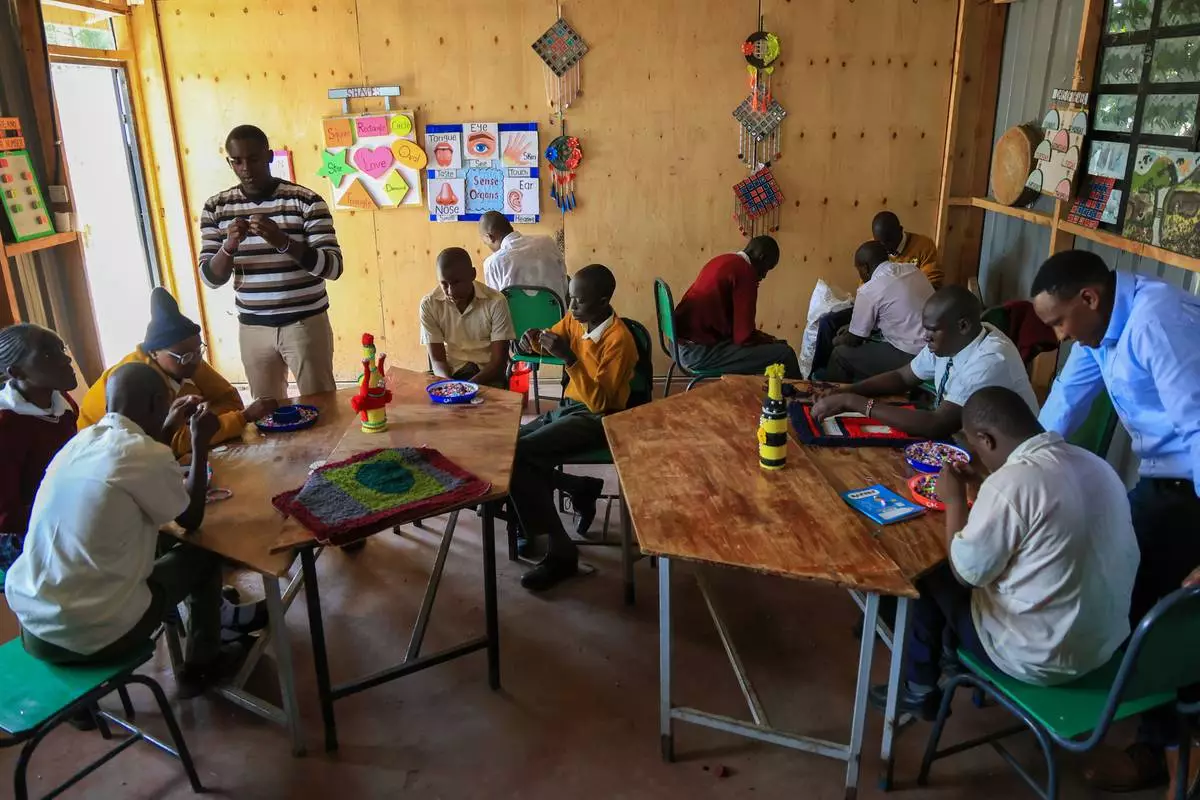
Pupils take part in an arts and crafts lesson at Rare Gem Talent School, which supports students with dyslexia, in Kitengela, Kajiado County, Kenya, Tuesday, Jan. 13, 2026. (AP Photo/Andrew Kasuku)
The Los Angeles Lakers felt like they weren't getting a fair whistle in their Game 2 loss to the Oklahoma City Thunder on Thursday.
It might take a lot more than friendly officiating to make this series a fair fight.
The Western Conference semifinals series moves to Los Angeles for Saturday's Game 3 and the Lakers hope a change of scenery can help them get back into the matchup against the defending NBA champion Thunder.
Oklahoma City looks as formidable as ever and is 6-0 in these playoffs. The Thunder have won five of those games by at least 10 points.
Over in the Eastern Conference, the Cleveland Cavaliers are in a similar situation on Saturday. They're in a 2-0 hole against the Detroit Pistons but now get to play in front of their home crowd.
— Game 3, Detroit at Cleveland, 3 p.m. EDT (NBC/Peacock)
Series: Detroit, 2-0.
Odds: Cleveland by 4.5.
The Pistons have won five consecutive postseason games for the first time since 2008 — and three of them were while facing elimination in Round 1. Cleveland is now 2-10 in conference semifinal games over the past three seasons.
— Game 3, Oklahoma City at LA Lakers, 8:30 p.m. EDT (ABC)
Series: Oklahoma City, 2-0.
Odds: Oklahoma City by 8.5.
The Lakers are furious with elements of the officiating right now, and that might go one of two ways in Game 3. They'll either come out inspired on Saturday and make this a series, or the anger could work against them.
— Game 4, New York at Philadelphia, 3:30 p.m.. EDT (ABC)
Series: New York, 3-0.
Odds: New York by 1.5.
The Knicks go for the four-game sweep on the road. Jalen Brunson scored 33 points in Game 3, delivering another big playoff performance. New York's fans — famous or not — have made themselves a big presence in Philadelphia. Mikal Bridges is having a big second-round series for the Knicks after struggling in the first round. He is averaging 19.3 points and shooting 64.9% from the field.
— Game 4, San Antonio at Minnesota, 7:30 p.m. EDT (NBC, Peacock)
Series: San Antonio, 2-1.
Odds: San Antonio by 4.5.
Victor Wembanyama delivered a masterful playoff performance in Game 3 with a career playoff-high 39 points, 15 rebounds and some game-wrecking defense. The Timberwolves need to find answers in a hurry when they host Game 4 before the series shifts back to San Antonio.
— Knicks 108, 76ers 94 for 3-0 series lead.
— Spurs 115, Timberwolves 108 for 2-1 series lead.
Injuries in the playoffs are never a good thing, but a comfortable lead in the second round gives the New York Knicks and Oklahoma City Thunder some room to be patient.
The Knicks have the luxury not to rush back forward OG Anunoby, who is averaging 21.4 points per game in the postseason. He sat out with a strained right hamstring and remains day to day.
The top-seeded Thunder are in a similar position as they wait for high-scoring guard Jalen Williams to return from a hamstring injury. Second-year guard Ajay Mitchell has played well in Williams' absence, averaging 19.5 points and five assists against the Lakers.
A breakdown of this season's NBA awards:
— Twyman-Stokes Teammate of the Year: DeAndre Jordan, New Orleans.
— Hustle Award: Moussa Diabaté, Charlotte.
— Defensive Player of the Year: Victor Wembanyama, San Antonio.
— Clutch Player of the Year: Shai Gilgeous-Alexander, Oklahoma City.
— Sixth Man of the Year: Keldon Johnson, San Antonio.
— Sportsmanship Award: Derrick White, Boston.
— Most Improved Player: Nickeil Alexander-Walker, Atlanta.
— Rookie of the Year: Cooper Flagg, Dallas.
— Executive of the Year: Brad Stevens, Boston.
Among the announcements still to come:
— Most Valuable Player: Gilgeous-Alexander, Wembanyama or Denver's Nikola Jokic.
— Coach of the Year: Detroit's J.B. Bickerstaff, San Antonio's Mitch Johnson or Boston's Joe Mazzulla.
Defending champion Oklahoma City (-165) is favored to win the NBA title, according to oddsmakers.
The Thunder are followed by San Antonio (+300), New York (+700), Detroit (+1600), Cleveland (+6600), Los Angeles Lakers (+10000), Minnesota (+12500) and Philadelphia (+25000).
— Sunday: NBA draft lottery.
— May 10-17: NBA draft combine.
— May 17 or 19: Eastern Conference finals begin on ESPN and ABC.
— May 18 or 20: Western Conference finals begin on NBC and Peacock.
— June 3: Game 1, NBA Finals on ABC. (Other finals dates: June 5, June 8, June 10, June 13, June 16 and June 19).
— June 23: Round 1, NBA draft.
— June 24: Round 2, NBA draft.
“I’m Linus. Jalen (Brunson's) my blanket,” first-year Knicks coach Mike Brown said. “He helps me relax at a lot of different times during the course of the game.”
— Wembanyama is averaging five blocks through seven playoff games. The Spurs star was at his best in the fourth quarter of Friday night's win, scoring 16 points and grabbing six rebounds.
— Detroit's Cade Cunningham is scoring 30.6 points per game in the playoffs, which leads the NBA. He is shooting nearly 41% from 3-point range.
AP NBA: https://apnews.com/nba
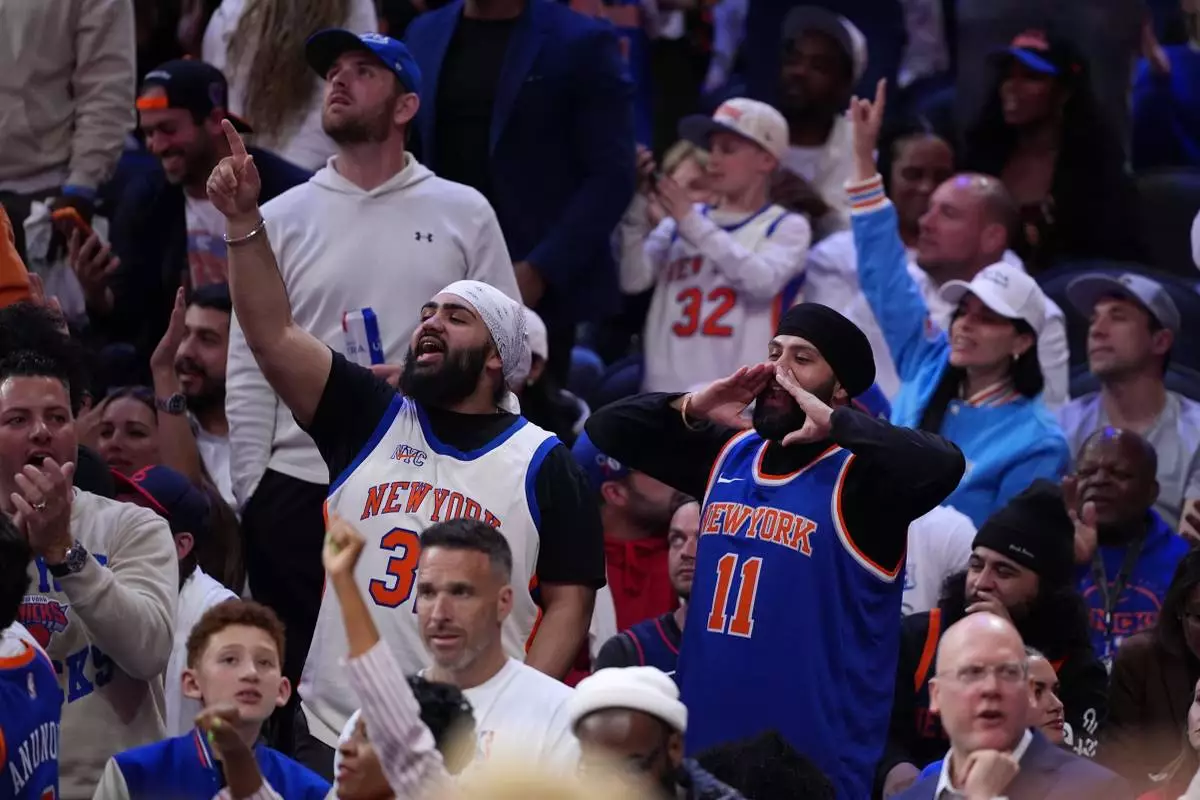
New York Knicks' fan react during the second half of Game 3 in a second-round NBA basketball playoff series against the Philadelphia 76ers Friday, May 8, 2026, in Philadelphia. (AP Photo/Matt Slocum)
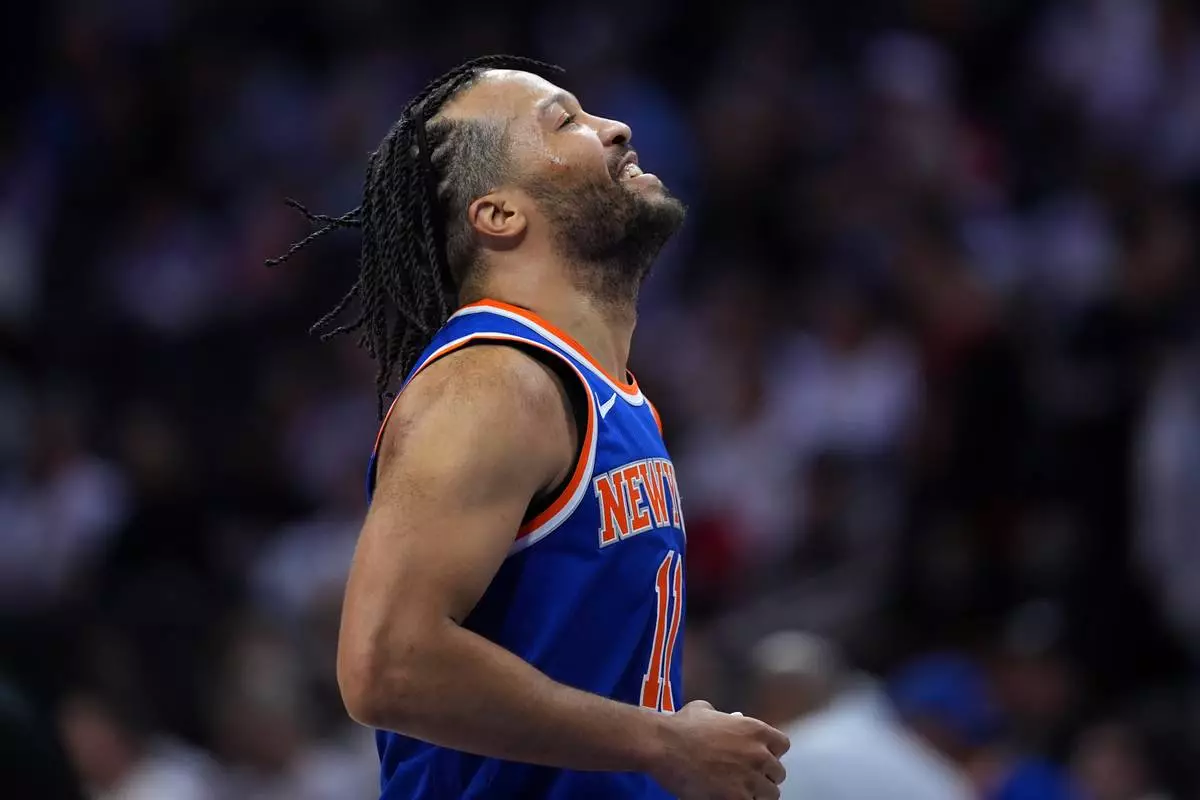
New York Knicks' Jalen Brunson reacts during the second half of Game 3 in a second-round NBA basketball playoff series against the Philadelphia 76ers Friday, May 8, 2026, in Philadelphia. (AP Photo/Matt Slocum)
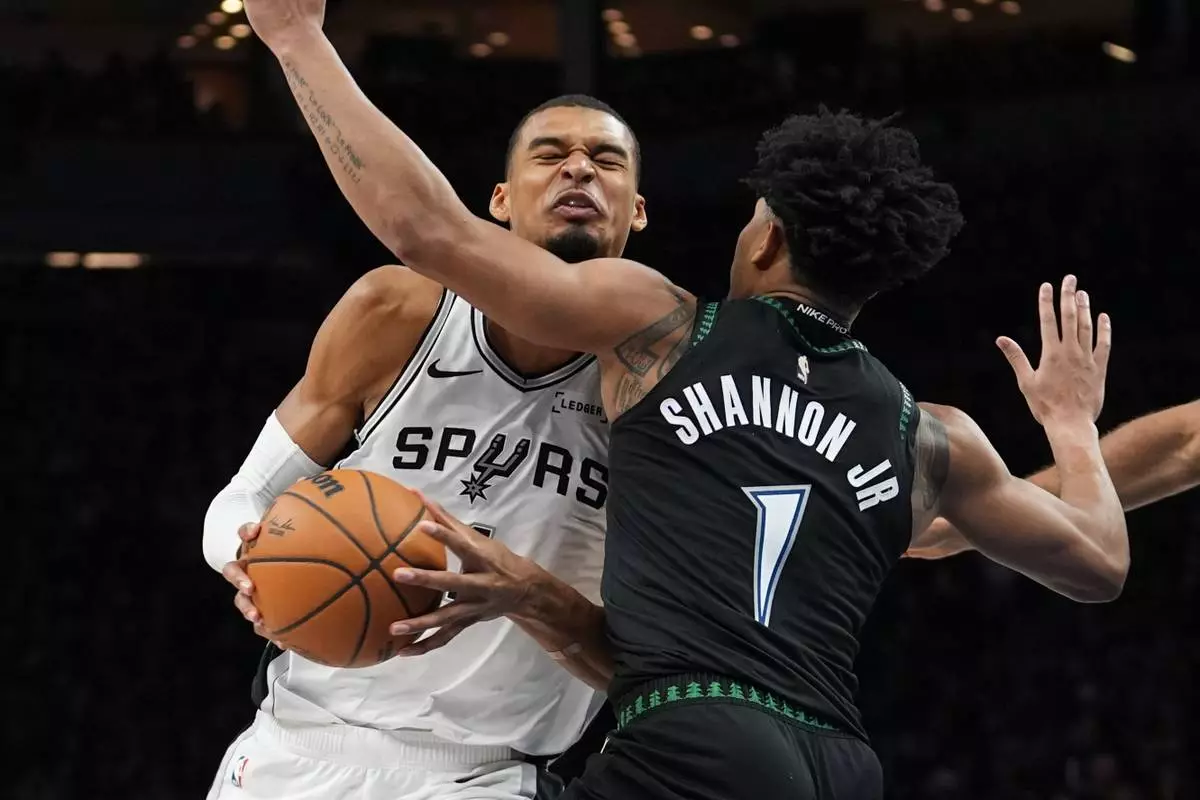
San Antonio Spurs forward Victor Wembanyama, left, is fouled by Minnesota Timberwolves guard Terrence Shannon Jr. (1) as he drives to the basket during the second half of Game 3 of a NBA basketball second-round playoff series in Minneapolis, Friday, May 8, 2026. (AP Photo/Abbie Parr)
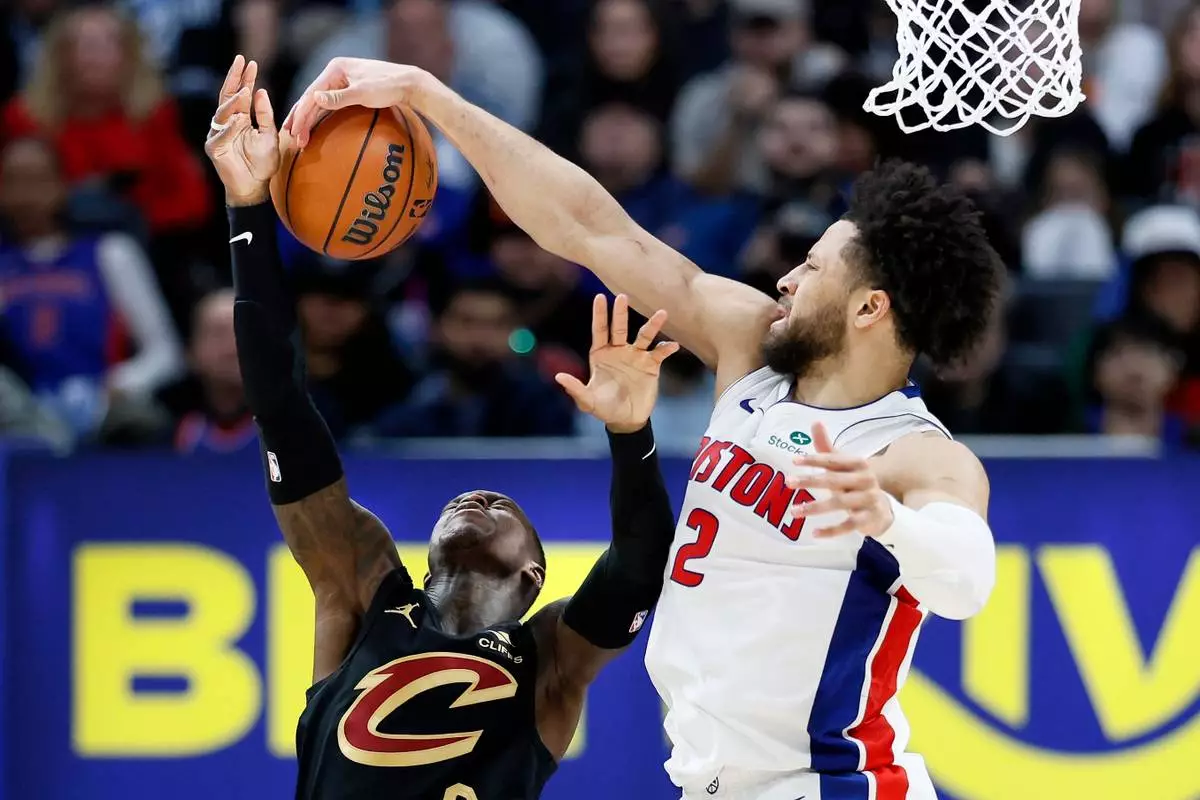
Detroit Pistons guard Cade Cunningham (2) blocks a shot attempted by Cleveland Cavaliers guard Dennis Schroder (8) during the second half in Game 2 of a second-round NBA playoffs basketball series, Thursday, May 7, 2026, in Detroit. (AP Photo/Duane Burleson)
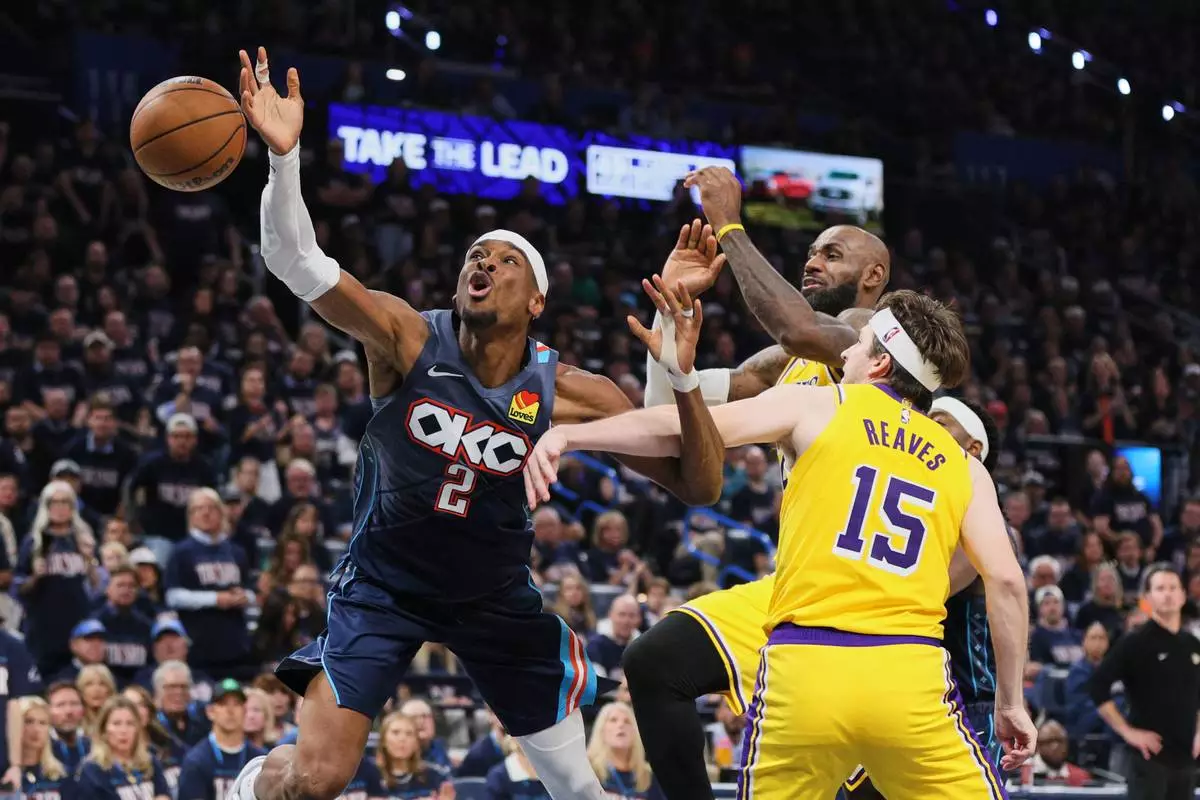
Oklahoma City Thunder's Shai Gilgeous-Alexander (2) is fouled driving to the basket by Los Angeles Lakers' Austin Reaves (15) as LeBron James, right rear, follows behind on the play in the second half of Game 2 in a second-round NBA basketball playoffs series Thursday, May 7, 2026, in Oklahoma City. (AP Photo/Nate Billings)
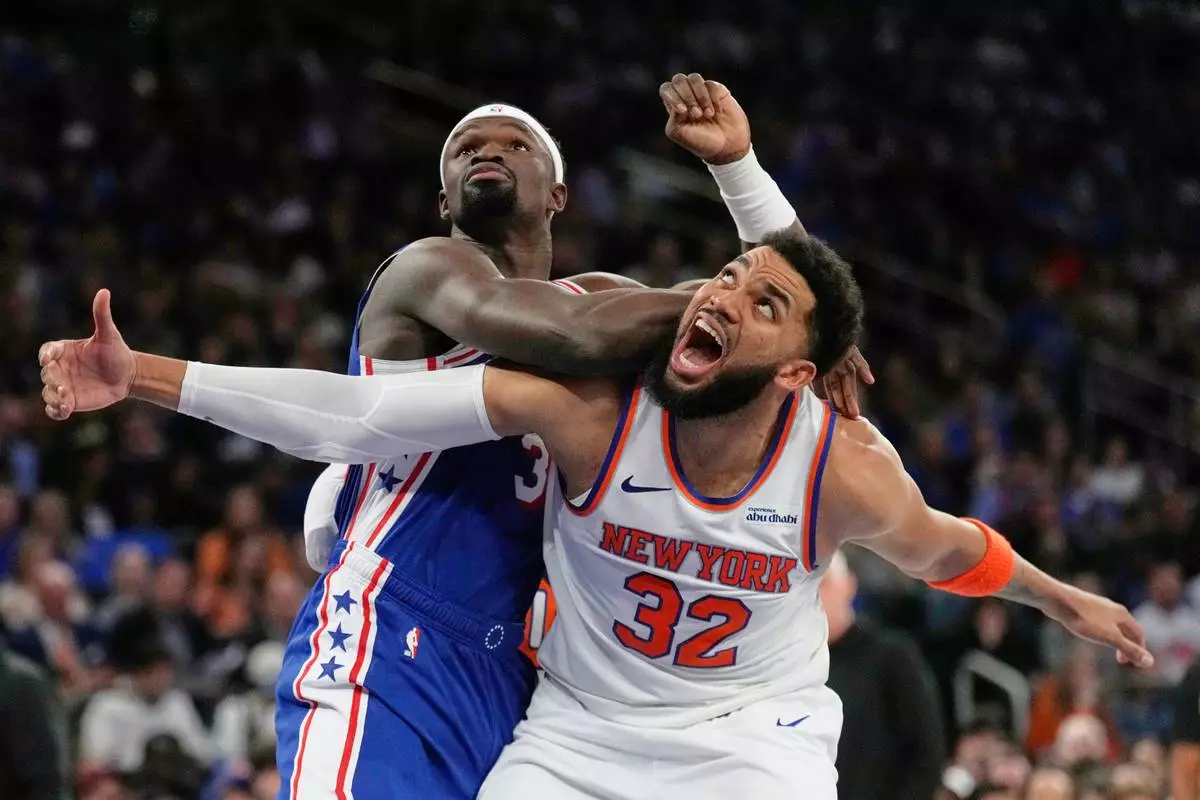
Philadelphia 76ers' Adem Bona, top, fouls New York Knicks' Karl-Anthony Towns during the second half of Game 1 in a second-round NBA basketball playoffs series Monday, May 4, 2026, in New York. (AP Photo/Seth Wenig)
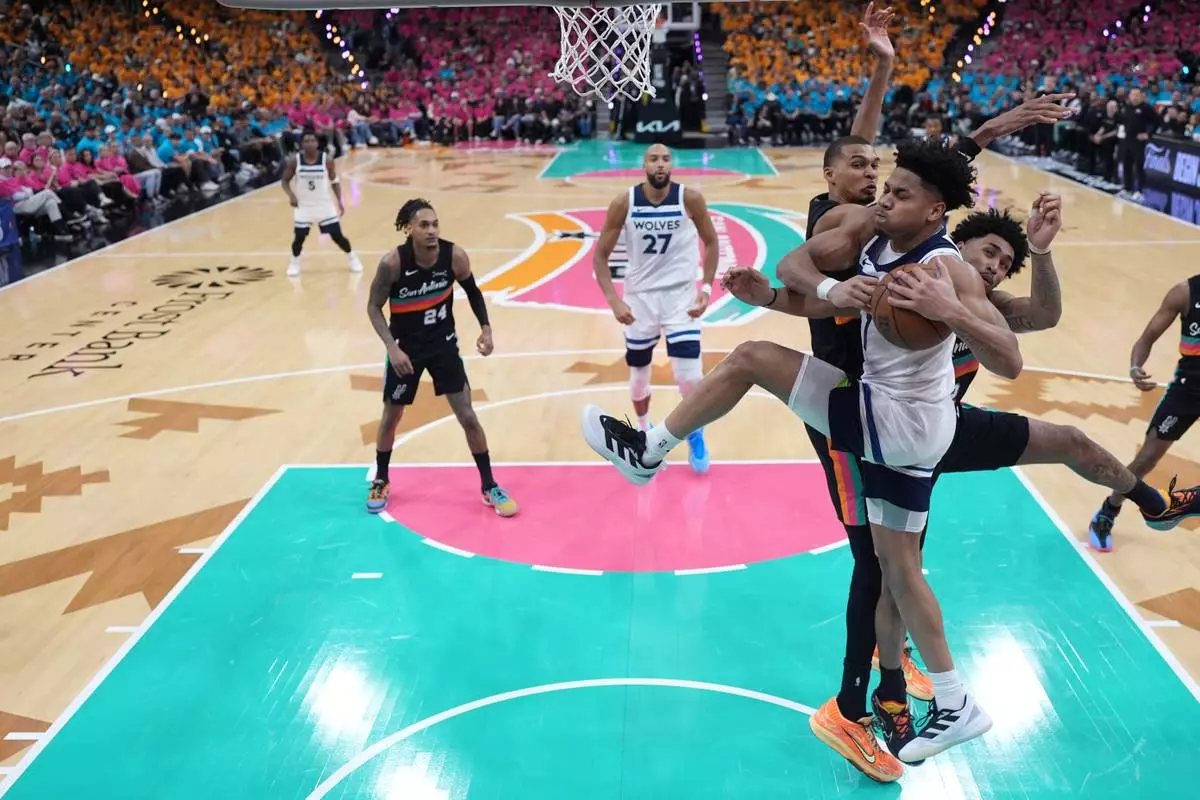
Minnesota Timberwolves guard Terrence Shannon Jr. (1), front, handles the ball as San Antonio Spurs guard Dylan Harper (2), middle, and forward-center Victor Wembanyama (1), back, defend during the second half in Game 1 of a second-round NBA playoffs basketball series in San Antonio, Monday, May 4, 2026. (AP Photo/Eric Gay)
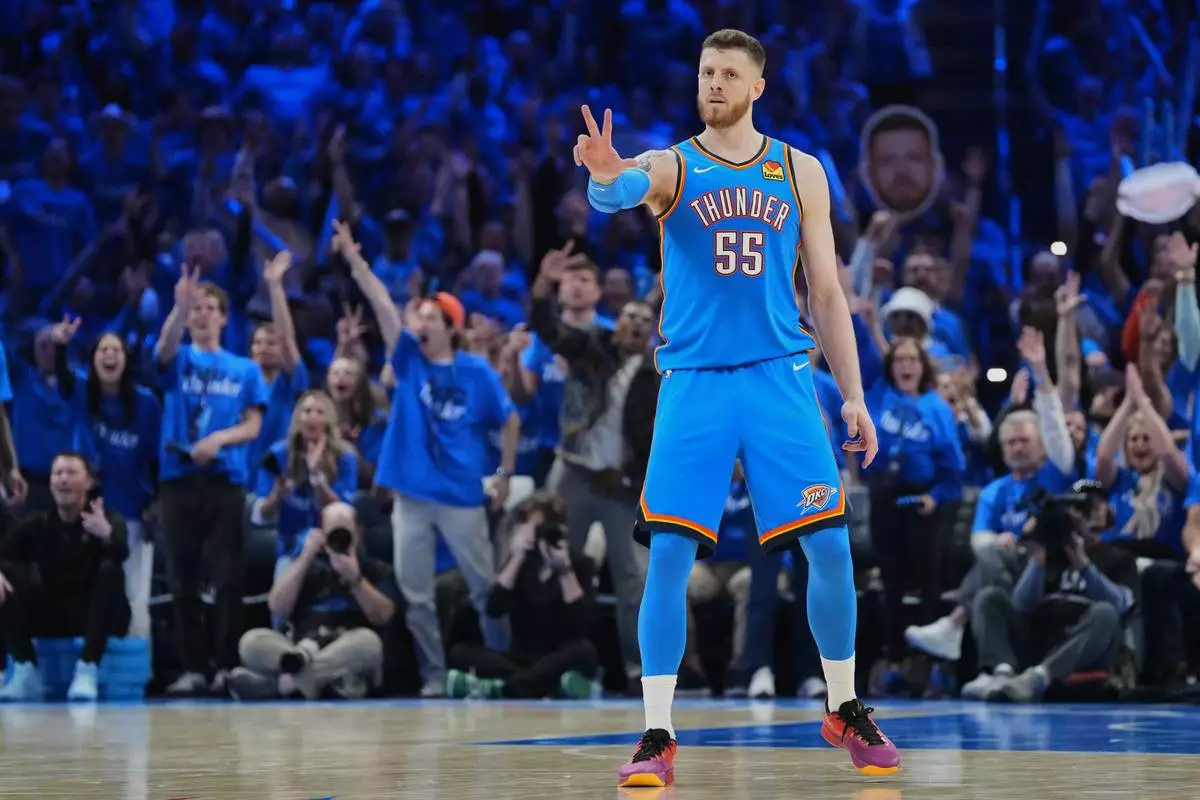
Oklahoma City Thunder center Isaiah Hartenstein (55) and fans celebrate a basket in the second half of Game 1 in a second-round NBA basketball playoffs series against the Los Angeles Lakers Tuesday, May 5, 2026 in Oklahoma City. (AP Photo/Kyle Phillips)
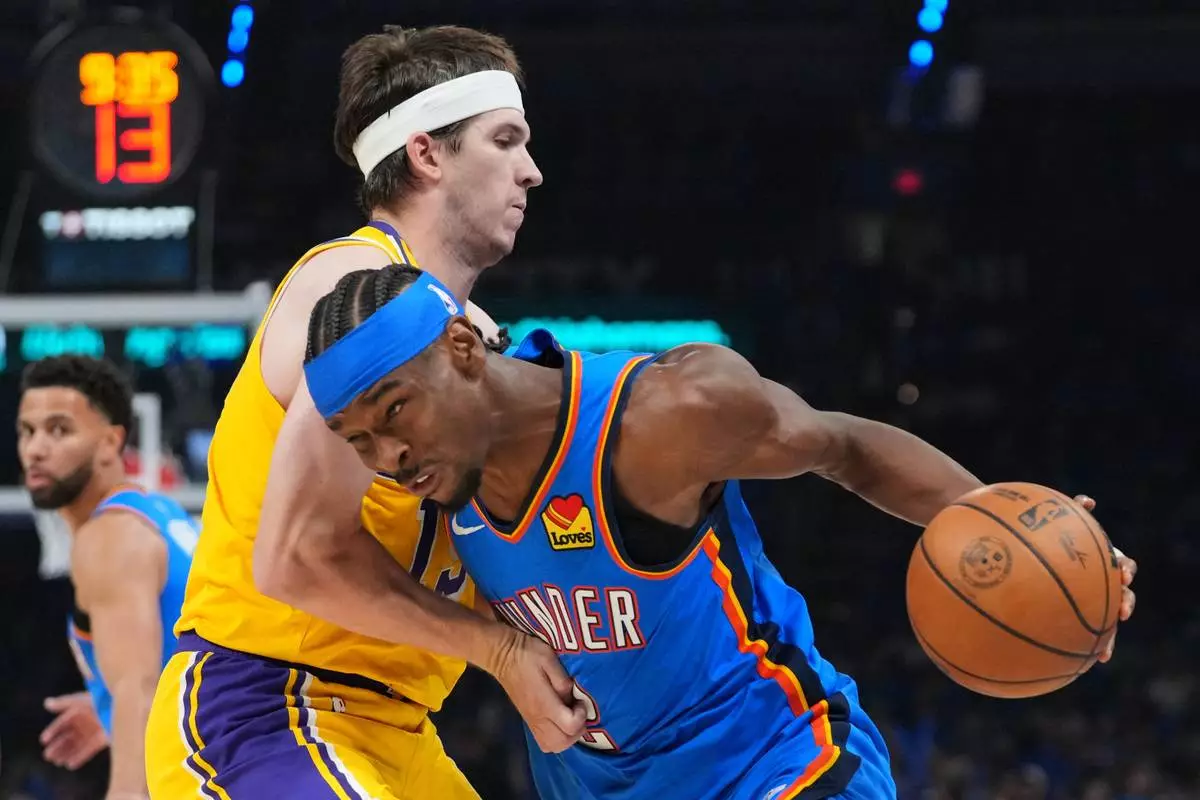
Oklahoma City Thunder guard Shai Gilgeous-Alexander, right, drives to the basket as Los Angeles Lakers guard Austin Reaves, left, defends second half of Game 1 in a second-round NBA basketball playoffs series Tuesday, May 5, 2026 in Oklahoma City. (AP Photo/Kyle Phillips)
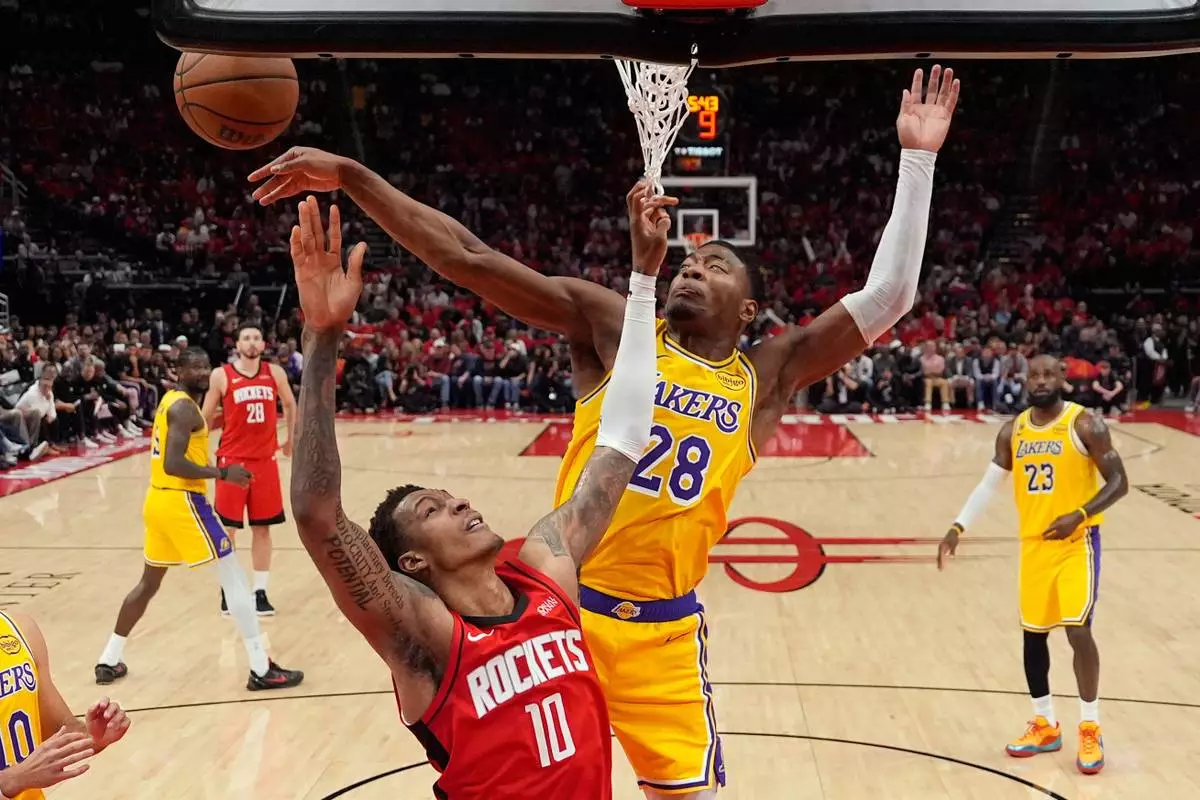
Los Angeles Lakers forward Rui Hachimura (28) blocks a shot by Houston Rockets forward Jabari Smith Jr. (10) during the first half of Game 6 of a first-round NBA playoffs basketball series in Houston, Friday, May 1, 2026. (AP Photo/Ashley Landis)
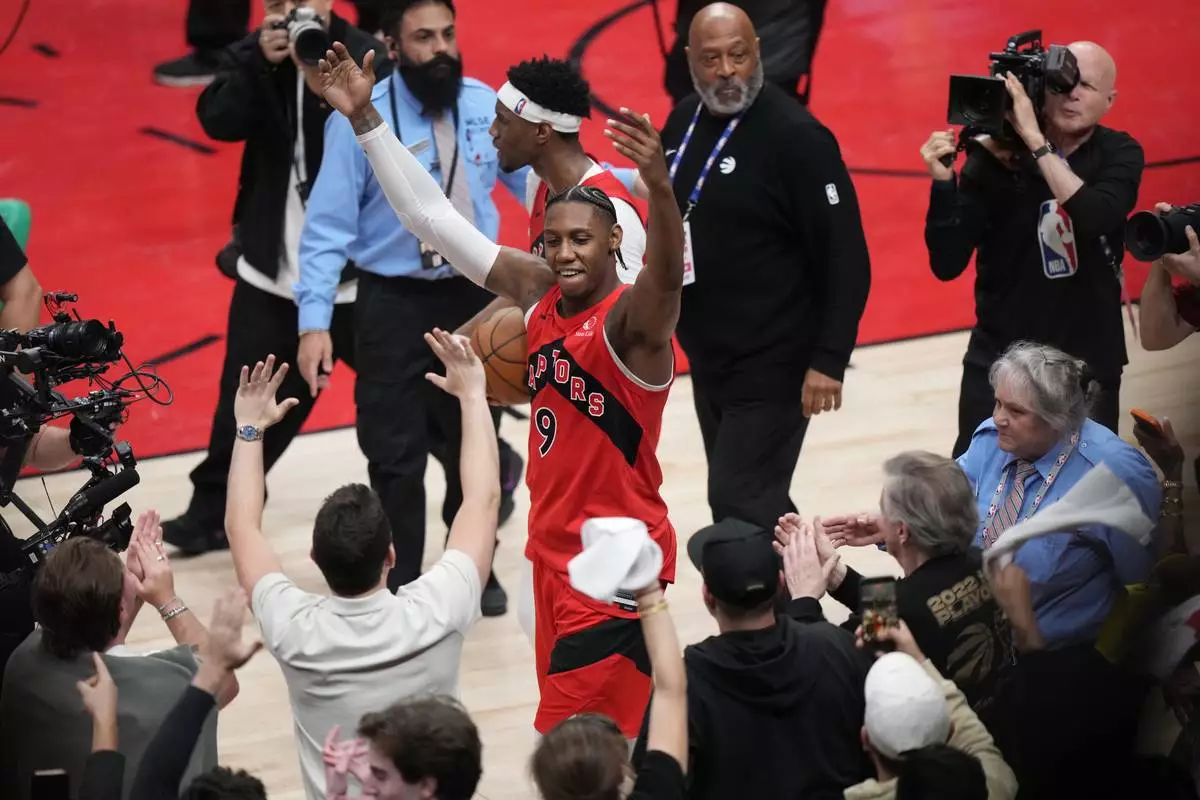
Toronto Raptors' RJ Barrett (9) celebrates with fans after a win over the Cleveland Cavaliers in Game 6 in the first round of an NBA basketball playoffs series in Toronto, Friday, May 1, 2026. (Nathan Denette/The Canadian Press via AP)
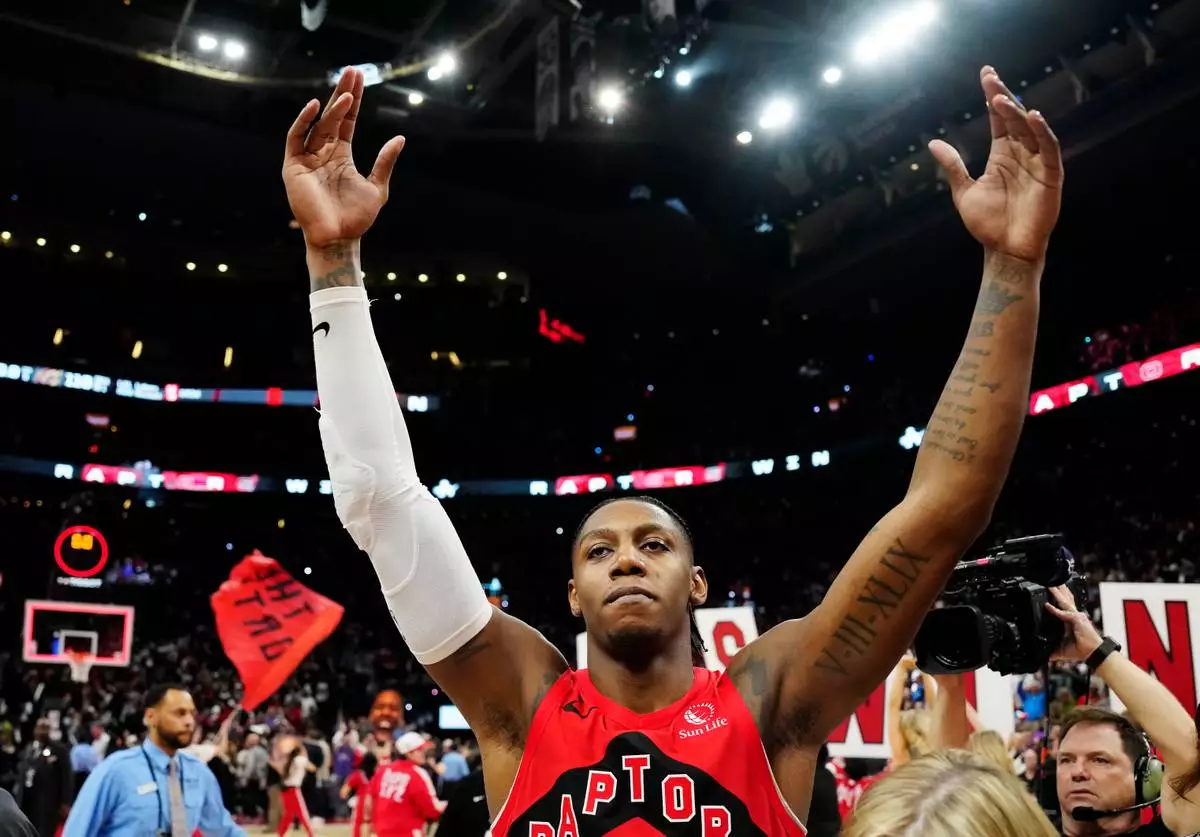
Toronto Raptors' RJ Barrett (9) celebrates after defeating the Cleveland Cavaliers in overtime of Game 6 in the first round of an NBA basketball playoffs series in Toronto on Friday, May 1, 2026. (Frank Gunn/The Canadian Press via AP)
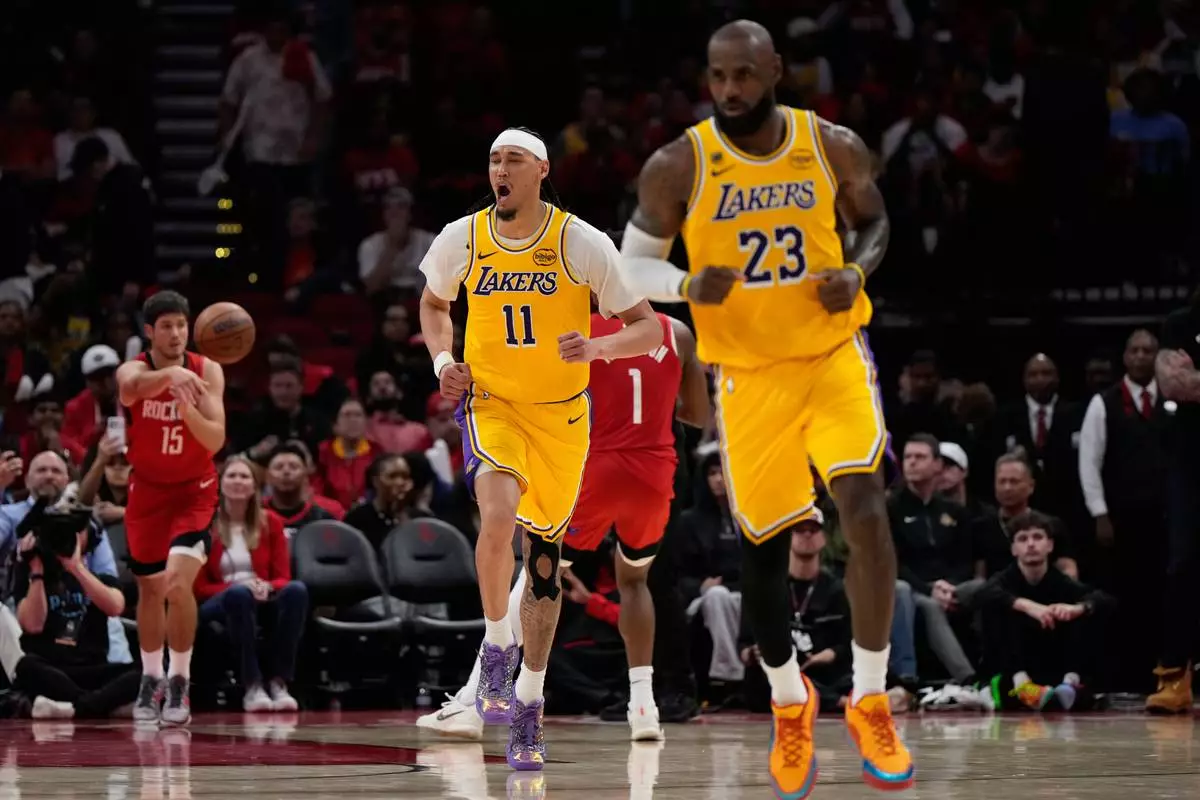
Los Angeles Lakers center Jaxson Hayes (11) celebrates during the second half of Game 6 of a first-round NBA playoffs basketball series against the Houston Rockets in Houston, Friday, May 1, 2026. (AP Photo/Ashley Landis)
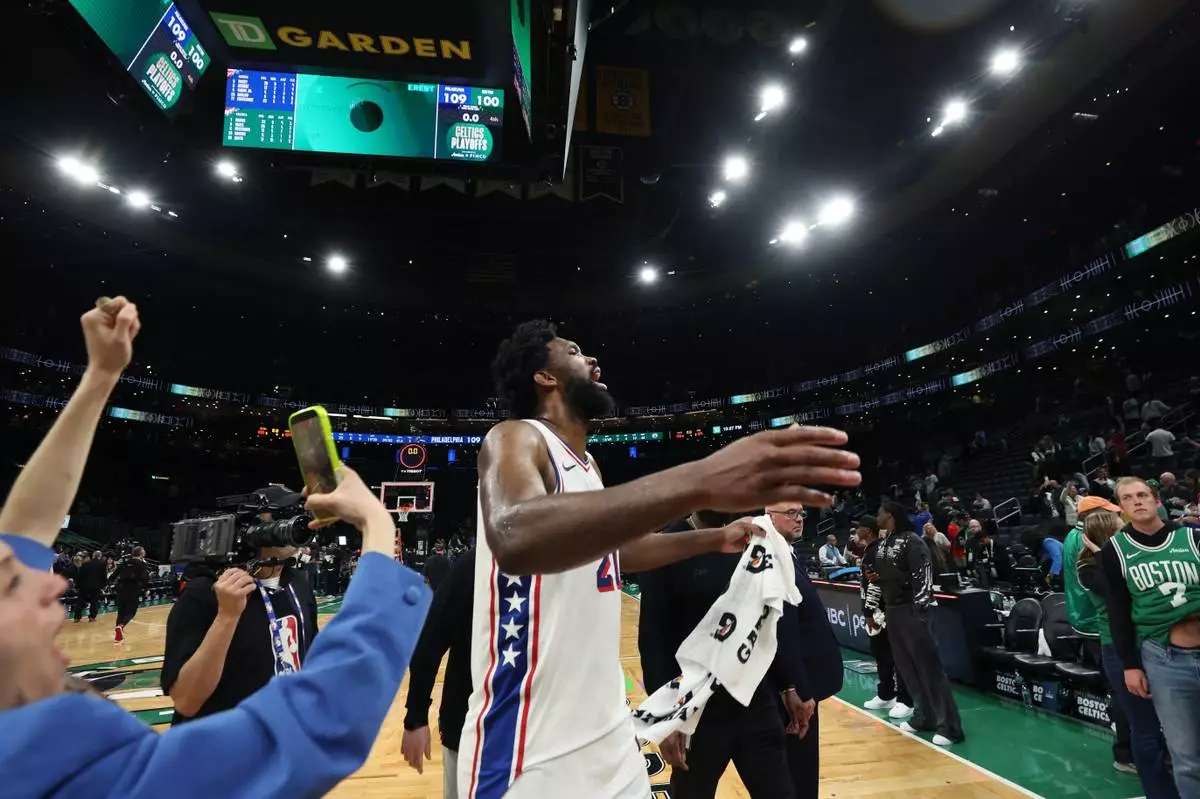
Philadelphia 76ers' Joel Embiid celebrates following his team's victory over the Boston Celtics after the Game 7 in a first-round NBA basketball playoffs series, Saturday, May 2, 2026 in Boston. (AP Photo/Jim Davis)
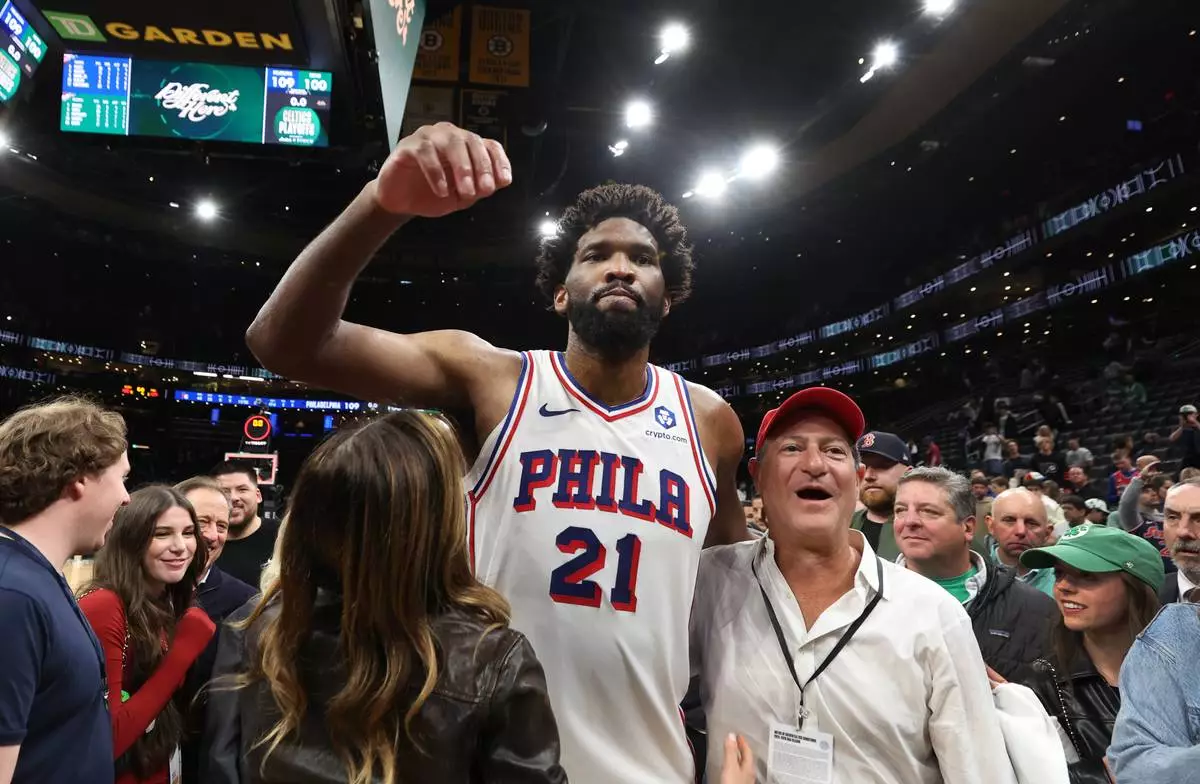
Philadelphia 76ers' Joel Embiid celebrates following his team's victory over the Boston Celtics after the Game 7 in a first-round NBA basketball playoffs series, Saturday, May 2, 2026 in Boston. (AP Photo/Jim Davis)
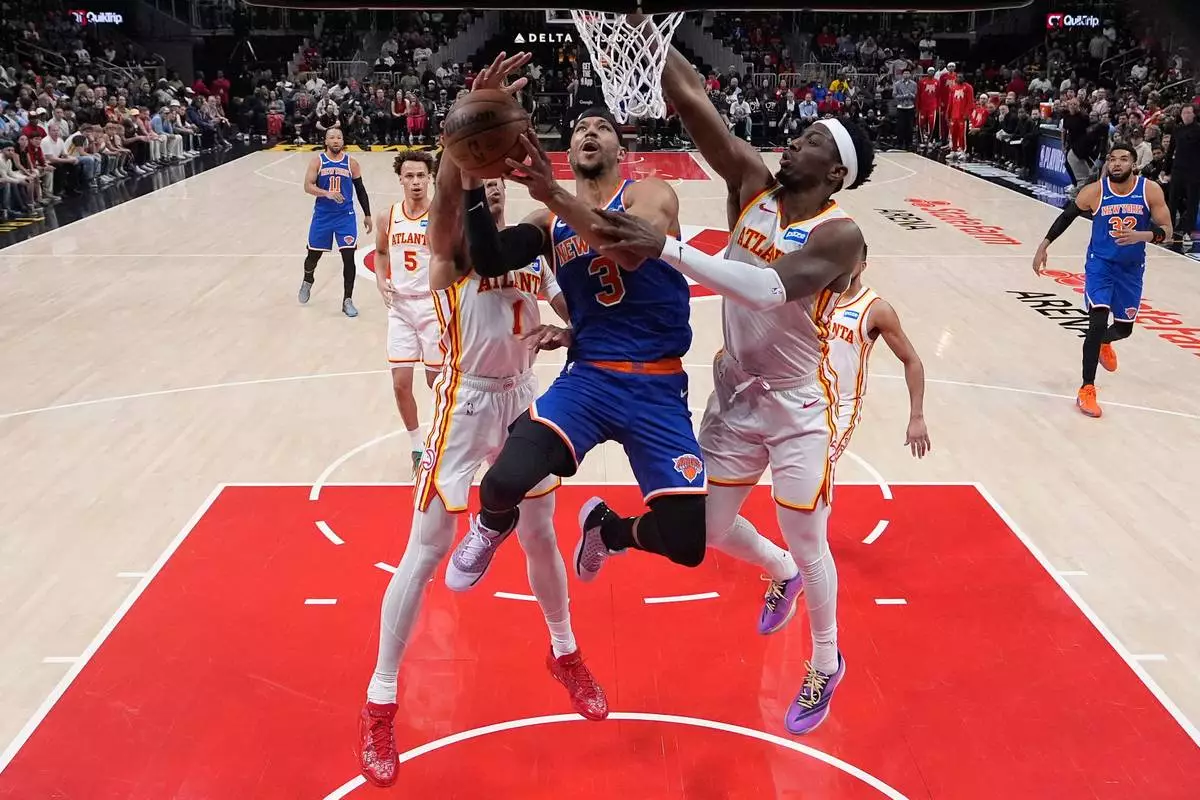
New York Knicks guard Josh Hart (3) shoots during Game 6 in a first-round NBA basketball playoffs series Thursday, April 30, 2026, in Atlanta. (AP Photo/Brynn Anderson)
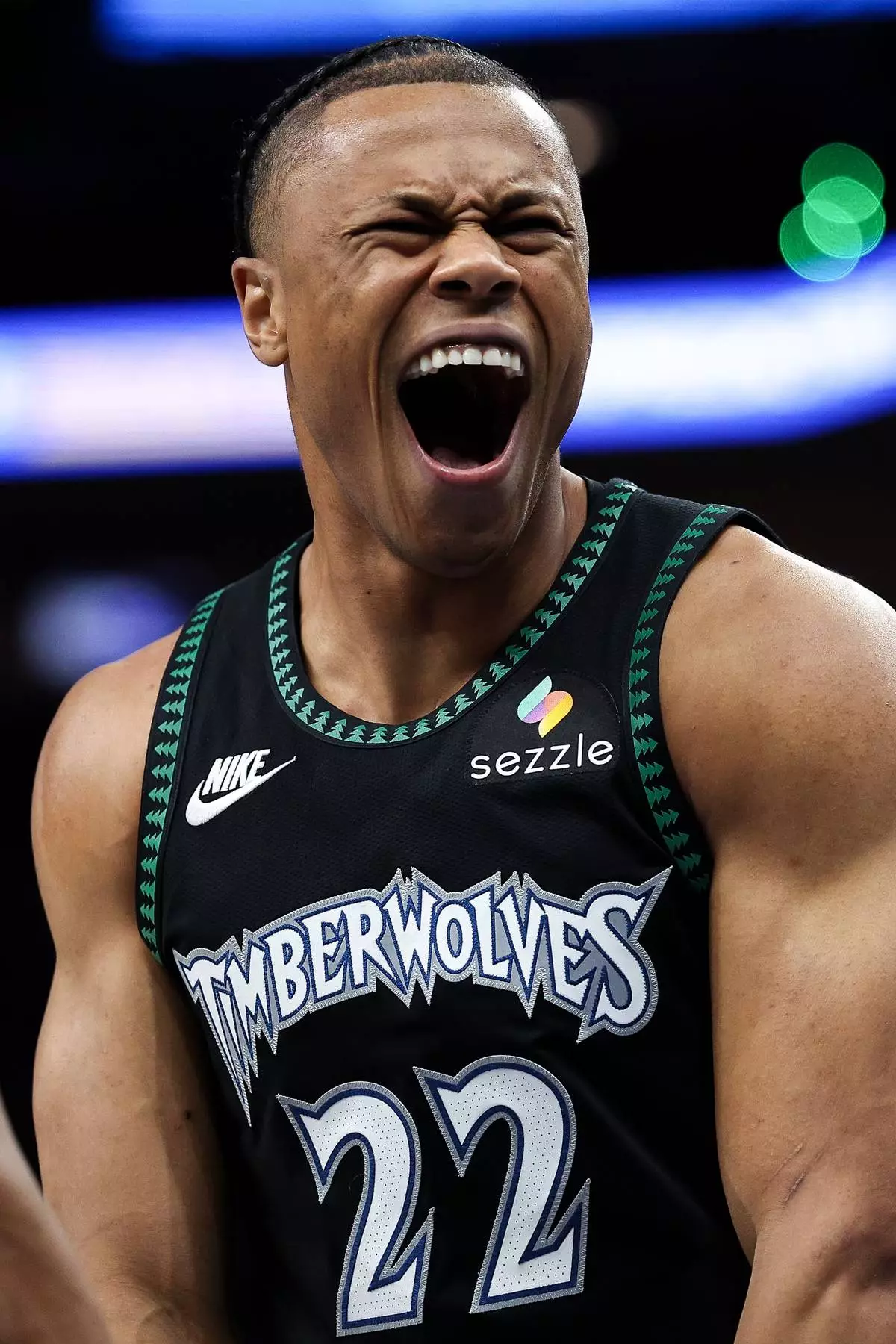
Minnesota Timberwolves guard Jaylen Clark (22) celebrates a basket against the Denver Nuggets during the second half of Game 6 of a first-round NBA basketball playoffs series, Thursday, April 30, 2026, in Minneapolis. (AP Photo/Matt Krohn)
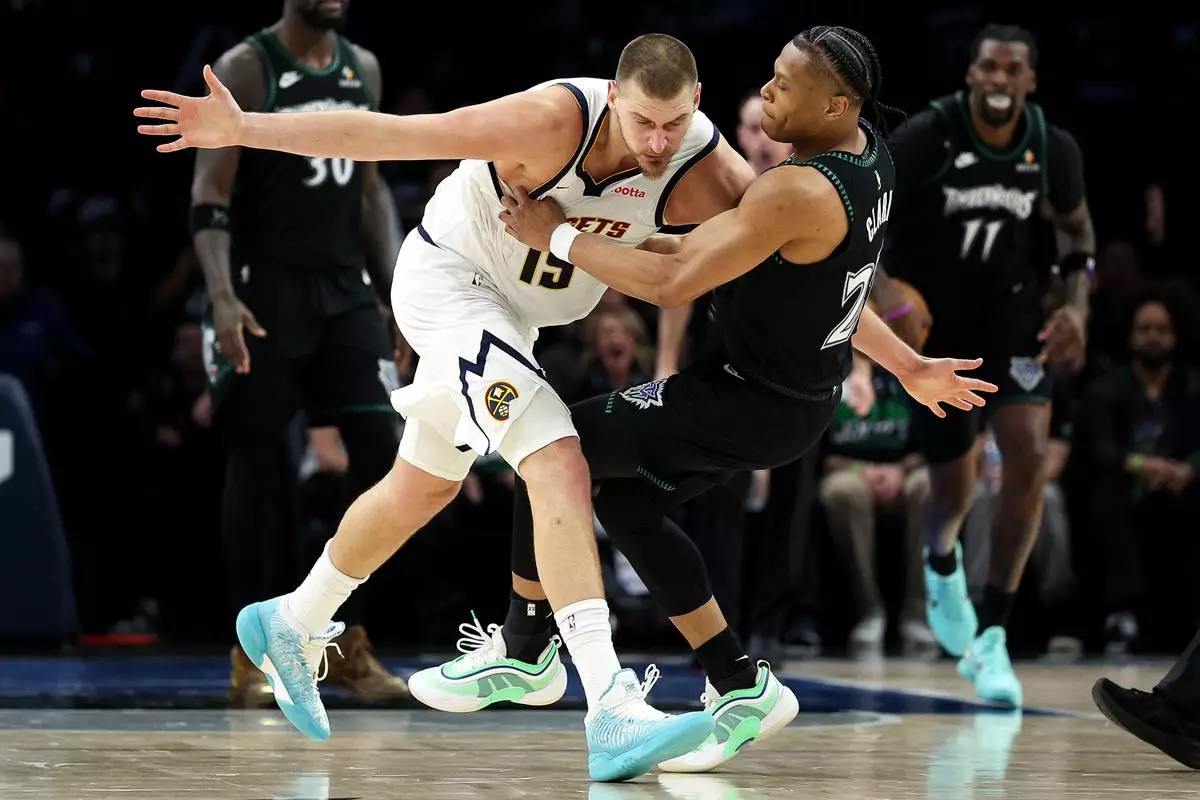
Denver Nuggets center Nikola Jokic, left, and Minnesota Timberwolves guard Jaylen Clark (22) get into an altercation during the second half of Game 6 of a first-round NBA basketball playoffs series, Thursday, April 30, 2026, in Minneapolis. (AP Photo/Matt Krohn)
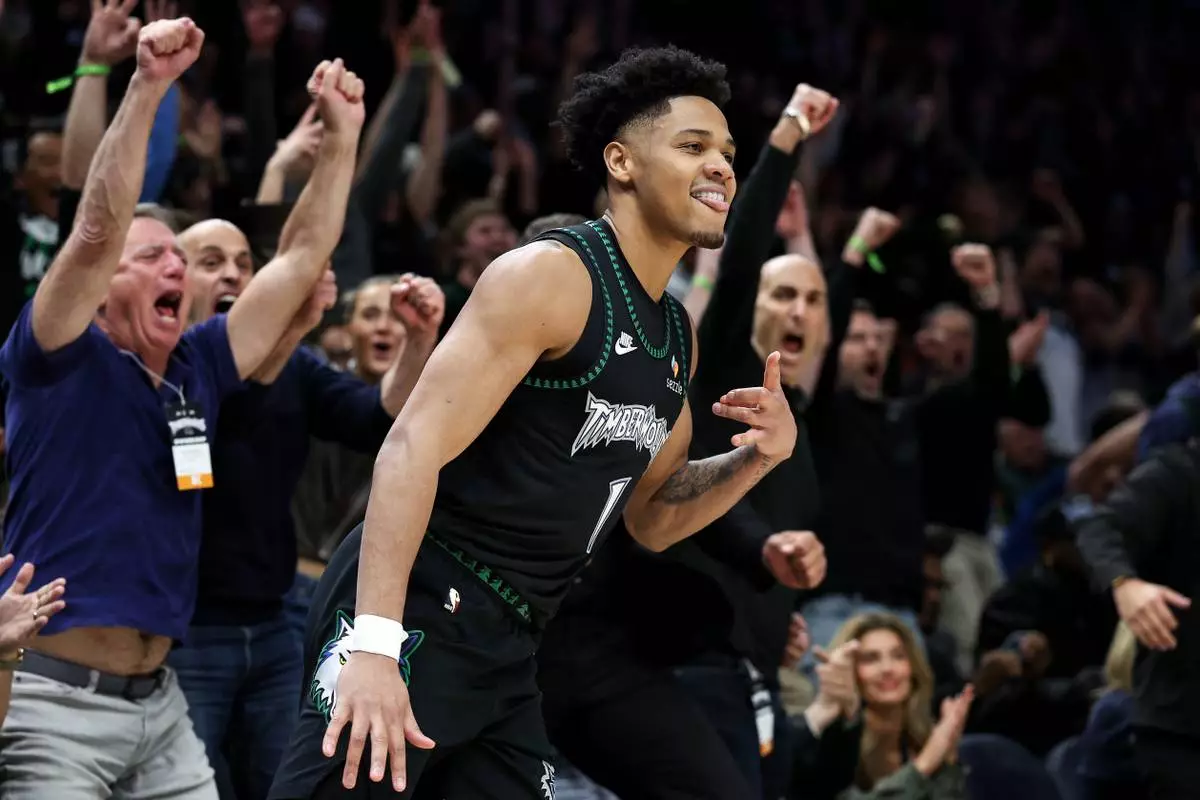
Minnesota Timberwolves guard Terrence Shannon Jr. (1) celebrates his three-point basket against the Denver Nuggets during the second half of Game 6 of a first-round NBA basketball playoffs series, Thursday, April 30, 2026, in Minneapolis. (AP Photo/Matt Krohn)
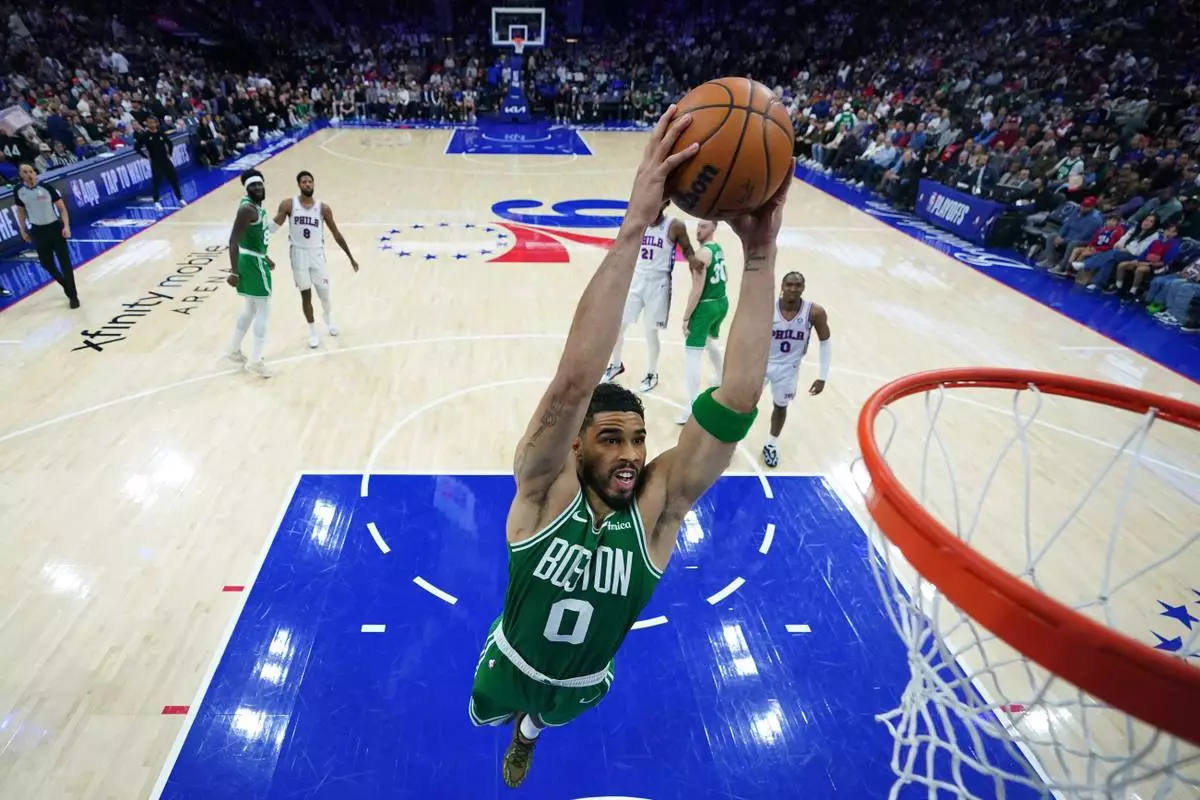
Boston Celtics' Jayson Tatum goes up for a dunk during the second half of Game 6 in a first-round NBA basketball playoff series against the Philadelphia 76ers Thursday, April 30, 2026, in Philadelphia. (AP Photo/Matt Slocum)
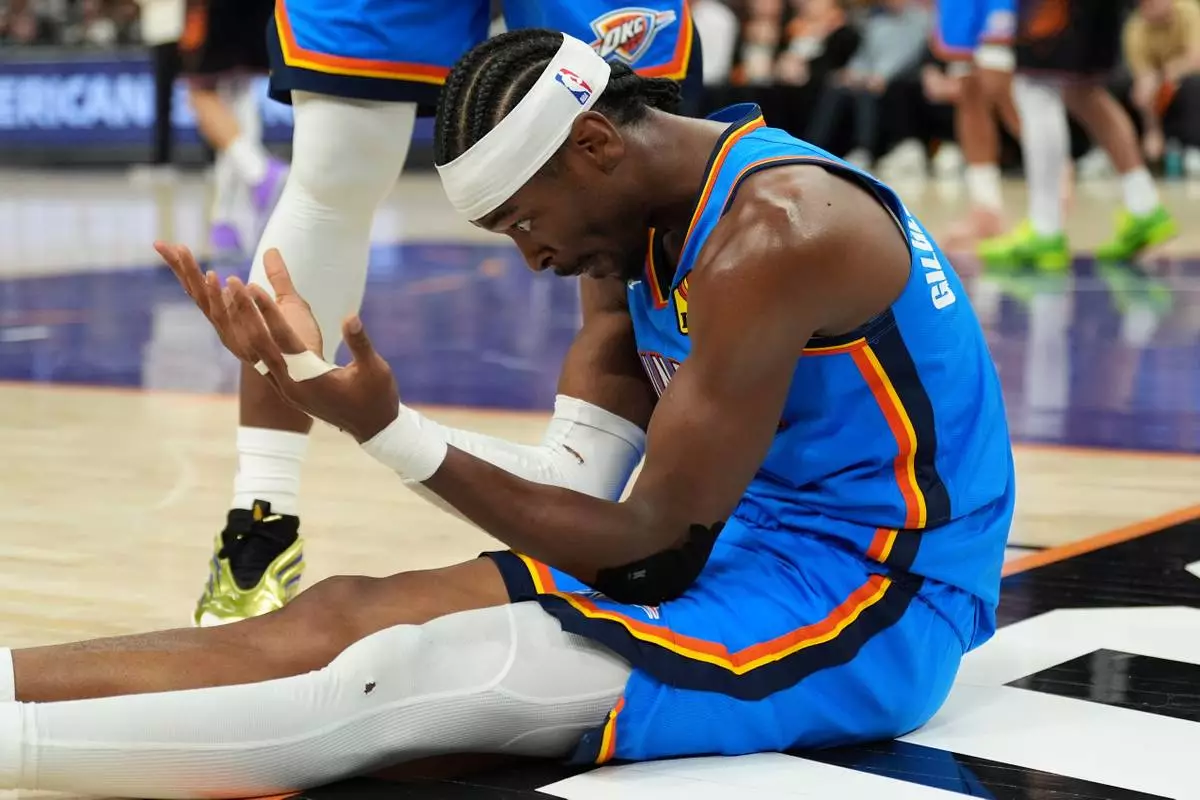
Oklahoma City Thunder guard Shai Gilgeous-Alexander celebrates a scores against the Phoenix Suns during the second half of Game 4 in a first-round NBA playoffs basketball series, Monday, April 27, 2026, in Phoenix. (AP Photo/Ross D. Franklin)
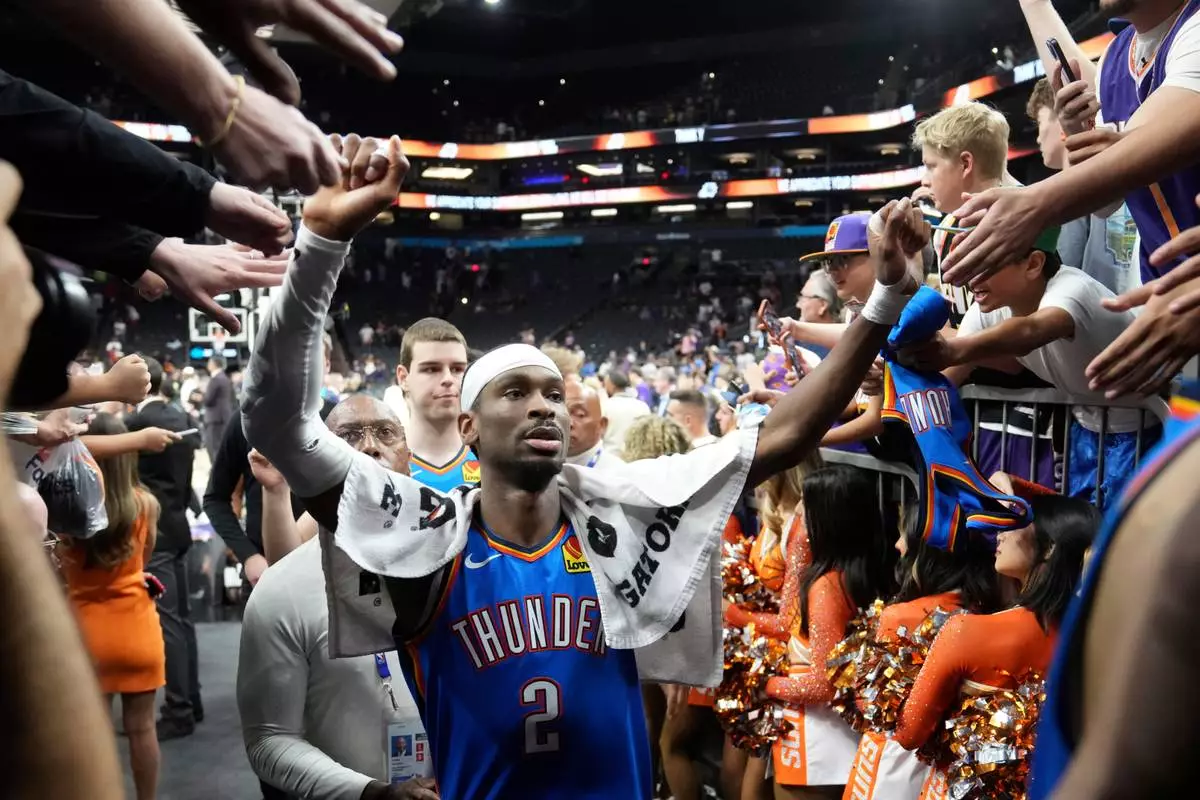
Oklahoma City Thunder guard Shai Gilgeous-Alexander celebrates with fans after Game 4 in a first-round NBA playoffs basketball series against the Phoenix Suns, Monday, April 27, 2026, in Phoenix. (AP Photo/Ross D. Franklin)
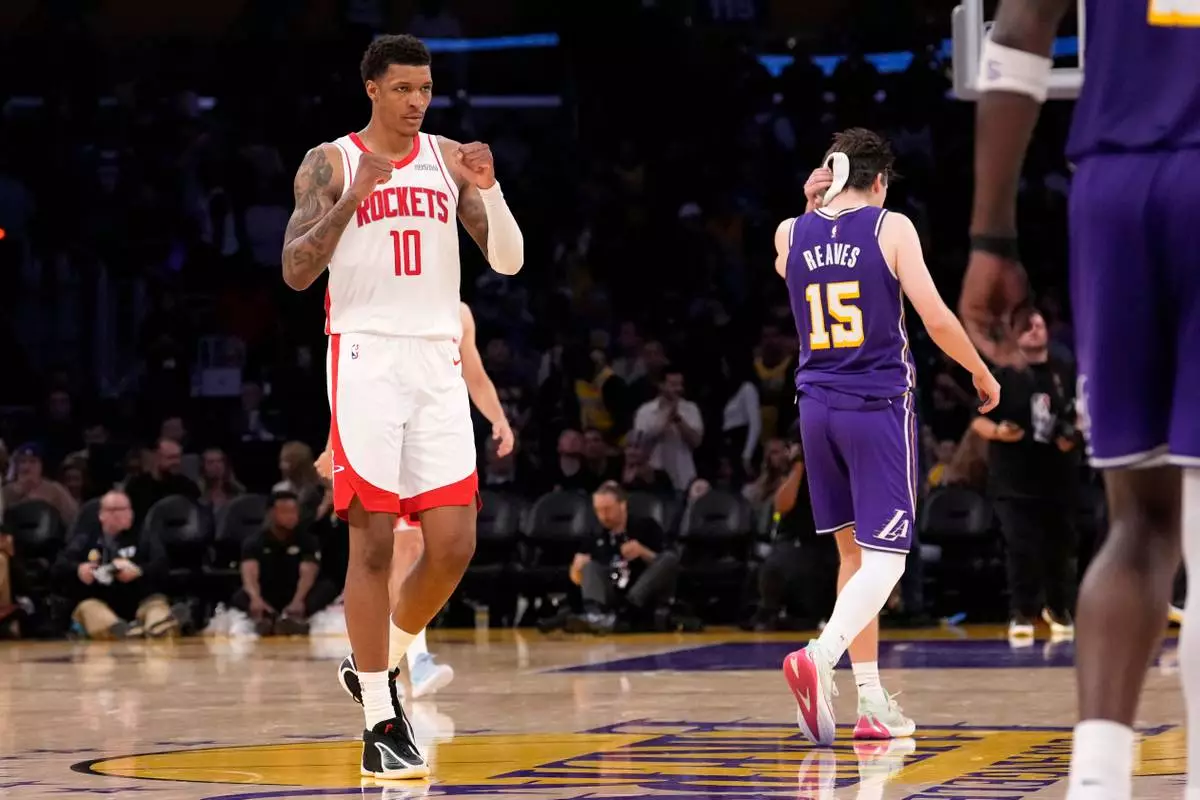
Houston Rockets forward Jabari Smith Jr., left, celebrates as Los Angeles Lakers guard Austin Reaves walks off after the Rockets defeated the Lakers in Game 5 of a first-round NBA playoffs basketball series Wednesday, April 29, 2026, in Los Angeles. (AP Photo/Mark J. Terrill)
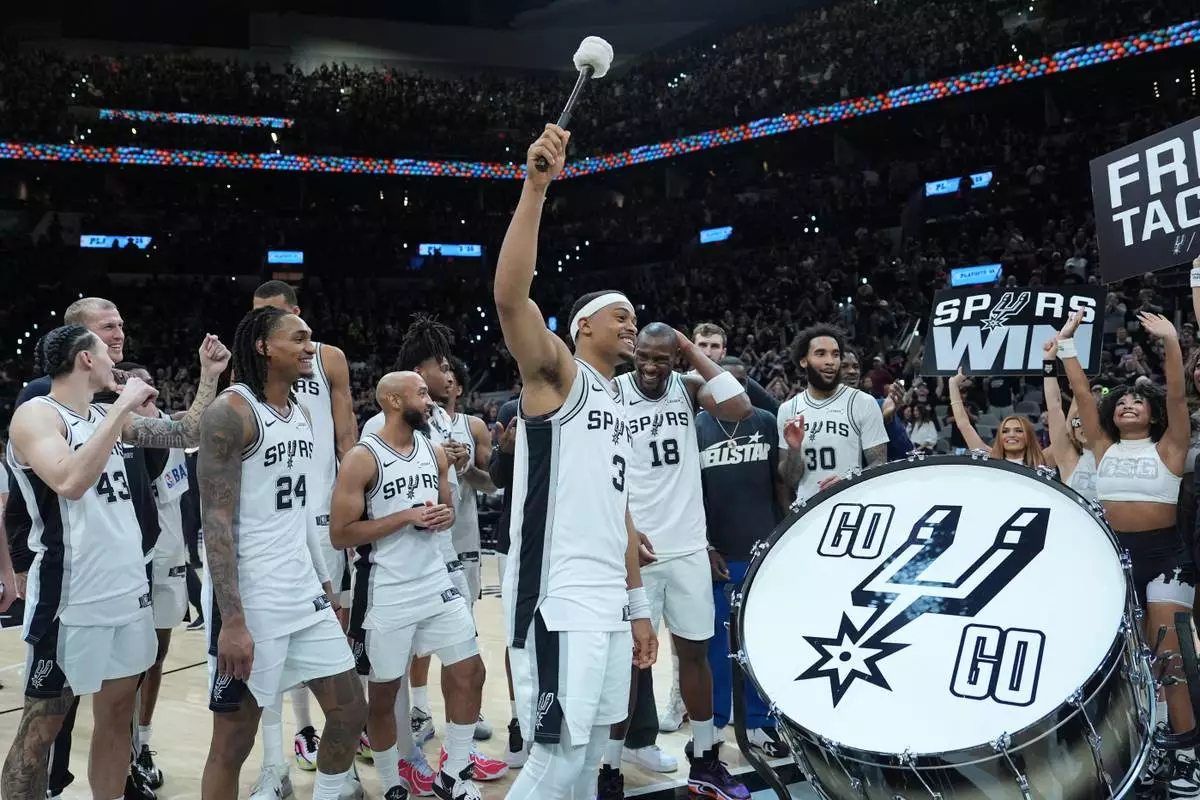
San Antonio Spurs forward/guard Keldon Johnson (3) celebrates with teammates after Game 5 of a first-round NBA playoffs basketball series against the Portland Trail Blazers in San Antonio, Tuesday, April 28, 2026. (AP Photo/Eric Gay)
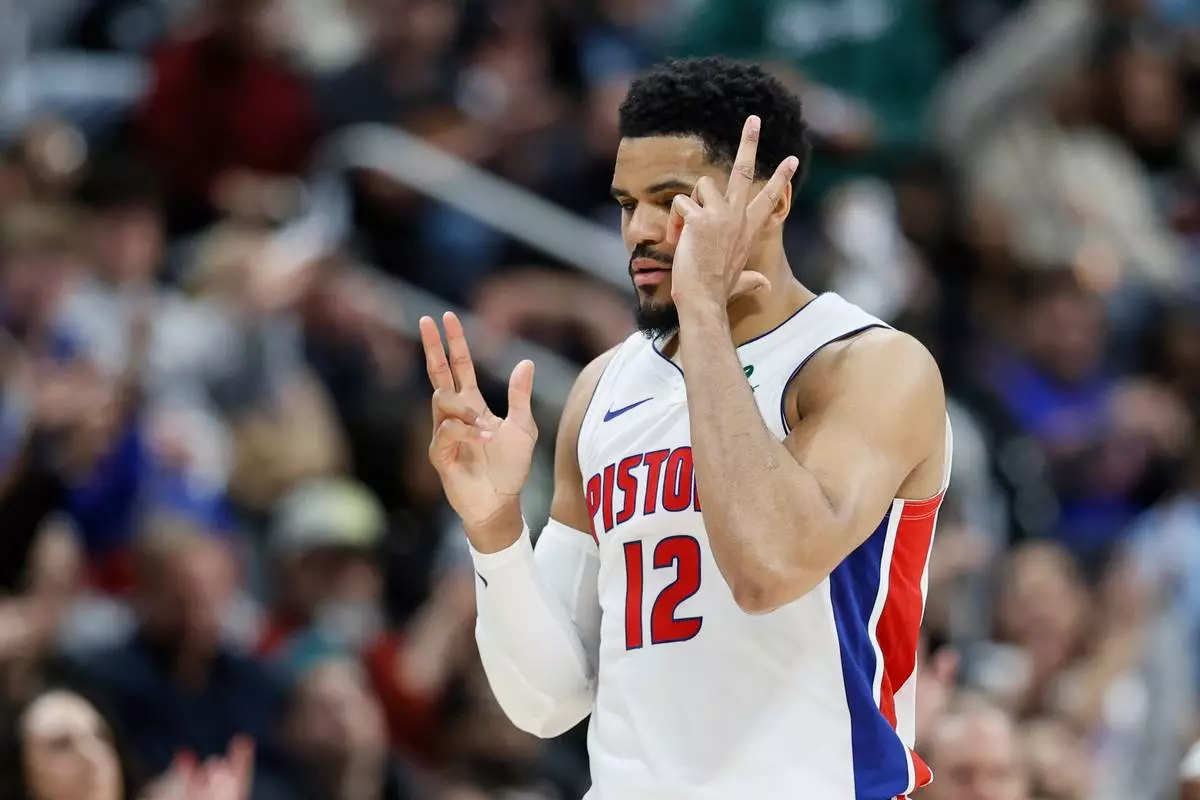
Detroit Pistons forward Tobias Harris (12) celebrates after scoring against the Orlando Magic during the fourth quarter in Game 5 of a first-round NBA basketball playoffs series Wednesday, April 29, 2026, in Detroit. (AP Photo/Duane Burleson)
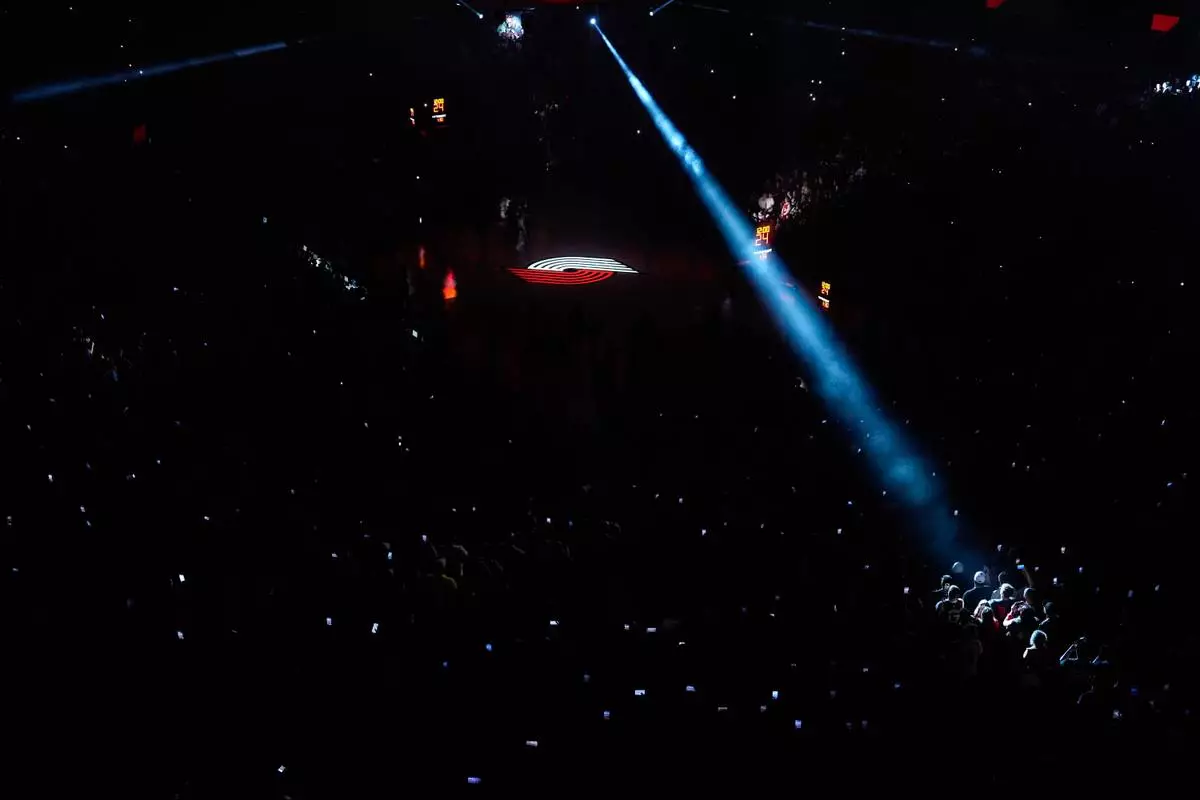
Fans watch Portland Trail Blazers player introductions before Game 4 of a first-round NBA basketball playoffs series against the San Antonio Spurs, in Portland, Ore., Sunday, April 26, 2026. (AP Photo/Jenny Kane)
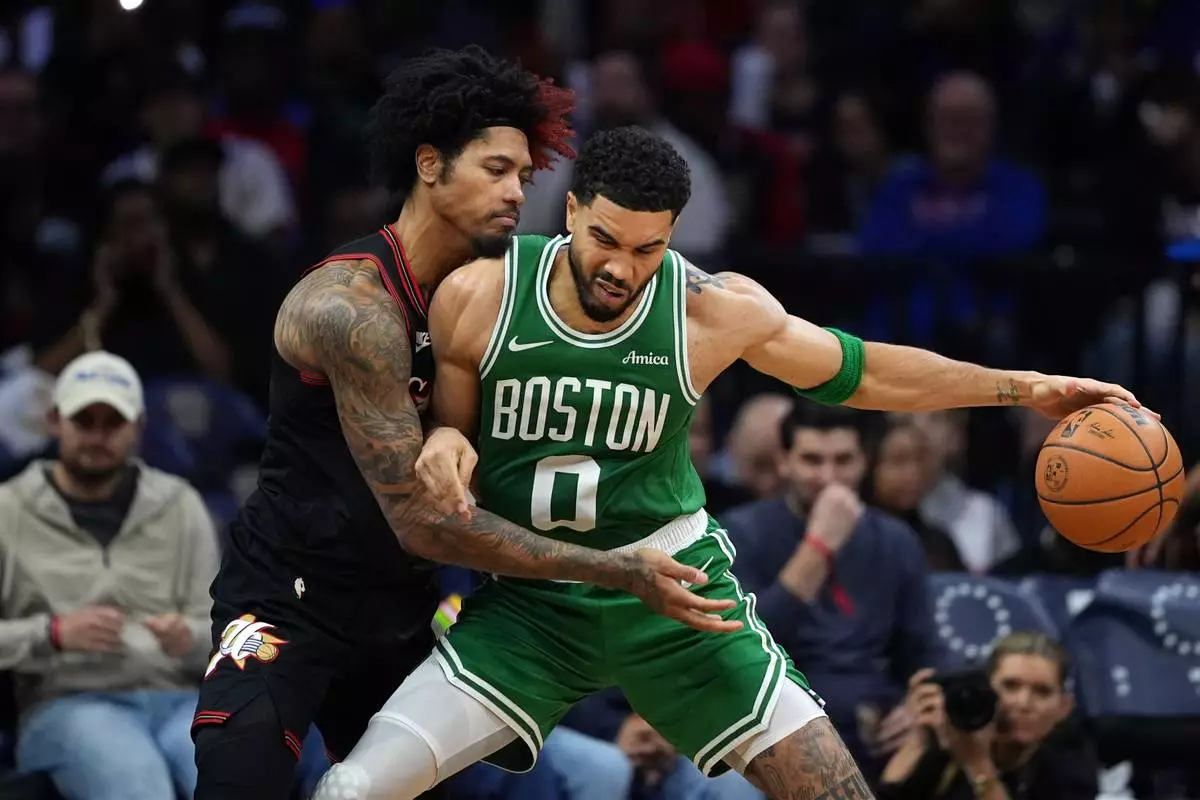
Boston Celtics' Jayson Tatum, right, tries to get past Philadelphia 76ers' Kelly Oubre Jr. during the second half of Game 4 in a first-round NBA basketball playoffs series Sunday, April 26, 2026, in Philadelphia. (AP Photo/Matt Slocum)
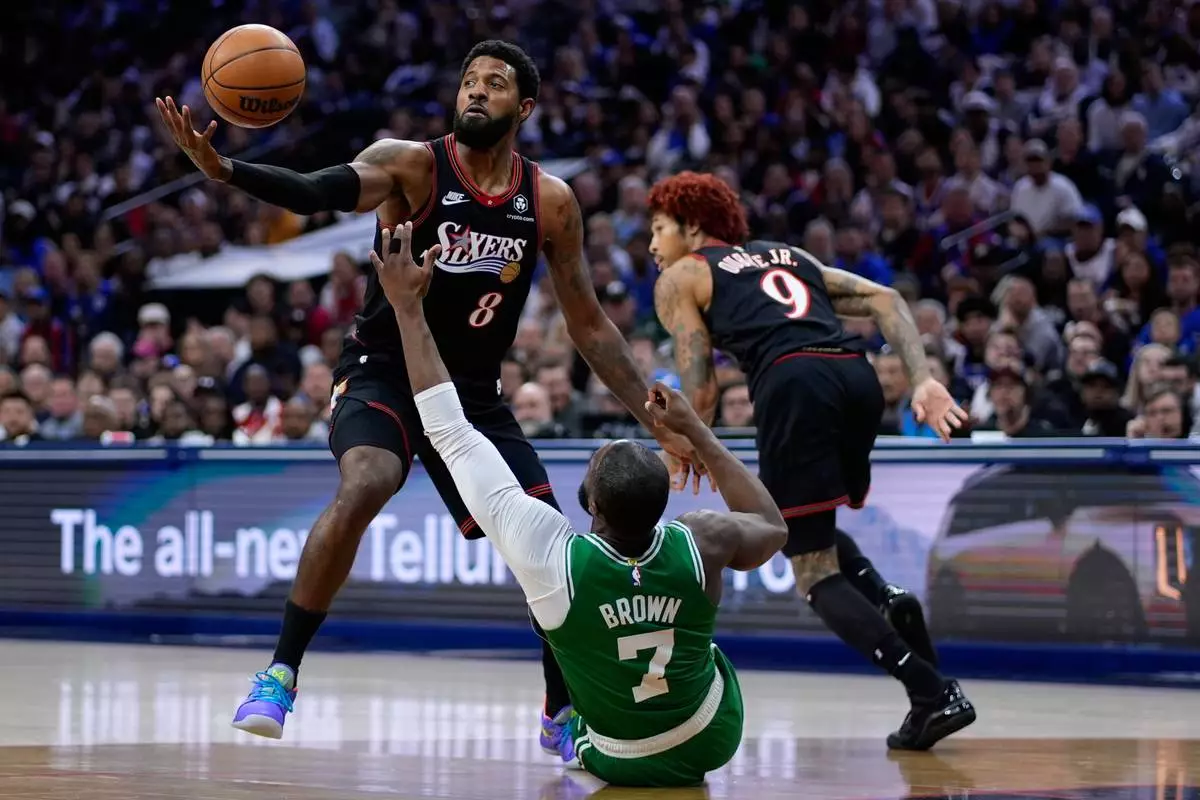
Philadelphia 76ers' Paul George (8) and Boston Celtics' Jaylen Brown (7) reach for a loose ball during the first half of Game 4 in a first-round NBA basketball playoffs series Sunday, April 26, 2026, in Philadelphia. (AP Photo/Matt Slocum)
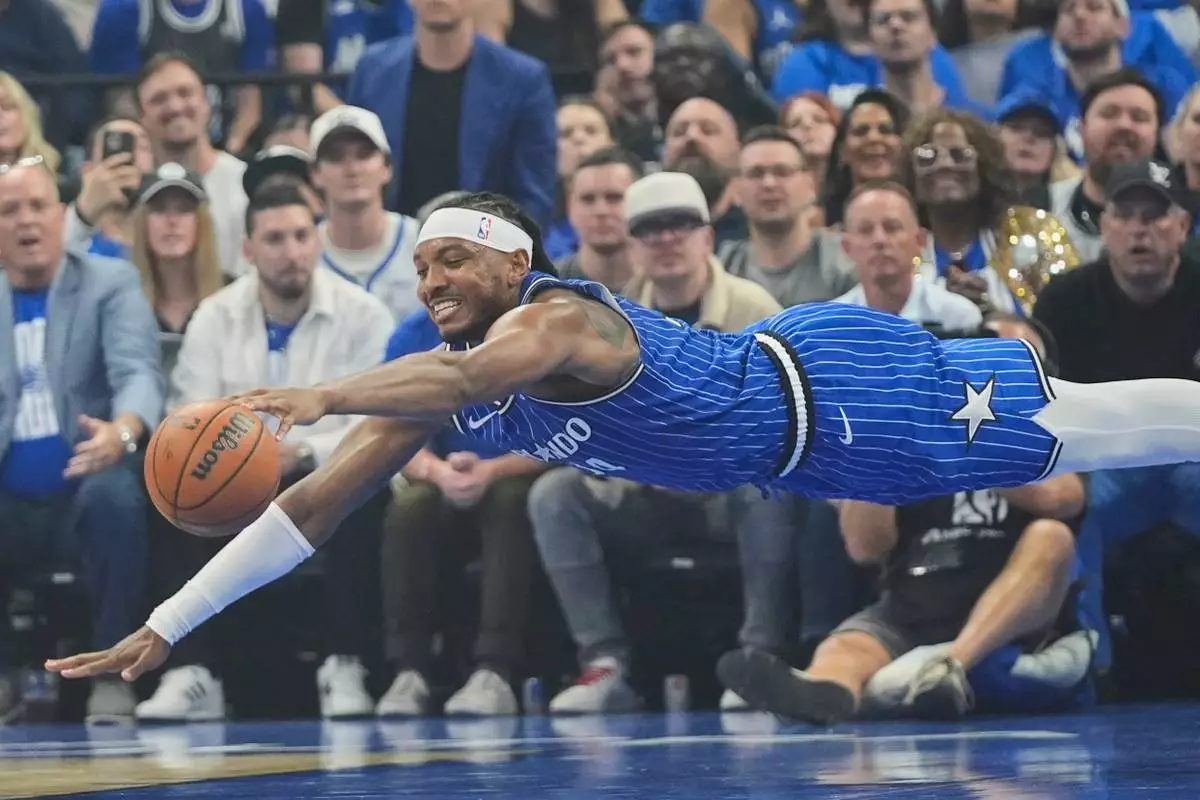
Orlando Magic center Wendell Carter Jr. dives for a loose ball during the first half in Game 4 of a first-round NBA basketball playoff series against the Detroit Pistons, Monday, April 27, 2026, in Orlando, Fla. (AP Photo/John Raoux)
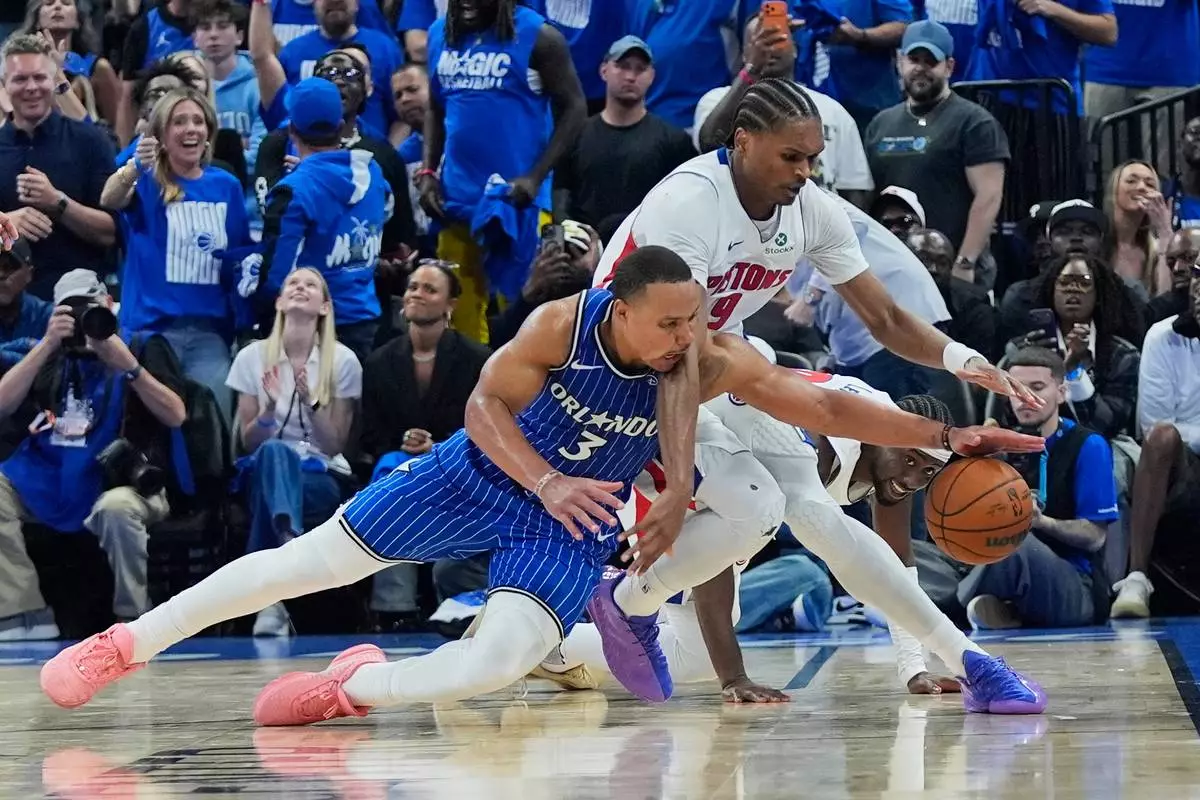
Orlando Magic guard Desmond Bane (3) goes after a loose ball against Detroit Pistons guard Ausar Thompson during the second half in Game 4 of a first-round NBA basketball playoff series, Monday, April 27, 2026, in Orlando, Fla. (AP Photo/John Raoux)
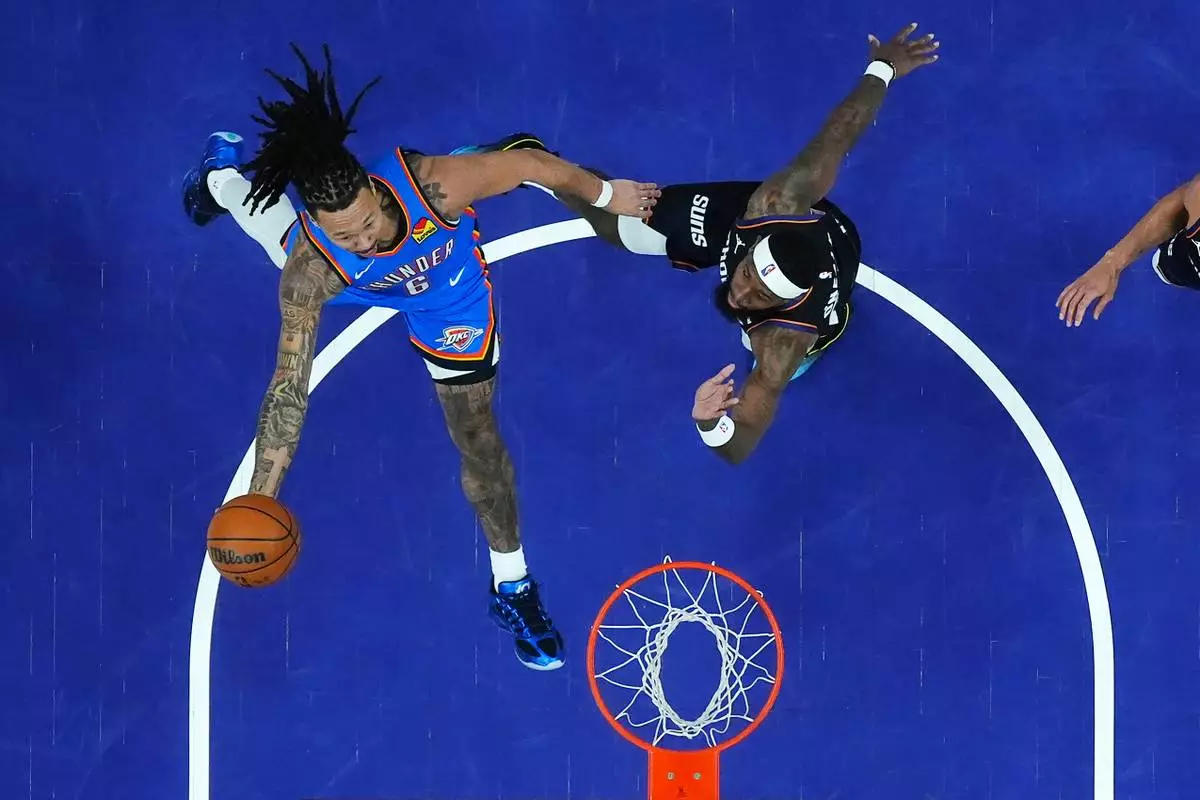
Oklahoma City Thunder forward Jaylin Williams (6) scores against Phoenix Suns forward Royce O'Neale during the second half of Game 3 of a first-round NBA playoffs basketball series, Saturday, April 25, 2026, in Phoenix. (AP Photo/Ross D. Franklin)
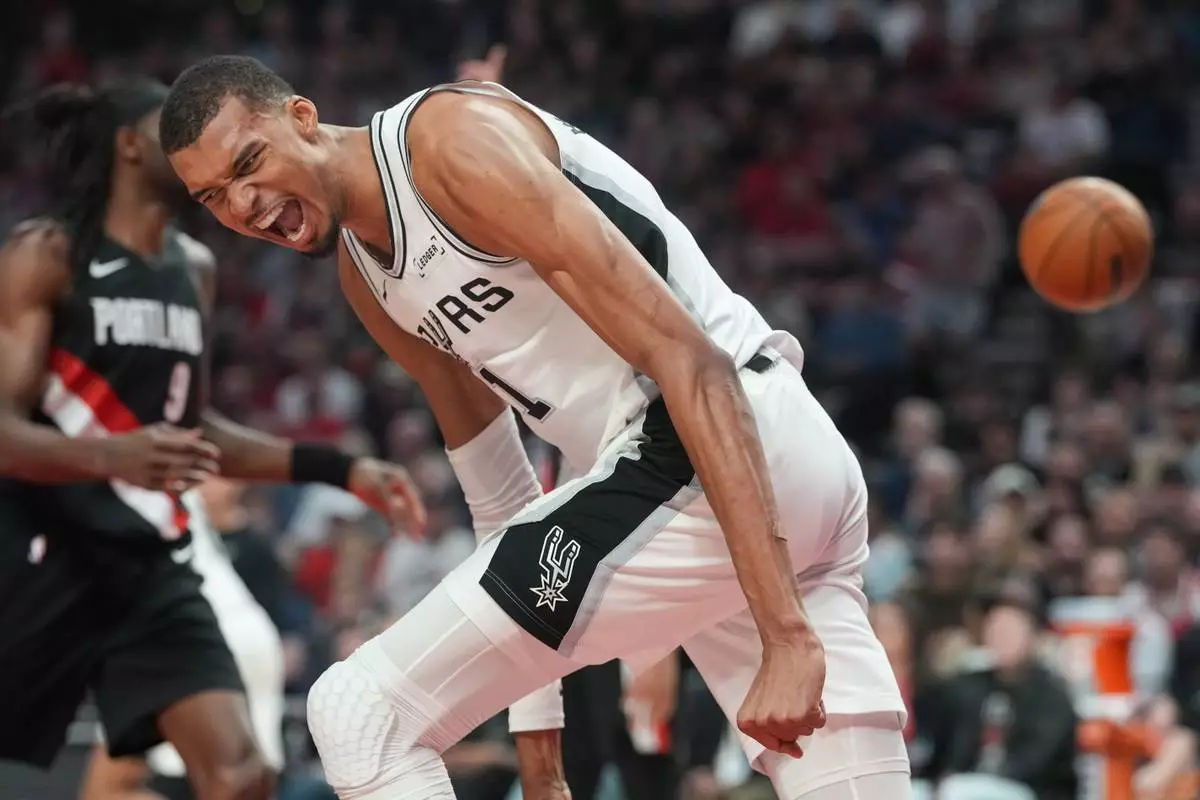
San Antonio Spurs center Victor Wembanyama reacts after a shot during the first half in Game 4 of a first-round NBA basketball playoffs series against the Portland Trail Blazers, in Portland, Ore., Sunday, April 26, 2026. (AP Photo/Jenny Kane)
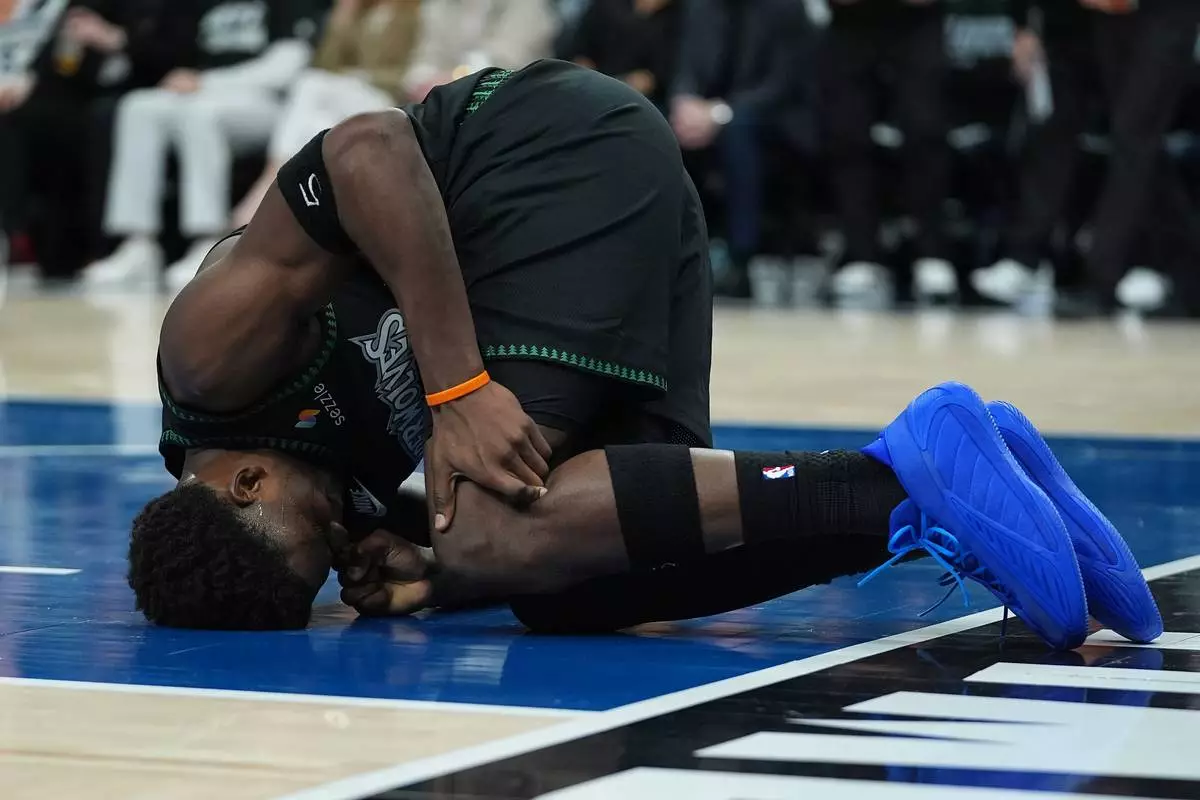
Minnesota Timberwolves guard Anthony Edwards kneels on the court after sustaining an injury during the first half of Game 4 of a first-round NBA basketball playoff series against the Denver Nuggets, Saturday, April 25, 2026, in Minneapolis. (AP Photo/Abbie Parr)
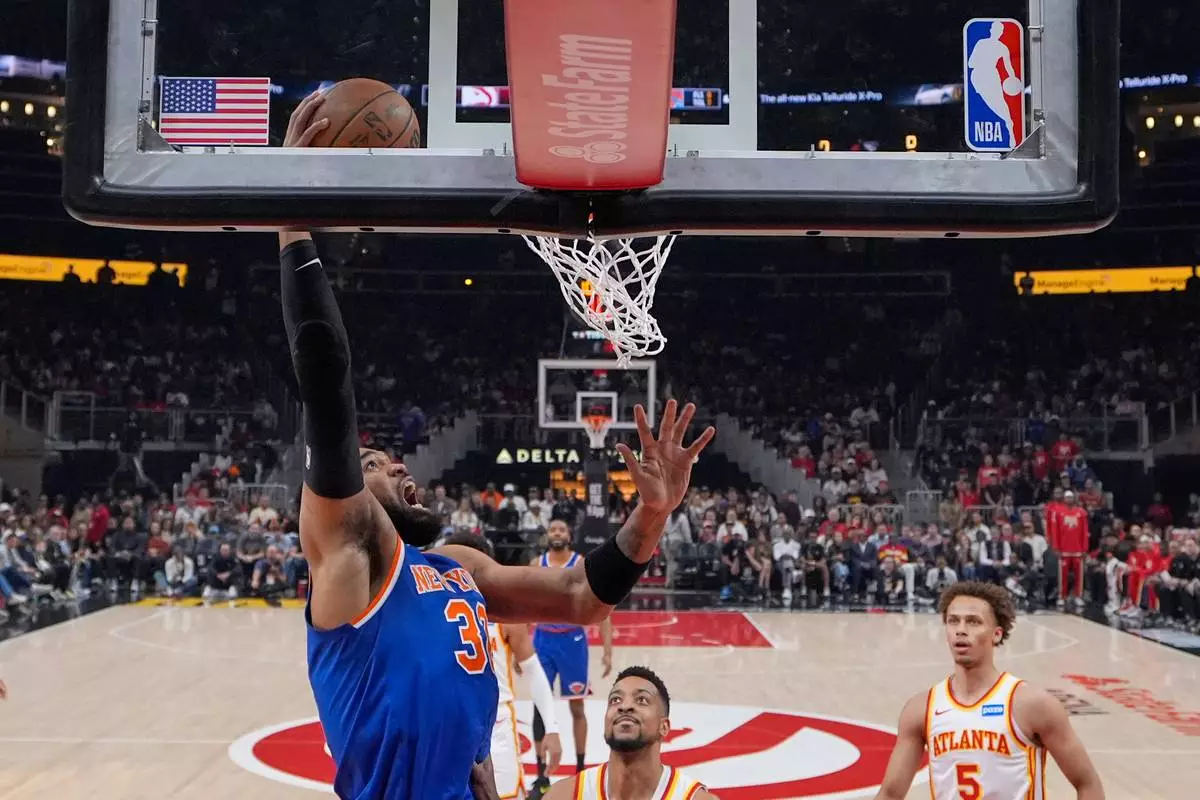
New York Knicks center Karl-Anthony Towns (32) shoots against Atlanta Hawks forward Onyeka Okongwu (17) during the first half of Game 4 in a first-round NBA playoffs basketball series Saturday, April 25, 2026, in Atlanta. (AP Photo/Brynn Anderson)
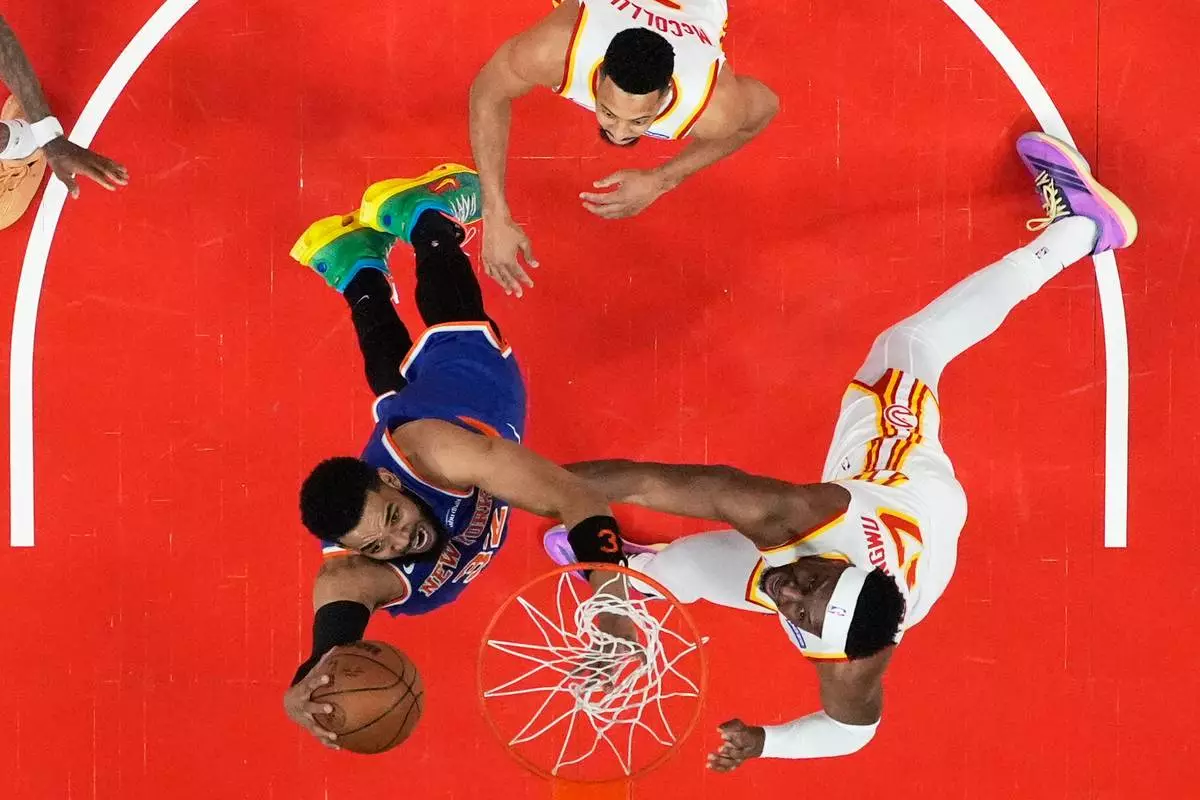
New York Knicks center Karl-Anthony Towns (32) shoots against Atlanta Hawks forward Onyeka Okongwu (17) during the first half of Game 4 in a first-round NBA playoffs basketball series Saturday, April 25, 2026, in Atlanta. (AP Photo/Brynn Anderson)
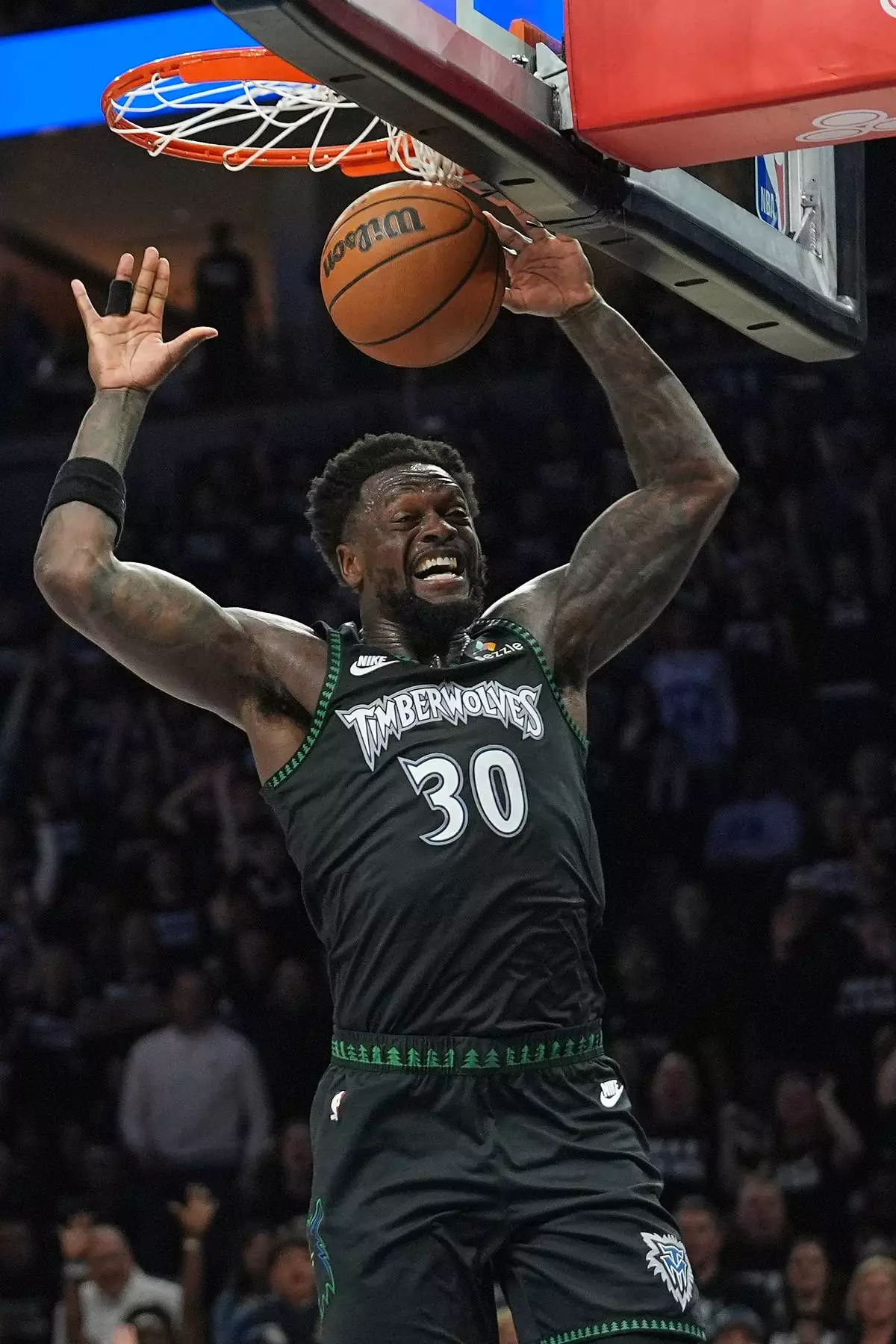
Minnesota Timberwolves forward Julius Randle dunks during the second half of Game 4 of a first-round NBA basketball playoff series against the Denver Nuggets, Saturday, April 25, 2026, in Minneapolis. (AP Photo/Abbie Parr)
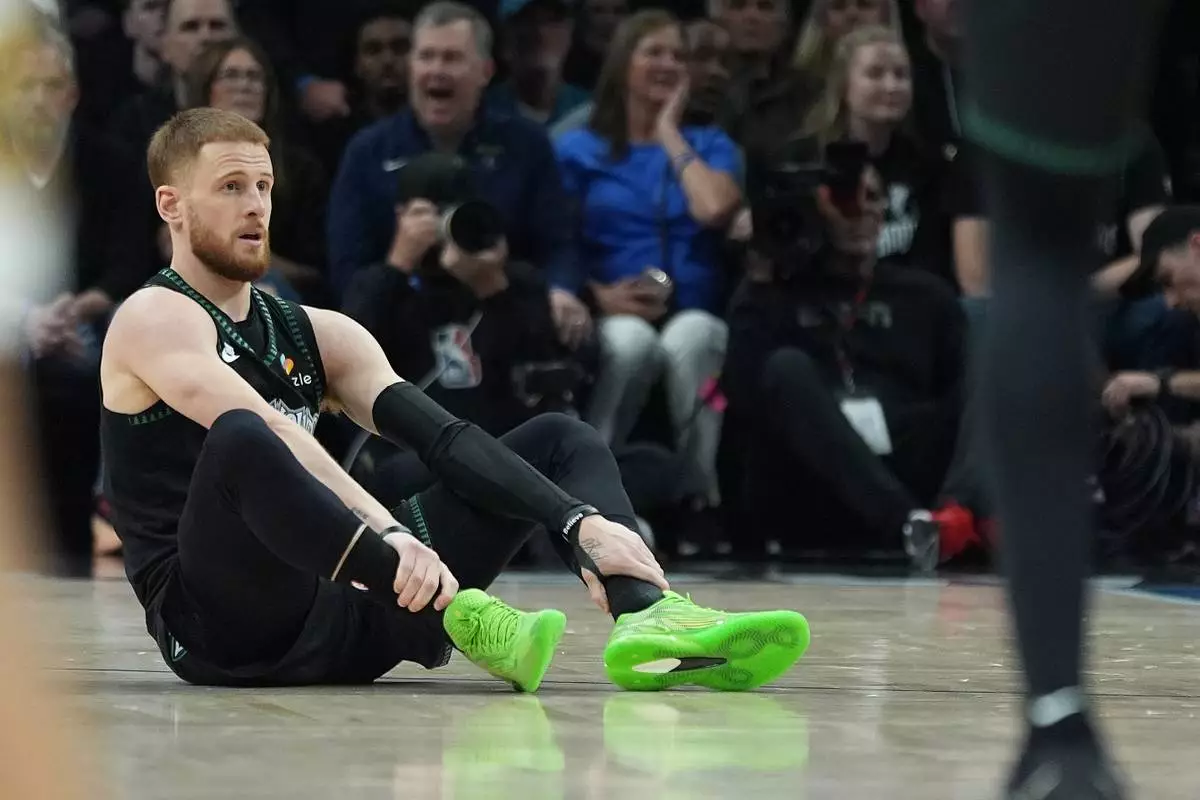
Minnesota Timberwolves guard Donte DiVincenzo (0) sits on the court after sustaining an injury during the first half of Game 4 of a first-round NBA basketball playoff series against the Denver Nuggets, Saturday, April 25, 2026, in Minneapolis. (AP Photo/Abbie Parr)
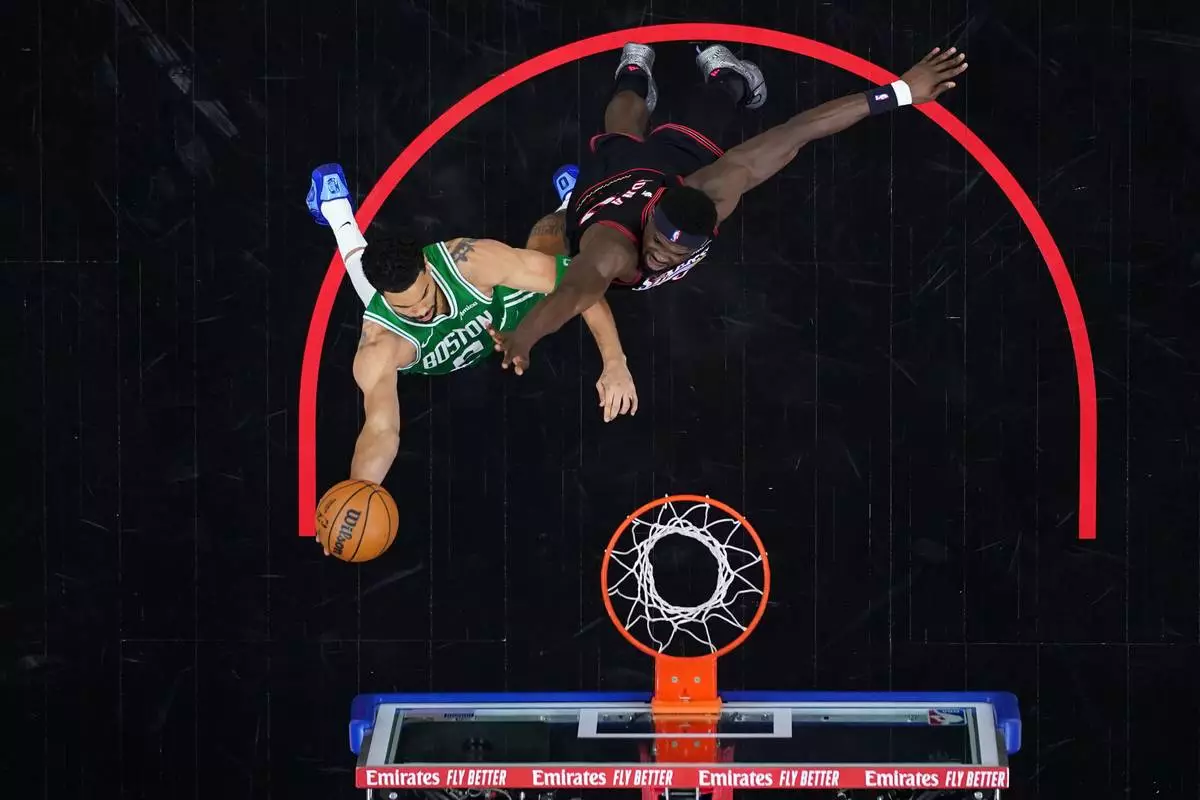
Boston Celtics' Jayson Tatum, left, goes up for a shot past Philadelphia 76ers' Adem Bona during the second half of Game 3 in a first-round NBA playoffs basketball series Friday, April 24, 2026, in Philadelphia. (AP Photo/Matt Slocum)
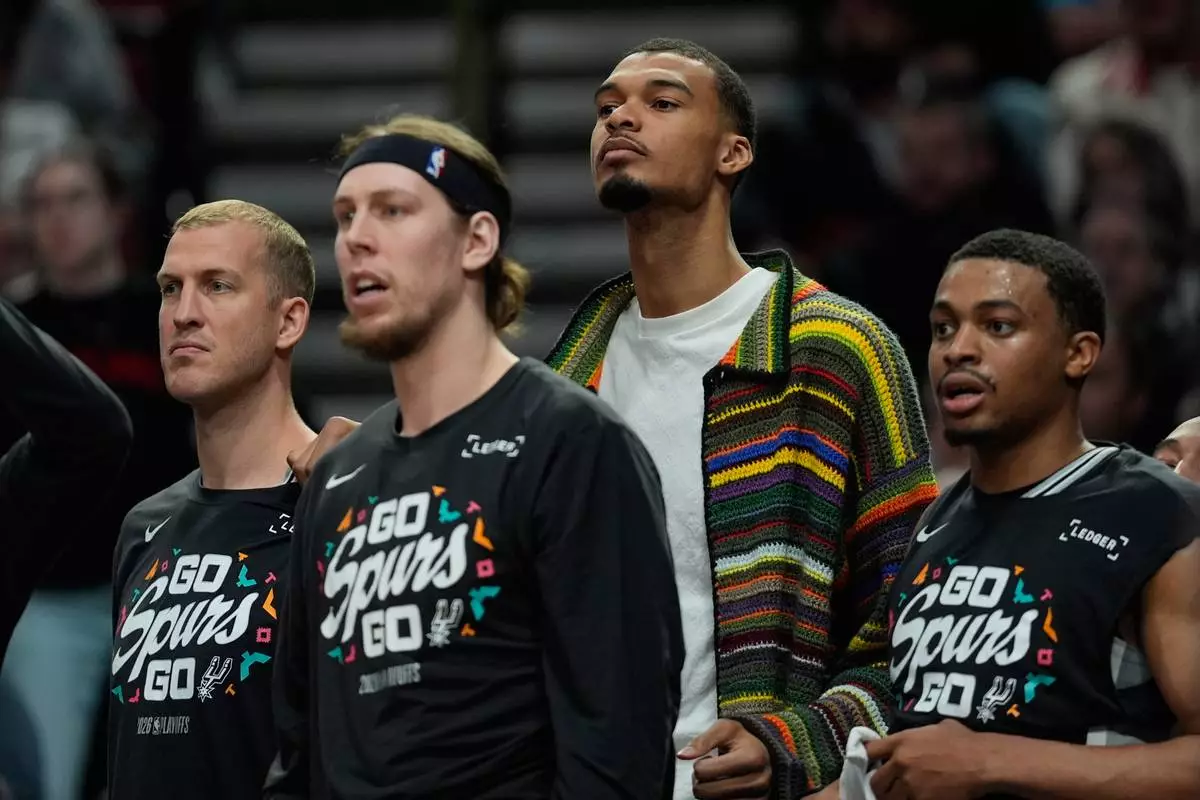
San Antonio Spurs forward Victor Wembanyama, center, wears street cloths on the bench as he sits out Game 3 of a first-round NBA playoffs basketball series against the Portland Trail Blazers in Portland, Ore, Friday, April 24, 2026. (AP Photo/Jenny Kane)
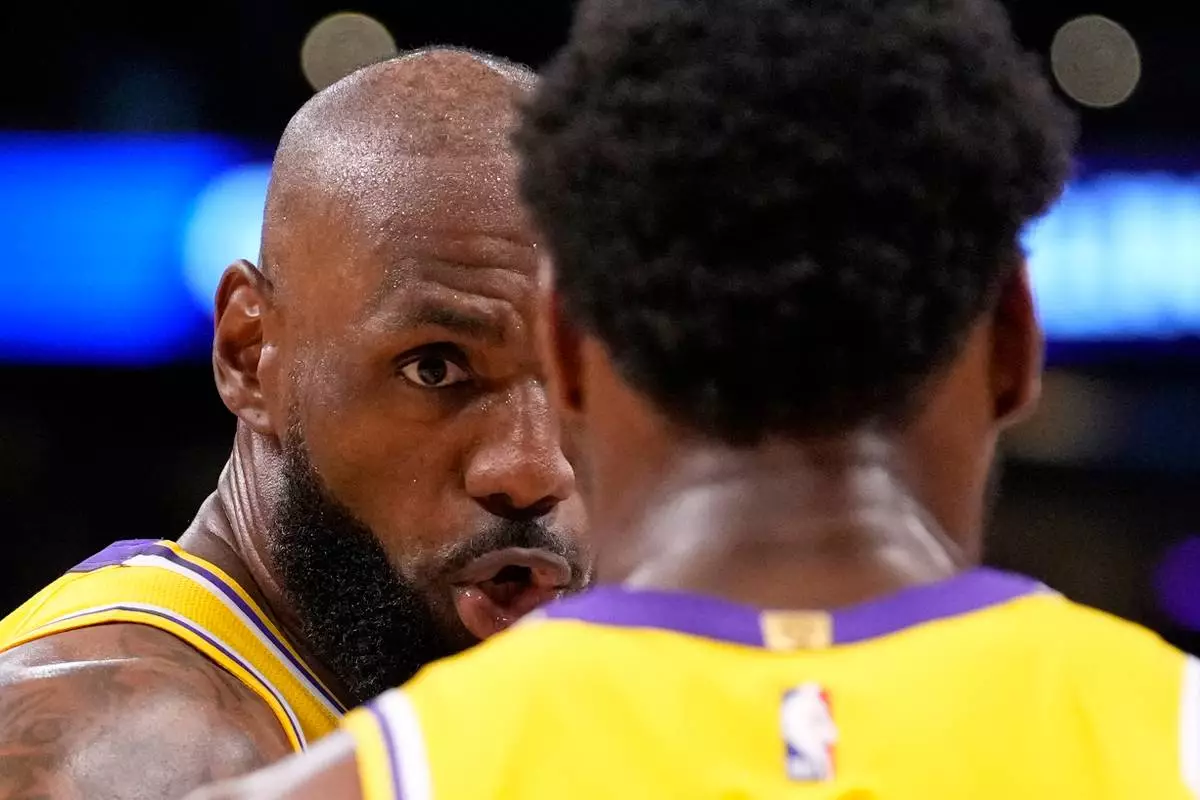
Los Angeles Lakers forward LeBron James, left, talks to guard Bronny James during the first half in Game 1 of a first-round NBA playoffs basketball series against the Houston Rockets, Saturday, April 18, 2026, in Los Angeles. (AP Photo/Mark J. Terrill)
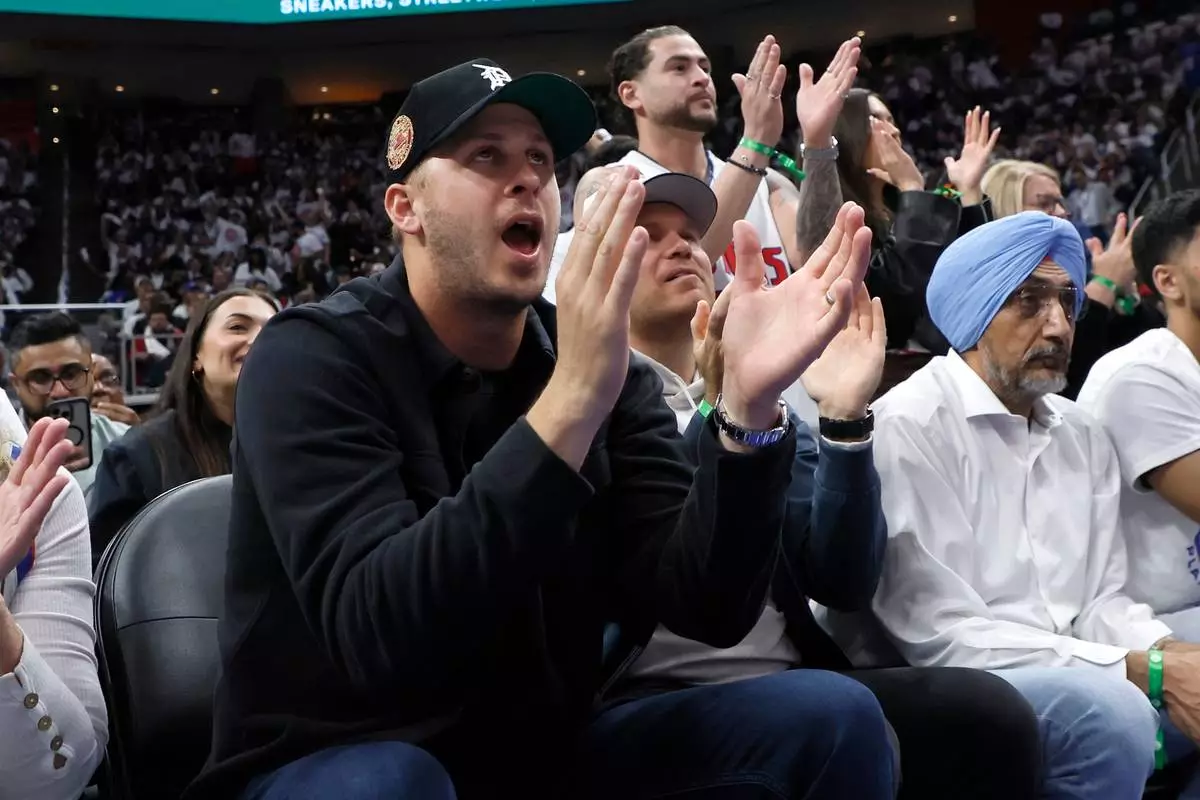
Detroit Lions quarterback Jared Goff cheers on the Detroit Piston during the second half in Game 2 of a first-round NBA basketball playoffs series against the Orlando Magic Wednesday, April 22, 2026, in Detroit. (AP Photo/Duane Burleson)
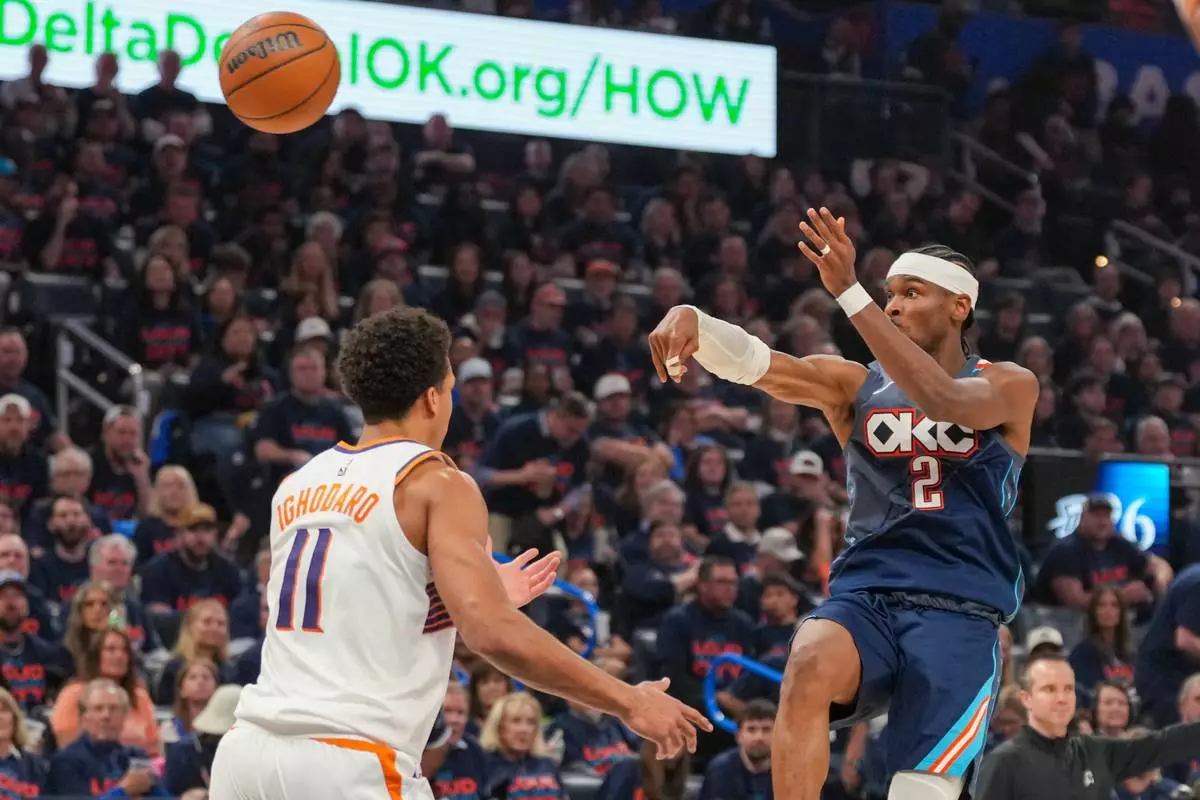
Oklahoma City Thunder guard Shai Gilgeous-Alexander (2) passes over Phoenix Suns forward Oso Ighodaro (11) during the second half in Game 2 of a first-round NBA playoffs basketball series Wednesday, April 22, 2026, in Oklahoma City. (AP Photo/Kyle Phillips)
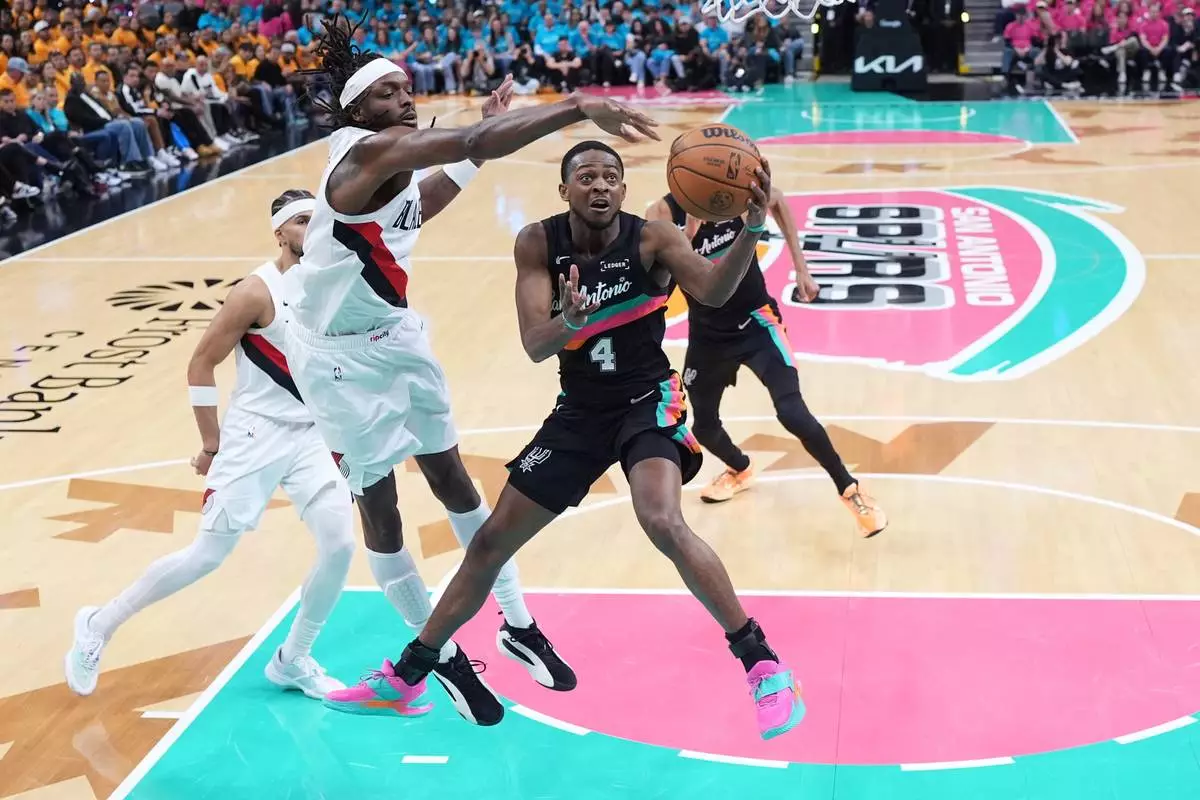
San Antonio Spurs guard De'aaron Fox (4) drives to the basket past Portland Trail Blazers forward Jerami Grant, left, during the second half in Game 1 of a first-round NBA playoffs basketball series in San Antonio, Sunday, April 19, 2026. (AP Photo/Eric Gay)
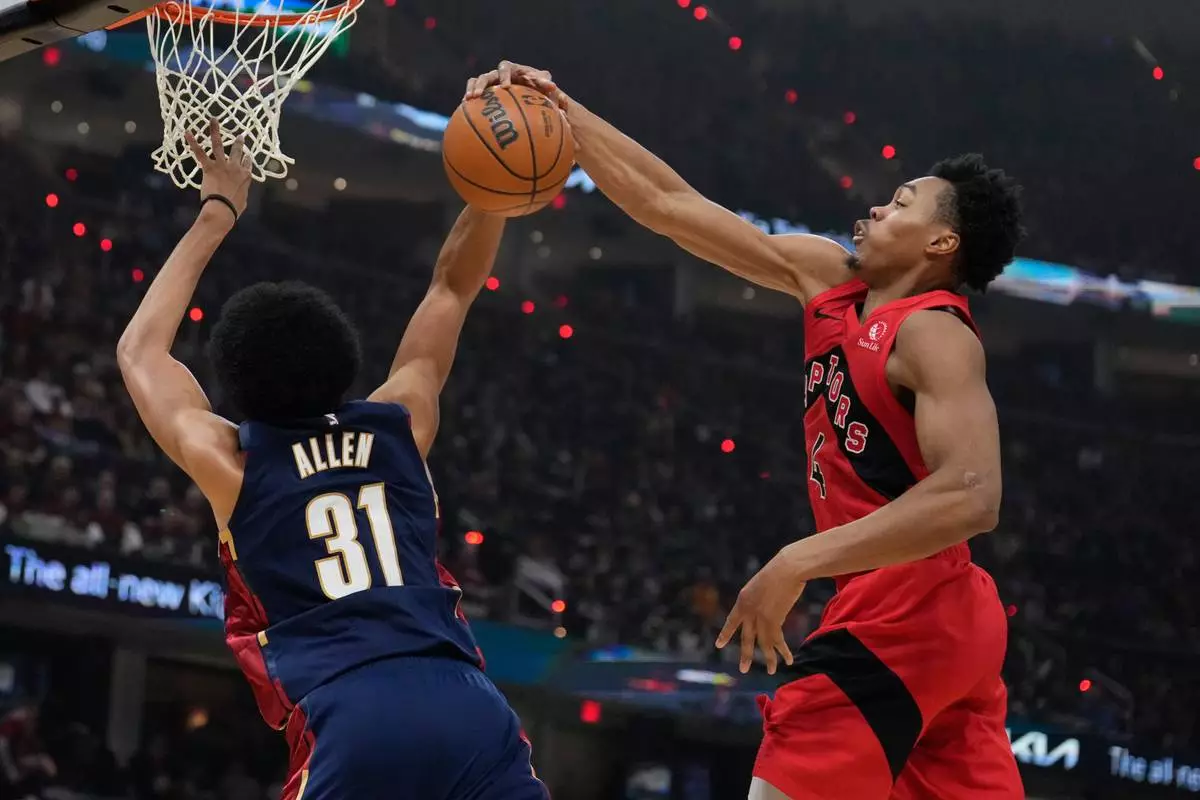
Toronto Raptors forward Scottie Barnes (4) blocks a shot by Cleveland Cavaliers center Jarrett Allen (31) in the second half in Game 2 of a first-round NBA basketball playoffs series in Cleveland, Monday, April 20, 2026. (AP Photo/Sue Ogrocki)
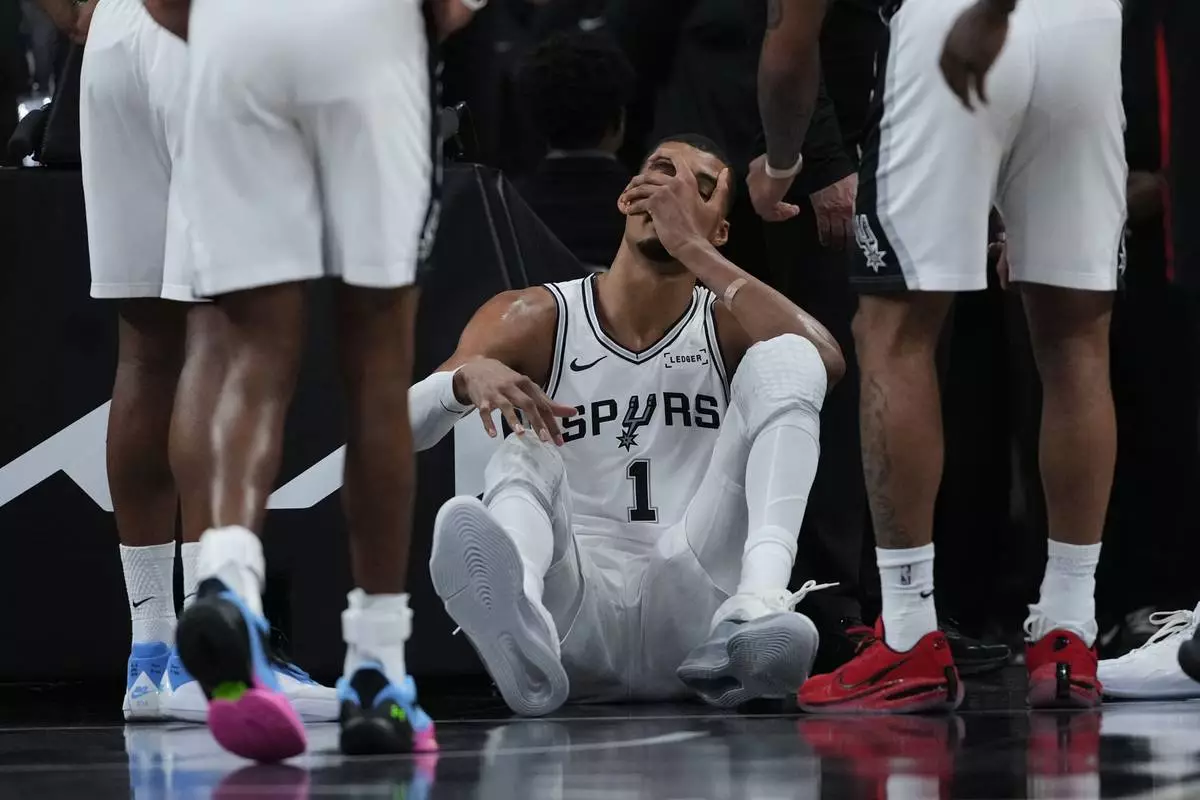
San Antonio Spurs forward Victor Wembanyama (1) sits on the court after a hard fall during the first half in Game 2 of a first-round NBA playoffs basketball series against the Portland Trail Blazers in San Antonio, Tuesday, April 21, 2026. (AP Photo/Eric Gay)
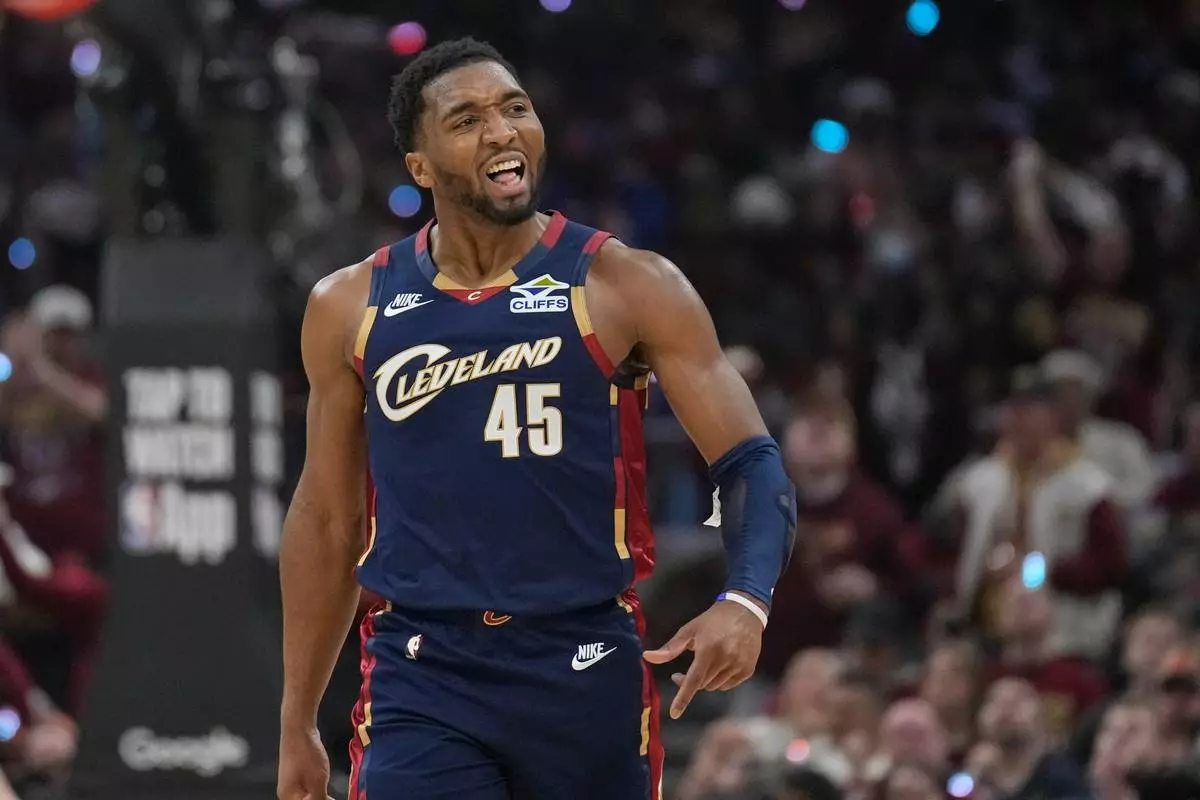
Cleveland Cavaliers guard Donovan Mitchell (45) gestures to the crowd in the first half in Game 2 of a first-round NBA basketball playoffs series against the Toronto Raptors in Cleveland, Monday, April 20, 2026. (AP Photo/Sue Ogrocki)
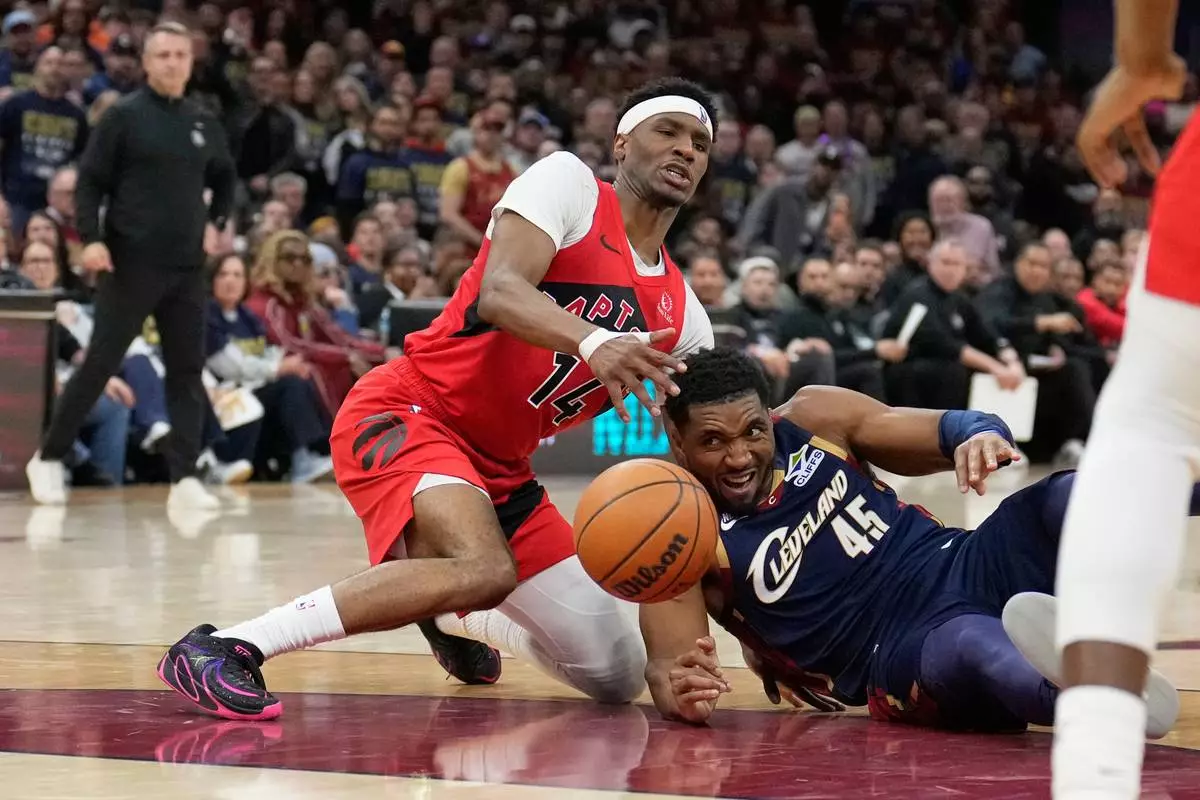
Toronto Raptors guard Ja'kobe Walter (14) and Cleveland Cavaliers guard Donovan Mitchell (45) reach for the ball in the second half in Game 2 of a first-round NBA basketball playoffs series in Cleveland, Monday, April 20, 2026. (AP Photo/Sue Ogrocki)
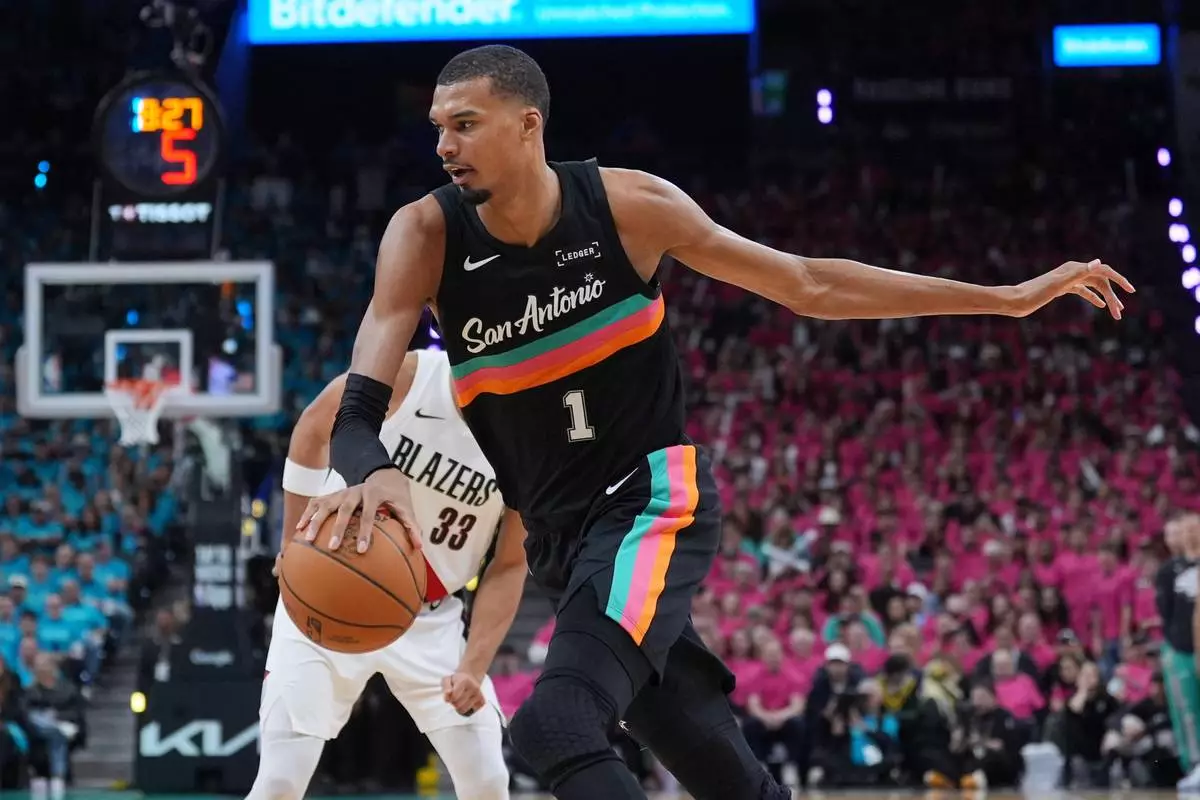
San Antonio Spurs forward Victor Wembanyama (1) drives past Portland Trail Blazers forward Toumani Camara (33) during the second half in Game 1 of a first-round NBA playoffs basketball series in San Antonio, Sunday, April 19, 2026. (AP Photo/Eric Gay)
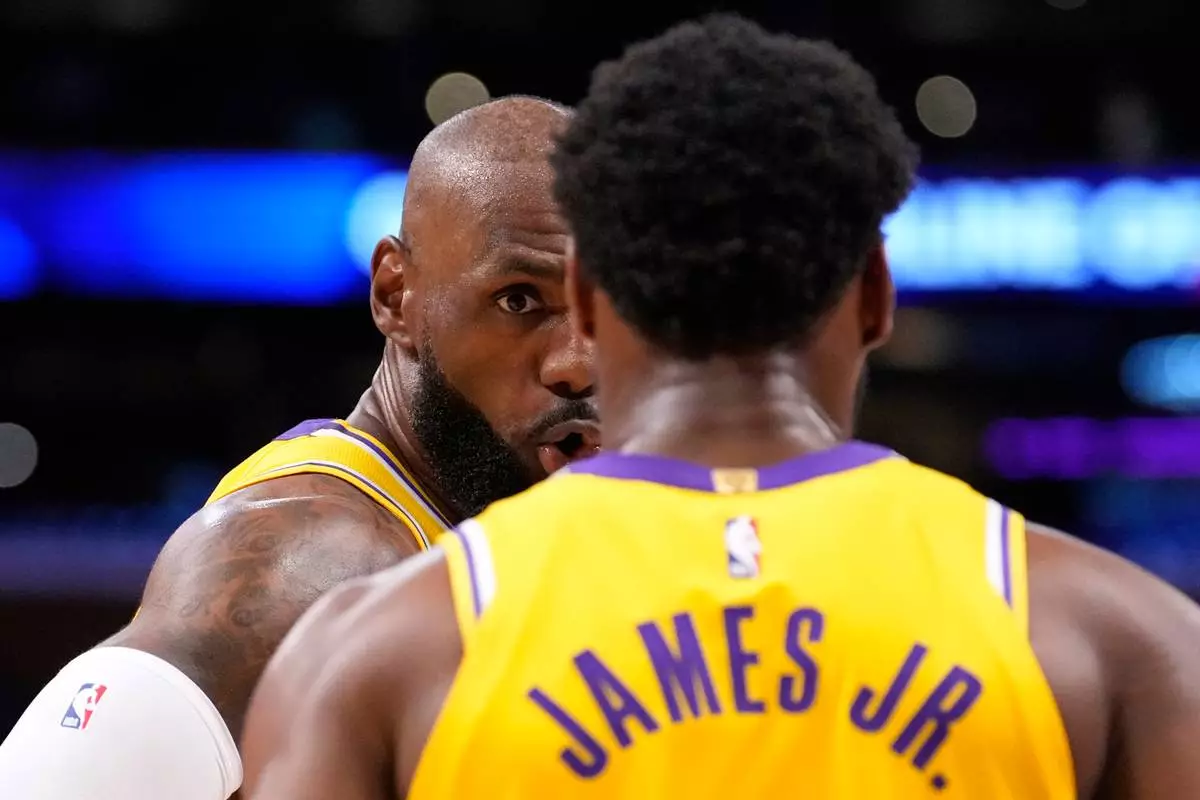
Los Angeles Lakers forward LeBron James, left, talks to his son guard Bronny James during the first half in Game 1 of a first-round NBA playoffs basketball series against the Houston Rockets, Saturday, April 18, 2026, in Los Angeles. (AP Photo/Mark J. Terrill)
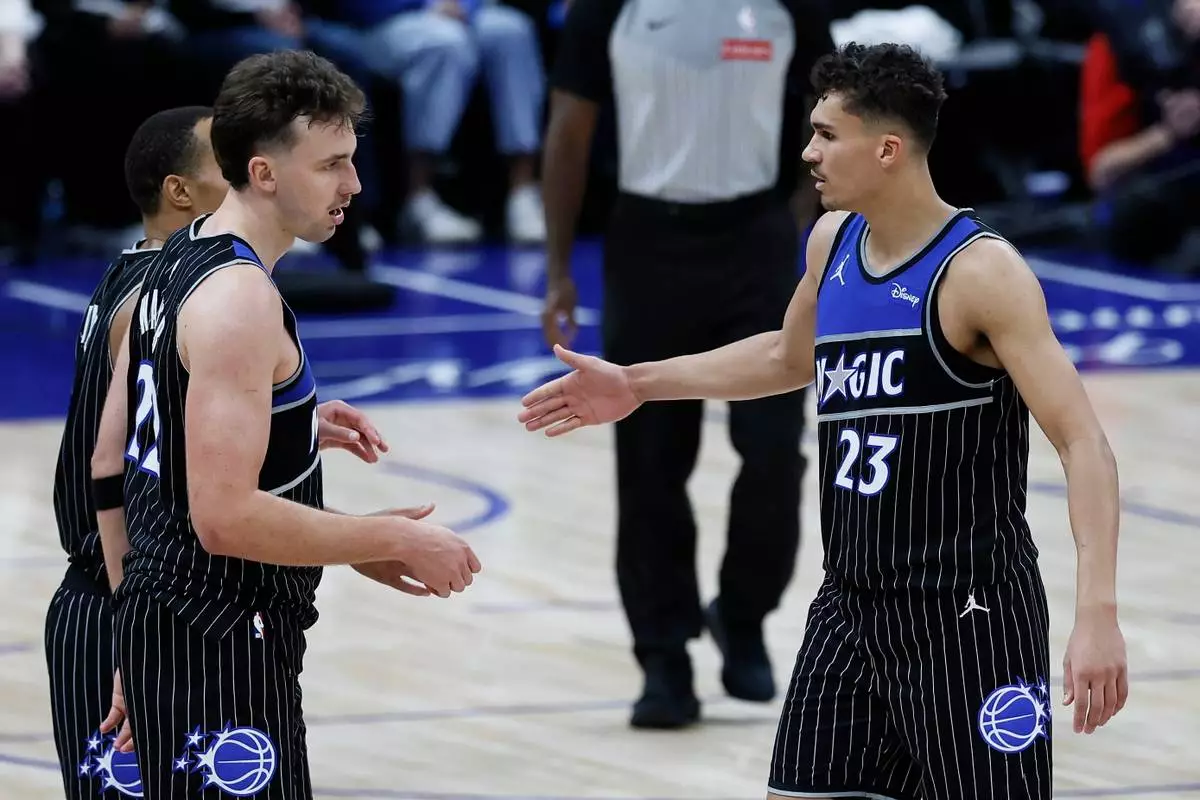
Orlando Magic forward Franz Wagner (22) and forward Tristan da Silva (23) celebrate after a win over the Detroit Pistons in Game 1 of a first-round NBA basketball playoffs series, Sunday, April 19, 2026, in Detroit. (AP Photo/Duane Burleson)
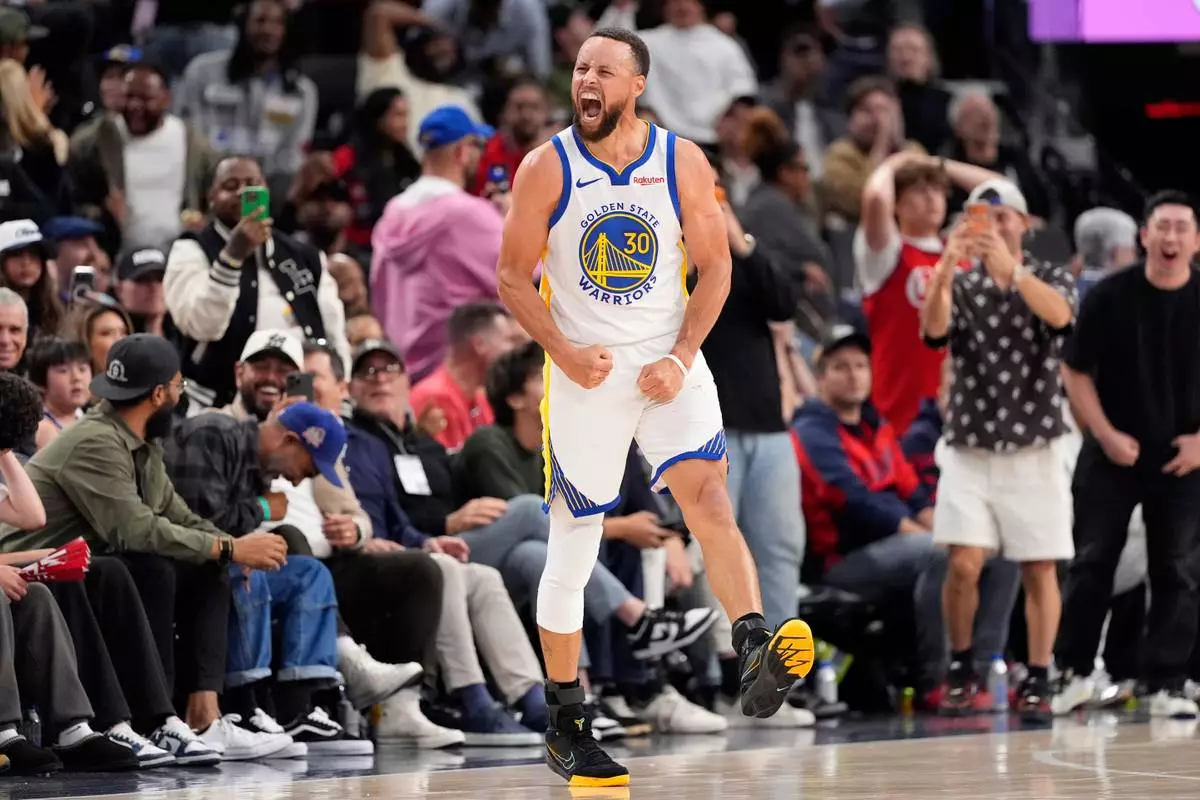
Golden State Warriors guard Stephen Curry celebrates after scoring during the second half of an NBA play-in tournament basketball game against the against the Los Angeles Clippers, Wednesday, April 15, 2026, in Inglewood, Calif. (AP Photo/Mark J. Terrill)
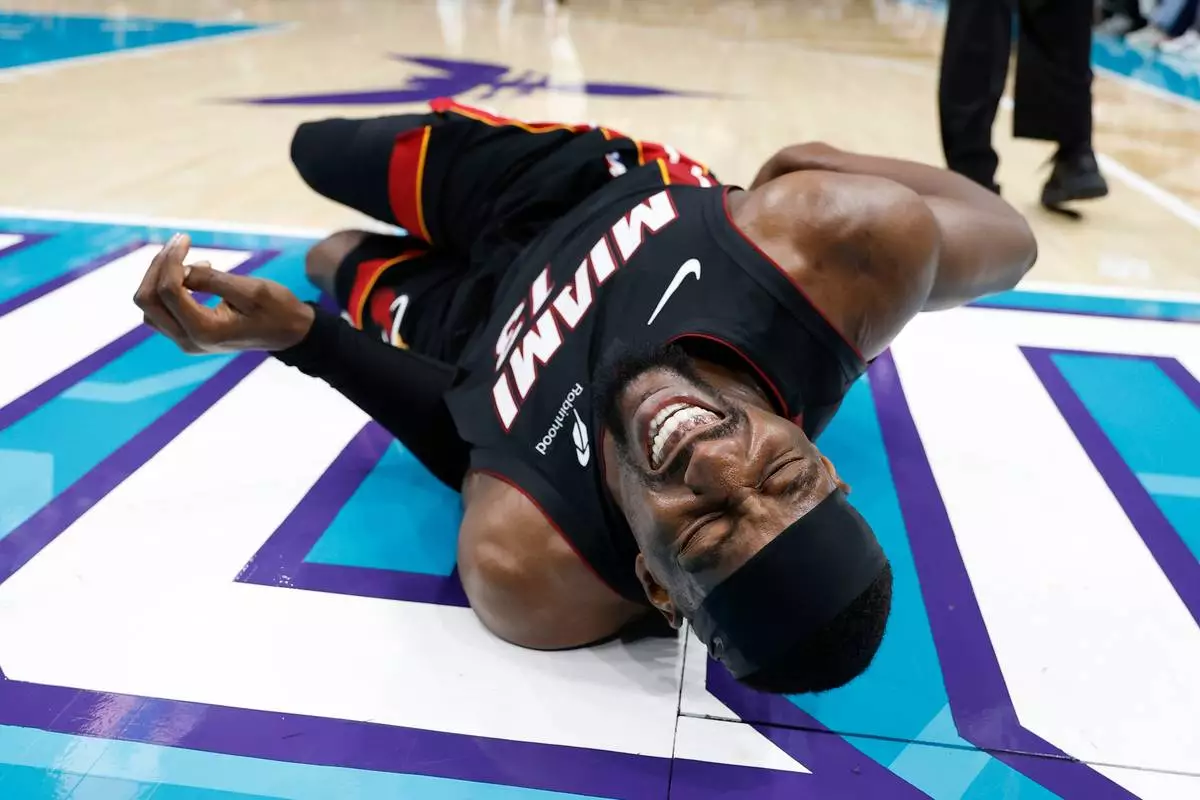
Miami Heat center Bam Adebayo (13) lies on the court during the first half of an NBA play-in tournament basketball game against the Charlotte Hornets in Charlotte, N.C., Tuesday, April 14, 2026. (AP Photo/Nell Redmond)
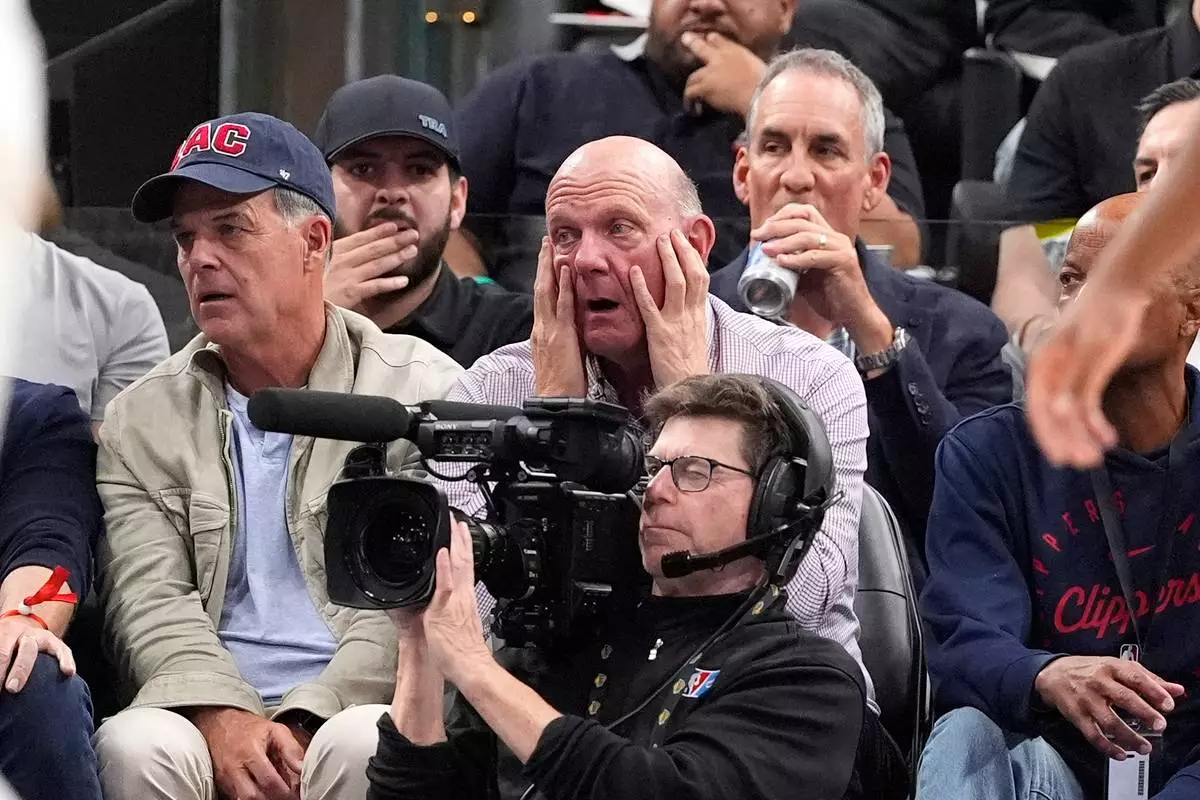
Los Angeles Clippers owner Steve Ballmer watches in the closing minutes of an NBA play-in tournament basketball game between the Clippers and the Golden State Warriors Wednesday, April 15, 2026, in Inglewood, Calif. (AP Photo/Mark J. Terrill)
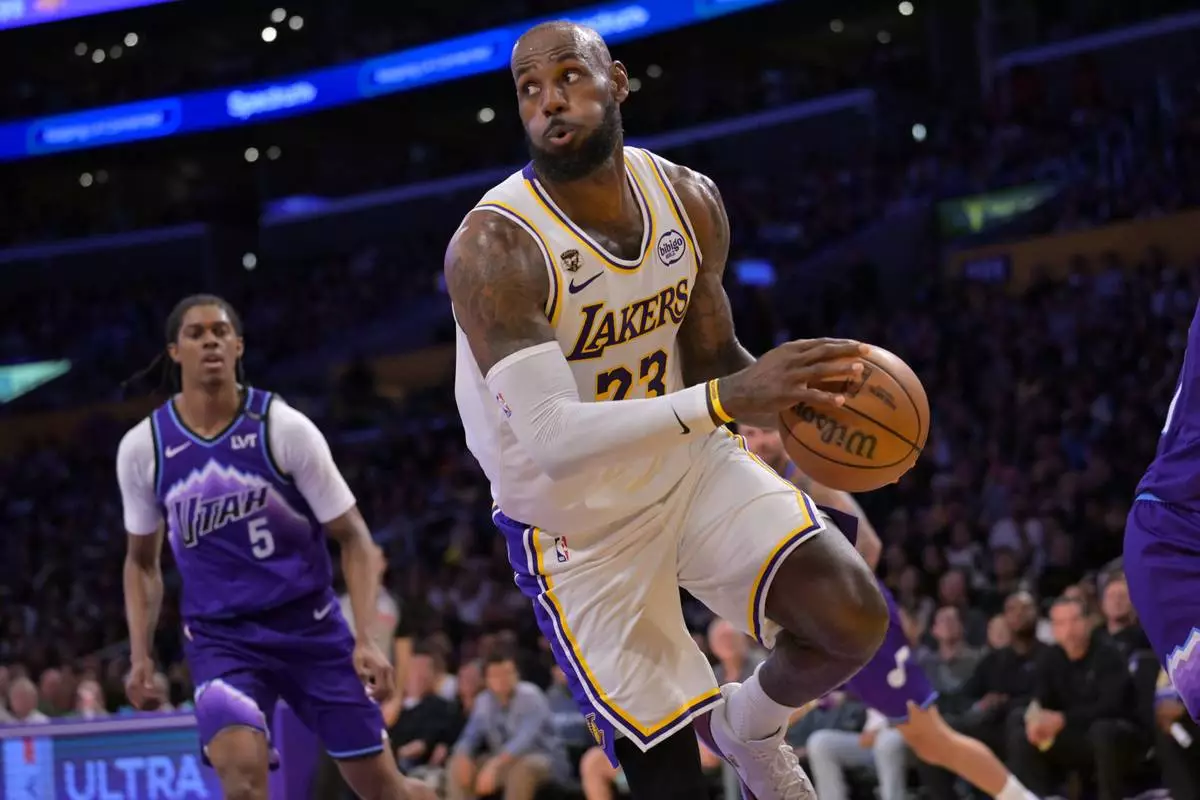
Los Angeles Lakers forward LeBron James looks to make a pass during the first half of an NBA basketball game against the Utah Jazz, Sunday, April 12, 2026, in Los Angeles. (AP Photo/Jayne Kamin-Oncea)
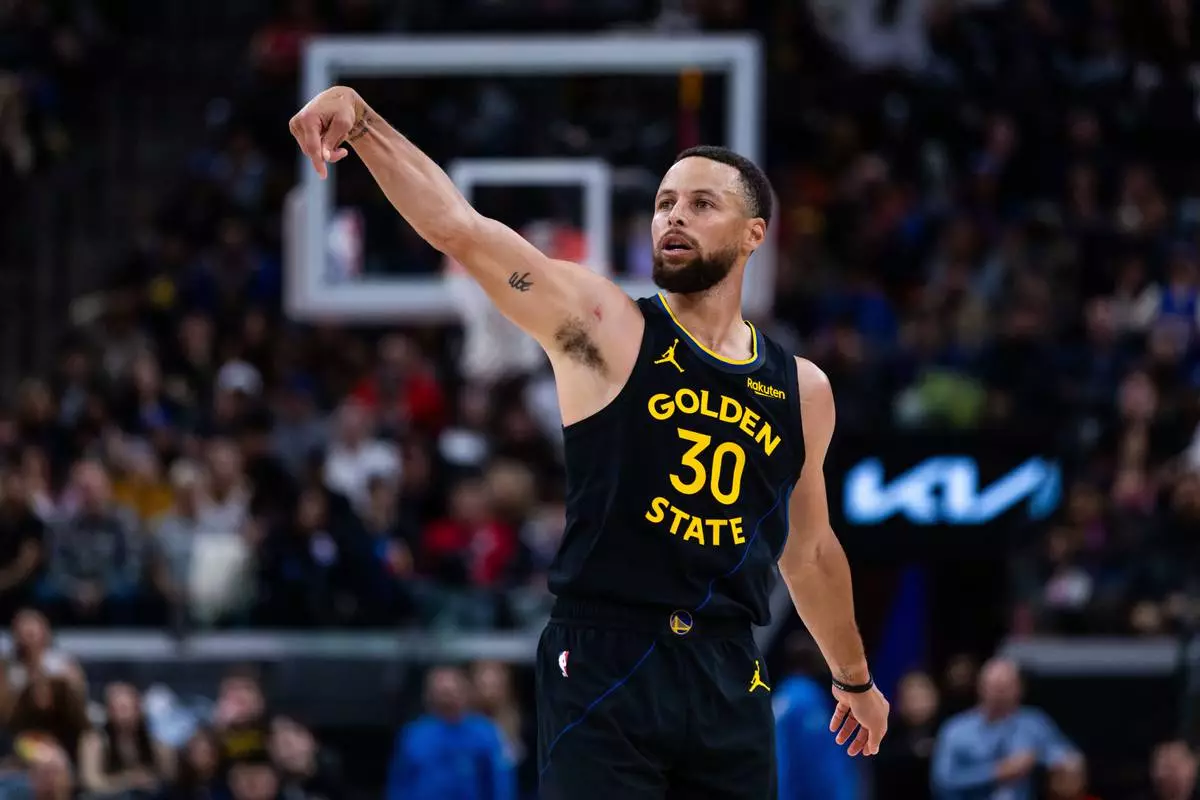
Golden State Warriors guard Stephen Curry (30) shoots against the Los Angeles Clippers during the second half of an NBA basketball game, Sunday, April 12, 2026, in Inglewood, Calif. (AP Photo/Ethan Swope)