NEW DELHI (AP) — Indian Prime Minister Narendra Modi on Thursday pitched his country as a central player in the global artificial intelligence ecosystem, saying it aims to build technology at home while deploying it worldwide.
“Design and develop in India. Deliver to the world. Deliver to humanity,” Modi told a gathering of some world leaders, technology executives and policymakers at the India AI Impact Summit in New Delhi.
Click to Gallery
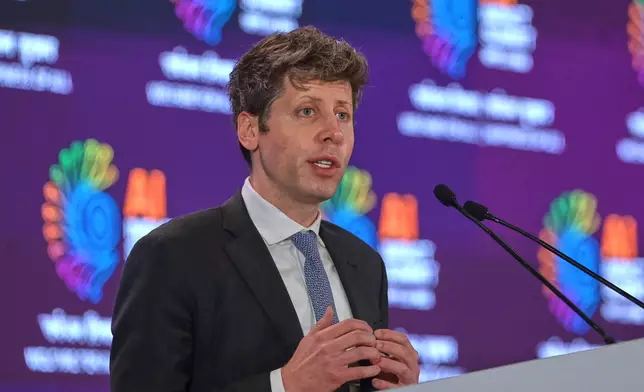
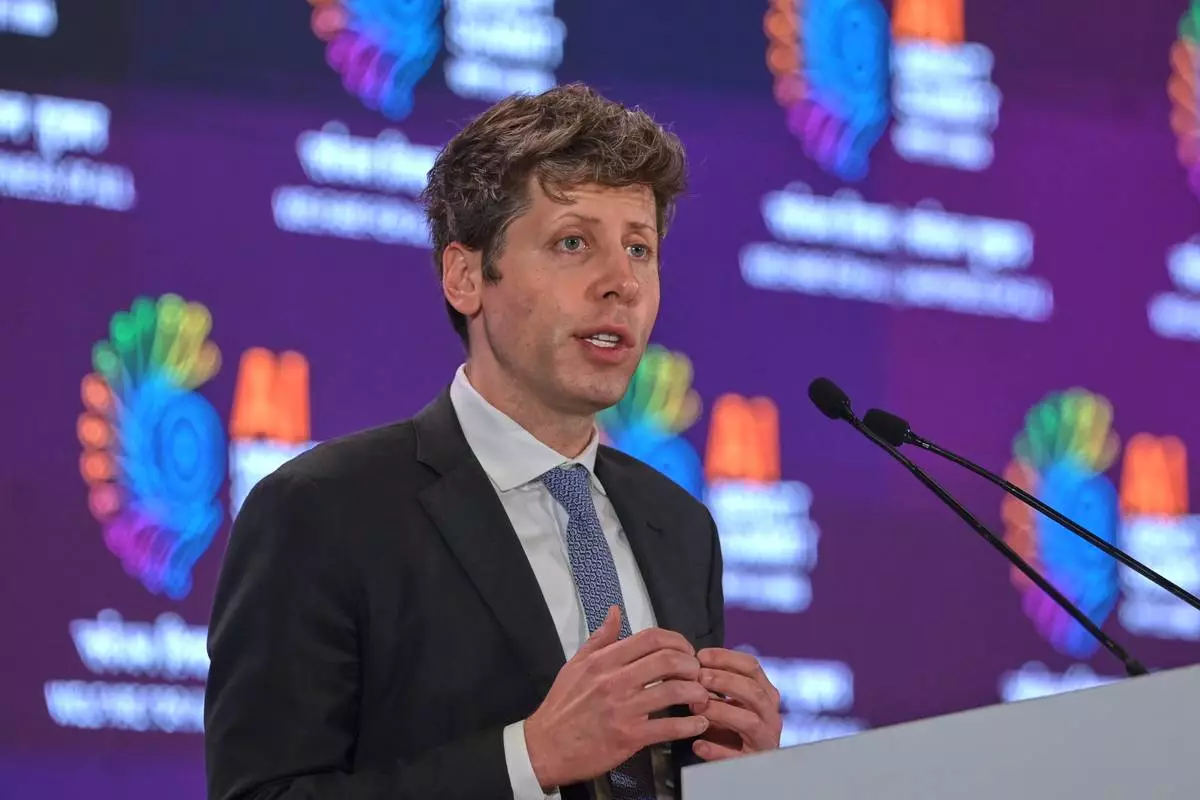
OpenAI’s CEO Sam Altman speaks at the AI Summit in New Delhi, India, Thursday, Feb. 19, 2026. (AP Photo)
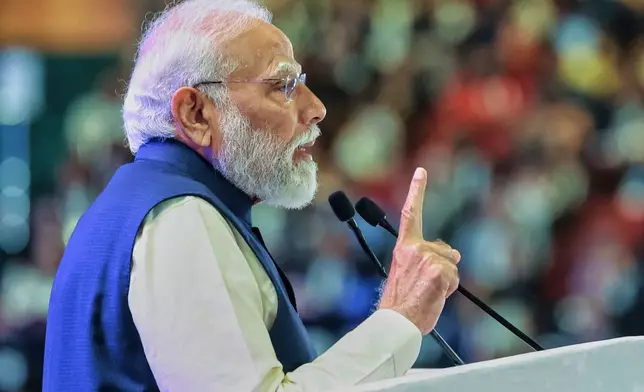
In this photo provided by Indian Prime Minister's Office, India Prime Minister Narendra Modi speaks during the AI Summit in New Delhi, India, Thursday, Feb. 19, 2026. (Indian Prime Minister's Office via AP)
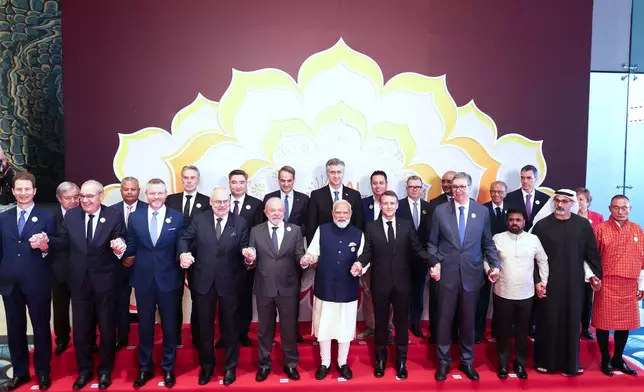
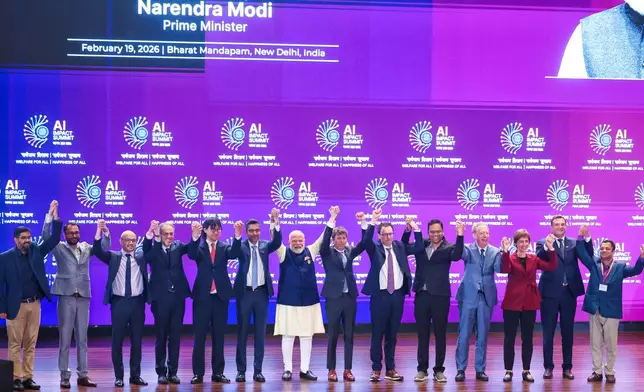
India's Prime Minister Narendra Modi, center, hold hands and poses for photographs with various head of states of participating countries during the AI Summit in New Delhi, India, Thursday, Feb. 19, 2026. (Indian Prime Minister's Office via AP)
India's Prime Minister Narendra Modi, seventh left, poses for photographs with chief executive officers of various AI groups during the AI Summit in New Delhi, India, Thursday, Feb. 19, 2026. (Indian Prime Minister's Office via AP)
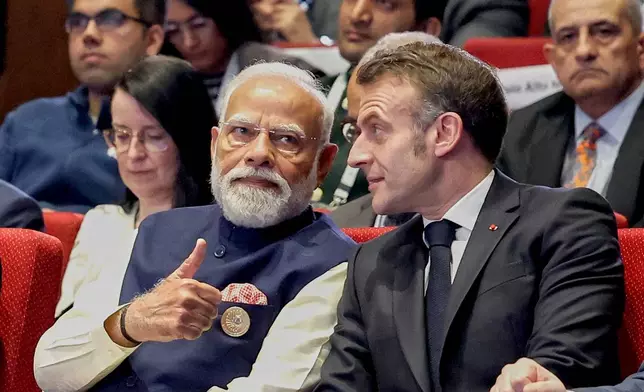
India's Prime Minister Narendra Modi, left, talks with French President Emmanuel Macron during the AI Summit in New Delhi, India, Thursday, Feb.19, 2026. (Indian Prime Minister's Office via AP)
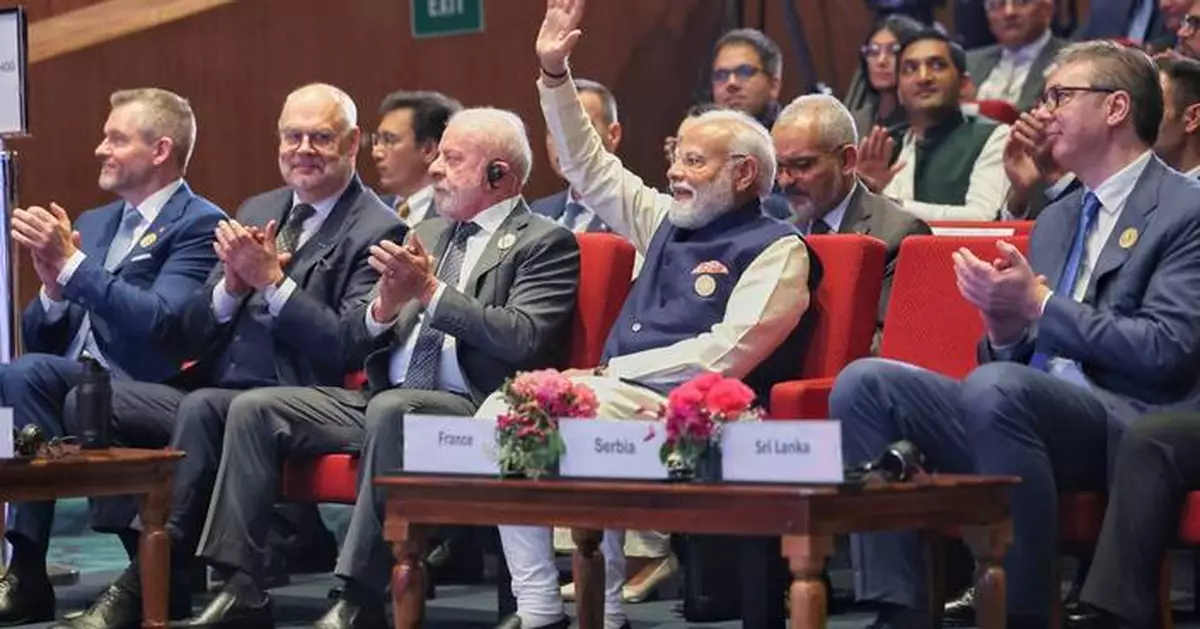
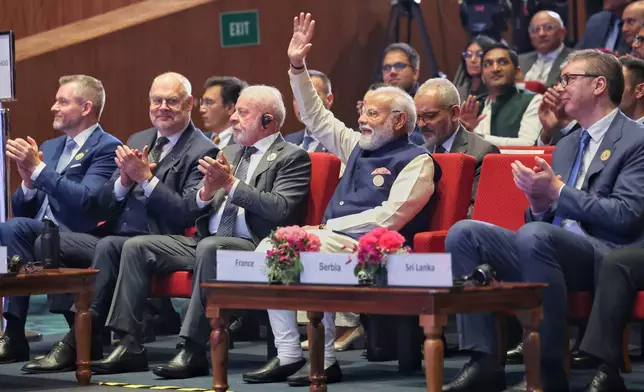
In this photo provided by Indian Prime Minister's Office, lndia's Prime Minister Narendra Modi, center, raises his hand in acknowledgment as other foreign dignitaries clap during the AI Summit in New Delhi, India, Thursday, Feb. 19, 2026. (Indian Prime Minister's Office via AP)
Modi’s remarks came as India — one of the fastest-growing digital markets — seeks to leverage its experience in building large-scale digital public infrastructure and to present itself as a cost-effective hub for AI innovation.
The summit was also addressed by French President Emmanuel Macron, Google CEO Sundar Pichai and U.N. Secretary-General António Guterres, who called for a $3 billion fund to help poorer countries build basic AI capacity, including skills, data access and affordable computing power.
“The future of AI cannot be decided by a handful of countries, or left to the whims of a few billionaires,” Guterres said, stressing that AI must “belong to everyone.”
India is using the summit to position itself as a bridge between advanced economies and the Global South. Indian officials cite the country’s digital ID and online payments systems as a model for deploying AI at low cost, particularly in developing countries.
“We must democratize AI. It must become a tool for inclusion and empowerment, particularly for the Global South,” Modi said.
He later separately met tech leaders, many of whom laid out their investing plans in India and agreed to commit to a broad set of principles for developing “inclusive and multilingual” AI.
OpenAI CEO Sam Altman said the company will collaborate with India’s Tata Group on AI initiatives, including the development of data center infrastructure in the country.
“We believe the democratization of AI is the only fair and safe path forward,” Altman said at the meeting. A group photo with Modi, Altman and a dozen other tech leaders went viral when Modi invited everyone to hold and lift their hands together. Breaking the chain by not holding hands were Altman and Dario Amodei, the CEO of AI company Anthropic, which has been in a fierce rivalry with OpenAI. Altman later said he was confused about what was happening.
With nearly 1 billion internet users, India has become a key market for global technology companies expanding their AI businesses.
Last December, Microsoft announced a $17.5 billion investment over four years to expand cloud and AI infrastructure in India. It followed Google’s $15 billion investment over five years, including plans for its first AI hub in the country. Amazon has also pledged $35 billion by 2030, targeting AI-driven digitization.
India is also seeking up to $200 billion in data center investment in the coming years.
The country, however, lags in developing its own large-scale AI model like U.S.-based OpenAI or China’s DeepSeek, highlighting challenges such as limited access to advanced semiconductor chips, data centers and hundreds of local languages to learn from.
The summit opened Monday with organizational glitches, as attendees and exhibitors reported long lines and delays, and some complained on social media that personal belongings and display items had been stolen. Organizers later said the items were recovered.
Problems resurfaced Wednesday when a private Indian university was expelled from the summit after a staff member showcased a commercially available Chinese-made robotic dog while claiming it as the institution’s own innovation.
The setbacks continued Thursday when Microsoft co-founder Bill Gates withdrew from a scheduled keynote address. No reason was given, though the Gates Foundation said the move was intended “to ensure the focus remains on the AI Summit’s key priorities.”
Gates is facing questions over his ties to late sex offender Jeffrey Epstein.
OpenAI’s CEO Sam Altman speaks at the AI Summit in New Delhi, India, Thursday, Feb. 19, 2026. (AP Photo)
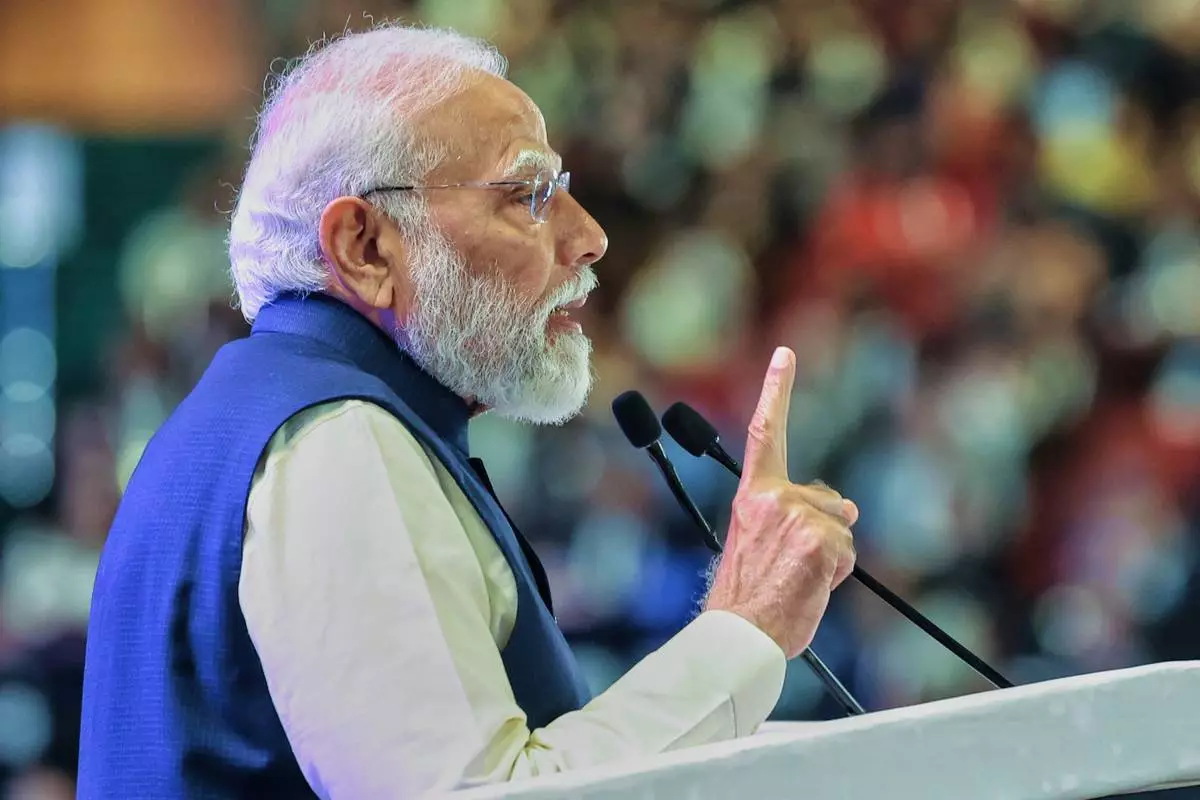
In this photo provided by Indian Prime Minister's Office, India Prime Minister Narendra Modi speaks during the AI Summit in New Delhi, India, Thursday, Feb. 19, 2026. (Indian Prime Minister's Office via AP)
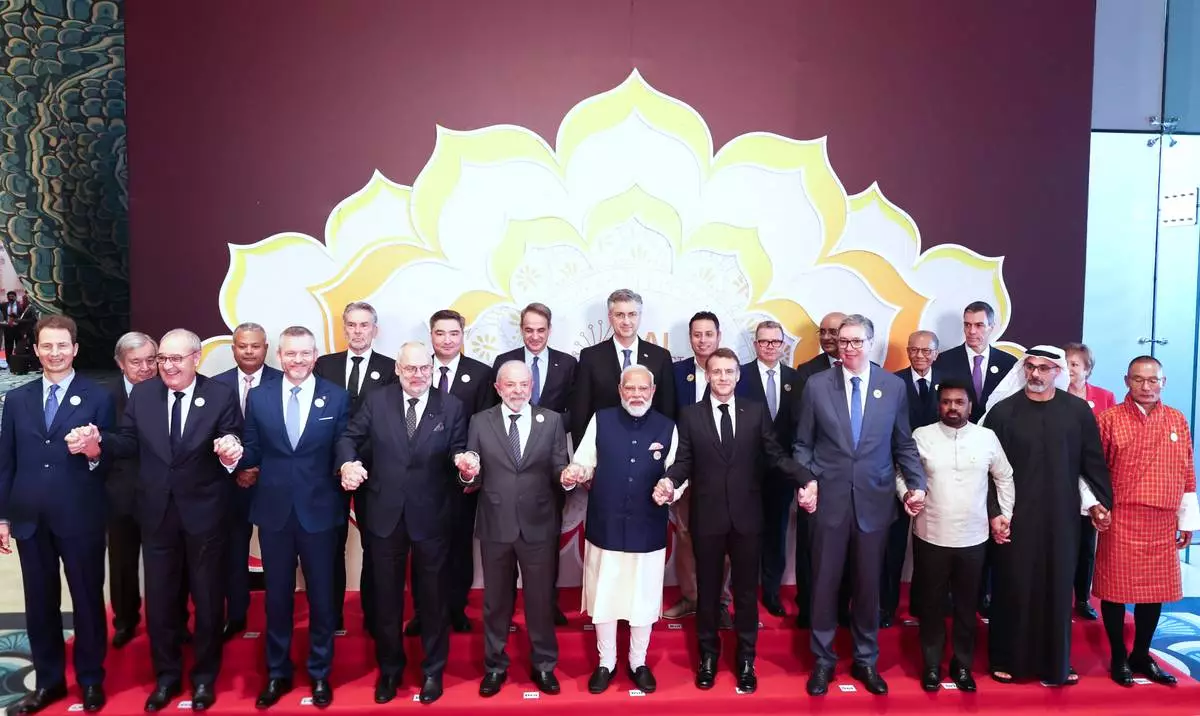
India's Prime Minister Narendra Modi, center, hold hands and poses for photographs with various head of states of participating countries during the AI Summit in New Delhi, India, Thursday, Feb. 19, 2026. (Indian Prime Minister's Office via AP)
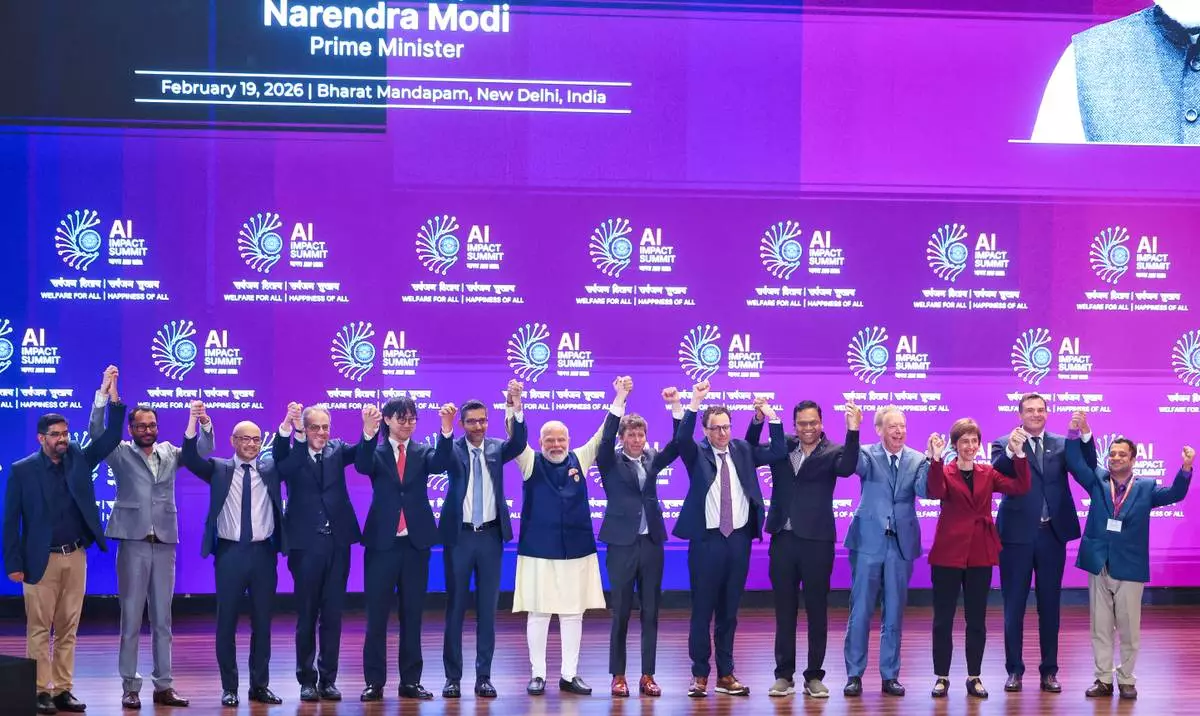
India's Prime Minister Narendra Modi, seventh left, poses for photographs with chief executive officers of various AI groups during the AI Summit in New Delhi, India, Thursday, Feb. 19, 2026. (Indian Prime Minister's Office via AP)
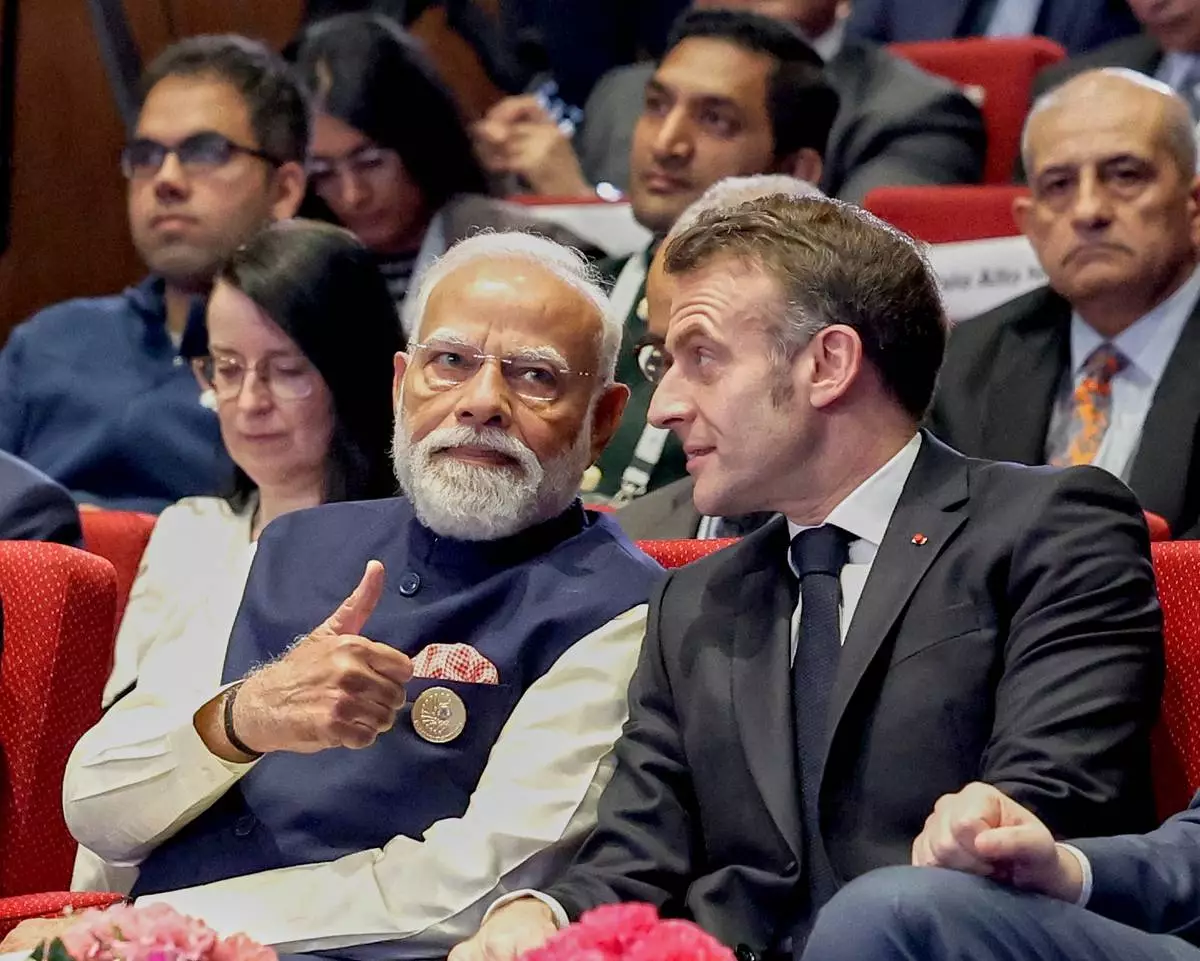
India's Prime Minister Narendra Modi, left, talks with French President Emmanuel Macron during the AI Summit in New Delhi, India, Thursday, Feb.19, 2026. (Indian Prime Minister's Office via AP)
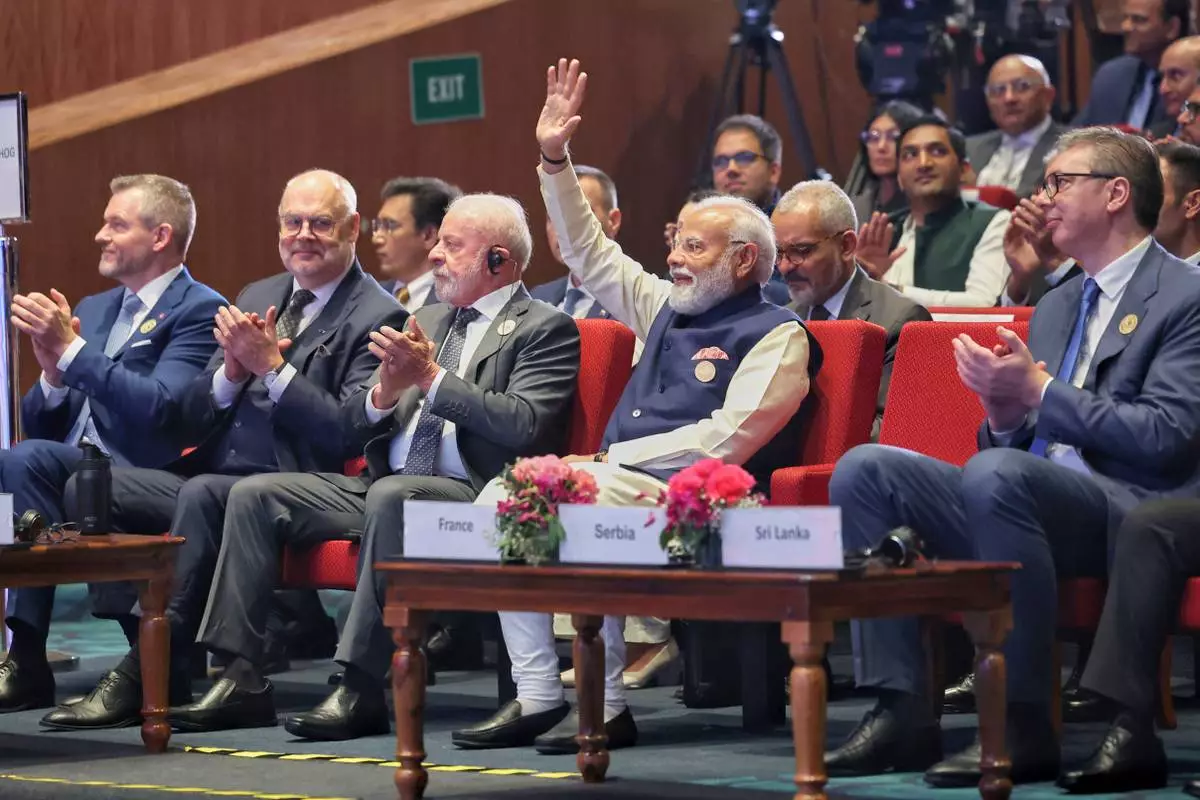
In this photo provided by Indian Prime Minister's Office, lndia's Prime Minister Narendra Modi, center, raises his hand in acknowledgment as other foreign dignitaries clap during the AI Summit in New Delhi, India, Thursday, Feb. 19, 2026. (Indian Prime Minister's Office via AP)
WASHINGTON (AP) — President Donald Trump announced Thursday at the inaugural Board of Peace meeting that nine members of the body have agreed to pledge $7 billion toward a Gaza relief package.
Kazakhstan, Azerbaijan, UAE, Morocco, Bahrain, Qatar, Saudi Arabia, Uzbekistan and Kuwait are the countries that are making pledges, Trump added.
“But every dollar spent is an investment in stability and the hope of new and harmonious (region),” said Trump in thanking the donors.
The amount, while significant, represents a fraction of the estimated $70 billion needed to rebuild the Palestinian territory decimated after two years of war.
Trump also announced the U.S. was pledging $10 billion for the Board of Peace, but didn’t specify what the money will be used for.
“The Board of Peace is showing how a better future can be built, starting right here in this room,” Trump said.
THIS IS A BREAKING NEWS UPDATE. AP’s earlier story follows below.
WASHINGTON (AP) — President Donald Trump is gathering Thursday with representatives from more than two dozen countries that have joined his Board of Peace — and several that have opted not to — for an inaugural meeting that will focus on reconstruction and building an international stabilization force for a war-battered Gaza, where a shaky ceasefire deal persists.
Trump announced ahead of the meeting that board members have pledged $5 billion for reconstruction, a fraction of the estimated $70 billion needed to rebuild the Palestinian territory decimated after two years of war. Members are expected to unveil commitments of thousands of personnel to international stabilization and police forces for the territory.
“What we’re doing is very simple: peace," Trump said in remarks to open the meeting. “It’s called the Board of Peace, and it’s all about an easy word to say, but a hard word to produce -- peace.”
The board was initiated as part of Trump's 20-point peace plan to end the conflict in Gaza. But since the October ceasefire, Trump's vision for the board has morphed and he wants it to have an even more ambitious remit — one that will not only complete the Herculean task of bringing lasting peace between Israel and Hamas but will also help resolve conflicts around the globe.
But the Gaza ceasefire deal remains fragile and Trump's expanded vision for it has triggered fears the U.S. president is looking to create a rival to the United Nations. Trump earlier this week said he hoped the board would push the U.N. to “get on the ball.”
“The United Nations has great potential,” he said. “They haven’t lived up to the potential.”
Trump started the meeting by taking part in a family photo with officials from nations that have joined the board.
Most countries sent high-level officials, but a few leaders—including Indonesian President Prabowo Subianto, Argentinian President Javier Milei, and Hungarian President Viktor Orbán—traveled to Washington for the gathering.
More than 40 countries and the European Union confirmed they were sending officials to Thursday’s meeting, according to a senior administration official who was not authorized to comment publicly. Germany, Italy, Norway, Switzerland and the United Kingdom are among more than a dozen countries that have not joined the board but are taking part as observers.
“Almost everybody’s accepted, and the ones that haven’t, will be," Trump predicted. "And some are playing a little cute -- it doesn’t work. You can’t play cute with me.”
The U.N. Security Council held a high-level meeting Wednesday on the ceasefire deal and Israel’s efforts to expand control in the West Bank. The U.N. session in New York was originally scheduled for Thursday but was moved up after Trump announced the board’s meeting for the same date and it became clear that it would complicate travel plans for diplomats planning to attend both.
Vatican Secretary of State Cardinal Pietro Parolin told reporters earlier this week that “at the international level it should above all be the U.N. that manages these crisis situations.” The Trump administration on Wednesday pushed back on the Vatican's concerns.
“This president has a very bold and ambitious plan and vision to rebuild and reconstruct Gaza, which is well underway because of the Board of Peace,” White House press secretary Karoline Leavitt said. “This is a legitimate organization where there are tens of member countries from around the world.”
Mike Waltz, the U.S. ambassador to the U.N., also pushed back on skeptical allies, saying the board is “not talking, it is doing.”
“We are hearing the chattering class criticizing the structure of the board, that it’s unconventional, that it’s unprecedented,” Waltz said. “Again, the old ways were not working.”
Central to Thursday's discussions will be creating an armed international stabilization force to keep security and ensure the disarming of the militant Hamas group, a key demand of Israel and a cornerstone of the ceasefire deal.
But thus far, only Indonesia has offered a firm commitment to Trump for the proposed force. And Hamas has provided little confidence that it is willing to move forward on disarmament. The administration is “under no illusions on the challenges regarding demilitarization” but has been encouraged by what mediators have reported back, according to a U.S. official who was not authorized to comment publicly and spoke on condition of anonymity.
Subianto, the Indonesian president, pledged to work closely with other leading Islamic countries invited by Trump to “join in the endeavors to try to achieve lasting peace in Palestine.”
“We recognize there are still obstacles to be overcome, but at least my position is at least we have to try, and we have to do our best,” he said at an event at the U.S. Chamber of Commerce on Wednesday, where he met with members of the business community.
On Thursday, updates are expected from the Gaza Executive Board, the operational arm of the board, about its efforts to create a functioning government system and services for the territory, according to the official who spoke on condition of anonymity to preview the broad outlines of the meeting.
Michael Hanna, U.S. program director at the International Crisis Group, a nonprofit group focused on preventing conflicts, suggested the skepticism some U.S. allies are showing is not unwarranted.
"Without any clear authorization for the expansion of its mandate beyond Gaza, it is unsurprising that many U.S. allies and partners have chosen to decline Trump’s offer to join the board," Hanna said. “Instead, many of the states most invested in Gaza’s future have signed up with the hope of focusing U.S. attention and encouraging Trump himself to use the influence and leverage he has with Israel.”
Associated Press writers Didi Tang in Washington, Farnoush Amiri at the United Nations and Nicole Winfield in Rome contributed reporting.
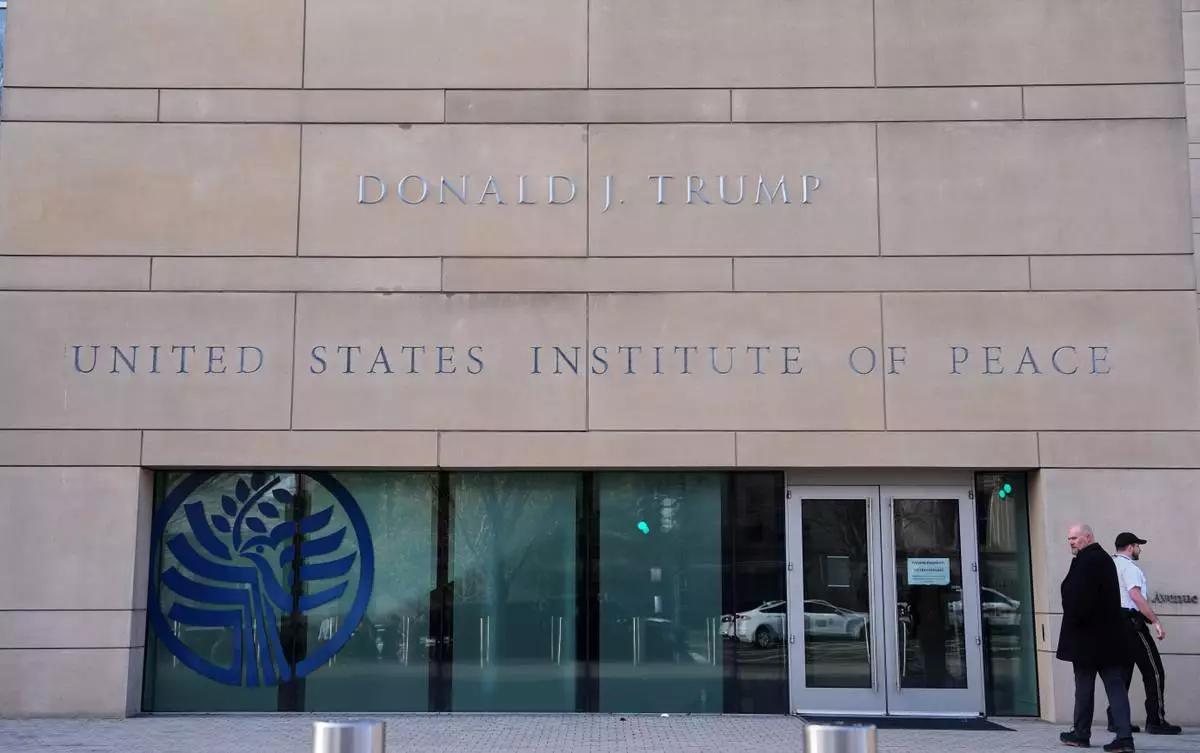
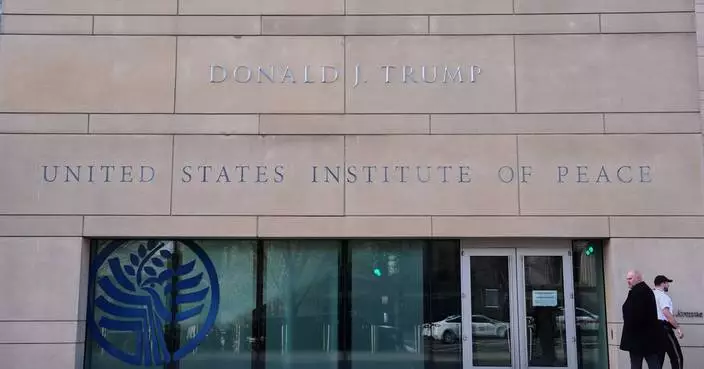
FILE - President Donald Trump's name is seen on the U.S. Institute of Peace building, Dec. 4, 2025, in Washington. (AP Photo/Evan Vucci, File)