Skip to Content Facebook Feature Image

Bears' potential move to Indiana takes step forward as effort to build stadium in Illinois lingers

Sport

Bears' potential move to Indiana takes step forward as effort to build stadium in Illinois lingers
Sport

Sport

Bears' potential move to Indiana takes step forward as effort to build stadium in Illinois lingers

2026-02-20 02:19 Last Updated At:03:40

CHICAGO (AP) — The Chicago Bears' potential move to Indiana took another step forward on Thursday when a key committee approved a plan to create an agency that would help get a stadium built.

The Indiana House of Representatives Ways and Means Committee passed a bill establishing a Northwest Indiana Stadium Authority to finance, construct and lease a stadium by a 24-0 margin. The Bears are looking at a tract of land near Wolf Lake in Hammond, Ind.

“The passage of SB 27 would mark the most meaningful step forward in our stadium planning efforts to date,” the team said in a statement. “We are committed to finishing the remaining site-specific necessary due diligence to support our vision to build a world-class stadium near the Wolf Lake area in Hammond, Indiana.”

Republican Gov. Mike Braun and lawmakers in Indiana have been aggressive in trying to lure the founding NFL franchise across the state line amid a yearslong effort to build an enclosed stadium in Illinois. The Bears did not mention Illinois in their statement.

The Illinois House Revenue and Finance Committee was scheduled to hold a hearing Thursday morning on a bill that would allow the Bears and any other developer of a large enough project to negotiate long-term property tax rates with local taxing bodies. But that got canceled.

“Illinois was ready to move this bill forward,” Matt Hill, a spokesman for Gov. JB Pritzker posted on X. “After a productive three-hour meeting yesterday, the Bears leaders requested the (Illinois General Assembly) pause the hearing to make further tweaks to the bill. This morning, we were surprised to see a statement lauding Indiana and ignoring Illinois.”

The Bears’ focus for a new home had fluctuated between a tract of land they own in Arlington Heights to the Chicago lakefront, and then back to the suburb.

They have said they plan to pay for the stadium construction on the site of a former racetrack about 30 miles northwest of their longtime home at Soldier Field, though they would need assistance to complete the project.

According to a team consultant report released in September, they are seeking $855 million in public funding for infrastructure in order to build a stadium in Arlington Heights that could host Final Fours and Super Bowls. The Bears were also hoping the Illinois legislature would pass a bill last October to freeze property taxes for large-scale construction projects such as the stadium that would have allowed them to begin construction in 2025. But that didn’t happen.

In September 2022, the Bears unveiled a nearly $5 billion plan for Arlington Heights that also called for restaurants, retail and more, when they were finalizing the purchase of that site.

Their focus moved toward building a new stadium next to Soldier Field after Kevin Warren was hired as president three years ago to replace the retiring Ted Phillips. The plan to transform Chicago’s Museum Campus got an enthusiastic endorsement from Mayor Brandon Johnson but a tepid reception from Pritzker and state legislators when it was announced in April 2024.

Last spring, the team announced it was turning its attention back to Arlington Heights, citing “significant progress” with local leaders.

Since moving to Chicago in 1921, the Bears have never owned their stadium, whether playing at Wrigley Field from 1921 to 1970 or Soldier Field since then.

AP NFL: https://apnews.com/hub/nfl
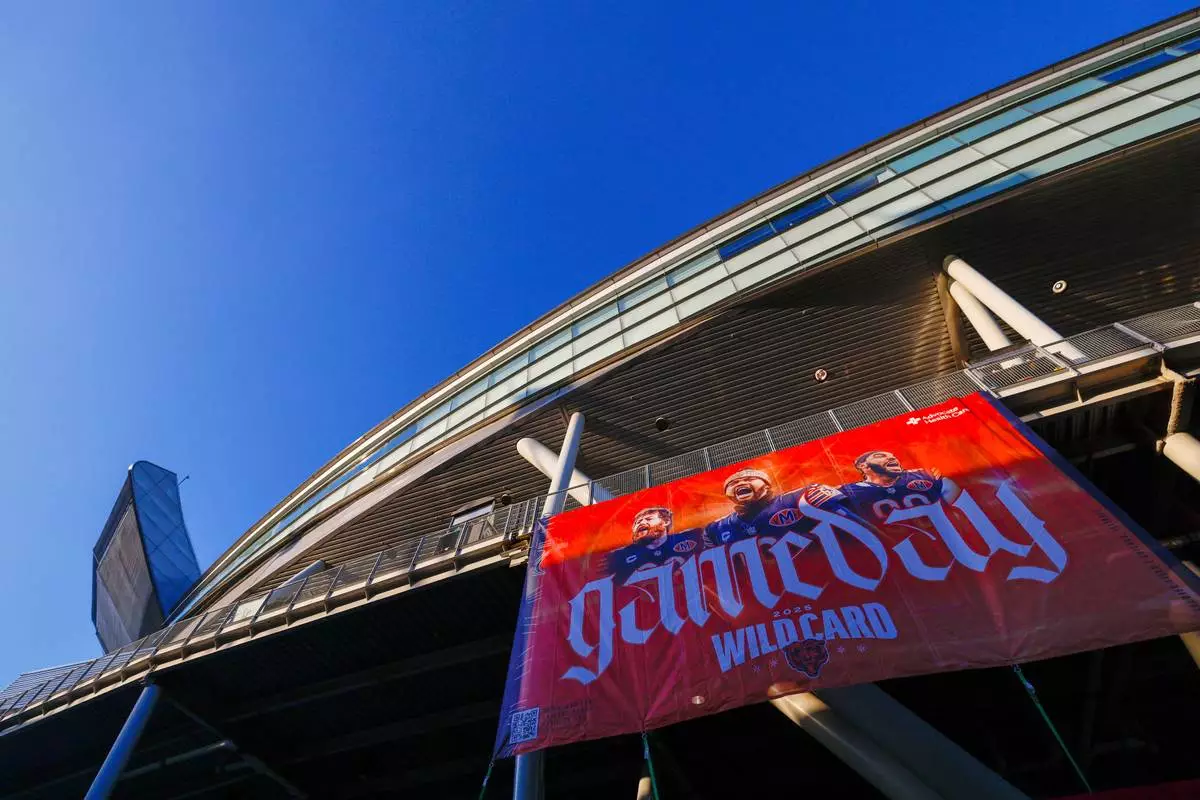
FILE - A sign hangs outside the Chicago Bears' Soldier field before an NFL divisional playoff football game against the Green Bay Packers, Saturday, Jan.10, 2026, in Chicago.(AP Photo/Jeffrey Phelps, File)
FILE - A sign hangs outside the Chicago Bears' Soldier field before an NFL divisional playoff football game against the Green Bay Packers, Saturday, Jan.10, 2026, in Chicago.(AP Photo/Jeffrey Phelps, File)

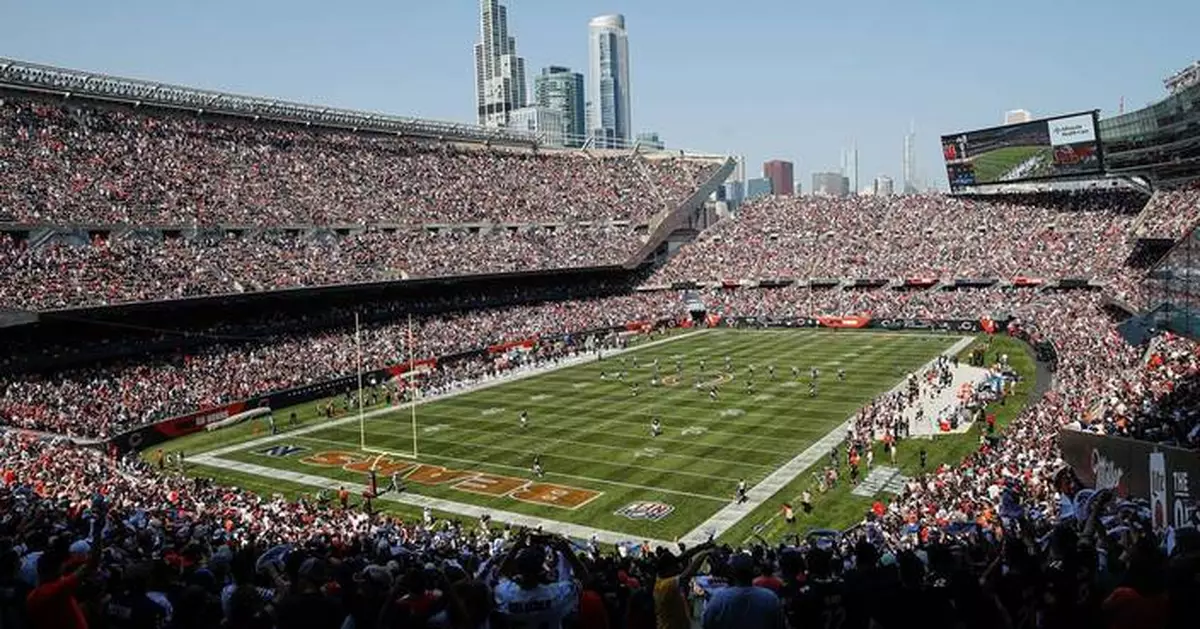
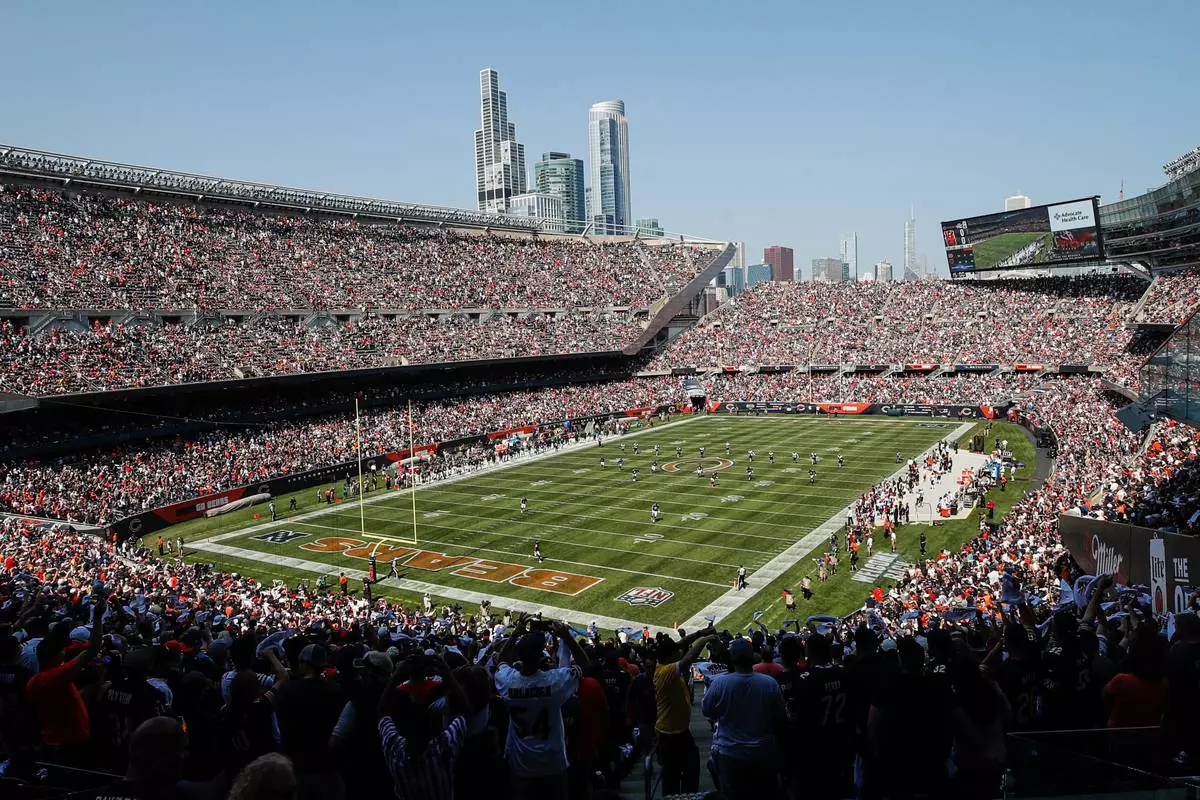
FILE - Cincinnati Bengals kick off to the Chicago Bears to start the first half of an NFL football game, Sunday, Sept. 19, 2021, in Chicago. (AP Photo/Kamil Krzaczynski, File)

FILE - Cincinnati Bengals kick off to the Chicago Bears to start the first half of an NFL football game, Sunday, Sept. 19, 2021, in Chicago. (AP Photo/Kamil Krzaczynski, File)
A weekslong “snow drought” in Northern California's Sierra Nevada helped set the stage for Tuesday's deadly avalanche, after several feet of new snow fell on an earlier layer that had hardened, making it unstable and easily triggered, experts said.

The new snow did not have time to bond to the earlier layer before the avalanche near Lake Tahoe killed at least eight backcountry skiers, said Craig Clements, a meteorology professor at San Jose State University, who has conducted avalanche research. Six skiers survived and rescuers were still searching for another one who was still missing on Wednesday.

The group was on a three-day backcountry trek in the Sierra Nevada on Tuesday morning when they were trapped by the avalanche as a winter storm pummeled the West Coast.

The dangers generally are highest in the first 24 to 48 hours after a very large snowfall, Clements said, and authorities had issued avalanche warnings.

Here's what to know.

When weather is dry and clear, as it had been in the Sierra Nevada since January, snow crystals change and can become angular or round over time, Clements said.

If heavy new snow falls on the crystals, the layers often can't bond and the new snow forms what is called a storm slab over a weaker layer.

“Because it's on a mountain, it will slide,” when it's triggered by any change in the tension above or below, sometimes naturally but also because of people traversing the area, Clements said.

Authorities have not said what triggered Tuesday's avalanche.

If there had been more consistent snowfall throughout the winter, different layers could have bonded more easily, Clements said. But even when a snow slab forms, the danger often only lasts a couple of days until the new snow stabilizes, he said.

Climate change can lead to weather extremes that include both drought and heavier precipitation, and scientists are studying how it might affect avalanches and where they occur.

Warmer-than-usual temperatures contributed to a snow drought throughout the West. But Clements said this week's avalanche is fairly typical for California's Sierra Nevada and he doesn't believe it can be linked to climate change.

Avalanches are a mechanism of how much snow falls on weak or stable layers, and this one was “a meteorological phenomenon, not a climate phenomenon,” he said.

About 3 feet to 6 feet of snow has fallen since Sunday, when the group started its trip. The area was also hit by subfreezing temperatures and gale force winds. The Sierra Avalanche Center said the threat of more avalanches remained Wednesday and left the snowpack unstable and unpredictable.

Crews found the bodies of eight backcountry skiers near California’s Lake Tahoe and were searching for one more following Tuesday's avalanche, which authorities say was the nation’s deadliest in nearly half a century.

Six from the guided tour were rescued six hours after the avalanche.

Nevada County Sheriff Shannan Moon said Wednesday that investigators would look into the decision to proceed with the trip despite the storm forecast.

The skiers traveled Sunday to remote huts at 7,600 feet (3,415 meters) in Tahoe National Forest, carrying their own food and supplies. At 6:49 that morning, the Sierra Avalanche Center issued an avalanche watch for the area, indicating that large slides were likely in the next 24 to 48 hours.

The Associated Press’ climate and environmental coverage receives financial support from multiple private foundations. AP is solely responsible for all content. Find AP’s standards for working with philanthropies, a list of supporters and funded coverage areas at AP.org.

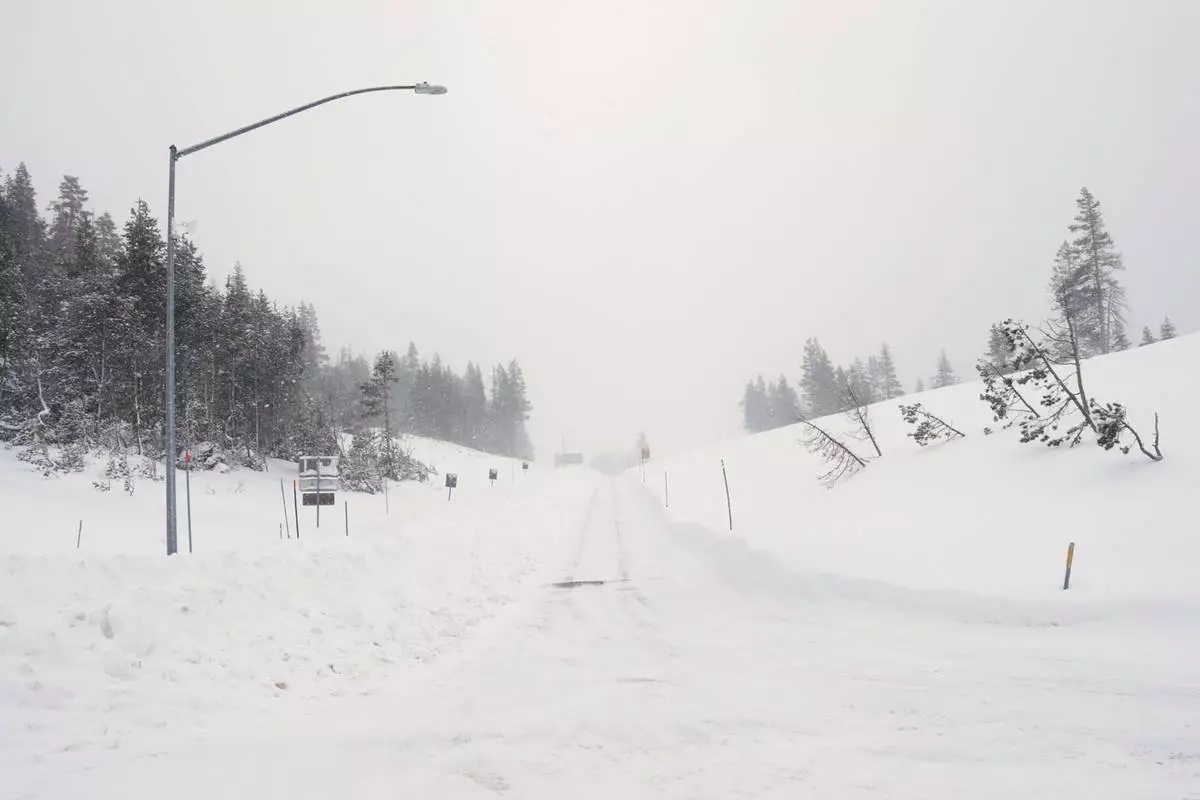
Snow covers an off-ramp along interstate 80 on Wednesday, Feb. 18, 2026 near Soda Springs, Calif. (AP Photo/Brooke Hess-Homeier)

Snow covers an off-ramp along interstate 80 on Wednesday, Feb. 18, 2026 near Soda Springs, Calif. (AP Photo/Brooke Hess-Homeier)

Recommended Articles