Skip to Content Facebook Feature Image

Kim lauds North Korea's economy and regional standing as major party meeting opens

News

Kim lauds North Korea's economy and regional standing as major party meeting opens
News

News

Kim lauds North Korea's economy and regional standing as major party meeting opens

2026-02-20 12:05 Last Updated At:12:36

SEOUL, South Korea (AP) — North Korean leader Kim Jong Un lauded his nation’s improving economy and regional standing as he opened the country’s most important political event, where he is expected to set his domestic and foreign policy agenda for the next five years and further entrench his family’s authoritarian rule.

The Workers’ Party congress, which will likely run for days in Pyongyang, comes as Kim carves out a more forceful regional presence, leveraging an advancing nuclear arsenal and a growing alignment with Moscow that have deepened his standoffs with Washington and Seoul.

More Images
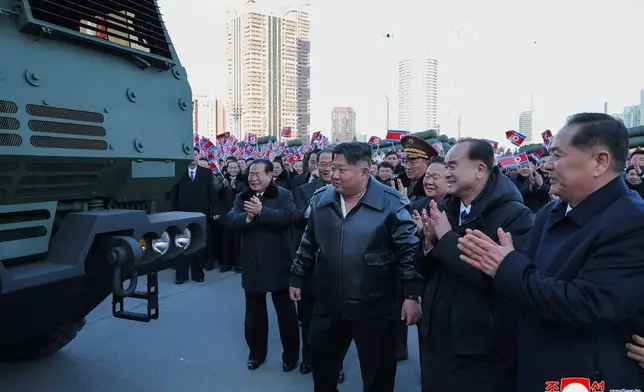
In this photo provided by the North Korean government, its leader Kim Jong Un attends a military ceremony in Pyongyang, North Korea, Wednesday, Feb. 18, 2026. Independent journalists were not given access to cover the event depicted in this image distributed by the North Korean government. The content of this image is as provided and cannot be independently verified. Korean language watermark on image as provided by source reads: "KCNA" which is the abbreviation for Korean Central News Agency. (Korean Central News Agency/Korea News Service via AP)
In this photo provided by the North Korean government, its leader Kim Jong Un attends a military ceremony in Pyongyang, North Korea, Wednesday, Feb. 18, 2026. Independent journalists were not given access to cover the event depicted in this image distributed by the North Korean government. The content of this image is as provided and cannot be independently verified. Korean language watermark on image as provided by source reads: "KCNA" which is the abbreviation for Korean Central News Agency. (Korean Central News Agency/Korea News Service via AP)

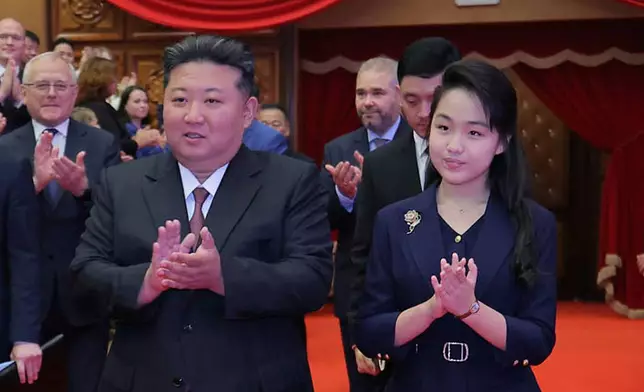
FILE - In this photo provided by the North Korean government, North Korean leader Kim Jong Un, center left, and his daughter, center right, arrive at the East Pyongyang Grand Theatre in Pyongyang, North Korea, June 29, 2025. Independent journalists were not given access to cover the event depicted in this image distributed by the North Korean government. The content of this image is as provided and cannot be independently verified. (Korean Central News Agency/Korea News Service via AP, File)
FILE - In this photo provided by the North Korean government, North Korean leader Kim Jong Un, center left, and his daughter, center right, arrive at the East Pyongyang Grand Theatre in Pyongyang, North Korea, June 29, 2025. Independent journalists were not given access to cover the event depicted in this image distributed by the North Korean government. The content of this image is as provided and cannot be independently verified. (Korean Central News Agency/Korea News Service via AP, File)

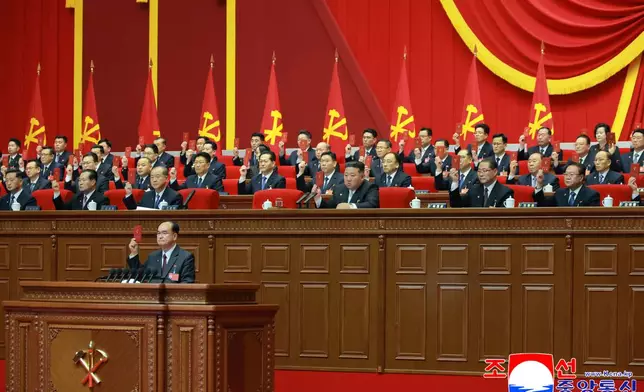
This photo provided on Friday, Feb. 20, 2026, by the North Korean government, North Korean leader Kim Jong Un, center, attends the ruling Workers’ Party Congress in Pyongyang, Thursday, Feb. 19, 2026. Independent journalists were not given access to cover the event depicted in this image distributed by the North Korean government. The content of this image is as provided and cannot be independently verified. Korean language watermark on image as provided by source reads: "KCNA" which is the abbreviation for Korean Central News Agency. (Korean Central News Agency/Korea News Service via AP)
This photo provided on Friday, Feb. 20, 2026, by the North Korean government, North Korean leader Kim Jong Un, center, attends the ruling Workers’ Party Congress in Pyongyang, Thursday, Feb. 19, 2026. Independent journalists were not given access to cover the event depicted in this image distributed by the North Korean government. The content of this image is as provided and cannot be independently verified. Korean language watermark on image as provided by source reads: "KCNA" which is the abbreviation for Korean Central News Agency. (Korean Central News Agency/Korea News Service via AP)
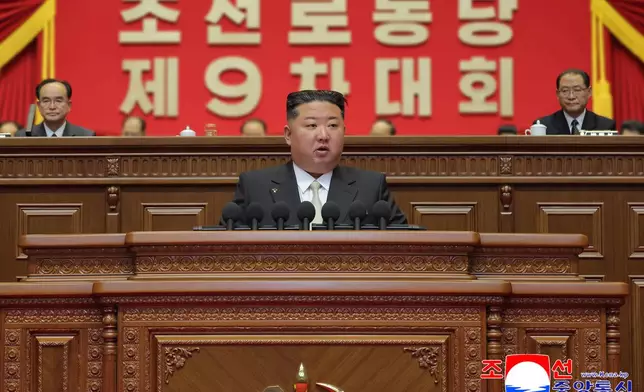
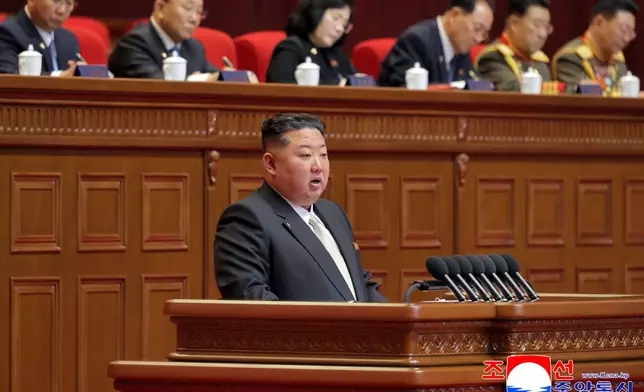
This photo provided on Friday, Feb. 20, 2026, by the North Korean government, North Korean leader Kim Jong Un delivers a speech during the ruling Workers’ Party Congress in Pyongyang, Thursday, Feb. 19, 2026. Independent journalists were not given access to cover the event depicted in this image distributed by the North Korean government. The content of this image is as provided and cannot be independently verified. Korean language watermark on image as provided by source reads: "KCNA" which is the abbreviation for Korean Central News Agency. (Korean Central News Agency/Korea News Service via AP)

This photo provided on Friday, Feb. 20, 2026, by the North Korean government, North Korean leader Kim Jong Un delivers a speech during the ruling Workers’ Party Congress in Pyongyang, Thursday, Feb. 19, 2026. Independent journalists were not given access to cover the event depicted in this image distributed by the North Korean government. The content of this image is as provided and cannot be independently verified. Korean language watermark on image as provided by source reads: "KCNA" which is the abbreviation for Korean Central News Agency. (Korean Central News Agency/Korea News Service via AP)

This photo provided on Friday, Feb. 20, 2026, by the North Korean government, North Korean leader Kim Jong Un delivers a speech during the ruling Workers’ Party Congress in Pyongyang, Thursday, Feb. 19, 2026. Independent journalists were not given access to cover the event depicted in this image distributed by the North Korean government. The content of this image is as provided and cannot be independently verified. Korean language watermark on image as provided by source reads: "KCNA" which is the abbreviation for Korean Central News Agency. (Korean Central News Agency/Korea News Service via AP)

This photo provided on Friday, Feb. 20, 2026, by the North Korean government, North Korean leader Kim Jong Un delivers a speech during the ruling Workers’ Party Congress in Pyongyang, Thursday, Feb. 19, 2026. Independent journalists were not given access to cover the event depicted in this image distributed by the North Korean government. The content of this image is as provided and cannot be independently verified. Korean language watermark on image as provided by source reads: "KCNA" which is the abbreviation for Korean Central News Agency. (Korean Central News Agency/Korea News Service via AP)

The meeting will likely provide the stage for Kim to unveil his key political and military objectives and further consolidate his authoritarian grip before thousands of ruling party delegates. Some analysts say Kim could also use the congress to position his teenage daughter — believed to be named Kim Ju Ae and about 13 — as a potential successor, formalizing the regime’s fourth-generation succession.

North Korea’s official Korean Central News Agency reported Friday the meeting began the previous day. It did not immediately report any direct comments from Kim on his standoffs with the United States and South Korea or his nuclear weapons program.

Entering his 15th year in power, Kim is in a much stronger position than when he last convened the congress in 2021, when North Korea was experiencing a crippled economy worsened by the COVID-19 pandemic and the wreckage of his failed diplomacy with U.S. President Donald Trump.

Kim then made a rare admission of economic failures and issued a five-year development plan through 2025, urging economic self-reliance through mass mobilization. He doubled down on his nuclear ambitions and issued a long wish list of sophisticated weapons systems.

Kim now appears less isolated and more confident, buoyed by stronger ties with Russia and China, an extensive nuclear arsenal and what the outside world sees as a gradually improving economy.

In Thursday's speech, Kim claimed the North has made significant progress since 2021, citing economic gains and a firmer regional footing that he said marked an “irreversible” strengthening of the state’s status.

Kim has capitalized on geopolitical turmoil, using Russia’s war in Ukraine as a window to accelerate weapons development and deepen ties with Moscow, providing thousands of troops and large munitions shipments to support President Vladimir Putin’s war effort, possibly in exchange for aid and military technology.

He’s cozying up to China, joining Putin at a World War II ceremony in Beijing last September and holding his first summit with Chinese President Xi Jinping in six years — events that backed his efforts to portray the North as part of a united front against Washington.

Kim’s strict information blockade obscures the full picture of North Korea's economy, which remains in a largely impoverished state after decades of policy failures and sanctions.

Still, Lee Jong-kyu, an analyst at South Korea’s Korea Development Institute, estimates the North’s economy grew roughly 10% over the last five years, benefiting from a post-pandemic rebound in trade with China and arms exports to Russia.

“The past five years might be the most productive period for North Korean leadership since the 1950s and 1960s,” said Koh Yu-hwan, former president of Seoul's Institute for National Unification. Reflecting Kim’s confidence, the new congress is unlikely to introduce major shifts in domestic policy and will continue to stress internal unity and self-reliance under another five-year economic plan, Koh said.

North Korea has developed or tested much of the weapons Kim demanded in 2021, including solid-fuel intercontinental ballistic missiles and tactical nuclear systems. The country launched its first military satellite in 2023 and has recently claimed progress in building a nuclear-propelled submarine.

After prioritizing nuclear weapons and missiles, Kim is now putting more focus on conventional systems, launching new warships, anti-air weapons and attack drones, while outlining broader plans to integrate nuclear and conventional forces. Kim’s recent comments suggest he will use the congress to emphasize the parallel development of nuclear and conventional systems under a separate five-year plan for military development.

Kim could be drawing lessons from North Korea’s involvement in the conflict in Ukraine, now a conventional war of attrition in which Russia has avoided nuclear weapons. Conventional forces could become a key area of cooperation with Russia, such as improving the North’s aging air-defense systems, experts say.

North Korea has already adopted an escalatory nuclear doctrine that authorizes preemptive strikes if the leadership is deemed under threat. By pushing for the integration of conventional and nuclear forces, Kim aims to blur the distinction between them and signal a lower threshold for nuclear use, heightening the threat to South Korea, analysts say.

Kim has shunned talks with rival South Korea since 2019, when his diplomacy with Trump collapsed over U.S.-led sanctions. Ties worsened after Kim in 2024 discarded North Korea’s long-standing goal of a peaceful unification and declared Seoul a permanent enemy.

Kim is likely to entrench his hard-line view of the South at the congress, possibly by instructing changes to party rules to codify inter-Korean relations as between “two hostile states." While South Korean President Lee Jae Myung desires engagement, it’s highly unlikely that Kim’s stance on Seoul would change anytime soon, Koh said.

It’s clear Kim no longer views Seoul as a useful middleman with Washington, but rather as an obstacle to his efforts to carve out a more assertive role in global affairs. He has also shown sensitivity to South Korean soft power, intensifying a campaign to stamp out the influence of South Korean culture at home to reinforce his family’s dynastic rule.

Kim may take a more measured approach toward Washington to preserve the possibility of future dialogue, with the long-term aim of securing U.S. sanctions relief and tacit recognition as a nuclear state. While Kim has been prioritizing Russia, it would make sense to keep his options open as Putin’s war in Ukraine could wind down, potentially making North Korea less valuable to Moscow, some analysts say.
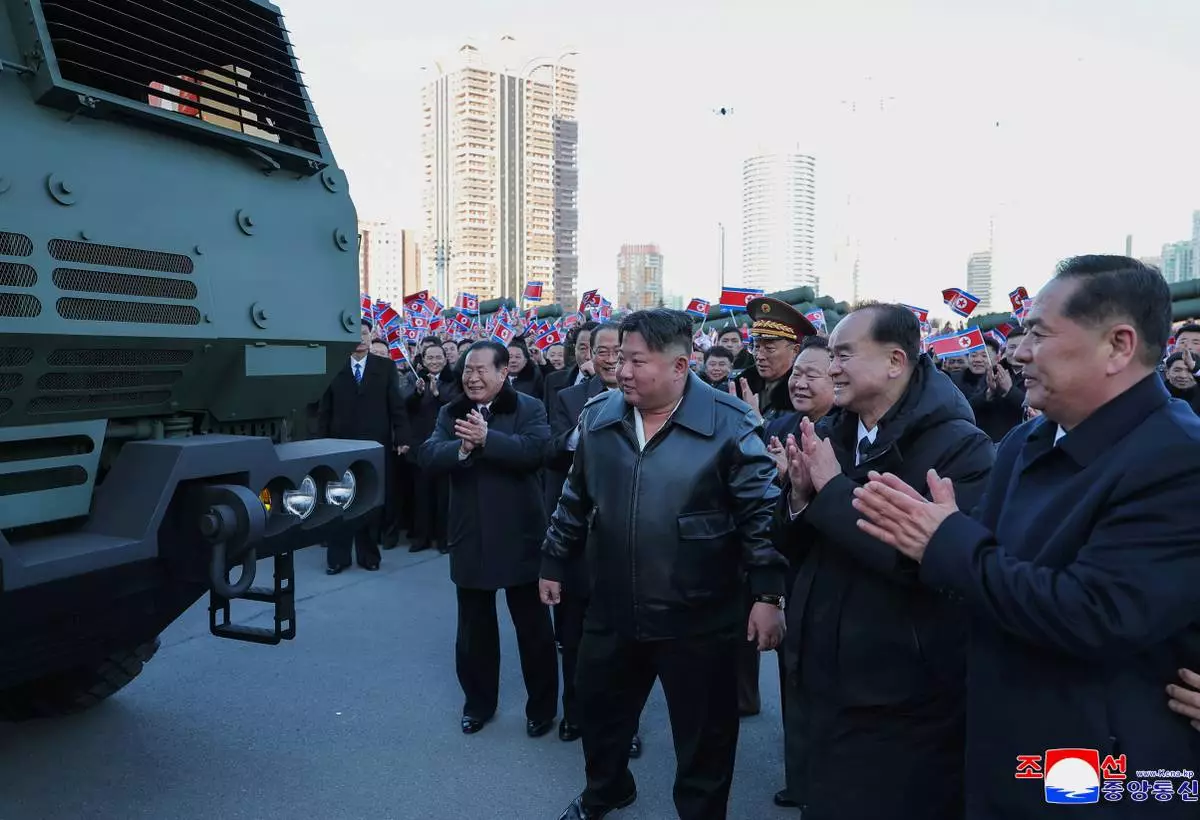
In this photo provided by the North Korean government, its leader Kim Jong Un attends a military ceremony in Pyongyang, North Korea, Wednesday, Feb. 18, 2026. Independent journalists were not given access to cover the event depicted in this image distributed by the North Korean government. The content of this image is as provided and cannot be independently verified. Korean language watermark on image as provided by source reads: "KCNA" which is the abbreviation for Korean Central News Agency. (Korean Central News Agency/Korea News Service via AP)
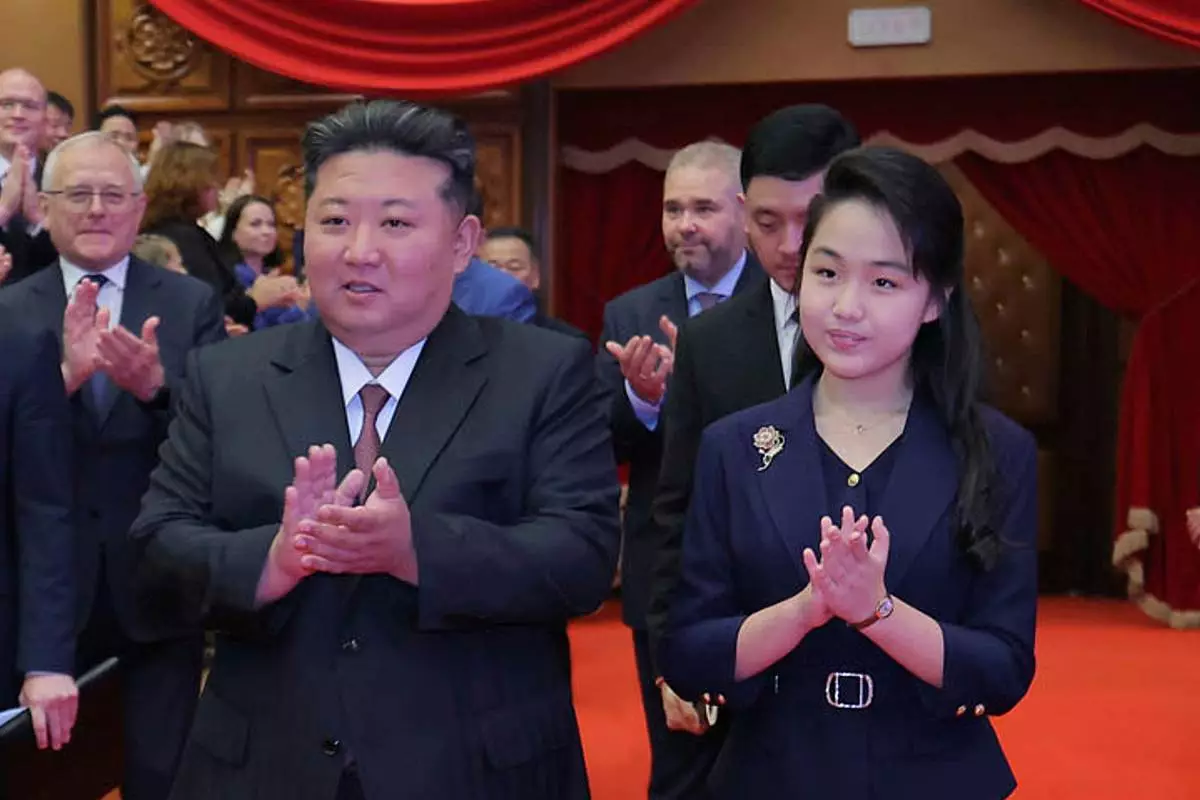
In this photo provided by the North Korean government, its leader Kim Jong Un attends a military ceremony in Pyongyang, North Korea, Wednesday, Feb. 18, 2026. Independent journalists were not given access to cover the event depicted in this image distributed by the North Korean government. The content of this image is as provided and cannot be independently verified. Korean language watermark on image as provided by source reads: "KCNA" which is the abbreviation for Korean Central News Agency. (Korean Central News Agency/Korea News Service via AP)

FILE - In this photo provided by the North Korean government, North Korean leader Kim Jong Un, center left, and his daughter, center right, arrive at the East Pyongyang Grand Theatre in Pyongyang, North Korea, June 29, 2025. Independent journalists were not given access to cover the event depicted in this image distributed by the North Korean government. The content of this image is as provided and cannot be independently verified. (Korean Central News Agency/Korea News Service via AP, File)
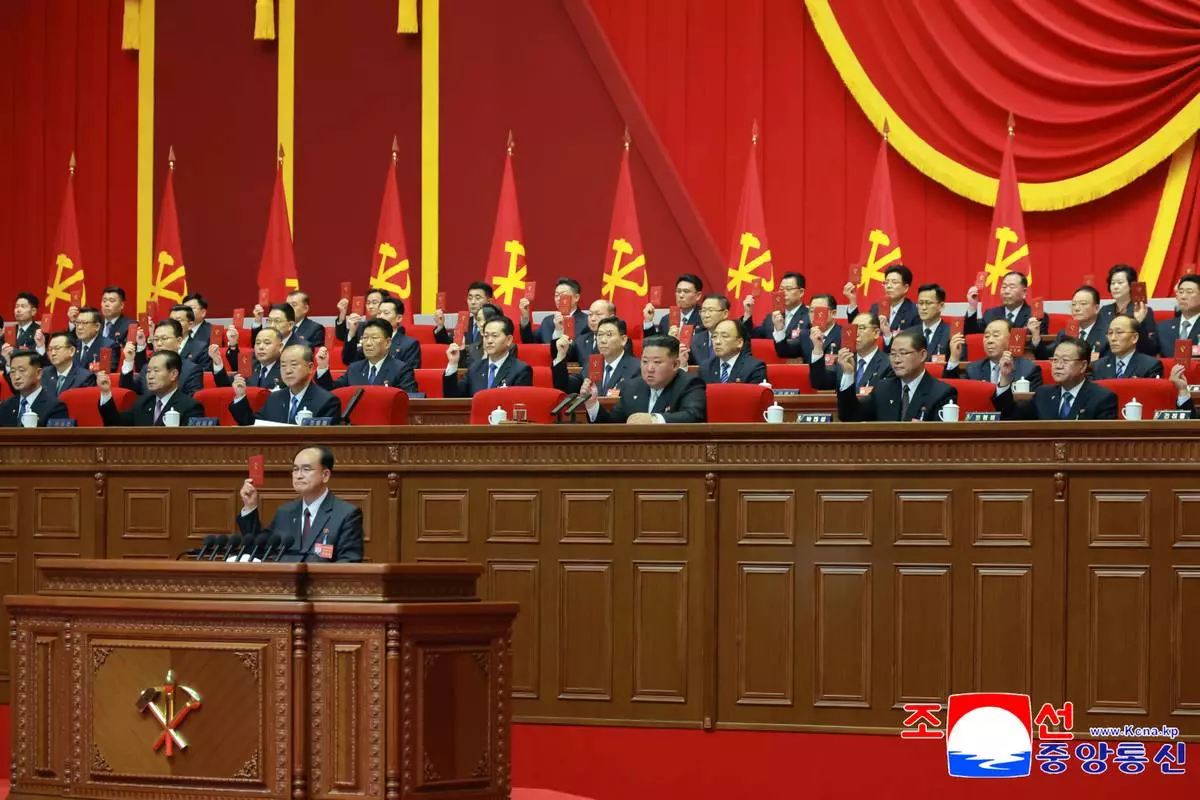
FILE - In this photo provided by the North Korean government, North Korean leader Kim Jong Un, center left, and his daughter, center right, arrive at the East Pyongyang Grand Theatre in Pyongyang, North Korea, June 29, 2025. Independent journalists were not given access to cover the event depicted in this image distributed by the North Korean government. The content of this image is as provided and cannot be independently verified. (Korean Central News Agency/Korea News Service via AP, File)

This photo provided on Friday, Feb. 20, 2026, by the North Korean government, North Korean leader Kim Jong Un, center, attends the ruling Workers’ Party Congress in Pyongyang, Thursday, Feb. 19, 2026. Independent journalists were not given access to cover the event depicted in this image distributed by the North Korean government. The content of this image is as provided and cannot be independently verified. Korean language watermark on image as provided by source reads: "KCNA" which is the abbreviation for Korean Central News Agency. (Korean Central News Agency/Korea News Service via AP)
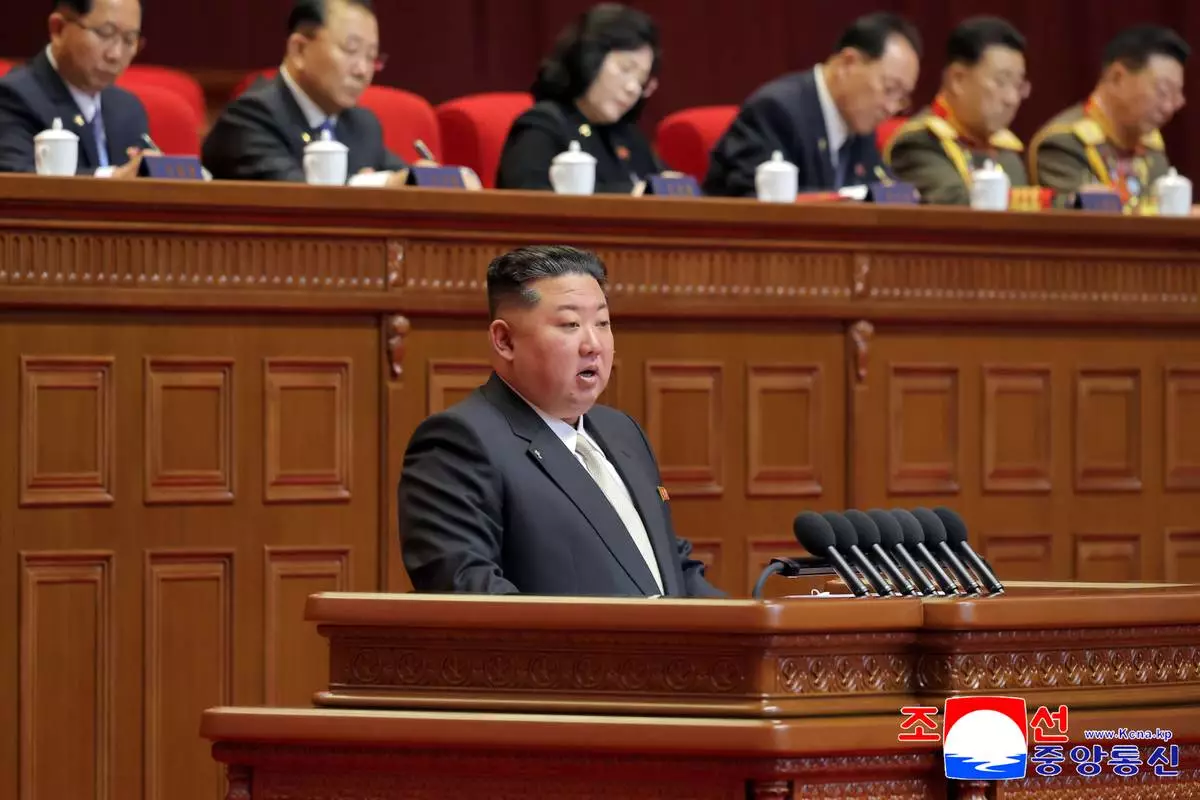
This photo provided on Friday, Feb. 20, 2026, by the North Korean government, North Korean leader Kim Jong Un, center, attends the ruling Workers’ Party Congress in Pyongyang, Thursday, Feb. 19, 2026. Independent journalists were not given access to cover the event depicted in this image distributed by the North Korean government. The content of this image is as provided and cannot be independently verified. Korean language watermark on image as provided by source reads: "KCNA" which is the abbreviation for Korean Central News Agency. (Korean Central News Agency/Korea News Service via AP)
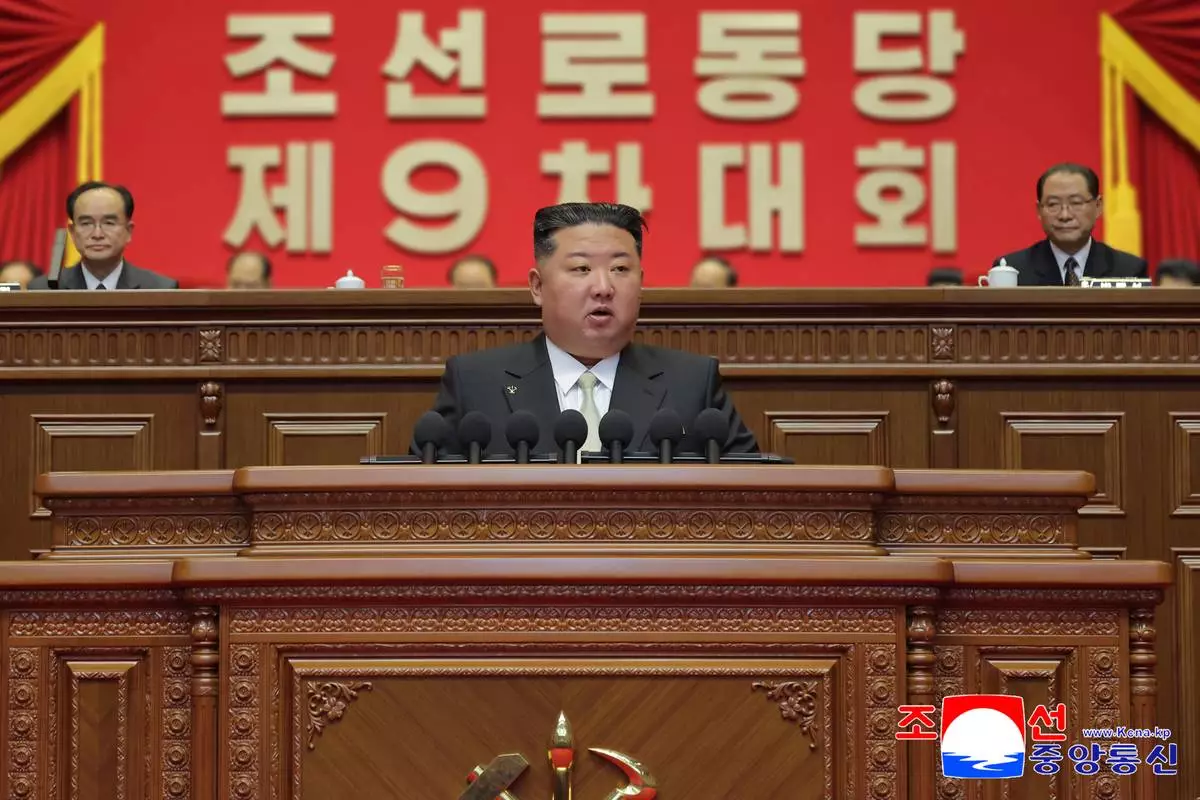
This photo provided on Friday, Feb. 20, 2026, by the North Korean government, North Korean leader Kim Jong Un delivers a speech during the ruling Workers’ Party Congress in Pyongyang, Thursday, Feb. 19, 2026. Independent journalists were not given access to cover the event depicted in this image distributed by the North Korean government. The content of this image is as provided and cannot be independently verified. Korean language watermark on image as provided by source reads: "KCNA" which is the abbreviation for Korean Central News Agency. (Korean Central News Agency/Korea News Service via AP)
This photo provided on Friday, Feb. 20, 2026, by the North Korean government, North Korean leader Kim Jong Un delivers a speech during the ruling Workers’ Party Congress in Pyongyang, Thursday, Feb. 19, 2026. Independent journalists were not given access to cover the event depicted in this image distributed by the North Korean government. The content of this image is as provided and cannot be independently verified. Korean language watermark on image as provided by source reads: "KCNA" which is the abbreviation for Korean Central News Agency. (Korean Central News Agency/Korea News Service via AP)
This photo provided on Friday, Feb. 20, 2026, by the North Korean government, North Korean leader Kim Jong Un delivers a speech during the ruling Workers’ Party Congress in Pyongyang, Thursday, Feb. 19, 2026. Independent journalists were not given access to cover the event depicted in this image distributed by the North Korean government. The content of this image is as provided and cannot be independently verified. Korean language watermark on image as provided by source reads: "KCNA" which is the abbreviation for Korean Central News Agency. (Korean Central News Agency/Korea News Service via AP)
This photo provided on Friday, Feb. 20, 2026, by the North Korean government, North Korean leader Kim Jong Un delivers a speech during the ruling Workers’ Party Congress in Pyongyang, Thursday, Feb. 19, 2026. Independent journalists were not given access to cover the event depicted in this image distributed by the North Korean government. The content of this image is as provided and cannot be independently verified. Korean language watermark on image as provided by source reads: "KCNA" which is the abbreviation for Korean Central News Agency. (Korean Central News Agency/Korea News Service via AP)
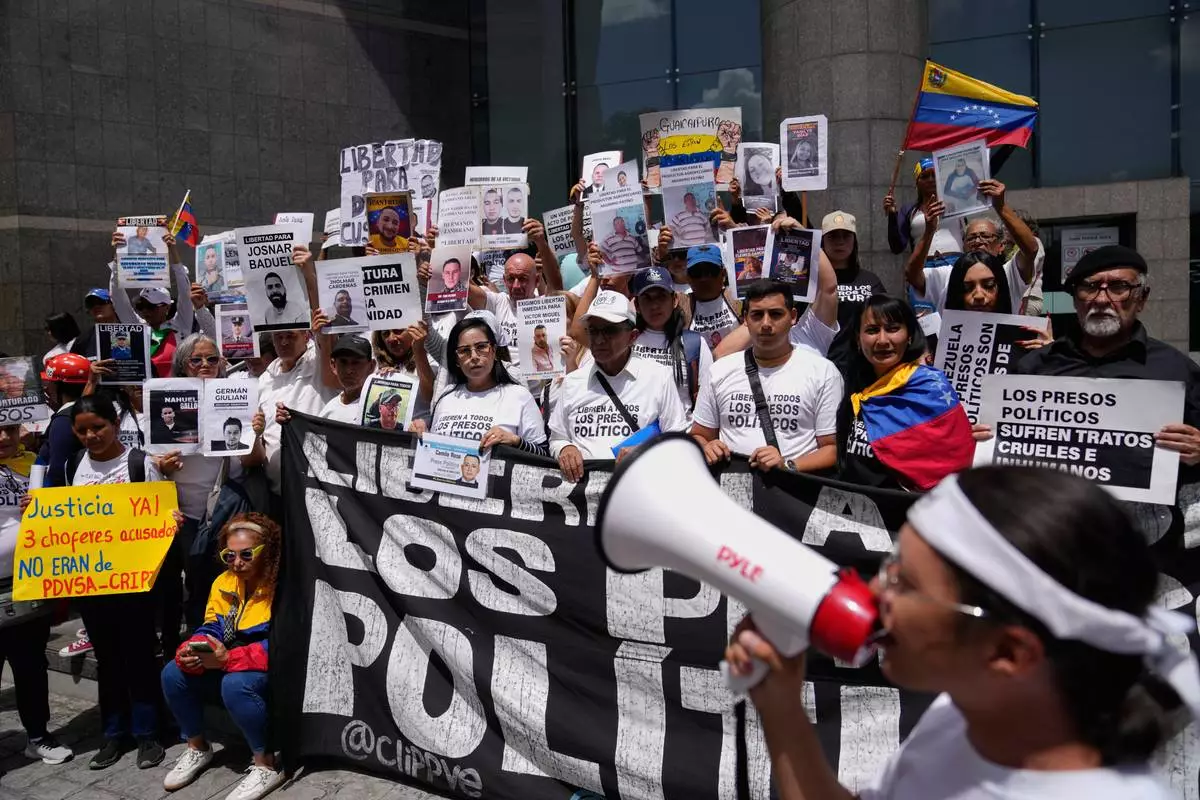
CARACAS, Venezuela (AP) — Venezuela's acting president on Thursday signed into law an amnesty bill that could lead to the release of politicians, activists, lawyers and many others, effectively acknowledging that the government has held hundreds of people in prison for political motivations.

The approval marks a reversal for authorities in the South American nation, who for decades have denied holding any political prisoners. It is the latest policy reversal following last month’s stunning U.S. military raid in the country’s capital, Caracas, to capture then-President Nicolás Maduro.

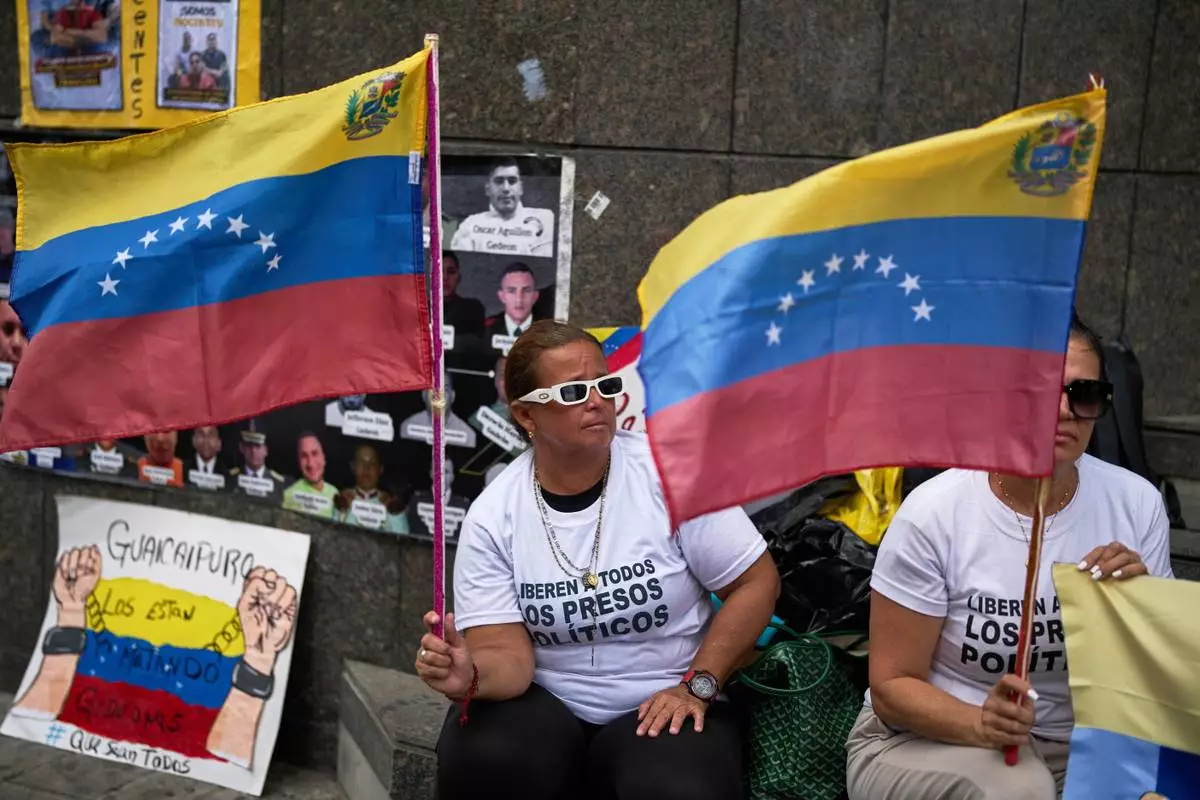
The measure is expected to benefit opposition members, activists, human rights defenders, journalists and many others who were targeted by the ruling party over the past 27 years. But families hoping for the release of their loved ones — some of whom have been gathered outside detention facilities for weeks — say that acting President Delcy Rodríguez has failed to deliver on earlier promises to release prisoners.

In the days after Maduro’s Jan. 3 capture, Rodríguez’s government announced it would release a significant number of prisoners. However, relatives and human rights watchdogs have criticized the slow pace of releases and the restrictive conditions under which many have been placed after leaving prison.

The new law was not a prerequisite for the government to free prisoners, but families held out hope that it could speed up releases. Some gathered outside detention facilities in Caracas grew impatient as hopes of immediate releases were disappointed Thursday night, retreating to their tents as Christian music played from a loudspeaker.

Venezuela-based prisoners’ rights group Foro Penal has tallied 448 releases since Jan. 8. The group estimates that more than 600 people are still in custody for political reasons.

Rodríguez, who proposed the bill late last month, signed the measure into law shortly after it was approved by the country's legislature.

She said during the signing that it showed that the country’s political leaders were “letting go of a little intolerance and opening new avenues for politics in Venezuela."

The bill’s purpose is to grant people “a general and full amnesty for crimes or offenses committed” during specific periods since 1999 that were marked by politically-driven conflicts in Venezuela, including “acts of politically motivated violence” in the context of the 2024 presidential election. The aftermath of that election led to protests and the arrest of more than 2,000 people, including minors.

The debate over the bill was suspended last week after lawmakers were unable to agree on some issues, including whether people who left the country to avoid detention can be granted amnesty, and laid bare the resistance from some ruling-party loyalists to seeing opposition members granted relief. Lawmakers on Thursday overcame the disagreement by allowing those abroad to have a lawyer seek amnesty on their behalf instead of forcing them to return to Venezuela to request the relief in person.

Once someone abroad has filed a request for amnesty, the law shields them from arrest when they return to the country to appear in court for a ruling on their request.

“It's not perfect, but it is undoubtedly a great step forward for the reconciliation of Venezuela,” opposition lawmaker Nora Bracho said in the debate. “It will undoubtedly alleviate the suffering of many Venezuelans.”

People convicted of human rights violations, war crimes, murder, drug trafficking and corruption do not qualify for amnesty, nor do people “who are being prosecuted or may be prosecuted or convicted for promoting, instigating, soliciting, invoking, favoring, facilitating, financing, or participating in armed or forceful actions against” Venezuela “by foreign states, corporations or individuals.” That could leave out members of the opposition who have supported Trump’s policy toward Venezuela.

General amnesty has long been a central demand of Venezuela’s opposition and human rights organizations, but they have viewed the proposal with cautious optimism and raised several concerns about eligibility and implementation.

The law was criticized Thursday by some members of the opposition, including Pedro Urruchurtu, international relations director for opposition leader and Nobel Peace Prize laurate María Corina Machado.

Urruchurtu has lived in exile since May, when he and other Machado staffers left the Argentine diplomatic compound in Caracas, where they had sheltered for more than a year to avoid arrest. He rejected the law's requirement that exiles return to Venezuela and appear in court.

“A true amnesty doesn’t require laws, but rather will, something that is lacking in this discussion,” Urruchurtu said on X. "It is not only an invalid and illegitimate law, but also a trap to buy time and revictimize those persecuted."

Some relatives of prisoners called on Trump to pressure Venezuela's government into freeing their loved ones.

“From the beginning, they have been liars, deceivers and mockers,” Marielis Guzmán said of Venezuelan authorities while standing outside a prison in Caracas on Thursday. “What the Venezuelan state has done is abuse its power.”

Follow AP’s coverage of Latin America and the Caribbean at https://apnews.com/hub/latin-america

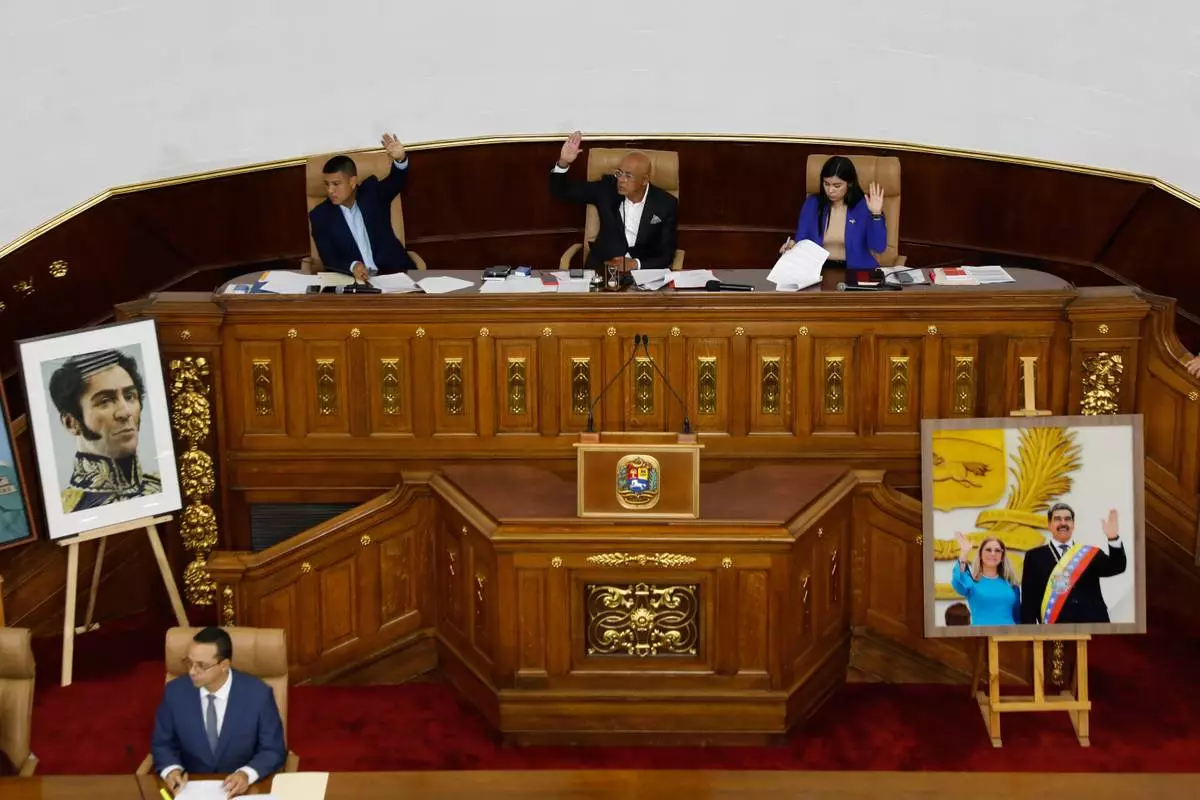
National Assembly President Jorge Rodriguez, center, presides over a session debating an amnesty bill in Caracas, Venezuela, Thursday, Feb. 19, 2026. (AP Photo/Crisitian Hernandez)

National Assembly President Jorge Rodriguez, center, presides over a session debating an amnesty bill in Caracas, Venezuela, Thursday, Feb. 19, 2026. (AP Photo/Crisitian Hernandez)

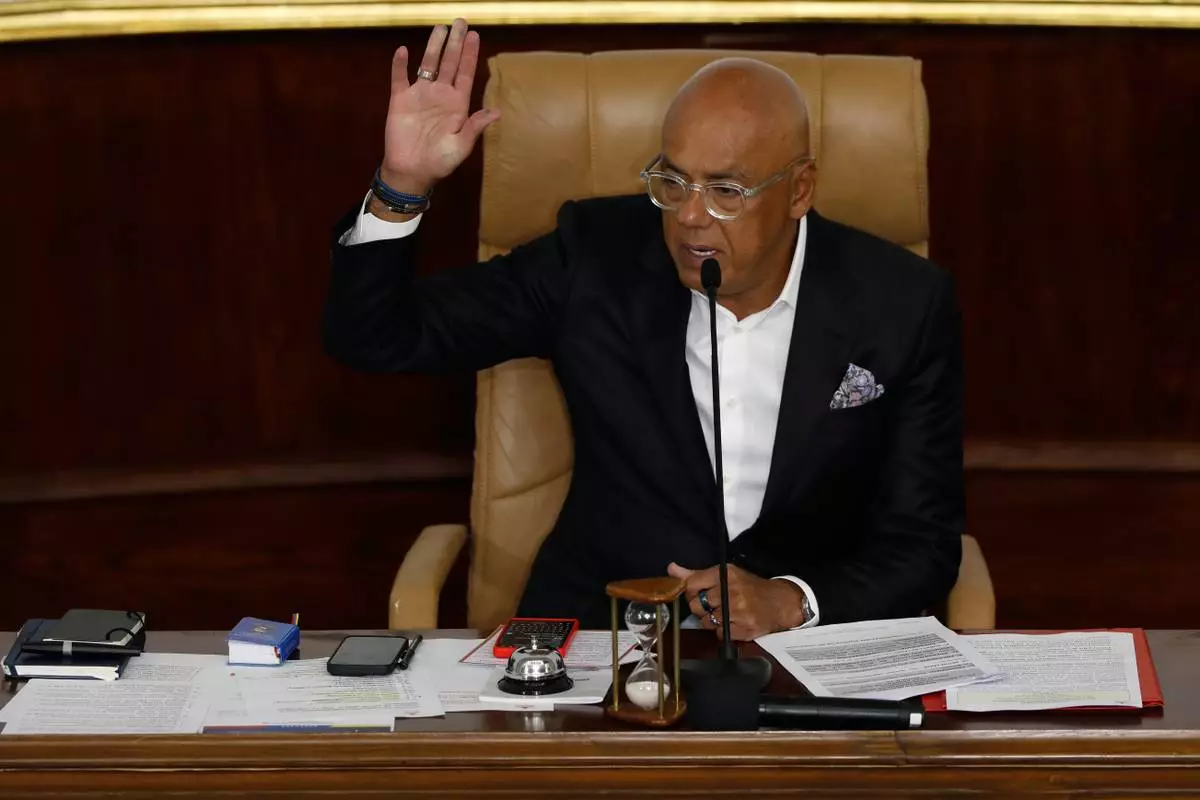
National Assembly President Jorge Rodriguez presides over a session debating an amnesty bill in Caracas, Venezuela, Thursday, Feb. 19, 2026. (AP Photo/Crisitian Hernandez)

National Assembly President Jorge Rodriguez presides over a session debating an amnesty bill in Caracas, Venezuela, Thursday, Feb. 19, 2026. (AP Photo/Crisitian Hernandez)

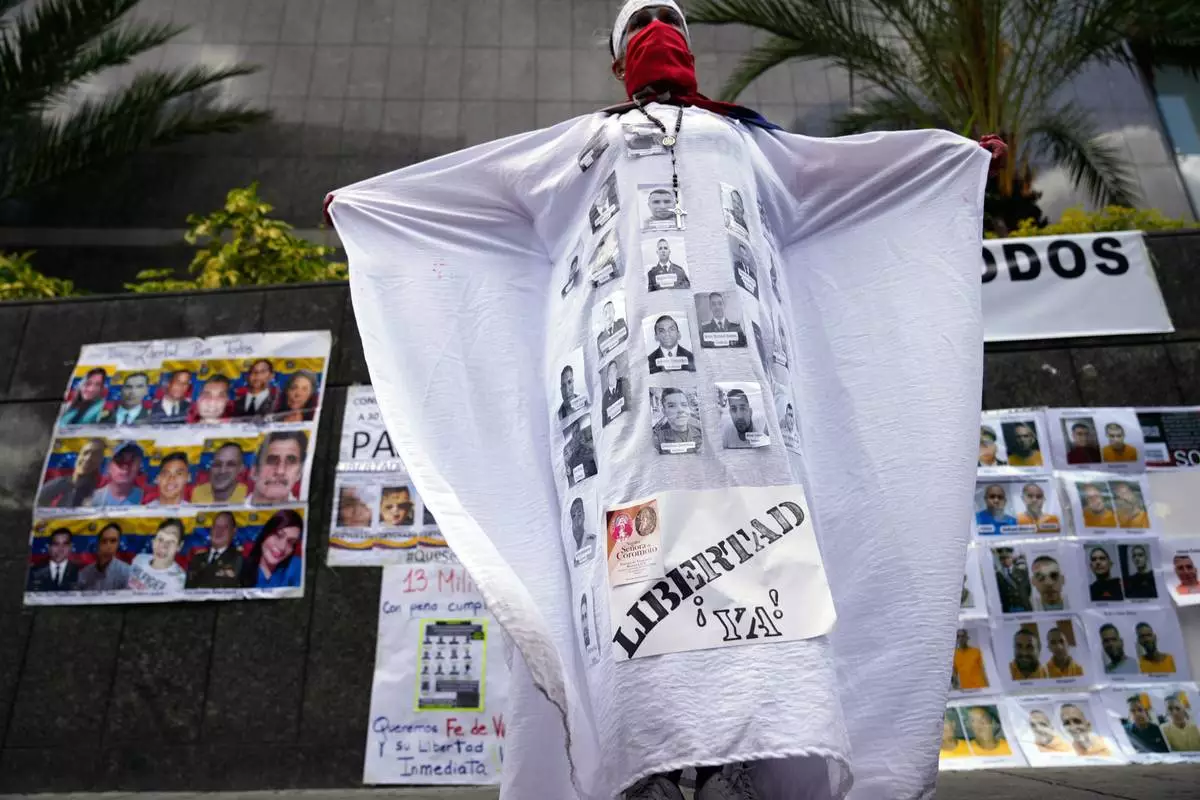
An activist protests outside the United Nations office for the release of what demonstrators consider to be political prisoners in Caracas, Venezuela, Wednesday, Feb. 18, 2026. (AP Photo/Ariana Cubillos)

An activist protests outside the United Nations office for the release of what demonstrators consider to be political prisoners in Caracas, Venezuela, Wednesday, Feb. 18, 2026. (AP Photo/Ariana Cubillos)

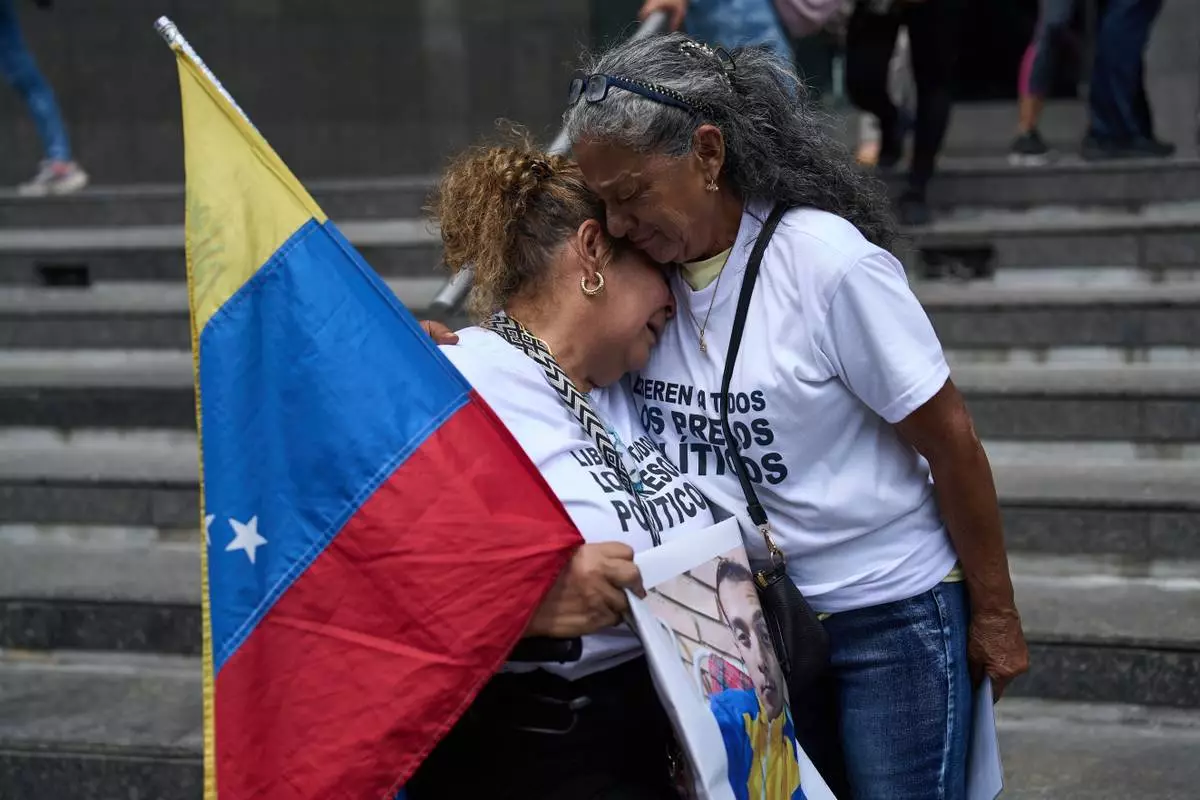
Barbara Bracho, left, mother of Gilberto Bracho, is embraced by Zoraida Gonzalez, mother of Miguel Estrada, both of whom consider their sons to be political prisoners, protest for their releases outside the United Nations office in Caracas, Venezuela, Wednesday Feb. 18, 2026. (AP Photo/Ariana Cubillos)

Barbara Bracho, left, mother of Gilberto Bracho, is embraced by Zoraida Gonzalez, mother of Miguel Estrada, both of whom consider their sons to be political prisoners, protest for their releases outside the United Nations office in Caracas, Venezuela, Wednesday Feb. 18, 2026. (AP Photo/Ariana Cubillos)

People who consider their detained family members to be political prisoners call for their releases outside the United Nations office in Caracas, Venezuela, Wednesday Feb. 18, 2026. (AP Photo/Ariana Cubillos)

People who consider their detained family members to be political prisoners call for their releases outside the United Nations office in Caracas, Venezuela, Wednesday Feb. 18, 2026. (AP Photo/Ariana Cubillos)

People who consider their detained family members to be political prisoners protest for their releases outside the United Nations office in Caracas, Venezuela, Wednesday Feb. 18, 2026. (AP Photo/Ariana Cubillos)

People who consider their detained family members to be political prisoners protest for their releases outside the United Nations office in Caracas, Venezuela, Wednesday Feb. 18, 2026. (AP Photo/Ariana Cubillos)

Recommended Articles