Escalating U.S.–Iran tensions have deepened mistrust and raised fears of lasting instability in the region, with threatened American strikes potentially triggering wider regional fallout, a Royal United Services Institute (RUSI) fellow warned Thursday.
U.S. President Donald Trump is weighing an initial limited military strike on Iran aimed at pressuring Tehran into accepting a nuclear deal, the Wall Street Journal reported on Thursday, citing sources familiar with the matter. If authorized, the strike could come within days, targeting a few military or government sites, said the report.
It added that if Iran still refuses to comply with the U.S. nuclear demand, the Trump administration would respond with a broad campaign against Iranian government facilities, potentially aimed at toppling the "Tehran regime".
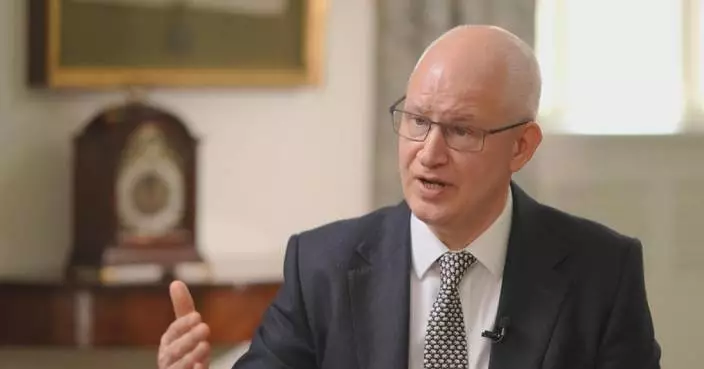
Samuel Ramani, Associate Fellow at the RUSI think tank and CEO of Pangea Geopolitical Risk, stressed that regional observers fear the standoff is not merely a short‑term pressure tactic, but a confrontation likely to drag on with deeper, longer‑term consequences for Iran and the wider Gulf.
"It is possible that there could be a leverage-building thing here. But equally, when I speak to others in the region, there are parallels that are being drawn towards what happened in Venezuela also. So I think that there's growing concern within the Gulf region and also within Tehran that this escalation is going to lead to something much more sustained or longer-term, whether it's full scale regime change, unknown, but something longer-term. And it's not just a leverage-building exercise," said Ramani in an interview with China Global Television Network (CGTN).
On Thursday, Trump told reporters that Iran has 10 to 15 days to reach a deal over its nuclear program, warning that otherwise "really bad things" would happen to the country.
In a letter to the UN Security Council on Thursday, Iran's UN ambassador Amir Saeid Iravani said that Iran will respond "decisively and proportionately" to any military aggression, exercising its right to self-defense under the UN Charter.
"The timing of all of this reflects a clear erosion of U.S.-Iran ability to cooperate. We saw the JCPOA be completely unraveled in the fall of last year. And that was not just the U.S. doing that, but that was also the E3 countries. We've seen the French, the Germans, the British basically also suspend that. We've seen Iran draw much closer in terms of its security partnerships with Russia. And these moves suggest that Iran is really not expecting much of a breakthrough from the West, it's maintaining its hard lines," Ramani said.
"We're looking at a situation where there are pretty much intractable divisions and mistrust between the U.S.-- and the West and Iran, more broadly. And that doesn't point in a good direction for those who want peace. Regional actors,with Israel the exception though, the Saudis, the Emiratis, the Qataris really don't want this to escalate to a full scale war. Why? Because they're worried about the central authority in Iran splitting up, Iran maybe even having a civil war. And even though they don't like the Islamic Republic for the most part, they see its retention as at least stable and predictable compared to the alternatives. So Israel might be pushing Trump in an escalation direction, but the Saudis, the Emiratis, and the Qataris are pushing Trump in the direction of restraint. The big question is, who does he listen to?" said Ramani.
Trump has ordered a large-scale military buildup in the Middle East. It's widely thought that the build-ups make it hard for Trump to back down without Iran's major concessions.
The aircraft carrier USS Gerald R. Ford was approaching Gibraltar on Wednesday as it made its way from the Caribbean to join the aircraft carrier USS Abraham Lincoln in waters near Iran, local media reported.
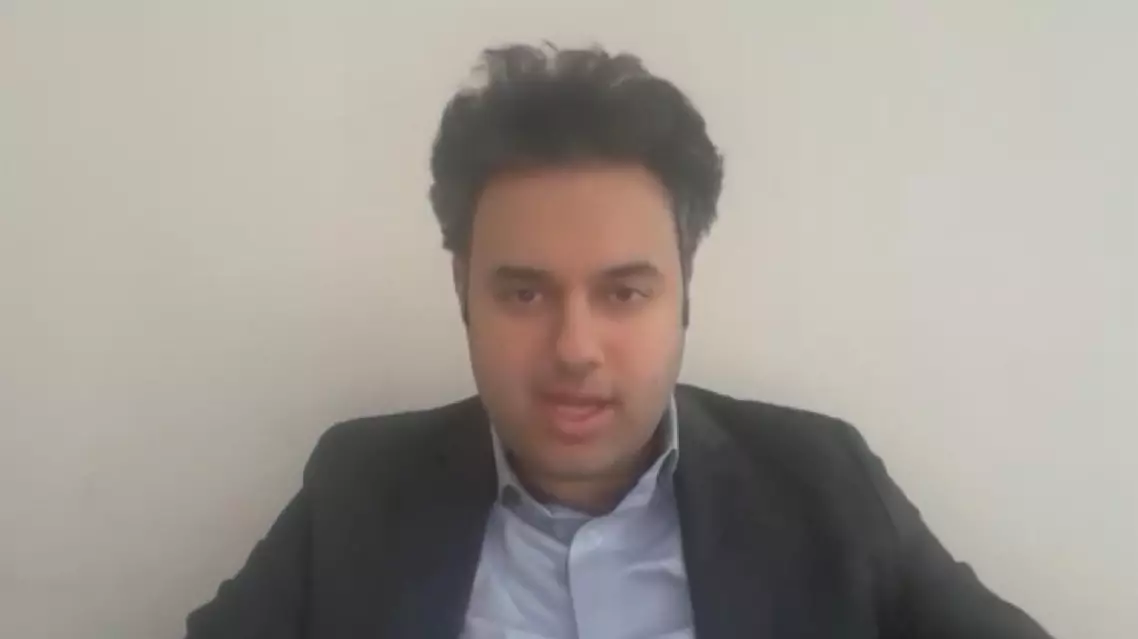
Escalating US-Iran standoff raises fears of lasting instability, regional fallout: expert
Escalating US-Iran standoff raises fears of lasting instability, regional fallout: expert
Escalating US-Iran standoff raises fears of lasting instability, regional fallout: expert