BORMIO, Italy (AP) — The steepest hill ski mountaineering athlete Ana Alonso Rodriguez had to climb on her way to an Olympic bronze medal involved no course at all. No snow or competitors, either.
Just trusting in herself, and an injured knee, to give it a try and get to the starting line at the Milan Cortina Games.
Click to Gallery
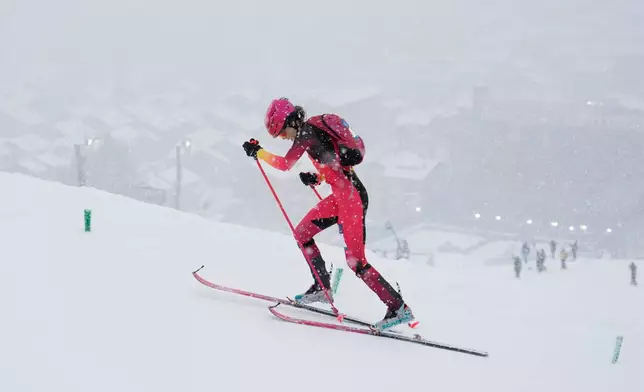
Spain's Ana Alonso Rodriguez competes during a ski mountaineering women's sprint heat, at the 2026 Winter Olympics, in Bormio, Italy, Thursday, Feb. 19, 2026. (AP Photo/John Locher)
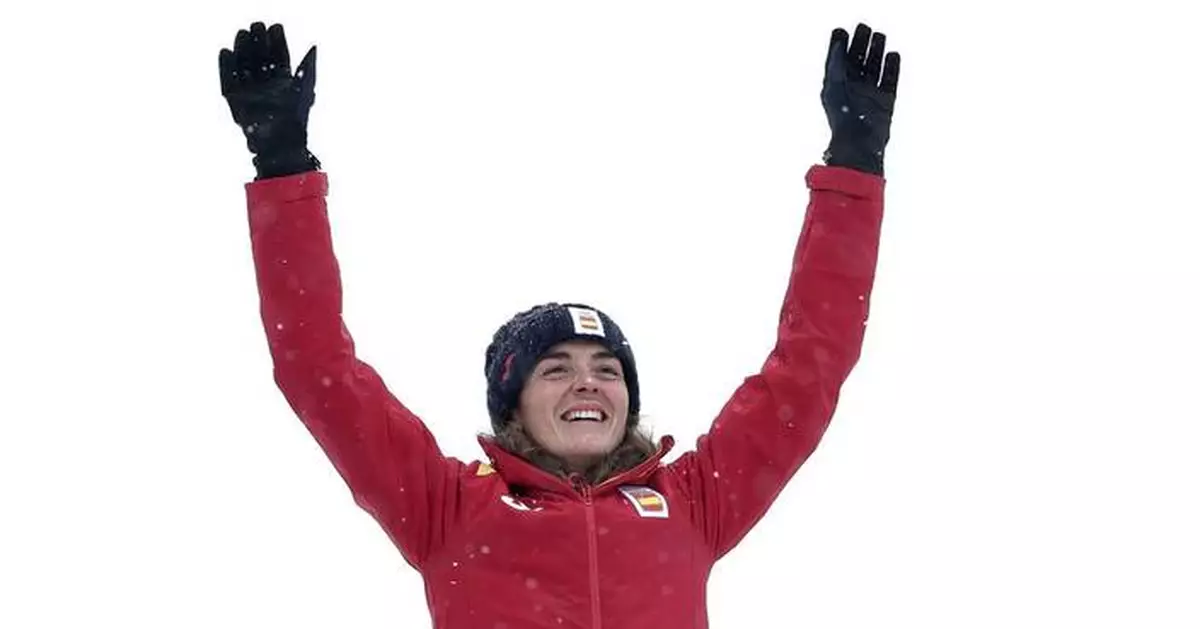
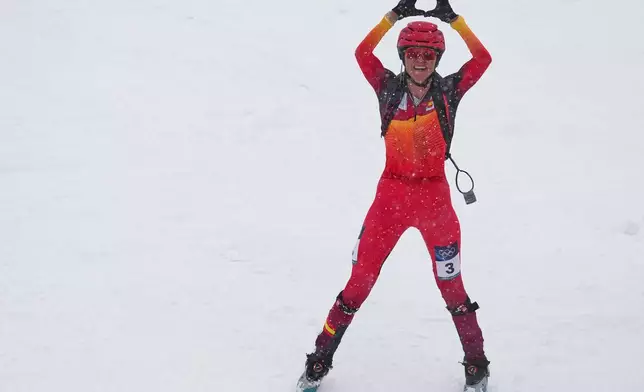
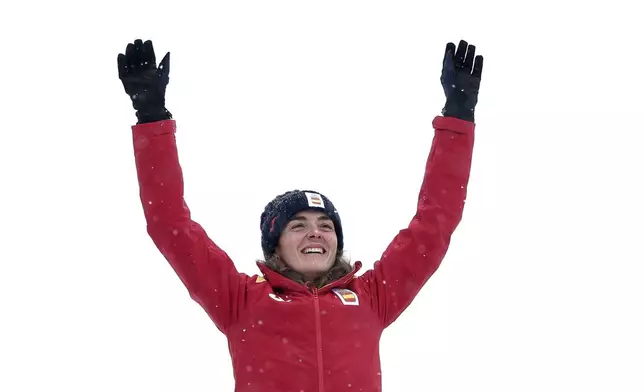
Spain's Ana Alonso Rodriguez celebrates taking third place in a ski mountaineering women's sprint final, at the 2026 Winter Olympics, in Bormio, Italy, Thursday, Feb. 19, 2026. (AP Photo/Rebecca Blackwell)
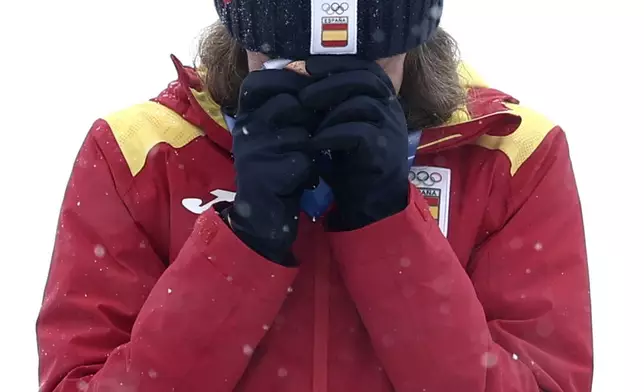
Spain's Ana Alonso Rodriguez reacts after winning the bronze medal in a ski mountaineering women's sprint final, at the 2026 Winter Olympics, in Bormio, Italy, Thursday, Feb. 19, 2026. (AP Photo/Gabriele Facciotti)
Spain's Ana Alonso Rodriguez celebrates after winning the bronze medal in a ski mountaineering women's sprint final, at the 2026 Winter Olympics, in Bormio, Italy, Thursday, Feb. 19, 2026. (AP Photo/Gabriele Facciotti)
In September, while riding her bike in a training session, the Spanish racer was hit by a car. She tore ligaments in her knee and injured her shoulder. Surgery would've surely meant sitting out the Winter Games, where her sport — one that involves skiing uphill and then downhill — was making its Olympic debut.
So, she rehabbed, instead, and hoped just to be able to compete in Bormio in some fashion. This bronze medal, the one she earned Thursday, felt almost surreal. On her way to the finish line, she even glanced over her shoulder not once or twice but three or four times just to make certain the medal, indeed, belonged to her.
“I couldn’t believe it,” said the 31-year-old Alonso Rodriguez, who is expected to combine with teammate and Olympic men's gold medalist Oriol Cardona Coll for the mixed relay on Saturday. “I was so emotional. Trying to believe that I achieved this medal, it was a beautiful moment for me.”
Back in early October, Alonso Rodriguez posted the news of her crash on Instagram. Along with it, a picture: Her left arm in a sling and her left knee in a bulky brace. She explained that she saw the car at the last moment and, realizing there was no escape, braced for the impact.
That, she wrote, prevented something worse from happening. There was another picture of her on the street, with people around, and a car windshield smashed in the background.
She vowed to work her way back to the skimo course, posting a note at the time that read, through translation: “Just 7 months ago I fulfilled a dream (of making the Olympics) that was born when I was 7. I don’t think life has taken me this far to leave me here. This is not an end. It’s just a new challenge to climb with determination, faith and a lot of passion.”
About three months after the crash, she returned to skis. By mid-January, she was back on the World Cup racing circuit.
And by early February, she was on the podium again, taking second with Cardona Coll in a relay race.
That's why she had so much confidence Thursday as she navigated a course that included traversing through a diamond-shaped pattern before taking the skis off to go up stairs in ski boots, followed by another vertical ascent with skis back on and finally the downhill. She finished 10.45 seconds behind winner Marianne Fatton of Switzerland, but, truth be told, just lining up was the goal.
This medal, well, it was extra.
“I wanted to focus on myself and be proud of my performance, no matter the results,” said Alonso Rodriguez, the silver medalist at the 2025 world championships. “So I only wanted to cross the finish line being happy with my performance.”
Next up, the mixed team event on Saturday to close out the racing program in Bormio. She and Cardona Coll are expected to be paired up — the official pairings come out later — and will be among the favorites. It's a powerful field that includes Emily Harrop, the silver-medal winner, who's expected to combine with Thibault Anselmet, the bronze medalist in the men's race, to represent France. A Swiss team, led by Fatton, will be in the medal mix, too.
Count teammate Cardona Coll as impressed with Alonso Rodriguez's performance.
“We were warming up and we realized Ana got third place and we had the first medal with us,” Cardona Coll explained. “That was a push of motivation.”
For Alonso Rodriguez, her push of motivation came from another mountain, in Cortina, where Italian ski racer Federica Brignone captured gold in the super-G and giant slalom. Brignone returned after breaking multiple bones in her left leg last March.
“We always had belief I could be here and give my best performance,” Alonso Rodriguez said. “The last days when Federica won two gold medals were an inspiration, because I know she has been working very hard.
“At the end, the hard work paid off. I’m so happy for her and for myself.”
This story has been updated to correct that Alonso Rodriguez's social media post was in October, not September.
AP Olympics: https://apnews.com/hub/milan-cortina-2026-winter-olympics
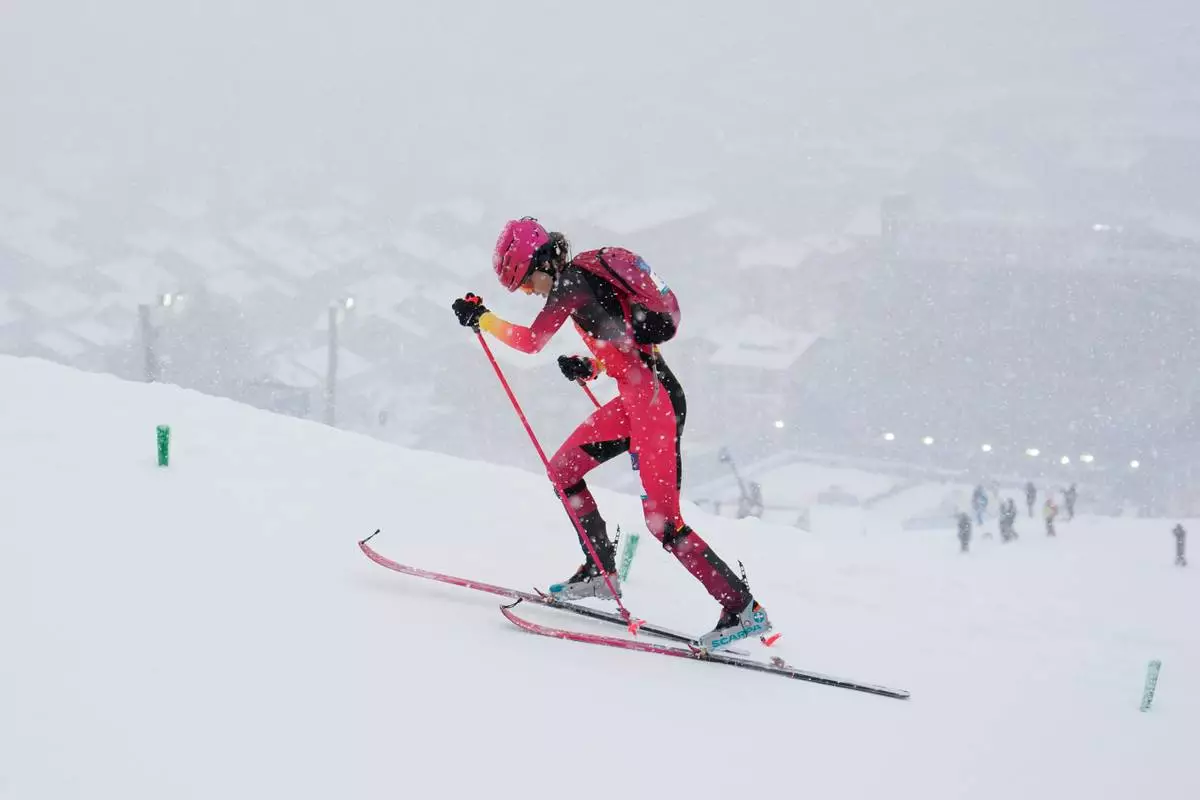
Spain's Ana Alonso Rodriguez competes during a ski mountaineering women's sprint heat, at the 2026 Winter Olympics, in Bormio, Italy, Thursday, Feb. 19, 2026. (AP Photo/John Locher)
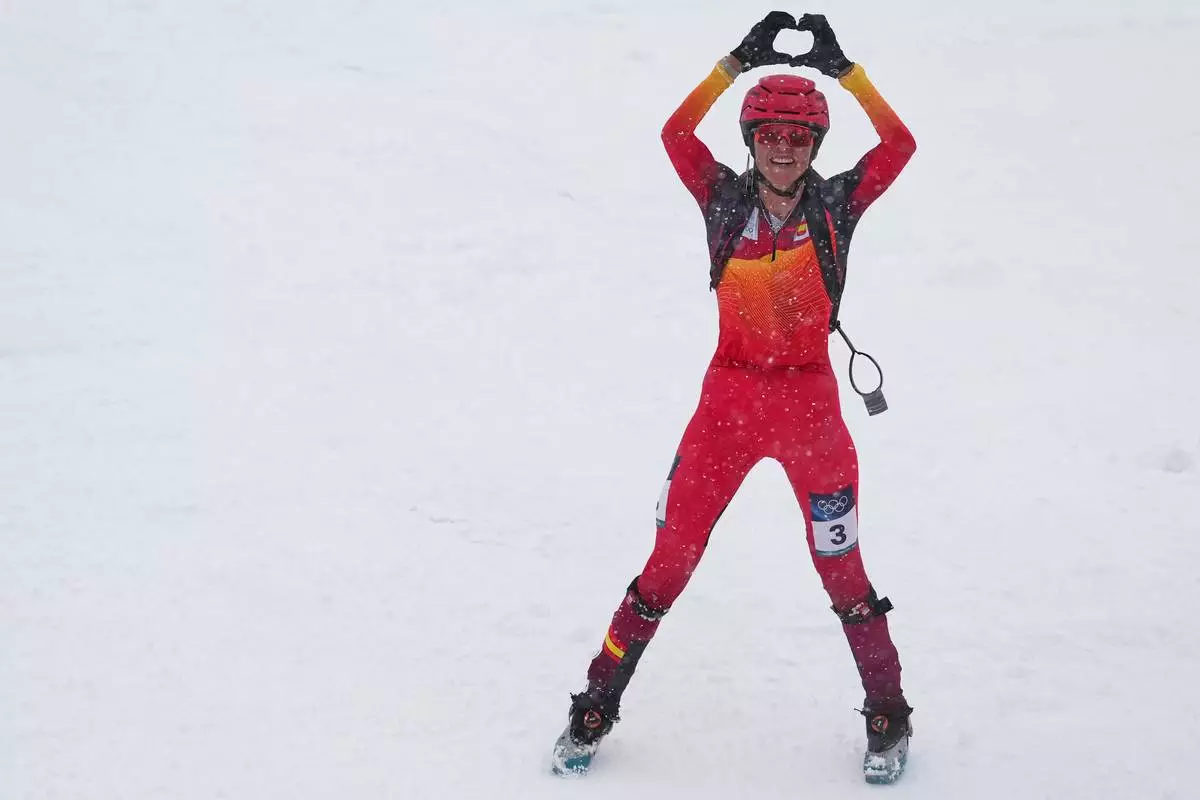
Spain's Ana Alonso Rodriguez celebrates taking third place in a ski mountaineering women's sprint final, at the 2026 Winter Olympics, in Bormio, Italy, Thursday, Feb. 19, 2026. (AP Photo/Rebecca Blackwell)
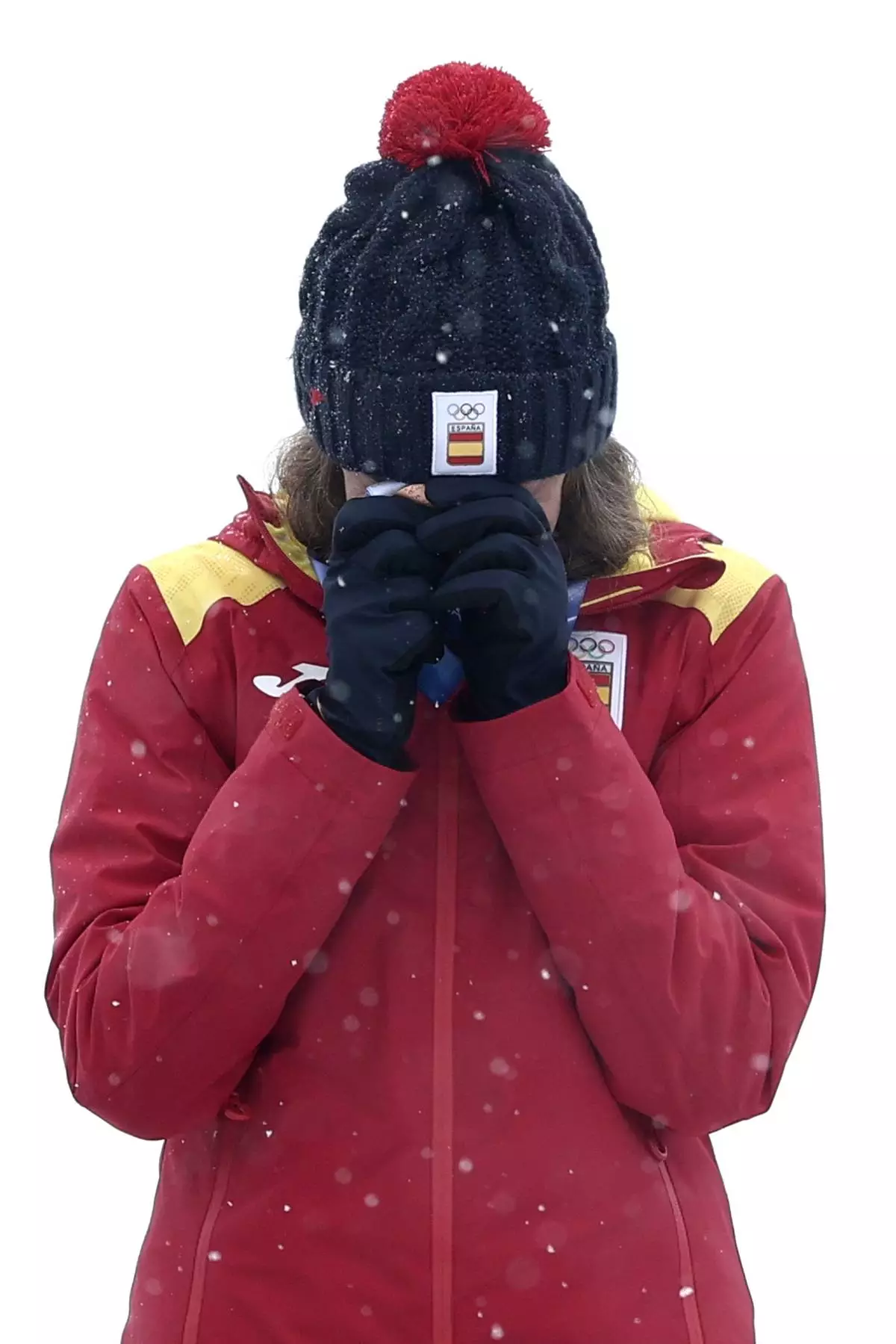
Spain's Ana Alonso Rodriguez reacts after winning the bronze medal in a ski mountaineering women's sprint final, at the 2026 Winter Olympics, in Bormio, Italy, Thursday, Feb. 19, 2026. (AP Photo/Gabriele Facciotti)

Spain's Ana Alonso Rodriguez celebrates after winning the bronze medal in a ski mountaineering women's sprint final, at the 2026 Winter Olympics, in Bormio, Italy, Thursday, Feb. 19, 2026. (AP Photo/Gabriele Facciotti)
WASHINGTON (AP) — When acting Attorney General Todd Blanche signed off on a nearly $1.8 billion fund meant to compensate President Donald Trump's allies for alleged political prosecution, he may have pleased his boss.
But the eyebrow-raising move — the latest in his push to prove his loyalty to Trump — has agitated the same Republican lawmakers if he is nominated for the permanent job.
Blanche insists he’s not auditioning for the job of attorney general. But a succession of splashy steps the Justice Department has taken under his watch since he took the position on an acting basis last month, including an indictment of former FBI Director James Comey, has left no doubt about the impression he’s hoping to make on the president who appointed him.
The fund in particular has put Blanche at the center of a Republican firestorm at a time when he aims to establish himself as the perfect person for the job for the remainder of Trump’s term. And it sharpened concerns from Democrats and other Blanche critics that he has not shed his mantle as the president’s personal attorney.
“So the nation’s top law enforcement official is asking for a slush fund to pay people who assault cops? Utterly stupid, morally wrong — Take your pick,” Republican Sen. Mitch McConnell of Kentucky, the former majority leader, said in a statement.
A former federal prosecutor in New York, Blanche came to public prominence for his lead role on Trump's defense team, including during the Republican's hush money trial in New York. That perch afforded him, he has said, a firsthand look at what he contends was the weaponization of the criminal justice system against Trump.
He was brought into the Justice Department as deputy attorney general, the No. 2 job, then was elevated last month after Trump ousted Pam Bondi.
Now he finds himself the latest Trump-appointed attorney general to simultaneously confront expectations from subordinates to uphold institutional norms and demands from the president to do his bidding.
Trump's first attorney general, Jeff Sessions, was forced out after the 2018 midterms after infuriating the president over his recusal from an investigation into ties between Russia and the 2016 presidential campaign. Another, William Barr, resigned after their relationship fizzled over Barr's refusal to back Trump's baseless claims of massive election fraud. Bondi was removed after struggling to bring successful prosecutions against Trump's political opponents.
Two weeks after becoming acting attorney general, Blanche announced the appointment of Joseph diGenova, an 81-year-old former Justice Department prosecutor from the Reagan administration, to a special position inside the department. He'll oversee a Florida-based investigation into whether former law enforcement and intelligence officials conspired over the last decade to undermine Trump.
“At some point, at the right time, that will be made public and the American people will see exactly what happened to this administration and President Trump over the past decade," Blanche told Fox News.
Prior government reviews of the FBI's Trump-Russia investigation, a centerpiece of the current conspiracy investigation, have failed to produce criminal charges against senior officials or evidence of criminal conduct by them. It's not clear what, if any, new information the continuing investigation has developed.
The Justice Department also last month obtained an indictment charging Comey, a Trump foe whose prosecution the president has long called for, with threatening Trump through a social media photo of seashells in the numerical arrangement of “86 47" — a case legal experts say will be challenging for prosecutors. Comey has said he wouldn't be surprised if the Justice Department pursues additional indictments.
In other moves, Blanche announced an indictment of the Southern Poverty Law Center, a nonprofit that has been the target of conservative outrage, with misleading donors about its activities, and has publicly defended a Justice Department crackdown on leaks to the news media, including subpoenas to reporters.
Arguably the most audacious demonstration of loyalty to Trump came this week when the Justice Department announced the creation of a $1.776 billion fund to compensate people who feel they've been unjustly investigated and prosecuted, coupled with a guarantee of immunity from tax audits for Trump and his eldest sons.
As Republican concerns grew, Blanche held a tense meeting with GOP lawmakers Thursday. Shortly afterward, Senate Republicans abruptly left Washington without voting on a roughly $70 billion bill to fund immigration enforcement agencies.
Blanche, who defended the fund at a congressional hearing this week, has said anyone who believes they've been persecuted can apply for compensation regardless of political affiliation. But the fund has been widely understood as a boon to Trump allies investigated during the Biden administration.
“It’s pretty clear that he’s not the attorney general for the United States as much as he's the attorney general for President Trump,” said Stephen Saltzburg, a George Washington University law professor and senior Justice Department official in the 1980s. He said Blanche would get an A+ if report cards were issued for fealty to Trump.
David Laufman, a former chief of staff to the deputy attorney general in President George W. Bush's administration, said that rather than protecting the Justice Department's independence, Blanche has been a “willing and ardent accomplice for carrying out any partisan or corrupt scheme the White House may devise.”
Blanche’s supporters dismiss the suggestion he is trying to curry favor with Trump to secure the permanent job.
“What he is doing is he is seeking justice based on facts and the law,” said Jay Town, who served as a U.S. attorney in Alabama during the first Trump administration. “And I don’t think that will ever change about him, whether he is the attorney general going forward or doesn’t spend another day in the administration. He is an honorable man and anybody that knows him knows that to be true.”
Blanche also says he is not angling to keep his job or feeling pressure to placate Trump.
He has told reporters he would be honored to be nominated but, "if he chooses to nominate somebody else and asks me to go do something else, I will say, ‘Thank you very much. I love you, sir.’ I don’t have any goals or aspirations beyond that.”
In recent days, he's functioned as the fund's public face and most visible defender, a role consistent with his comfort in the spotlight. He sometimes holds multiple press conferences a week and grants interviews to a variety of news outlets, a contrast to Bondi, who largely stuck to Fox News appearances.
His defenders say his experience as a federal prosecutor has made him a more sophisticated communicator for the department than Bondi, but his statements have at times invited backlash, including his refusal to rule out that violent Jan. 6 rioters could be eligible for payouts.
Though Blanche will appoint the five commissioners tasked with processing claims, his precise role in the fund’s implementation is unclear. He told CNN it was developed through negotiations with Trump’s private lawyers, not him.
For some Democrats, that's a difference without a distinction.
“Mr. Attorney General, you are acting today like the president's personal attorney," Sen. Chris Van Hollen, a Maryland Democrat, told Blanche during a combative exchange in the Senate hearing, "and that's the whole problem."
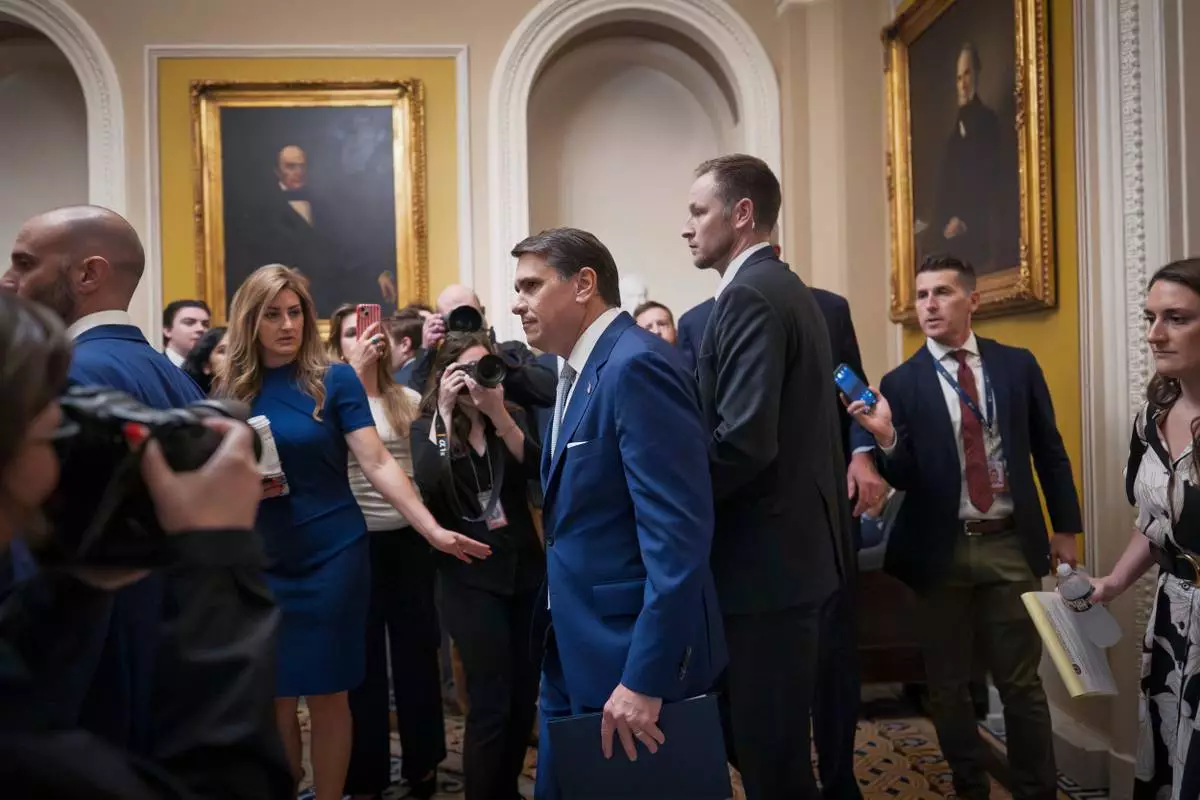
Acting Attorney General Todd Blanche arrives for a closed-door meeting with Republican senators who are expected to abandon a proposal for $1 billion in security money for the White House complex and President Donald Trump's ballroom after it has failed to win enough party support, at the Capitol in Washington, Thursday, May 21, 2026. (AP Photo/J. Scott Applewhite)
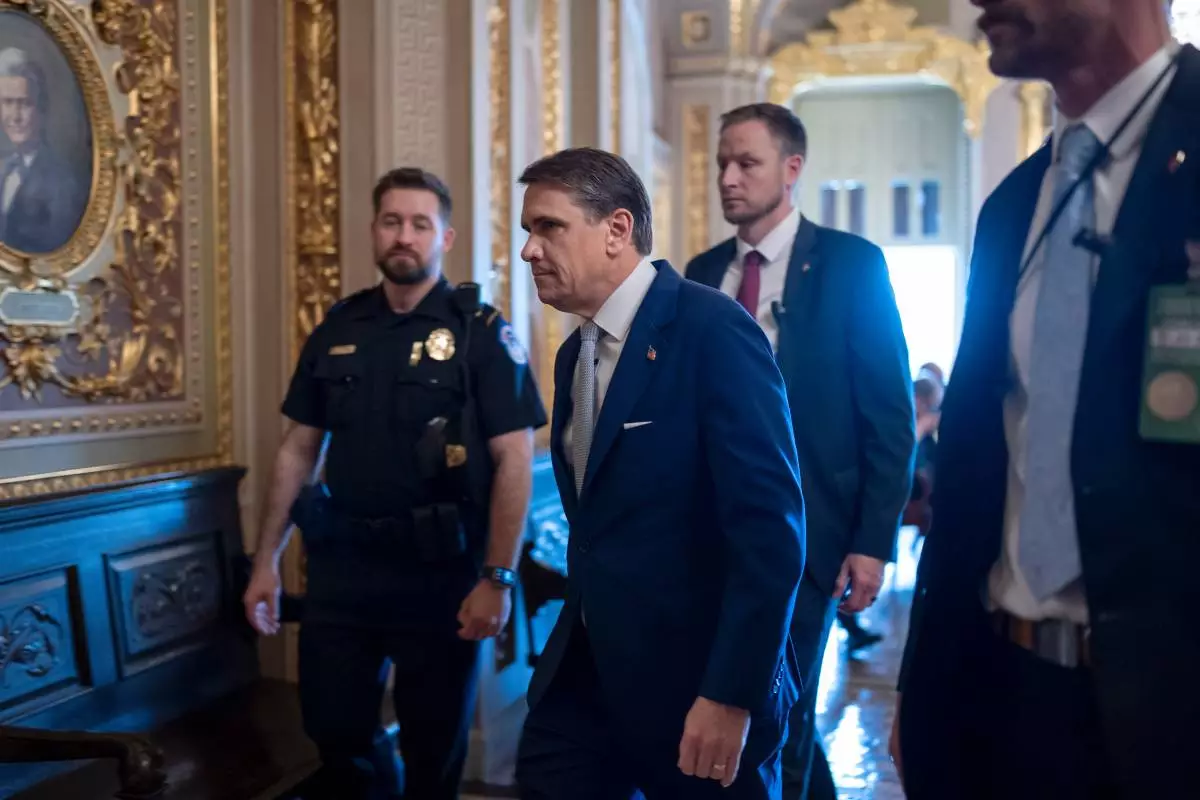
Acting Attorney General Todd Blanche arrives for a closed-door meeting with Republican senators who are expected to abandon a proposal for $1 billion in security money for the White House complex and President Donald Trump's ballroom after it has failed to win enough party support, at the Capitol in Washington, Thursday, May 21, 2026. (AP Photo/J. Scott Applewhite)