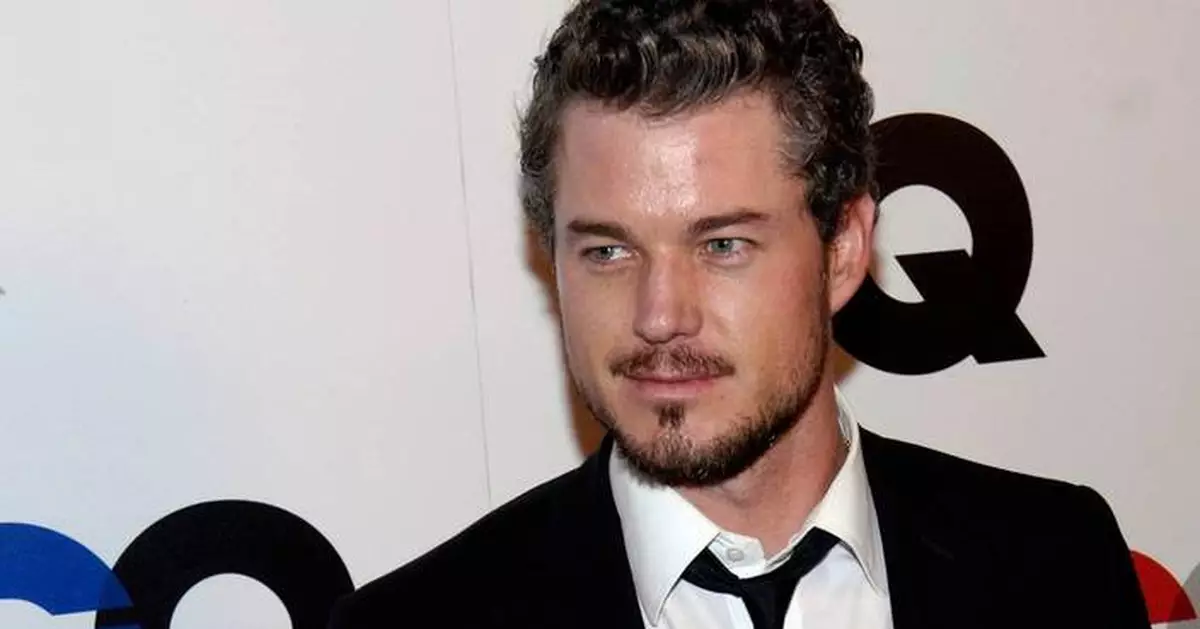
Friends and co-stars across Hollywood are mourning Eric Dane, the actor known for his iconic role as Dr. Mark Sloan — aka McSteamy — on ABC's “Grey's Anatomy.” Dane, who announced his ALS diagnosis less than a year ago, died Thursday at 53.
“The Franklin strip fanatics fantasy football league will miss Mr. Eric Dane. We know you’ll be watching from the booth. Miss you, buddy. Let’s keep fighting the fight to solve ALS.” — the actor and “Valentine’s Day” costar, on X.
“He was warm, generous, prepared, and so passionate about what he did. He led with kindness and made everyone on our set feel seen. … May his memory inspire more research, awareness and progress toward a cure.” – the actor and “Redeeming Love” co-star, on Instagram.
“Eric was a light. You’d see it effortlessly shine from him on the set of ‘Grey’s’ as well as when he was with Rebecca and the girls. During filming he’d get this twinkle in his eye and with a mischievous look, he would deliver with perfect comedic timing, a line of dialogue that would floor you! You will be missed.” – the actor and “Grey’s Anatomy” co-star, on Instagram.
“Rest in Peace Buddy.” – the actor and “Grey’s Anatomy” co-star, on Instagram, accompanied by a photo of Dane in surgical scrubs as Dr. Mark Sloan.
“I love you. And yours.” – the actor on Instagram, accompanied by video of a scene together from the sitcom “Zoe, Duncan, Jack and Jane.”
“I learned so much from Eric. He was a great man. I’m sad to see him go in this way. I’m sending love to his family. Thanks for the memories my friend.” – the actor and “The Last Ship” co-star, on Instagram
“I can’t stop seeing that spark in Eric’s eye right before he’d say something that would either make you spit out your drink or rethink your entire perspective. He had a razor-sharp sense of humor. He loved the absurdity of things. He loved catching people off guard.
And when it came to his daughters and Rebecca, everything in him softened. He carried them with him even in rooms where they weren’t present. You could see it in the way his voice changed when he said their names. A breathtakingly beautiful family.
The spark. The mischief. The tenderness he kept guarded but never totally hidden.
He convinced me to get my pixie cut and my nose ’piercing. He also was with me on the walk when we found Lucy, my beloved rescue chihuahua. He called me ‘Milano,’ as if it was the only part of my name that mattered. – the actor and “Charmed” co-star, on Instagram.
“We tried to book gigs, we tried to laugh at the pain and we tried to stay sober. I’m glad we got to play together in Americana. I love you, man. I wish we had more time. Enjoy the arms of Father God. I’ll see you again.” — the actor and “Americana” co-star, on Instagram.
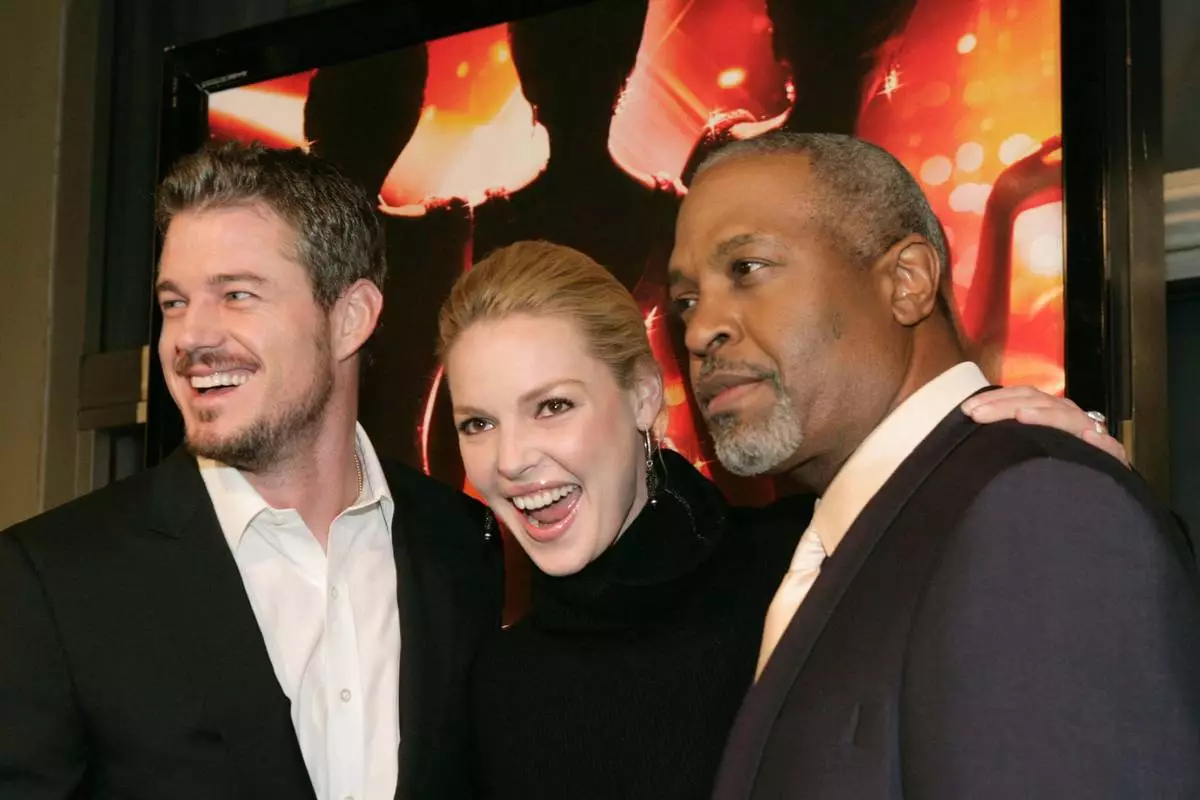
FILE - Actor Eric Dane, left, Katherine Heigl, center, and James Pickens Jr. from the show "Grey's Anatomy" arrive at the premiere of "Dreamgirls," in Beverly Hills, Calif., Dec. 11, 2006. (AP Photo/Matt Sayles, File)
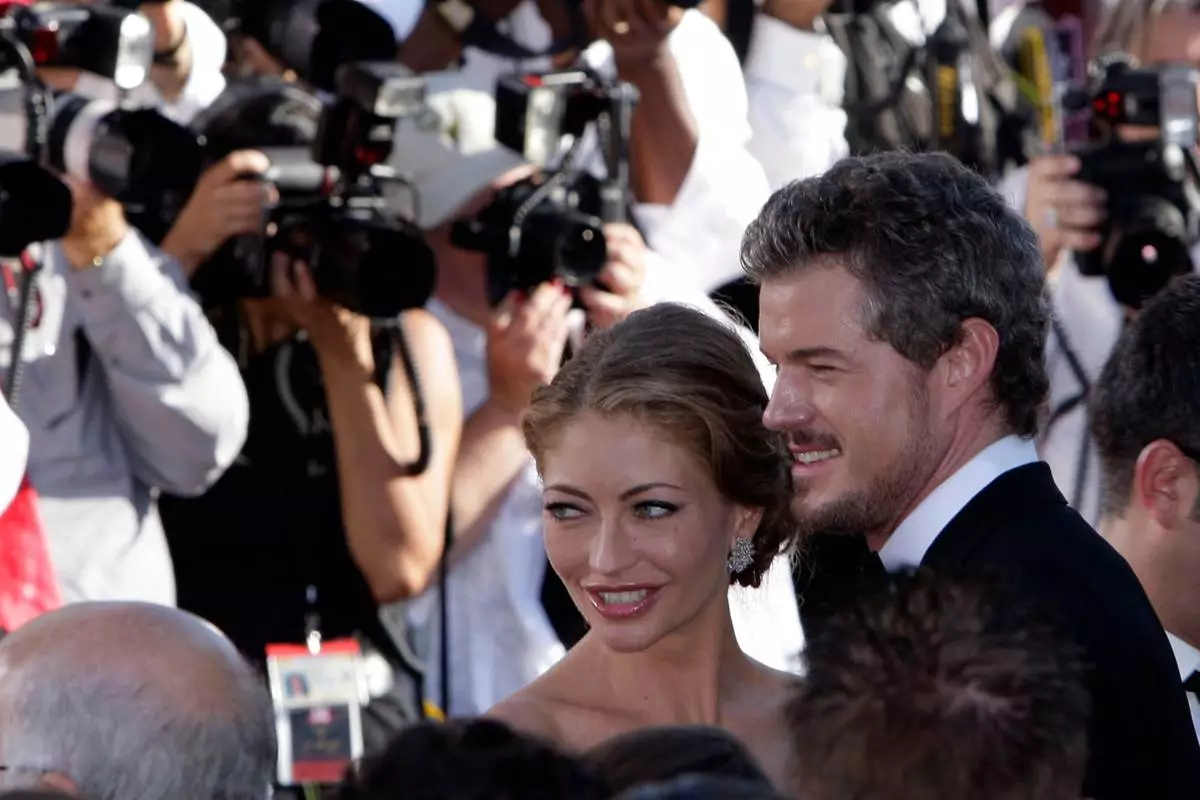
FILE - Eric Dane and Rebecca Gayheart arrive at the 59th Primetime Emmy Awards at the Shrine Auditorium, Sept. 16, 2007, in Los Angeles. (AP Photo/Kevork Djansezian, File)
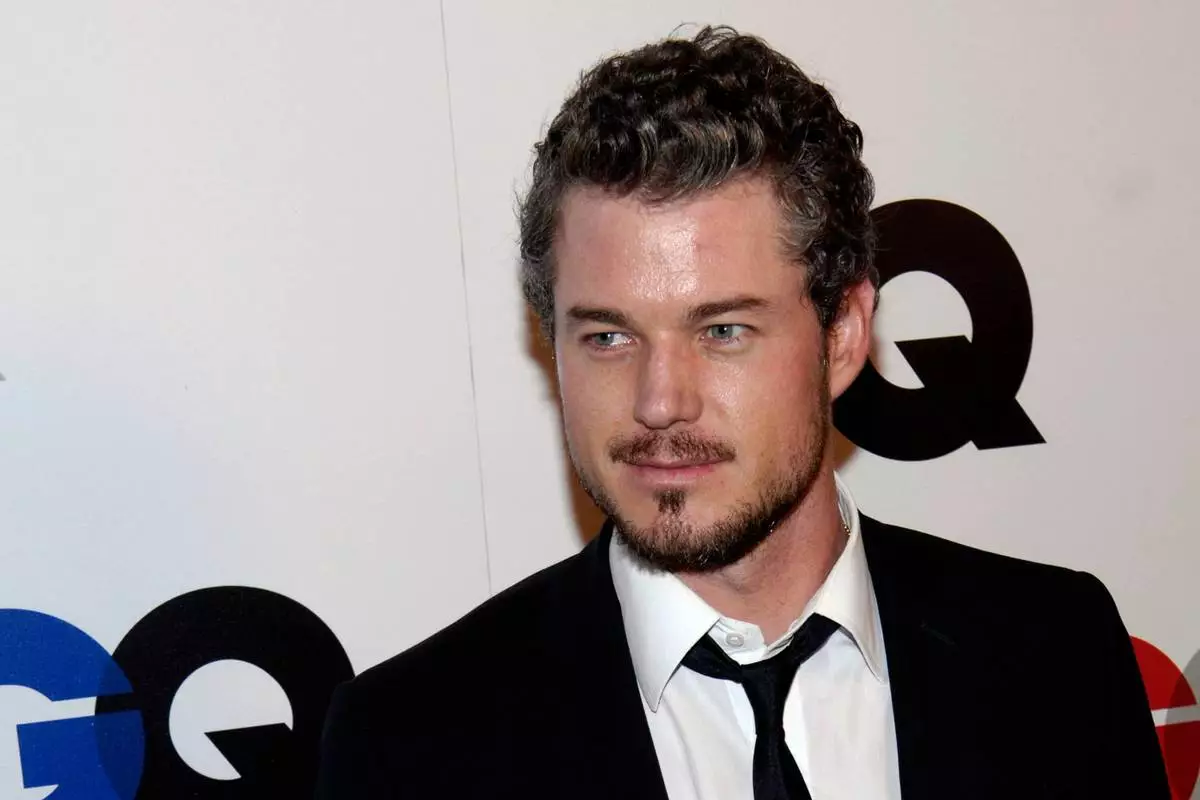
FILE - Actor Eric Dane arrives to the 12th annual GQ "Men of the Year" party at the Chateau Marmont hotel, in Los Angeles, Dec. 5, 2007. (AP Photo/Chris Pizzello, File)
DUBAI, United Arab Emirates (AP) — Saudi Arabia could have some form of uranium enrichment within the kingdom under a proposed nuclear deal with the United States, congressional documents and an arms control group suggest, raising proliferation concerns as an atomic standoff between Iran and America continues.
U.S. Presidents Donald Trump and Joe Biden both tried to reach a nuclear deal with the kingdom to share American technology. Nonproliferation experts warn any spinning centrifuges within Saudi Arabia could open the door to a possible weapons program for the kingdom, something its assertive crown prince has suggested he could pursue if Tehran obtains an atomic bomb.
Already, Saudi Arabia and nuclear-armed Pakistan signed a mutual defense pact last year after Israel launched an attack on Qatar targeting Hamas officials. Pakistan’s defense minister then said his nation’s nuclear program “will be made available” to Saudi Arabia if needed, something seen as a warning for Israel, long believed to be the Middle East's only nuclear-armed state.
“Nuclear cooperation can be a positive mechanism for upholding nonproliferation norms and increasing transparency, but the devil is in the details,” wrote Kelsey Davenport, the director for nonproliferation policy at the Washington-based Arms Control Association.
The documents raise “concerns that the Trump administration has not carefully considered the proliferation risks posed by its proposed nuclear cooperation agreement with Saudi Arabia or the precedent this agreement may set.”
Saudi Arabia did not respond to questions Friday from The Associated Press.
The congressional document, also seen by the AP, shows the Trump administration aims to reach 20 nuclear business deals with nations around the world, including Saudi Arabia. The deal with Saudi Arabia could be worth billions of dollars, it adds.
The document contends that reaching a deal with the kingdom “will advance the national security interests of the United States, breaking with the failed policies of inaction and indecision that our competitors have capitalized on to disadvantage American industry and diminish the United States standing globally in this critical sector.” China, France, Russia and South Korea are among the leading nations that sell nuclear power plant technology abroad.
The draft deal would see America and Saudi Arabia enter safeguard agreements with the United Nations’ nuclear watchdog — the International Atomic Energy Agency or IAEA. That would include oversight of the “most proliferation-sensitive areas of potential nuclear cooperation,” it added. It listed enrichment, fuel fabrication and reprocessing as potential areas.
“This suggests that once the bilateral safeguards agreement is in place, it will open the door for Saudi Arabia to acquire uranium enrichment technology or capabilities — possibly even from the United States,” Davenport wrote. “Even with restrictions and limits, it seems likely that Saudi Arabia will have a path to some type of uranium enrichment or access to knowledge about enrichment.”
Saudi Arabia is a member state of the IAEA, a Vienna-based agency which promotes peaceful nuclear work but also inspects nations to ensure they don’t have clandestine atomic weapons programs.
The IAEA told the AP in a statement on Friday that it “maintains regular contact with both parties and is able to apply verification measures in connection with bilateral cooperation agreements.”
“If the parties will request the agency to apply verification measures in connection with their bilateral cooperation agreements, the agency will continue to consult with the parties concerned and address the request in accordance with its established procedures,” the IAEA added.
Enrichment isn't an automatic path to a nuclear weapon — a nation also must master other steps including the use of synchronized high explosives, for instance. But it does open the door to weaponization, which has fueled the concerns of the West over Iran's program.
The United Arab Emirates, a neighbor to Saudi Arabia, signed what is referred to as a “123 agreement” with the U.S. to build its Barakah nuclear power plant with South Korean assistance. But the UAE did so without seeking enrichment, something nonproliferation experts have held up as the “gold standard” for nations wanting atomic power.
The push for a Saudi-U.S. deal comes as Trump threatens military action against Iran if it doesn't reach a deal over its nuclear program. The Trump military push follows nationwide protests in Iran that saw its theocratic government launch a bloody crackdown on dissent that killed thousands and saw tens of thousands more reportedly detained.
In Iran's case, it long has insisted its nuclear enrichment program is peaceful. However, the West and the IAEA say Iran had an organized military nuclear program up until 2003. Tehran also had been enriching uranium up to 60% purity, a short, technical step from weapons-grade levels of 90% — making it the only country in the world to do so without a weapons program.
Iranian diplomats long have pointed to 86-year-old Supreme Leader Ayatollah Ali Khamenei's comments as a binding fatwa, or religious edict, that Iran won’t build an atomic bomb. However, Iranian officials increasingly have made the threat they could seek the bomb as tensions have risen with the U.S.
Saudi Crown Prince Mohammed bin Salman, the kingdom's day-to-day ruler, has said if Iran obtains the bomb, “we will have to get one.”
The Associated Press receives support for nuclear security coverage from the Carnegie Corporation of New York and Outrider Foundation. The AP is solely responsible for all content.
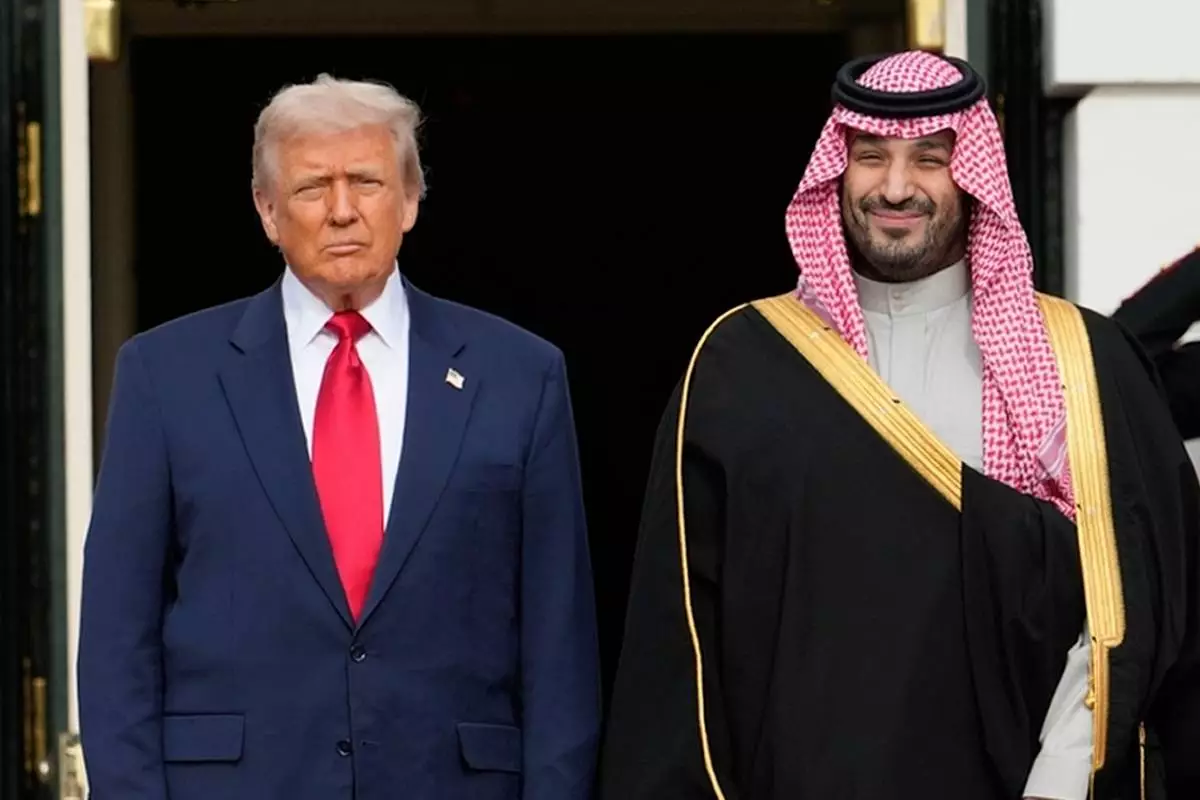
FILE - President Donald Trump stands with Saudi Arabia's Crown Prince Mohammed bin Salman on his visit to the White House, Nov. 18, 2025, in Washington. (AP Photo/Mark Schiefelbein, File)