Skip to Content Facebook Feature Image

When in Rome: Budapest pizzeria offers time-travel twist with ancient Rome-inspired pie

ENT

When in Rome: Budapest pizzeria offers time-travel twist with ancient Rome-inspired pie
ENT

ENT

When in Rome: Budapest pizzeria offers time-travel twist with ancient Rome-inspired pie

2026-02-21 12:56 Last Updated At:13:13

BUDAPEST, Hungary (AP) — In Hungary’s capital, a city best known for its goulash, a pizzeria is inviting diners to travel back two millennia to a time before tomatoes, mozzarella or even the word “pizza” were known in Europe.

At Neverland Pizzeria in central Budapest, founder Josep Zara and his team have created a limited-edition pie using only ingredients that would have been available in ancient Rome, long before what we know today as pizza ever existed.

More Images
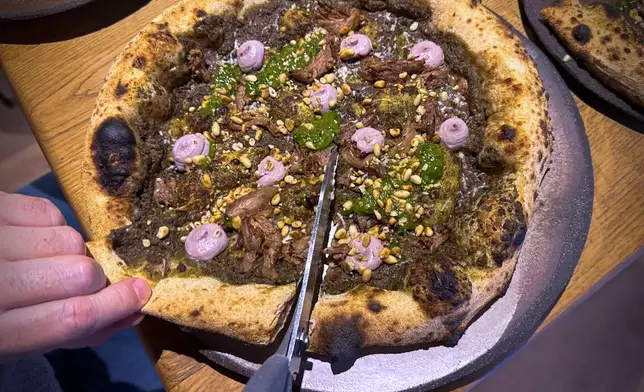
A customer cuts a Roman-era pizza in Budapest, Hungary, on Feb. 11, 2026. (AP Photo/Bela Szandelszky)
A customer cuts a Roman-era pizza in Budapest, Hungary, on Feb. 11, 2026. (AP Photo/Bela Szandelszky)

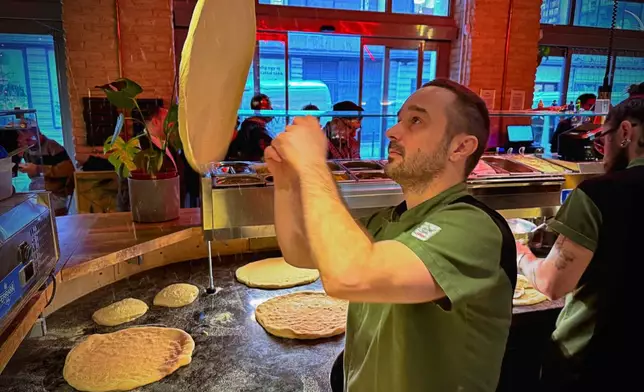
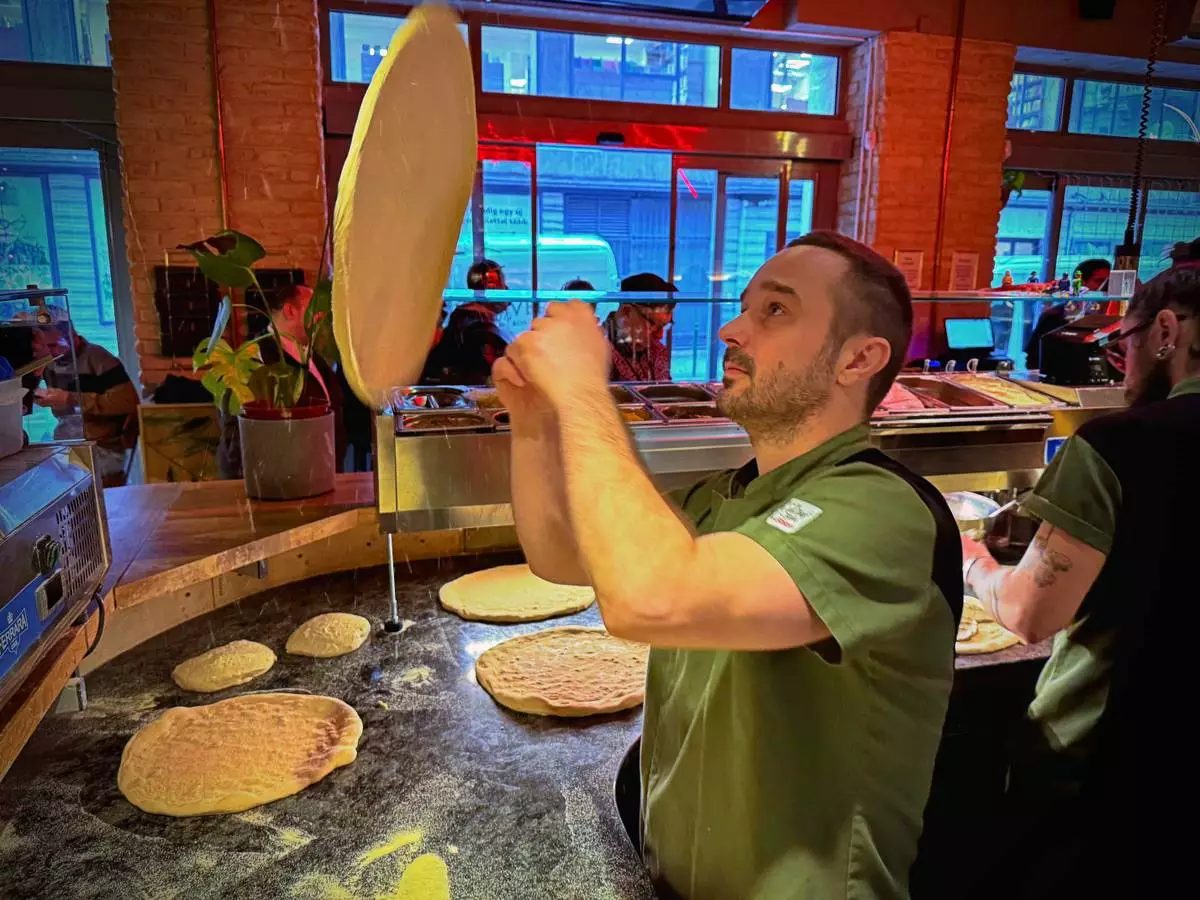
A chef of the Neverland Pizzeria makes dough for the restaurant's Roman-era pizza in Budapest, Hungary, on Feb. 11, 2026. (AP Photo/Bela Szandelszky)
A chef of the Neverland Pizzeria makes dough for the restaurant's Roman-era pizza in Budapest, Hungary, on Feb. 11, 2026. (AP Photo/Bela Szandelszky)
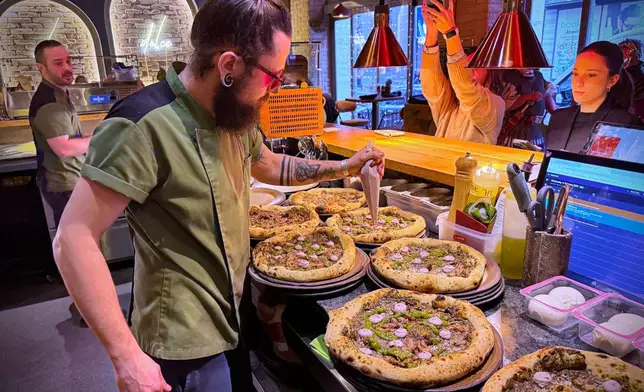
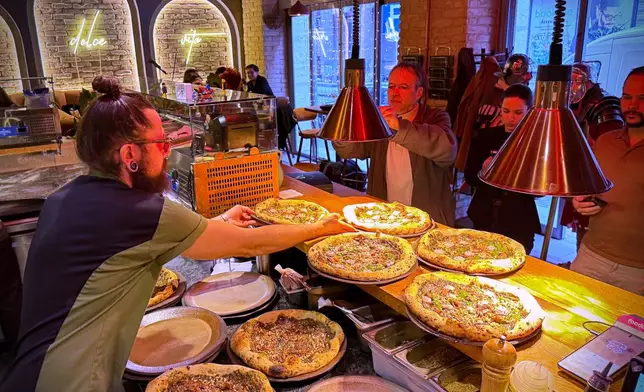
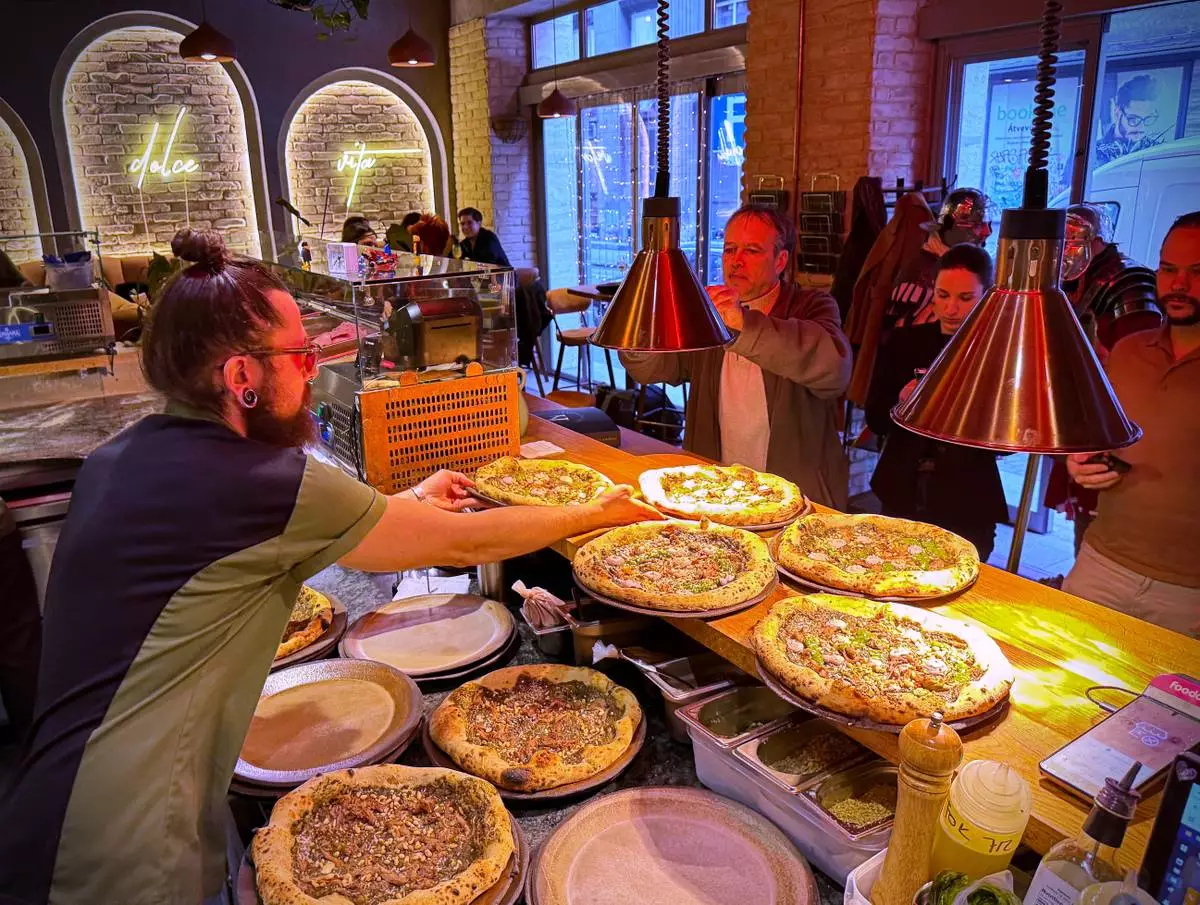
Laszlo Bardossy, head chef of the Neverland Pizzeria serves the restaurant's Roman-era pizza in Budapest, Hungary, on Feb. 11, 2026. (AP Photo/Bela Szandelszky)

Laszlo Bardossy, head chef of the Neverland Pizzeria serves the restaurant's Roman-era pizza in Budapest, Hungary, on Feb. 11, 2026. (AP Photo/Bela Szandelszky)

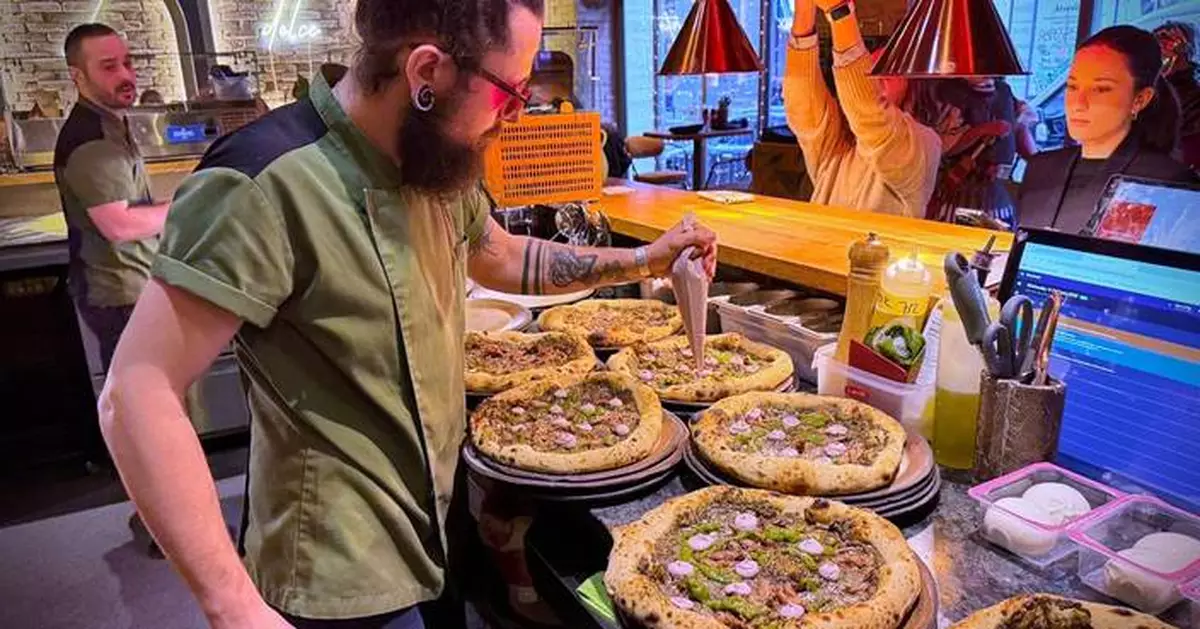
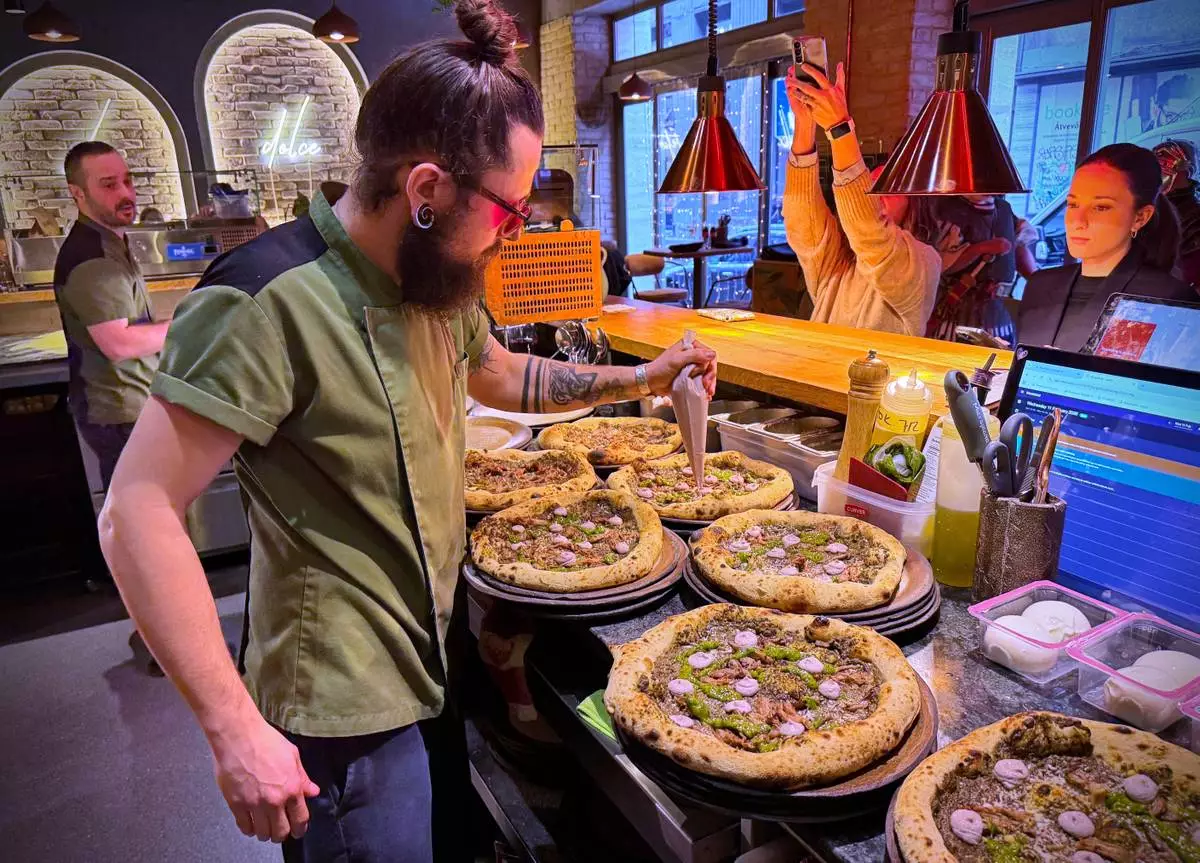
Laszlo Bardossy, head chef of the Neverland Pizzeria adds topping on the restaurant's Roman-era pizza in Budapest, Hungary, on Feb. 11, 2026. (AP Photo/Bela Szandelszky)

Laszlo Bardossy, head chef of the Neverland Pizzeria adds topping on the restaurant's Roman-era pizza in Budapest, Hungary, on Feb. 11, 2026. (AP Photo/Bela Szandelszky)

“Curiosity drove us to ask what pizza might have been like long ago,” Zara said. “We went all the way back to the Roman Empire and wondered whether they even ate pizza at the time.”

Strictly speaking, they did not. Tomatoes arrived in Europe centuries later from the Americas, and mozzarella was as yet unknown. Some histories have it that the discovery of mozzarella led directly to the invention of pizza in Naples in the 1700s.

But Romans did eat oven-baked flatbreads topped with herbs, cheeses and sauces, the direct ancestors of modern pizza, which were often sold in ancient Roman snack bars called thermopolia.

In 2023, archaeologists uncovered a fresco in Pompeii depicting a focaccia-like flatbread topped with what appear to be pomegranate seeds, dates, spices and a pesto-like spread. The image made headlines around the world, and sparked Zara’s imagination.

“That made me very curious about what kind of flavor this food might have had,” he said. “That’s where we got the idea to create a pizza that people might have eaten in the Roman Empire, using only ingredients that were in wide use at the time.”

Zara began researching Roman culinary history, consulting a historian in Germany as well as the ancient cookbook De re coquinaria, thought to have been authored around the 5th century. Following his research, he compiled a list of historically documented ingredients to present to the pizzeria's head chef.

“We sat down to imagine what we might be able to make using these ingredients, and without using things like tomatoes and mozzarella," Zara said. "We had to exclude all ingredients that originated from America.”

Head chef László Bárdossy said the constraints forced the team into months of experimentation, and a few false starts.

“We had to discard a couple ideas,” Bárdossy said. “The fact that there wasn’t infrastructure like a water system at the time of the Romans made things difficult for us, since more than 80% of pizza dough is water. We had to come up with something that would have worked before running water.”

The solution: helping the dough rise using fermented spinach juice. Ancient grains such as einkorn and spelt, widely cultivated in Roman times, formed the base, and the dough ended up slightly more dense than that of most modern pizzas.

The finished pie is topped with ingredients associated with Roman aristocratic cuisine, including epityrum, an olive paste, garum, a fermented fish sauce ubiquitous in Roman cooking, confit duck leg, toasted pine nuts, ricotta and a grape reduction.

“Our creation can be called a modern pizza from the perspective that we tried to make it comprehensible for everyone,” Bárdossy said. “Although we wouldn’t use all its ingredients for everyday dishes. There is a narrow niche that thinks this is delicious and is curious about it, while most people want more conventional pizza, so it’s not for everyday eating. It’s something special.”

For Zara, the project reflects Neverland Pizzeria’s broader philosophy.

“We’ve always liked coming up with new and interesting things, but tradition is also very important for us, and we thought that these two things together suit us,” he said.

However, he added, there is a modern boundary the restaurant will not cross.

“We do a lot of experimentation with our pizzas. But of course, we definitely do not use pineapple,” he said.

Béla Szandelszky contributed reporting.
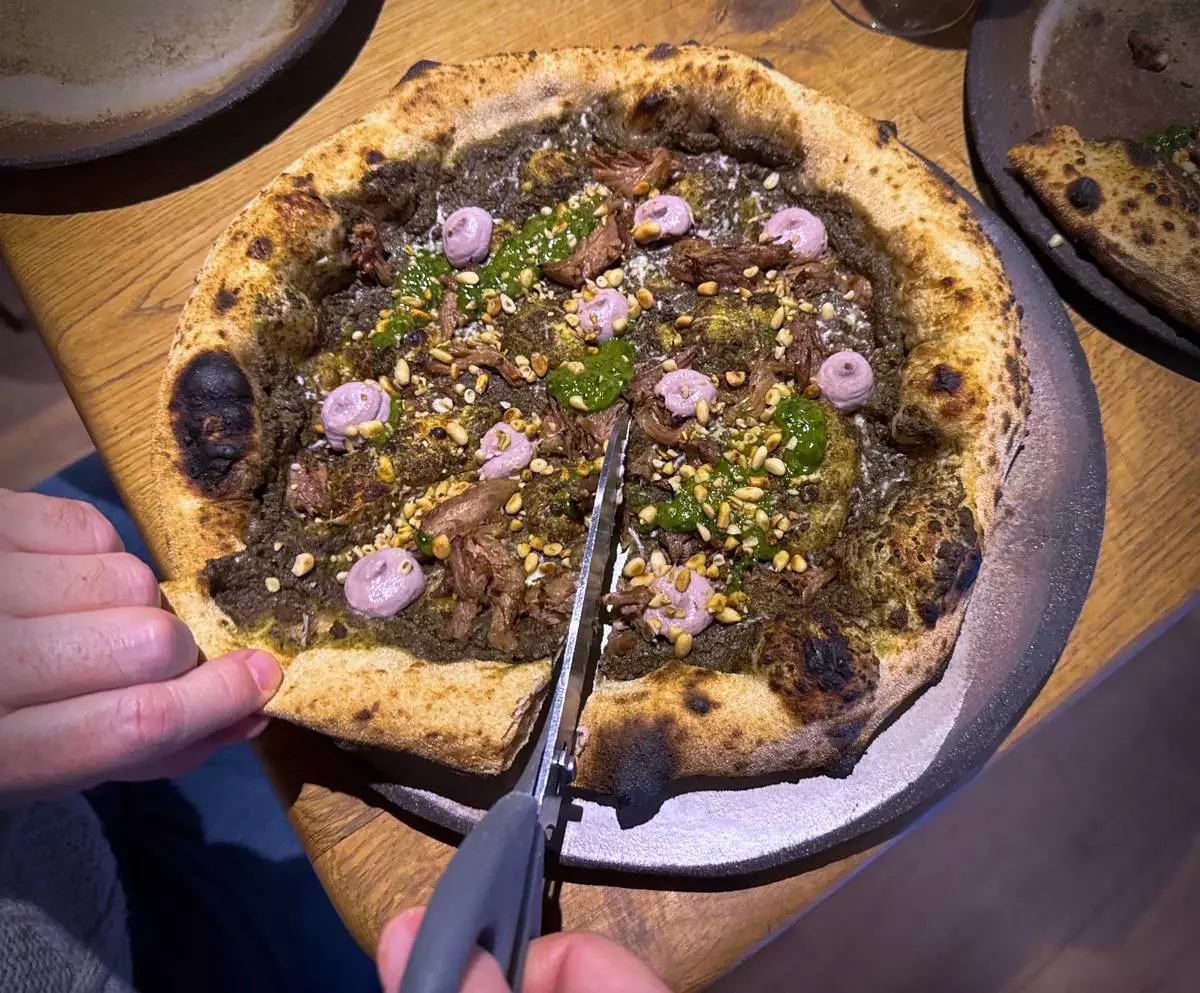
A customer cuts a Roman-era pizza in Budapest, Hungary, on Feb. 11, 2026. (AP Photo/Bela Szandelszky)
A customer cuts a Roman-era pizza in Budapest, Hungary, on Feb. 11, 2026. (AP Photo/Bela Szandelszky)

A chef of the Neverland Pizzeria makes dough for the restaurant's Roman-era pizza in Budapest, Hungary, on Feb. 11, 2026. (AP Photo/Bela Szandelszky)
A chef of the Neverland Pizzeria makes dough for the restaurant's Roman-era pizza in Budapest, Hungary, on Feb. 11, 2026. (AP Photo/Bela Szandelszky)
Laszlo Bardossy, head chef of the Neverland Pizzeria serves the restaurant's Roman-era pizza in Budapest, Hungary, on Feb. 11, 2026. (AP Photo/Bela Szandelszky)


Laszlo Bardossy, head chef of the Neverland Pizzeria serves the restaurant's Roman-era pizza in Budapest, Hungary, on Feb. 11, 2026. (AP Photo/Bela Szandelszky)

Laszlo Bardossy, head chef of the Neverland Pizzeria adds topping on the restaurant's Roman-era pizza in Budapest, Hungary, on Feb. 11, 2026. (AP Photo/Bela Szandelszky)

Laszlo Bardossy, head chef of the Neverland Pizzeria adds topping on the restaurant's Roman-era pizza in Budapest, Hungary, on Feb. 11, 2026. (AP Photo/Bela Szandelszky)
SALT LAKE CITY (AP) — A year after her husband died, a mother of three in Utah self-published a children’s book that she said helped her sons cope with the sudden loss. Kouri Richins promoted her book “Are You With Me?” on a local TV station and drew praise for helping young children process the death of a parent.

Weeks after the book's publication in 2023, she was arrested in her husband's death and charged with murder.

The arrest sent shock waves through her small mountain town just outside Park City, where a 12-person jury is set to decide her fate in a monthlong trial that starts Monday.

Richins, 35, faces nearly three dozen counts in connection with her husband's death, including aggravated murder, attempted murder, forgery, mortgage fraud and insurance fraud. She has pleaded not guilty.

Prosecutors say she killed her husband, Eric Richins, at their home in March 2022 by slipping fentanyl into a cocktail that he drank. They say she was deep in debt and killed him for financial gain while planning a future with another man she was seeing on the side.

The chilling case of a once-respected local author accused of profiting off her own violent crime has captivated true-crime enthusiasts in the years since her arrest. Once lauded as a touching read, her book has since become a tool for prosecutors in arguing that she carried out a calculated killing.

Her defense attorneys, Wendy Lewis, Kathy Nester and Alex Ramos, said they are confident the jury will rule in Richins’ favor after hearing her side of the story.

“Kouri has waited nearly three years for this moment: the opportunity to have the facts of this case heard by a jury, free from the prosecution’s narrative that has dominated headlines since her arrest,” her legal team said in a statement. “What the public has been told bears little resemblance to the truth.”

On the night of her husband's death, Richins called 911 to report that she had found him “cold to the touch” at the foot of their bed, according to the police report. He was pronounced dead, and a medical examiner later found five times the lethal dose of fentanyl in his system.

That was not her first attempt on his life, charging documents allege.

A month earlier, on Valentine's Day, Eric Richins told friends he broke out in hives and blacked out after taking one bite of a sandwich that Richins had left for him. She had bought the sandwich the same week police say she also purchased fentanyl pills from the family's housekeeper. Opioids, including fentanyl, can cause severe allergic reactions.

After injecting himself with his son’s EpiPen and chugging the allergy medication Benadryl, Eric Richins woke from a deep sleep and called a friend to say, “I think my wife tried to poison me,” the friend said in a written testimony.

A day after Valentine’s Day, Kouri Richins texted her alleged lover, “If he could just go away ... life would be so perfect.”

The friend Eric Richins called that night and the housekeeper who claims to have sold his wife the drugs could be key witnesses in the upcoming trial. Others may include family members and the man with whom Kouri Richins was allegedly having an affair.

The prosecution's star witness, housekeeper Carmen Lauber, told police she gave Richins fentanyl pills she bought from a dealer a couple of days before Valentine’s Day. Later that month, Richins allegedly told the housekeeper that the pills she provided were not strong enough and asked her to procure stronger fentanyl, according to charging documents.

Defense attorneys are expected to argue that Lauber did not actually give Richins fentanyl and was motivated to lie for legal protection. Lauber is not charged in connection with the case, and detectives said at an earlier hearing that she had been granted immunity.

No fentanyl pills were ever found in Richins’ home, and the housekeeper's dealer said he was in jail and detoxing from drug use when he told detectives in 2023 that he had sold Lauber fentanyl. He later said in a sworn affidavit that he only sold her the opioid OxyContin.

Charging documents indicate Eric Richins met with a divorce attorney and an estate planner in October 2020, a month after he discovered that his wife made some major financial decisions without his knowledge. She had a negative bank account balance, owed lenders more than $1.8 million and was being sued by a creditor, according to court documents.

Prosecutors say Kouri Richins mistakenly believed she would inherit her husband's estate under terms of their prenuptial agreement. She had also opened numerous life insurance policies on her husband without his knowledge, with benefits totaling nearly $2 million, prosecutors allege.

She is also accused of forging loan applications and fraudulently claiming insurance benefits after her husband's death.

FILE - Kouri Richins, a Utah mother of three who wrote a children's book about coping with grief after her husband's death and was later accused of fatally poisoning him, looks on during a court hearing on Aug. 27, 2024, in Park City, Utah. (AP Photo/Rick Bowmer, Pool, File)

FILE - Kouri Richins, a Utah mother of three who wrote a children's book about coping with grief after her husband's death and was later accused of fatally poisoning him, looks on during a court hearing on Aug. 27, 2024, in Park City, Utah. (AP Photo/Rick Bowmer, Pool, File)

Recommended Articles