Skip to Content Facebook Feature Image

A record-setting Winter Olympics: 6 golds and 16 medals for the US in women's events set marks

News

A record-setting Winter Olympics: 6 golds and 16 medals for the US in women's events set marks
News

News

A record-setting Winter Olympics: 6 golds and 16 medals for the US in women's events set marks

2026-02-22 00:56 Last Updated At:01:00

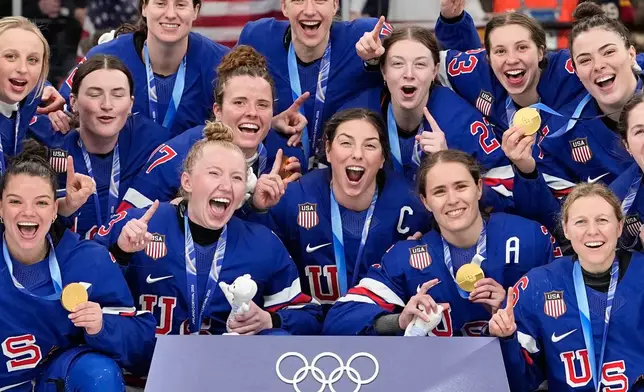
CORTINA D'AMPEZZO, Italy (AP) — The U.S. women's hockey team had just won Olympic gold, and veteran forward Kendall Coyne Schofield summed the moment up perfectly.

“We did it!” she exclaimed.

More Images
United States' team celebrate after victory ceremony for women's ice hockey at the 2026 Winter Olympics, in Milan, Italy, Thursday, Feb. 19, 2026. (AP Photo/Hassan Ammar)

United States' team celebrate after victory ceremony for women's ice hockey at the 2026 Winter Olympics, in Milan, Italy, Thursday, Feb. 19, 2026. (AP Photo/Hassan Ammar)

Gold medalist Alysa Liu of the United States displays her medal after competing in the women's free skate program in figure skating at the 2026 Winter Olympics, in Milan, Italy, Thursday, Feb. 19, 2026. (AP Photo/Natacha Pisarenko)
Gold medalist Alysa Liu of the United States displays her medal after competing in the women's free skate program in figure skating at the 2026 Winter Olympics, in Milan, Italy, Thursday, Feb. 19, 2026. (AP Photo/Natacha Pisarenko)

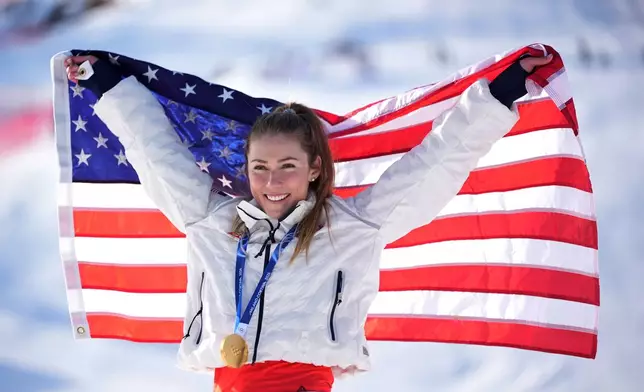
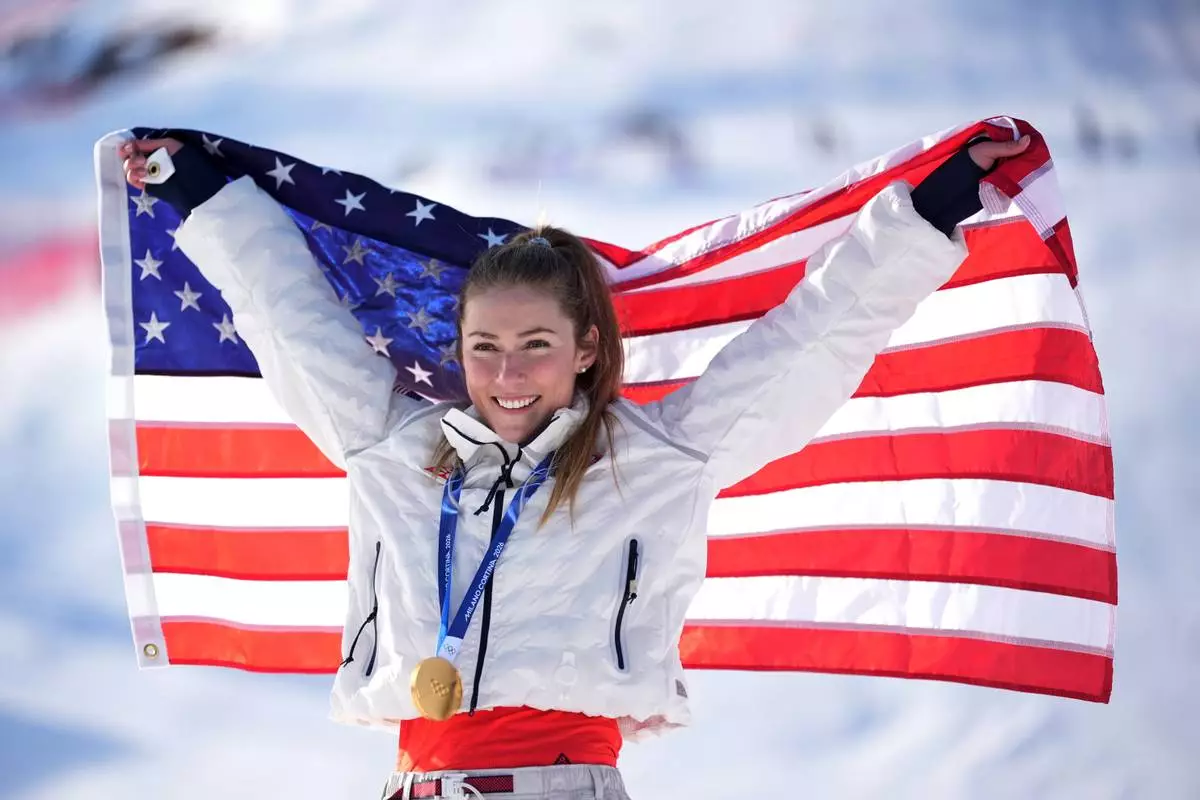
United States' Mikaela Shiffrin celebrates winning the gold medal in an alpine ski, women's slalom race, at the 2026 Winter Olympics, in Cortina d'Ampezzo, Italy, Wednesday, Feb. 18, 2026. (AP Photo/Jacquelyn Martin)
United States' Mikaela Shiffrin celebrates winning the gold medal in an alpine ski, women's slalom race, at the 2026 Winter Olympics, in Cortina d'Ampezzo, Italy, Wednesday, Feb. 18, 2026. (AP Photo/Jacquelyn Martin)

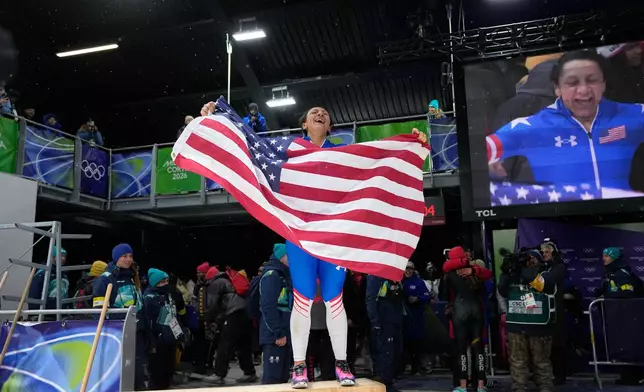
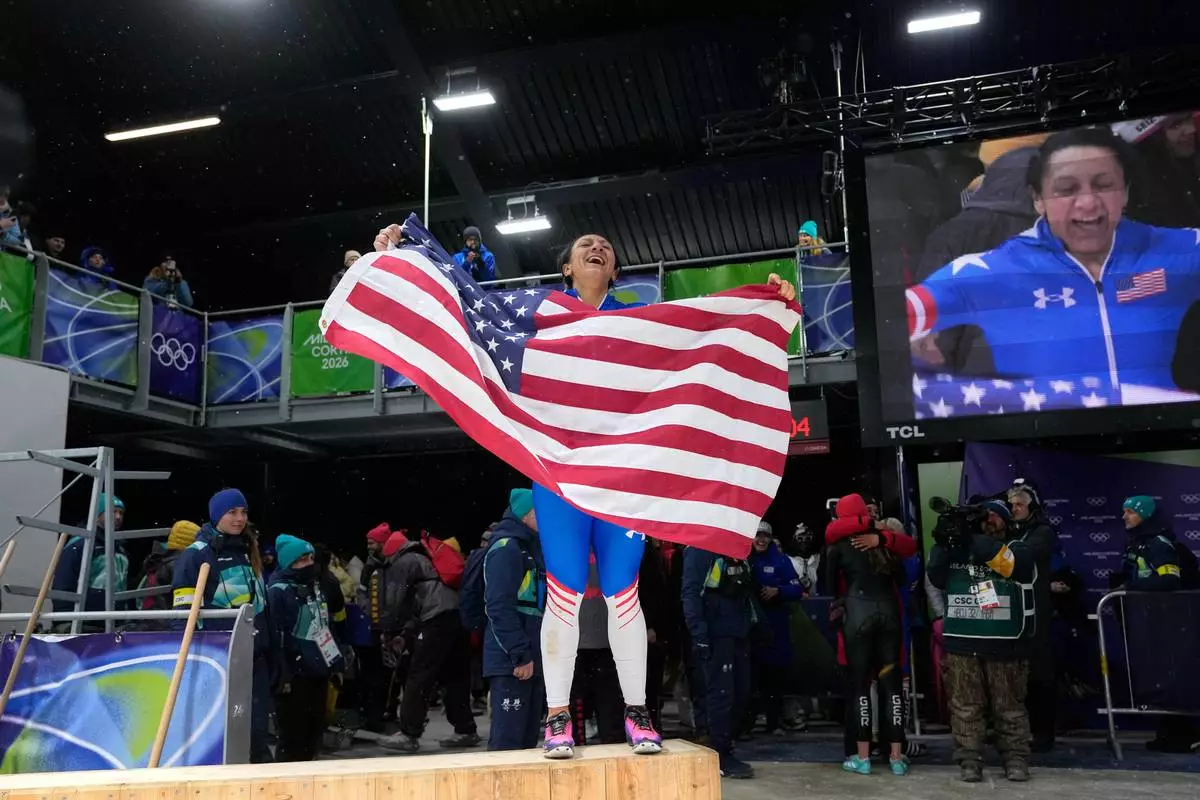
United States' gold medalist Elana Meyers Taylor celebrates at the finish after the women's monobob competition at the 2026 Winter Olympics, in Cortina d'Ampezzo, Italy, Monday, Feb. 16, 2026. (AP Photo/Alessandra Tarantino)
United States' gold medalist Elana Meyers Taylor celebrates at the finish after the women's monobob competition at the 2026 Winter Olympics, in Cortina d'Ampezzo, Italy, Monday, Feb. 16, 2026. (AP Photo/Alessandra Tarantino)

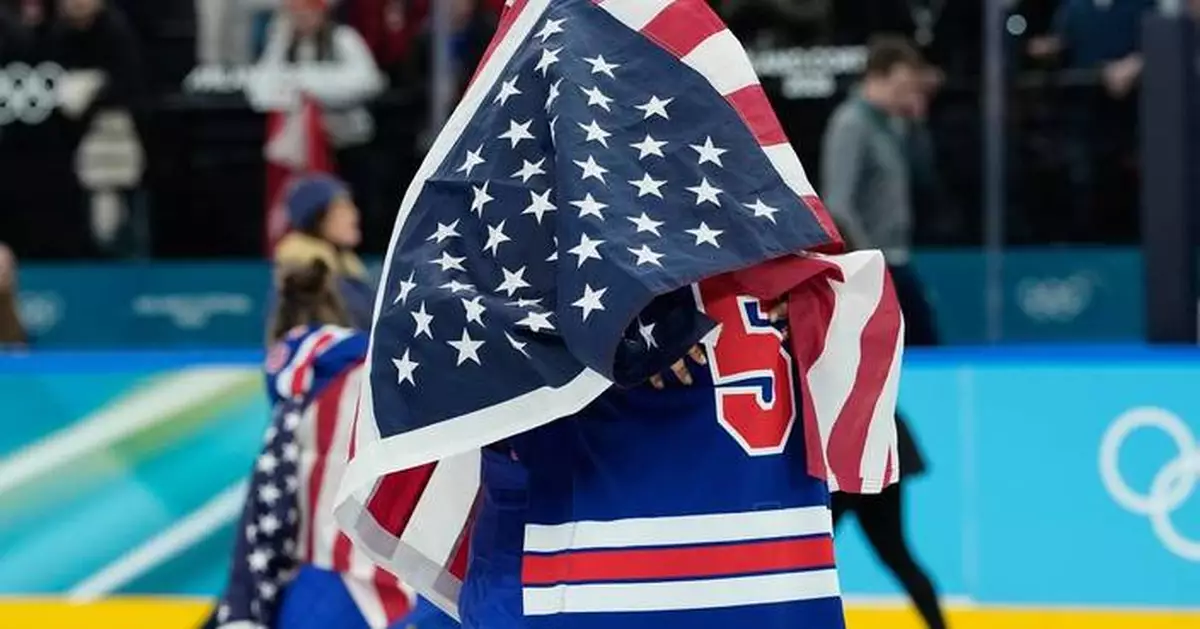
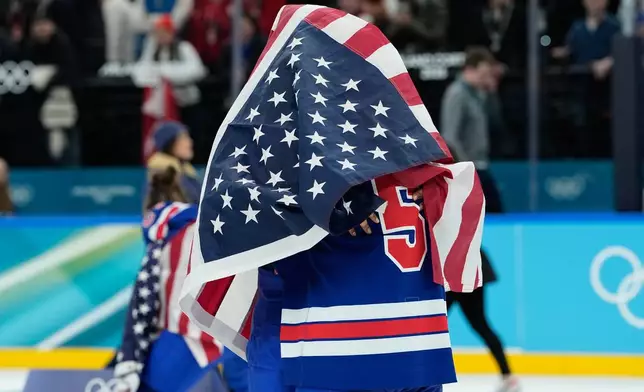
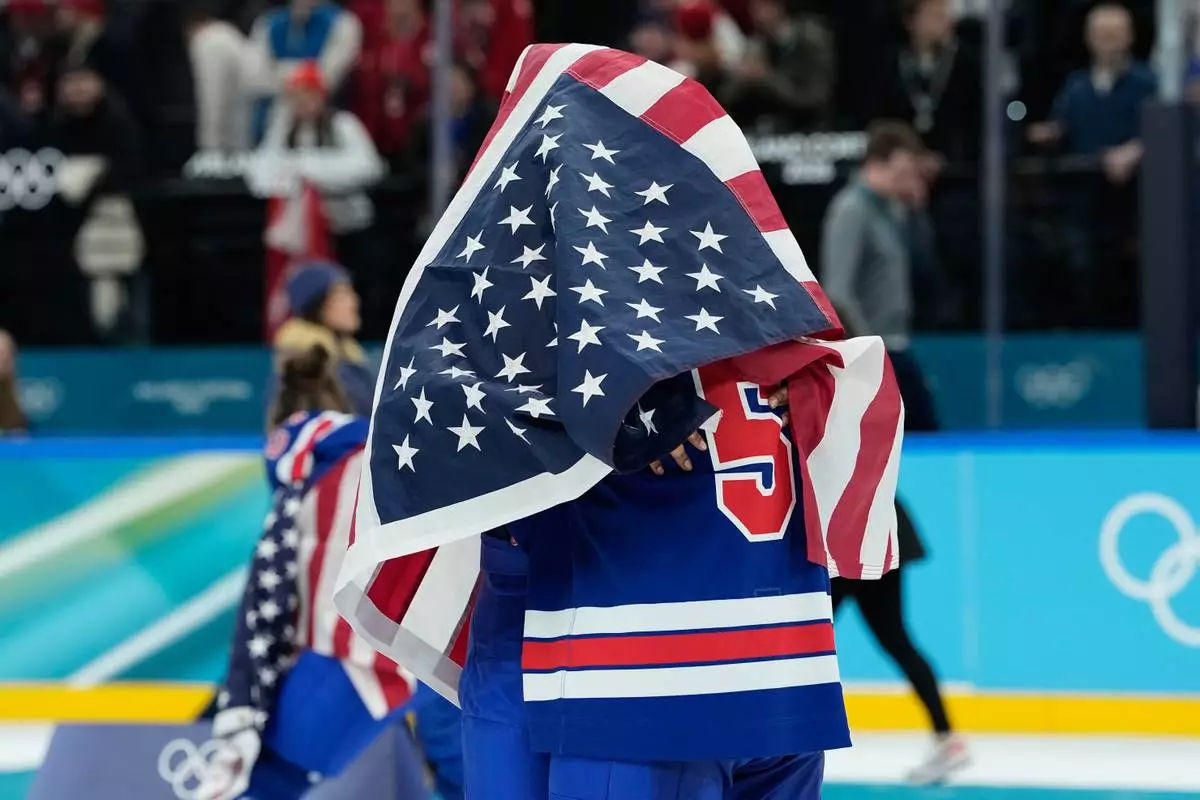
United States' Megan Keller (5), covered in the U.S. flag, gets a hug from a teammate after the United States' women's ice hockey team stand after being presented with the gold medals at the 2026 Winter Olympics, in Milan, Italy, Thursday, Feb. 19, 2026. (AP Photo/Petr David Josek)

United States' Megan Keller (5), covered in the U.S. flag, gets a hug from a teammate after the United States' women's ice hockey team stand after being presented with the gold medals at the 2026 Winter Olympics, in Milan, Italy, Thursday, Feb. 19, 2026. (AP Photo/Petr David Josek)

Plenty of American women — more than ever at a Winter Olympics — had the same sentiment at these Milan Cortina Games.

When it came to winning medals, they indeed did it. And in record numbers, too.

American women — not even counting mixed events — were up to six golds and 16 medals overall through some of the competition on Saturday, the next-to-last day of these Games. The previous U.S. winter women's-only marks: five golds (done in 1992, 2002 and 2018) and 13 medals (done in 2014 and 2022).

“Our team is so strong,” Milan Cortina women’s slalom gold medalist and Alpine legend Mikaela Shiffrin said. “We have so many incredible athletes and teammates and friends, and everybody just showed up with so much courage and heart here. And I’m so proud to be part of this American team.”

The count goes to 20 medals for U.S. women from Milan Cortina when adding in mixed competition. More than 40 American women will leave the Games with at least one medal — another winter record for the U.S. And those numbers could keep rising, with some medal chances still left before the cauldrons get extinguished and the Games come to a close.

“Team USA is crushing it and it’s friggin’ sweet,” said U.S. women's bobsledder Kaillie Humphries Armbruster — a bronze medalist in monobob and a contender for another medal in the two-woman event on Saturday night. “Women’s hockey got gold, hell yeah. It's all definitely motivating.”

There was shiny motivation everywhere U.S. women could look.

Shiffrin and downhill winner Breezy Johnson won golds in Alpine skiing, Elana Meyers Taylor won in monobob, Alysa Liu won the figure skating women's singles gold (plus another gold in the team event for both men and women), Elizabeth Lemley took the Olympic title in freestyle moguls and the women's hockey team rallied late to force overtime and then beat Canada for that title. Kaila Kuhn was part of a gold-medal win in mixed team aerials as well — the 11th for Team USA at these Olympics, the most by the Americans in Winter Games history.

The U.S. men have been no slouches in Italy.

But the U.S. women have been record-setting.

“It’s iconic. It’s legendary,” U.S. bobsledder Kaysha Love said. “At the end of the day, I think that’s why we do this.”

In fairness, the games have grown over time, which means more women have gotten the chance to become Olympians. There were 41 events for women (excluding mixed events) at Milan Cortina, compared with 37 at Turin in 2006 and a mere 12 at Lake Placid in 1980.

Still, records are records. And this U.S. Olympic women’s team, as a total group, set a new standard.

The 16 medals for Americans in women's competition at Milan Cortina, and 20 when adding in mixed events, would top the total medals won by all U.S. athletes — men, women and mixed — in every Winter Games from 1924 through 1998.

Freestyle skiing has delivered four of the 16 women's medals for Americans in these Games; Jaelin Kauf got two of those, both silvers in moguls.

“There’s an incredibly strong women’s team and moguls program in the US, (which is) exactly why it’s so good,” Kauf said. “We have become extremely dominant in the last handful of years, continuing to be the best women’s team in the world for four or five years now.”

Clearly, success breeds success. Just ask Cory Thiesse.

She became the first American woman to medal in Olympic curling. Thiesse won silver in mixed doubles with Korey Dropkin and got there, in part, because she was inspired by past success of others — whether they were in curling or not.

“I know how important it was for me to have girls to look up to when I was growing up, not only in my own sport but other sports out there winning medals and seeing that on TV and dreaming big because of it,” Thiesse told the AP on Friday, one day before she and the U.S. women lost the bronze-medal match to Canada. “So, I just think it’s great for future generations.”

U.S. men's hockey coach Mike Sullivan said the American women who delivered this year are also planting seeds for 2030, 2034 and beyond.

“What a terrific hockey team and they’ll be an inspiration for the next generation of girls growing up in the United States,” Sullivan said after the U.S. women topped Canada for hockey gold. “It’s crazy how far women’s hockey has come in the United States, and a lot of it is due to the teams like this and the girls that play on these teams. They inspire the next generation.”

AP National Writer Eddie Pells, AP Hockey Writers Stephen Whyno and John Wawrow, AP Sports Writer Pat Graham and AP reporter Jennifer McDermott contributed to this report.

AP Winter Olympics coverage: https://apnews.com/hub/milan-cortina-2026-winter-olympics
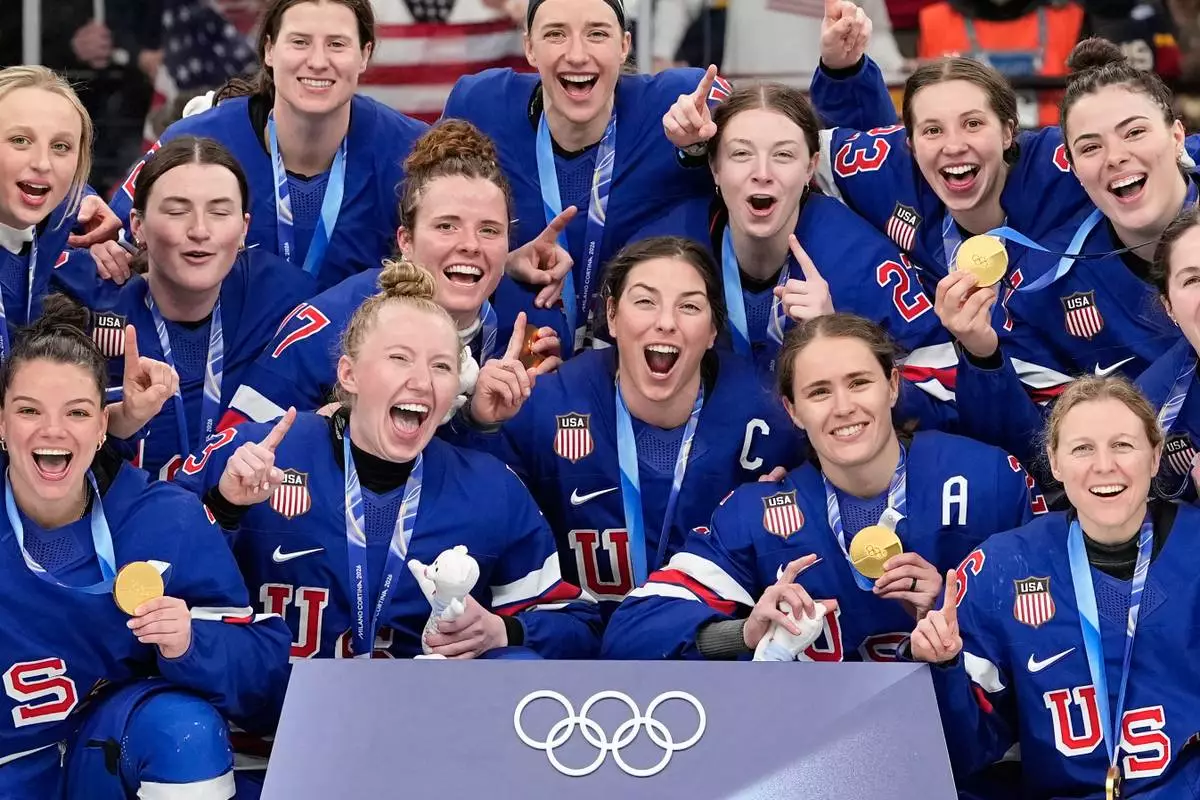
United States' team celebrate after victory ceremony for women's ice hockey at the 2026 Winter Olympics, in Milan, Italy, Thursday, Feb. 19, 2026. (AP Photo/Hassan Ammar)

United States' team celebrate after victory ceremony for women's ice hockey at the 2026 Winter Olympics, in Milan, Italy, Thursday, Feb. 19, 2026. (AP Photo/Hassan Ammar)

Gold medalist Alysa Liu of the United States displays her medal after competing in the women's free skate program in figure skating at the 2026 Winter Olympics, in Milan, Italy, Thursday, Feb. 19, 2026. (AP Photo/Natacha Pisarenko)
Gold medalist Alysa Liu of the United States displays her medal after competing in the women's free skate program in figure skating at the 2026 Winter Olympics, in Milan, Italy, Thursday, Feb. 19, 2026. (AP Photo/Natacha Pisarenko)

United States' Mikaela Shiffrin celebrates winning the gold medal in an alpine ski, women's slalom race, at the 2026 Winter Olympics, in Cortina d'Ampezzo, Italy, Wednesday, Feb. 18, 2026. (AP Photo/Jacquelyn Martin)
United States' Mikaela Shiffrin celebrates winning the gold medal in an alpine ski, women's slalom race, at the 2026 Winter Olympics, in Cortina d'Ampezzo, Italy, Wednesday, Feb. 18, 2026. (AP Photo/Jacquelyn Martin)

United States' gold medalist Elana Meyers Taylor celebrates at the finish after the women's monobob competition at the 2026 Winter Olympics, in Cortina d'Ampezzo, Italy, Monday, Feb. 16, 2026. (AP Photo/Alessandra Tarantino)
United States' gold medalist Elana Meyers Taylor celebrates at the finish after the women's monobob competition at the 2026 Winter Olympics, in Cortina d'Ampezzo, Italy, Monday, Feb. 16, 2026. (AP Photo/Alessandra Tarantino)

United States' Megan Keller (5), covered in the U.S. flag, gets a hug from a teammate after the United States' women's ice hockey team stand after being presented with the gold medals at the 2026 Winter Olympics, in Milan, Italy, Thursday, Feb. 19, 2026. (AP Photo/Petr David Josek)


United States' Megan Keller (5), covered in the U.S. flag, gets a hug from a teammate after the United States' women's ice hockey team stand after being presented with the gold medals at the 2026 Winter Olympics, in Milan, Italy, Thursday, Feb. 19, 2026. (AP Photo/Petr David Josek)

SOCORRO, Texas (AP) — In a Texas town at the edge of the Rio Grande and a tall metal border wall, rumors swirled that federal immigration officials wanted to purchase three hulking warehouses to transform into a detention center.

As local officials scrambled to find out what was happening, a deed was filed showing the Department of Homeland Security had already inked a $122.8 million deal for the 826,000-square-foot (76,738-square-meter) warehouses in Socorro, a bedroom community of 40,000 people outside El Paso.

“Nobody from the federal government bothered to pick up the phone or even send us any type of correspondence letting us know what’s about to take place,” said Rudy Cruz Jr., the mayor of the predominantly Hispanic town of low-slung ranch homes and trailer parks, where orchards and irrigation ditches share the landscape with strip malls, truck stops, recycling plants and distribution warehouses.

Socorro is among at least 20 communities with large warehouses across the U.S. that have become stealth targets for Immigration and Customs Enforcement’s $45-billion expansion of detention centers.

As public support for the agency and President Donald Trump’s immigration crackdown sags, communities are objecting to mass detentions and raising concerns that the facilities could strain water supplies and other services while reducing local tax revenue. In many cases, mayors, county commissioners, governors and members of Congress learned about ICE’s ambitions only after the agency bought or leased space for detainees, leading to shock and frustration even in areas that have backed Trump.

“I just feel,” said Cruz, whose wife was born in Mexico, “that they do these things in silence so that they don’t get opposition.”

ICE, which is part of DHS, has purchased at least seven warehouses in Arizona, Georgia, Maryland, Pennsylvania and Texas, signed deeds show. Other deals have been announced but not yet finalized, though buyers scuttled sales in eight locations.

DHS objected to calling the sites warehouses, stressing in a statement that they would be “very well structured detention facilities meeting our regular detention standards.”

The process has been chaotic at times. ICE this past week acknowledged it made a “mistake” when it announced warehouse purchases in Chester, New York, and Roxbury, New Jersey. Roxbury then announced Friday that the sale there had closed.

DHS has confirmed it is looking for more detention space but hasn’t disclosed individual sites ahead of acquisitions. Some cities learned that ICE was scouting warehouses through reporters. Others were tipped off by a spreadsheet circulating online among activists whose source is unclear.

It wasn’t until Feb. 13 that the scope of the warehouse project was confirmed, when the governor’s office in New Hampshire, where there is backlash to a planned 500-bed processing center, released a document from ICE showing the agency plans to spend $38.3 billion to boost detention capacity to 92,000 beds.

Since Trump took office, the number of people detained by ICE has increased to 75,000 from 40,000, spread across more than 225 sites.

ICE could use the warehouses to consolidate and to increase capacity. The document describes a project that includes eight large-scale detention centers, capable of housing 7,000 to 10,000 detainees each, and 16 smaller regional processing centers. The document also refers to the acquisition of 10 existing “turnkey” facilities.

The project is funded through the big tax and spending cuts bill passed by Congress last year that nearly doubled DHS' budget. To build the detention centers, the Trump administration is using military contracts.

Those contracts allow a lot of secrecy and for DHS to move quickly without following the usual processes and safeguards, said Charles Tiefer, a professor emeritus of law at the University of Baltimore Law School.

In Socorro, the ICE-owned warehouses are so large that 4 1/2 Walmart Supercenters could fit inside, standing in contrast to the remnants of the austere Spanish colonial and mission architecture that defines the town.

At a recent City Council meeting, public comments stretched for hours. “I think a lot of innocent people are getting caught up in their dragnet,” said Jorge Mendoza, an El Paso County retiree whose grandparents immigrated from Mexico.

Many speakers invoked concerns about three recent deaths at an ICE detention facility at the nearby Fort Bliss Army base.

Even communities that backed Trump in 2024 have been caught off guard by ICE's plans and have raised concerns.

In rural Pennsylvania's Berks County, commissioner Christian Leinbach called the district attorney, the sheriff, the jail warden and the county’s head of emergency services when he first heard ICE might buy a warehouse in Upper Bern Township, 3 miles (4.8 kilometers) from his home.

No one knew anything.

A few days later, a local official in charge of land records informed him that ICE had bought the building — promoted by developers as a “state-of-the art logistics center” — for $87.4 million.

“There was absolutely no warning,” Leinbach said during a meeting in which he raised concerns that turning the warehouse into a federal facility means a loss of more than $800,000 in local tax dollars.

ICE has touted the income taxes its workers would pay, though the facilities themselves will be exempt from property taxes.

In Social Circle, Georgia, which also strongly supported Trump in 2024, officials were stunned by ICE’s plans for a facility that could hold 7,500 to 10,000 people after first learning about it through a reporter.

The city, which has a population of just 5,000 and worries about the infrastructure needs for such a detention center, only heard from DHS after the $128.6 million sale of a 1 million-square-foot (92,900-square-meter) warehouse was completed. Like Socorro and Berks County, Social Circle questioned whether the water and sewage system could keep up.

ICE has said it did due diligence to ensure the sites don’t overwhelm city utilities. But Social Circle said the agency's analysis relied on a yet-to-be built sewer treatment plant.

“To be clear, the City has repeatedly communicated that it does not have the capacity or resources to accommodate this demand, and no proposal presented to date has demonstrated otherwise,” the city said in a statement.

And in the Phoenix suburb of Surprise, officials sent a scathing letter to Homeland Security Secretary Kristi Noem after ICE without warning bought a massive warehouse in a residential area about a mile from a high school. Arizona Attorney General Kris Mayes, a Democrat, raised the prospect of going to court to have the site declared a public nuisance.

Back in Socorro, people waiting to speak against the ICE facility spilled out of the City Council chambers, some standing beside murals paying tribute to the World War II-era Braceros Program that allowed Mexican farmworkers to be guest workers in the U.S. The program stoked Socorro’s economy and population before President Dwight D. Eisenhower’s administration in the 1950s began mass deportations aimed at people who had crossed the border illegally.

Eduardo Castillo, formerly an attorney for the U.S. Department of Justice, told city officials it is intimidating but “not impossible” to challenge the federal government.

“If you don’t at least try,” he said, “you will end up with another inhumane detention facility built in your jurisdiction and under your watch.”

Hollingsworth reported from Kansas City, Missouri. Holly Ramer in Concord, New Hampshire, and Marc Levy in Harrisburg, Pennsylvania, also contributed.

A warehouse purchased by U.S. Immigration and Customs Enforcement in Surprise, Ariz., is seen Saturday, Feb. 14, 2026. (AP Photo/Ty ONeil)

A warehouse purchased by U.S. Immigration and Customs Enforcement in Surprise, Ariz., is seen Saturday, Feb. 14, 2026. (AP Photo/Ty ONeil)

Three hulking warehouses light up the night in Socorro, Texas, Thursday, Feb. 12, 2026, amid concern about the purchase of the property by federal authorities in connection with U.S. Immigration and Customs Enforcement’s $45-billion expansion of immigrant detention centers. (AP Photo/Morgan Lee)

Three hulking warehouses light up the night in Socorro, Texas, Thursday, Feb. 12, 2026, amid concern about the purchase of the property by federal authorities in connection with U.S. Immigration and Customs Enforcement’s $45-billion expansion of immigrant detention centers. (AP Photo/Morgan Lee)

A public comment session takes place at a City Council meeting on Wednesday, Feb. 11, 2026, in Socorro, Texas, regarding the purchase of three hulking warehouses in connection with U.S. Immigration and Customs Enforcement's expansion of immigrant detention centers. (AP Photo/Morgan Lee)

A public comment session takes place at a City Council meeting on Wednesday, Feb. 11, 2026, in Socorro, Texas, regarding the purchase of three hulking warehouses in connection with U.S. Immigration and Customs Enforcement's expansion of immigrant detention centers. (AP Photo/Morgan Lee)

Mayor Rudy Cruz Jr., right, listens to public comments at a City Council meeting on Wednesday, Feb. 11, 2026, in Socorro, Texas, regarding the purchase of three hulking warehouses in connection with U.S. Immigration and Customs Enforcement's expansion of immigrant detention centers. (AP Photo/Morgan Lee)

Mayor Rudy Cruz Jr., right, listens to public comments at a City Council meeting on Wednesday, Feb. 11, 2026, in Socorro, Texas, regarding the purchase of three hulking warehouses in connection with U.S. Immigration and Customs Enforcement's expansion of immigrant detention centers. (AP Photo/Morgan Lee)

A newly built warehouse is seen on Friday, Feb. 6, 2026, in Social Circle, Ga., where officials are concerned about U.S. Immigrations and Customs Enforcement's plans connected to a $45-billion expansion of immigrant detention centers. (AP Photo/Mike Stewart)

A newly built warehouse is seen on Friday, Feb. 6, 2026, in Social Circle, Ga., where officials are concerned about U.S. Immigrations and Customs Enforcement's plans connected to a $45-billion expansion of immigrant detention centers. (AP Photo/Mike Stewart)

Recommended Articles