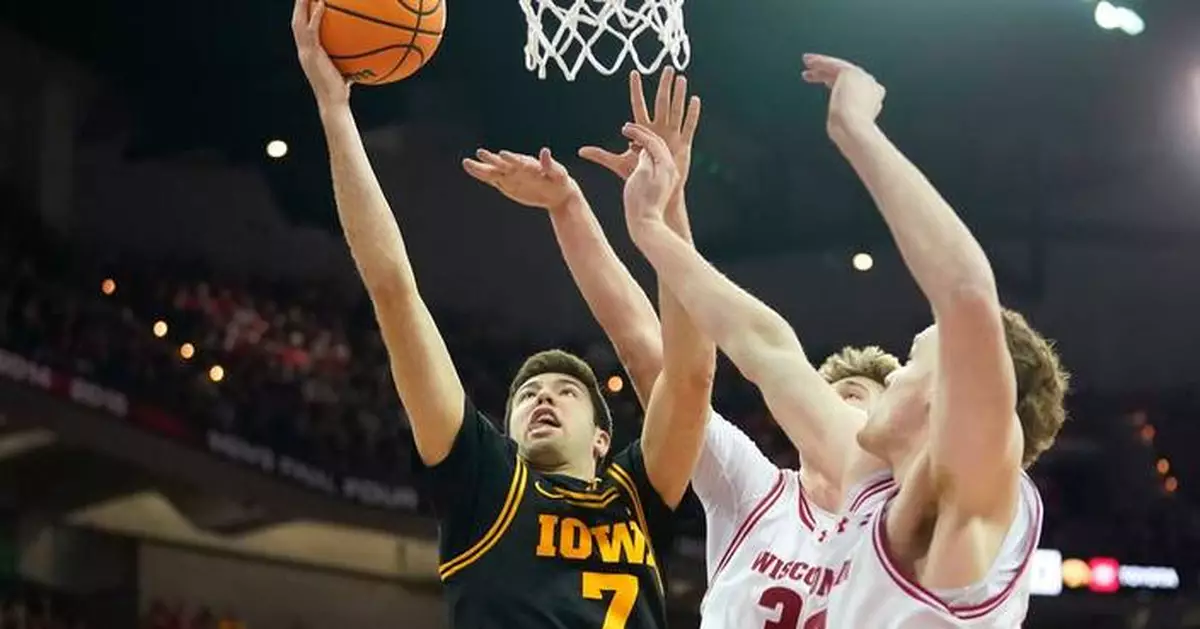
MADISON, Wis. (AP) — Nick Boyd scored 27 points and Nolan Winter added 18 as No. 24 Wisconsin pulled away late for an 84-71 victory over Iowa on Sunday.
Bennett Stirtz’s layup trimmed Iowa's deficit to 68-65, but Austin Rapp hit a pair of 3-pointers to fuel a 10-point Wisconsin run. Boyd’s layup put the Badgers ahead 78-65 with just under four minutes remaining.
John Blackwell hit four free throws after a deadball technical foul to extend the lead to 82-69 with 1:02 left.
Rapp scored 14 points and Blackwell had 13 for Wisconsin (19-8, 11-5 Big Ten), which bounced back from an 86-69 loss at Ohio State.
Stirtz had 23 points for Iowa (19-8, 9-7), which was coming off a 57-52 win at home over No. 9 Nebraska. Alvaro Folgueiras and Tate Sage scored 11 apiece.
Wisconsin shot 53.8%, including 10 of 24 beyond the arc. The Badgers hit 18 of 20 free throws, including 14 of 15 in the second half. Boyd shot 9 of 16 and Winter 8 of 11.
Stirtz opened the second half with a 3 to put Iowa up 44-41, but Wisconsin answered with an 11-0 run, going in front 51-44 on Boyd’s driving layup.
Andrew Rohde’s 3-pointer put the Badgers in front 64-57, but Stirtz hit a jumper and followed with a steal and layup to make it 64-61.
Wisconsin, which trailed by nine early, was within 41-40 at halftime despite Blackwell being limited to 10 scoreless minutes with two fouls.
Boyd and Winter combined for 29 of Wisconsin’s first-half points, making 11 of 16 shots, while the rest of the team was 4 for 12.
Iowa hosts Ohio State on Wednesday.
Wisconsin plays at Oregon on Wednesday.
Get poll alerts and updates on the AP Top 25 throughout the season. Sign up here. AP college basketball: https://apnews.com/hub/ap-top-25-college-basketball-poll and https://apnews.com/hub/college-basketball
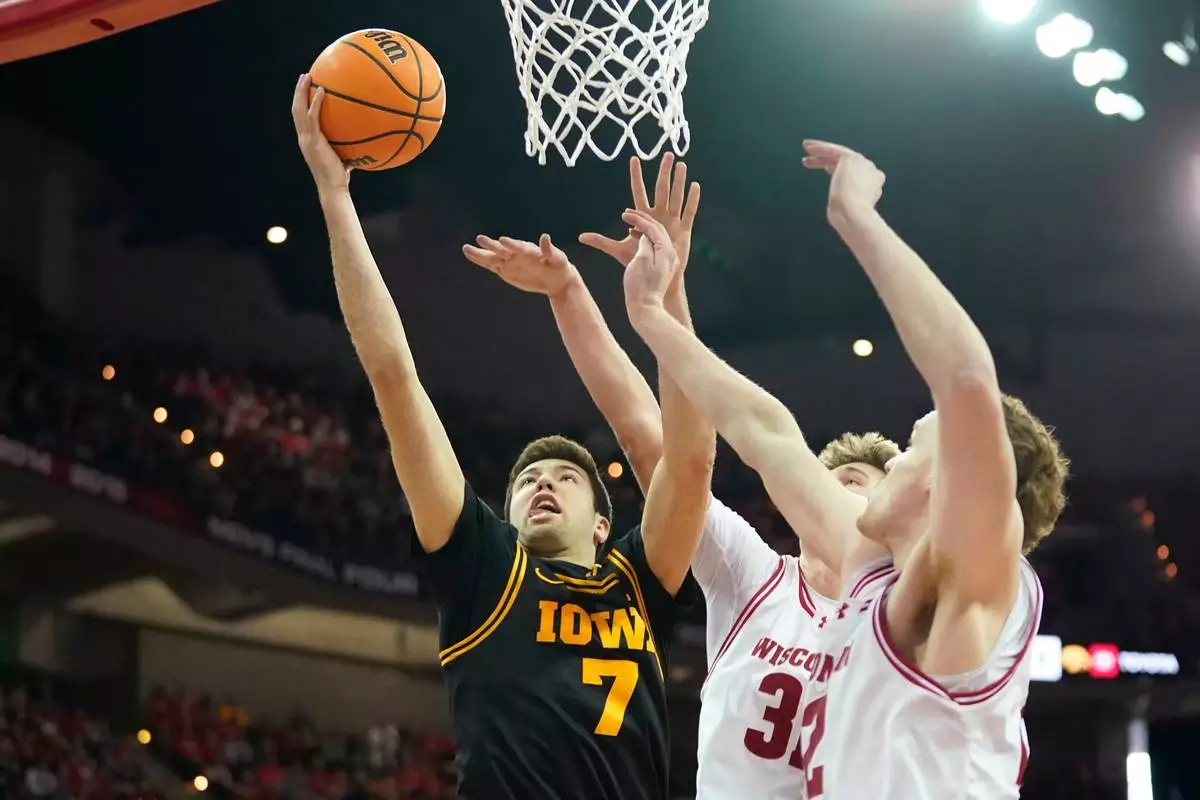
Iowa forward Alvaro Folgueiras (7) scores against Wisconsin forward Nolan Winter, center, and Wisconsin forward Austin Rapp, right, during the first half of an NCAA college basketball game Sunday, Feb. 22, 2026, in Madison, Wis. (AP Photo/Kayla Wolf)
MEXICO CITY (AP) — The Mexican army killed the leader of the Jalisco New Generation Cartel, Nemesio Rubén Oseguera Cervantes, "El Mencho," on Sunday, decapitating what had become Mexico's most powerful drug cartel and thrusting swaths of the nation into chaos.
The capture was the Mexican government's biggest prize yet to show the Trump administration in its efforts to crack down on the cartels, and was met with a forceful reaction from the cartel, known by its Spanish initials CJNG.
Cars burned out by cartel members blocked roads in nearly a dozen Mexican states and left smoke billowing into the air. Jalisco's capital, Guadalajara, was turned into a ghost town Sunday night as civilians hunkered down. School was canceled Monday in several states.
Oseguera Cervantes was wounded in an operation to capture him Sunday in Tapalpa, Jalisco about a two-hour drive southwest of Guadalajara and he died while being flown to Mexico City, the Defense Department said in a statement. The state is the base of the cartel known for trafficking huge quantities of fentanyl and other drugs to the United States.
During the operation, troops came under fire and killed four people at the location. Three more people, including Oseguera Cervantes, were wounded and later died, the statement said. Two others were arrested and armored vehicles, rocket launchers and other arms were seized. Three members of the armed forces were wounded and receiving medical treatment.
A Jalisco state official who requested anonymity because they were not authorized to speak publicly said that a member of the National Guard died in Tapalpa during the operation, six other National Guard members died in Zapopan beside Guadalajara, a jail guard was killed at a lockup in Puerto Vallarta when prisoners rioted, and an agent from the Jalisco state prosecutor’s office was killed in Guadalajara. Details were not immediately available.
The U.S. Embassy in Mexico said on X that the operation was carried out by Mexican special forces “within the framework of bilateral cooperation, with U.S. authorities providing complementary intelligence.”
“Ever since President (Claudia) Sheinbaum has been in power, the army has been way more confrontational, combative against criminal groups in Mexico,” said David Mora, analyst for International Crisis Group in Mexico. “This is signaling to the U.S. that if we keep cooperating, sharing intelligence, Mexico can do it, we don’t need U.S. troops on Mexican soil."
The killing of the drug lord set off several hours of roadblocks with burning vehicles, tactics commonly used by the cartels to block military operations. Videos circulating on social media showed smoke billowing over the tourist city of Puerto Vallarta in Jalisco, and people sprinting through the airport of the state's capital in panic.
Air Canada announced it was suspending flights to Puerto Vallarta “due to an ongoing security situation” and advised customers not to go to their airport.
In Guadalajara, the state capital, burning vehicles blocked roads. Mexico's second-largest city is scheduled to host matches during this summer's soccer World Cup.
The U.S. State Department warned U.S. citizens in Jalisco, Tamaulipas, Michoacan, Guerrero and Nuevo Leon states to remain in safe places due to the ongoing security operations. Canada's embassy in Mexico warned its citizens in Puerto Vallarta to shelter in place and generally to keep a low profile in Jalisco.
Jalisco Gov. Pablo Lemus told residents to stay at home and suspended public transportation.
The U.S. State Department had offered a reward of up to $15 million for information leading to the arrest of El Mencho. The Jalisco New Generation Cartel, known as CJNG, is one of the most powerful and fastest growing criminal organizations in Mexico and was born in 2009.
In February, the Trump administration designated the cartel as a foreign terrorist organization.
Sheinbaum, like her predecessor, has criticized the “kingpin” strategy of previous administrations that took out cartel leaders only to trigger explosions of violence as cartels fractured. While she has remained popular in Mexico, security is a persistent concern and since U.S. President Donald Trump took office a year ago, she has been under tremendous pressure to show results against drug trafficking.
On Sunday, Sheinbaum applauded Mexican security forces and called for calm in a post on X.
The Jalisco cartel has been one of the most aggressive cartels in its attacks on the military — including on helicopters — and is a pioneer in launching explosives from drones and installing mines. In 2020, it carried out a spectacular assassination attempt with grenades and high-powered rifles in the heart of Mexico City against the then head of the capital’s police force and now federal security secretary.
The DEA considers the cartel to be as powerful as the Sinaloa cartel, one of Mexico's most infamous criminal groups, with a presence in all 50 U.S. states. It is one of the main suppliers of cocaine to the U.S. market and, like the Sinaloa cartel, earns billions from the production of fentanyl and methamphetamines. Sinaloa, however, has been weakened by infighting after the loss of its leaders Ismael “El Mayo” Zambada and Joaquín “El Chapo” Guzmán, both in U.S. custody.
Oseguera Cervantes, 59, was originally from Aguililla in the neighboring state of Michoacan. He had been significantly involved in drug trafficking activities since the 1990s. When he was younger, he migrated to the U.S. where he was convicted of conspiracy to distribute heroin in the U.S. District Court for the Northern District of California in 1994 and served nearly three years in prison.
Following his release from custody, Oseguera Cervantes returned to Mexico and reengaged in drug trafficking activity with drug lord Ignacio Coronel Villarreal, alias “Nacho Coronel.” After Villarreal's death, Oseguera Cervantes and Erik Valencia Salazar, alias “El 85,” created the Jalisco New Generation Cartel around 2007.
Initially, they worked for the Sinaloa Cartel, but eventually split and for years the two cartels have battled for territory across Mexico.
Since 2017, Oseguera Cervantes has been indicted several times in the United States District Court for the District of Columbia.
The most recent superseding indictment, filed on April 5, 2022, charges Oseguera Cervantes with conspiracy and distribution of controlled substances (methamphetamine, cocaine, and fentanyl) for the purpose of illegal importation into the United States and use of firearms during and in connection with drug trafficking offenses. Oseguera Cervantes is also charged under the Drug Kingpin Enforcement Act for directing a continuing criminal enterprise.
Last year, people searching for missing relatives founds piles of shoes and other clothing, as well as bone fragments at what authorities later said was a Jalisco cartel recruitment and training site.
Associated Press writers María Verza and Megan Janetsky contributed to this report.
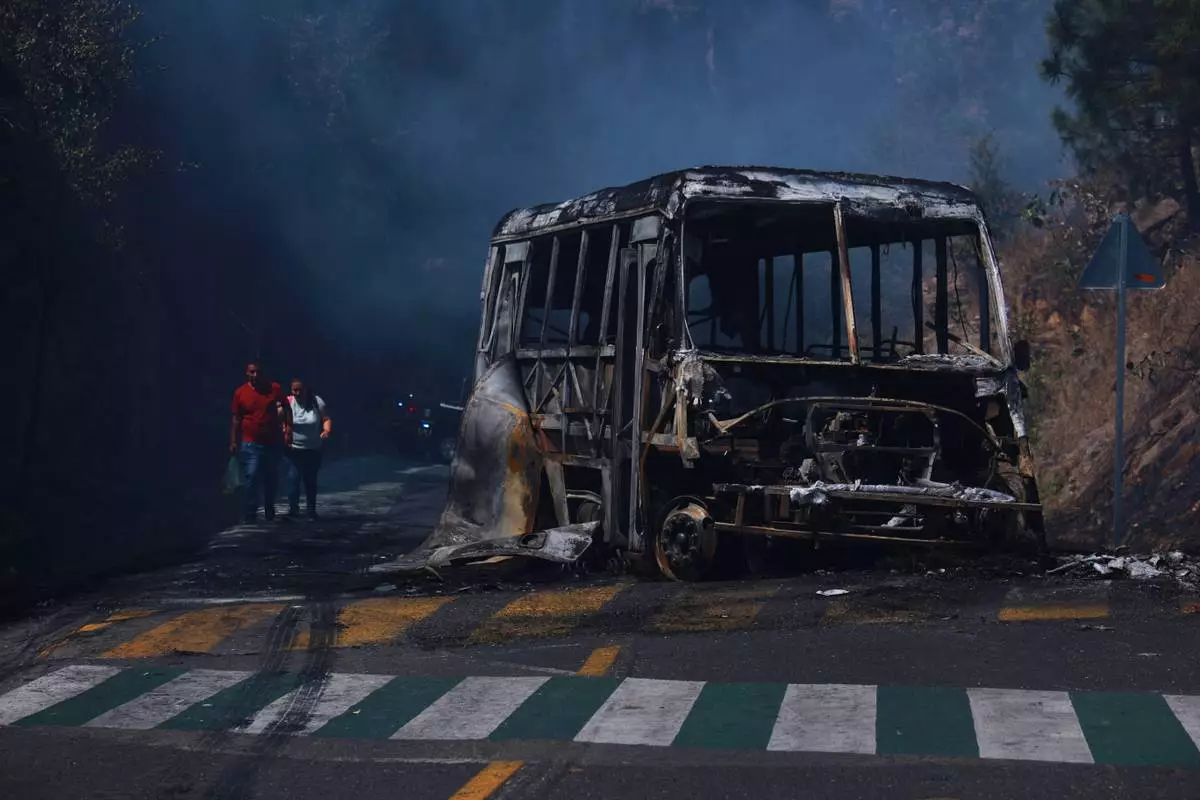
Pedestrians walk past a charred vehicle after it was set on fire, on a road in Cointzio, Michoacán state, Mexico, Sunday, Feb. 22, 2026, after the death of the leader of the Jalisco New Generation Cartel, Nemesio Rubén Oseguera Cervantes, known as "El Mencho." (AP Photo/Armando Solis)
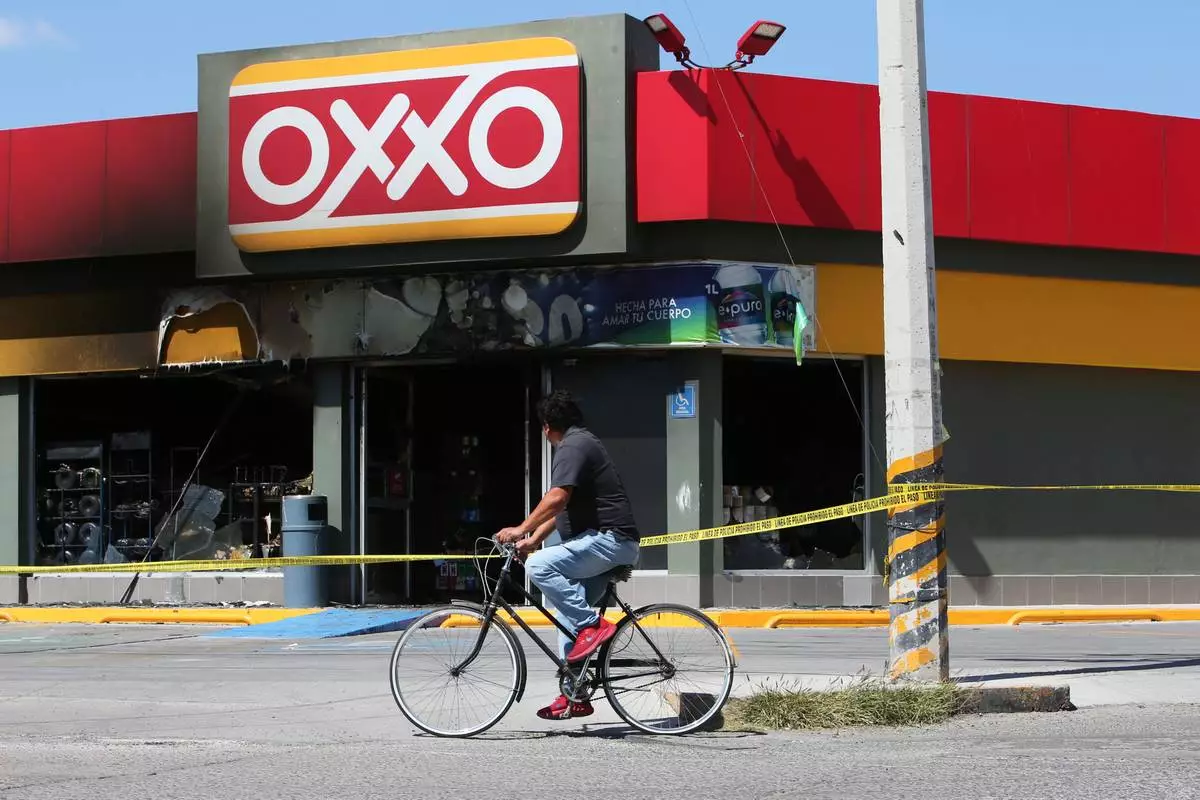
A man rides a bike next to a convenience store that was set on fire, in San Francisco del Ricon, Guanajuato state, Mexico, Sunday, Feb. 22, 2026, after the death of the leader of the Jalisco New Generation Cartel, Nemesio Ruben Oseguera Cervantes, known as "El Mencho." (AP Photo/Alfredo Valadez)
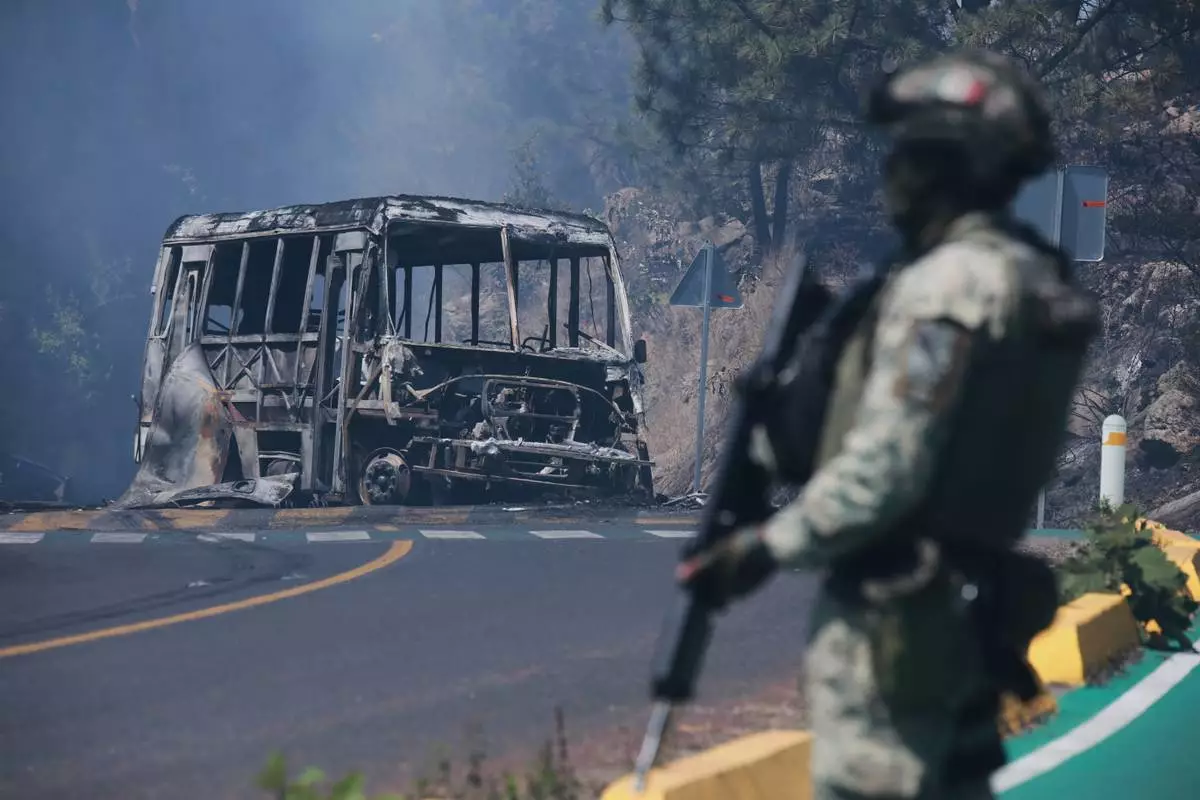
A soldier stands guard by a charred vehicle after it was set on fire, in Cointzio, Michoacán state, Mexico, Sunday, Feb. 22, 2026, following the death of the leader of the Jalisco New Generation Cartel, Nemesio Oseguera, known as "El Mencho." (AP Photo/Armando Solis)
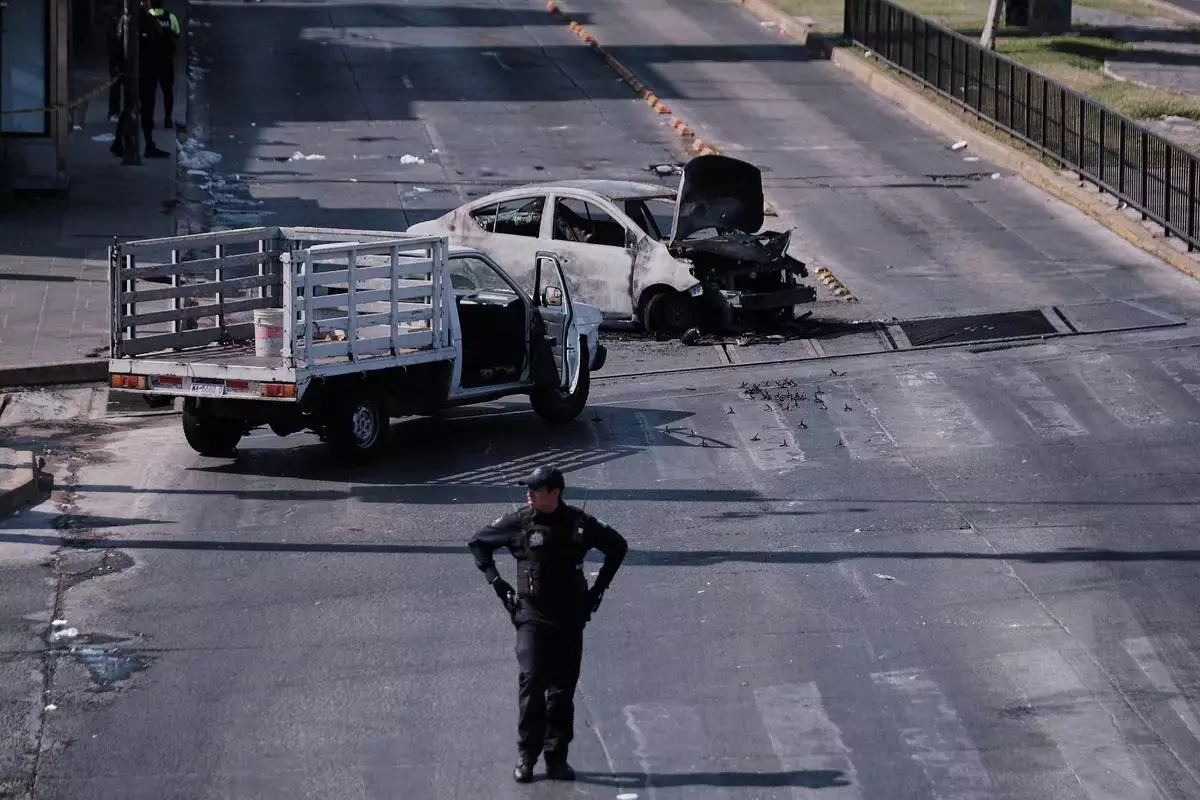
A police officer stands guard by a charred vehicle after it was set on fire, on a road in Guadalajara, Jalisco state, Mexico, Sunday, Feb. 22, 2026, after the death of the leader of the Jalisco New Generation Cartel, Nemesio Rubén Oseguera Cervantes, known as "El Mencho." (AP Photo/Alejandra Leyva)
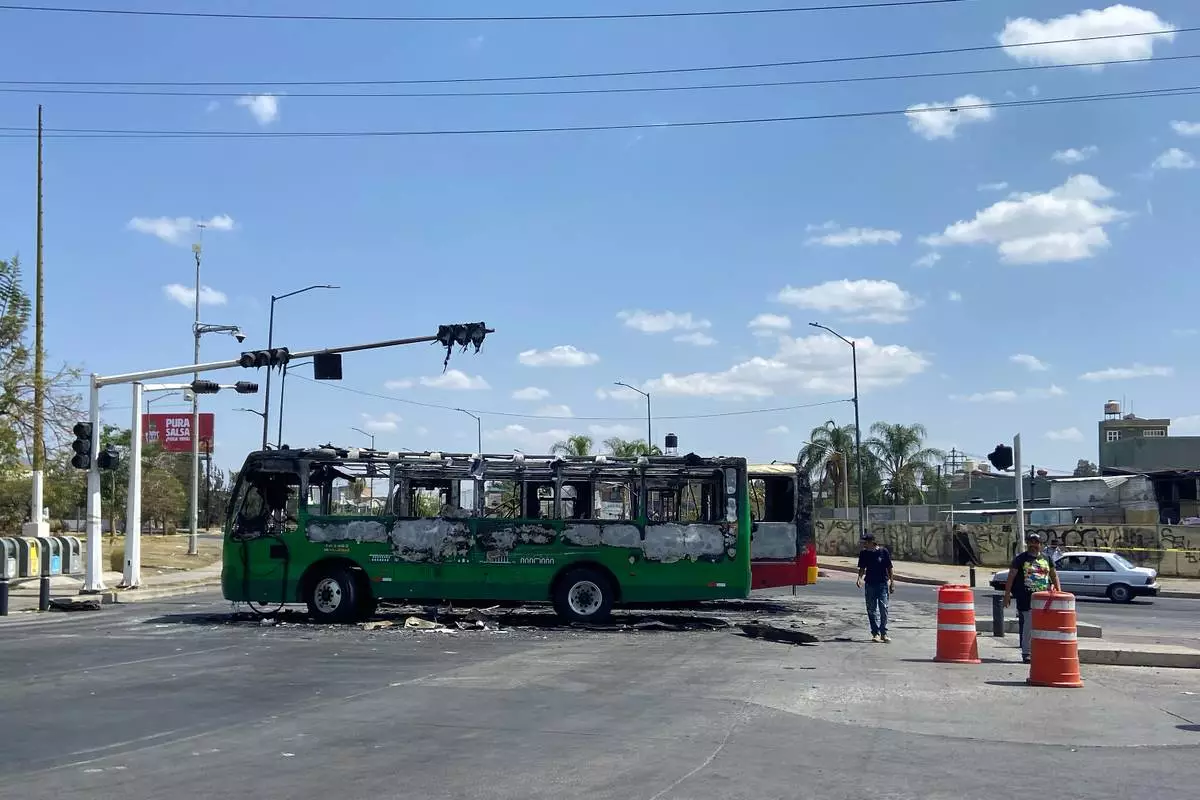
Pedestrians walk past charred buses that were set on fire, on a road in Guadalajara, Jalisco state, Mexico, Sunday, Feb. 22, 2026, after the death of the leader of the Jalisco New Generation Cartel, Nemesio Rubén Oseguera Cervantes, known as "El Mencho." (AP Photo/Refugio Ruiz)
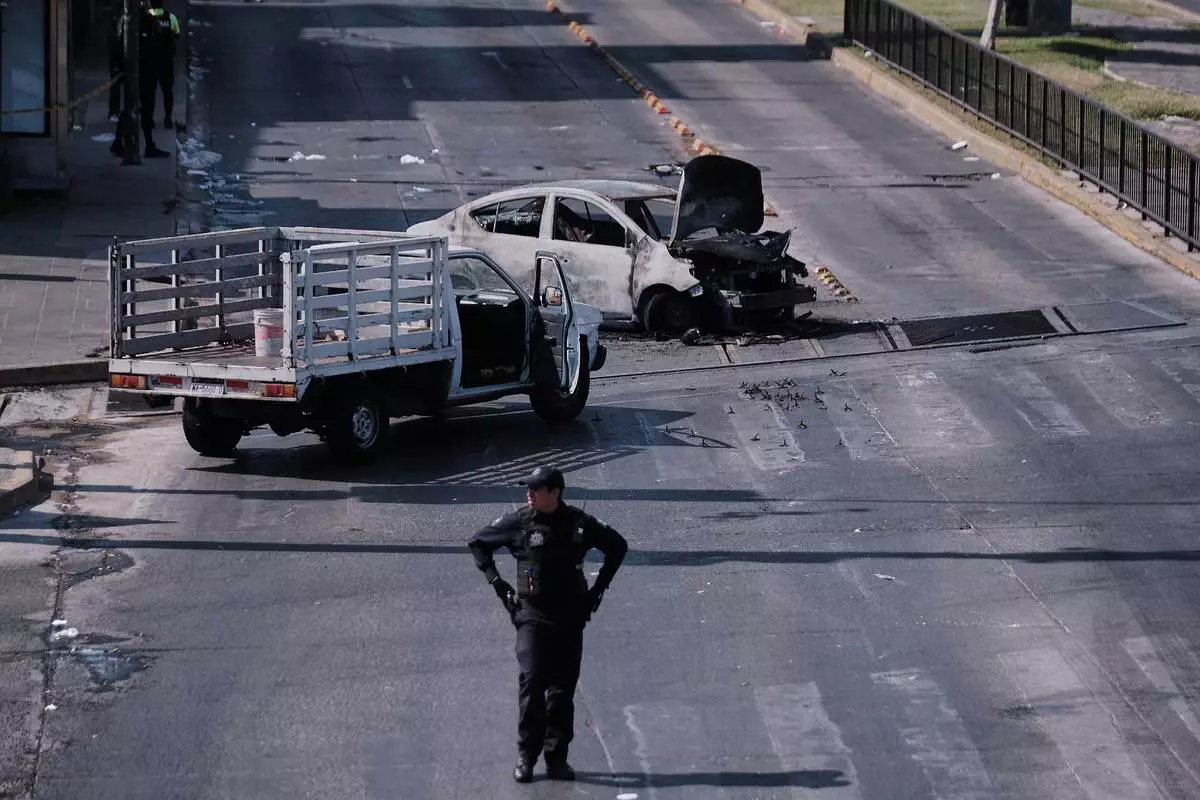
A police officer stands guard by a charred vehicle after it was set on fire, on a road in Guadalajara, Jalisco state, Mexico, Sunday, Feb. 22, 2026, after the death of the leader of the Jalisco New Generation Cartel, "El Mencho." (AP Photo/Alejandra Leyva)
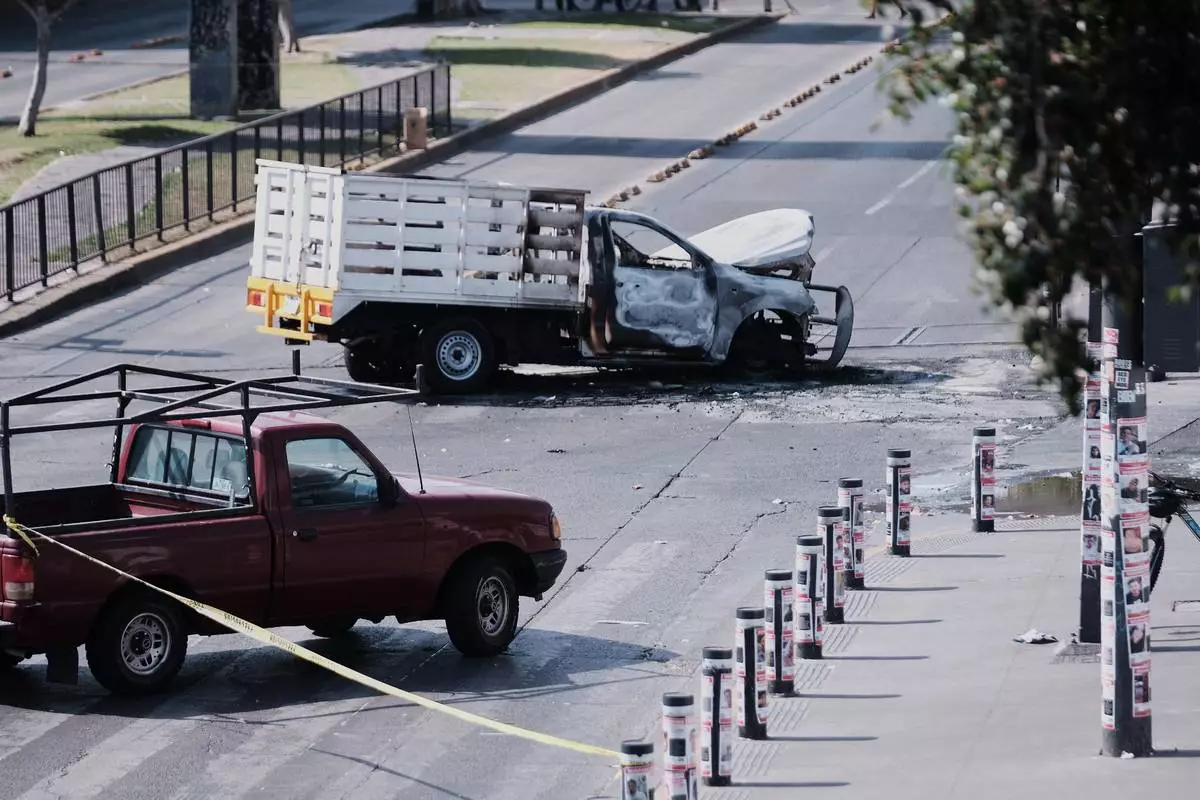
A vehicle sits charred after being set on fire, on a road in Guadalajara, Jalisco state, Mexico, Sunday, Feb. 22, 2026, after the death of the leader of the Jalisco New Generation Cartel, "El Mencho." (AP Photo/Alejandra Leyva)
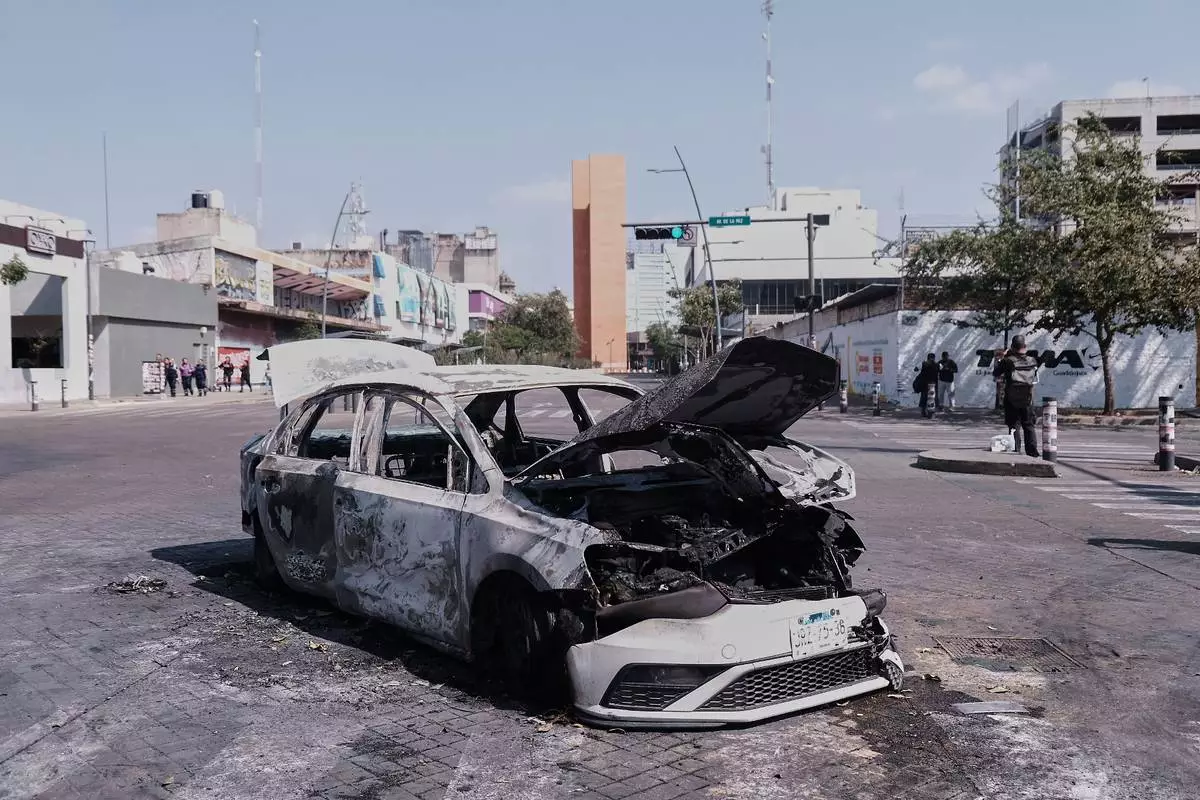
A vehicle sits charred after being set on fire, on a road in Guadalajara, Jalisco state, Mexico, Sunday, Feb. 22, 2026, after the death of the leader of the Jalisco New Generation Cartel, "El Mencho." (AP Photo/Alejandra Leyva)
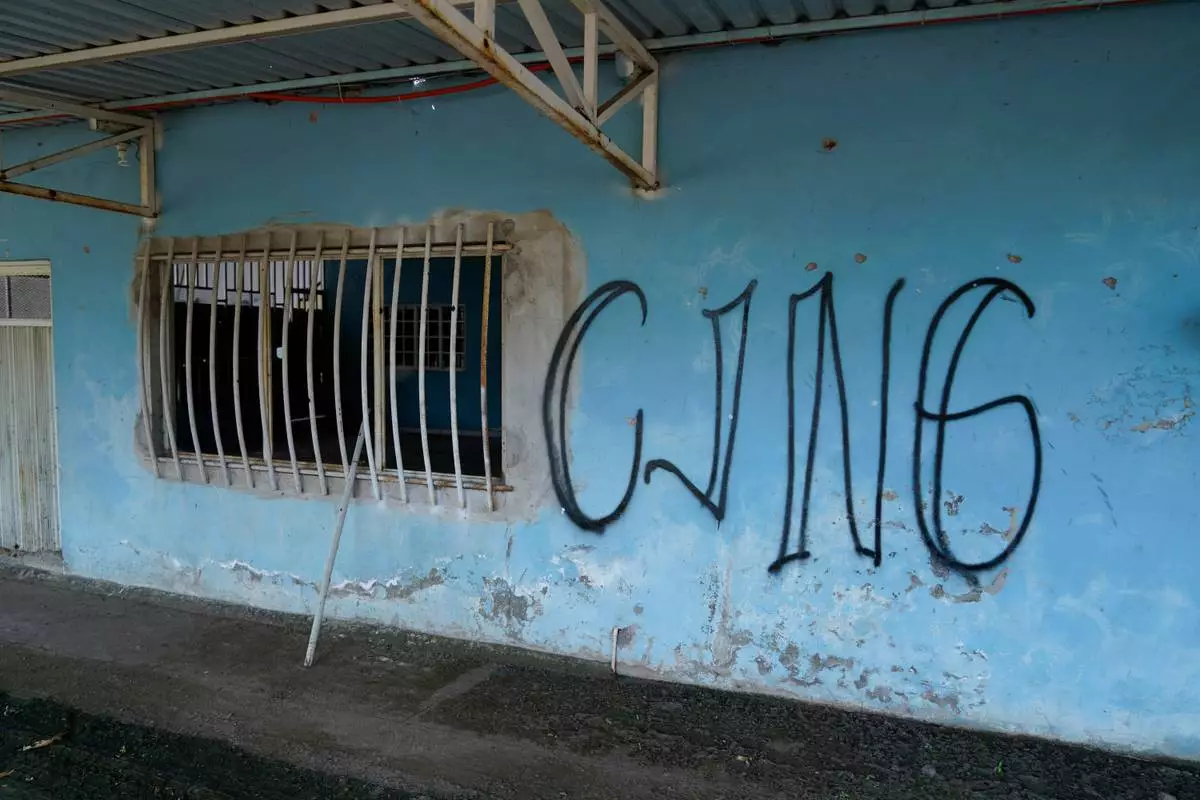
FILE - The letters "CJNG" for the group's formal name, Jalisco New Generation Cartel, covers the facade of an abandoned home in El Limoncito, in the Michoacan state of Mexico, Oct. 30, 2021. (AP Photo/Eduardo Verdugo, File)