Skip to Content Facebook Feature Image

Kim reelected to top post of North Korea’s ruling party as it hails his nuclear buildup

News

Kim reelected to top post of North Korea’s ruling party as it hails his nuclear buildup
News

News

Kim reelected to top post of North Korea’s ruling party as it hails his nuclear buildup

2026-02-23 12:58 Last Updated At:13:10

SEOUL, South Korea (AP) — North Korean leader Kim Jong Un was reelected to the top post of the ruling Workers’ Party, with delegates crediting him for bolstering the country’s nuclear arsenal and strengthening its regional standing, state media reported Monday.

The report from the party congress, a major propaganda spectacle where Kim is expected to outline his political and military goals for the next five years, suggests he will double down on accelerating a nuclear arsenal already equipped with missiles capable of threatening Asian U.S. allies and the American mainland.

More Images
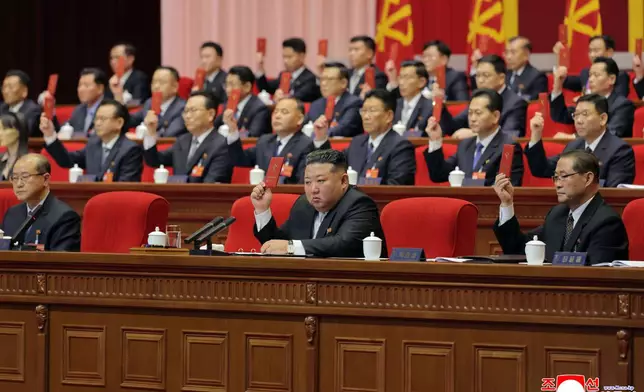
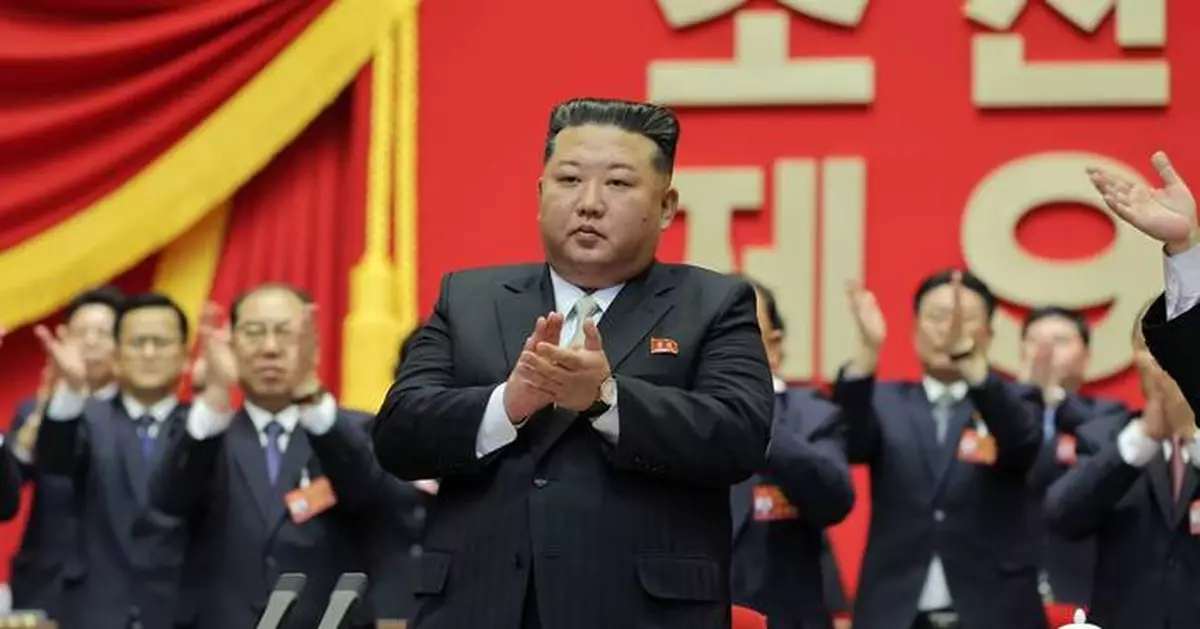
This photo provided Monday, Feb. 23, 2026, by the North Korean government, its leader Kim Jong Un, center, attends the ruling Workers’ Party Congress in Pyongyang, Sunday, Feb. 22, 2026. Independent journalists were not given access to cover the event depicted in this image distributed by the North Korean government. The content of this image is as provided and cannot be independently verified. Korean language watermark on image as provided by source reads: "KCNA" which is the abbreviation for Korean Central News Agency. (Korean Central News Agency/Korea News Service via AP)
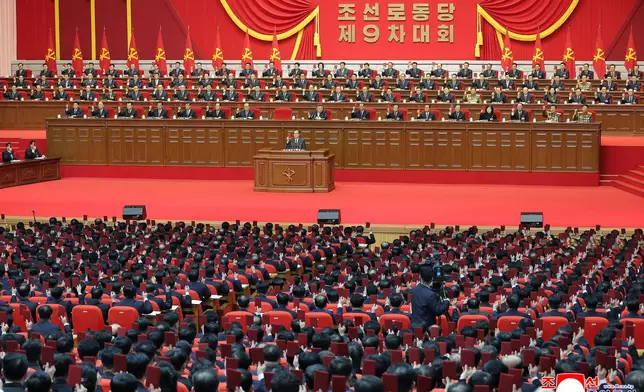
This photo provided Monday, Feb. 23, 2026, by the North Korean government, its leader Kim Jong Un, center, attends the ruling Workers’ Party Congress in Pyongyang, Sunday, Feb. 22, 2026. Independent journalists were not given access to cover the event depicted in this image distributed by the North Korean government. The content of this image is as provided and cannot be independently verified. Korean language watermark on image as provided by source reads: "KCNA" which is the abbreviation for Korean Central News Agency. (Korean Central News Agency/Korea News Service via AP)
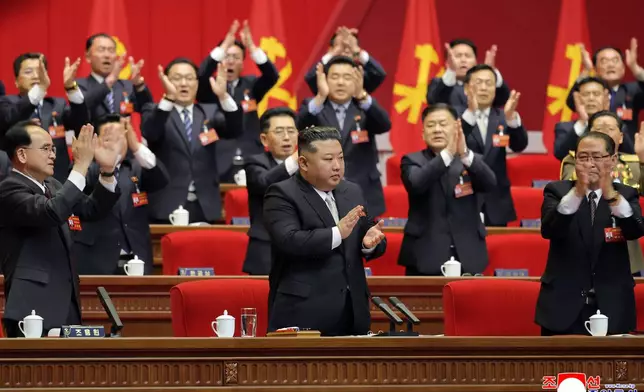
This photo provided Monday, Feb. 23, 2026, by the North Korean government, its leader Kim Jong Un attends the ruling Workers’ Party Congress in Pyongyang, Sunday, Feb. 22, 2026. Independent journalists were not given access to cover the event depicted in this image distributed by the North Korean government. The content of this image is as provided and cannot be independently verified. Korean language watermark on image as provided by source reads: "KCNA" which is the abbreviation for Korean Central News Agency. (Korean Central News Agency/Korea News Service via AP)
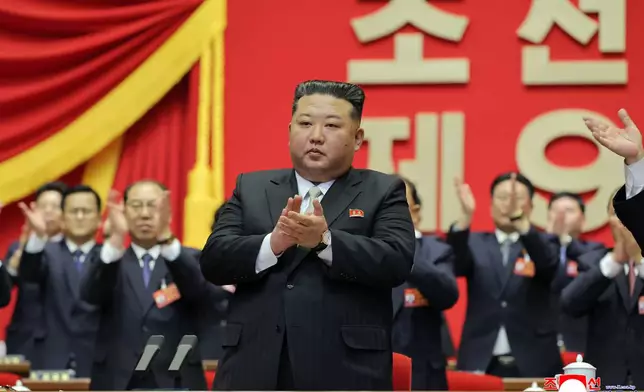
This photo provided Monday, Feb. 23, 2026, by the North Korean government, its leader Kim Jong Un attends the ruling Workers’ Party Congress in Pyongyang, Sunday, Feb. 22, 2026. Independent journalists were not given access to cover the event depicted in this image distributed by the North Korean government. The content of this image is as provided and cannot be independently verified. Korean language watermark on image as provided by source reads: "KCNA" which is the abbreviation for Korean Central News Agency. (Korean Central News Agency/Korea News Service via AP)

This photo provided Monday, Feb. 23, 2026, by the North Korean government, its leader Kim Jong Un, center, claps hands as he was re-elected to the top post of the ruling Workers’ Party, during the party's Congress in Pyongyang, Sunday, Feb. 22, 2026. Independent journalists were not given access to cover the event depicted in this image distributed by the North Korean government. The content of this image is as provided and cannot be independently verified. Korean language watermark on image as provided by source reads: "KCNA" which is the abbreviation for Korean Central News Agency. (Korean Central News Agency/Korea News Service via AP)

This photo provided Monday, Feb. 23, 2026, by the North Korean government, its leader Kim Jong Un, center, claps hands as he was re-elected to the top post of the ruling Workers’ Party, during the party's Congress in Pyongyang, Sunday, Feb. 22, 2026. Independent journalists were not given access to cover the event depicted in this image distributed by the North Korean government. The content of this image is as provided and cannot be independently verified. Korean language watermark on image as provided by source reads: "KCNA" which is the abbreviation for Korean Central News Agency. (Korean Central News Agency/Korea News Service via AP)

This photo provided Monday, Feb. 23, 2026, by the North Korean government, its leader Kim Jong Un, center, claps hands as he was re-elected to the top post of the ruling Workers’ Party, during the party's Congress in Pyongyang, Sunday, Feb. 22, 2026. Independent journalists were not given access to cover the event depicted in this image distributed by the North Korean government. The content of this image is as provided and cannot be independently verified. Korean language watermark on image as provided by source reads: "KCNA" which is the abbreviation for Korean Central News Agency. (Korean Central News Agency/Korea News Service via AP)

This photo provided Monday, Feb. 23, 2026, by the North Korean government, its leader Kim Jong Un, center, claps hands as he was re-elected to the top post of the ruling Workers’ Party, during the party's Congress in Pyongyang, Sunday, Feb. 22, 2026. Independent journalists were not given access to cover the event depicted in this image distributed by the North Korean government. The content of this image is as provided and cannot be independently verified. Korean language watermark on image as provided by source reads: "KCNA" which is the abbreviation for Korean Central News Agency. (Korean Central News Agency/Korea News Service via AP)

The party also released a new roster for its powerful Central Committee that confirmed a generational shift in Kim’s leadership circle, with aging military chiefs and the 76-year-old head of Pyongyang’s rubber-stamp parliament among dozens replaced in the 138-member body.

The congress, which began last Thursday, comes as Kim grows increasingly assertive in regional politics, following an aggressive expansion of his nuclear arsenal and closer ties with Russia forged through joint war efforts in Ukraine, which have deepened his standoffs with Washington and Seoul. Kim has also pursued stronger ties with China, traveling to Beijing last September and having his first summit with Chinese President Xi Jinping in six years.

Analysts say Kim will likely use the meeting to unveil new military goals, including strengthening conventional forces and integrating them with nuclear capabilities, while reemphasizing a campaign for economic “self-reliance” through mass mobilization, following gradual post-pandemic gains fueled by rebounding trade with China and arms exports to Russia.

North Korea’s official Korean Central News Agency said Kim was reelected as the party’s general secretary with the “unshakable will and unanimous desire” of thousands of delegates on the fourth day of meetings Sunday.

Under party rules, the congress, which Kim has held every five years since 2016, elects the general secretary to serve as the party’s top representative and leader. Kim, 42, has held the party’s top post throughout his rule, though the title changed from first secretary to chairman at the congress in 2016 and then to general secretary at the congress in 2021.

The party said in a statement that by building up nuclear forces, Kim has created a military capable of handling “any threat of aggression” and “any form of war,” and credited his leadership with “reliably guaranteeing” the country’s future and “boosting the pride and self-esteem” of North Koreans.

It also praised Kim’s recent foreign policy, which it said raised national prestige. China's state-run Xinhua news agency said Xi congratulated Kim on his reelection.

KCNA said the congress adopted revisions to party rules during Sunday’s meeting but did not immediately provide details. Experts had anticipated that Kim would use the congress to entrench his hard-line stance toward South Korea and possibly rewrite party rules to codify his characterization of inter-Korean relations as between two “hostile” states.

State media so far haven’t mentioned any comments by Kim or other senior leaders at the congress directly addressing relations with Washington and Seoul.

Yoon Min Ho, a spokesperson at South Korea’s Unification Ministry, described Kim’s reelection as a predictable move to further burnish his leadership and that Seoul will closely watch further messages from the congress.

The most notable change to the new Central Committee list was the exclusion of Choe Ryong Hae, chairman of the standing committee of the Supreme People’s Assembly, who during an earlier part of Kim’s rule was seen as the second most powerful individual in Pyongyang. Also left out were military marshals Pak Jong Chon and Ri Pyong Chol, who had rose in the leadership ranks while Kim sped up his nuclear development over the past decade.

Yoon also noted the removal of senior officials who handled inter-Korean affairs, including Kim Yong Chol and Ri Son Gwon, who served key roles in carrying out Kim Jong Un’s diplomacy with then-South Korean President Moon Jae-in and President Donald Trump in 2018 and 2019.

North Korea has suspended all meaningful diplomacy with the United States and South Korea since the collapse of a 2019 summit between Kim Jong Un and Trump over disagreements about exchange sanctions relief for steps to wind down Kim’s nuclear and missile program.

Kim’s government has rejected dialogue offers from Trump since the American president began his second term, urging Washington to drop its demand for North Korea’s denuclearization as a precondition for talks. Inter-Korean relations further deteriorated in 2024 when Kim abandoned the North’s long-standing goal of peaceful reunification and declared the war-divided South a permanent enemy.
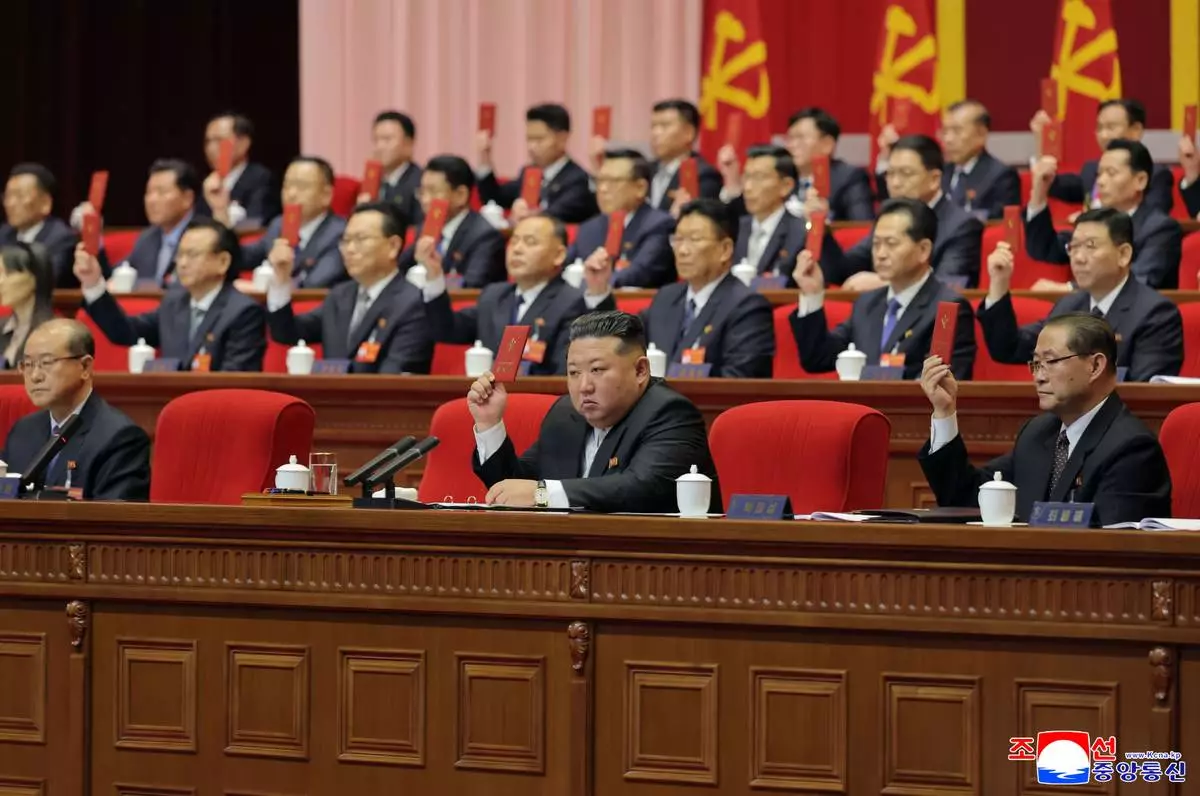
This photo provided Monday, Feb. 23, 2026, by the North Korean government, its leader Kim Jong Un, center, attends the ruling Workers’ Party Congress in Pyongyang, Sunday, Feb. 22, 2026. Independent journalists were not given access to cover the event depicted in this image distributed by the North Korean government. The content of this image is as provided and cannot be independently verified. Korean language watermark on image as provided by source reads: "KCNA" which is the abbreviation for Korean Central News Agency. (Korean Central News Agency/Korea News Service via AP)
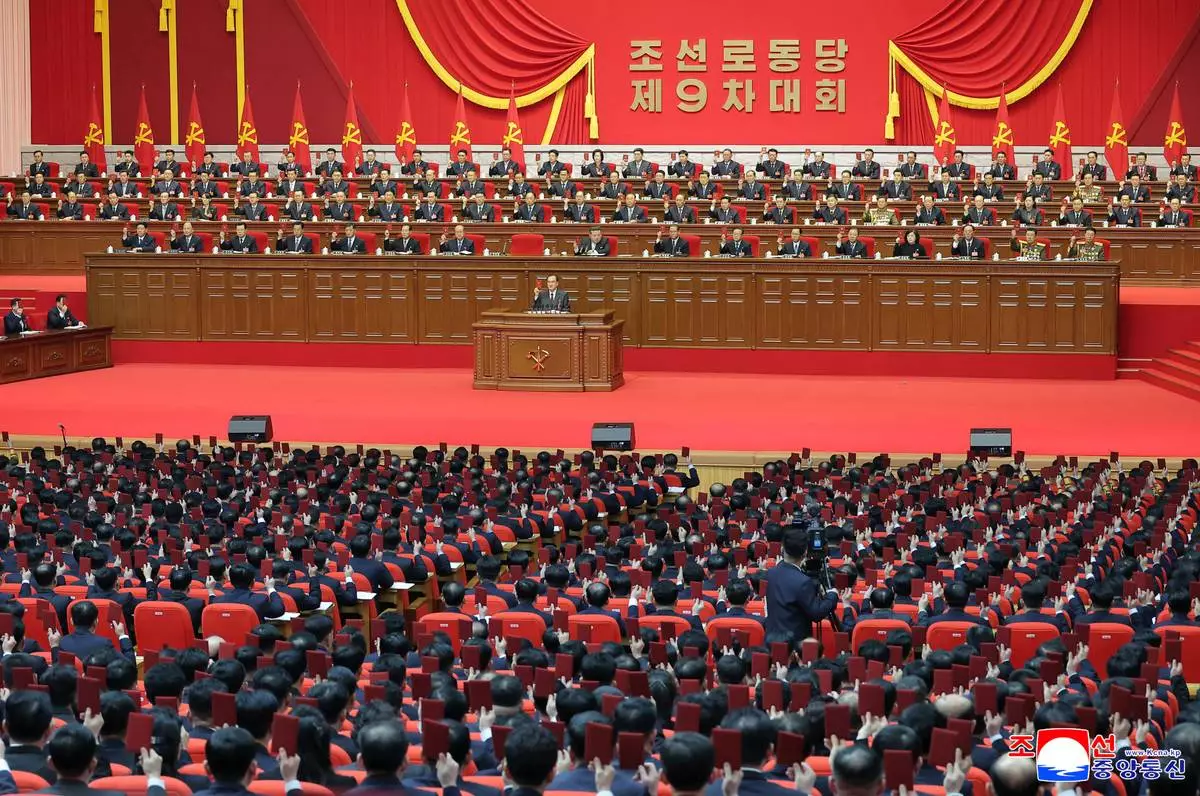
This photo provided Monday, Feb. 23, 2026, by the North Korean government, its leader Kim Jong Un, center, attends the ruling Workers’ Party Congress in Pyongyang, Sunday, Feb. 22, 2026. Independent journalists were not given access to cover the event depicted in this image distributed by the North Korean government. The content of this image is as provided and cannot be independently verified. Korean language watermark on image as provided by source reads: "KCNA" which is the abbreviation for Korean Central News Agency. (Korean Central News Agency/Korea News Service via AP)
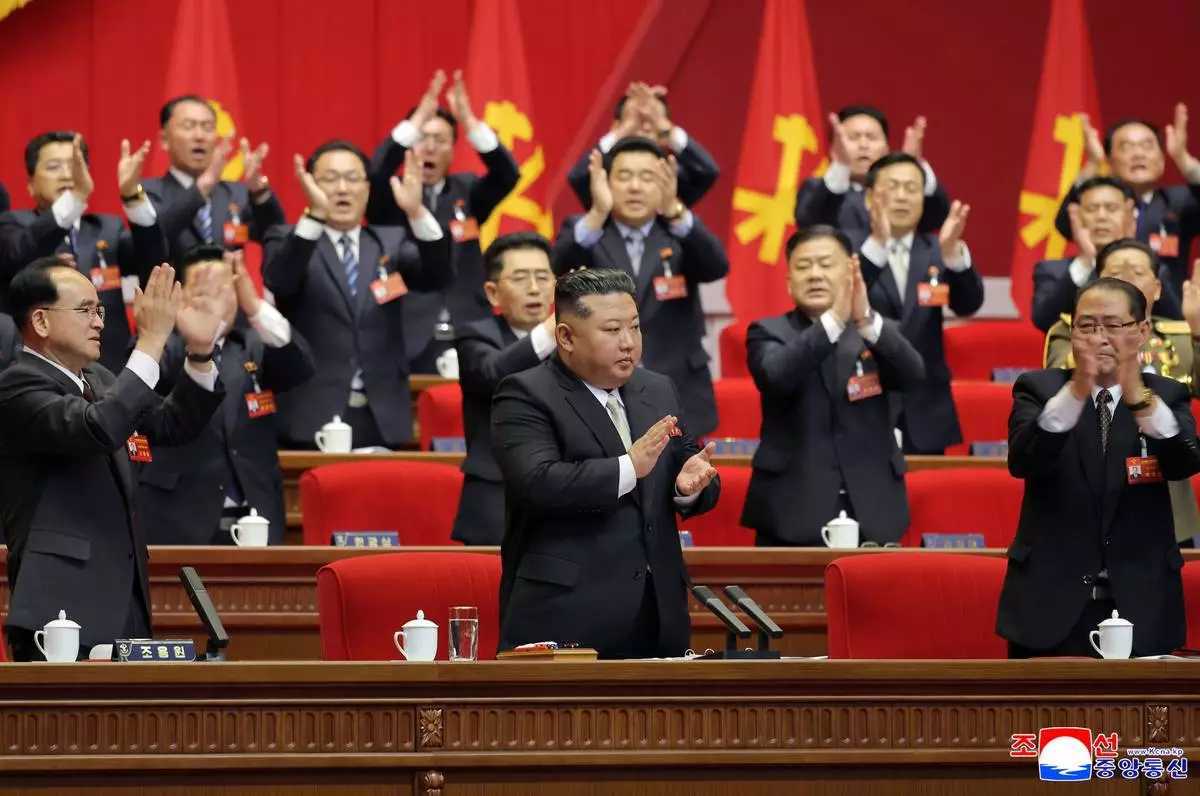
This photo provided Monday, Feb. 23, 2026, by the North Korean government, its leader Kim Jong Un attends the ruling Workers’ Party Congress in Pyongyang, Sunday, Feb. 22, 2026. Independent journalists were not given access to cover the event depicted in this image distributed by the North Korean government. The content of this image is as provided and cannot be independently verified. Korean language watermark on image as provided by source reads: "KCNA" which is the abbreviation for Korean Central News Agency. (Korean Central News Agency/Korea News Service via AP)
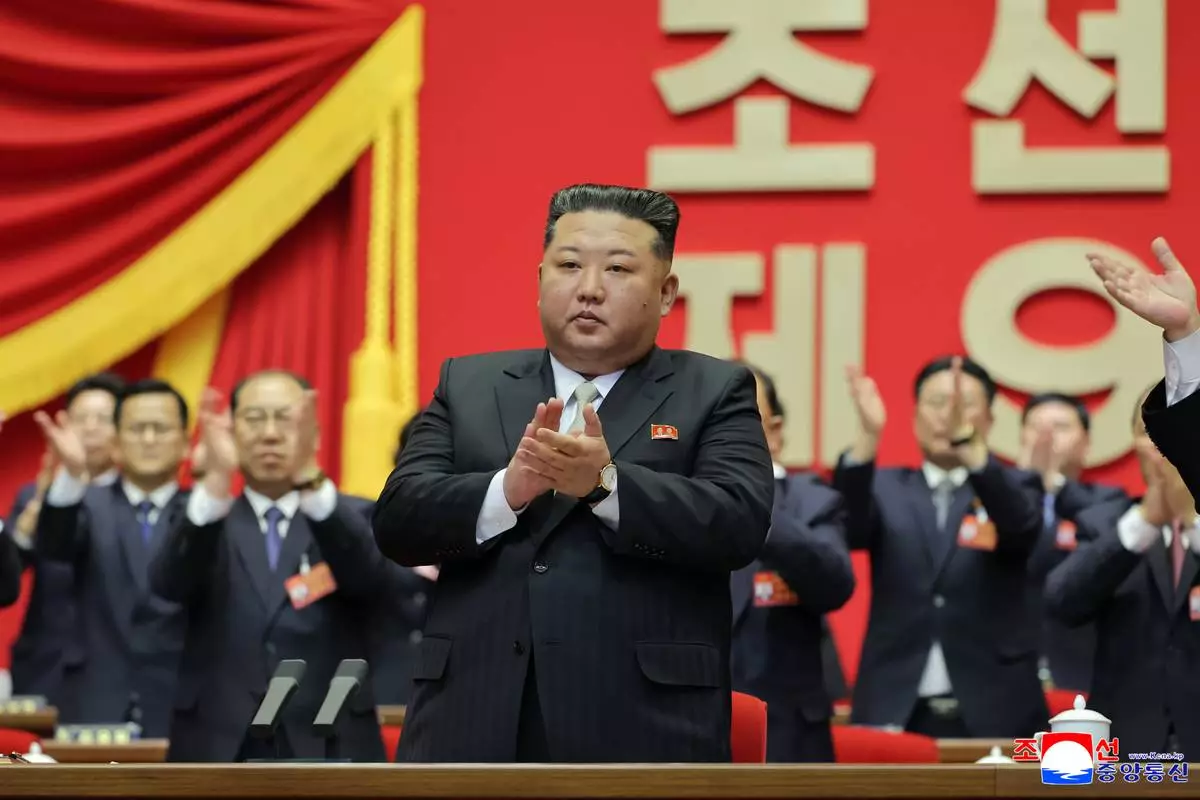
This photo provided Monday, Feb. 23, 2026, by the North Korean government, its leader Kim Jong Un attends the ruling Workers’ Party Congress in Pyongyang, Sunday, Feb. 22, 2026. Independent journalists were not given access to cover the event depicted in this image distributed by the North Korean government. The content of this image is as provided and cannot be independently verified. Korean language watermark on image as provided by source reads: "KCNA" which is the abbreviation for Korean Central News Agency. (Korean Central News Agency/Korea News Service via AP)
This photo provided Monday, Feb. 23, 2026, by the North Korean government, its leader Kim Jong Un, center, claps hands as he was re-elected to the top post of the ruling Workers’ Party, during the party's Congress in Pyongyang, Sunday, Feb. 22, 2026. Independent journalists were not given access to cover the event depicted in this image distributed by the North Korean government. The content of this image is as provided and cannot be independently verified. Korean language watermark on image as provided by source reads: "KCNA" which is the abbreviation for Korean Central News Agency. (Korean Central News Agency/Korea News Service via AP)
This photo provided Monday, Feb. 23, 2026, by the North Korean government, its leader Kim Jong Un, center, claps hands as he was re-elected to the top post of the ruling Workers’ Party, during the party's Congress in Pyongyang, Sunday, Feb. 22, 2026. Independent journalists were not given access to cover the event depicted in this image distributed by the North Korean government. The content of this image is as provided and cannot be independently verified. Korean language watermark on image as provided by source reads: "KCNA" which is the abbreviation for Korean Central News Agency. (Korean Central News Agency/Korea News Service via AP)

This photo provided Monday, Feb. 23, 2026, by the North Korean government, its leader Kim Jong Un, center, claps hands as he was re-elected to the top post of the ruling Workers’ Party, during the party's Congress in Pyongyang, Sunday, Feb. 22, 2026. Independent journalists were not given access to cover the event depicted in this image distributed by the North Korean government. The content of this image is as provided and cannot be independently verified. Korean language watermark on image as provided by source reads: "KCNA" which is the abbreviation for Korean Central News Agency. (Korean Central News Agency/Korea News Service via AP)

This photo provided Monday, Feb. 23, 2026, by the North Korean government, its leader Kim Jong Un, center, claps hands as he was re-elected to the top post of the ruling Workers’ Party, during the party's Congress in Pyongyang, Sunday, Feb. 22, 2026. Independent journalists were not given access to cover the event depicted in this image distributed by the North Korean government. The content of this image is as provided and cannot be independently verified. Korean language watermark on image as provided by source reads: "KCNA" which is the abbreviation for Korean Central News Agency. (Korean Central News Agency/Korea News Service via AP)
JUNEAU, Alaska (AP) — Alaska U.S. Senate candidate Dan Sullivan acknowledges that sharing a name and party affiliation with the incumbent Republican gives him “an instant megaphone" in the crowded primary race. But Sullivan said his campaign isn't a sham or something Democrats put him up to doing.

He said friends for years have jokingly referred to him as senator and asked if he has ever thought about running. He said he’s been considering it for more than a decade.

“This is my choice,” Sullivan, who lives in the small fishing community of Petersburg, said in a telephone interview Monday.

Last week, Sen. Dan Sullivan accused the challenger Sullivan of “trying to trick” voters to help his main rival in the race, Democratic former U.S. Rep. Mary Peltola. The senator suggested the other Sullivan's entrance in the August primary was part of a coordinated effort by Democrats and Peltola's campaign to confuse voters, an accusation they deny. He threatened litigation to get to the bottom of it.

The issue is of national concern to Republicans because they are seeking to hold onto their majority in the U.S. Senate in what is expected to be a difficult midterm election year for the party in power. Sullivan, the challenger, dismissed claims that his candidacy is a merely a ruse to undermine the senator's reelection chances.

He said he has had no contact with Peltola's campaign — “zero, none, zilch” — and said “no” when asked if anyone from the state Democratic Party or any national Democratic operatives had contacted him to run.

A Peltola spokesperson, Harry Child, has said the campaign “has no involvement with either Sullivan campaign.” The executive director of the Alaska Democratic Party, Jenny-Marie Stryker, said her organization “is in no way affiliated with either Dan Sullivan.” A Democratic Senatorial Campaign Committee spokesperson, Monica Robinson, replied “no” when asked if the group had been involved in urging the challenger Sullivan to run.

Sullivan called sharing a name with the Alaska's incumbent U.S. senator “a matter of fate” and said he had done nothing wrong.

“I have every right to run for whatever office I'm qualified for, and I’m qualified for this office,” the challenger said, adding: “I think I’m doing what most Americans would think would be a patriotic thing to do when you’re unsatisfied with the status quo. You stand up and say, I’m going to fight for things I believe that are going to make my community better.”

Ballots in prior years in Alaska have not identified the incumbent, but the Alaska Division of Elections’ current candidate list online does. It also distinguishes the candidates using a middle initial — Dan S. Sullivan for the senator and Dan J. Sullivan for the challenger.

Alaska has open primaries in which the top four vote-getters, regardless of party, advance to the ranked choice general election in November. Sen. Sullivan's campaign worries having two Dan Sullivans on the ballot could confuse voters.

Sen. Sullivan's campaign, in a statement Monday, said, “Alaskans deserve a fair and honest election — not political games meant to manipulate the ballot and benefit Democrats.”

The challenger said he was registered with the limited government-leaning Alaskan Independence Party for decades, until the party's dissolution late last year. Election officials had said voters registered with the party could change their affiliation but if they did not, they'd be shown as “undeclared.” Sullivan said he then was listed as undeclared until filing to run for office, when he registered as Republican.

He said he was motivated in part by his late father, whom he described as a “true, compassionate, conservative Republican.” He said if he had to label himself, it would be “a pragmatic Republican centrist” — similar to Alaska's senior U.S. senator, Lisa Murkowski, but “with touches of a Rand Paul Republican in there.”

He said he grew up in the Chicago area but was drawn to Alaska and put down roots nearly 50 years ago in Petersburg. The fishing community of about 3,400 in southeast Alaska's Tongass National Forest is known as “Little Norway” for its many residents with Scandinavian roots. He worked for the U.S. Forest Service before changing careers and becoming a teacher. He has since retired.

Like most communities in Alaska, Petersburg isn't connected to the state's main road system and is accessible only by air or water. Juneau, the nearest city, is about 45 minutes away by plane.

Petersburg sits on Mitkof Island, which is distinguished by mountains, thick stands of forest and boggy areas called muskeg. Sea lions hauled up on buoys and humpback whales and orcas are common sights off its shores.

Sullivan, who will turn 69 this weekend, passed on an interview request last Friday, he said, because the king salmon were running and he wanted to fish.

As far as his run for office, the challenger said he plans to do some fundraising and hopes to campaign in the state's larger cities, including Anchorage and Juneau, but he so far has no firm plans to do so and is working on the details.

He finds the current dustup over his Senate run — and the incumbent's reaction — a bit surprising.

“I guess my thought would be, ‘Dude, why don’t you just run your campaign?’ If you’ve got a strong record, run on your record. People will love you for it and you’ll be swept back into office,” he said Monday. “Why would he be concerned that a guy out of Petersburg is this huge threat?”

Sen. Dan Sullivan, R-Alaska, heads to a closed-door meeting with fellow Republicans, at the Capitol in Washington, Tuesday, June 2, 2026. (AP Photo/J. Scott Applewhite)

Sen. Dan Sullivan, R-Alaska, heads to a closed-door meeting with fellow Republicans, at the Capitol in Washington, Tuesday, June 2, 2026. (AP Photo/J. Scott Applewhite)

Recommended Articles