Skip to Content Facebook Feature Image

More Ghanaians are wearing a cultural outfit after their president was mocked

ENT

More Ghanaians are wearing a cultural outfit after their president was mocked
ENT

ENT

More Ghanaians are wearing a cultural outfit after their president was mocked

2026-02-23 14:11 Last Updated At:14:55

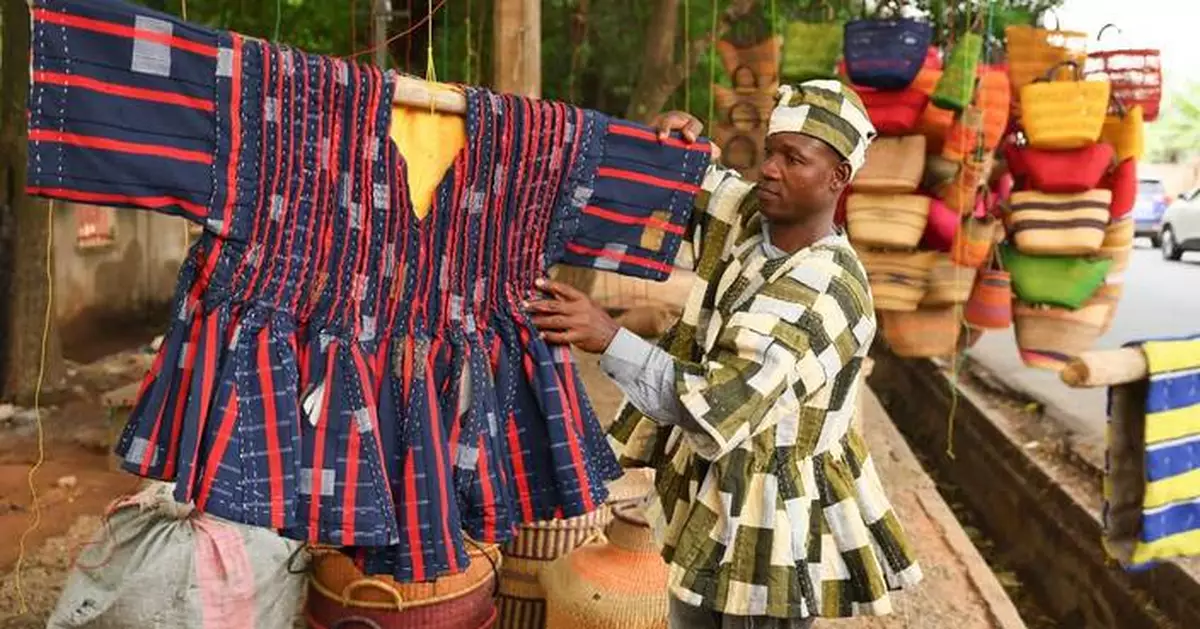
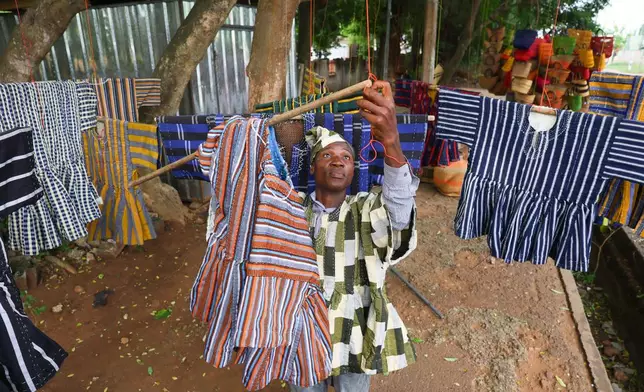
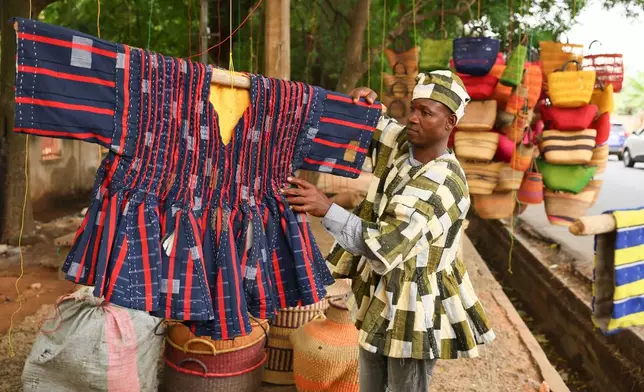
ACCRA, Ghana (AP) — On a busy street in central Accra, Clement Azaabire hangs neatly sewn fugu smocks on lines, the striped, multicolored fabrics swaying in the breeze. For 15 years, Azaabire has proudly sold the garment that is associated with his community in northern Ghana. Now, it's the talk of town.

More Ghanaians are wearing the colorful traditional outfit with pride in a trend triggered by online mockery.

More Images
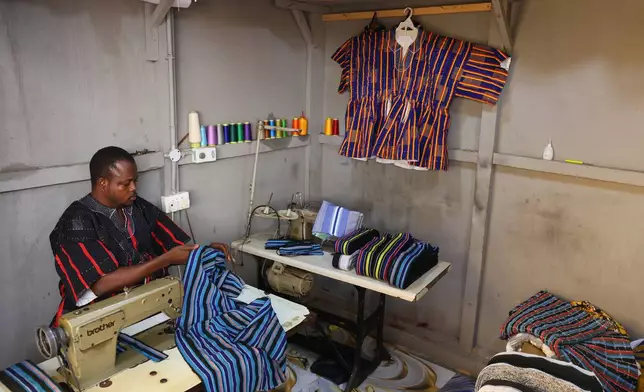
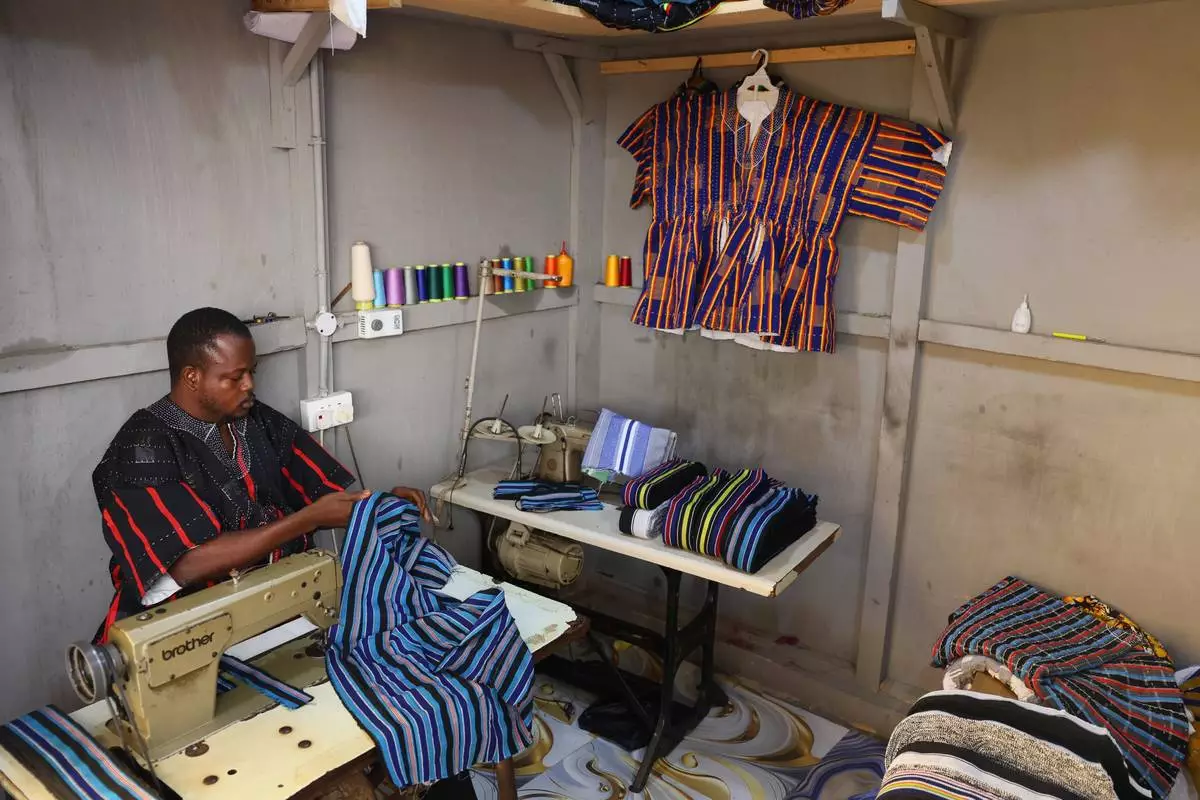
Moses Adibasa, a traditional fugu garment maker, works on in his workshop in Accra, Ghana, Wednesday, Feb. 18, 2026. (AP Photo/Tsraha Yaw)
Moses Adibasa, a traditional fugu garment maker, works on in his workshop in Accra, Ghana, Wednesday, Feb. 18, 2026. (AP Photo/Tsraha Yaw)

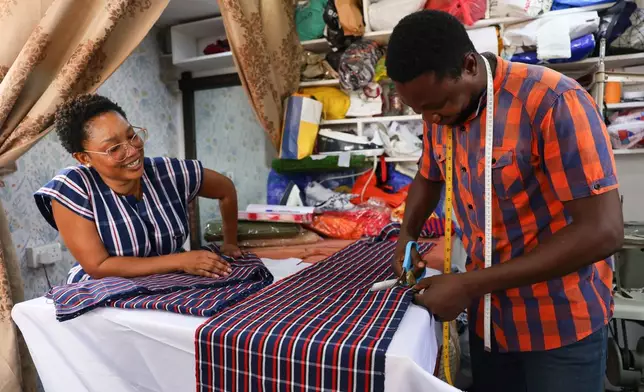
Perfectual Linnan, a fashion designer, interacts with a staff member at her workshop in Accra, Ghana, Wednesday, Feb. 18, 2026. (AP Photo/Tsraha Yaw)
Perfectual Linnan, a fashion designer, interacts with a staff member at her workshop in Accra, Ghana, Wednesday, Feb. 18, 2026. (AP Photo/Tsraha Yaw)

Clement Azaabire hangs traditional fugu garments under a tree on display for sale along a street in Accra, Ghana, Wednesday, Feb. 18, 2026. (AP Photo/Tsraha Yaw)
Clement Azaabire hangs traditional fugu garments under a tree on display for sale along a street in Accra, Ghana, Wednesday, Feb. 18, 2026. (AP Photo/Tsraha Yaw)
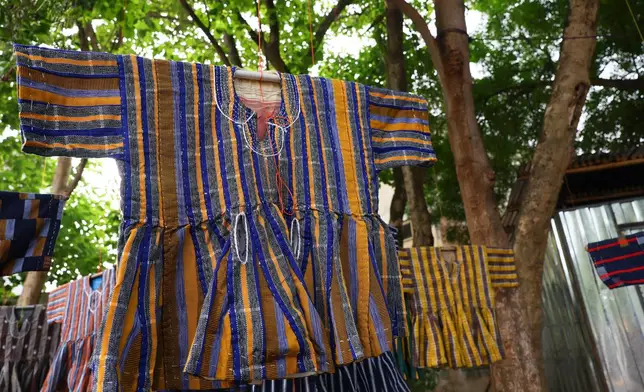
Traditional fugu garments hang under a tree on display for sale along a street in Accra, Ghana, Wednesday, Feb. 18, 2026. (AP Photo/Tsraha Yaw)

Traditional fugu garments hang under a tree on display for sale along a street in Accra, Ghana, Wednesday, Feb. 18, 2026. (AP Photo/Tsraha Yaw)

Clement Azaabire hangs traditional fugu garments under a tree on display for sale along a street in Accra, Ghana, Wednesday, Feb. 18, 2026. (AP Photo/Tsraha Yaw)

Clement Azaabire hangs traditional fugu garments under a tree on display for sale along a street in Accra, Ghana, Wednesday, Feb. 18, 2026. (AP Photo/Tsraha Yaw)

Ghana's President John Dramani Mahama in early February visited Zambia wearing a fugu garment, prompting ridicule from some social media users. Ghanaians responded by defending what they felt was a rich cultural heritage, and Tourism Minister Abla Dzifa Gomashie took it a step further by declaring Wednesdays as “Fugu Day.”

Since the “Fugu Day” declaration on Feb. 10, more people are wearing the smock to work on Wednesdays, but also on other days. And traders like Azaabire are selling out their stock.

“It makes me feel connected to where I come from," said Wango Abdul Karim, a businessman who wears fugu to work every Wednesday.

In Ghana, which is widely known for its rich fashion style and an agelong weaving heritage, traditional production of smock weaves has been the preserve of the north and an art skill handed down through generations.

The fugu smock, however, gained more prominence in March 1957 when Ghana’s first President Kwame Nkrumah wore it during the country’s inaugural independence ceremony. Today, it’s worn at festivals, state functions and increasingly in contemporary fashion.

Also known locally as batakari, the loose-fitting fugu smock is made from handwoven strips of cotton fabric stitched together to form a flowing robe, often worn over trousers and paired with a matching cap. The fabric is traditionally woven on narrow looms in Ghana's northern savannah and sewn into distinctive styles, with the regional identifiers visible in its stripe patterns and in the number of stitch lines.

Scholars link its development to trade and migration across West Africa, including influences from Mossi and Hausa communities. Batakari, derived from the Hausa language, means “outer gown,” while fugu in the Mossi language means cloth. The smock has long represented prestige and is worn by chiefs, warriors and community leaders with certain designs reserved for special ceremonies.

At the Accra Arts and Crafts Centre, Moses Adibasa guides strips of woven fabric through a sewing machine, pausing to align the narrow bands by hand before stitching them together.

He has earned a living from making traditional smocks for nearly two decades and is optimistic about the ripple effects of “Fugu Day.”

“It will benefit those selling thread, those weaving and those of us sewing," Adibasa said.

In a studio in Accra, Perfectual Linnan, a fashion designer and founder of Roots by Linnan, recreates the fugu fabric into jackets, trousers and tops designed for everyday wear. She is part of a growing movement of young designers incorporating the fabric into modern designs.

“We want to show that you can wear the northern fabric in different ways," she said. “If you’re not into the traditional smock, you can still carry a piece of culture with you.”

Although traditional looms are still used for the clothing, many weavers now rely on imported yarn due to the lack of locally grown cotton.

The “Fugu Day” celebration has meant higher demand and more pressure on the smock weavers, many of whom are struggling to increase production, according to Abigail Naki Gabor, secretary of Ghana's smock weavers and sellers association.

One way to help is through increased government investments, said Gabor. “Using our hands slows the process and limits our ability to be productive. We need industrial machines,” she said.

Beyond the “Fugu Day,” Ghana is engineering a broader “Wear Ghana” campaign to promote local fashion and heritage with upcoming trade exhibitions planned, according to Kofi Atta Kakra Kusi with the Ghana Tourism Authority.

Back in her studio in Accra, Linnan is sounding an alarm about handling the smock with care despite the labor intensive process of weaving it.

“It is a careful, intentional process," she says. "If we treat it only as a commodity and not as heritage, we lose something important.”
Moses Adibasa, a traditional fugu garment maker, works on in his workshop in Accra, Ghana, Wednesday, Feb. 18, 2026. (AP Photo/Tsraha Yaw)
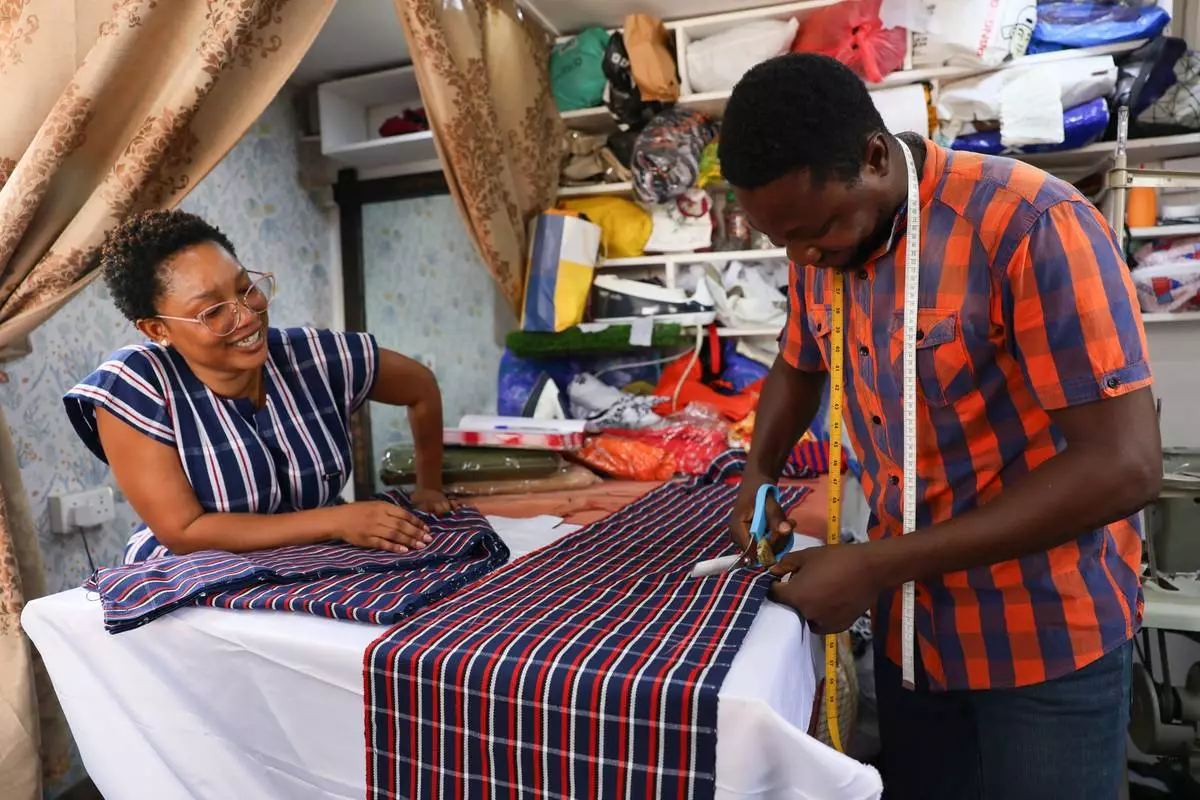
Moses Adibasa, a traditional fugu garment maker, works on in his workshop in Accra, Ghana, Wednesday, Feb. 18, 2026. (AP Photo/Tsraha Yaw)

Perfectual Linnan, a fashion designer, interacts with a staff member at her workshop in Accra, Ghana, Wednesday, Feb. 18, 2026. (AP Photo/Tsraha Yaw)
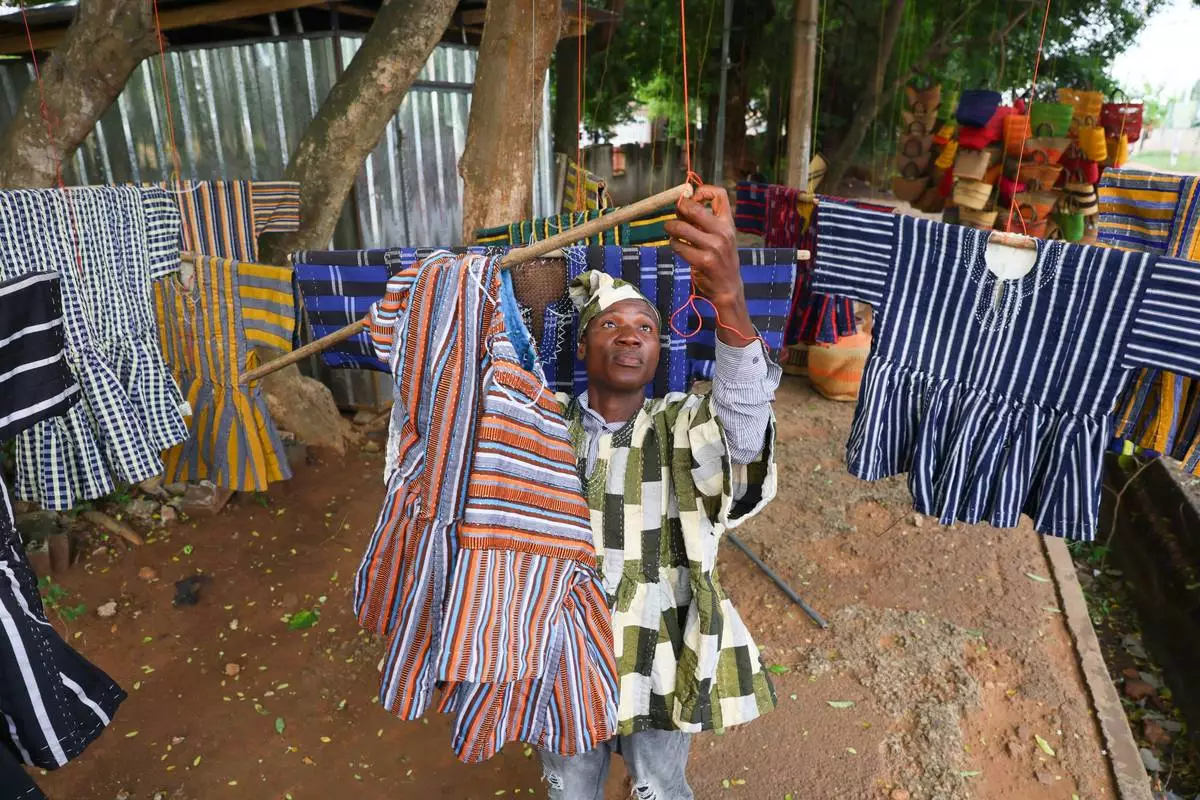
Perfectual Linnan, a fashion designer, interacts with a staff member at her workshop in Accra, Ghana, Wednesday, Feb. 18, 2026. (AP Photo/Tsraha Yaw)

Clement Azaabire hangs traditional fugu garments under a tree on display for sale along a street in Accra, Ghana, Wednesday, Feb. 18, 2026. (AP Photo/Tsraha Yaw)
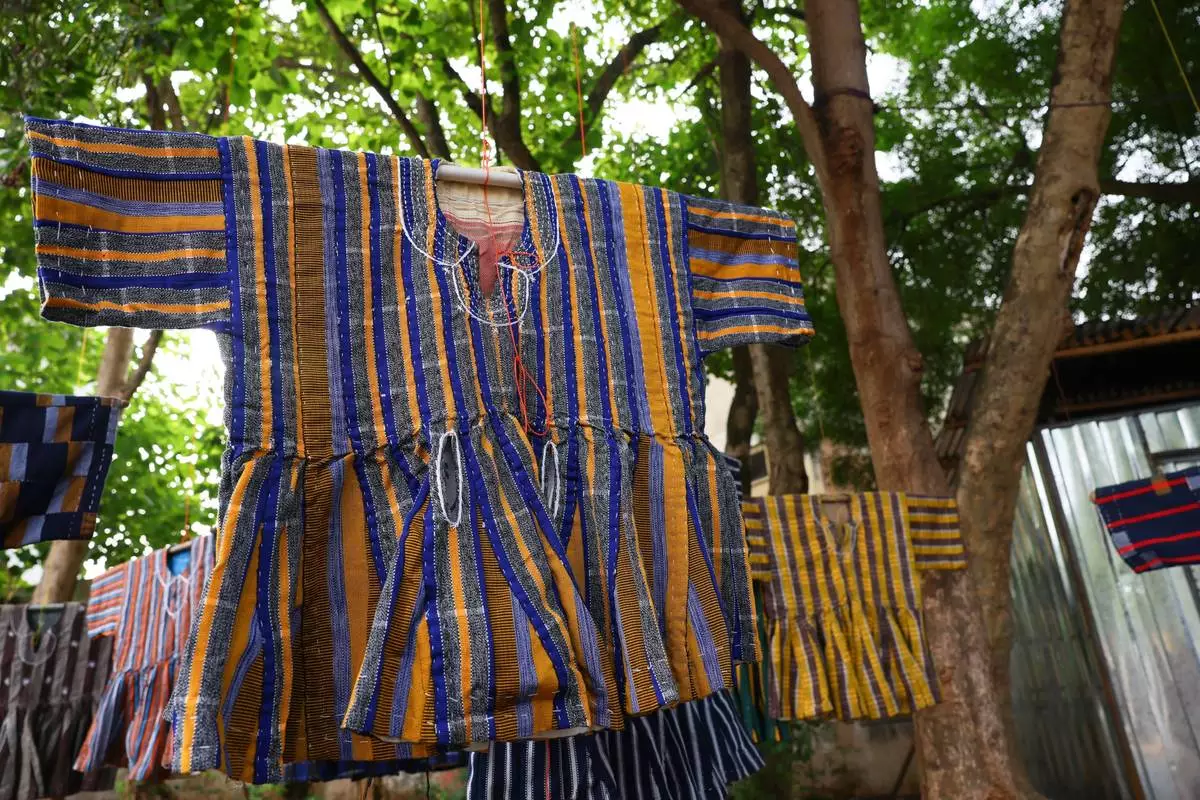
Clement Azaabire hangs traditional fugu garments under a tree on display for sale along a street in Accra, Ghana, Wednesday, Feb. 18, 2026. (AP Photo/Tsraha Yaw)
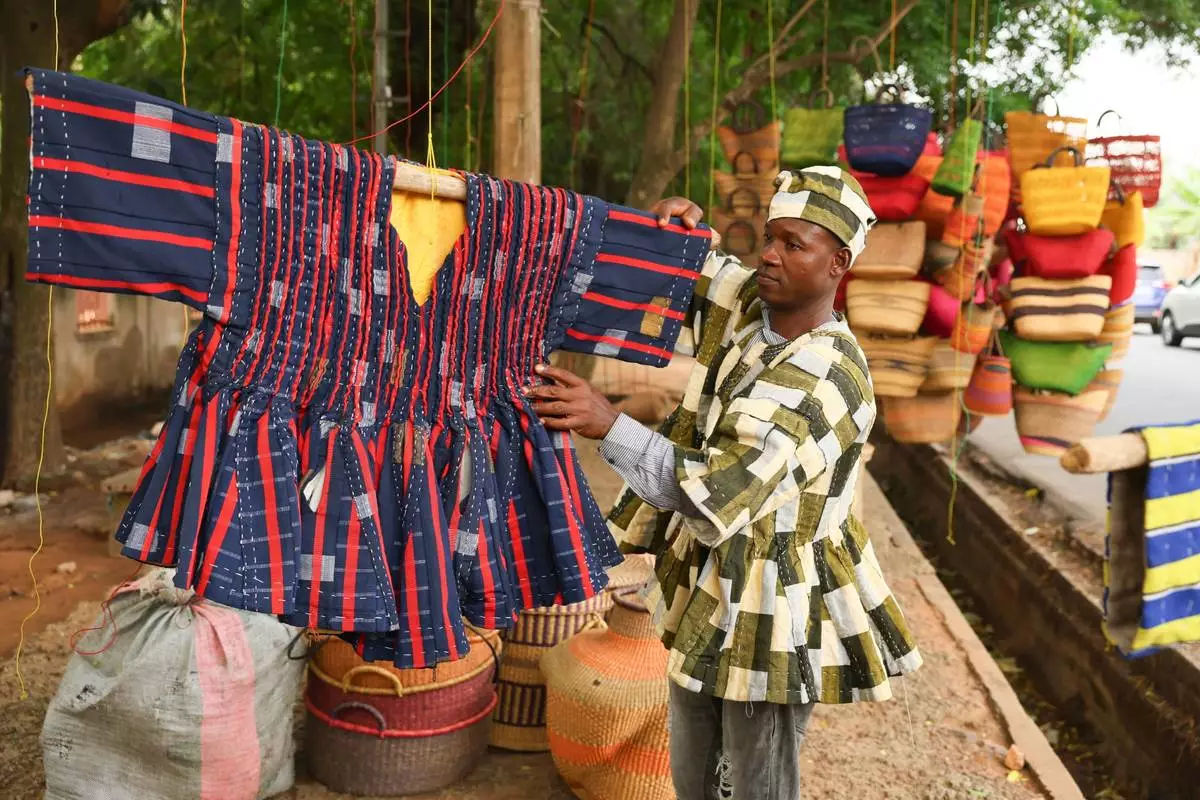
Traditional fugu garments hang under a tree on display for sale along a street in Accra, Ghana, Wednesday, Feb. 18, 2026. (AP Photo/Tsraha Yaw)

Traditional fugu garments hang under a tree on display for sale along a street in Accra, Ghana, Wednesday, Feb. 18, 2026. (AP Photo/Tsraha Yaw)

Clement Azaabire hangs traditional fugu garments under a tree on display for sale along a street in Accra, Ghana, Wednesday, Feb. 18, 2026. (AP Photo/Tsraha Yaw)
Clement Azaabire hangs traditional fugu garments under a tree on display for sale along a street in Accra, Ghana, Wednesday, Feb. 18, 2026. (AP Photo/Tsraha Yaw)
CORTINA D'AMPEZZO, Italy (AP) — Goodbye Milan Cortina. See you in Rome in 2040?

Now that the just-concluded Winter Olympics have been hailed for setting “a new, very high standard” by IOC President Kirsty Coventry, Italian organizers are contemplating a bid for the 2040 Summer Games.

“I think our country deserves another Summer Olympics,” Italian Olympic Committee (CONI) president Luciano Buonfiglio said over the weekend. “But let’s take it step by step. A candidacy has to be agreed on and shared with the government.”

The idea of the Milan Cortina Games was born out of the rejection of Rome’s bid for the 2024 Olympics by then-Mayor Virginia Raggi a decade ago. That came four years after then-Premier Mario Monti scrapped the city’s candidacy for the 2020 Games because of financial concerns; and after a Rome bid was narrowly defeated by Athens in the final round of voting for 2004.

“Scars help you remember” the defeats, said Giovanni Malagò, the head of the Milan Cortina organizing committee and former CONI president.

But Malagò, who is also an IOC member, suggested that Rome has a couple of key advantages in Olympic circles: its “unique” history of failed bids and the centerpiece venue for any Summer candidacy.

“Rome has a 70,000-seat stadium with an athletics track — which is huge in terms of sustainability,” Malagò said.

The existing Stadio Olimpico and surrounding Foro Italico complex would be a natural setting for athletics and swimming — the two biggest sports at the Summer Games.

Rome Mayor Roberto Gualtieri said during the Milan Cortina Games that he believes his city has “the conditions” for another bid — especially after welcoming more than 33 million people to the capital and Vatican for the 2025 Holy Year.

“If it’s considered a realistic goal, I’m open to collaborating with the IOC, government and CONI in order to create the most competitive bid possible,” Gualtieri said. “A capital like Rome should not be afraid of big challenges. The Jubilee showed off our organizational capacity for big events.”

With the 2028 Games coming up in Los Angeles and 2032 in Brisbane, Australia; and India and Qatar bidding for 2036; the 2040 Summer Games seem destined to return to Europe.

“Now is not the time to discuss this. It’s premature, wrong and even counterproductive,” Malagò said. “We need to understand the geopolitical landscape for post-2032.”

Malagò wouldn't elaborate on speculation that he will run for Rome mayor after he finishes off his Milan Cortina duties, saying he would discuss “ideas that I have in mind” after next month's Paralympics.

Andrea Abodi, Italy’s Minister for Sport and Youth, added: "It doesn’t necessarily require an announcement to build a winning bid.”

AP Olympics: https://apnews.com/hub/milan-cortina-2026-winter-olympics

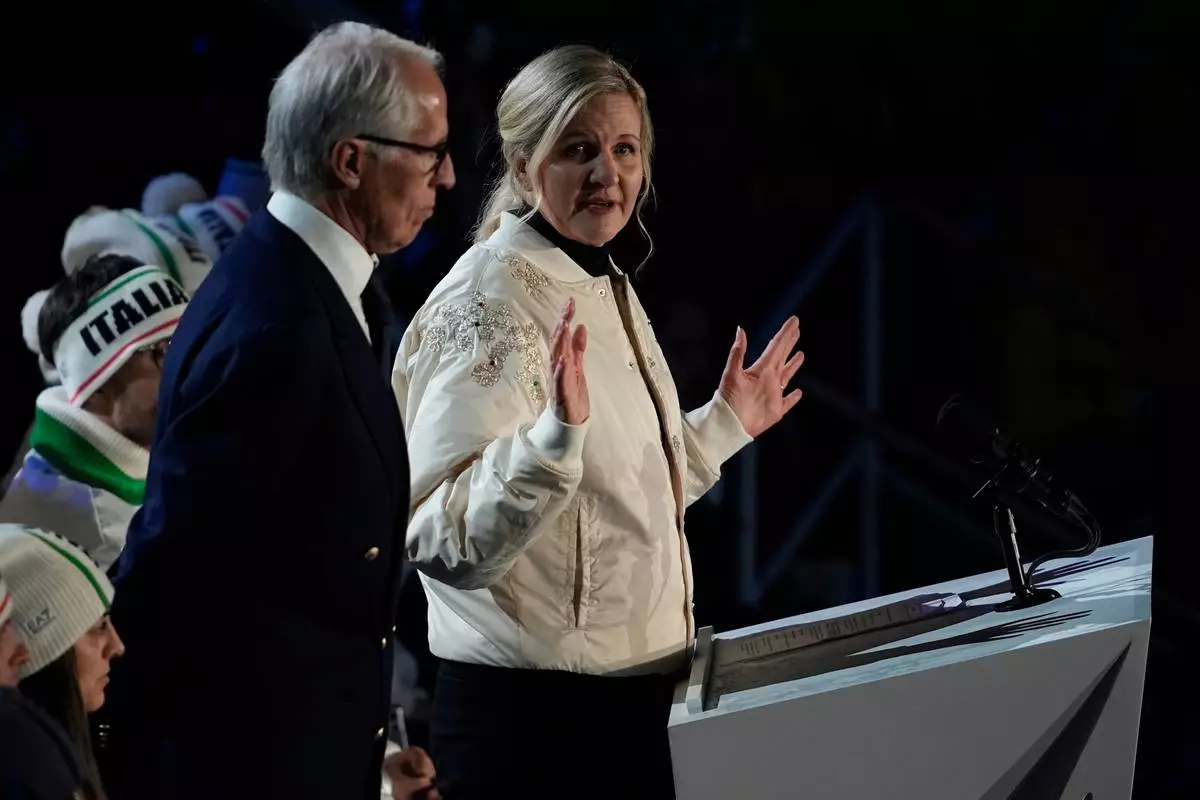
IOC President Kirsty Coventry, right, speaks next to President of the Milan Cortina 2026 foundation Giovanni Malago during the closing ceremony of the 2026 Winter Olympics, in Verona, Italy, Sunday, Feb. 22, 2026. (AP Photo/Ashley Landis)

IOC President Kirsty Coventry, right, speaks next to President of the Milan Cortina 2026 foundation Giovanni Malago during the closing ceremony of the 2026 Winter Olympics, in Verona, Italy, Sunday, Feb. 22, 2026. (AP Photo/Ashley Landis)

Italy's Prime Minister Giorgia Meloni attends the closing ceremony of the 2026 Winter Olympics, in Verona, Italy, Sunday, Feb. 22, 2026. (AP Photo/Natacha Pisarenko)

Italy's Prime Minister Giorgia Meloni attends the closing ceremony of the 2026 Winter Olympics, in Verona, Italy, Sunday, Feb. 22, 2026. (AP Photo/Natacha Pisarenko)

President of the Milan Cortina 2026 foundation Giovanni Malago and IOC President Kirsty Coventry, right, embrace during the closing ceremony of the 2026 Winter Olympics, in Verona, Italy, Sunday, Feb. 22, 2026. (AP Photo/Natacha Pisarenko)

President of the Milan Cortina 2026 foundation Giovanni Malago and IOC President Kirsty Coventry, right, embrace during the closing ceremony of the 2026 Winter Olympics, in Verona, Italy, Sunday, Feb. 22, 2026. (AP Photo/Natacha Pisarenko)

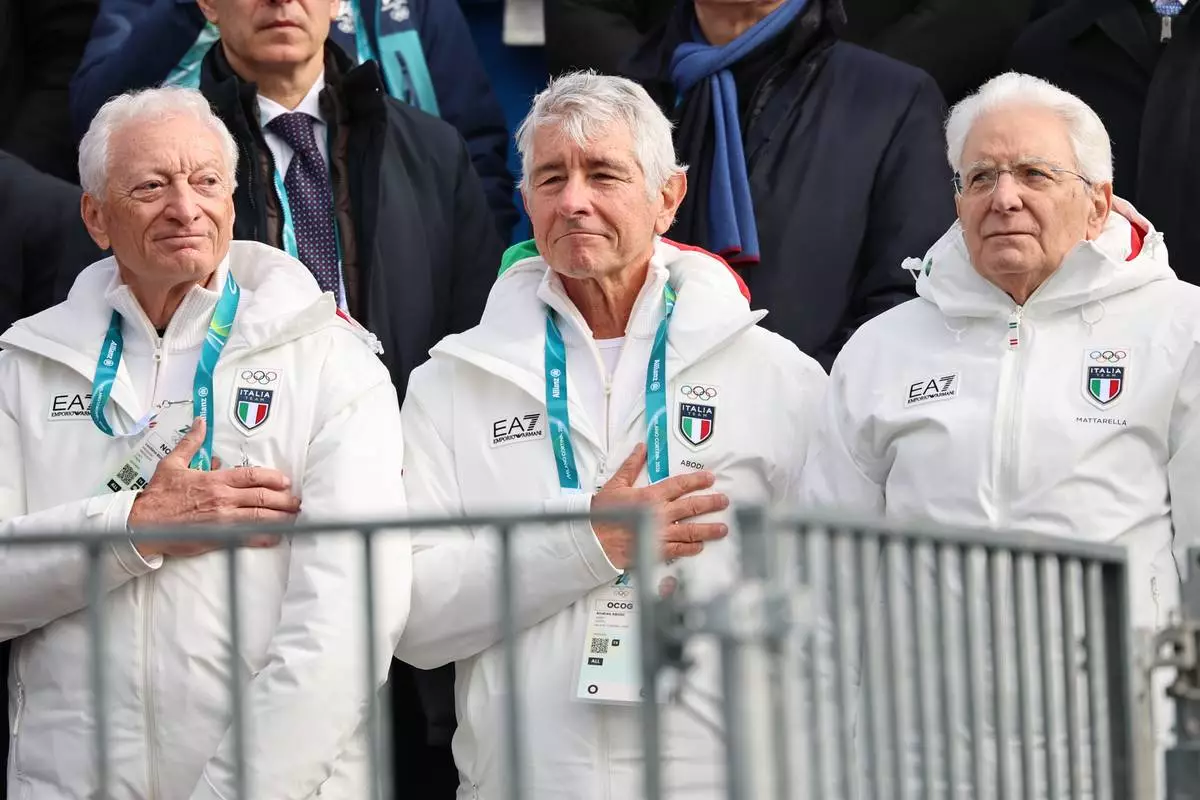
Italian President Sergio Mattarella, right, Andrea Abodi, Italian Minister for Sport and Youth, center, and Luciano Buonfiglio, President of the Italian National Olympic Committee (CONI), listen to the national anthem during the podium ceremony for an alpine ski, women's super-G race, at the 2026 Winter Olympics, in Cortina d'Ampezzo, Italy, Thursday, Feb. 12, 2026. (AP Photo/Marco Trovati)

Italian President Sergio Mattarella, right, Andrea Abodi, Italian Minister for Sport and Youth, center, and Luciano Buonfiglio, President of the Italian National Olympic Committee (CONI), listen to the national anthem during the podium ceremony for an alpine ski, women's super-G race, at the 2026 Winter Olympics, in Cortina d'Ampezzo, Italy, Thursday, Feb. 12, 2026. (AP Photo/Marco Trovati)

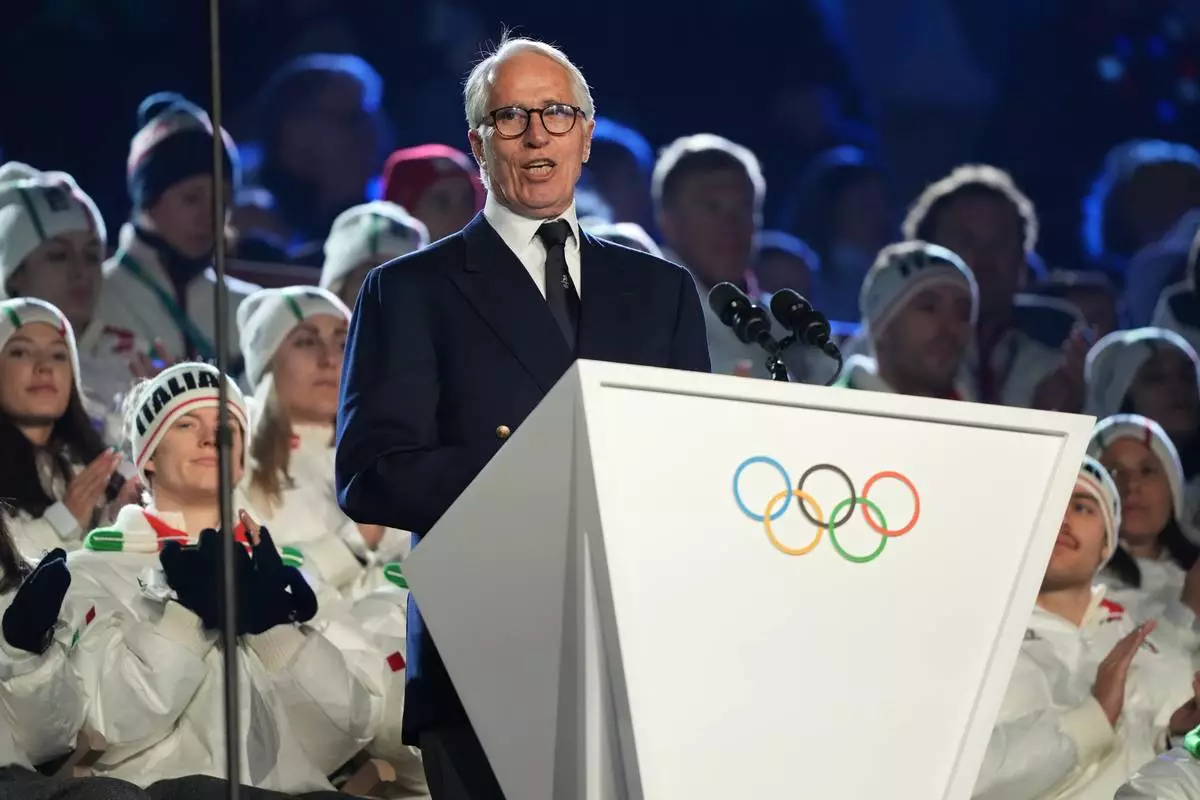
President of the Milan Cortina 2026 foundation Giovanni Malago speaks during the closing ceremony of the 2026 Winter Olympics, in Verona, Italy, Sunday, Feb. 22, 2026. (AP Photo/Natacha Pisarenko)

President of the Milan Cortina 2026 foundation Giovanni Malago speaks during the closing ceremony of the 2026 Winter Olympics, in Verona, Italy, Sunday, Feb. 22, 2026. (AP Photo/Natacha Pisarenko)

Recommended Articles