Four years after Beijing hosted the Winter Olympics in 2022, venues of the sport events have become winter playgrounds for all ages and brought new momentum for the ice and snow economy.
The National Alpine Skiing Center (NASC), known as the "Snow Flying Swallow," has optimized its commercial operation model over the past four years, catering to both professional competitions and public experiences.
Beginners can learn safely at the Yanqing District-based center, while experts can challenge themselves on the same Olympic-grade slopes.
"I like skiing here because the slopes are longer and more challenging than ordinary ones," said a skier.
Operators of the park said the facility has been exploring the commercial value of the Winter Olympics legacy by hosting international events, sports and leisure activities, educational programs and business forums.
They have also developed mountain activities like hiking and rock climbing during the off-snow season at the facility to make it attractive all year round.
"We are fully unleashing the new momentum for sustainable use of Olympic venues. We are building a year-round operational eco-tourism system featuring flower viewing in spring, mountain resort holiday making during summer, hiking in autumn and skiing in winter. We have achieved the transition from a professional competition venue to a public ice and snow playground, realizing both economic and social benefits of the Winter Olympics legacy," said Yang Liyuan, director of the Yanqing Olympic Zone.
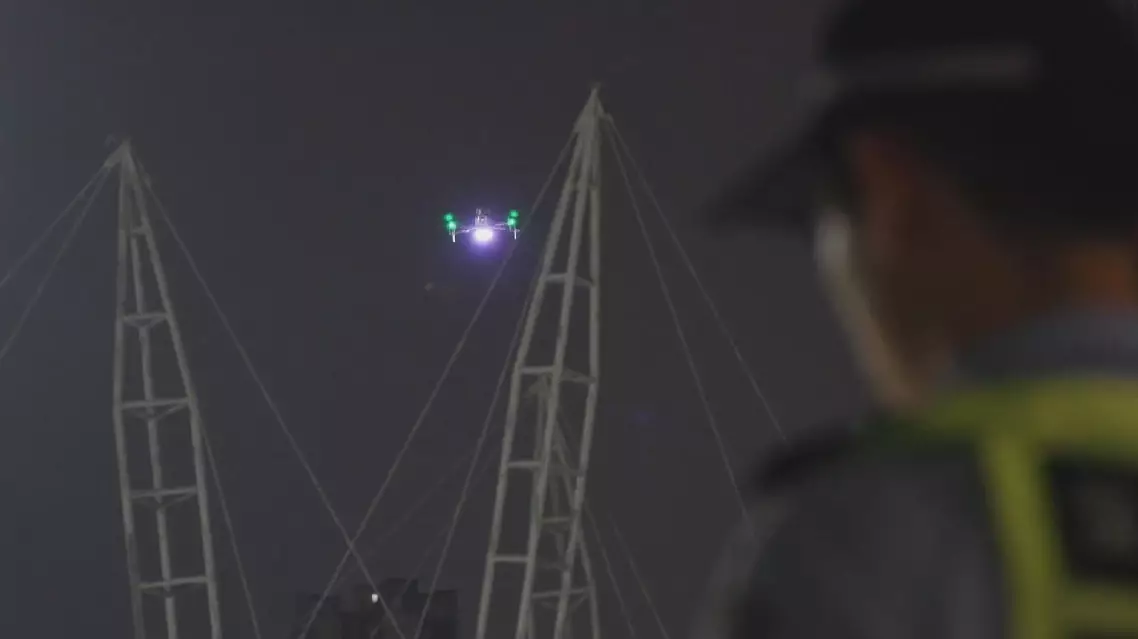
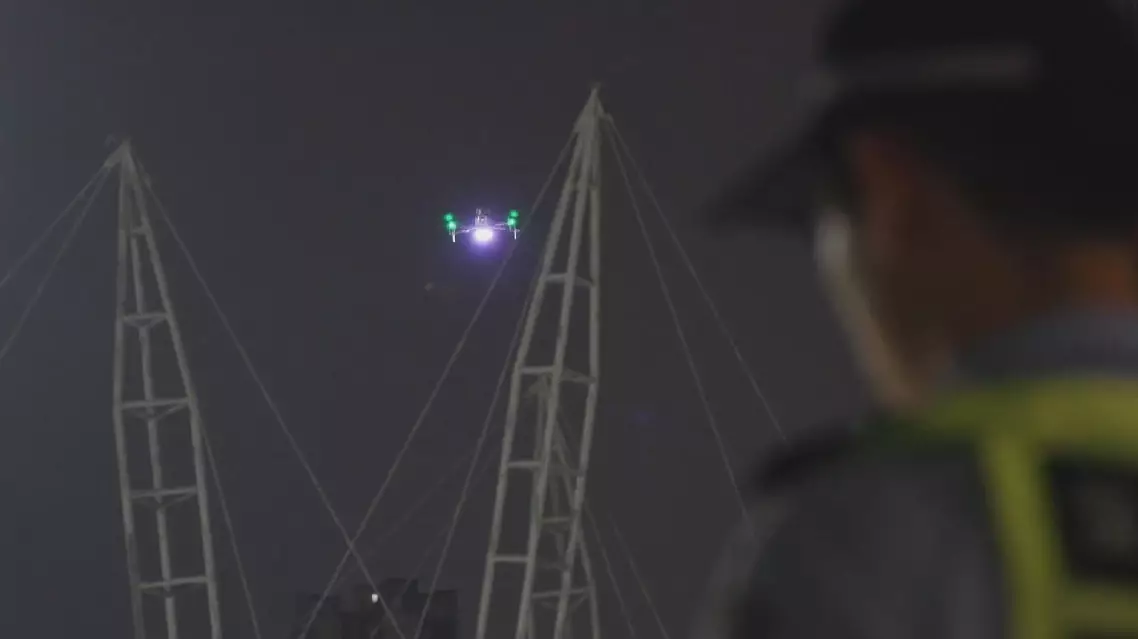
At the foot of the NASC lies the National Sliding Center, known as the "Snow Dragon", featuring 16 angled curves to resemble a mythical Chinese dragon.
This venue has hosted various high-level competitions while also providing training facilities and logistical support for the national team's preparations. It also attracted adults and children to experience bobsleigh and skeleton and display their courage and skills in the programs dubbed "Formula 1 on ice."
The track spans 1.6 kilometers in length, with a run lasting approximately 90 seconds. The public bobsleigh can reach speeds of over 80 kilometers per hour.
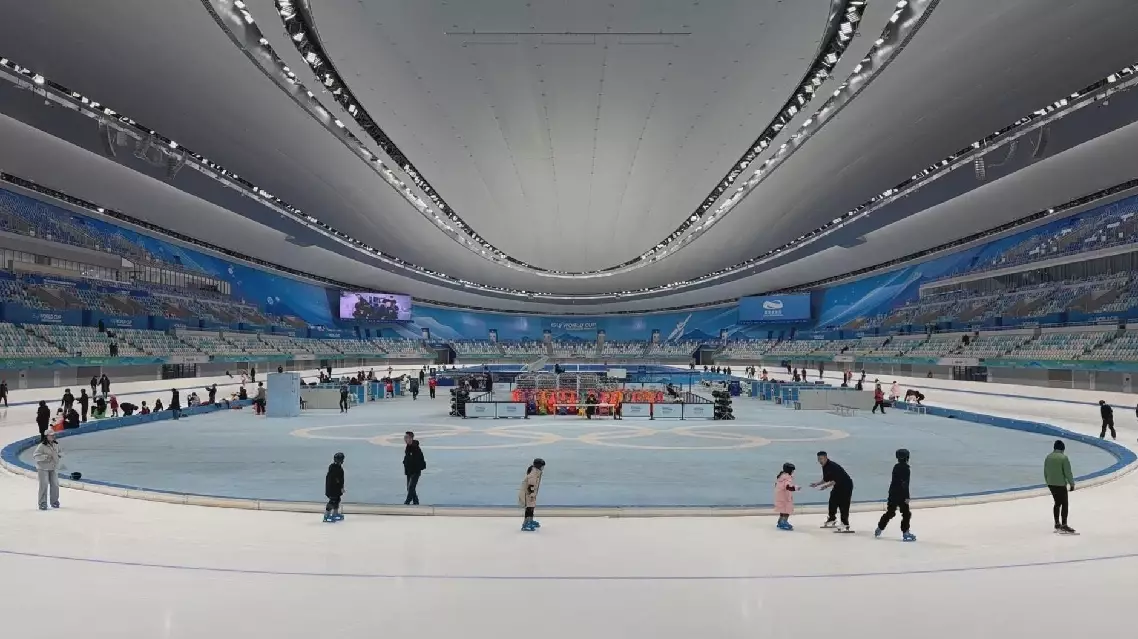
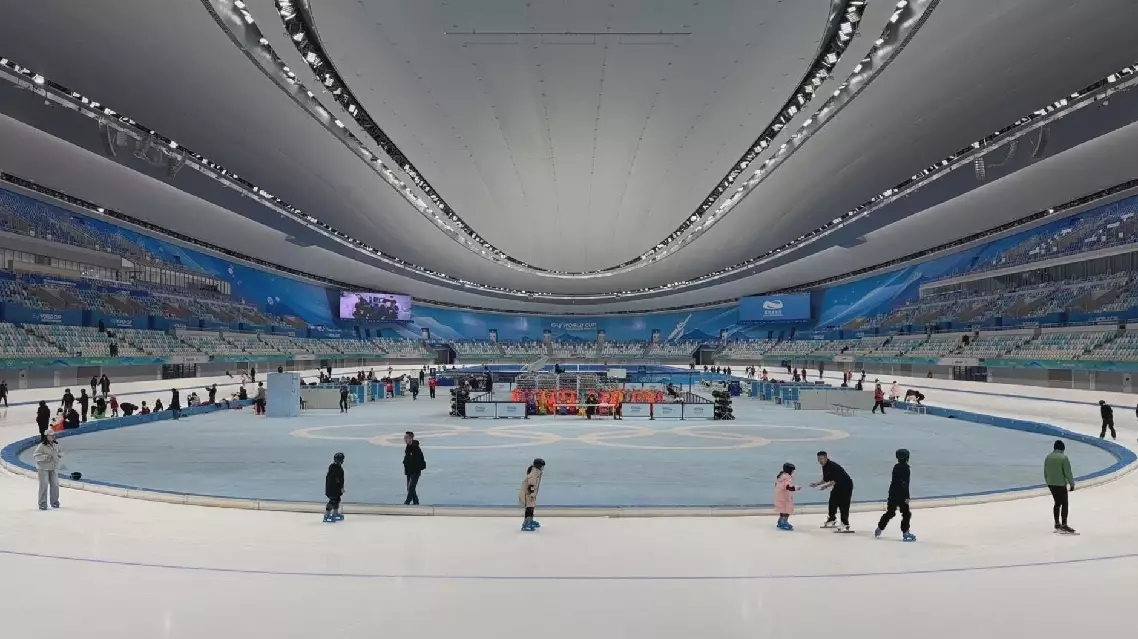
In the National Speed Skating Oval, widely known as the "Ice Ribbon", events such as youth research programs, international exhibitions and technology competitions have vigorously manifested the commercial value of the Winter Olympics legacy.
Covering 12,000 square meters and capable of accommodating over 2,000 people for ice activities simultaneously, the venue located in Beijing's Chaoyang District boasts the largest ice surface in Asia.
"This venue is very modern, one of the best ice-skating venues in the world. It operates with zero-emission and is exceptionally eco-friendly," said a skater in the venue.
It is estimated that the venue will receive 100,000 visits during the official nine-day Spring Festival holiday season ending on Monday.
The China Ice and Snow Tourism Development Report (2026) predicts that during the 2025-2026 winter season, the number of ice and snow tourism and leisure participants in China will reach 360 million.
Winter Olympics legacy propels ice, snow economy in Beijing
Winter Olympics legacy propels ice, snow economy in Beijing