A grand celebration of Maslenitsa, a traditional custom marking the end of the freezing winter and the arrival of the mild spring, was held at the Gorki Leninskie Museum-Reserve near Moscow.
This year's Maslenitsa, also known as Butter Week, took place from Feb 16 to 22. This year's celebration features thousands of guests, equestrian performances, and a five-story-tall scarecrow.
While pancakes are baked at the event site, Spring Festival is celebrated in China this year in February. Despite their different geographies, these holidays share a common spirit.
"In China, it's not called New Year, but Spring Festival. Maslenitsa, for us, is also a way of saying goodbye to winter and welcoming spring. So there's a connection, and this year they just happened to fall at the same time," said Evgeniy Gennadievich Saramud, director of the Gorki Leninskie Museum-Reserve.
"We have a very interesting goal: to show both history and connect it to Maslenitsa. That's why we have two teams. One way or another, we show how horsemen of that time were trained, and there's a connection between the competitions of the Grodno hussars and the noble squadron. We are spring, and we will conquer winter, what else can we do?" said Tatyana Kuznetsova, representative of a Russian hussar cavalry school.
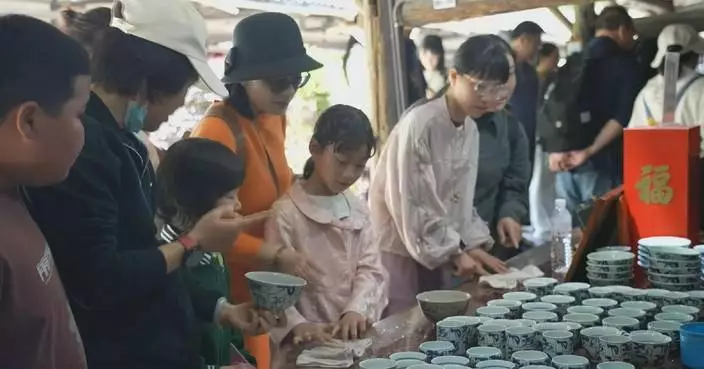
To ensure participants have enough energy for all the fun, traditional pancakes, the main symbol of the sun, are baked almost non-stop in a wide variety of flavors.
"Our fillings are cranberry, raspberry, and sea buckthorn jam. The more pancakes you eat on Maslenitsa, the more energy you'll have in the spring," said festival participant Ruslan Kozintsev.
Many guests arrived at the festival in designer costumes that combined history and modern technology.
"This idea came from my wife, and she also participated in part of the production and performance. She made the masks herself. This is modern technology, 3D printing. Maslenitsa is a big festival, very fun, very cool. There are pancakes, there are caviar-based dishes, there's sour cream, there's honey," said festival attendee Dmitry Ermolaev.
For many, such outings are a way to connect with their roots and feel the connection between generations.
"We tried to portray a Strelets warrior in this traditional costume. We decided to maintain the festive atmosphere," said festival attendee Ilya Moiseenko.
"This is becoming a good tradition, and we dress like this because we are in Russia, we are Russian. We want to maintain our culture and remind people that this is our genes, our blood, our ancestry," said Tatyana Stukalina, another festival attendee.
As performances concluded, the main ceremony began. On this day, the bonfire took on a special, almost sacred meaning. Accompanied by the guests' songs, the flames engulfed a 17-meter-tall giant doll, and for the thousands gathered at the site, this bonfire symbolized a long-awaited revival and hope.
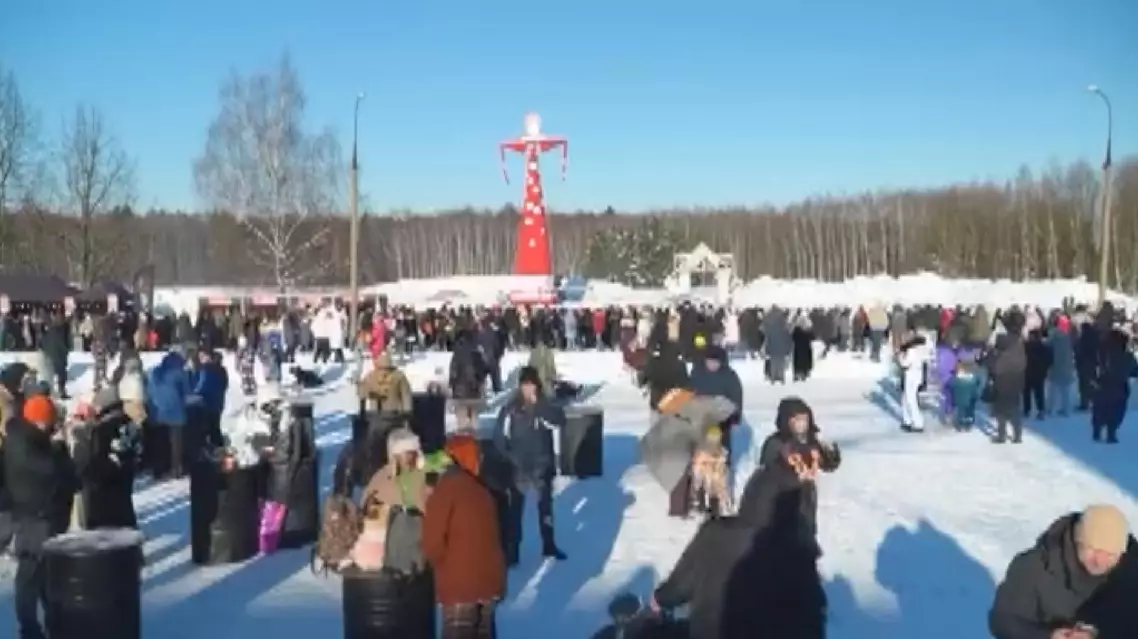
Grand Maslenitsa celebrations held in Moscow Oblast