Skip to Content Facebook Feature Image

Legal changes under consideration to remove former Prince Andrew from line of succession

News

Legal changes under consideration to remove former Prince Andrew from line of succession
News

News

Legal changes under consideration to remove former Prince Andrew from line of succession

2026-02-24 18:42 Last Updated At:02-25 14:38

LONDON (AP) — It's been 90 years since a British royal was removed from the line of succession. That might happen again now that Britain's government says it will consider introducing legal changes to formally remove Andrew Mountbatten-Windsor from the list of royals in line to the throne.

Despite being stripped of his status as prince in October over his close links with the late convicted sex offender Jeffrey Epstein, the former Prince Andrew, King Charles III's younger brother, remains eighth in line to become monarch.

Experts say the process of removing him from the line of succession could be lengthy because it requires the involvement of about a dozen countries that also call the British monarch their head of state.

Nonetheless, momentum for change is building after police last week arrested Mountbatten-Windsor on suspicion of misconduct in public office. Following the release of millions of pages of files last month related to Epstein by the U.S. Justice Department, the former prince was accused of sharing confidential trade information with the disgraced financier when he served as U.K. trade envoy from 2001 to 2011.

Mountbatten-Windsor, 66, was released without charge on Thursday after spending about 11 hours in custody, but he remains under investigation.

“The government is clear that we are not ruling out action in respect of the line of succession at this stage, and we will consider whether any further steps are required in due course," Darren Jones, Prime Minister Keir Starmer's chief secretary, told lawmakers on Monday.

Any such measure will only take place once the police investigation is finished, he added.

Under the current line of royal succession, Charles' son Prince William is heir to the throne and his three children — Prince George, Princess Charlotte and Prince Louis — are next. Prince Harry is fifth, while his two children, Prince Archie and Princess Lilibet, are sixth and seventh in line.

Mountbatten-Windsor — who was second in line to the throne at his birth — currently follows them in eighth position. His daughters, Princesses Beatrice and Eugenie, are at ninth and 12th places respectively.

Removing him from the line of succession would require an act of Parliament, which needs lawmakers' approval.

One party, the Liberal Democrats, has been vocal about supporting such a move.

"I think it would be intolerable for Andrew Mountbatten-Windsor to succeed to the crown," party leader Ed Davey said last week. “It’s not as remote as some people think."

Any change to the line of succession would also require backing from 14 Commonwealth countries where Charles is head of state.

Of those, Australia and New Zealand have said they would support any U.K. government plan to exclude Mountbatten-Windsor.

“These are grave allegations and Australians take them seriously,” Australia's Prime Minister Anthony Albanese wrote in a letter to Starmer. “I agree with His Majesty that the law must now take its full course and there must be a full, fair and proper investigation.”

Starmer’s government is not believed to have received similar letters from other countries that also have Charles as head of state, including Canada, Jamaica, the Bahamas and Tuvalu.

Robert Hazell, a politics professor who founded the Constitution Unit at University College London, said in some countries the change will require a formal constitutional amendment, while in others it can be done by legislation.

He expressed doubt that the U.K. or the other governments would want to spend time removing Mountbatten-Windsor from the succession line given he is only eighth in line.

“The last time this happened was for the Succession to the Crown Act 2013, which made the law of royal succession gender neutral,” he said. “It took two years of protracted negotiations for all the different countries to amend their own laws or constitutions.”

One question is whether excluding Mountbatten-Windsor would affect his daughters, who are not working royals, and their children.

“Not necessarily — it depends how the legislation is framed,” Hazell said.

The last time a royal was removed from the line of succession was after King Edward VIII abdicated in December 1936 to marry American divorcee Wallis Simpson. At the time, the law was changed to strike him and any descendants from the list.

For his part, Charles has not publicly indicated whether he would support or oppose removing his brother from the line of succession. The monarch stressed that the law must take its course in the investigation, adding: “My family and I will continue in our duty and service to you all.’’

Reports in the British media, however, suggest the palace is not against the legal change. Citing an unnamed palace source, the Times of London reported on Saturday that the royal family said it would “never get in the way” of what Parliament decides.
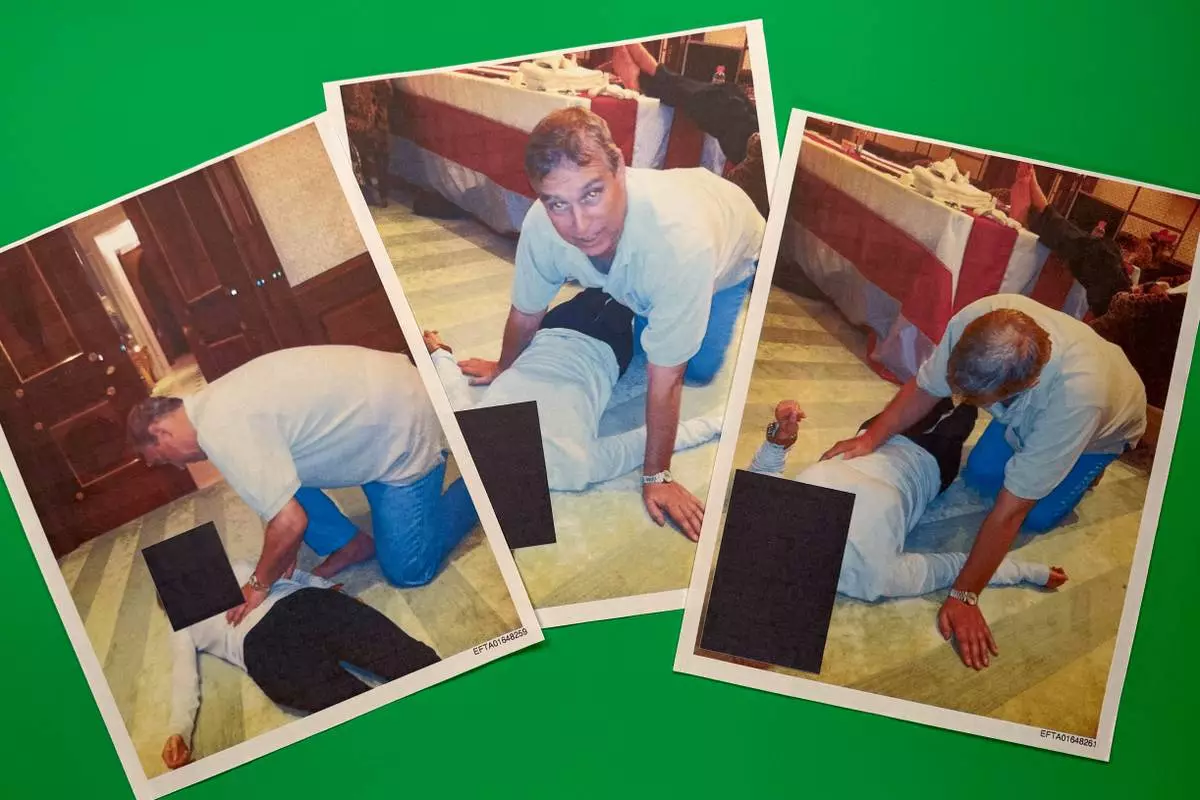
EDS NOTE: GRAPHIC CONTENT - FILE - Images from an undated and redacted document released by the U.S. Department of Justice, photographed Saturday, Jan. 31, 2026, show Andrew Mountbatten-Windsor, formerly known as Prince Andrew, leaning over an unidentified person. (AP Photo/Jon Elswick, File)
EDS NOTE: GRAPHIC CONTENT - FILE - Images from an undated and redacted document released by the U.S. Department of Justice, photographed Saturday, Jan. 31, 2026, show Andrew Mountbatten-Windsor, formerly known as Prince Andrew, leaning over an unidentified person. (AP Photo/Jon Elswick, File)

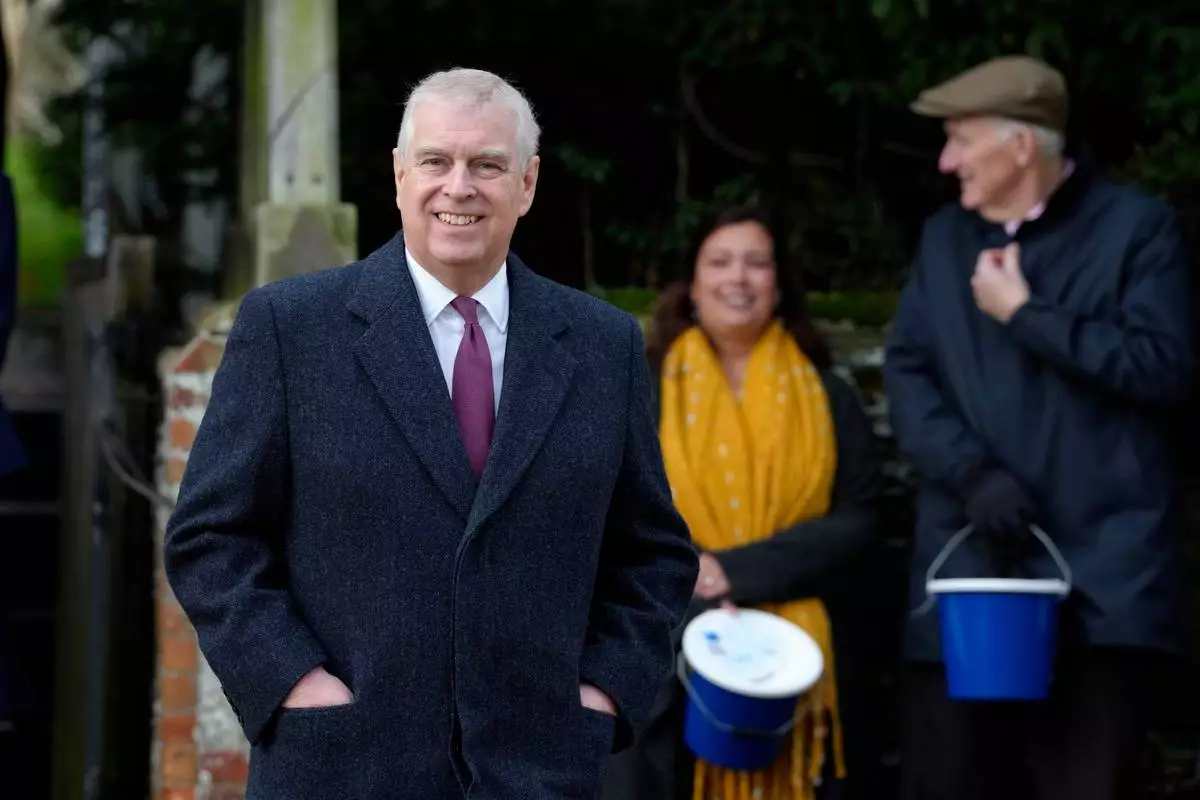
FILE - Prince Andrew leaves after attending the Christmas day service at St Mary Magdalene Church in Sandringham in Norfolk, England, Dec. 25, 2022. (AP Photo/Kirsty Wigglesworth, File)
FILE - Prince Andrew leaves after attending the Christmas day service at St Mary Magdalene Church in Sandringham in Norfolk, England, Dec. 25, 2022. (AP Photo/Kirsty Wigglesworth, File)

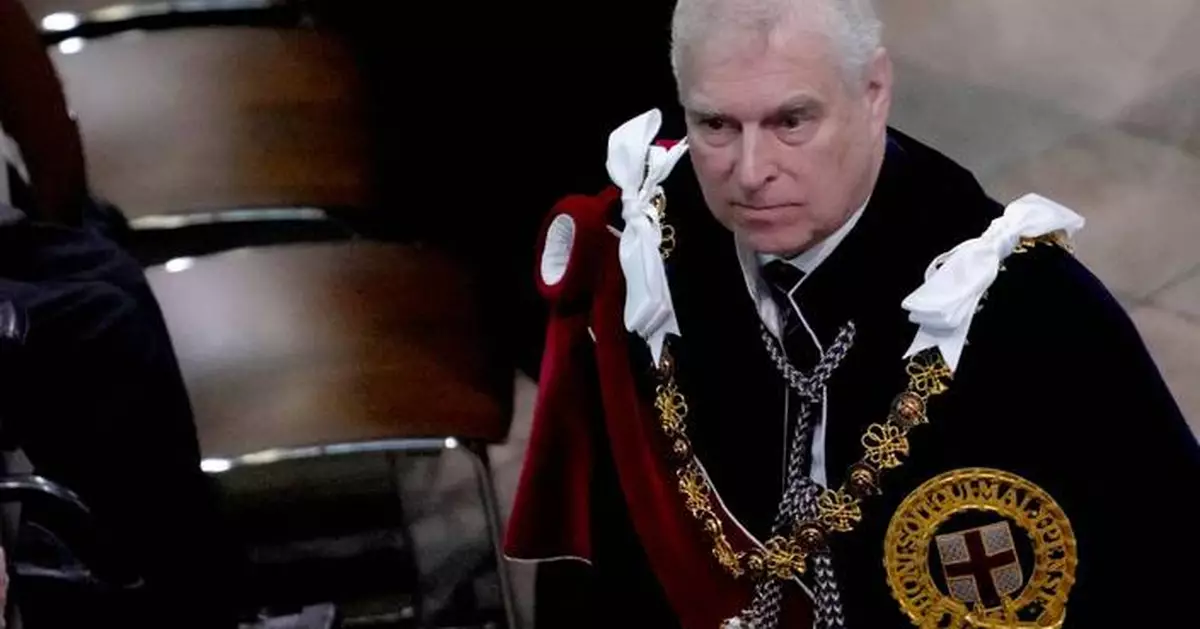
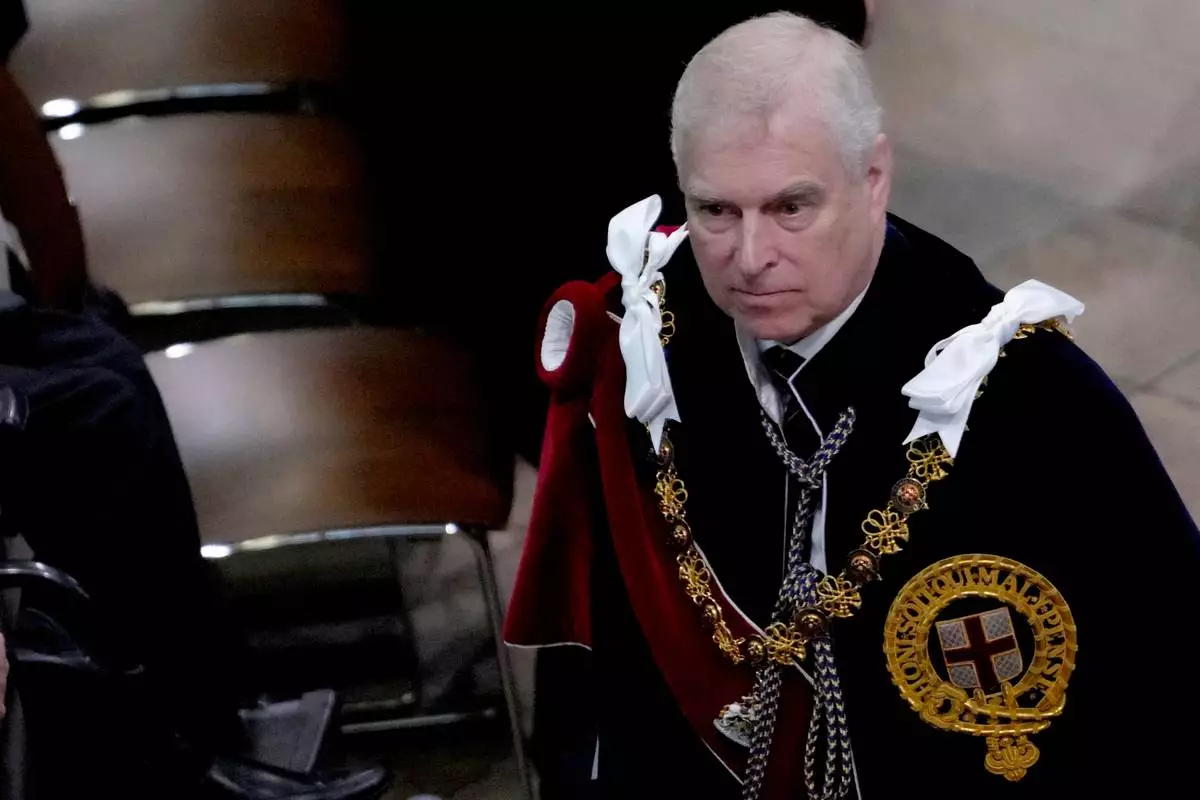
FILE - Britain's Prince Andrew during the coronation ceremony of Britain's King Charles III at Westminster Abbey in London Saturday, May 6, 2023. (AP Photo/Kirsty Wigglesworth, file)

FILE - Britain's Prince Andrew during the coronation ceremony of Britain's King Charles III at Westminster Abbey in London Saturday, May 6, 2023. (AP Photo/Kirsty Wigglesworth, file)

ABOARD THE PAPAL PLANE (AP) — Pope Leo XIV on Wednesday doubled down as U.S. President Donald Trump’s criticism showed no sign of letting up, insisting that the message "the world needs to hear today” is one of peace and dialogue.

Leo spoke to journalists en route to Cameroon as he continued his Africa visit.

He made no mention of Trump’s latest social media post or the suggestion by U.S. Vice President JD Vance, a Catholic convert, that he should “be careful” when speaking about theology.

Leo took no questions. Rather, he focused on his first stop in Algeria and the teachings of St. Augustine of Hippo, the inspiration of his religious order and his own spirituality.

But Leo spoke in terms that suggested the Trump administration's criticism of the pope's calls for peace in the Iran war hadn't gone unnoticed. He spoke exclusively in English.

Trump has issued repeated broadsides this week against history’s first U.S.-born pope, accusing him of being weak on crime and a captive to the left, and asserting that Leo owed his papacy to Trump. Trump also posted, then took down, an artificial intelligence-generated, Christ-like image of himself that drew widespread condemnation, even from many supporters.

Trump’s attacks on Leo began after the pope amplified criticism of war and asserted that God doesn’t bless those who drop bombs. Leo also called Trump’s threat to annihilate Iranian civilization “truly unacceptable.”

Overnight, Trump posted “Not good!!!” in response to a post citing social media posts by Leo before he was pope that were critical of Trump. And he wrote: “Will someone please tell Pope Leo that Iran has killed at least 42,000 innocent, completely unarmed, protesters in the last two months, and that for Iran to have a Nuclear Bomb is absolutely unacceptable.”

Leo drew attention to his visit Tuesday to Annaba, the ancient city of Hippo where St. Augustine, the theological and philosophical giant of the early church, lived as a bishop for more than 30 years.

“His writings, his teaching, his spirituality, his invitation to search for God and to search for truth is something that is very much needed today, a message that is very real for all of us today as believers in Jesus Christ, but for all people,” Leo said.

By going to Hippo, Leo said that he wanted to offer the church and the world a vision that St. Augustine offers in terms of seeking "unity among all peoples and respect for all people in spite of the differences.”

He recalled that the vast majority of Algerians are Muslim, but that they respect and honor St. Augustine as “one of the great sons of their land.” Such an attitude, he said, helps to build bridges between Christians and Muslims and promote dialogue.

And he recalled his visit to the Great Mosque of Algiers, where he stood in silent prayer.

“I think the visit to the mosque was significant to say that although we have different beliefs, we have different ways of worshiping, we have different ways of living, we can live together in peace,” he said.

“And so I think that to promote that kind of image is something which the world needs to hear today.”

While being on the receiving end of Trump's criticisms online, Leo pointed to the respectful way that the Algerian government had received him on the first-ever papal visit — with a full military airborne escort through Algeria's airspace.

“It’s a sign of the goodness, of the generosity, of the respect that the Algerian people and the Algerian government have wished to show to the Holy See and to myself,” Leo said.

The Vatican's editorial director, Andrea Tornielli, was more pointed than Leo in his rebuttal of Vance, who had argued that the Catholic Church had a long tradition of endorsing so-called “just wars,” when war can be morally justified.

Tornielli noted that the “just war” theory was developed centuries ago, when wars were fought with swords, not machine-guided drones.

“This teaching has gradually been enriched and deepened, to the point of recognizing how increasingly difficult it is to claim that a ‘just war’ exists,” Tornielli wrote on Vatican Media. Modern warfare poses a "reality that raises moral questions of dramatic intensity.”

“There has been a growing awareness that war is not a path to be followed,” he wrote.

U.S. Cardinal Robert McElroy, the archbishop of Washington, has said the U.S.-Israeli war in Iran failed to meet the minimum criteria for the war to be considered morally just. Such criteria would have included that it was a response to an imminent threat, that the U.S. and Israel had clearly articulated their intentions or that the benefits would outweigh the harm.

Associated Press religion coverage receives support through the AP’s collaboration with The Conversation US, with funding from Lilly Endowment Inc. The AP is solely responsible for this content.

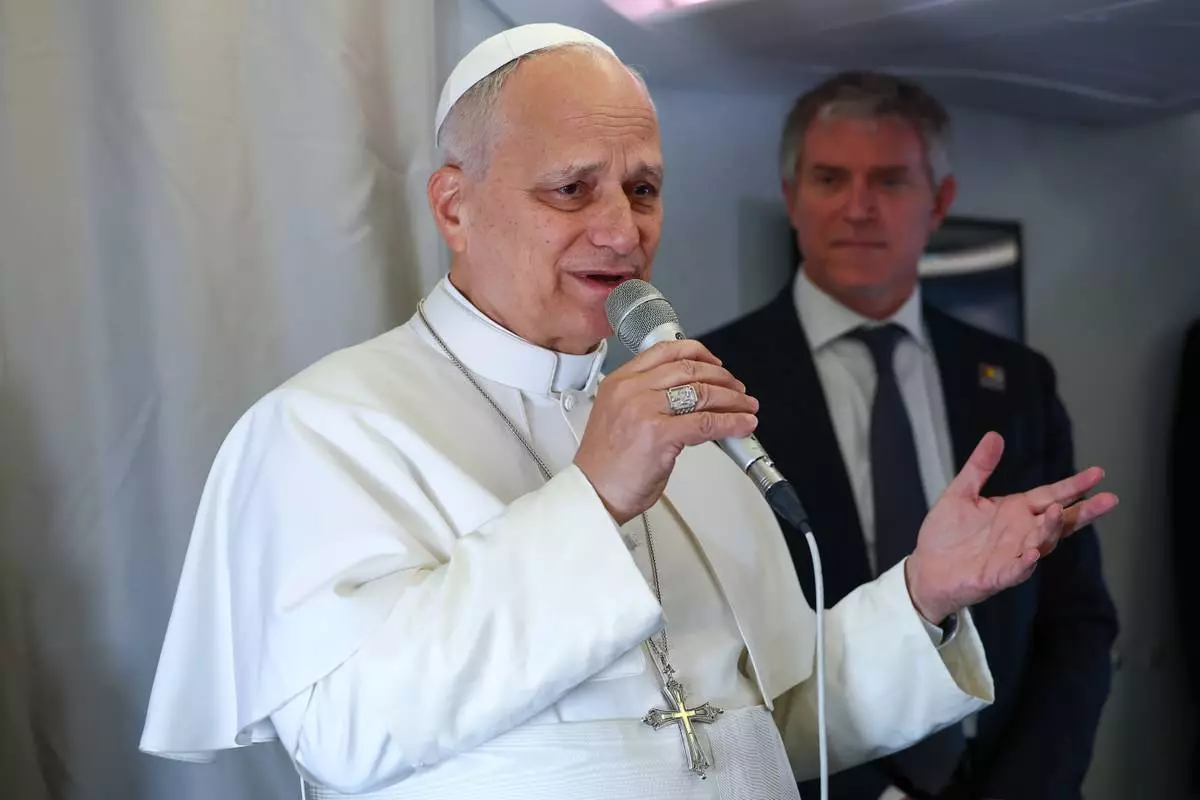
Pope Leo XIV speaks to journalists aboard his flight bound for Yaounde-Nsimalen International Airport, Cameroon, Wednesday, April 15, 2026, on the third day of an 11-day apostolic journey to Africa. (Guglielmo Mangiapane/Pool Photo via AP)

Pope Leo XIV speaks to journalists aboard his flight bound for Yaounde-Nsimalen International Airport, Cameroon, Wednesday, April 15, 2026, on the third day of an 11-day apostolic journey to Africa. (Guglielmo Mangiapane/Pool Photo via AP)

Recommended Articles