BOGOTA, Colombia (AP) — Illegal gold mining is spreading into new parts of Peru’s Amazon, advancing along remote rivers and into Indigenous territories as experts warn of a widening environmental and public health crises that could cause irreparable damage.
The surge marks a new phase for one of the Amazon’s most destructive industries, as operations move beyond long-established hot spots into previously untouched regions, environmentalists, researchers and Indigenous leaders told The Associated Press.
The expansion is accelerating deforestation, contaminating rivers with mercury and exposing remote communities to violence and organized crime, even as the government says it is stepping up enforcement.
Once largely concentrated in the southern Amazon region of Madre de Dios, the activity is now moving north into regions such as Loreto and Ucayali.
Peru’s high commissioner for the fight against illegal mining, Rodolfo García Esquerre, acknowledged as much during a television interview in early February.
“Unfortunately, we have illegal mining in all regions of Peru,” he said on TVPERU news channel.
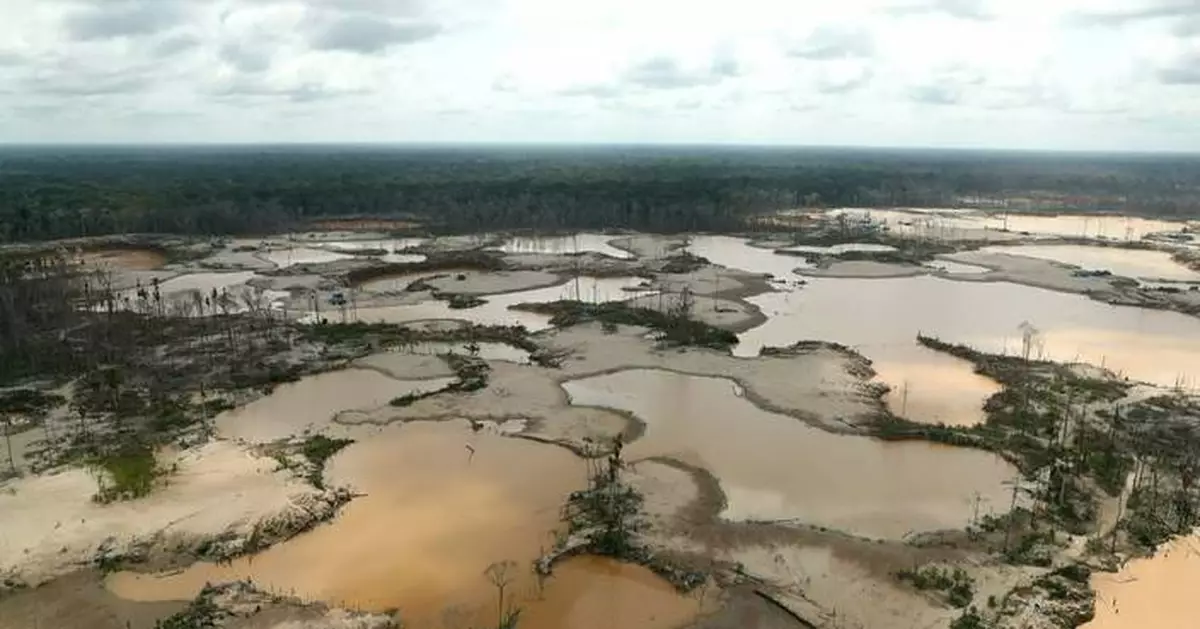
Illegal miners strip away forest with bulldozers, carve pits into flood plains and deploy floating dredges that suck up river sediment in search of gold. The process leaves behind pools of stagnant, mercury-laced water and eroded riverbanks, while camps and access roads spread deeper into previously untouched forest.
Peruvian environmental lawyer César Ipenza said the expansion has accelerated in recent years as gold prices surge. Gold has been trading at roughly $2,000 an ounce so far in 2026 — near historic highs and roughly double its price a decade ago.
“Illegal mining has increased considerably,” Ipenza said, pointing to new activity in Huanuco, Pasco, Loreto and along the Ecuador border as higher gold prices make it economically viable to operate in more remote regions.
Julia Urrunaga, Peru program director for the nonprofit Environmental Investigation Agency, said field reports show illegal mining is now appearing in new areas this year, particularly along river systems.
On the ground, conservationists say changes to the environment are noticed soon after illegal mining takes hold.
“It happens pretty fast,” said Luis Fernández, a research professor and senior fellow of the Sabin Center for Environment and Sustainability at Wake Forest University. “You’ll see changes in weeks to months once the machinery comes in … sediment plumes in the rivers almost immediately.”
At the Panguana Biological Station in Peru’s central Amazon, a private conservation area protecting one of the region’s most biodiverse forests, the impacts are already visible in 2026. The station has become a front line site in the illegal mining boom, its administrator, Fernando Malatesta, told the AP.
“Where there were once intact forests … the rivers are now murky,” he said. “You used to see crystal-clear water, but not anymore.”
Heavy machinery and road building have pushed into once-intact forests. “It was an unrecognizable place,” Malatesta said of a nearby area he witnessed deforested by dozens of machines in recent months.
Illegal miners often arrive by river with dredging equipment or by road with excavators, rapidly clearing land and altering waterways.
At Panguana, Malatesta and his team were forced to leave the station after threats escalated in 2025 and early 2026.
“They started threatening us … there were people with machetes,” he said, recalling confrontations with miners and residents.
Researchers say such violence is tied to the growing involvement of organized crime networks.
“Transnational criminal groups are becoming more significant every day,” said Ipenza, the environmental lawyer.
Urrunaga said illegal gold mining has become a key source of income for criminal networks.
“Sadly, it’s very connected. It’s a source of income for many of the organized crime activities happening in the country,” she said, adding that the activity is also “deeply linked to the political forces in the country right now.”
In late 2023, Peru’s government created a high-level multisector commission to combat illegal mining and oversee efforts to formalize small-scale miners.
Officials say enforcement efforts are ongoing. Recent operations have resulted in the seizure and destruction of equipment worth more than 60 million soles ($16 million) used in illegal mining activities.
But environmental defenders say enforcement remains weak on the ground.
The Peruvian government did not immediately respond to a request for comment. Rodolfo García Esquerre, Peru’s high commissioner for the fight against illegal mining, appointed in 2024, declined to comment.
Indigenous leaders say the expansion is affecting communities across the Amazon.
“This is already being heard in other parts of the Amazon. It is spreading through Loreto and Ucayali,” said Julio Cusurichi, an Indigenous leader from Madre de Dios. He described how outside miners arrive quickly, cutting forests and polluting rivers.
“There is fear,” Cusurichi said, adding that more than 30 Indigenous leaders have been killed in recent years for defending their lands.
At Panguana, Malatesta said Indigenous communities in some areas have begun to participate in mining due to economic need, while in others they try to resist.
“They are supporting illegal mining … they are selling their land thinking they are making the deal of the year,” he said, warning the money from mining “doesn’t last forever.”
Urrunaga said the environmental damage is closely tied to serious health risks for communities.
“The devastation generated by gold mining is terrible in terms of the environment and through the environment also for human health,” she said, pointing to how mercury, used to extract gold, pollutes rivers, and the food and water consumed by Indigenous communities, where fish is a staple food.
“Mercury becomes the delivery system for poison,” Fernández said, explaining how it builds up through food chains and affects children’s neurological development.
Claudia Vega, a scientist and mercury program coordinator at the Amazon Center for Scientific Innovation, CINCIA, said the expansion of mining into heavily fish-dependent Amazonian communities could have severe consequences.
“Amazonian communities are already vulnerable … they eat fish every day,” she said. “If you put mining in that type of place … you are adding more risk.”
She warned contamination could reach levels similar to the Minamata disaster in Japan, where mercury poisoning caused widespread neurological damage.
“We can have deformities, loss of vision, loss of hearing,” she said.
Scientists warn that the expansion of mining could have irreversible consequences.
“We’re going to see a conversion of river corridors, flood plains and forests,” Fernández said.
Urrunaga said international gold buyers "need to be accountable for the destruction that their consumption is generating in terms of the environment, but most importantly in terms of human lives.”
As gold prices rise and demand continues worldwide, scientists caution that continued expansion could push parts of the Amazon closer to an ecological tipping point, with large areas of rainforest shifting into degraded savanna-like ecosystems.
“Every tree that falls, every river that is contaminated and every animal that disappears remind us that we are losing an irreplaceable treasure,” Malatesta said.
The Associated Press’ climate and environmental coverage receives financial support from multiple private foundations. AP is solely responsible for all content. Find AP’s standards for working with philanthropies, a list of supporters and funded coverage areas at AP.org.
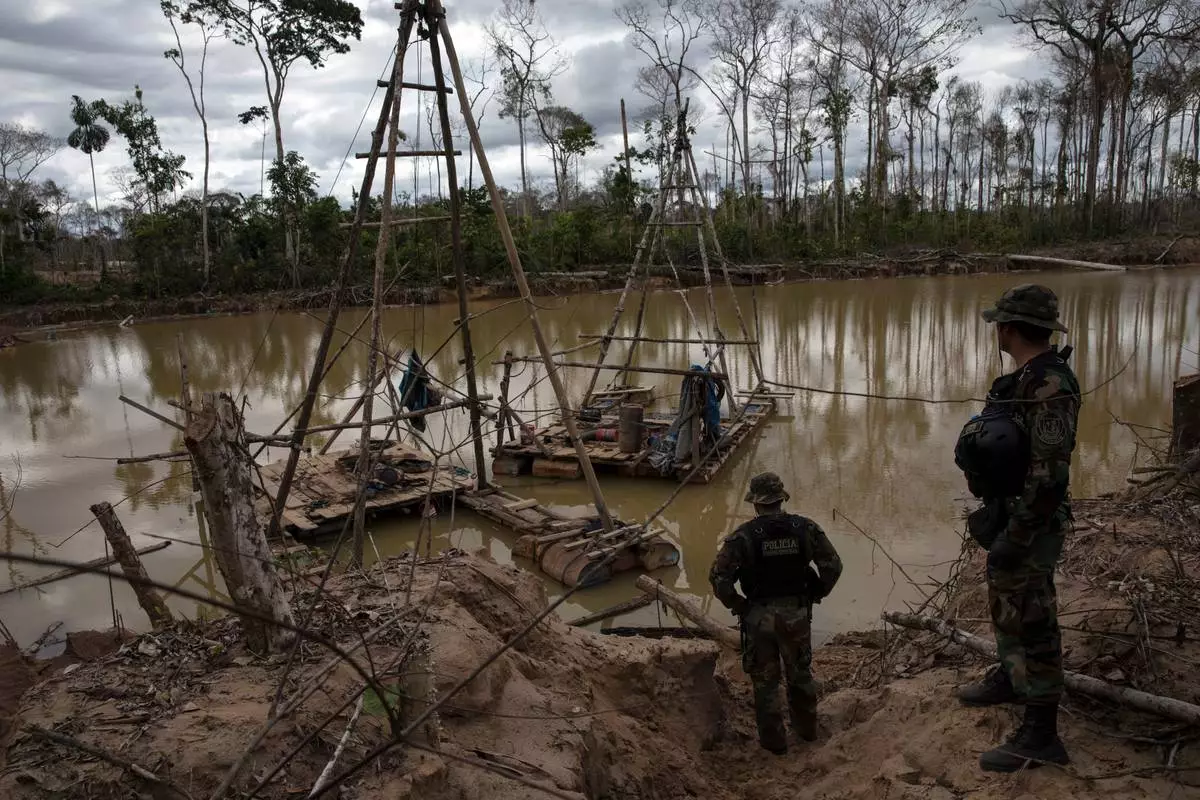
FILE - Police special forces stand next to illegal mining machinery in Peru's Tambopata province on April 1, 2019. (AP Photo/Rodrigo Abd, File)
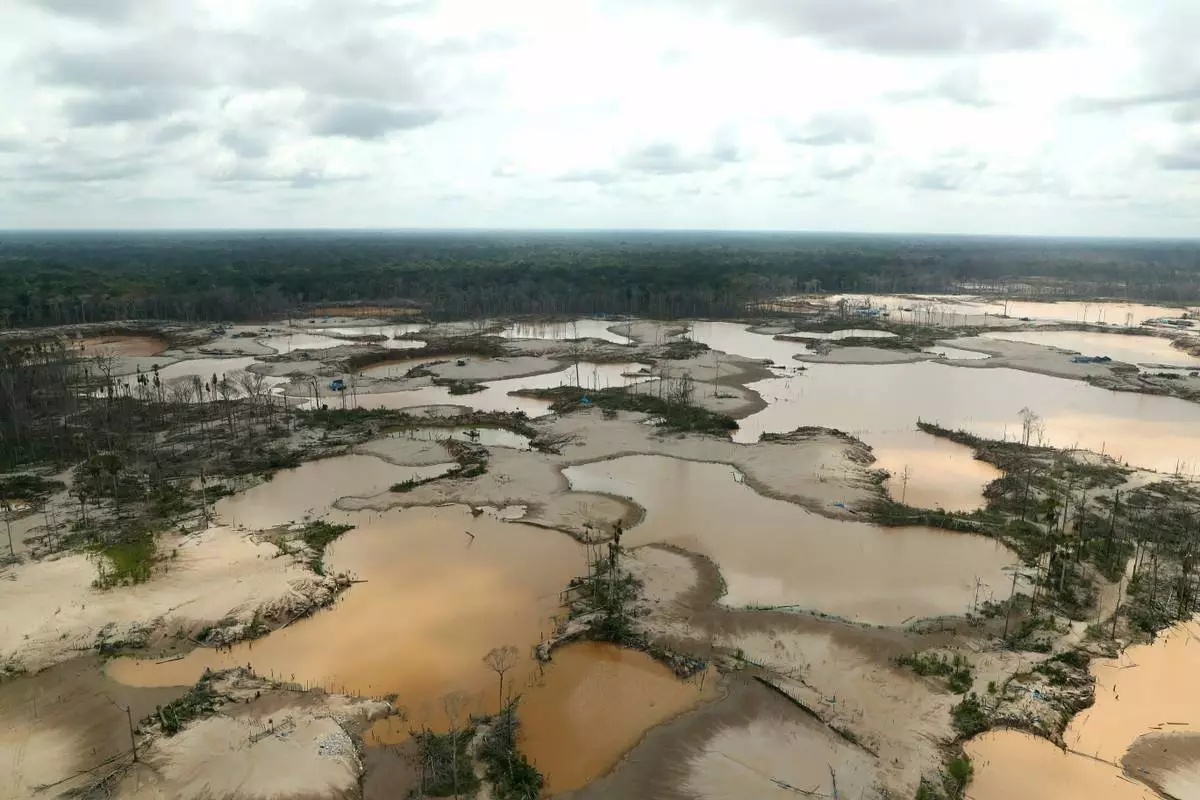
FILE - Peruvian jungle devastated by gold miners is visible in Madre de Dios, Peru, March 5, 2019. (Guadalupe Pardo/Pool Photo via AP, File)
WASHINGTON (AP) — President Donald Trump will stand before Congress on Tuesday to deliver the annual State of the Union address to a suddenly transformed nation.
One year back in office, Trump has emerged as a president defying conventional expectations. He has executed a head-spinning agenda, upending priorities at home, shattering alliances abroad and challenging the nation's foundational system of checks and balances. Two Americans were killed by federal agents while protesting the Trump administration's immigration raids and mass deportations.
As the lawmakers sit in the House chamber listening to Trump's agenda for the year ahead, the moment is an existential one for the Congress, which has essentially become sidelined by his expansive reach, the Republican president bypassing his slim GOP majority to amass enormous power for himself.
“It’s crazy," said Nancy Henderson Korpi, a retiree in northern Minnesota who joined an Indivisible protest group and plans to watch the speech from home. “But what is disturbing more to me is that Congress has essentially just handed over their power.”
She said, “We could make some sound decisions and changes if Congress would do their job.”
The country is at a crossroads, celebrating its 250th anniversary while experiencing some of the most significant changes to its politics, policies and general mood in many Americans' lifetimes.
The president muscled his agenda through Congress when he needed to — often pressuring lawmakers with a phone call during cliffhanger votes — but more often avoided the messy give-and-take of the legislative process to power past his own party and the often unified Democratic opposition.
Trump's signature legislative accomplishment so far is the GOP’s big tax cuts bill, with its new savings accounts for babies, no taxes on tips and other specialty deductions, and steep cuts to Medicaid and SNAP food aid. It also fueled more than $170 billion to Homeland Security for his immigration deportations.
But the GOP-led Congress has largely stood by as Trump dramatically seized power through hundreds of executive actions, many being challenged in court, and a willingness to do whatever it takes to impose his agenda.
“Retrieving a lost power is no easy business in our constitutional order,” wrote Justice Neil Gorsuch in the Supreme Court's landmark rebuke of Trump's tariffs policy on Friday.
Gorsuch said that without the court stepping in on major questions, “Our system of separated powers and checks-and-balances threatens to give way to the continual and permanent accretion of power in the hands of one man.”
From slashing the federal workforce to upending the childhood vaccine schedule to attacking Venezuela and capturing that country's president, Trump's reach appeared to know no bounds.
His administration launched investigations of would-be political foes, imposed his name on historic buildings, including the storied John F. Kennedy Center for the Performing Arts, and perhaps most visibly has been rounding up people and converting warehouses into detention holding centers for deportations.
At almost every step of the way, there were moments when Congress could have intervened but did not.
Democrats, in the minority, often tried to push back, including by halting routine Homeland Security funds unless there are restraints on the immigration actions.
But Republicans believe the country elected the president and gave their party control of Congress to align with his agenda, according to one senior GOP leadership aide who insisted on anonymity to discuss the dynamic.
House Speaker Mike Johnson of Louisiana has said Trump will be the “most consequential” president of the modern era.
Democrats plan to either boycott the speech or sit in stony silence.
“The state of the union is falling apart,” said House Democratic Leader Hakeem Jeffries of New York.
There have been times when Congress held its own against the White House, but they have been rare — as in the high-profile bipartisan push from Reps. Thomas Massie, R-Ky., and Rep. Ro Khanna, D-Ca., to force the release of the Jeffrey Epstein files, over the objections of Johnson and GOP leadership.
The flex of congressional power has more often come from a few renegade Republicans joining with most Democrats to put a check on the president, as when the House voted to block Trump's tariffs on Canada. The Senate advanced a war powers resolution to prevent military action in Venezuela without congressional approval, but backed off after Trump intervened.
Those have been mostly symbolic votes, because Congress would not have the numbers to overcome any expected Trump veto.
More often, the Congress has accommodated Trump, by rolling back already approved bipartisan funding for USAID foreign aid or public broadcasting or failing to stop the U.S. military strikes on alleged drug-smuggling boats that killed two survivors in the Caribbean. When Trump issued a Day One pardon of some 1,500 people charged in the Jan. 6, 2021 attack on the Capitol, the Republicans in Congress did not object.
And as Trump's Department of Government Efficiency with billionaire Elon Musk started firing federal workers, GOP lawmakers signaled approval by forming their own DOGE caucus on Capitol Hill.
“The central question for us is does the public understand what's at stake” said Max Stier, CEO of the Partnership for Public Service, a nonprofit organization focused on government management and democracy. “We are in the midst of the most significant transformation of our government and our public servants in our history as a country.”
He said some 300,000 federal employees were fired or moved on, while 100,000 new hires or rehires have largely gone to Homeland Security.
In courtrooms across the country, cases are being filed against the administration at record levels, as Congress was “asleep at the wheel,” said Skye Perryman, president of Democracy Forward, which has filed more than 150 cases against the administration, part of the largest legal effort against an executive branch in U.S. history.
But the judicial system has been under strain, and the White House has not always abided by court rulings. GOP lawmakers have joined Trump's criticism of the courts, displaying outside their offices posters of judges they want to impeach.
A next big test will be over a proof-of-citizenship voting bill that Trump wants ahead of the midterm elections.
The House has passed the SAVE America Act, which would require birth certificates or passports to register to vote in federal elections and a photo ID at the polls. Supporters say it’s needed to crack down on fraud, while critics argue it will shut millions of Americans out of voting because they don’t have citizenship documents readily available.
The Senate has a majority to pass the measure but not the necessary 60 votes to overcome an expected Democratic-led filibuster.
Trump has vowed executive actions if Congress fails to approve legislation.
Follow the AP's coverage of President Donald Trump at https://apnews.com/hub/donald-trump.
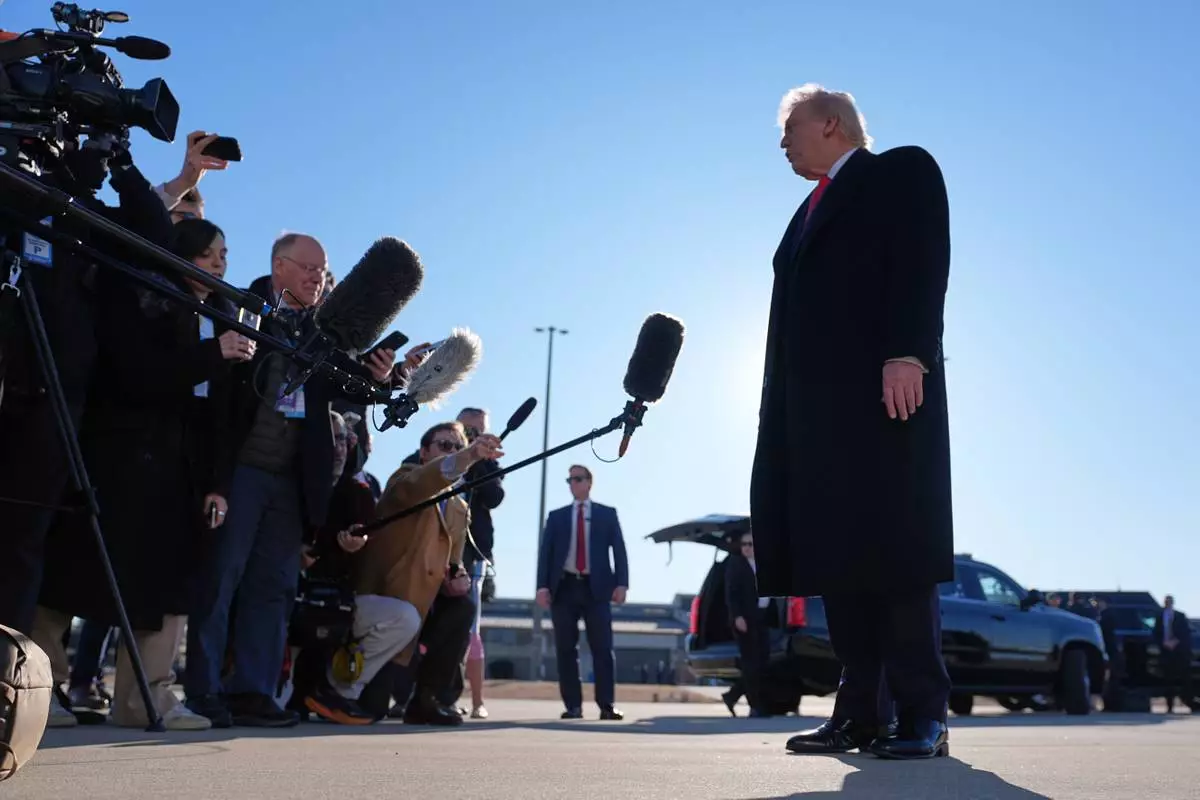
President Donald Trump speaks to reporters before boarding Air Force One at Pope Army Airfield, in Fort Bragg, N.C., Friday, Feb. 13, 2026, en route to Palm Beach, Fla. (AP Photo/Matt Rourke)
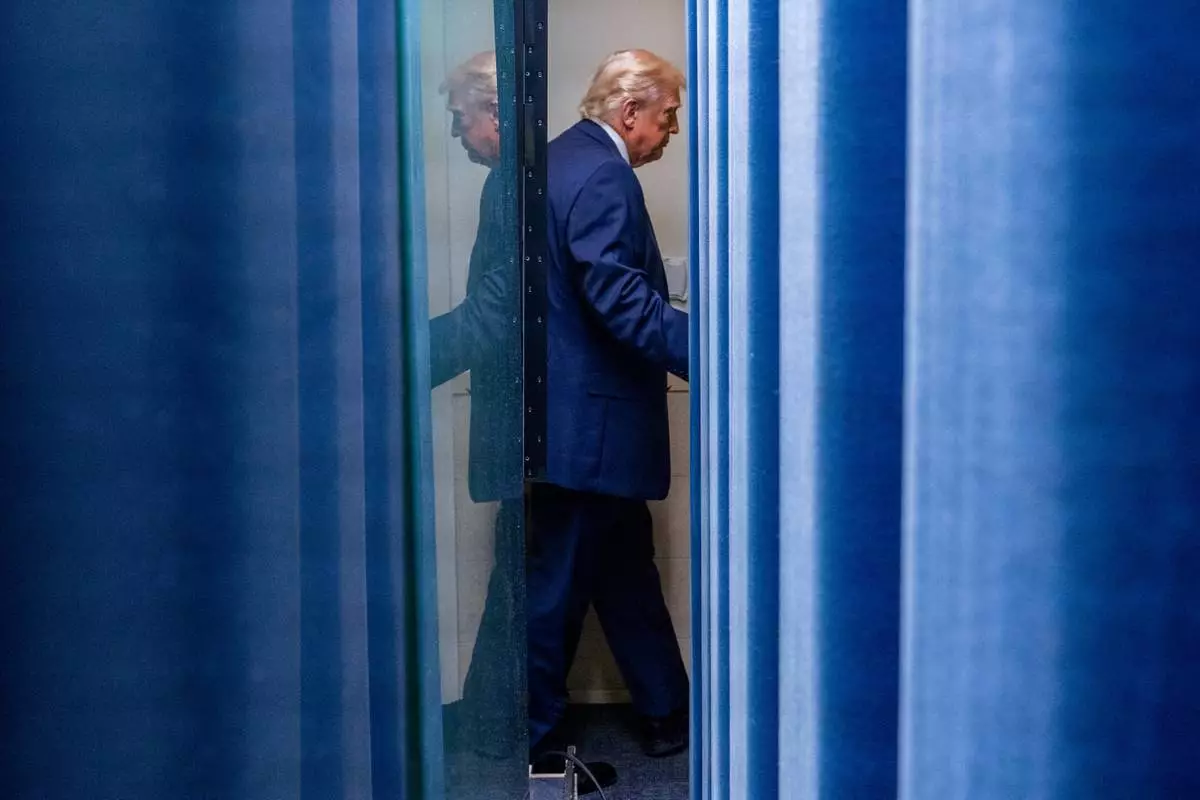
President Donald Trump departs after speaking with reporters in the James Brady Press Briefing Room at the White House, Friday, Feb. 20, 2026, in Washington. (AP Photo/Alex Brandon)
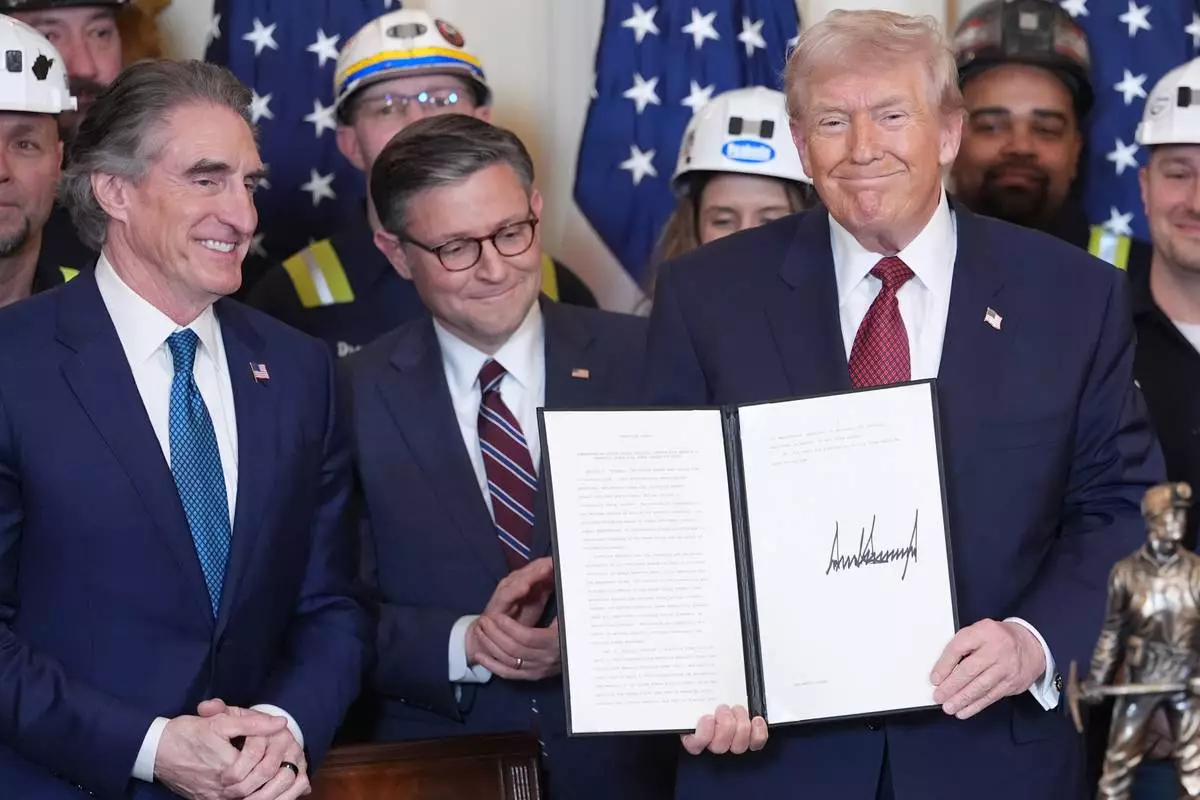
President Donald Trump holds an executive order regarding coal during an event in the East Room of the White House, Wednesday, Feb. 11, 2026, in Washington, as Interior Secretary Doug Burgum, House Speaker Mike Johnson of La., and coal miners watch. (AP Photo/Evan Vucci)
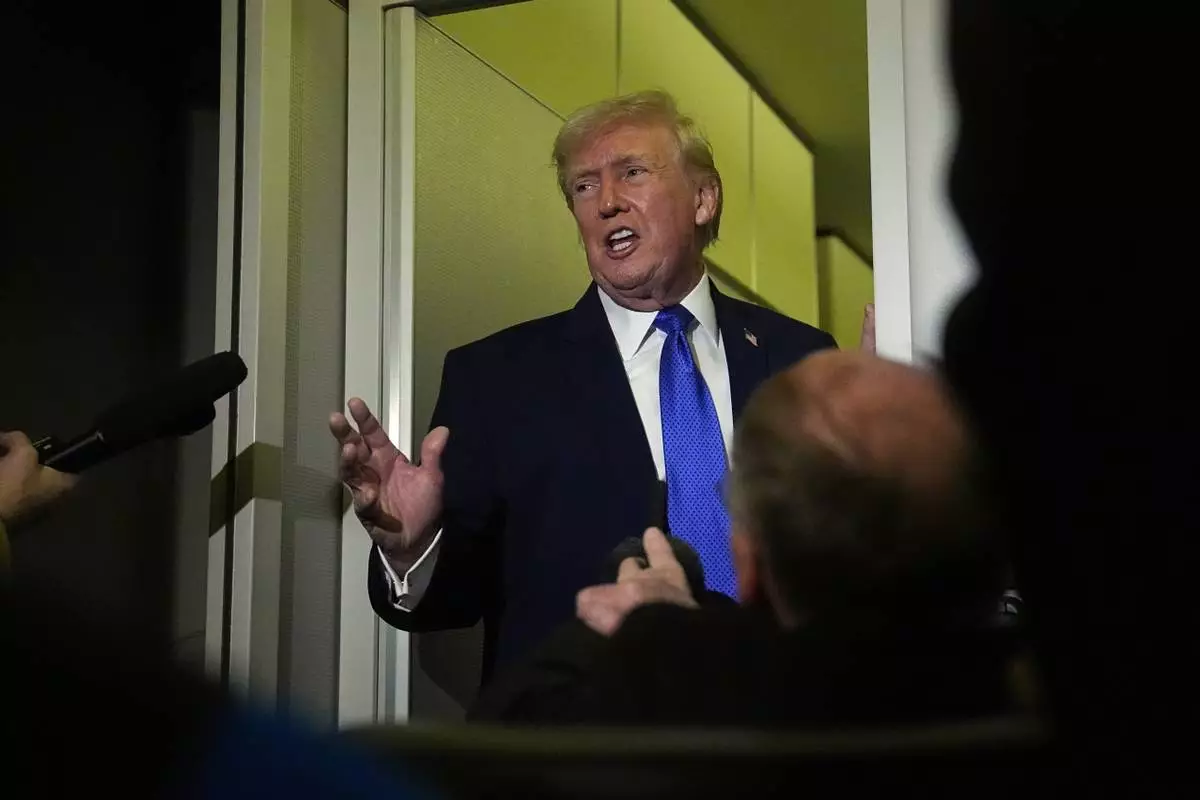
President Donald Trump speaks with reporters aboard Air Force One, Monday, Feb. 16, 2026, en route to Washington from West Palm Beach, Fla. (AP Photo/Matt Rourke)
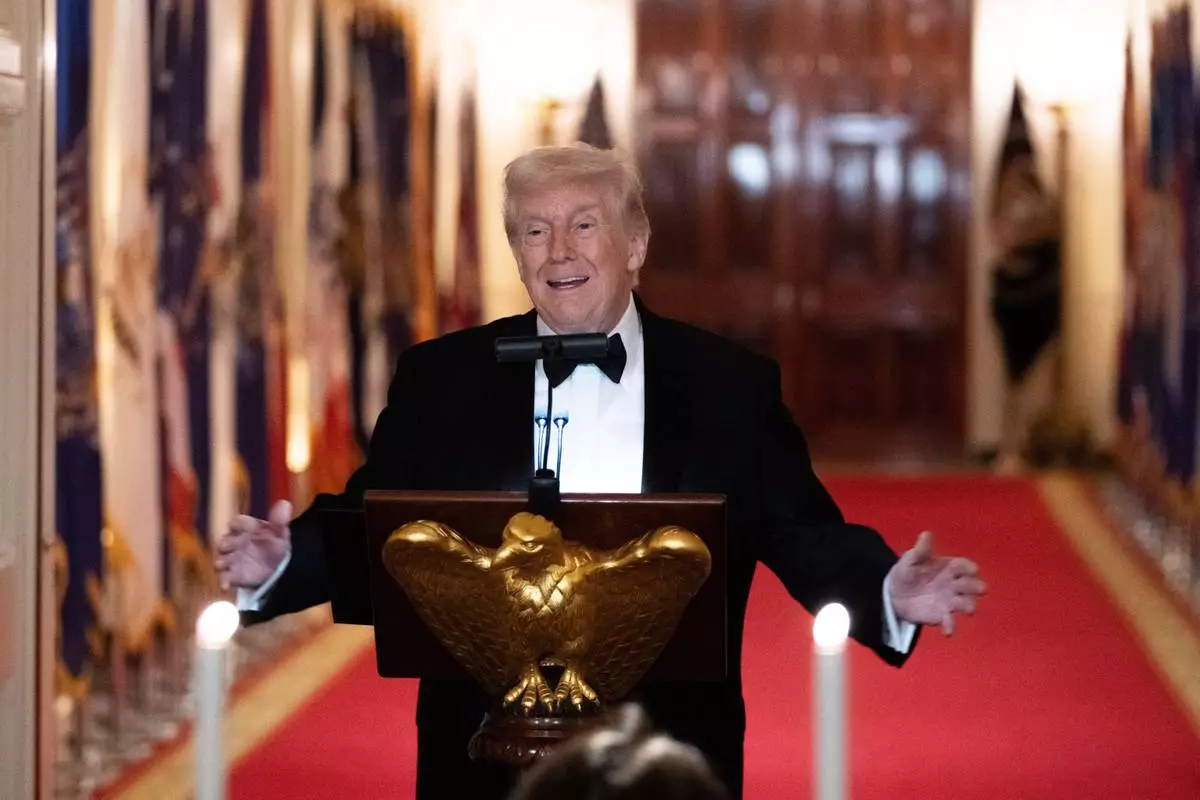
President Donald Trump speaks at the National Governors Association dinner at the White House, Saturday, Feb. 21, 2026, in Washington. (AP Photo/Allison Robbert)
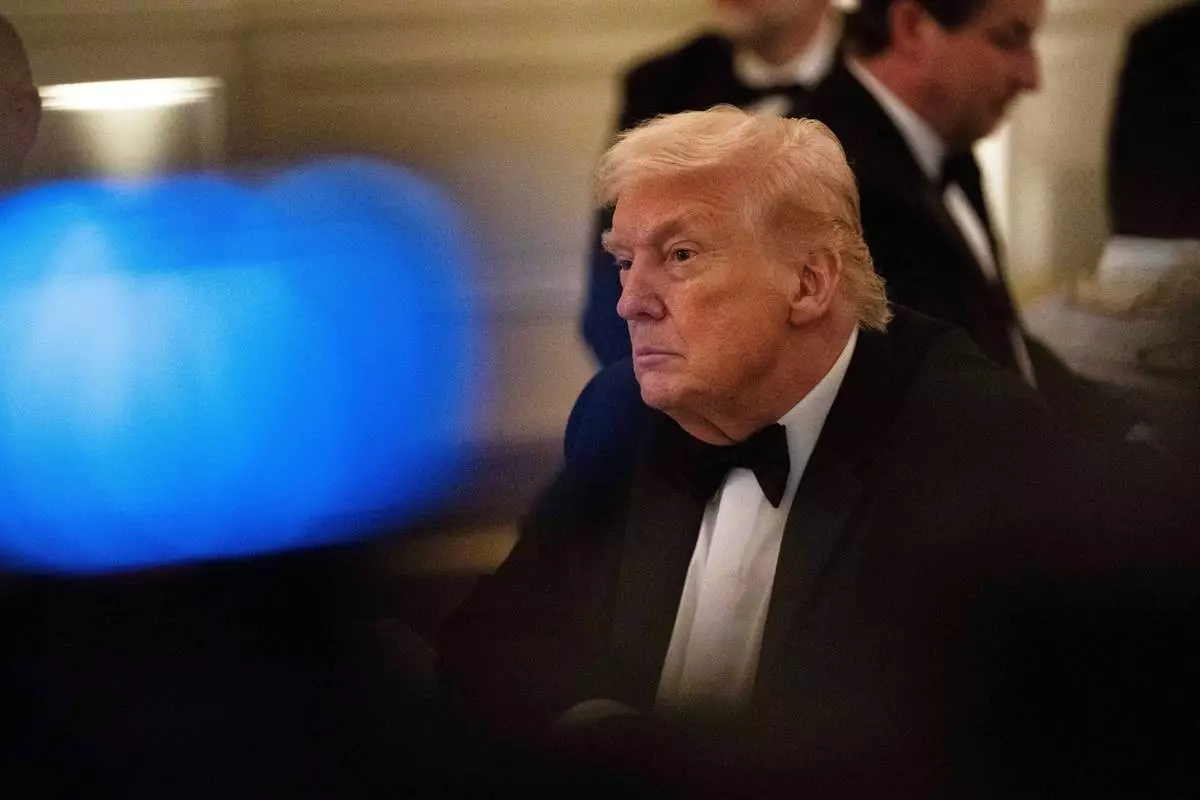
President Donald Trump attends the National Governors Association dinner at the White House, Saturday, Feb. 21, 2026, in Washington. (AP Photo/Allison Robbert)
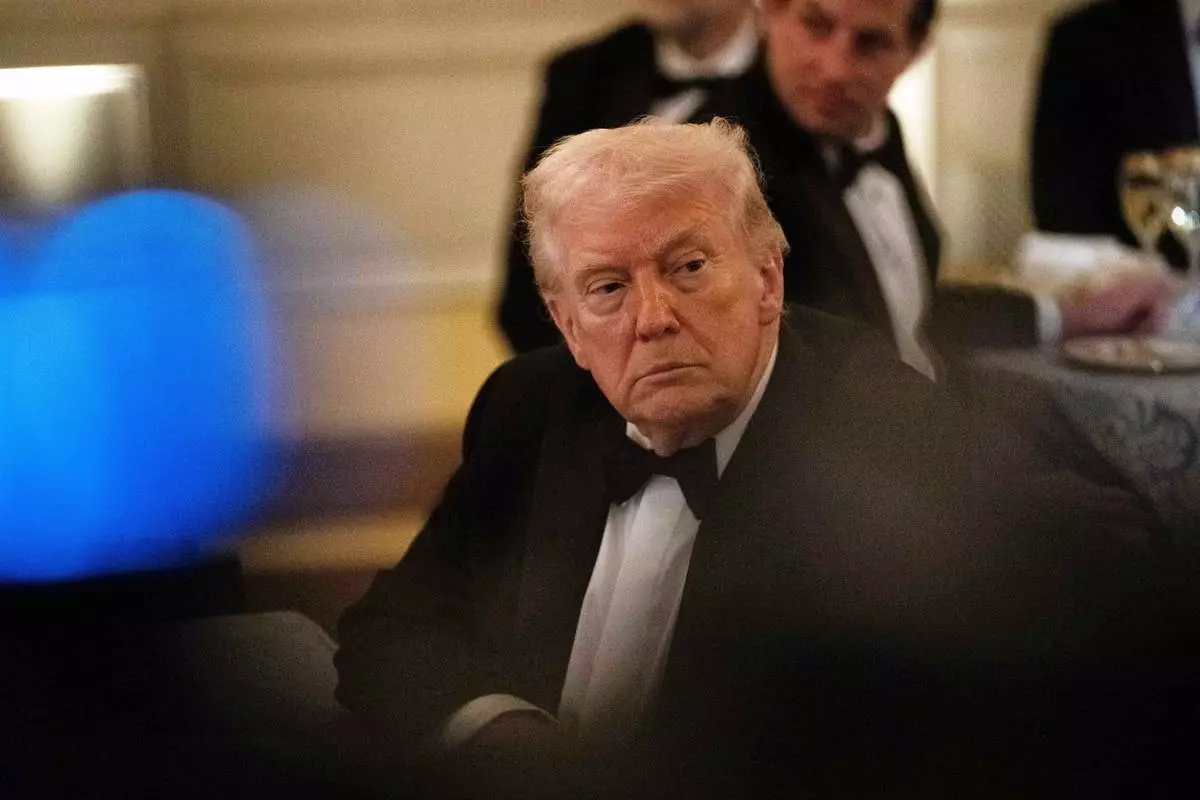
President Donald Trump attends the National Governors Association dinner at the White House, Saturday, Feb. 21, 2026, in Washington. (AP Photo/Allison Robbert)
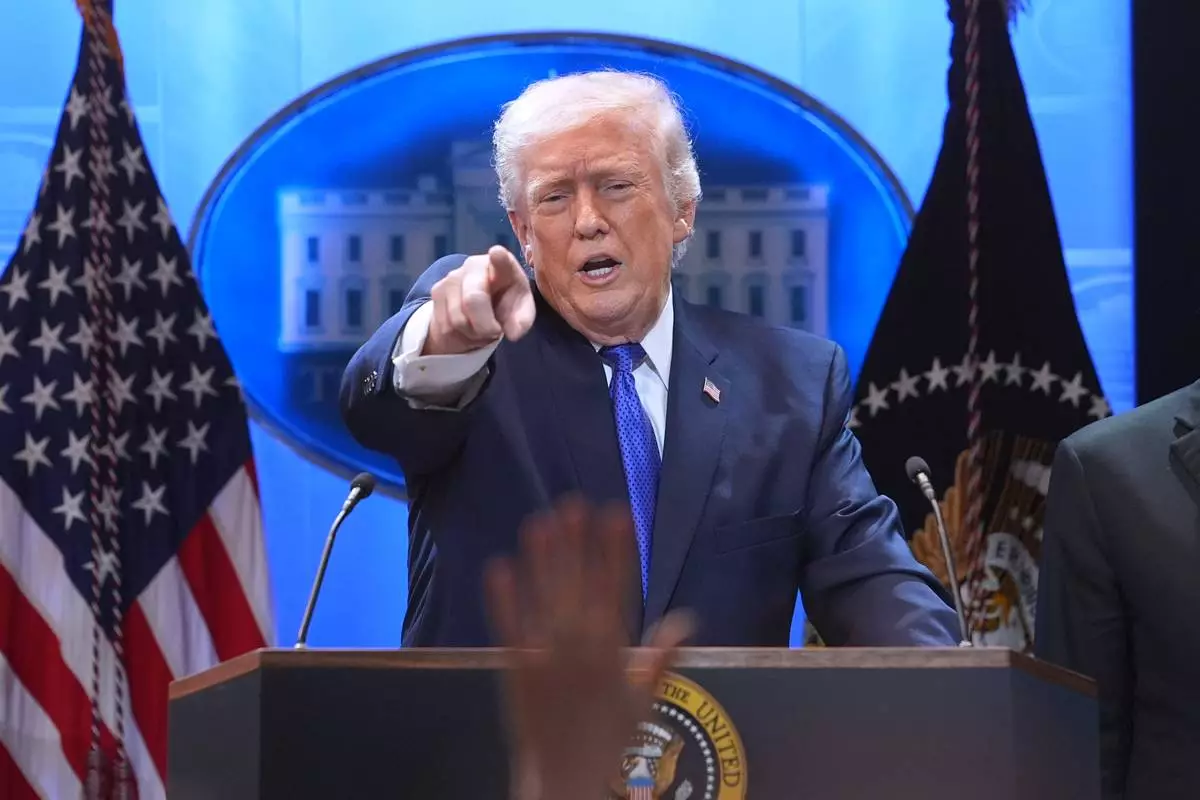
President Donald Trump points to a reporter during a press briefing at the White House, Friday, Feb. 20, 2026, in Washington. (AP Photo/Evan Vucci)
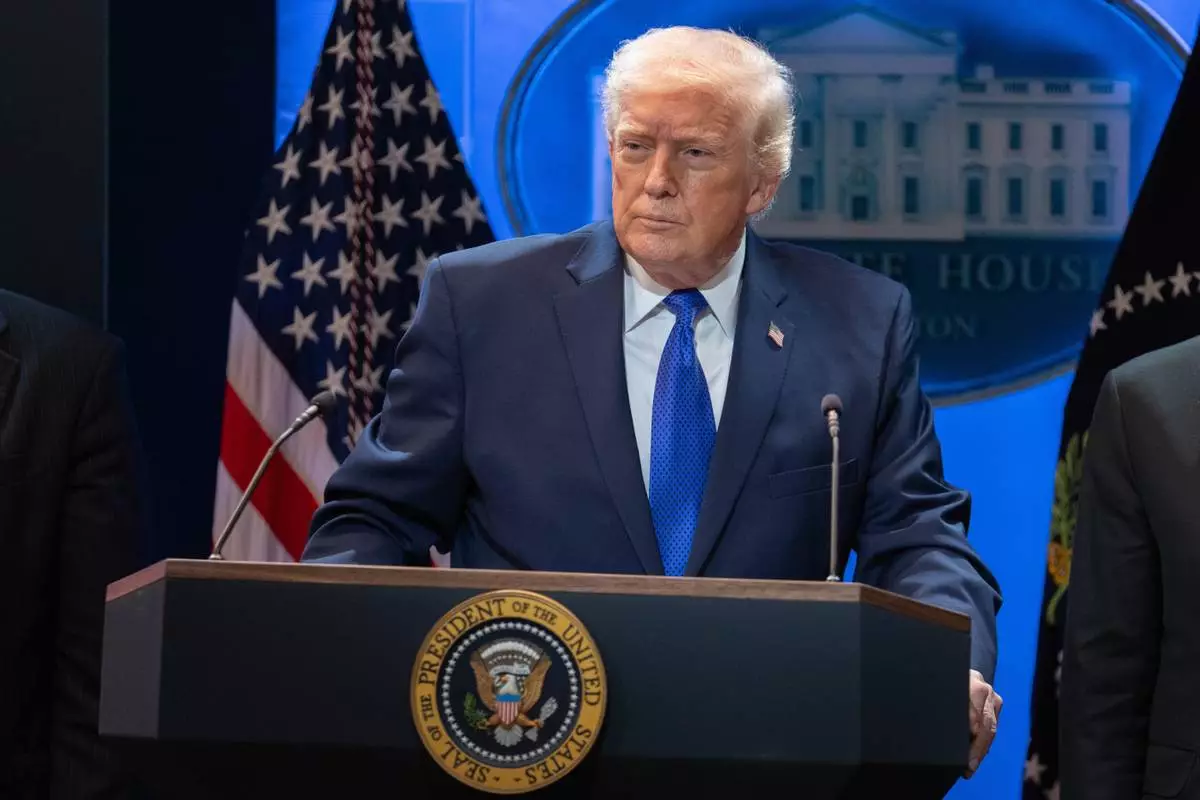
President Donald Trump speaks during a press briefing at the White House, Friday, Feb. 20, 2026, in Washington. (AP Photo/Allison Robbert)