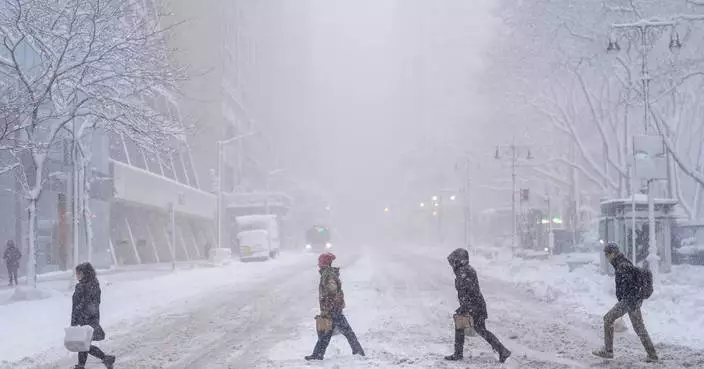
WASHINGTON (AP) — A former U.S. Immigration and Customs Enforcement lawyer who was responsible for training new deportation officers warned Monday that the agency's training program for new recruits is “deficient, defective and broken.”
Ryan Schwank's comments during a forum held by congressional Democrats come at a time of intense scrutiny of the officers tasked with carrying out President Donald Trump's mass deportation agenda. Critics, including rights groups and Democratic politicians, have accused deportation officers of using excessive force when arresting immigrants, attacking bystanders who record their conduct and failing to follow constitutional protections of people's rights.
The Department of Homeland Security is rapidly scaling up the number of deportation officers, raising concerns that it will sacrifice proper screening and training of applicants in a rush to get them into the field. The department denied it was cutting corners, saying new officers get trained on firearms, use-of-force policies and how to safely arrest people.
Schwank testified during a hearing hosted by Democratic Sen. Richard Blumenthal of Connecticut and Rep. Robert Garcia of California. Blumenthal's office said Schwank resigned from the agency on Feb. 13.
“I am here because I am duty-bound to report the legally required training program at the ICE academy is deficient, defective and broken,” Schwank said.
He also accused the department of dismantling the training program for new deportation officers and lying about what they were doing.
“DHS told the public the new cadets receive all the training they need to perform their duties, that no critical material or standards have been cut," he said. "This is a lie. ICE made the program shorter, and they removed so many essential parts that what remains is a dangerous husk.”
Monday's was the third public forum held by the two Democrats to examine how ICE is training thousands of new officers and the conduct of those officers once they’re on the streets. Both have been vocal critics of how ICE officers conduct themselves. At the beginning of the hearing, Blumenthal thanked the witnesses, including Schwank, for their “courage and strength.”
Blumenthal's office said Schwank was one of two anonymous whistleblowers who came forward earlier to disclose a new ICE policy authorizing deportation officers to forcibly enter an immigrant's home to remove them from the country even if they didn't have a warrant signed by a judge.
His office also released dozens of pages of documents related to the training of new deportation officers, noting the disclosure came from whistleblowers.
Blumenthal's office said the documents demonstrated “drastic cuts” to how new deportation officers are trained and tested. That includes changes to the number of exams new officers have to pass, the classes they have to take and the hours they train.
“The training has been truncated and reduced, both in numbers of courses and substantive policy,” the senator said at the start of the hearing.
Homeland Security strongly denied that it has removed any training requirements or lessened requirements for officers. ICE recruits receive 56 days of training and 28 days on average of on-the-job training, the department said Monday in response to an inquiry about the allegations made during the forum.
“Despite false claims from the media and sanctuary politicians, no training hours have been cut. Our officers receive extensive firearm training, are taught de-escalation tactics, and receive Fourth and Fifth Amendment comprehensive instruction," department spokeswoman Lauren Bis said in an e-mailed statement.
She also said ICE recruits are monitored on the job after graduating from the academy.
The department has “streamlined training to cut redundancy and incorporate technology advancements, without sacrificing basic subject matter content,” Bis said.
Schwank disputed that new officers are getting much in the way of on-the-job training, describing the supervision as minimal. Many graduates go to their home offices just long enough to “get their gun, their badge and their body armor,” he said.
Schwank said he had taught cadets who were as young as 18, including one who celebrated her 19th birthday in his classroom. Previously, new recruits had to be at least 21, but Homeland Security announced last summer that it was removing age restrictions on who could join the agency. Schwank said the recruits wanted to do well but the agency wasn't giving them the training to do the job correctly.
At one point during Monday's forum, Schwank was asked whether he had ever seen recruits use disproportional force during training and replied that he had seen that happen multiple times. He cited examples of trainees accidentally drawing their firearms on each other, arresting people without cause or using excessive force. Even so, he said, they graduated from the academy.
The documents released by Blumenthal's office show that ICE is eliminating over a dozen “practical exams” that used to be necessary for deportation officers to pass, according to an analysis by Democratic Senate staff. ICE also appears to have cut a number of classes from the training, including “Use of Force Simulation Training.”
Deportation officers appear to be getting fewer hours of training overall, according to the documents.
The two other people who spoke during the forum were Teyana Gibson Brown, whose husband was arrested by deportation officers who broke into their house without a warrant signed by a judge to take him away, and Stevan Bunnell, who was the general counsel for the Department of Homeland Security from 2013 to 2017.

Sen. Richard Blumenthal, D-Ct., speaks during a Senate Homeland Committee hearing on Capitol Hill in Washington, Thursday, Feb. 12, 2026, in Washington. (AP Photo/Tom Brenner)
A massive snowstorm pummeled the northeast United States from Maryland to Maine on Monday, forcing millions of people to stay home amid strong winds and blizzard warnings, transportation shutdowns, and school and business closures. New York City remains under a state of emergency, Mayor Zohran Mamdani said during an afternoon news briefing.
Snow fell at a rate of 2 to 3 inches (5 to 7.6 centimeters) an hour early Monday from New York through Massachusetts. Some areas have gotten well over a foot (30 centimeters) of snow since Sunday, along with wind gusts of over 30 mph (48 kph) and low visibility.
More than 5,000 flights in and out of the U.S. were canceled for Monday, according to the flight tracking website FlightAware. Most were canceled in New York, New Jersey and Boston.
Here's the latest:
More than 516,000 utility customers nationwide remain in darkness Monday evening after a blizzard battered the Northeast.
More than half of those without power are in Massachusetts, where the storm dropped three feet of snow in some places, according to PowerOutage.us, which tracks outages nationwide.
New Jersey, in a distant second, was still dealing with nearly 80,000 customers without electricity, though that was down from more than 200,000 at the peak of the storm.
Other states dealing with significant outages late Monday included Delaware and Rhode Island.
The Metropolitan Transportation Authority said Monday evening that subway lines are mostly operational, with the exception of the hard-hit borough of Staten Island, where rail service remains suspended.
The agency warned subway riders to expect delays, especially on lines that run outdoors. Bus commuters should also expect long wait times as routes will be adjusted based on road conditions and the city’s longer, accordion-style buses won’t be in service.
Commuter rail service to suburbs to the north and east of the city, including hard-hit Long Island, are expected to resume limited service ahead of the Tuesday morning commute, the MTA said.
Across the Hudson River, New Jersey Transit train and bus service remained suspended late Monday, though some light rail service was expected to resume shortly on a limited schedule, the agency said.
The Long Island Rail Road said service will resume on a limited basis at 4 a.m. Tuesday. Limited service would be resuming on the Ronkonkoma, Huntington, Babylon, Oyster Bay, Montauk, and Port Washington lines.
The commuter rail said on its website that more details would be available soon.
New York City Mayor Zohran Mamdani has been touting an effort to recruit temporary shovelers to clear crosswalks, bus stops and other public areas. “All you need to bring is two forms of ID to ensure you get paid,” he said in a news conference Monday.
Those who heeded the mayor’s call soon learned it was more complicated. At a sanitation garage in Manhattan on Monday afternoon, four would-be shovelers were turned away by city workers, who told them they needed a Social Security card and two passport photos.
When one of the women pulled up a clip from the mayor’s news conference, the worker shrugged.
A spokesperson for the city’s Department of Sanitation said the city had relaxed its requirement around passport photos, but still required Social Security cards to comply with federal employment laws. He said nearly 1,500 people had successfully signed up to shovel since the blizzard began.
The program — which pays $30 an hour — had already come under fire from some conservatives, who contrasted the strict requirements for shovelers with Mamdani’s opposition to voter ID laws.
Central Park in New York City recorded 19 inches of snow.
Warwick, Rhode Island, exceeded 3 feet at 36.2 inches (92 centimeters), topping the nation so far.
Central Islip on Long Island, and Somerset and Berkeley, Massachusetts, all hit 31 inches (79 centimeters).
At least 19 locations in five states have at least 2 feet (0.61 meters) of snow.
In Massachusetts, the highest wind gust of 83 miles per hour (133.6 kph) was in Nantucket, with hurricane-force gusts recorded all over Cape Cod.
Officials in the Republican stronghold of Staten Island, which was among the hardest hit regions of New York, were among the most critical of Democratic Mayor Zohran Mamdani’s announcement that classes would resume in person Tuesday in the nation’s largest school district.
“Numerous roads are impassable, and people have to walk in the middle of the street because the sidewalks are completely blocked by at least two feet of snow,” Staten Island Borough President Vito Fossella said in a statement. “Schools should absolutely remain closed tomorrow.”
The teacher’s union also advised its members to exercise caution navigating the Tuesday morning commute.
“No one should jeopardize their safety trying to report to work,” the United Federation of Teachers wrote in a letter to its members Monday. “Make the decision that is best for you and your family tomorrow. Your safety comes first.”
Most suburban districts in the area announced a second day off for students.
Rows of front stoops in Brooklyn were in various states of excavation Monday along the tree-lined streets just east of Prospect Park.
But Brooklyn residents said they were happy to come together and shovel snow for themselves — as well as their neighbors.
Robert Jefferson said he went to five stores on Sunday to get salt for the sidewalk, but they were all out.
“I found one on Ocean Avenue that had salt, so I rushed over there. Didn’t have dinner,” he said Monday while helping his next-door neighbors, a mother and daughter, shovel their sidewalk after he finished his.
“It’s pretty warm out here, so the snow is not so icy. It’s, you know, pretty light,” he said as a city snowplow rattled down the street. “But it’s a lot of snow and not a lot of places to put it.”
The 32.8 inches (83.3 centimeters) of snow that fell by 1 p.m. Monday at Rhode Island T.F. Greene International Airport topped the previous record of 28.6 inches (72.6 centimeters) for a single snowstorm set between Feb. 6-7, 1978, according to the National Weather Service.
More snow was expected for the area. The airport is in Warwick, south of Providence.
Connecticut Gov. Ned Lamont said Monday afternoon that the “worst part of the storm has passed.”
The Democrat still urged motorists to avoid driving for the rest of the day, though. While conditions on interstate highways are improving, Lamont said local and secondary roads will take longer to clear.
“If you must travel, leave early, take it slow, and keep a good distance from the plows,” Lamont said in a statement.
Two energy companies in the state reported more than 80,000 homes lost power earlier in the day.
Delaware Electric Cooperative restored power to 13,000 homes and expects to restore thousands more today, but some outages could take days to fix, the company said in a news update.
Service crews from Virginia are expected to assist with restoration efforts, the company said, describing the winter weather as “the second worst storm our Co-op has faced.”
Delaware is currently under a state of emergency, with nonessential driving banned in most of the state.
The sound of shovels scraping concrete filled the air in Brooklyn as residents and businesses began clearing snow and digging out cars once the worst of the storm had passed Monday afternoon.
Christa Prince and two others were busy with shovels and an electric snowblower.
“We’re just making a path for this car. It’s not our car, but you know, we’re just doing our neighbor a kind deed,” Prince said.
The nor’easter quickly intensified to easily qualify as a “bomb cyclone” and featured thundersnow and lightning — two things rarely seen in snowstorms.
And while the storm was paralyzing and potentially dangerous for millions along the Eastern Seaboard, meteorologists rhapsodized over both its power and its beauty.
The storm hit the “Goldilocks situation” of just the right temperature for wet, heavy snow — any warmer and its precipitation wouldn’t have fallen as snow. And any colder and there wouldn’t have been as much moisture in the air to feed that snowfall, said Owen Shieh, warning coordination meteorologist at the weather service’s Weather Prediction Center in Maryland.
The storm also followed the ideal track for maximum snowfall. A little farther inland and it would have lost its warm ocean energy; a bit farther out to sea, and the heaviest snow would have fallen over the water, said Jeff Masters, co-founder of Weather Underground and now meteorologist at Yale Climate Connections.
As snow piled up across Boston, staff from New England’s largest homeless services provider fanned out across the city in vans and on foot.
Inside Pine Street Inn’s four shelters, every bit of space was in use, said Inn spokesperson Barbara Trevisan. The organization has 585 beds across its shelters, and more than 650 people crowded the buildings Sunday into Monday — some lying on side-by-side mats filling lobbies, separated by mere inches.
“It’s not necessarily pretty,” Trevisan said. “But we make sure everybody does have a safe place to stay.”
As the storm intensified, outreach teams were on the streets, carrying blankets, gloves, coats, socks and drinks like hot chocolate in their vans.
If someone refuses shelter, workers cannot force them to go inside, Trevisan said. Instead, they offer what they can: a ride, dry clothes, a warm drink, even a chance to sit in a heated van for half an hour.
Carbon monoxide from an underground electrical fire caused by seeping road salt forced residents of a Brooklyn apartment building to evacuate during the snowstorm Monday.
A woman hoisted a child wrapped in a blanket into her arms as she stepped into the blowing snow, accompanied by a man with a meowing cat inside a pet carrier. White smoke billowed nearby from a maintenance hole.
Another resident, Eric Moultrie, said the fire has been smoldering since before the snowstorm and eventually caused a power outage Monday morning.
“I heard some like, loud buzzing and banging and the lights were all flickering and going on and off,” he said. He said the building in the Flatbush neighborhood has around 70 apartments.
Firefighters at the scene said it’s common for road salt to get into underground utility equipment, triggering sparks that burn cable insulation and can release carbon monoxide.
Daniel Gueyikian, a recent college graduate from Chicago, found himself stranded after multiple cancellations.
Gueyikian traveled to the East Coast over the weekend to see friends and attend a conference. He was originally scheduled to fly home from Newark airport but his flight Sunday night was canceled.
He rebooked for a Monday morning departure out of Philadelphia — that flight was also canceled.
A midday departure was scrapped as well.
By early afternoon Monday, Gueyikian was holding out for a 5 p.m. flight — the first on the departures board that had not yet been canceled.
“It’s been a bit much,” he said, joking that he wished he could take over as the groundhog and decide whether winter should last any longer.
Broadway shows were closed Monday for the second consecutive day.
While Monday is a traditional day off in the theater district, five productions — “Harry Potter and the Cursed Child,” “Chicago,” “Every Brilliant Thing,” “The Great Gatsby” and “Six” — had been slated to open their doors and will now shutter them.
“When we’re talking about the previous storm, we’re talking about a level of arctic conditions that the city had not seen for many, many years and unlike in prior storms after the snowfall, there wasn’t an increase in temperature,” Mamdani said, referring to not having reports of fatalities since the start of the current storm.
“Though it is a blizzard, one of the few pieces of good news is that we will see 40-degree (4.4 degree Celsius) weather sometime in this week,” he continued.
Crews have been busy since the start of the storm, working to clear streets, according to Mamdani. About 2,600 sanitation employees are staffing each shift, and 2,300 plows are helping clear snow, he said.
“I continue to encourage all non-emergency traffic — cars, trucks, scooters and e-bikes — to remain off the roads. We are plowing streets and doing everything we can to keep our roadways clear so that emergency vehicles can get through,” Mamdani said.
Parts of Staten Island have been hit hard, prompting extra clearing equipment to be sent there. About 11,000 utility customers in the Rockaways were without power Monday morning, but electricity to about 8,000 has since been restored.
State Emergency Management Director William Turner also urged residents to stay off the roads.
“While a full travel ban is not in effect, the travel is still very treacherous,” he said during a news conference.
Joshua Cingranelli, the state meteorologist, said parts of southeastern Connecticut so far received about 20 inches (51 cm) of snow while wind gusted to 68 mph (109.4 kph) at Groton-New London Airport along the coastline.
Official blizzard conditions were reported in Groton, Meriden and Waterbury, he said.
Benjamin Lundell and Thomas Mehari, network consultants on a business trip from Sweden, were among those stranded in New York, after their flight to Texas was canceled Monday.
“We’re dressed for Houston currently,” said Lundell, as he trudged through knee-high snow in a thin jacket and jeans in search of a new hotel in Manhattan. “It’s a crazy day … but it’s been an adventure.”
One upside to the blizzard: Katz’s Deli, the famed pastrami shop, for once didn’t have a line.
“There were a lot of free tables,” Lundell said. “We didn’t know it was a popular place.”
Snowfall totals reached 2 feet (61 centimeters) on Monday morning in southeastern Massachusetts, Long Island in New York and parts of New Jersey and Rhode Island, according to reports made to the National Weather Service.
Ali Atoun was bundled up in a parka and hood as he worked in a Manhattan coffee truck, where he had opened up at 6 a.m.
He was warm enough, he said. But customers? “Very few.”
Connecticut Gov. Ned Lamont is warning that more electricity outages are likely as the snow freezes, pulling tree branches onto power lines.
“We’re not out of the woods yet,” he told WFSB-TV shortly before 11 a.m. “This storm’s got at least a few more hours to go.”
He said roughly 20,000 homes were out of power so far.
Given the large amount of snow, the Connecticut Department of Energy and Environmental Protection said cities and towns will be allowed to dispose of snow piles in bodies of water, subject to various restrictions.
“This additional flexibility will allow towns to more easily clear road access for emergency vehicles, and will prevent negative impacts from blocked drainage infrastructure, like localized flooding,” according to a news release from the department.
Nonessential employees at Harvard University in Cambridge, Massachusetts, were told not to report to campus Monday and to instead work remotely if possible. Essential employees, however, were asked to report to work as scheduled unless instructed otherwise.
Meanwhile, Harvard directed faculty, students, staff, academic personnel, and others to check their school communications channels for academic and school-specific schedule modifications.
In New York, Columbia University campuses moved to remote instruction, though essential personnel were still expected to report for work.
Snow covered Ocean City’s boardwalk after the beach community received more than 12 inches (30.5 cm) of the white stuff. The town was under a blizzard warning issued by the weather service until Monday evening.
Scattered power outages were reported, along with some traffic lights not working, according to the city’s Facebook page.
“Our teams are actively assessing roadways, infrastructure, and critical services throughout the Town to ensure we have a clear understanding of storm impacts and can prioritize response efforts where they are needed most,” said JR Harmon, the deputy city manager.
Gov. Mikie Sherrill said a statewide travel ban would be extended until at least noon Monday, citing high winds and whiteout conditions that persist across the state, creating “extremely dangerous travel conditions.”
The travel restriction excludes the New Jersey Turnpike and certain essential personnel, including health care workers, officials said. Anyone who violates the ban could face penalties.
Sherrill said most people are following the travel ban, which “is appreciated.”
Vince Lisi was helping his neighbors shovel in Brooklyn.
“We’ve got a wide enough path for people to walk their dogs,” he said.
Lisi, a graphic designer in his early 60s, said the snow was heavy.
“I am out of breath, but I’m almost done,” he said, adding that he’d been out about 30 minutes. “I know I’ll be out here again.”
His tip? “Just gotta take small shovelfuls.”
Most subways continued to operate in New York City, though rush hour crowds were largely absent.
In Lower Manhattan, snow shovelers appeared to outnumber commuting office workers, and pedestrians walked freely in streets normally blocked by morning traffic.
“It’s very quiet, except for the howling winds,” said Luis Valez, a concierge at a residential tower just off Wall Street, as he cleared the sidewalk. “A couple residents have gone out to get their essentials. Other than that, there’s nothing.”
Nearby, Pelle Andersson, an in-house chef at Spotify, stepped off a city bus.
“There won’t be anyone there, but we have to prepare for tomorrow,” he said, noting that he was Swedish and accustomed to extreme weather.
“This is the real deal, even for a Swede,” he added.
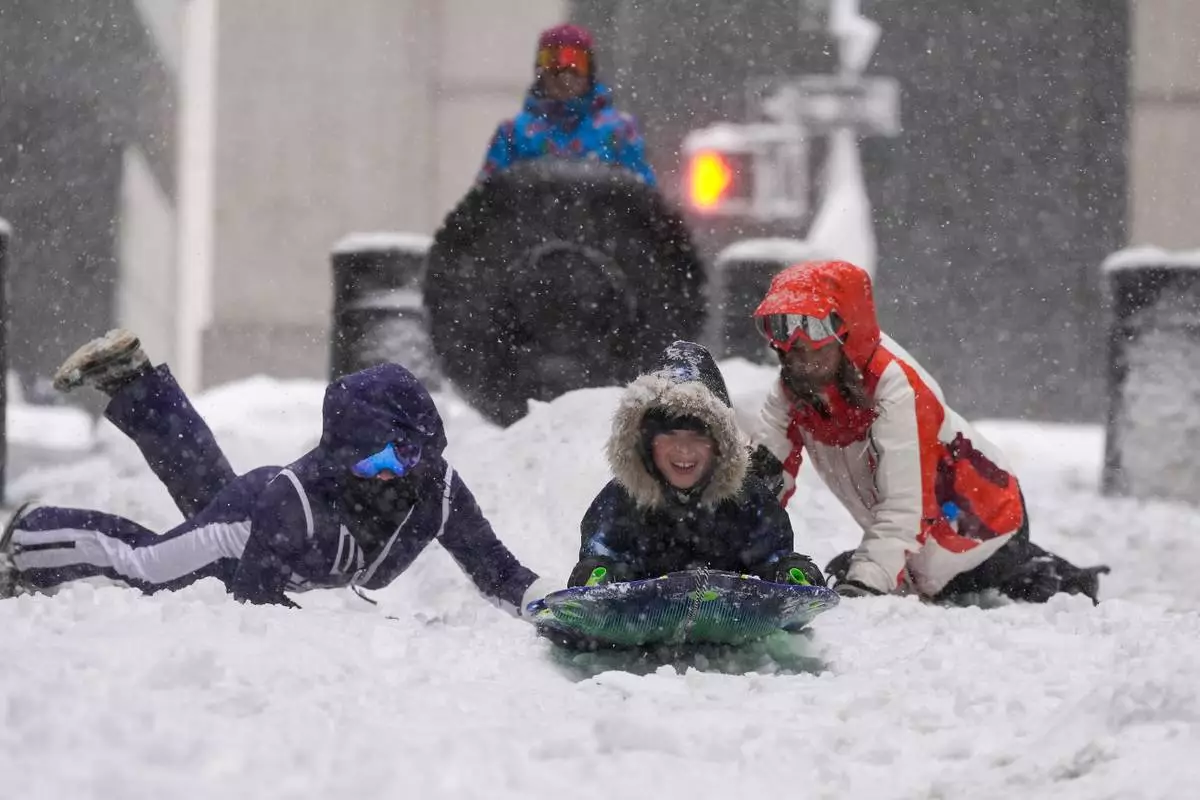
Jack Wilson, center, sleds down a street in lower Manhattan during a snow storm, Monday, Feb. 23, 2026, in New York. (AP Photo/Seth Wenig)
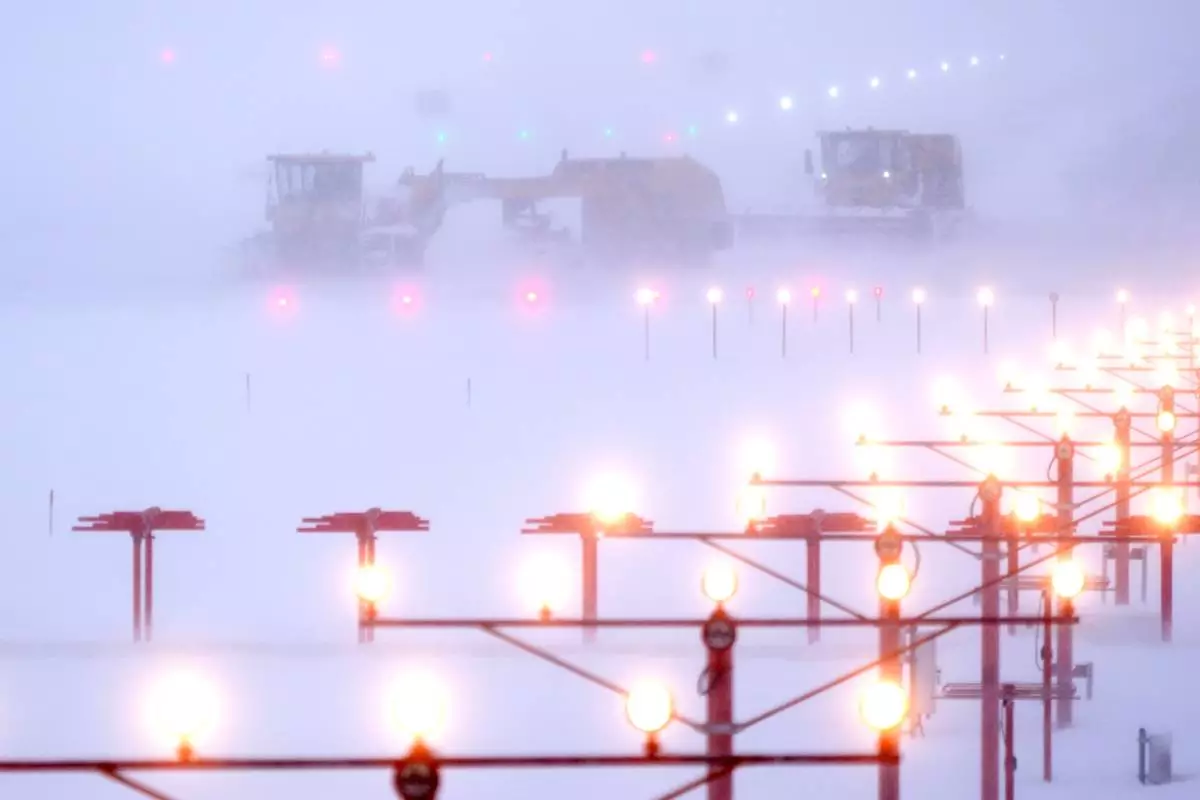
Snowplows clear a runway at Manchester-Boston Regional Airport during a winter storm, Monday, Feb. 23, 2026, in Londonderry, N.H. (AP Photo/Charles Krupa)
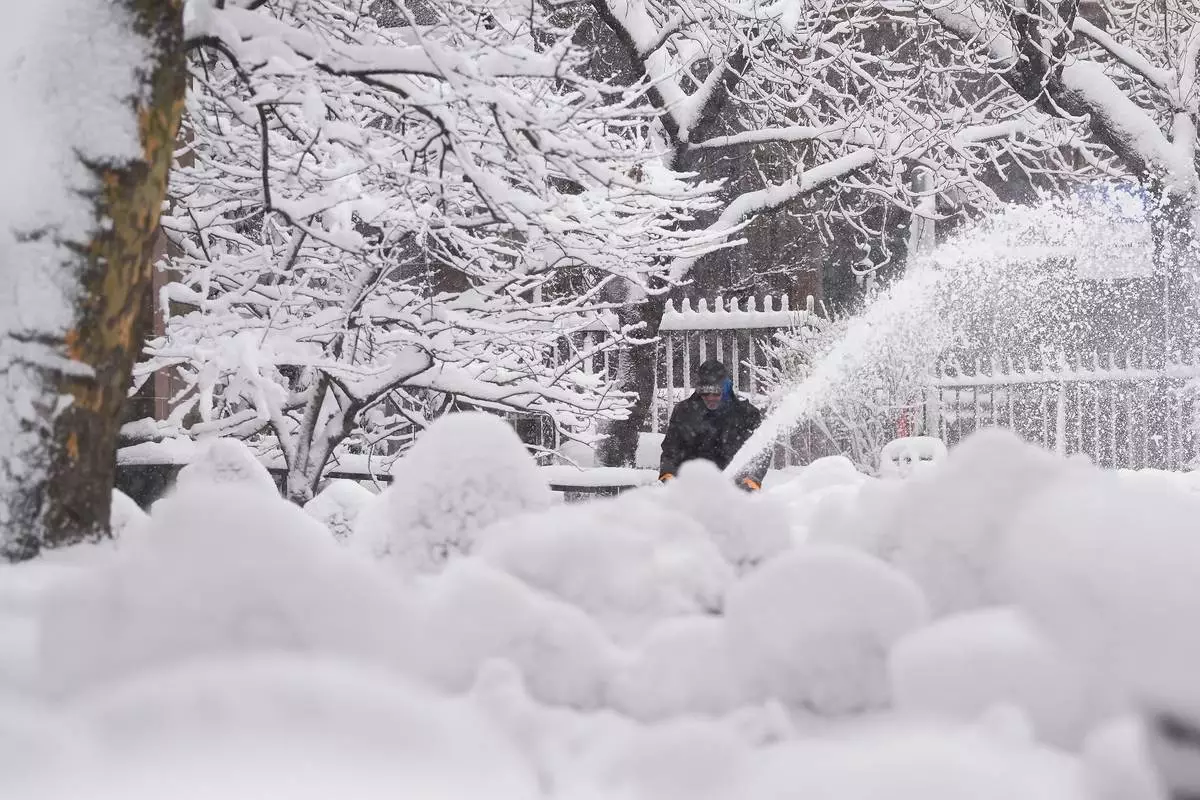
A groundskeeper clears snow from the walkways inside the Trinity Church graveyard in lower Manhattan during a snow storm, Monday, Feb. 23, 2026, in New York. (AP Photo/Seth Wenig)
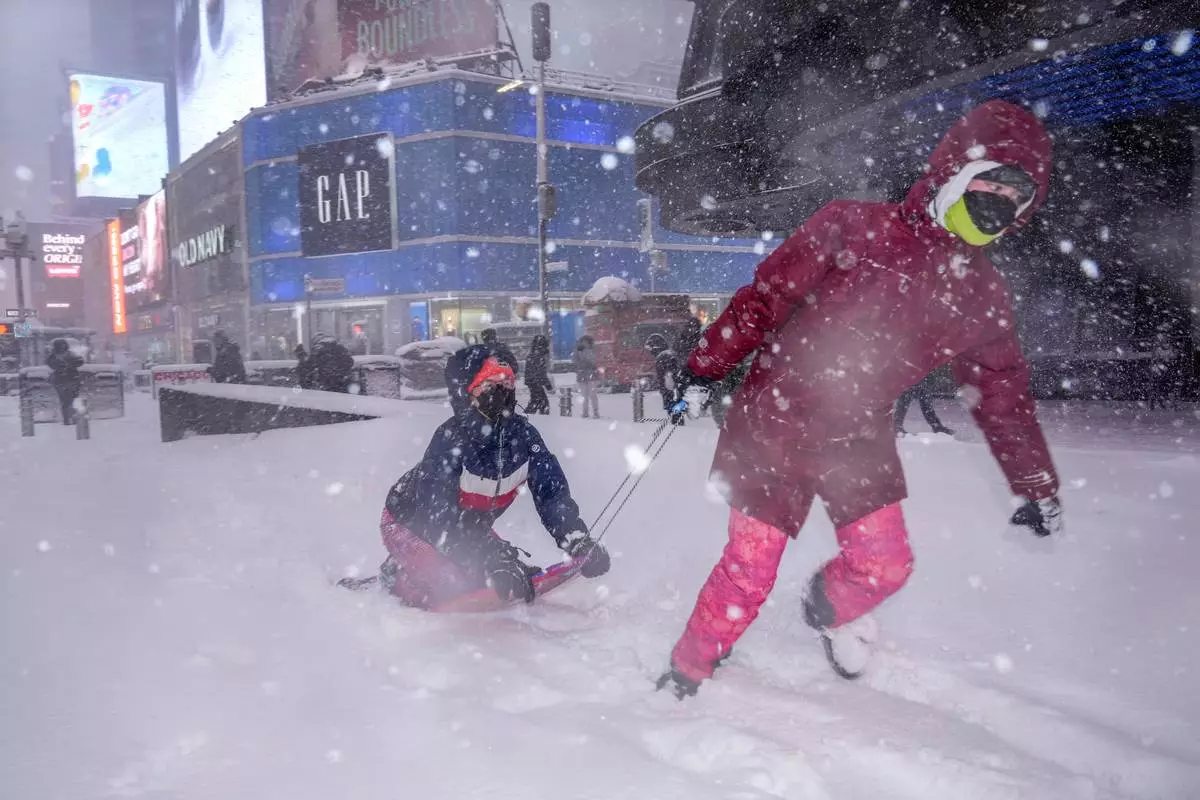
Hannah and Astrid Grimskog play in Times Square during a snow storm, Monday, Feb. 23, 2026, in New York. (AP Photo/Seth Wenig)
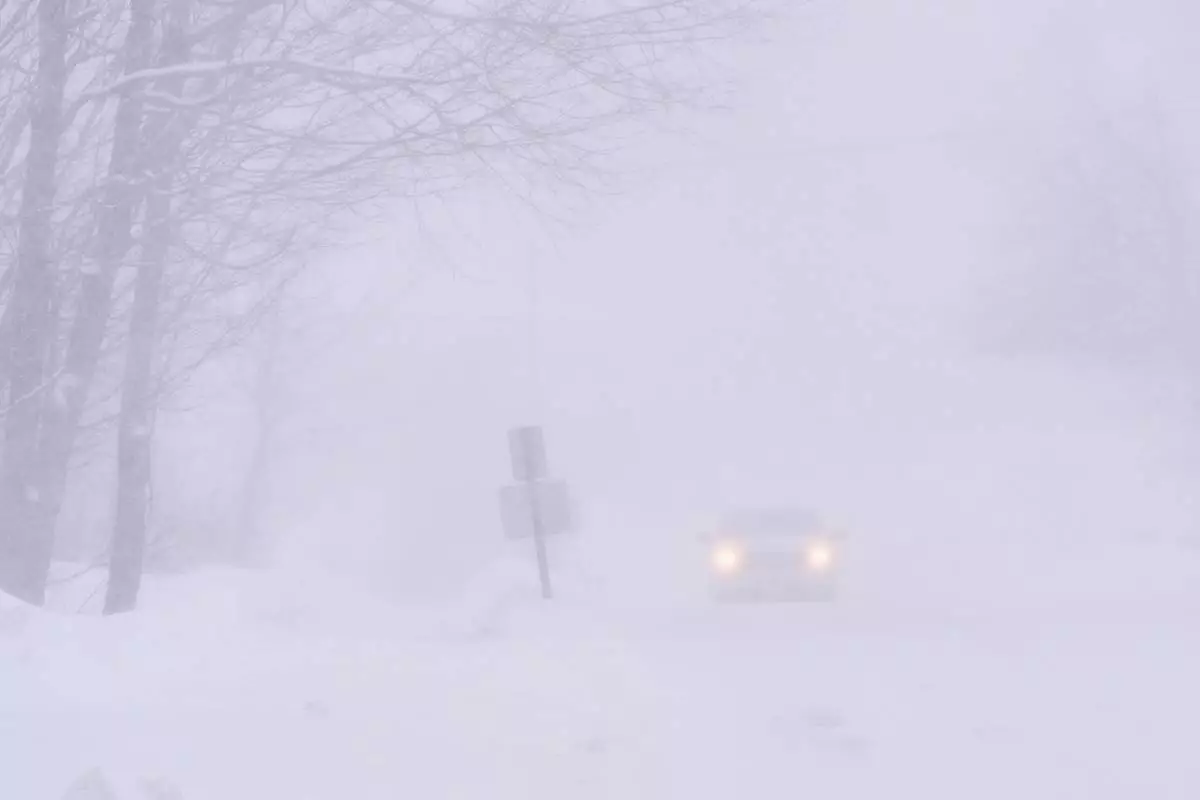
A pick-up truck drives in nearly white-out conditions during a winter storm, Monday, Feb. 23, 2026, in Derry, N.H. (AP Photo/Charles Krupa)
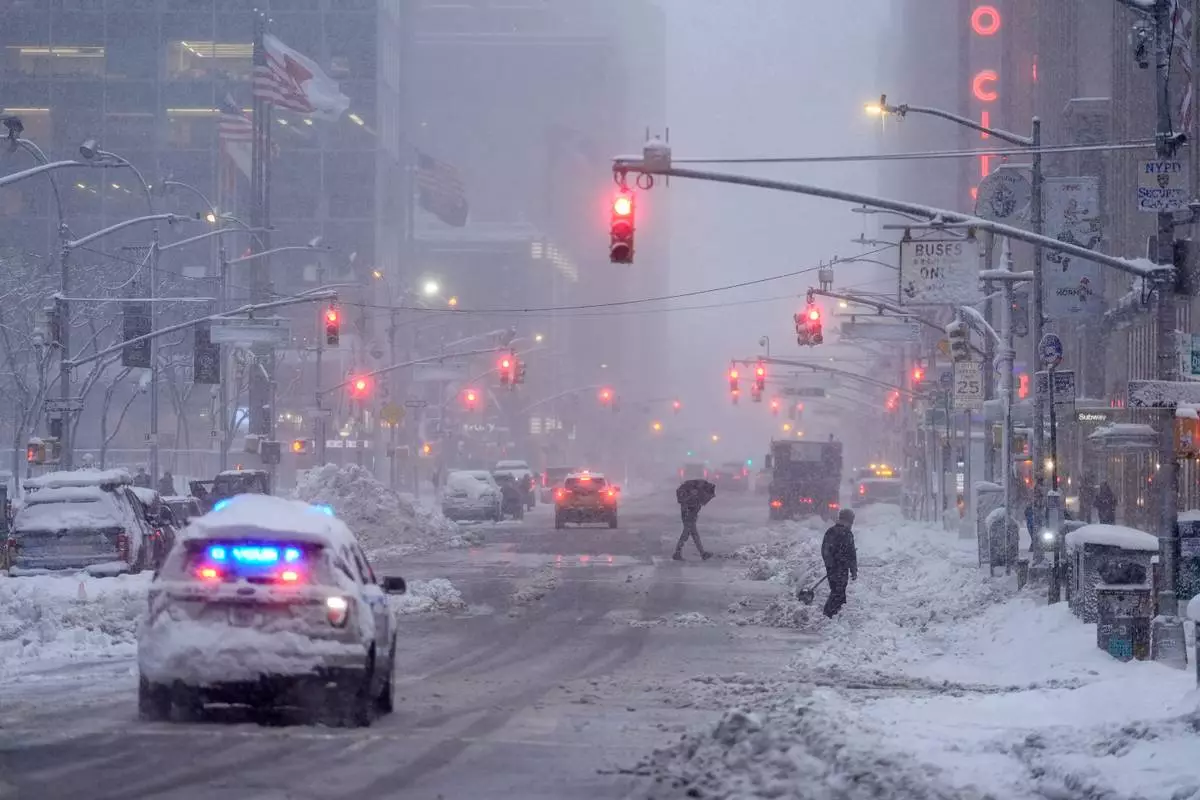
A law enforcement vehicle makes its way down Sixth Avenue as pedestrians cross during a snow storm, Monday, Feb. 23, 2026, in New York. (AP Photo/Seth Wenig)
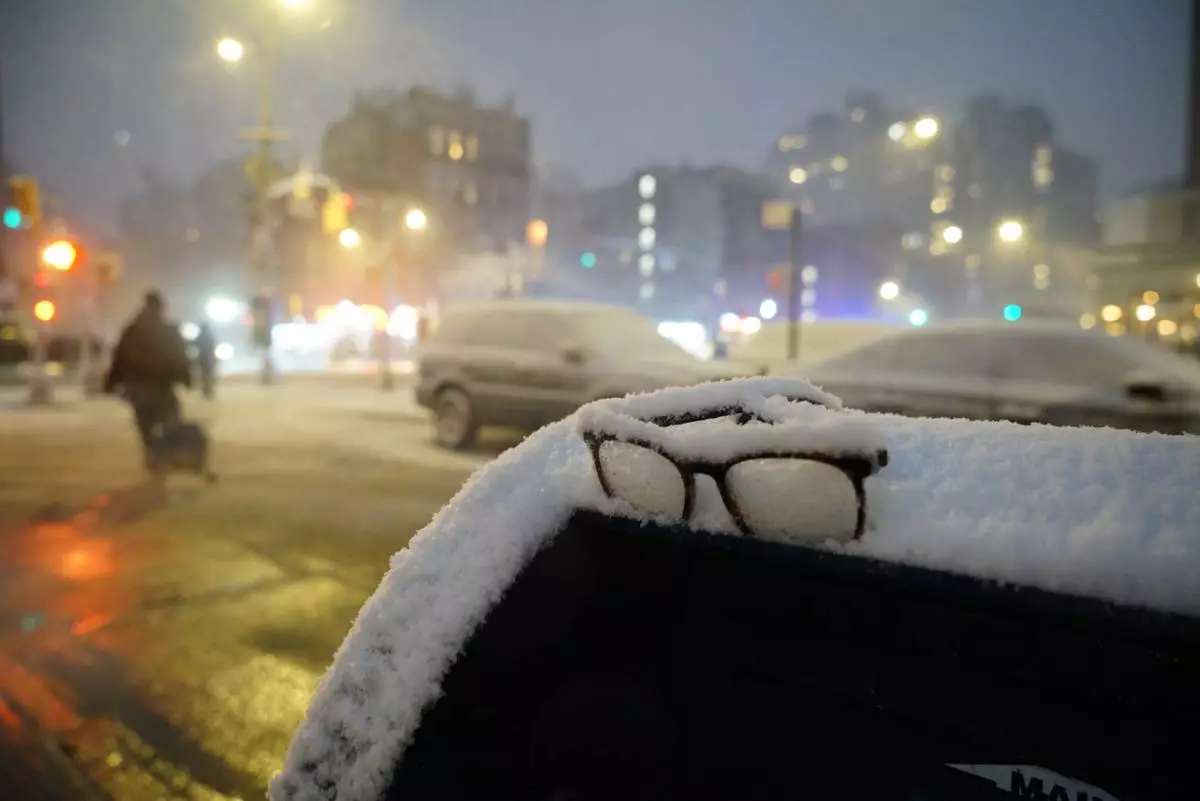
A pair of missing glasses sits in accumulated snow on top of a mailbox during a snowstorm, Sunday, Feb. 22, 2026, in New York. (AP Photo/Pamela Hassell)
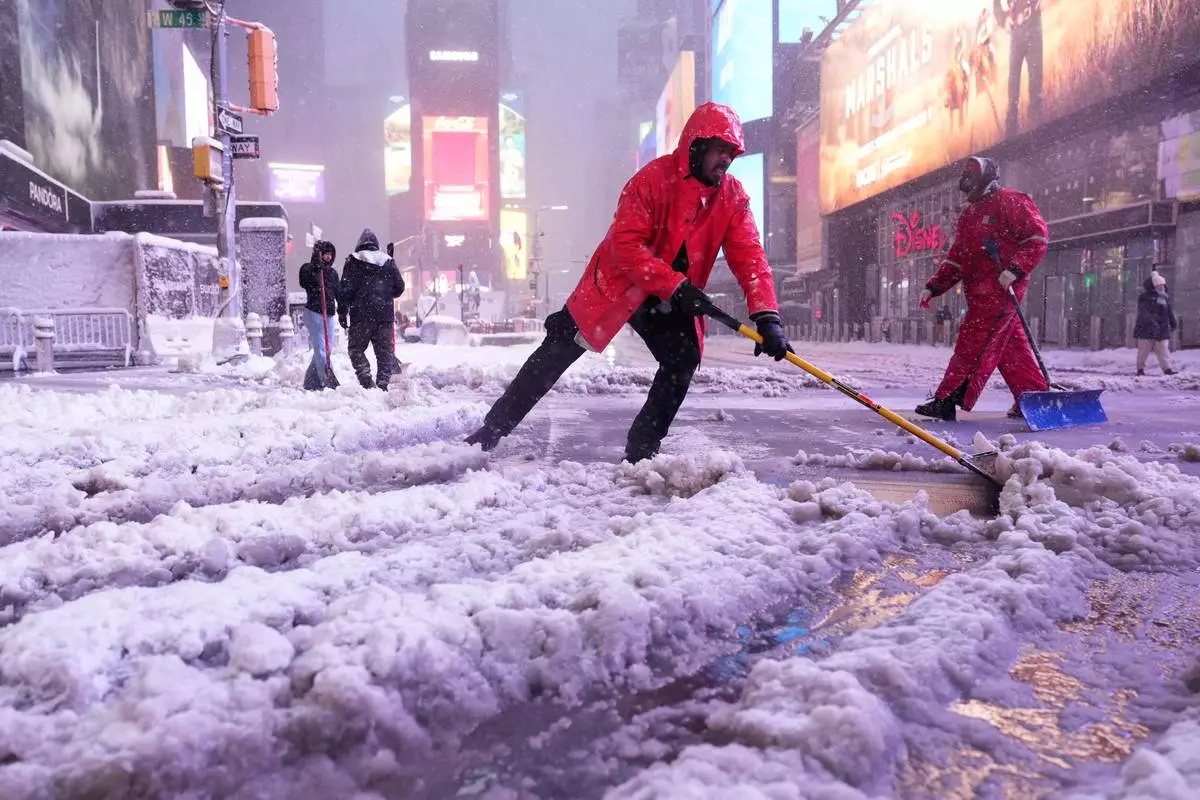
A worker with the Times Square Alliance sanitation crew shovels snow in Times Square, Monday, Feb. 23, 2026, in New York. (AP Photo/Seth Wenig)
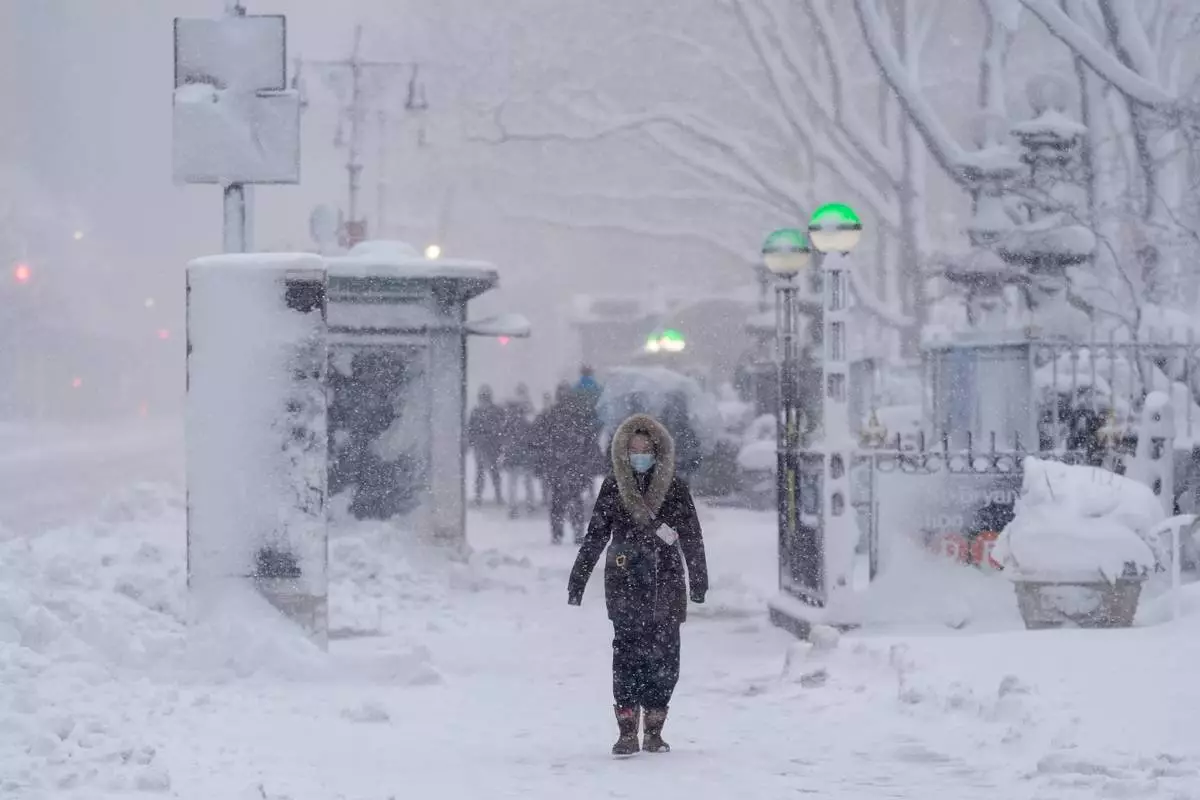
A pedestrian walks along 42nd Street near Bryant Park during a snow storm, Monday, Feb. 23, 2026, in New York. (AP Photo/Seth Wenig)