CHICAGO--(BUSINESS WIRE)--Feb 24, 2026--
Fingerprint, a leader in device intelligence for fraud prevention, today announced strong momentum for fiscal year 2026. As enterprises increasingly turn to Fingerprint’s platform to detect AI-driven fraud, the company achieved 65% growth in annual recurring revenue (ARR), with adoption spanning financial services, fintech, SaaS, e-commerce and travel and hospitality. Fingerprint's device intelligence platform now identifies over 1 billion unique devices per month, a 77% year-over-year increase.
This press release features multimedia. View the full release here: https://www.businesswire.com/news/home/20260224743088/en/
With 99% of organizations reporting fraud losses from AI-enabled attacks, the company's momentum reflects the demand for modern fraud prevention tools.
"Increased automated web traffic is creating both opportunity and risk for enterprises. Those that recognize the 'block all bots' approach hinders operations are turning to device intelligence as the foundation of their fraud prevention strategy," said Dan Pinto, Fingerprint's CEO and co-founder. "This year's growth reflects that shift, and we're positioned to help customers harness automation confidently."
Financial and Customer Growth Validate Technology Leadership
Reflecting growing enterprise demand, Fingerprint expanded its customer base across North America, Europe and the Asia-Pacific region, entering the Japanese market and achieving strong adoption in the travel and hospitality industry.
The company now serves 2,000 customers in over 56 countries, achieving 36% customer growth and an industry-leading net revenue retention rate of 128%, surpassing established industry players.
Fingerprint’s momentum is underscored by notable customer additions in the travel and hospitality industry, including Booking.com, as well as continued expansion into popular rideshare and vacation rental platforms. In a recent analysis, Fingerprint found that the industry faces $1–3 billion in annual global losses from rewards fraud alone, highlighting the need for sophisticated fraud detection tools as fraudsters increasingly deploy AI to scale their attacks.
“Fraudsters are early adopters and are sophisticated, so staying ahead of the bad guys is critical,” said Andreas Zodhiates, Head of Payment Fraud at Booking.com. “Fingerprint provides clear device-level signals we can use to prevent more fraud and reduce losses, while also enabling smoother customer journeys. It acts as both a fraud detector and a trust enabler.”
Global Expansion and Strategic Partnerships
Fingerprint expanded its international footprint, growing its global employee base by 39%. The company also expanded its North American workforce by more than half, and grew its APAC headcount by 80% to meet growing demand across regions.
The company announced partnerships with Unit21, Sumsub, and Narmi, providing its device intelligence capabilities that enhance fraud detection and prevention across their respective platforms without disrupting the user experience.
Fingerprint further strengthened its market position through partnerships with Manus, Browserbase, Anchor Browser, Notte, and Firecrawl, building Authorized AI Agent Detection, an ecosystem that enables businesses to distinguish legitimate automation from malicious bots and scrapers. As AI-driven automation scales and fraudsters adopt the technology, this ecosystem positions Fingerprint at the center of how enterprises detect and manage automated interactions.
Product Innovation Meets Growing Market Demand
In 2025, AI agents began accounting for a growing share of automated web traffic, creating a new challenge for organizations. To move beyond the traditional "block all bots" approach, which leaves revenue on the table while still exposing businesses to fraud and abuse, Fingerprint developed and deployed a series of purpose-built product innovations:
Industry Recognition and Awards
Fingerprint’s growth was recognized across top industry awards throughout the year:
About Fingerprint
Fingerprint detects the intent of human and agentic visitors. Our device intelligence platform identifies over 1 billion unique devices every month and processes hundreds of signals to help fraud teams distinguish trusted visitors from bad actors at speed and scale. Over 6,000 companies, including innovators like Dropbox, Booking.com, and checkout.com, use Fingerprint every day to recognize high-risk activity in real time, prevent fraud attacks, and deliver frictionless user experiences. Learn more at fingerprint.com.
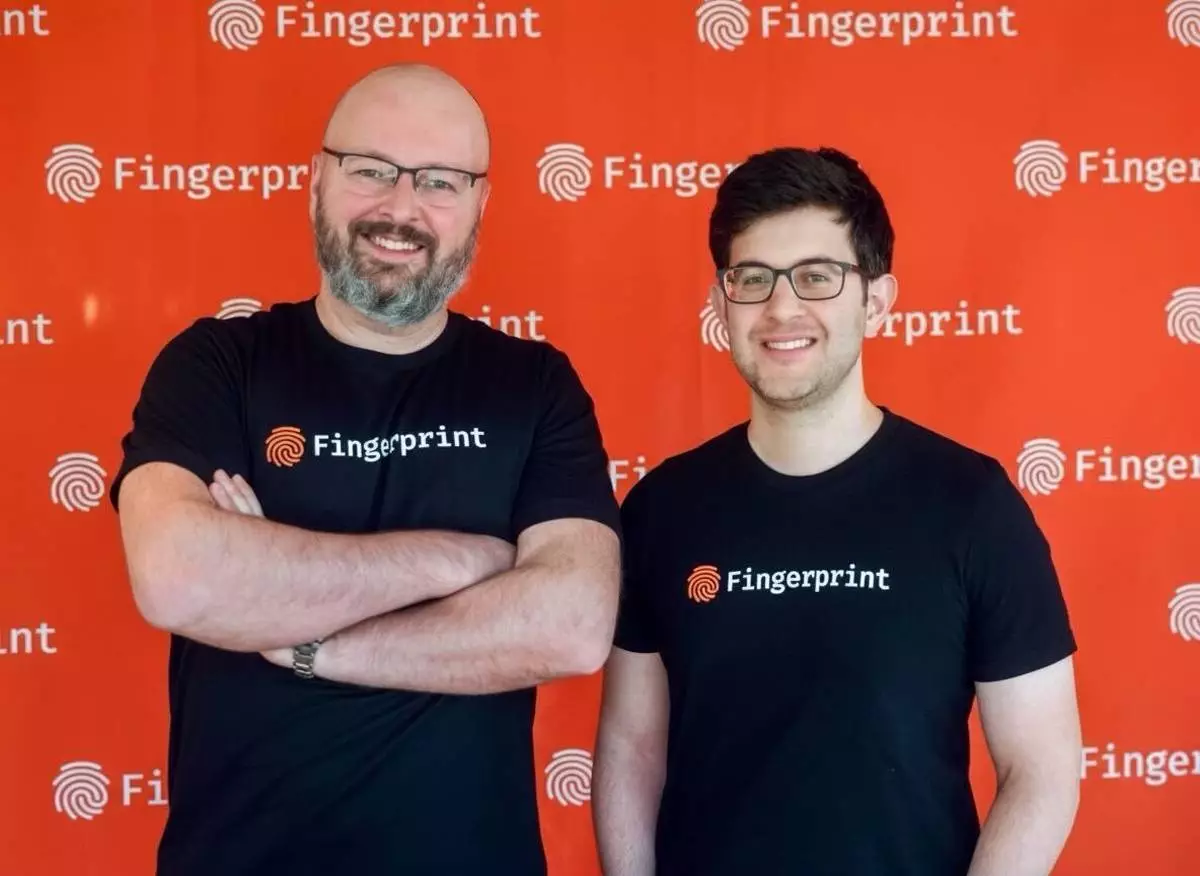
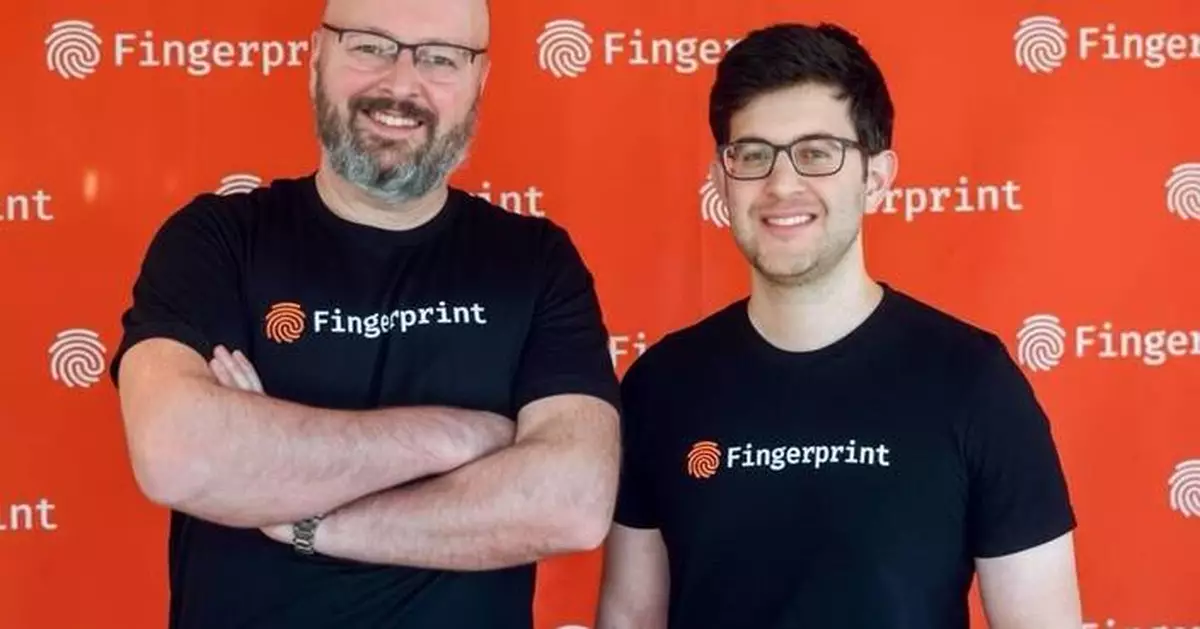
Left to right: Fingerprint co-founders, CTO Valentin Vasilyev and CEO Dan Pinto
ALBUQUERQUE, N.M. (AP) — Even as it battled the deadliest drug epidemic in American history, the U.S. Drug Enforcement Administration permitted hundreds of thousands of fentanyl pills to hit the streets of New Mexico between 2023 and 2025, according to three current and former DEA agents and government records reviewed by The Associated Press.
DEA agents repeatedly monitored shipments of fentanyl pills — but did not seize them — as federal prosecutors sought to bring bigger criminal cases against traffickers of a synthetic opioid that the White House last year designated a “ weapon of mass destruction.”
Agents and experts, however, said the tactic amounted to a gamble with public safety that potentially imperiled communities in and around Albuquerque and may have violated U.S. Justice Department rules intended to safeguard the public.
“We poisoned our community to make cases,” DEA Special Agent David Howell told AP in a series of interviews in New Mexico. “Through our own willful blindness, we get to say, ‘We don’t really know what happened to the drugs.’ But we 100% got people killed.”
The DEA has long contended it would not be plausible to seize every shipment of every drug. But the strategy of allowing staggering amounts of counterfeit painkillers to hit the streets shocked several veteran agents who spoke with AP.
Ridding the streets of illicit fentanyl, manufactured mostly in Mexican labs, became DEA’s top priority over the past decade as overdose deaths surged. At the same time, its lethality — a few milligrams can kill the average adult — upended time-tested tactics that had been used to combat drugs like cocaine and heroin. Those methods have included allowing drug transactions to be completed so agents might follow the narcotics through the supply chain. Fentanyl, however, is so dangerous that the U.S. Justice Department developed guidelines for agents in such circumstances, encouraging them to seize the opioid whenever “practicable.”
Albuquerque, which has a neighborhood so besieged by drugs it’s known as “War Zone,” and other regions in New Mexico remain at the epicenter of the fentanyl epidemic. While overdose deaths nationwide fell 14% last year, government data show New Mexico tallied a 21% spike.
Alex Uballez, who served as U.S. attorney in New Mexico from 2022 through last year, said authorities at times allowed drug shipments to go unseized as part of a broader effort to gather intelligence and build cases against major drug traffickers. He said the approach reflected his office’s limited resources and his belief that prosecuting larger organizations can have a bigger impact than interdicting every suspected drug transaction.
Last year, DEA recorded the largest fentanyl bust in its history in Albuquerque.
“The bigger fish are worth catching,” Uballez said, “and that will save more lives.”
The DEA said in a statement that “the investigative decisions at issue were lawful, reasonable under the circumstances and consistent with Department guidance.”
“Public descriptions suggesting that DEA knowingly permitted fentanyl to reach communities are false and fundamentally mischaracterize the facts,” DEA spokesperson Amanda Wozniak wrote in an email. She said the investigations involved court-authorized wiretaps “in which agents and prosecutors conducted real-time surveillance, intelligence gathering, and operational analysis targeting larger drug trafficking organizations.”
In some cases, the DEA had such detailed intelligence about drug deliveries that agents were able to tally precise pill counts, according to reports reviewed by AP.
Agents, for example, deciphered coded chatter over cellphones and closely surveilled a transaction at a mobile home park in Albuquerque in June 2023, according to a 66-page report reviewed by AP. Agents wrote in the report that traffickers delivered 74,000 pills as part of that deal, a figure federal prosecutors later confirmed in a court filing.
Days earlier, another DEA report showed, investigators watched the same distribution ring deliver a spare tire hiding another suspected fentanyl shipment that similarly went unseized.
“We did nothing, but sit back and watch,” said Howell, who filed an official whistleblower complaint in 2023 to bring attention to what he thought was a tactic that risked public safety.
Months passed before federal authorities busted the traffickers, and Howell, who participated in the surveillance, said authorities today cannot account for the unseized shipments.
“It’s outrageous to put that many lives at risk in hopes of making a big case,” said Tristan Leavitt, president of Empower Oversight, a whistleblower advocacy group that has asked the Senate Judiciary Committee and Justice Department’s Office of Inspector General to investigate Howell’s claims.
A former DEA supervisor, speaking on condition of anonymity for fear of retaliation, said he and his Albuquerque colleagues allowed “millions” of pills to go unseized during a multi-state investigation last year.
Howell reported in his whistleblower disclosures that agents on that case permitted the delivery of at least 1.8 million fentanyl pills.
That investigation, the former supervisor and Howell told AP, culminated in the largest fentanyl bust in DEA history, a takedown announced in May 2025 by then-Attorney General Pam Bondi that resulted in the seizure of more than 3 million pills.
“The amount we ultimately seized was hitting the streets every month while that case was going on,” the former supervisor said, adding that the DEA could have dismantled the organization six months earlier.
The U.S. Attorney’s Office in Albuquerque did not answer questions about the unseized fentanyl shipments but, in a statement to AP, said the “conduct” Howell brought to light happened during the prior administration.
“The current leadership of this office is focused on aggressively investigating and prosecuting fentanyl trafficking and disrupting the criminal organizations responsible for distributing these drugs,” Tessa DuBerry, a spokesperson for the office, wrote in an email.
Uballez, the former U.S. attorney, said estimated pill counts “based on intercepted phone calls are not reliable.”
“I don’t think I’d contest that drugs are ‘walked,’” he said, referring to the law enforcement tactic of allowing contraband to go unseized to further an investigation. “How much and how frequently — and with what certainty — is incredibly difficult to answer in retrospect.”
As fentanyl overdoses became an epidemic over the last decade, the U.S. Justice Department developed an internal playbook for combatting the deadliest drug ever to cross the Mexican border. The game plan coincided with a publicity campaign that warned Americans that “One Pill Can Kill,” a DEA effort to highlight fentanyl’s unique dangers.
Adopted in 2017, the department’s two-page “Fentanyl Protocols” called on agents to “seize or otherwise prevent the distribution” of fentanyl “as soon as practicable.” The rules, which have not previously been made public, said that “protecting public safety is paramount,” irrespective of whether seizures compromise investigations.
The Justice Department rewrote the rules in 2024 to afford law enforcement more discretion in such cases. The updated protocols say investigators “may exercise discretion in determining whether to take action to prevent the trafficking of fentanyl,” balancing public safety risks against “the benefits to be achieved through preserving the investigation.”
The DEA rarely discusses the tactic of allowing drugs to go unseized. Its agent manual describes taking drugs off the street as “the usual course of action” but adds “there may be instances where the investigative objectives can be better achieved by not doing so.”
The agency has long used “controlled deliveries” in which constant surveillance of the drugs — and often replacing them with fake narcotics — is followed by a takedown to recover them, according to current and former agents.
In interviews, several current and former agents likened the decision to permit fentanyl to hit the streets to the infamous “Operation Fast and Furious,” a 2011 gun-walking scandal in which straw buyers smuggled some 2,000 assault weapons into Mexico with the intent of tracing the firearms to cartel leaders.
The Bureau of Alcohol, Tobacco, Firearms and Explosives was savaged with bipartisan criticism after two of those guns surfaced at the scene of the fatal shooting of a Border Patrol agent, and the Justice Department explicitly forbid agents from allowing firearms to be trafficked.
Howell became so unnerved by his agency’s failure to seize fentanyl that he began flagging overdose deaths that might have been caused by the very pills DEA permitted to flow to dealers. One of those cases included a 15-month-old toddler who died after ingesting burned fentanyl residue last year in Española, a New Mexico town ravaged by grinding poverty and addiction.
Howell, who joined DEA 19 years ago after a decade in the Navy, took his allegations to the U.S. Office of Special Counsel. The agency, tasked with protecting whistleblowers, initially found a “substantial likelihood of wrongdoing” and asked the Justice Department to investigate.
In early 2024, Howell told the Justice Department’s Office of Professional Responsibility that DEA agents had observed — yet not seized — separate deliveries of 150,000 and 50,000 fentanyl pills.
DEA and federal prosecutors, he added, “are placing themselves in a precarious position where they will not be able to prove that the fentanyl they could have stopped did not result in the death of a person.”
The Justice Department’s Office of Professional Responsibility found in 2024 that the DEA and U.S. attorney’s office had made reasonable decisions in deciding to allow drugs to go unseized and that their inaction posed no “specific danger to public health.”
The Office of Special Counsel, which critics say rarely pushes back on agency findings, deemed the Justice Department’s report reasonable.
Howell, meanwhile, paid a price after coming forward. The DEA relegated him to desk duty for more than a year and docked his performance evaluations, according to Howell and DEA records. Internal records also show prosecutors barred him from testifying in federal court, citing his “pattern of refusing to heed” admonitions to allow drugs to go unseized during long-term investigations.
Pointing to DEA’s own “One Pill Can Kill” campaign, current and former agents said they could not understand the watchdog’s finding that the tactics had not put the public in danger. They noted the drug is so dangerous it has to be handled in a specialized laboratory.
Goodman reported from Miami.
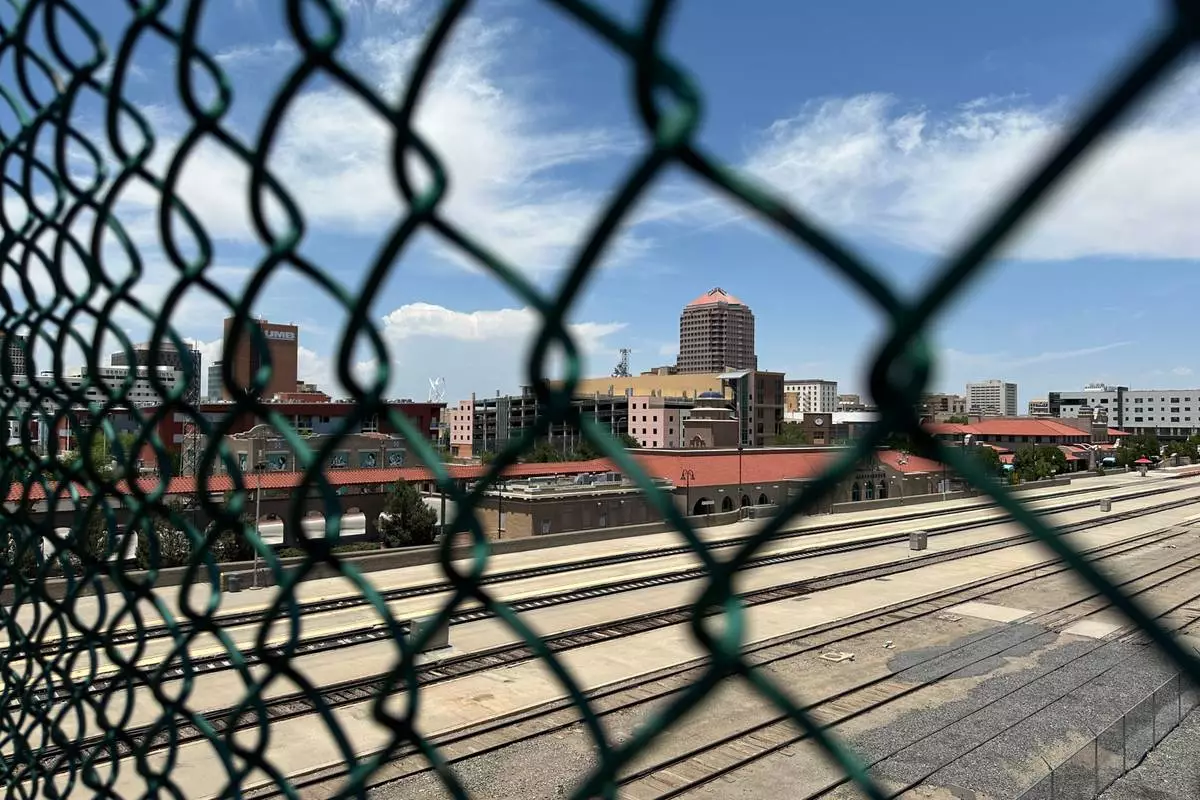
The tallest building in downtown Albuquerque, N.M., which houses the U.S. attorney's office, is seen beyond a chain link fence on Friday, June 12, 2026. (AP Photo/Susan Montoya Bryan)
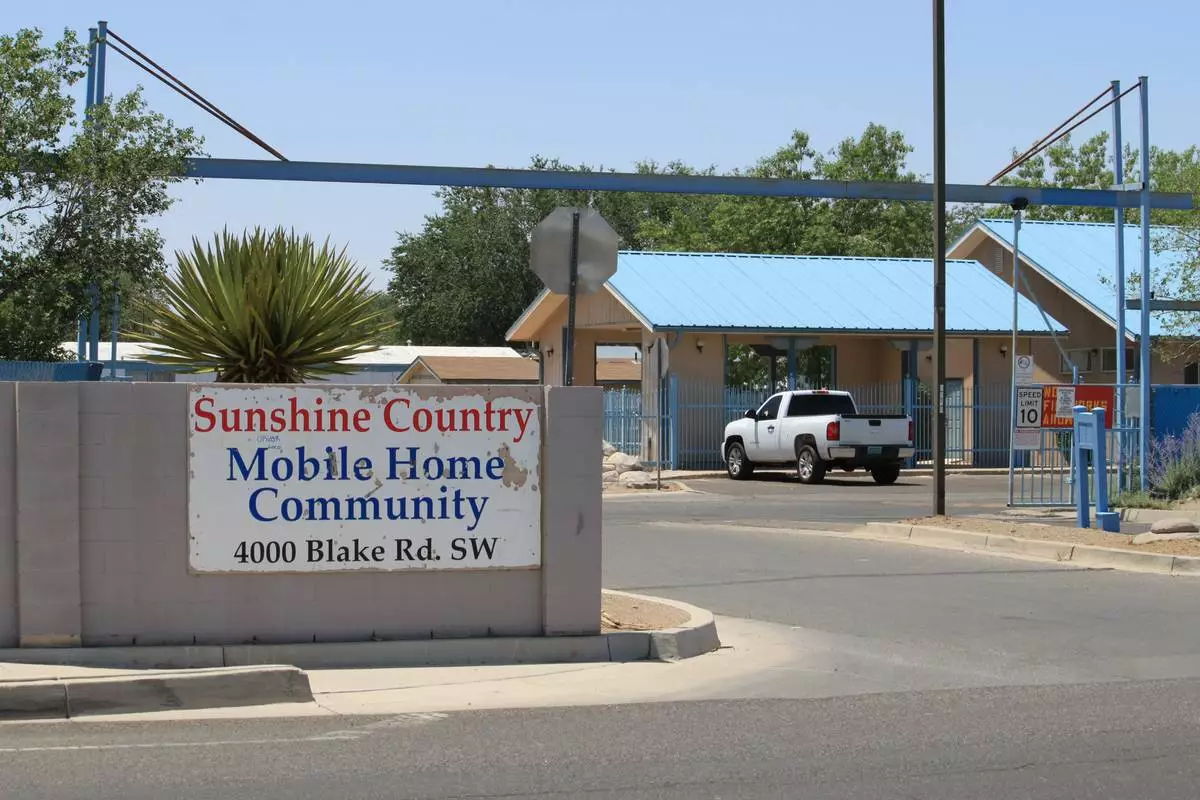
This June 12, 2026 photo shows a mobile home park where federal agents monitored, but did not seize, a shipment of fentanyl in Albuquerque, N.M. (AP Photo/Susan Montoya Bryan)
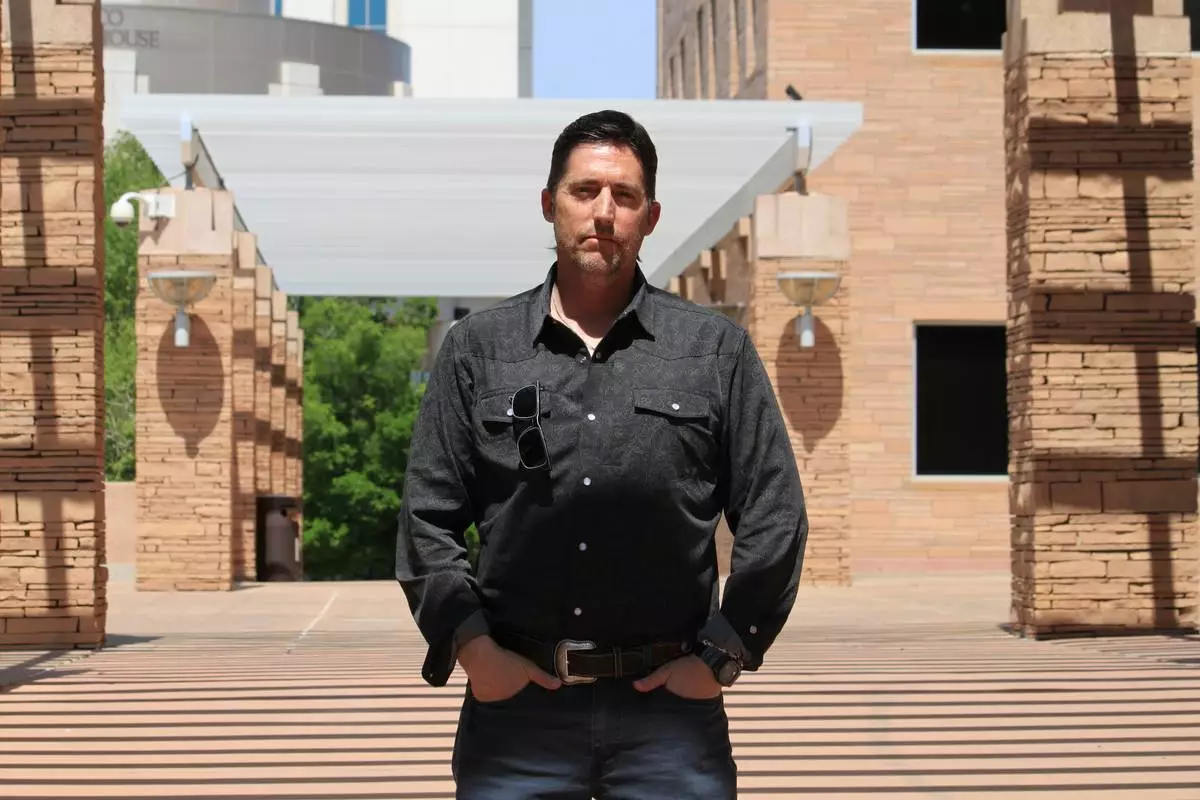
DEA Special Agent David Howell, who filed a whistleblower complaint, poses for a portrait outside the U.S. district courthouse in Albuquerque, N.M., on Friday, June 12, 2026. (AP Photo/Susan Montoya Bryan)
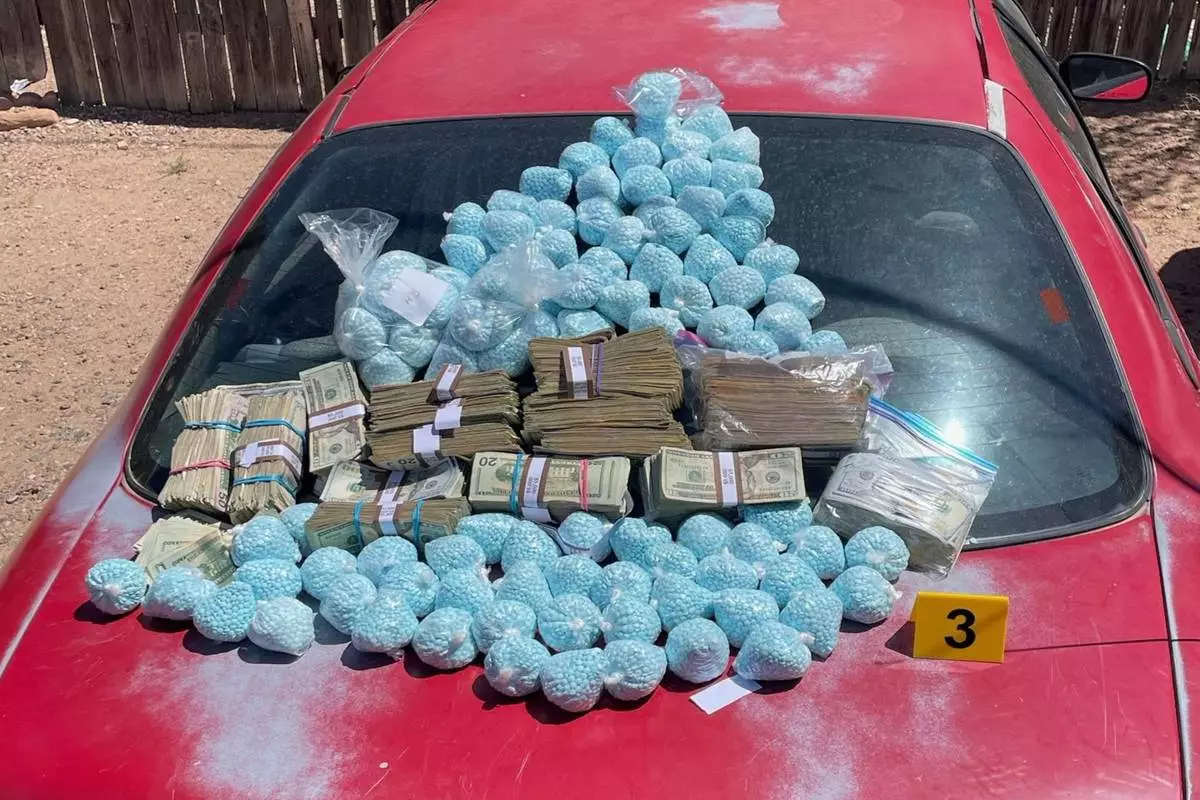
This photo provided by the U.S. Drug Enforcement Administration shows pills containing fentanyl which were seized by the DEA in New Mexico, on April 28, 2025. (DEA via AP)
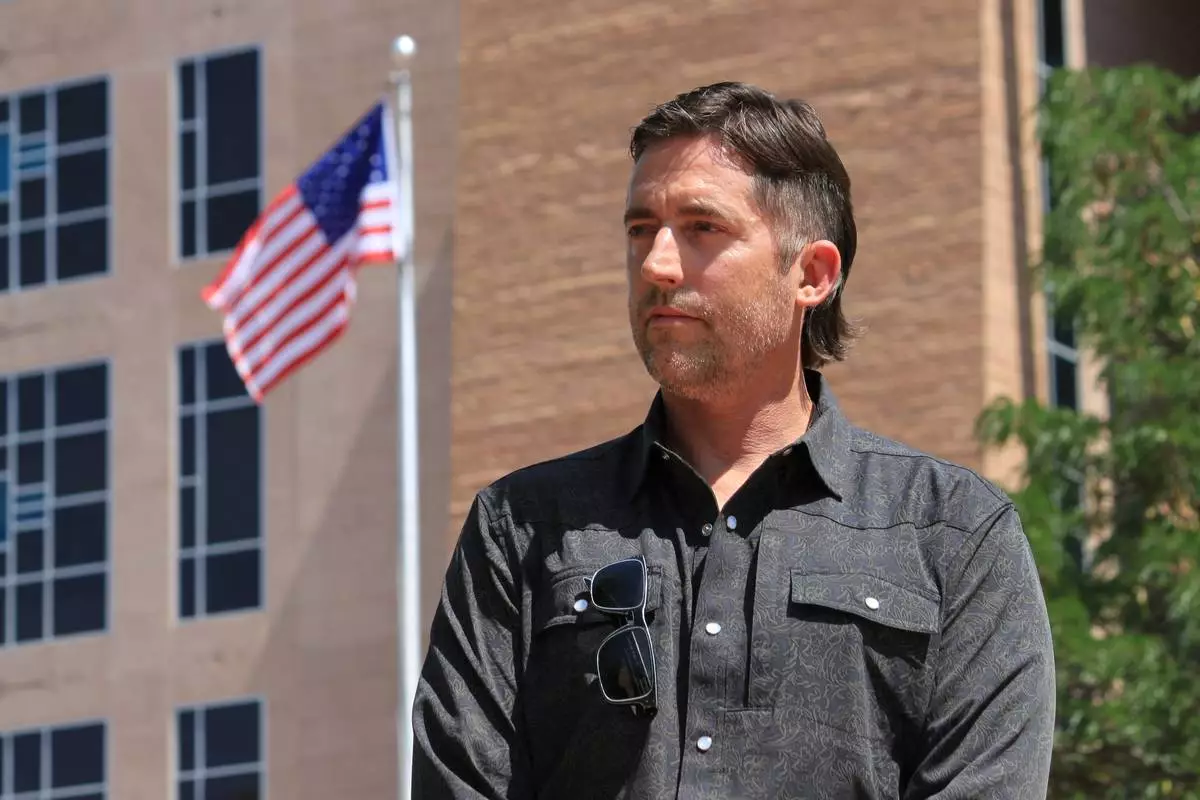
DEA Special Agent David Howell, who filed a whistleblower complaint, poses for a portrait outside the U.S. district courthouse in Albuquerque, N.M., on Friday, June 12, 2026. (AP Photo/Susan Montoya Bryan)