Budget Speech by the Financial Secretary (1)
Following is the full text of the Speech on the 2026-27 Budget delivered by the Financial Secretary, Mr Paul Chan, to the Legislative Council today (February 25):
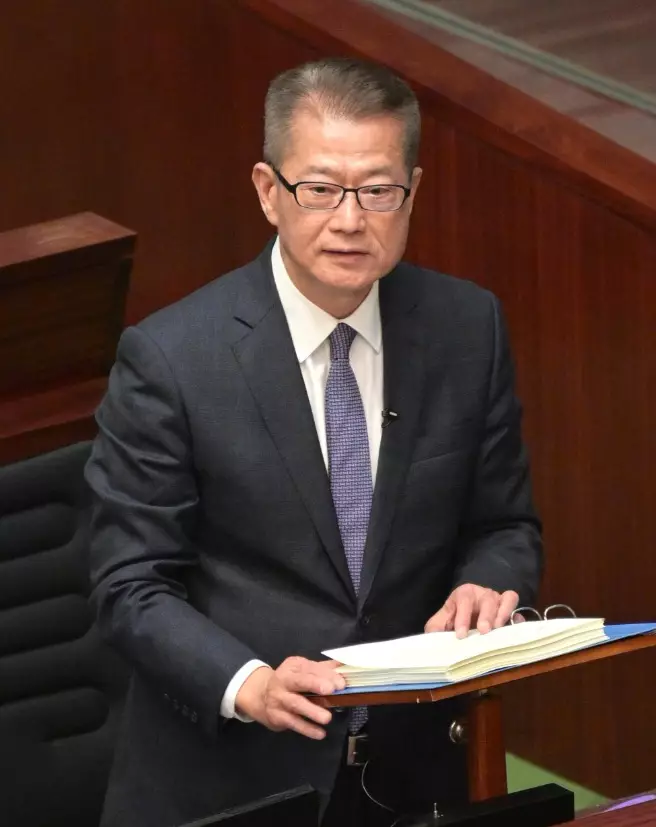
The Financial Secretary, Mr Paul Chan, delivers the 2026-27 Budget in the Legislative Council today (February 25). Photo source: HKSAR Government Press Releases
President, Honourable Members and fellow citizens,
I move that the Appropriation Bill 2026 be read a second time.
Introduction
2. Today is the ninth day of the Chinese New Year, and the city is still brimming with festive spirits. The bustling New Year fairs, the buzzing Night Parade and the dazzling fireworks display above Victoria Harbour have echoed the vigour and vitality symbolised by the Year of the Horse.
3. Over the past year, as a result of the booming economy and capital market, our tax revenue has increased. Coupled with the reinforced fiscal consolidation programme gradually bearing fruit, our public finances have improved sooner than expected. The Operating Account has returned to a surplus this financial year. After taking into account the proceeds from bond issuance, the Consolidated Account has also returned to balance ahead of schedule. All these have enabled us to suitably reinforce support for the people and small and medium enterprises (SMEs) within our means.
4. This year marks the beginning of the National 15th Five Year Plan. The stable and high-quality development of our country is always our strongest backing. Our country's sustained high-standard two-way opening-up, coupled with scientific and technological innovation, have presented us with new opportunities. We must embrace the 15th Five-Year Plan with an innovative mindset, fostering new quality productive forces in accordance with local conditions. Leveraging our edge of having close connectivity with the Mainland and the world, and with a large pool of talents, we will facilitate enterprises in opening up new markets. We expect Hong Kong's economy to sustain good momentum this year.
5. The theme of this Budget is: "Driving High-quality, Inclusive Growth with Innovation and Finance". I will elaborate on this a little later.
Economic Situation in 2025
6. The global political and economic landscape is fraught with complication and volatility. The United States (US) waged a tariff war early last year, precipitating a sharp escalation in global trade tensions. As the US reached preliminary trade agreements with various economies and achieved consensus with China on key economic and trade matters, trade frictions eased, allowing the global economy to continue expanding.
7. Technological transformation and the rapid development of artificial intelligence (AI) have spurred a fresh wave of investment enthusiasm and driven product demand. Asia, especially China, serves as an important engine propelling global economic growth. Furthermore, the resumption of interest rate cuts by the US since September last year has bolstered performance of the investment and capital markets. The International Monetary Fund (IMF) projects global economic growth of 3.3 per cent for 2025, which is broadly in line with that of 2024.
8. Hong Kong's economy was buoyant last year. External trade remained strong, private consumption rebounded, and fixed investment accelerated. The overall economy grew by 3.5 per cent in the year, marking the third consecutive year of expansion.
9. Boosted by robust demand for electronic-related products, total exports of goods from Hong Kong grew by 12 per cent in real terms, with particularly notable increases in exports to the Chinese Mainland and the Association of Southeast Asian Nations (ASEAN).
10. Exports of services rose by 6.3 per cent. Visitor arrivals surged by 12 per cent, while cross-boundary financial services and traffic saw sustained growth.
11. On domestic demand, private consumption expenditure rose by 1.7 per cent for the year, reversing the downward trend from the second quarter of 2025. Amid continuing economic expansion and a recovering residential property market, growth in overall investment expenditure accelerated to 4.3 per cent.
12. The labour market gradually stabilised in the latter half of the year. The seasonally adjusted unemployment rate stood at 3.8 per cent in the fourth quarter. Employment earnings showed sustained growth, with the median monthly employment earnings of full time employees increasing by 4.2 per cent year-on-year in the fourth quarter.
13. Inflation remained mild. Netting out the effects of the Government's one-off measures, the underlying inflation rate was 1.1 per cent last year.
14. The stock market delivered a stellar performance. The Hang Seng Index rose by 28 per cent over the year. The daily turnover surged by 90 per cent to a historic high of close to $250 billion. Capital raised through initial public offerings (IPOs) exceeded 2024 by more than two times to over $280 billion, ranking first globally.
15. The residential property market saw increases in both prices and transaction volumes. Market activities have been active since last March, with total transactions reaching a four year high of nearly 63 000 for the year. Property prices rose by 3.3 per cent for the year, ending a three-year decline, while rental prices rose by 4.3 per cent in the year. Transaction volume for non-residential properties rebounded, while the declines in rentals and prices narrowed.
Economic Outlook for 2026 and the Medium Term
16. Entering 2026, global trade tensions have moderated, and economic activities continued to expand in major economies. The Chinese Mainland will be the leading contributor to global economic growth, serving as the key driver for both regional and global economic momentum. The steadfast development of our country will continue providing firm support for Hong Kong.
17. Our country will implement more proactive macro policies this year, expanding domestic demand, and steadfastly advancing high-quality development, while maintaining reasonable economic growth. This will lay a strong foundation for the 15th Five Year Plan period, and generate propitious conditions for Hong Kong's economic growth.
18. Driven by investments in AI and other new technologies, the demand for related products continues to underpin the trade expansion in Asia. Market expectations of further interest rate cuts in the US would bolster investor confidence. The IMF forecasts moderate growth for the global economy this year.
19. Benefitting from these factors, Hong Kong's exports of goods should sustain decent growth. Exports of services will also continue to increase, driven by increasing visitor arrivals and demand for financial services.
20. Domestic demand will grow steadily. A stable labour market and rising household incomes will drive private consumption, while improvement in business sentiment, coupled with expectations of interest rate cuts, will boost asset markets and investments.
21. Nevertheless, the international environment remains complex and intricate. With the major advanced economies still frequently shifting their trade and economic policies, uncertainties will continue to loom over global trade. A slower-than-expected pace of US rate cuts could hamper the optimism currently underpinning the global financial market.
22. Based on our assessment of the current global and local economic situations, we forecast that Hong Kong's economy will grow by 2.5 per cent to 3.5 per cent this year.
23. As for prices, external price pressures are in check. With the local economy continuing to expand, inflation this year is expected to be moderately higher than last year. We forecast the underlying inflation rate and the headline inflation rate this year to be 1.7 per cent and 1.8 per cent respectively.
24. In the medium term, protectionism will persist in some major economies, while fragmentation of the global economy will continue. Nevertheless, the rise of the "Global South" and the reshaping of the global trade and investment landscape will unlock new markets and new growth areas for Hong Kong.
25. This year marks the beginning of the 15th Five-Year Plan. Hong Kong will proactively align with the 15th Five-Year Plan, better integrate and serve the overall national development, and continue to proactively participate in development of the Guangdong-Hong Kong-Macao Greater Bay Area (GBA).
26. The current-term Government is committed to expanding economic capacity and enhancing competitiveness, expediting the development of the Northern Metropolis (NM), driving growth through talents and innovation and technology (I&T) and developing new quality productive forces tailored to local circumstances for promoting high-quality economic development.
27. We forecast that Hong Kong's economy will grow on average by three per cent per annum in real terms from 2027 to 2030, with the underlying inflation rate averaging two per cent a year.
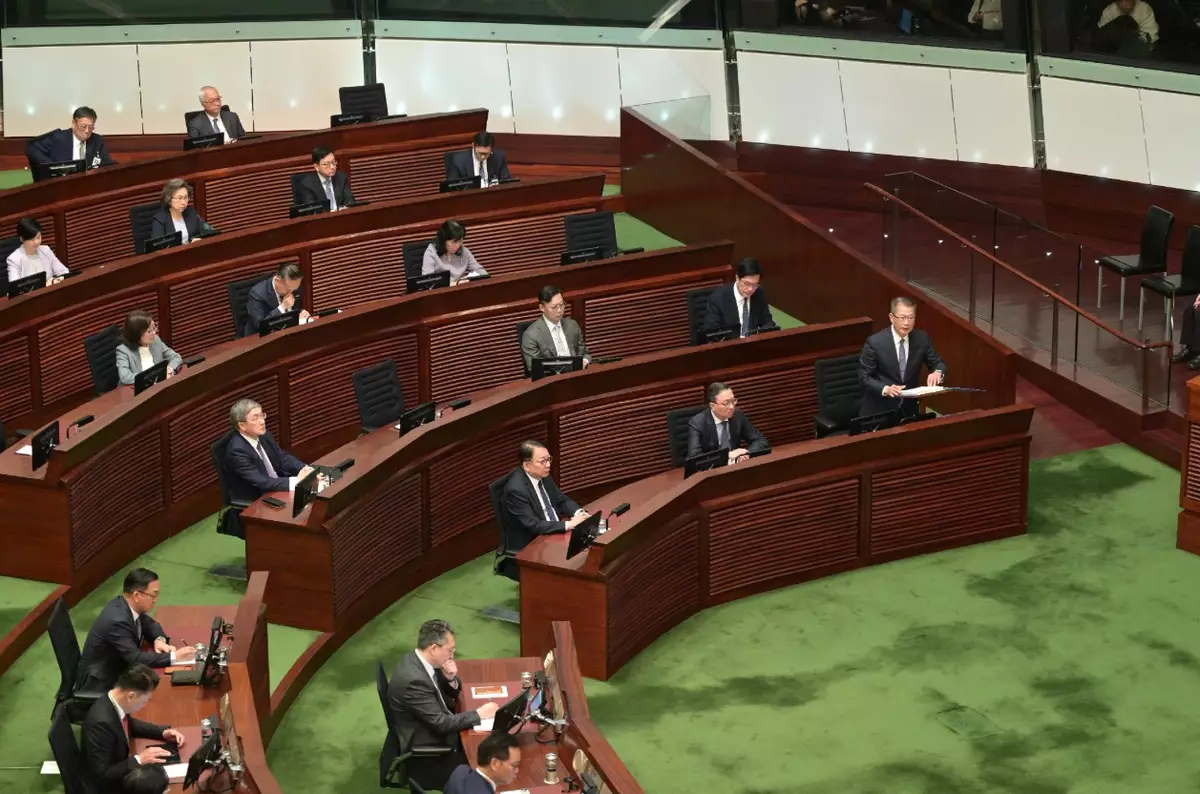
The Financial Secretary, Mr Paul Chan (front row, first right), delivers the 2026-27 Budget in the Legislative Council today (February 25). Photo source: HKSAR Government Press Releases
Budget Speech by the Financial Secretary (10)
Public Finance
251. During the pandemic, several rounds of large-scale counter-cyclical measures were launched to support enterprises and safeguard jobs. These measures, though successful in stabilising the economy and protecting people's livelihood, have led to fiscal deficits in the past few years. The Budget last year introduced a reinforced fiscal consolidation programme, aiming at achieving fiscal balance through strictly containing the growth of government expenditure, suitably increasing revenue and consolidating the Government's financial resources. In addition, the scale of bond issuance would be enlarged. Last year, we set the target of attaining surpluses in the Operating Account from 2026-27 onwards and the Consolidated Account in 2028-29 respectively.
252. Over the past year, we have been fully committed to implementing the fiscal consolidation programme. As a result of the robust stock market and an accelerated economic growth, revenue from stamp duties and profits tax has increased by nearly $50 billion in total compared to the original estimate. In 2025-26, the Operating Account will return to a surplus ahead of schedule, while the Consolidated Account will be broadly balanced after taking into account the net proceeds from bond issuance.
253. In the medium term, the Operating Account will register a surplus throughout the period from 2026-27 to 2030-2031. The Capital Account will nevertheless still record a deficit annually, mainly due to a high level of capital works expenditure. As infrastructure projects are an investment in Hong Kong's future, we will meet the financing needs by suitably increasing bond issuance. During the period, fiscal reserves are expected to gradually increase to over $700 billion.
254. Overall, our public finances have seen significant improvement.
255. The Government has been upholding the principle of keeping the expenditure within the limits of revenues as enshrined under Article 107 of the Basic Law. We are striving to achieve fiscal balance in the economic cycle and ensure the resilience and sustainability of public finances.
Following through the Fiscal Consolidation Programme
256. We will continue implementing the reinforced fiscal consolidation programme put forward in last year's Budget. Key principles are as follows:
(a) to focus on strictly controlling government expenditure, supplemented by increasing revenue;
(b) to maintain the competitiveness of Hong Kong's simple and low tax regime, and to avoid raising tax rates substantially or introducing new taxes; and
(c) to uphold the "user pays" and "affordable users pay" principles as far as practicable in increasing revenue.
Strictly Containing the Growth of Operating Expenditure
257. We will continue strictly containing the growth of the Government's operating expenditure. Bureaux and departments will make sustained efforts to review their resource allocation and work priorities, and provide public services with better cost-effectiveness through consolidating internal resources, streamlining procedures and leveraging technology.
258. We will take forward the Productivity Enhancement Programme as planned. On the premise that Comprehensive Social Security Assistance (CSSA), Social Security Allowance and statutory expenditures will not be affected, the Government's recurrent expenditure will be cut by two per cent in both 2026-27 and 2027-28, delivering further savings of about $7.8 billion and $15.6 billion respectively over 2025-26.
259. The civil service establishment will be reduced by two per cent in each of the coming two financial years to an estimated level of about 188 000 posts by April 1, 2026, resulting in a cumulative deletion of over 10 000 posts within this term of Government.
260. Regarding the 2026-27 civil service pay adjustment, the Government will conduct the Pay Trend Survey in accordance with the established mechanism. The Chief Executive-in-Council will then make a decision having due regard to the six factors.
Increasing Revenue
261. On increasing revenue, we will uphold the "affordable users pay" principle in implementing the following measures:
(a) The rates of stamp duty on residential property transactions valued above $100 million will be raised from 4.25 per cent to 6.5 per cent, affecting about 0.3 per cent of residential property transactions. It is estimated that revenue will increase by about $1 billion per annum. This measure will take retrospective effect from tomorrow upon passage of the amendment bill by the LegCo; and
(b) Last year, we amended the Inland Revenue Ordinance to implement OECD's package by imposing the global minimum tax and implementing the Hong Kong minimum top-up tax on large multinational enterprise groups with an annual consolidated revenue of or above EUR750 million. This measure is expected to bring in an additional tax revenue of about $15 billion for the Government annually starting from 2027-28.
Consolidating and Optimising the Use of Government Financial Resources
Consolidating Funds Established Outside the Government's Accounts
262. As announced in last year's Budget, we have brought back $61.5 billion from six seed capital funds with a relatively large unspent balance to the Government's accounts for optimising the use of government financial resources. I have also instructed various policy bureaux to conduct a full review of the remaining 36 purpose-specific funds established outside the Government's accounts. After carefully assessing the individual circumstances of the funds, we propose:
(a) revising the financial arrangements of four funds to bring back their unspent balances, on the premise of supporting their operations in the next five years;
(b) closing a fund which has accomplished its policy objectives and two funds for which objectives can be met more effectively under the established funding mechanism, and bringing back their unspent balances;
(c) consolidating six funds into three for enhanced efficiency in the use of resources; and
(d) maintaining the financial arrangements of the remaining 23 funds.
The above measures are expected to bring back about $15.8 billion to the Government's accounts in 2026-27.
Transferring the Accumulated Surplus of the Bond Fund
263. The Bond Fund, established in 2009 outside the Consolidated Account, aims to support the issuance of bonds including Silver Bonds, iBonds and alternative bonds under the Government Bond Programme (GBP). Since 2024, Silver Bonds have been issued under the Infrastructure Bond Programme instead, with the proceeds being credited to the Capital Works Reserve Fund. The majority of bonds issued under the GBP will be held to maturity for redemption by the end of this year.
264. By the end of March, the balance of the Bond Fund is estimated to be about $150 billion, with an accumulated surplus of about $37 billion after deducting outstanding bond balances and interest payments etc. To optimise the use of the surplus of the Bond Fund, the Government will introduce a resolution to the LegCo to enable the transfer of the accumulated fund surplus to the Consolidated Account in 2026-27.
Transferring Investment Income of the Exchange Fund
265. The Exchange Fund achieved record-breaking performance last year, delivering an investment income of $330 billion. As at the end of last year, the total value of assets under the Exchange Fund exceeded $4.1 trillion, which would suffice to maintain monetary and financial stability in Hong Kong. On the premise that the Exchange Fund's function to maintain the stability and integrity of the local monetary and financial systems will not be compromised, I propose, under the Exchange Fund Ordinance, transferring $75 billion in each of the coming two financial years, totalling $150 billion, from the Exchange Fund to the Capital Works Reserve Fund in support of the NM and other infrastructure projects.
Bond Issuance
266. Last year's Policy Address announced that the Government would earmark an additional $30 billion in the next two to three years to increase expenditure on works projects for driving sustained economic development. The Government's capital works expenditure is estimated to be about $128 billion for 2026-27. Capital works expenditure will remain at a similar level during the Medium Range Forecast (MRF) period.
267. The Government has since 2019 and 2024 issued green bonds and infrastructure bonds respectively. Issuing bonds allows the Government to invest in infrastructure, while diversifying the development of the local bond market.
268. As the Government will accelerate the development of the NM and other public works projects relating to the economy and people's livelihood, we plan to raise the total borrowing ceiling of the two bond programmes from $700 billion announced last year to $900 billion. About $160 billion to $220 billion worth of bonds will be issued in each of the next five years, about half of which will be used for re-financing the short-term debts incurred in recent years. In future, we will issue more longer-term bonds to align more closely the cash flow duration with project requirements.
269. During the MRF period, the ratio of government debt to GDP will rise from 14.4 per cent to 19.9 per cent, which is a highly prudent level and well below that of most advanced economies. I would like to reiterate that proceeds from bond issuance will be used to invest in infrastructure only, but not for government recurrent expenditure.
(To be continued.)

Source: AI-found images