If Peter Jackson’s “The Beatles: Get Back” was the supreme document of the Beatles’ final moments together and of their dissolution, Morgan Neville’s “Man on the Run” is a kind of sequel.
It begins in late 1969, just months after Savile Row rooftop concert. The Beatles have broken up. Paul McCartney has seemingly disappeared. There are even rumors that he’s dead. On a remote farm in Scotland, a confused and distraught McCartney wonders whether he’ll write “another note, ever.”
But the most surprising thing about revisiting this tumultuous, tabloid-ready period of McCartney’s life is a simple fact. When the Beatles broke up, McCartney was 27 years old. To say he had lived a lifetime by then would be an understatement. By just the sheer enormity of their production and colossal cultural impact, you might easily mistakenly put McCartney in middle age by then.
“Man on the Run,” premiering Friday on Prime Video, is the story of everything that came after. McCartney, an executive producer, is never seen sitting for an interview, but his off-camera musings mark the movie, a chronicle of self renewal. For McCartney, kept boyish by the Beatles, the band's end meant a sudden coming of age.
“I had to look inside myself and find something that wasn’t the Beatles,” McCartney says in the film.
How you feel about McCartney’s post-Beatles career might inform how you feel about “Man on the Run.” For Neville, the celebrated documentary filmmaker of “Won’t You Be My Neighbor,”“Piece by Piece” and “20 Feet From Stardom,” it’s a period that offers no neat narrative, but — quite unlike the mythic Beatles years — something more like the ups and down of life, with regrets and triumphs along the way.
It didn’t get off to a good start. McCartney, blamed for the Beatles breakup, was guilt-ridden. His first records were a disappointment. Singing with Linda McCartney, his wife, wasn’t greeted well. A 1973 TV special that included a rendition of “Mary Had a Little Lamb” was, to put it a mildly, a misjudgment. A curious feature of McCartney’s largely sunny disposition is a nagging self-loathing.
“If I hear someone damning Paul McCartney, I tend to believe them,” he says, referencing the Beatles split.
“Get Back” offered a revelatory window into the group’s dynamics that put many of the old views of McCartney to bed. Comparisons are tough — “Get Back” is one of the greatest docs of the century — but Jackson’s film, drawn largely from footage shot by Michael Lindsay-Hogg, was also incredibly intimate. It captured not only the band’s individual relationships but the songwriting process in real time. (The emergence of “Get Back” from McCartney’s strumming and humming stands as one of the great sequences in documentary film.)
“Man on the Run” lacks that sense of closeness. By keeping the film in archival — the documentary is full of family photos and home movies — and without present-day talking heads, Neville lets us experience McCartney’s post-Beatles years as he did. It comes as a sacrifice, though, to a nearness to McCartney — and to the creation of his solo songs — that might have deepened the film.
The real arc of “Man on the Run” is building toward the creation of McCartney's first post-Beatles band, Wings. It’s in some ways an unlikely centerpiece. In the revolving makeup of the band, Denny Laine was the only permanent member outside Paul and Linda. On the other hand, Wings’ “Band on the Run” is the best album McCartney produced after the Beatles, and the clear culmination of years of struggle. If you needed one, this is your cue to go play “Jet” loud.
It turns out, to no one’s surprise, it’s hard to move on after being in the Beatles — especially for someone like McCartney who believed so sincerely in the band. Like its subject, “Man on the Run” inevitably pales next to films of the Beatles heyday. But it’s a meaningful companion piece about the end of an era and the start of a long and winding road.
“Man on the Run,” an Amazon MGM release, is rated R by the Motion Picture Association for language. Running time: 126 minutes. Two and a half stars out of four.
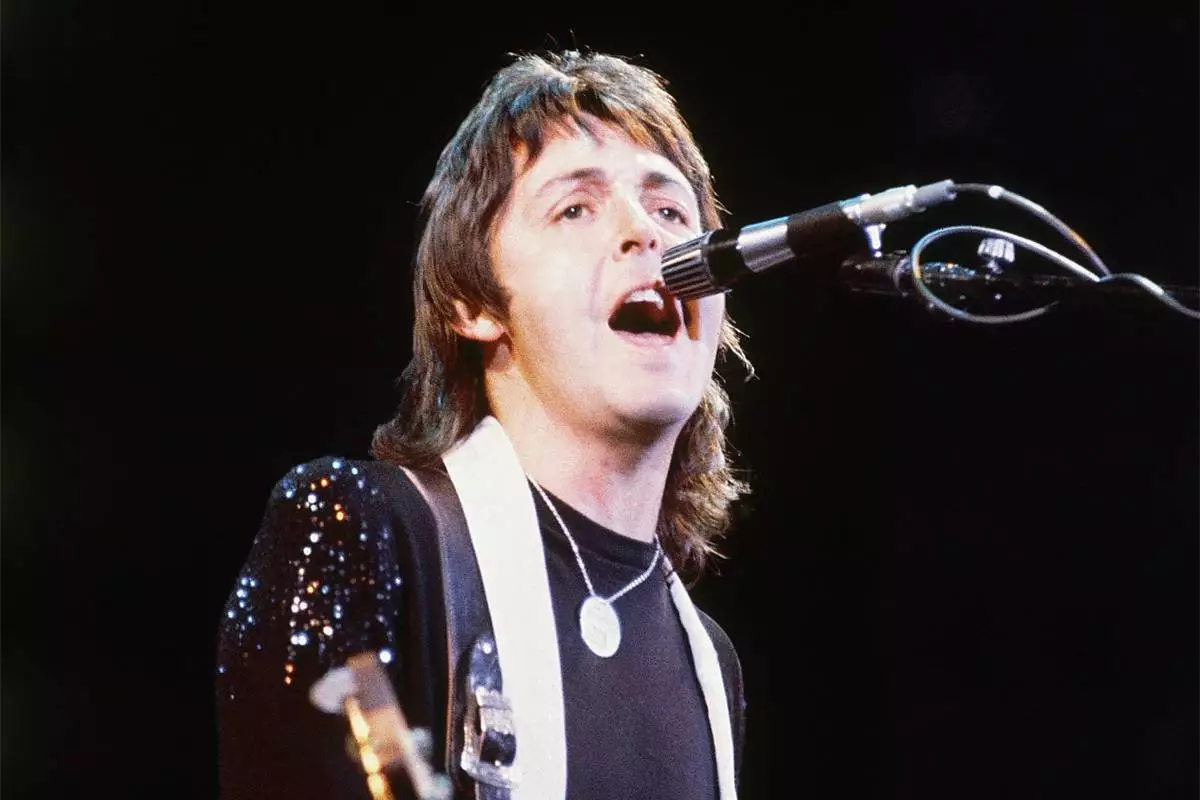
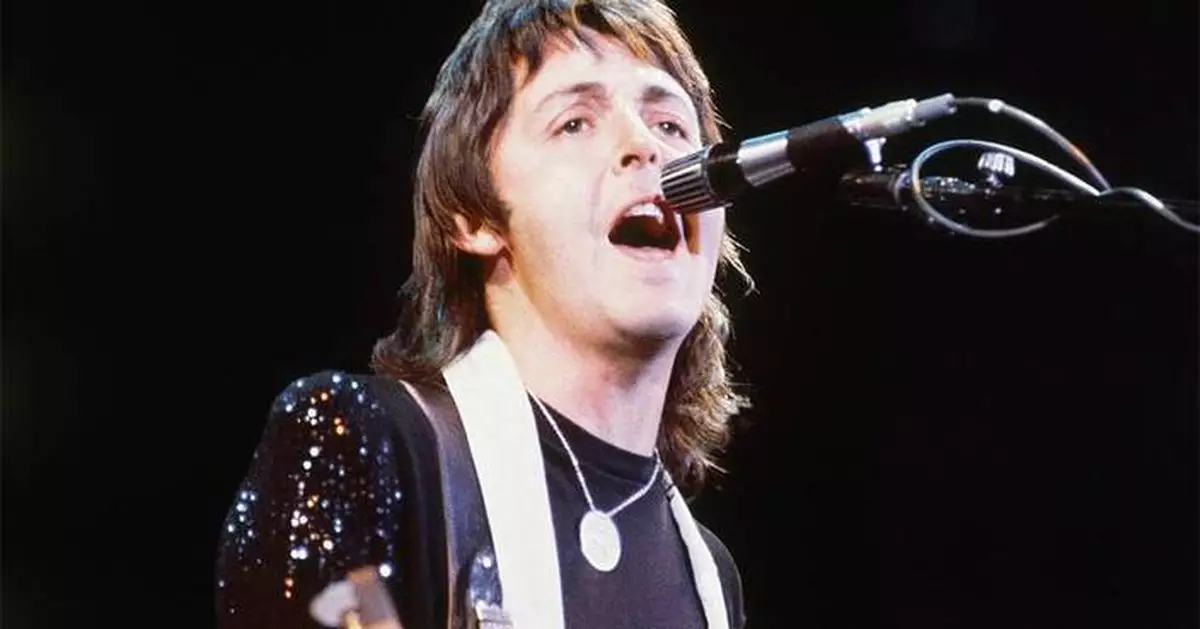
FILE - Paul McCartney, of Paul McCartney and Wings, performs at the Nassau Coliseum in Uniondale, N.Y. on May 21, 1976. (AP Photo/Richard Drew, File)
NEW HAVEN, Conn.--(BUSINESS WIRE)--May 28, 2026--
Unilever today unveiled plans to develop a new Global Innovation Center in New Haven, Connecticut, opening by spring 2029. The center will be a leading hub for the company’s research and development for its personal care, beauty and wellbeing businesses in the U.S. and globally.
This press release features multimedia. View the full release here: https://www.businesswire.com/news/home/20260528022339/en/
The center further propels Unilever’s growth strategy in the U.S. market, raising the bar for research and development in the consumer goods industry and powering the company’s portfolio of innovative and desirable brands. Centrally located in one of the world’s fastest-growing biosciences innovation clusters, the digital-first and AI-powered center will deliver deeper insights to fuel Unilever’s ambition of reshaping product categories. The center will advance how Unilever’s teams of scientists and experts push the boundaries of the fundamental differentiators that make the company’s brands distinct and products desirable: superior science, aesthetics and sensorials.
The center brings together a new and differentiated combination of assets and capabilities that will accelerate breakthroughs and enable Unilever’s brands to bring the next generation of market-making beauty, wellbeing and personal care products to people faster:
The center advances Unilever's strategy to become a sharper, focused personal care, beauty and wellbeing company, built upon shared capabilities across science-led innovation, demand creation and operational execution. Unilever will invest $270 million in the project over the long term, including $50 million in capital expenditure. Total combined investment of public and private funds in the center will exceed $300 million. This investment builds on nearly $15 billion invested in Unilever’s U.S. business over the past decade, across both acquisitions and capital projects.
Approximately 300 employees will work at the center. It will succeed Unilever's existing R&D facility in Trumbull, Connecticut, which has operated since 1972, marking the next chapter of Unilever's long partnership with the State of Connecticut and its scientific community.
Herrish Patel, President of Unilever USA and CEO of Personal Care North America, said:
“New Haven gets us to the future faster. Our Global Innovation Center is where we'll innovate at the intersection of science, technology and culture — for the U.S. and for the world. We will build on our deep heritage of innovation to develop the next generation of brands and products that people love. As part of Unilever’s global network of innovation hubs, the center will connect closely with our other leading locations worldwide, sharing technology, insights, and breakthrough ideas to accelerate innovation at scale. As the U.S. becomes a center of gravity for Unilever, we’re harnessing the best of American innovation to match our growth ambition here in the U.S. and around the world.”
Specific capabilities to be housed at the center include:
Richard Slater, Unilever Chief Research & Development Officer, said:
“Behind every Unilever product is world-leading science that delivers superior performance, combined with design, fragrance and sensory experiences that make our brands distinctive. Our new Global Innovation Center will bring these capabilities together to develop new, category-defining innovations in the U.S., and scale globally. The real shift here is integration and speed: science, design and sensorials working as one, with AI and partnerships accelerating every stage of innovation.”
Connecticut Governor Ned Lamont said:
“Unilever’s decision to make this investment in New Haven reaffirms Connecticut’s global reputation as a leader in innovation, research and development, and discovery. This innovation center will serve as an important foundational piece for this burgeoning hub that will not only strengthen New Haven’s existing tech centers but will also boost our innovation ecosystem statewide. I am glad we have Unilever as a valued member of Connecticut’s growing business community, and I look forward to this company continuing to succeed here for many years to come.”
About Unilever
Unilever is one of the world’s leading suppliers of Beauty & Wellbeing, Personal Care, Home Care, and Foods products, with sales in over 190 countries and products used by 3.7 billion people every day. We have 96,000 employees and generated sales of €50.5 billion in 2025.
Our leading brands in the U.S. include Dove, Hellmann’s, Vaseline, Degree, Axe, TRESemmé, Knorr, Nutrafol, Liquid I.V., Paula’s Choice, and Dermalogica.
For more information on Unilever U.S. and its brands visit: www.unileverusa.com

Rendering of Unilever's future Global Innovation Center in New Haven, opening in spring 2029.