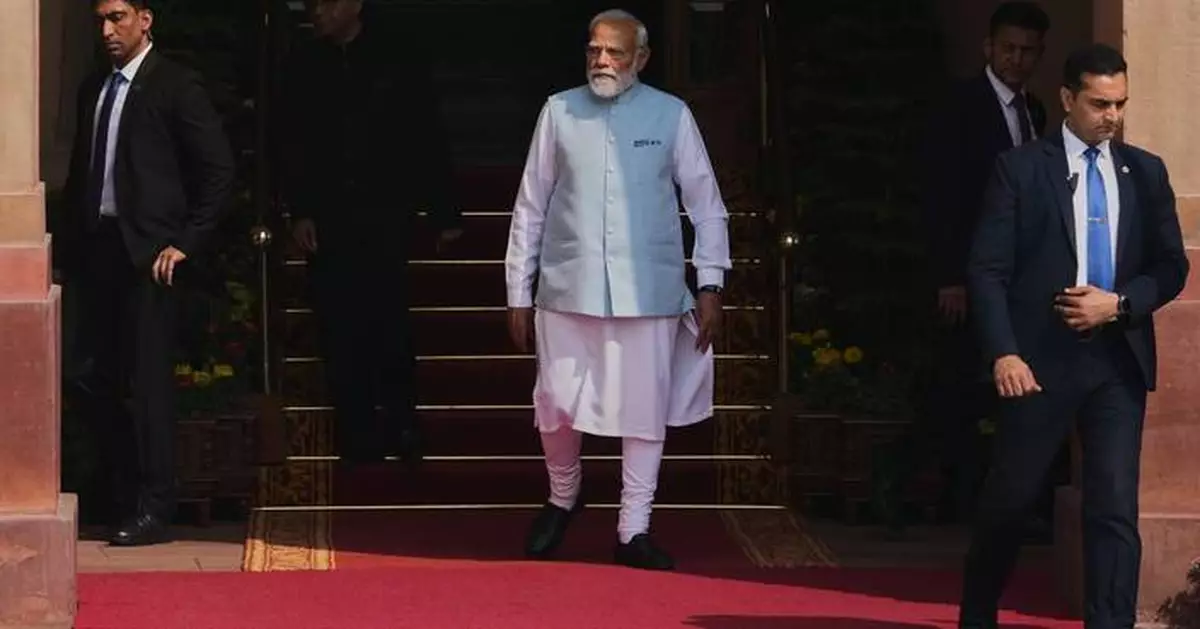
JERUSALEM (AP) — Indian Prime Minister Narendra Modi was expected in Israel on Wednesday for a two-day visit focusing on strengthening security, economic and technological cooperation between the two countries.
Modi has said he would hold talks with Israeli Prime Minister Benjamin Netanyahu and President Isaac Herzog and would speak to Israeli parliament on Wednesday evening.
“Our nations share a robust and multifaceted Strategic Partnership,” Modi wrote on X. “Ties have significantly strengthened in the last few years.”
Netanyahu referred to himself and Modi as “personal friends” when he announced the visit earlier this week and the visit is likely to give Israel a boost of international support after seeing relations with many of its allies deteriorate since the war in Gaza began in October 2023.
In addition to being a powerful ally, India is also Israel's No. 2 trading partner in Asia. Total trade between India and Israel was valued at $3.62 billion in the 2025 fiscal year, according to India’s Ministry of Commerce and Industry.
Modi became India's first prime minister to travel to Israel in 2017, and Netanyahu reciprocated with a trip to India the following year.
Netanyahu told a Cabinet meeting Sunday that economic and security issues will be high on the leaders' agenda, as will sharing technology, including artificial intelligence and quantum computing.
“We are partners in innovation, security, and a shared strategic vision," Netanyahu said on the social platform X ahead of Modi's arrival. “Together, we are building an axis of nations committed to stability and progress.”
Modi's embrace of Israel has marked a shift in India’s foreign policy. India has historically supported the Palestinians, and did not establish full diplomatic ties with Israel until 1992.
A staunch Hindu nationalist, Modi was one of the first global leaders to swiftly express solidarity with Israel following the Oct. 7, 2023 attack by the Palestinian militant Hamas group.
India was also among more than 100 countries earlier this month to condemn Israel's newly approved measures to deepen its control over the occupied West Bank and weaken the already limited powers of the Palestinian Authority.
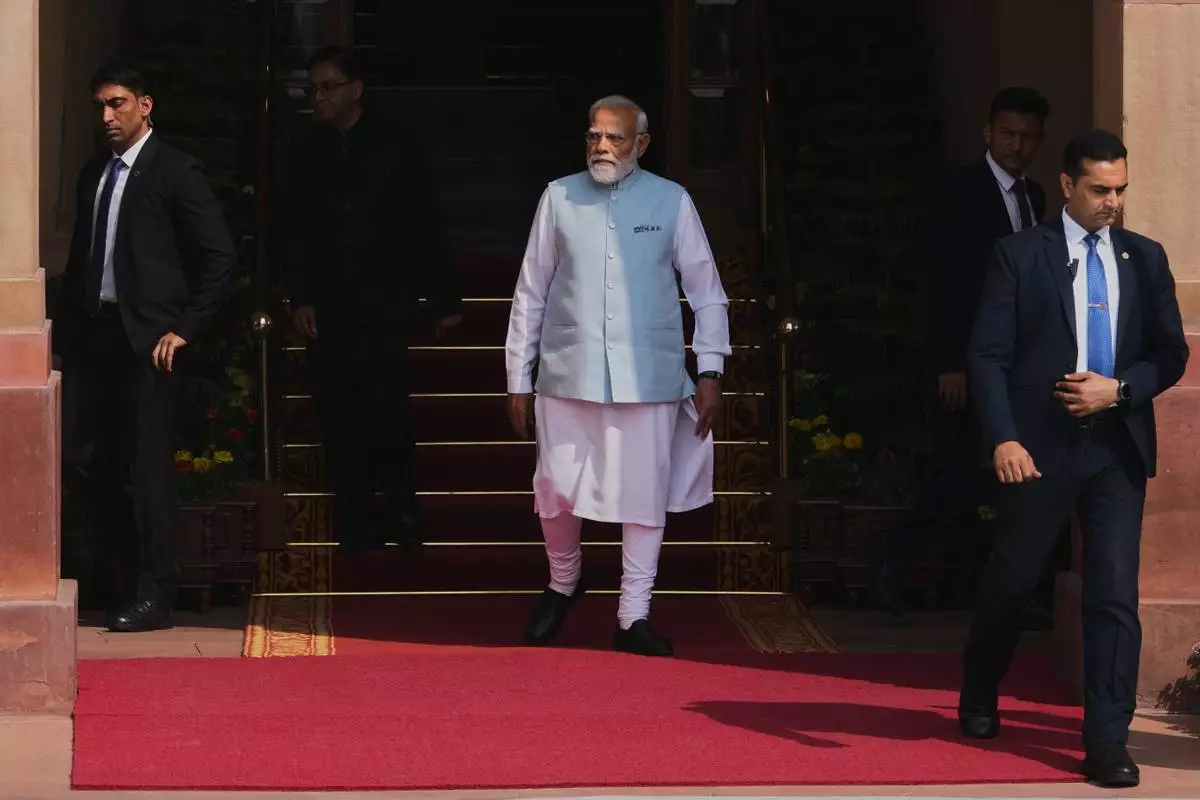
Indian Prime Minister Narendra Modi arrives to receive Brazilian President Luiz Inacio Lula da Silva for a delegation-level meeting at Hyderabad house in New Delhi, India, Saturday, Feb. 21, 2026. (AP Photo/Manish Swarup)
SEOUL, South Korea (AP) — The U.S. and South Korean militaries said on Wednesday they will conduct their annual springtime exercises next month to bolster their countries' combined defense capabilities against a backdrop of a deepening diplomatic freeze with nuclear-armed North Korea.
The Freedom Shield drills is set for March 9-19, according to the announcement.
North Korea has long described the allies ’ joint exercises as invasion rehearsals and used them as a pretext to dial up its own military demonstrations and weapons testing activity. The allies say the drills are defensive in nature.
The announcement came as North Korea is holding a major political conference where authoritarian leader Kim Jong Un is expected to outline his key domestic, foreign policy and military goals for the next five years. North Korean state media have not so far reported any direct comments by Kim on relations with Washington and Seoul at the ruling Workers’ Party congress, which began last week.
Based on recent public comments, experts say Kim could use the congress to further entrench his hard-line stance toward South Korea, reiterate calls for Washington to drop its demand for denuclearization as a precondition for renewed talks, and announce steps to simultaneously strengthen and integrate his nuclear and conventional forces.
Freedom Shield is one of two “command post” exercises that the allies conduct each year; the other is Ulchi Freedom Shield, held in August. The drills are largely computer-simulated and designed to test the allies’ joint operational capabilities while incorporating evolving war scenarios and security challenges.
As usual, the March drill will be accompanied by a field training program called Warrior Shield to enhance “training realism and combat readiness,” Col. Ryan Donald, public affairs director of U.S. Forces Korea, told a news conference.
South Korean and U.S. officials have not said how many troops will participate. The exercises typically involve thousands.
There has been speculation that the allies are seeking to tone down the drills to create conditions for dialogue with North Korea.
Liberal South Korean President Lee Jae Myung has expressed a desire for inter-Korean engagement, and some of his top officials have voiced hope that President Donald Trump’s expected visit to China in late March or April could open the door to renewed talks between Washington and Pyongyang.
Col. Jang Do-young, public affairs director of South Korea’s Joint Chiefs of Staff, said the March exercises will not involve scenarios of a possible response to a North Korean nuclear attack but will include training aimed at “deterring nuclear threats.” He said the allies were still discussing the specifics of the field training program.
The rapid expansion in recent years of Kim’s nuclear weapons program — now featuring systems capable of threatening U.S. allies in Asia, as well as long-range missiles that could potentially reach the American homeland — has heightened South Korea’s security concerns while its diplomacy with Pyongyang remains stalled.
South Korea is also grappling with intensifying U.S.-China competition in the region, which has prompted Washington to press its ally to assume a greater share of the defense burden against North Korea as it focuses more on China.
North Korea has repeatedly rejected Washington and Seoul’s calls to resume diplomacy aimed at winding down its nuclear program, which derailed in 2019 following the collapse of Kim’s second summit with Trump during the American president’s first term.
Kim has now made Russia the priority of his foreign policy, sending thousands of troops and large amounts of military equipment to support Moscow’s war in Ukraine, possibly in exchange for aid and military technology.
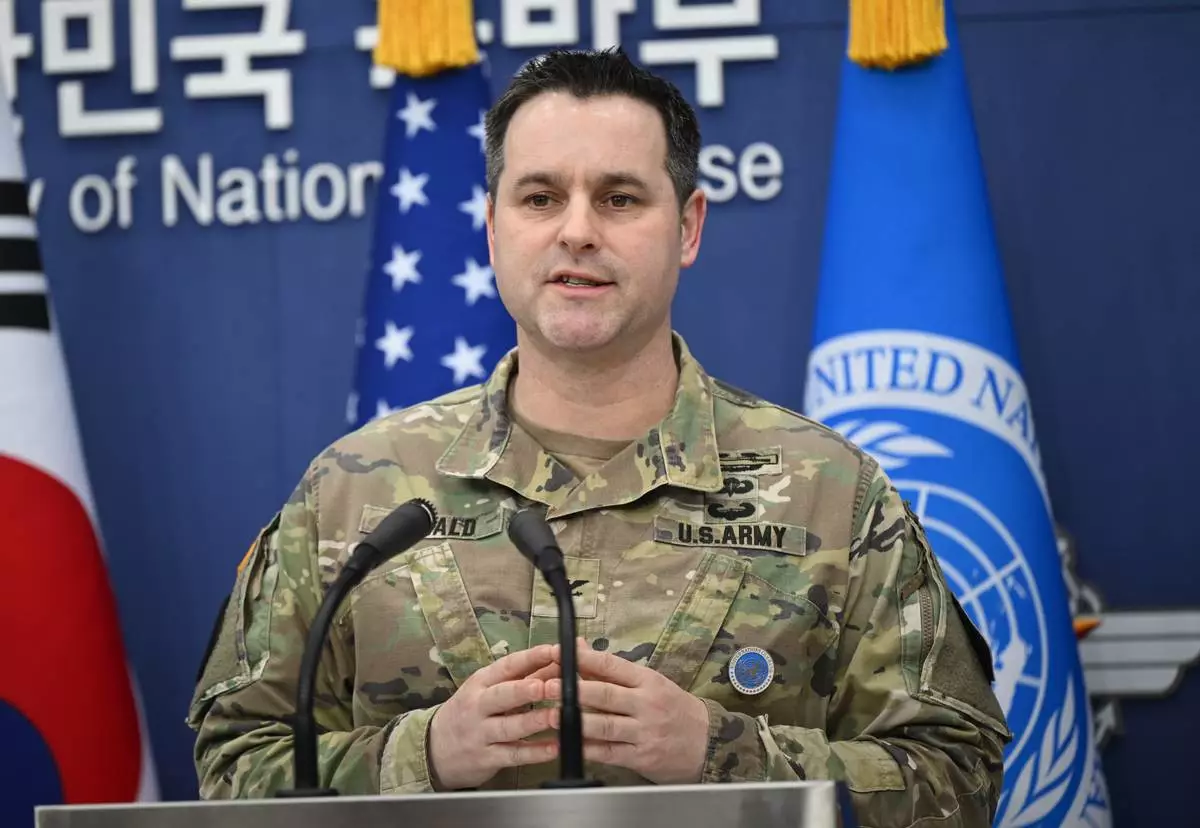
U.S. Army Col. Ryan Donald, public affairs director of the United Nations Command, Combined Forces Command, and United States Forces Korea, speaks during a media briefing on the 2026 ROK-US Freedom Shield Military Exercise at the Defense Ministry in Seoul, South Korea, Wednesday, Feb. 25, 2026. (Jung Yeon-je/Pool Photo via AP)
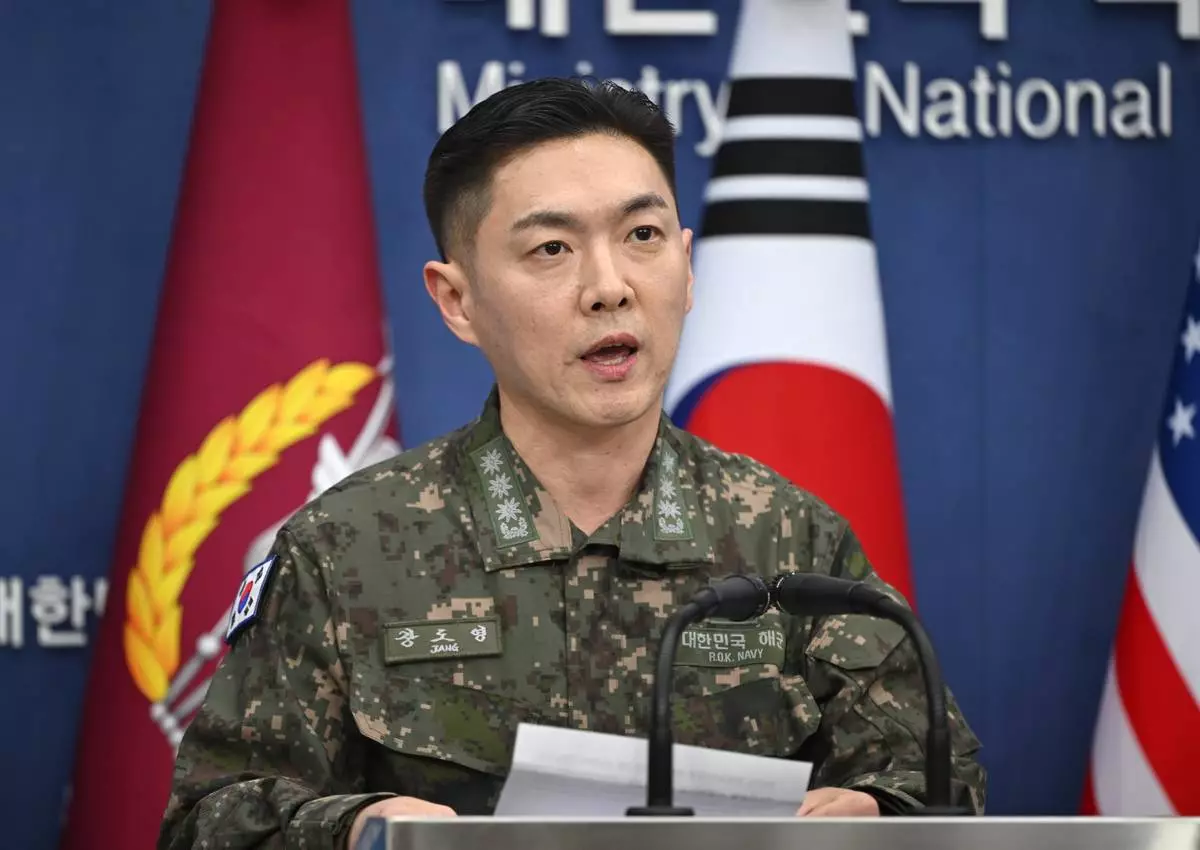
Col. Jang Do-young, public affairs director of South Korea's Joint Chiefs of Staff, speaks during a media briefing on the 2026 ROK-US Freedom Shield Military Exercise at the Defense Ministry in Seoul, South Korea, Wednesday, Feb. 25, 2026. (Jung Yeon-je/Pool Photo via AP)
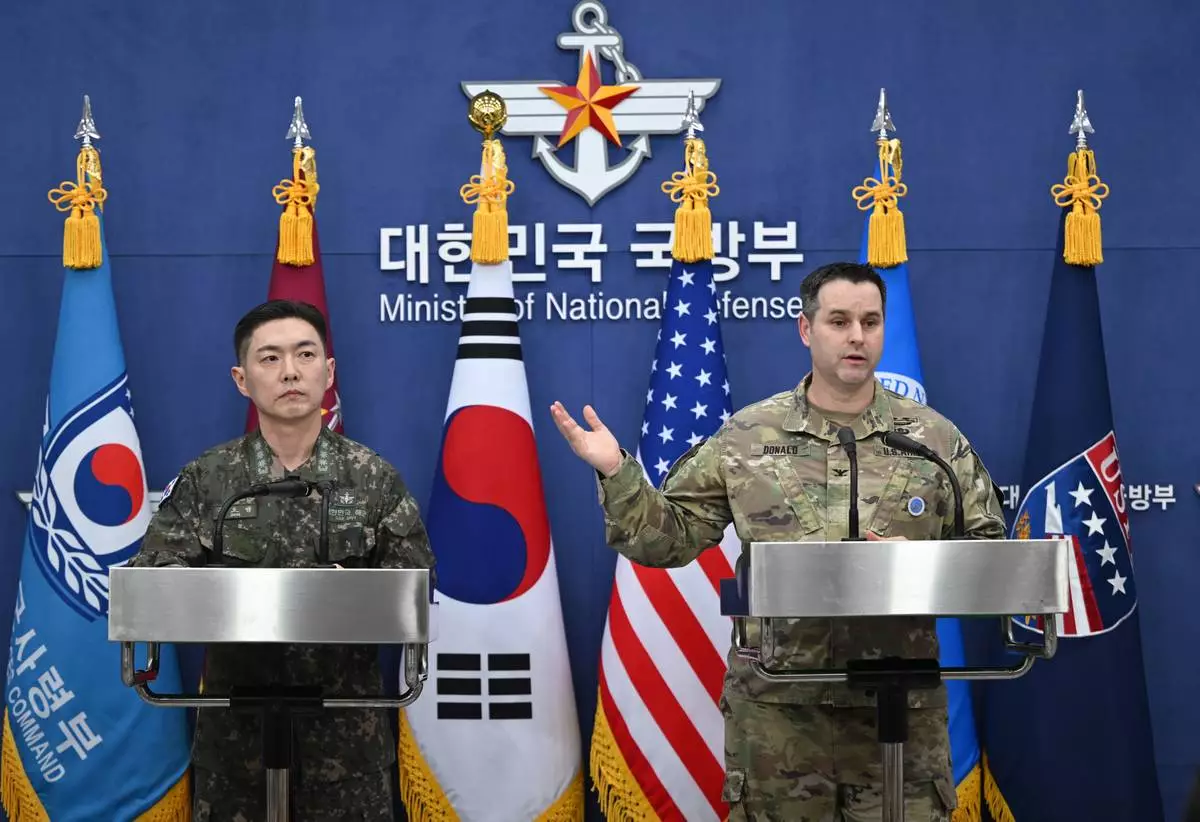
Col. Jang Do-young, left, public affairs director of South Korea's Joint Chiefs of Staff, and U.S. Army Col. Ryan Donald, public affairs director of the United Nations Command, Combined Forces Command, and United States Forces Korea, pose for a photo during a media briefing on the 2026 ROK-US Freedom Shield Military Exercise at the Defense Ministry in Seoul, South Korea, Wednesday, Feb. 25, 2026. (Jung Yeon-je/Pool Photo via AP)
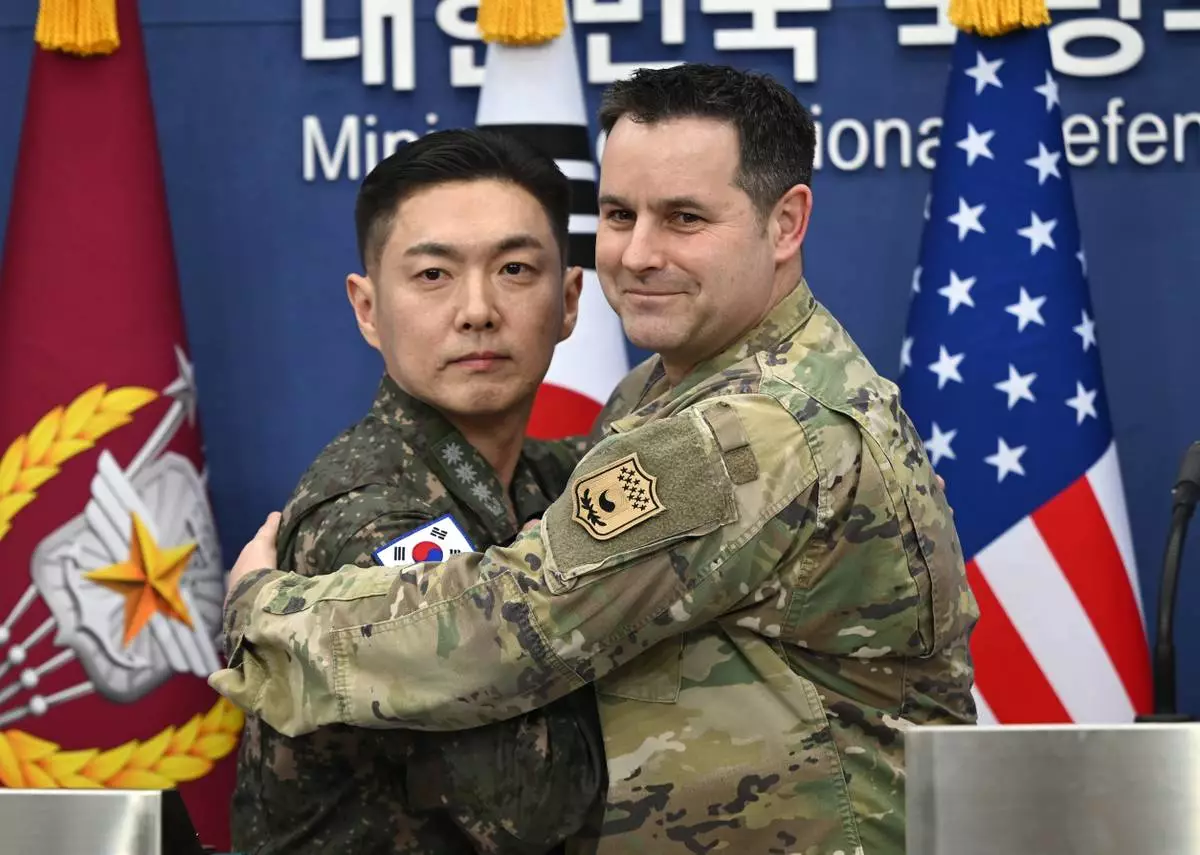
Col. Jang Do-young, left, public affairs director of South Korea's Joint Chiefs of Staff, and U.S. Army Col. Ryan Donald, public affairs director of the United Nations Command, Combined Forces Command, and United States Forces Korea, pose for a photo during a media briefing on the 2026 ROK-US Freedom Shield Military Exercise at the Defense Ministry in Seoul, South Korea, Wednesday, Feb. 25, 2026. (Jung Yeon-je/Pool Photo via AP)
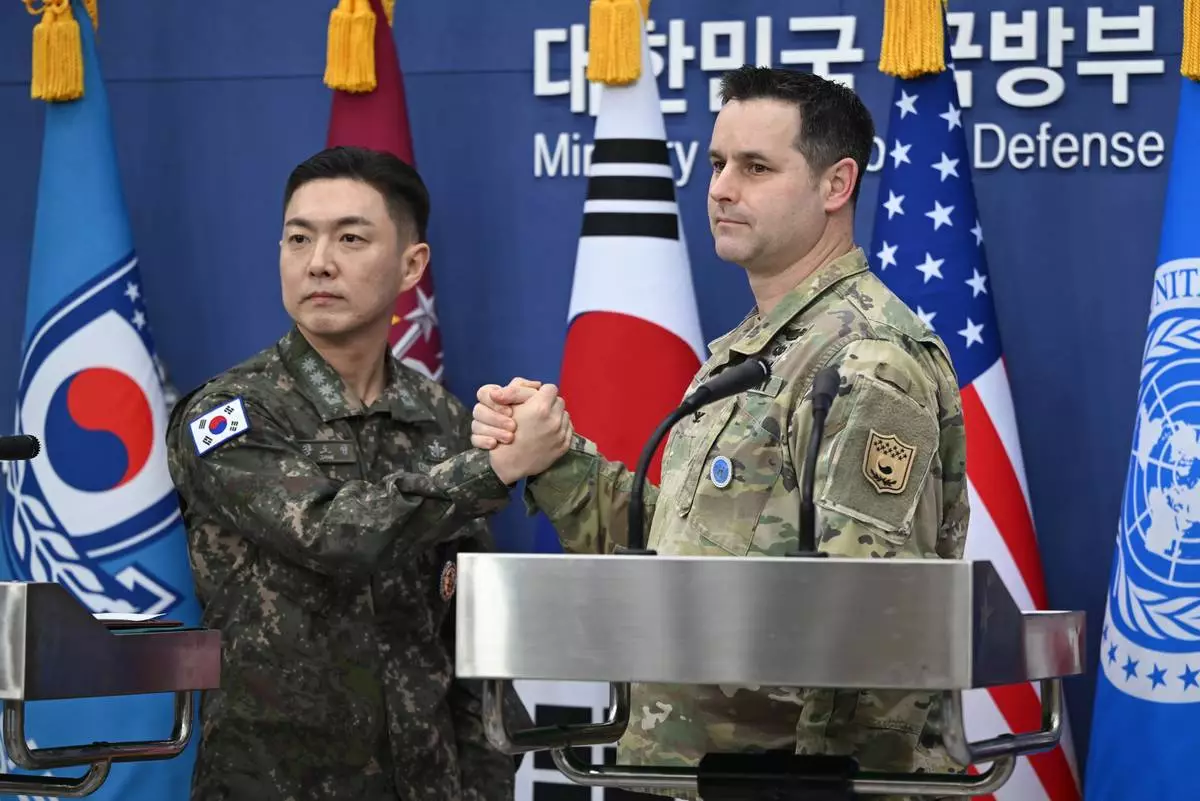
Col. Jang Do-young, left, public affairs director of South Korea's Joint Chiefs of Staff, and U.S. Army Col. Ryan Donald, public affairs director of the United Nations Command, Combined Forces Command, and United States Forces Korea, pose for a photo during a media briefing on the 2026 ROK-US Freedom Shield Military Exercise at the Defense Ministry in Seoul, South Korea, Wednesday, Feb. 25, 2026. (Jung Yeon-je/Pool Photo via AP)