|
BEIJING, Feb. 25, 2026 /PRNewswire/ -- Spirit AI has raised $280 million USD to scale the deployment of general-purpose embodied models. The funding arrives as the industry pivots toward Scaling Law-driven VLA architectures—a trajectory supported by a diverse group of global financial and strategic investors.
This Beijing-based company is building a universal robotic brain by scaling with diverse human video and wearable sensor data. This path aligns Spirit AI with global peers like Google DeepMind and Physical Intelligence (Pi) in leveraging massive datasets for physical reasoning. The vision is powered by a core team from UC Berkeley, Tsinghua, and Peking University — averaging under age 30—who bridge frontier theory in multimodal LLMs and robot learning with industrial-scale deployment.
The "Dirty Data" Strategy: Scaling Beyond Curation
While many in the field have hit performance ceilings by over-curating "clean" datasets, Spirit AI is prioritizing real-world complexity. "Dirty data is the key to scaling VLA models," says Yang Gao, Co-founder & Chief Scientist of Spirit AI.
Dr. Gao currently serves as an Assistant Professor at Tsinghua University and holds a PhD from UC Berkeley. A prominent figure in robot learning, he has spearheaded a range of influential research while bridging academia and industry. His notable contributions include EfficientZero, scaling laws for imitation learning, and pioneering frameworks such as ViLa and CoPa.
The company argues that diverse, unstructured, and non-pre-scripted interaction is the essential catalyst for building models with true common sense.
- Data Velocity: Spirit AI has amassed over 200,000 hours of interaction data, with a roadmap to exceed 1 million hours by the end of 2026.
- Cost Disruption: Using proprietary wearable collection devices, Spirit AI has reduced data acquisition costs by 90% compared to traditional teleoperation.
- Benchmark Performance: In January 2026, Spirit v1.5 topped the RoboChallenge global leaderboard, demonstrating state-of-the-art generalization that rivals the world's leading embodied AI models.
Industrial Validation: The CATL Benchmark
Spirit AI has applied VLA models to the production lines of CATL, the world's largest battery manufacturer.
On the floor, Spirit AI-powered agents handle flexible wire harnesses—a long-standing hurdle due to material unpredictability. Achieving a 99%+ success rate, these agents match the precision and cycle times of skilled human workers in complex manufacturing.
About Spirit AI
Spirit AI builds the "Universal Brain" for the next generation of robotics. By deploying general-purpose embodied models that bridge simulation and reality, the company provides robots with the robust generalization and physical precision required for the real world. Spirit AI is moving beyond the lab to integrate versatile robotic agents into the modern workforce, accelerating the arrival of real-world embodied AI.
Media Contact: pr@spirit-ai.com
BEIJING, Feb. 25, 2026 /PRNewswire/ -- Spirit AI has raised $280 million USD to scale the deployment of general-purpose embodied models. The funding arrives as the industry pivots toward Scaling Law-driven VLA architectures—a trajectory supported by a diverse group of global financial and strategic investors.
This Beijing-based company is building a universal robotic brain by scaling with diverse human video and wearable sensor data. This path aligns Spirit AI with global peers like Google DeepMind and Physical Intelligence (Pi) in leveraging massive datasets for physical reasoning. The vision is powered by a core team from UC Berkeley, Tsinghua, and Peking University — averaging under age 30—who bridge frontier theory in multimodal LLMs and robot learning with industrial-scale deployment.
The "Dirty Data" Strategy: Scaling Beyond Curation
While many in the field have hit performance ceilings by over-curating "clean" datasets, Spirit AI is prioritizing real-world complexity. "Dirty data is the key to scaling VLA models," says Yang Gao, Co-founder & Chief Scientist of Spirit AI.
Dr. Gao currently serves as an Assistant Professor at Tsinghua University and holds a PhD from UC Berkeley. A prominent figure in robot learning, he has spearheaded a range of influential research while bridging academia and industry. His notable contributions include EfficientZero, scaling laws for imitation learning, and pioneering frameworks such as ViLa and CoPa.
The company argues that diverse, unstructured, and non-pre-scripted interaction is the essential catalyst for building models with true common sense.
- Data Velocity: Spirit AI has amassed over 200,000 hours of interaction data, with a roadmap to exceed 1 million hours by the end of 2026.
- Cost Disruption: Using proprietary wearable collection devices, Spirit AI has reduced data acquisition costs by 90% compared to traditional teleoperation.
- Benchmark Performance: In January 2026, Spirit v1.5 topped the RoboChallenge global leaderboard, demonstrating state-of-the-art generalization that rivals the world's leading embodied AI models.
Industrial Validation: The CATL Benchmark
Spirit AI has applied VLA models to the production lines of CATL, the world's largest battery manufacturer.
On the floor, Spirit AI-powered agents handle flexible wire harnesses—a long-standing hurdle due to material unpredictability. Achieving a 99%+ success rate, these agents match the precision and cycle times of skilled human workers in complex manufacturing.
About Spirit AI
Spirit AI builds the "Universal Brain" for the next generation of robotics. By deploying general-purpose embodied models that bridge simulation and reality, the company provides robots with the robust generalization and physical precision required for the real world. Spirit AI is moving beyond the lab to integrate versatile robotic agents into the modern workforce, accelerating the arrival of real-world embodied AI.
Media Contact: pr@spirit-ai.com
** The press release content is from PR Newswire. Bastille Post is not involved in its creation. **

Spirit AI Lands $280M to Scale Embodied AI Through "Dirty Data"

Spirit AI Lands $280M to Scale Embodied AI Through "Dirty Data"

Spirit AI Lands $280M to Scale Embodied AI Through "Dirty Data"
|
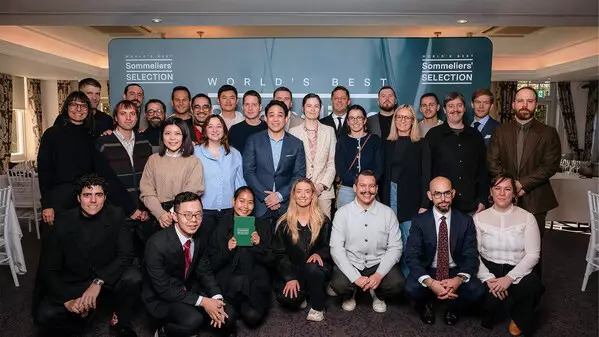
LONDON, Feb. 25, 2026 /PRNewswire/ -- In a global celebration of wine excellence, leading sommeliers from 17 countries across six continents judged the World's Best Sommeliers' Selection 2026. Panellists drawn from The World's 50 Best Restaurants network, led by Kristell Monot, President of the World's Best Sommeliers' Selection and Head Sommelier at Mugaritz, tasted a diverse array of wines to determine a line-up of 115 wines from 16 countries.
To view the final selection, please see here.
Italy topped the selection with 20 wines, including 13 reds. Nebbiolo shone with four Barolo and Barbaresco entries, while more contemporary styles included Clara Marcelli's Grenache and Tenuta Del Paguro's seabed–aged Merlot.
Portugal followed with 18 wines across white, red and fortified categories. Five white wines highlighted the strength of Portugal's indigenous varieties, while all eight reds hailed from the Douro. Three ports and two Madeira wines reaffirmed Portugal's mastery of fortified wines.
The USA achieved 17 wines, led by California with six reds and one white, from Sonoma's Pinot Noir to Paso Robles' Cabernet Sauvignons. Texas contributed six wines, while Oregon's Lingua Franca earned four places for Chardonnay and Pinot Noir.
Spain delivered seven reds from regions including Ribera del Duero, Rioja and Priorat. Two sherries highlighted renewed interest in fortified wines, while Pere Ventura's Cava reinforced Spain's strength in sparkling styles. Contemporary whites from Chivite and Bodegas Faustino completed the 12 entries.
Argentina also contributed 12 wines, with seven reds underscoring the country's reputation for Malbec. Four whites showed growing stylistic range, while Uco Valley producer Rutini demonstrated breadth with a Malbec, Chardonnay and traditional method sparkling wine. Uruguay earned five places, Brazil was represented by a single white blend and Chile secured eight red wines.
Elsewhere in Europe, France led in sparkling and rosé, while Germany impressed with three Rieslings. Czech producer Gurdau earned three places with a Riesling, Grüner Veltliner and Sekt. Georgia added two traditional varietals, including the only orange wine, and Greece contributed one white and one red.
A spokesperson for the World's Best Sommeliers' Selection comments: "The selection reflects the incredible diversity of the global wine landscape - from revered classics to bold new voices. The selection remains a trusted benchmark for on-trade professionals and we're proud to bring the world's top sommeliers together to define the future of wine."
Media centre:
https://event.worldsbestsommeliersselection.com/live/en/page/media-centre
PDF - https://mma.prnewswire.com/media/2919144/WBSS26.pdf
LONDON, Feb. 25, 2026 /PRNewswire/ -- In a global celebration of wine excellence, leading sommeliers from 17 countries across six continents judged the World's Best Sommeliers' Selection 2026. Panellists drawn from The World's 50 Best Restaurants network, led by Kristell Monot, President of the World's Best Sommeliers' Selection and Head Sommelier at Mugaritz, tasted a diverse array of wines to determine a line-up of 115 wines from 16 countries.
To view the final selection, please see here.
Italy topped the selection with 20 wines, including 13 reds. Nebbiolo shone with four Barolo and Barbaresco entries, while more contemporary styles included Clara Marcelli's Grenache and Tenuta Del Paguro's seabed–aged Merlot.
Portugal followed with 18 wines across white, red and fortified categories. Five white wines highlighted the strength of Portugal's indigenous varieties, while all eight reds hailed from the Douro. Three ports and two Madeira wines reaffirmed Portugal's mastery of fortified wines.
The USA achieved 17 wines, led by California with six reds and one white, from Sonoma's Pinot Noir to Paso Robles' Cabernet Sauvignons. Texas contributed six wines, while Oregon's Lingua Franca earned four places for Chardonnay and Pinot Noir.
Spain delivered seven reds from regions including Ribera del Duero, Rioja and Priorat. Two sherries highlighted renewed interest in fortified wines, while Pere Ventura's Cava reinforced Spain's strength in sparkling styles. Contemporary whites from Chivite and Bodegas Faustino completed the 12 entries.
Argentina also contributed 12 wines, with seven reds underscoring the country's reputation for Malbec. Four whites showed growing stylistic range, while Uco Valley producer Rutini demonstrated breadth with a Malbec, Chardonnay and traditional method sparkling wine. Uruguay earned five places, Brazil was represented by a single white blend and Chile secured eight red wines.
Elsewhere in Europe, France led in sparkling and rosé, while Germany impressed with three Rieslings. Czech producer Gurdau earned three places with a Riesling, Grüner Veltliner and Sekt. Georgia added two traditional varietals, including the only orange wine, and Greece contributed one white and one red.
A spokesperson for the World's Best Sommeliers' Selection comments: "The selection reflects the incredible diversity of the global wine landscape - from revered classics to bold new voices. The selection remains a trusted benchmark for on-trade professionals and we're proud to bring the world's top sommeliers together to define the future of wine."
Media centre:
https://event.worldsbestsommeliersselection.com/live/en/page/media-centre
PDF - https://mma.prnewswire.com/media/2919144/WBSS26.pdf
** The press release content is from PR Newswire. Bastille Post is not involved in its creation. **
WORLD'S BEST SOMMELIERS' SELECTION 2026 ANNOUNCED