HARARE, Zimbabwe (AP) — The United States has said it will wind down health assistance to Zimbabwe after negotiations collapsed on a U.S.-proposed funding deal that the African nation rejected in part over a requirement to share sensitive health data.
The loss of the southern African nation’s largest health donor casts uncertainty over programs to combat HIV and the public health sector in one of the world’s most vulnerable health systems, where patients often must supply even basic items such as bandages at clinics and often have to buy their own medicines due to shortfalls.
Zimbabwean authorities said the funding proposal carried conditions they could not accept. The decision was driven by concerns over data sharing concerns, fairness, sovereignty and Washington’s broader shift away from global health institutions, government spokesperson Nick Mangwana said on Wednesday.
Mangwana said the U.S. proposal was tied to “comprehensive access to Zimbabwe’s sensitive health data, including virus samples and epidemiological information from our citizens.”
He said President Emmerson Mnangagwa directed that negotiations be terminated because the U.S. was not offering a “corresponding guarantee of access to any medical innovations — such as vaccines, diagnostics, or treatments — that might result from that shared data.”
“The United States was not offering reciprocal sharing of its own epidemiological data with our health authorities,” Mangwana added. “In essence, our nation would provide the raw materials for scientific discovery without any assurance that the end products would be accessible to our people should a future health crisis emerge.”
The U.S. had offered $367 million over five years to support Zimbabwe’s priority health programs, including HIV/AIDS treatment and prevention, tuberculosis, malaria, maternal and child health, and disease outbreak preparedness, the U.S. embassy in Zimbabwe said.
The proposed deal would have represented the largest potential health investment in Zimbabwe by any international partner, providing “extraordinary benefits for Zimbabwean communities — especially the 1.2 million men, women, and children currently receiving HIV treatment through U.S.-supported programs,” U.S. ambassador Pamela Tremont said in a statement on Tuesday.
“We will now turn to the difficult and regrettable task of winding down our health assistance in Zimbabwe,” she said, adding that Zimbabwe had indicated it was prepared to continue its HIV response independently. "We wish them well,” said Tremont.
The U.S. has been Zimbabwe’s largest bilateral health donor for years, providing nearly $2 billion in assistance since 2006. The U.S. says it “is directly responsible” for Zimbabwe's success in reaching United Nations targets for HIV treatment, testing and viral load suppression.
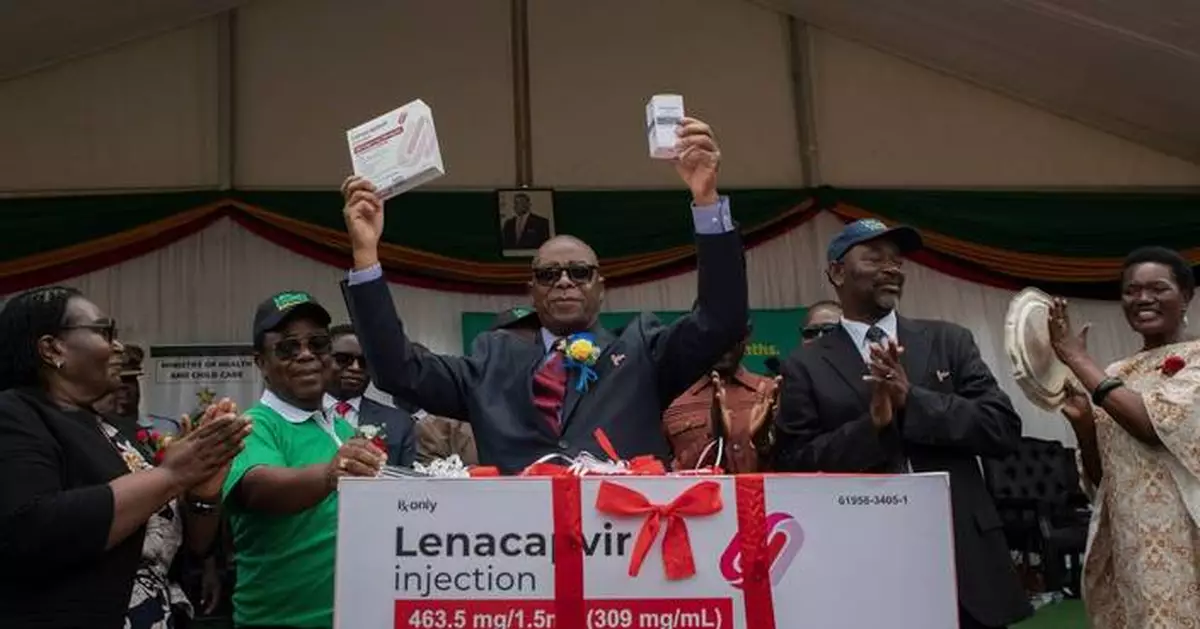
Zimbabwe has begun rolling out lenacapavir, a long-acting HIV prevention drug administered twice a year. The rollout was supported by the United States President’s Emergency Plan for AIDS Relief, or PEPFAR, in partnership with the Global Fund, raising questions about future deliveries under the program.
Zimbabwe's College of Public Health Physicians has urged continued talks, citing the need for continued U.S funding for “critical components” of Zimbabwe’s public health system.
“An abrupt discontinuation of such support could risk treatment interruption, increased transmission, the emergence of drug resistance, and additional strain on the health system,” the college said in a statement.
Zimbabwe, like many low-income countries, has been grappling with the effects of aid reductions under President Donald Trump, although some programs continued under PEPFAR. The U.S. in January also withdrew from the World Health Organization, part of a broader reconfiguration of global health engagement.
Under the new U.S. framework, the Trump administration has pursued bilateral “America First” health funding agreements, replacing arrangements previously coordinated through the now-dismantled U.S. Agency for International Development.
The U.S. embassy in Zimbabwe said agreements worth more than $18 billion have been signed with 16 African countries, although recipient countries would contribute about $7.1 billion of this amount as part of the U.S. drive to get countries to invest more in their own health sectors.
Several countries have already entered into the new pacts. Nigeria reached an agreement emphasizing Christian-based health facilities. Rwanda and Uganda have also signed deals, while some agreements, including those with Rwanda and Côte d’Ivoire, include provisions for private U.S. sector investment.
In Kenya, a pact signed in December has been delayed after the High Court suspended implementation pending a case filed by a consumer rights group over data safety concerns.
Zimbabwean officials criticized the bilateral model as “a departure from the multilateral frameworks” and said virus data with pandemic potential should be shared exclusively through the WHO system.
“This system is designed to ensure that when a country contributes its data, the benefits — including vaccines and treatments — are shared equitably, not commercialized exclusively by those with the resources to develop them,” Mangwana said.
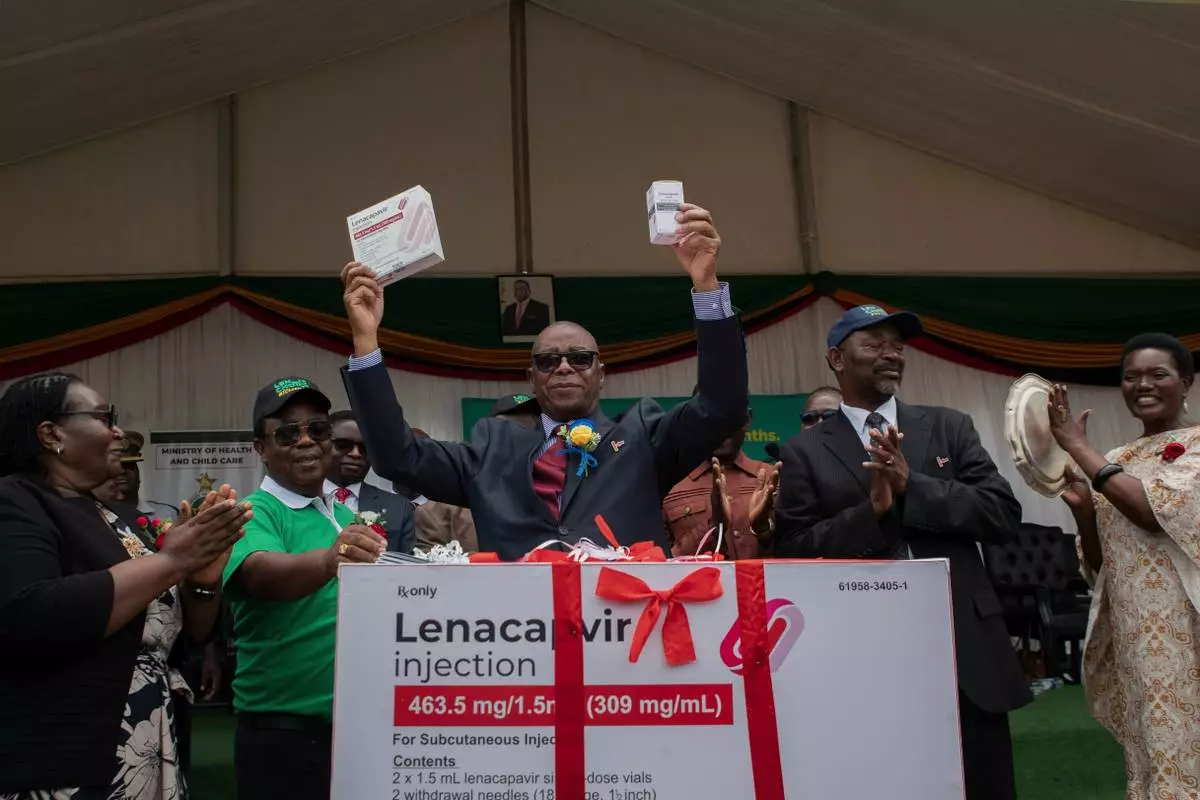
FILE - Zimbabwe's Minister of Health and Child Care Douglas Mombeshora holds up containers of lenacapavir, a new HIV prevention drug, during its launch in Harare, Zimbabwe, Thursday, Feb. 19, 2026. (AP Photo/Aaron Ufumeli, File)
DUBAI, United Arab Emirates (AP) — Iran pushed back Wednesday against U.S. President Donald Trump's pressure tactics ahead of critical talks in Geneva over Tehran's nuclear program, alternating between calling his remarks “big lies” and saying negotiations may yield an agreement through “honorable diplomacy.”
The remarks by two Iranian officials ahead of Thursday's talks come as America has assembled its biggest deployment of aircraft and warships to the Middle East in decades. The buildup is part of Trump's efforts to get a deal to constrain Iran's nuclear program while the country struggles at home with growing dissent following nationwide protests last month.
If the negotiations fail, Trump repeatedly has threatened to attack Iran — something Mideast nations fear could spiral into a new regional war as the embers of the yearslong Israel-Hamas war still smolder. Already, Iran has said all U.S. military bases in the Mideast would be considered legitimate targets, putting at risk tens of thousands of American service members.
Satellite photos shot Tuesday by Planet Labs PBC and analyzed by The Associated Press appeared to show the American vessels that typically are docked in Bahrain, the home of the U.S. Navy’s 5th Fleet, all out at sea. The 5th Fleet referred questions to the U.S. military’s Central Command, which declined to comment. Before Iran’s attack on Qatar in June, the 5th Fleet similarly scattered its ships at sea to protect against a potential attack.
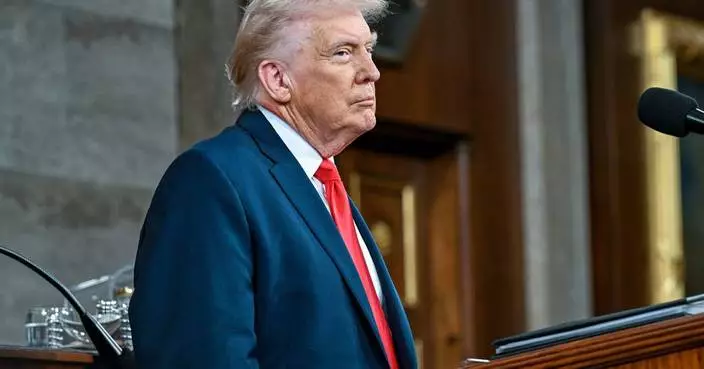
Trump touched on Iran and the nuclear negotiations in his State of the Union speech late Tuesday in Washington.
“They’ve already developed missiles that can threaten Europe and our bases overseas, and they’re working to build missiles that will soon reach the United States of America,” Trump said. “They were warned to make no future attempts to rebuild their weapons program, and in particular nuclear weapons, yet they continue. They’re starting it all over.”
Satellite photos analyzed earlier by the AP showed Iran beginning to rebuild its missile-production sites and doing some work at the three nuclear sites attacked by the U.S. in June. Iran long has maintained its nuclear program is peaceful. The West and the International Atomic Energy Agency say Iran had a nuclear weapons program until 2003. It had been enriching uranium up to 60% purity before the June attack — a short, technical step away from weapons-grade levels of 90%.
Responding to Trump, Iranian Foreign Ministry spokesman Esmail Baghaei sought to compare him to Joseph Goebbels, Adolf Hitler’s propaganda minister. He accused Trump and his administration of conducting a “disinformation & misinformation campaign” against Iran.
“Whatever they’re alleging in regards to Iran’s nuclear program, Iran’s ballistic missiles, and the number of casualties during January’s unrest is simply the repetition of ‘big lies,'" Baghaei wrote on X.
Trump said in his speech that at least 32,000 people were killed in last month's protests, which is at the far end of estimates offered by activists for the death toll. The U.S.-based Human Rights Activist News Agency has so far counted more than 7,000 dead and believes the actual figure is far higher. Iran’s government, which long has downplayed death tolls in other unrest, offered its only toll on Jan. 21, saying 3,117 people were killed.
Mohammad Bagher Qalibaf, Iran's parliament speaker, said separately that the U.S. could either try diplomacy or face Iran's wrath.
“If you choose the table of diplomacy — a diplomacy in which the dignity of the Iranian nation and mutual interests are respected — we will also be at that table," Qalibaf said, according to the semiofficial Student News Network, a media outlet believed to be close to the all-volunteer Basij force of Iran's paramilitary Revolutionary Guard.
“But if you decide to repeat past experiences through deception, lies, flawed analysis and false information, and launch an attack in the midst of negotiations, you will undoubtedly taste the firm blow of the Iranian nation and the country’s defensive forces.”
Iran and the U.S. are due to meet Thursday for their third round of talks under the mediation of Oman, long an interlocutor between Tehran and the West. Iranian Foreign Minister Abbas Araghchi and his team left Tehran on Wednesday afternoon for Geneva, where they will meet American officials led by special U.S. Mideast envoy Steve Witkoff.
If the talks fail, uncertainty hangs over the timing of any possible attack, as well as its mission and goals.
The U.S. has not made clear the aims of possible military action. If the goal is to pressure Iran to make concessions in nuclear negotiations, it’s not clear whether limited strikes will work. If the goal is to remove Iran’s leaders, that will likely commit the U.S. to a larger, longer military campaign. There has been no public sign of planning for what would come next, including the potential for chaos in Iran.
The status of Iran’s nuclear program is another mystery. Trump earlier said American strikes “obliterated” it. Now dismantling whatever remains of the program appears to be back on the administration’s agenda. IAEA inspectors have not been allowed to inspect those sites and verify what remains.
There is also uncertainty about what any military action could mean for the wider region. Tehran could retaliate against the American-allied nations of the Persian Gulf or Israel. Oil prices have risen in recent days in part due to those concerns.
Associated Press writer Amir Vahdat in Tehran, Iran, contributed to this report.

Women walk across an overpass in downtown Tehran, Iran, Tuesday, Feb. 24, 2026. (AP Photo/Vahid Salemi)
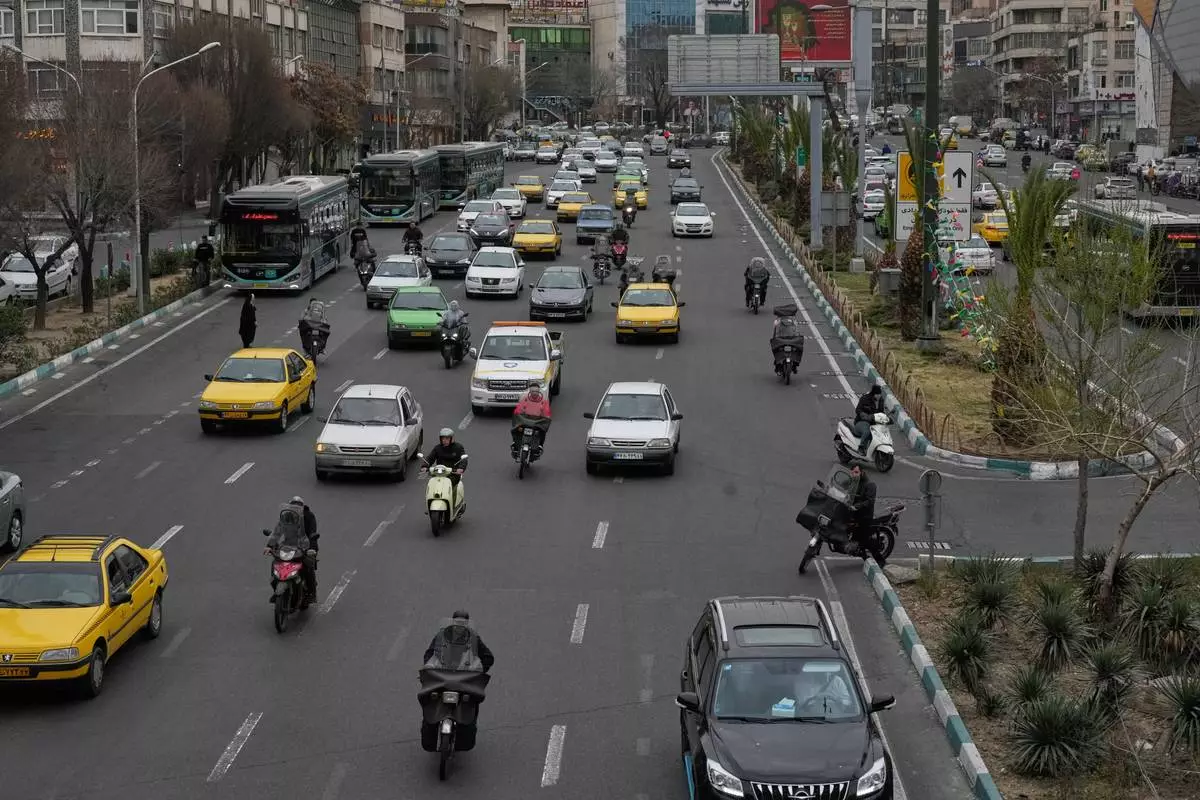
Vehicles drive in downtown Tehran, Iran, Tuesday, Feb. 24, 2026. (AP Photo/Vahid Salemi)

People cross a square in downtown Tehran, Iran, Tuesday, Feb. 24, 2026. (AP Photo/Vahid Salemi)
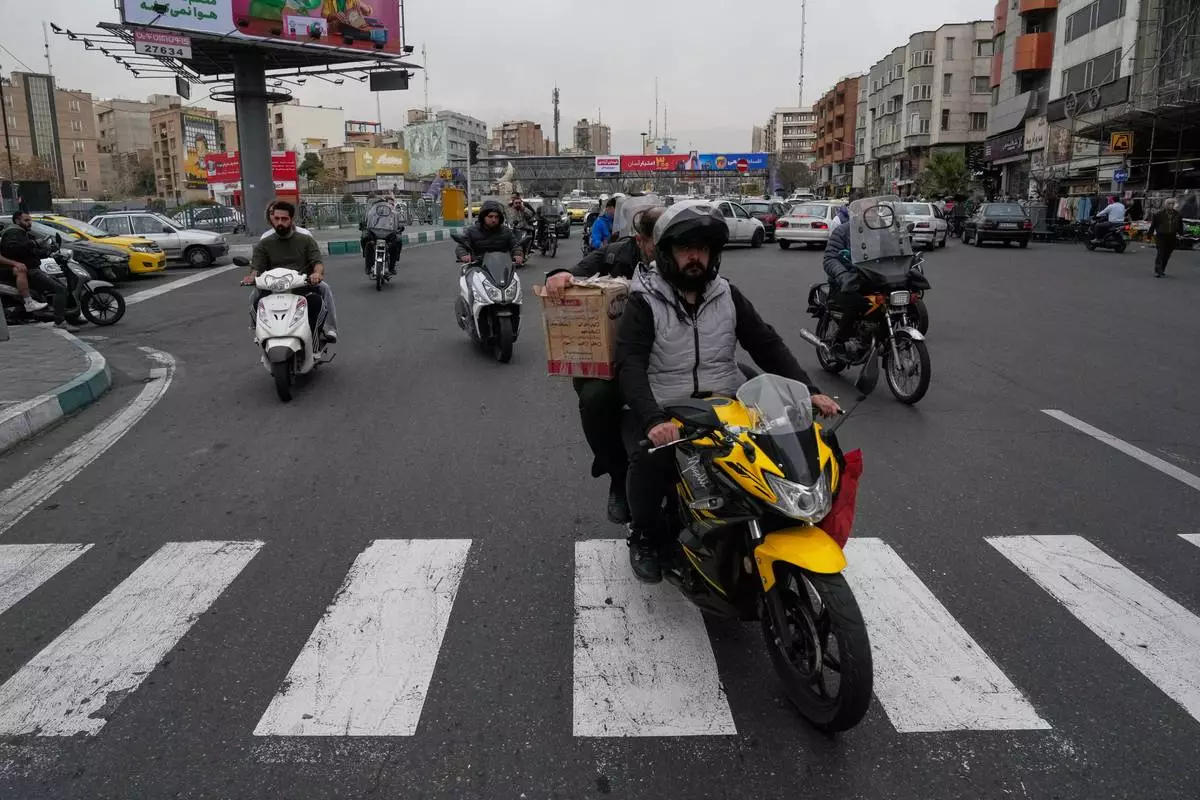
People drive their motorbikes in a square in downtown Tehran, Iran, Tuesday, Feb. 24, 2026. (AP Photo/Vahid Salemi)
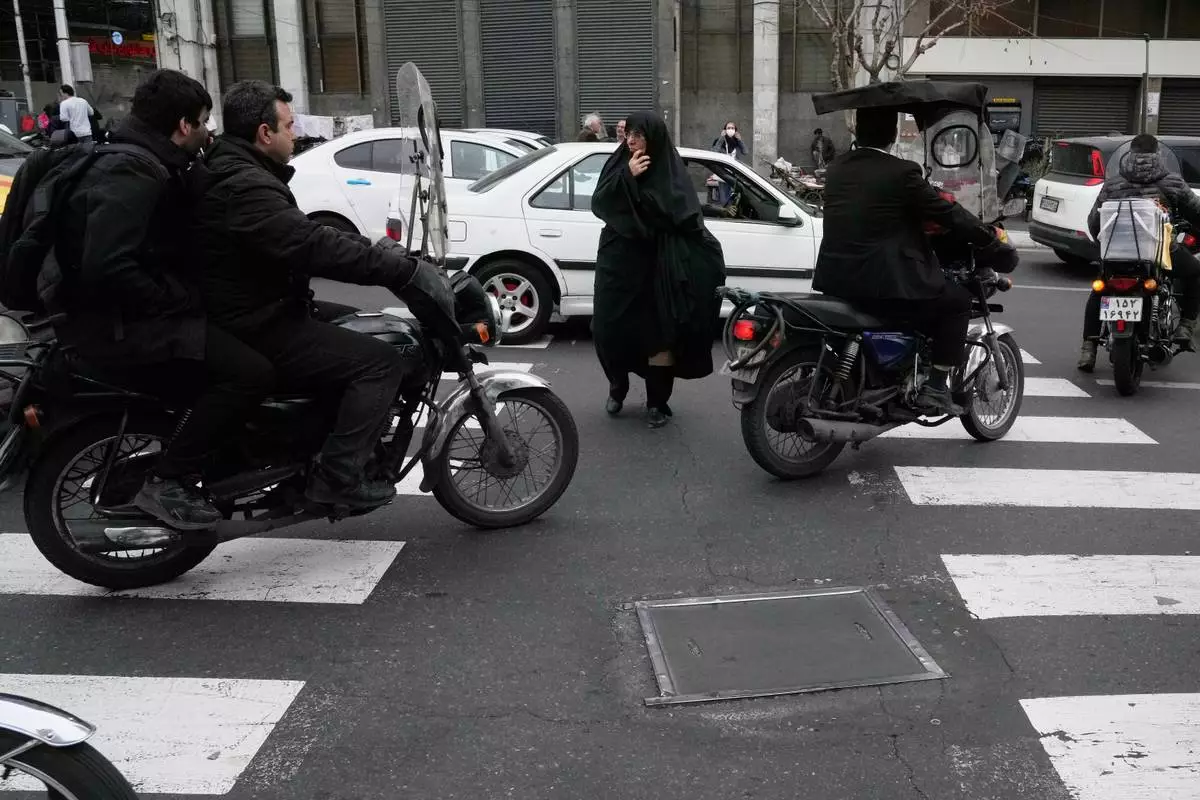
A woman crosses a square as motorbikes ride past in downtown Tehran, Iran, Tuesday, Feb. 24, 2026. (AP Photo/Vahid Salemi)