The Pinglu Canal, under construction in south China's Guangxi Zhuang Autonomous Region, is expected to reshape the country's modern logistics and expand its inland logistics to further connect with the world.
The canal, stretching over 134 kilometers and estimated to cost 72.7 billion yuan (about 10.56 billion U.S. dollars), aims to link the Xijiang River, a major waterway in southwest China, with ports in the Beibu Gulf.
It is the country's first major canal to link inland waterways with the sea since the founding of the People's Republic of China.
At the construction site, an 80-meter-high tower is a vantage point to witness the construction of the Madao Junction -- a key hub along the canal.
"This is the core hub of the entire canal. We ensure vessels can pass safely in accordance with navigation standards while controlling water levels and flow speeds. The metal structures here total 25,000 tons. All equipment has been fabricated, and installation has reached 8,000 to 9,000 tons," said engineer Wei Minxin.
Workers and engineers are racing against time to keep the project on track.
"At our busiest, Madao Junction had about 5,000 people on site," said Wei.
The canal is expected to open in the second half of 2026 and become an important part of China's planned waterway network.
"By 2035, according to the Ministry of Transport's plan, China will form a 'four vertical, four horizontal, two network' waterway layout. Currently, the nation has about 16,000 kilometers of high-grade waterways, projected to reach 25,000 kilometers by 2035. The Pinglu Canal is an important section of the 'Han-Xiang-Gui' corridor. In the future, inland water transport will be a key focus of infrastructure development," said Cheng Yaofei, chairman of Guangxi Pinglu Canal Construction Company.
Once operational, the canal will facilitate the direct shipment of goods from Guangxi, Yunnan, and Guizhou through the Xijiang river system to ports in the Beibu Gulf, rather than routing them through neighboring Guangdong. This strategic shift is projected to significantly reduce the shipping distance by approximately 560 kilometers.
Known as a convenient and cost-effective passage to ASEAN countries, the Pinglu Canal has garnered widespread acclaim as a positive advancement that will enhance maritime connectivity with the bloc.
"The Pinglu Canal is the first river-to-sea canal built since the founding of the People's Republic of China -- a 'century project' and a major opportunity for Guangxi. It also connects the West Land-Sea New Corridor and the Belt and Road, shortening transport distances to ASEAN and opening new opportunities," said Xiao Jianzhuang, president of Guangxi University.
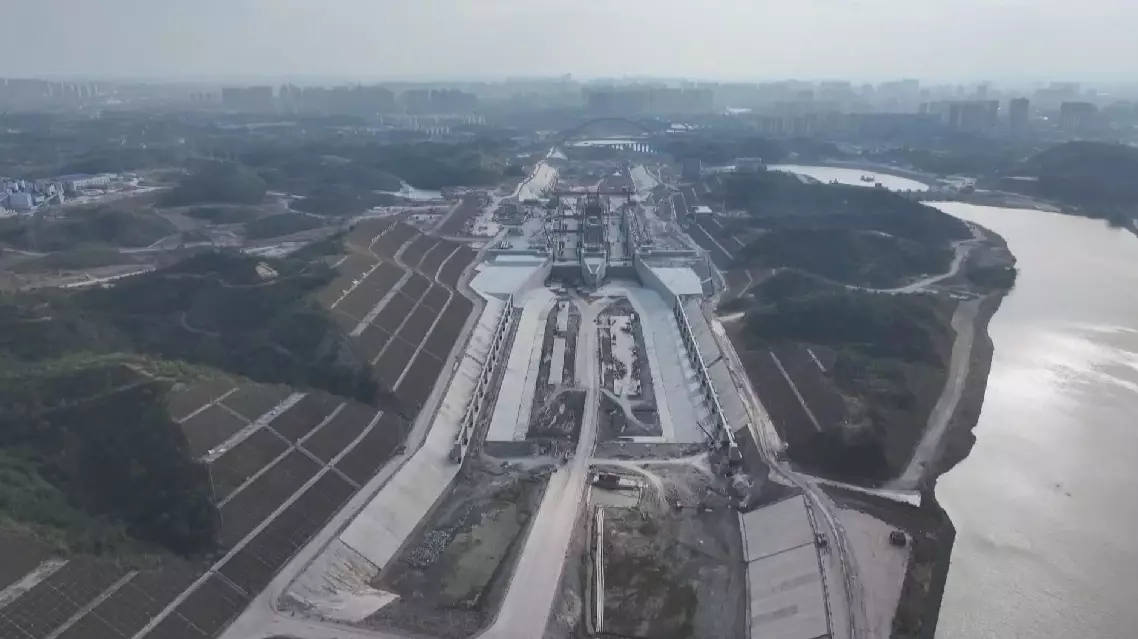
New canal in Guangxi linking inland waterways with sea to reshape China's modern logistics