MADISON, Wis. (AP) — Energy company Enbridge has finally started work on rerouting an aging oil pipeline around a tribal reservation in northern Wisconsin after seven years of legal wrangling, moving ahead despite two new lawsuits that still could delay the project indefinitely.
About 12 miles (19 kilometers) of Enbridge's Line 5 pipeline runs across the Bad River Band of Lake Superior's reservation along the shores of Lake Superior. The tribe sued Enbridge in 2019 to force the company to remove the section from its land, arguing land easements allowing operation expired six years earlier and the 73-year-old pipeline was prone to a catastrophic spill.
A judge in 2023 gave the company until this June to remove the segment from the reservation. The Bad River and conservation groups want the line completely shut down and have kept the reroute project tied up with legal challenges. An administrative law judge upheld Enbridge's state wetlands permit on Feb. 13, removing the project's last legal hurdle and clearing the way for construction.
Enbridge spokesperson Juli Kellner said crews started clearing trees in the new segment's right-of-way on Tuesday.
The Bad River and a coalition of environmental group filed separate actions in Iron County Circuit Court this month seeking an immediate stay of the wetlands permit, arguing that regulators underestimated the damage reroute construction will cause.
“The Bad River watershed is not an oil pipeline corridor that exists to serve Enbridge’s profits. It is our homeland. We must protect it,” Elizabeth Arbuckle, the Bad River tribal chair, said in a statement announcing the tribe's filing.
The judges in both cases have yet to rule. A hearing has been scheduled in the Bad River's case for Thursday.
Kellner, Enbridge's spokesperson, said that seeking a stay isn't reasonable given that the project has been heavily scrutinized and the public needs uninterrupted energy. She noted that the pipeline serves 10 refineries and propane production facilities that serve millions of people across the Midwest and Great Lakes region.
Calgary, Alberta-based Enbridge has been using Line 5 to transport crude oil and natural gas liquids between Superior, Wisconsin, and Sarnia, Ontario, since 1953.
Line 5 is at the center of another controversy in Michigan, where conservationists and tribes fear a 4.5-mile (6.4 kilometer) segment that runs beneath the Straits of Mackinac could rupture. The straits link Lake Michigan and Lake Huron; a spill in the region could trigger an ecological disaster.
Enbridge has proposed encasing the segment in a protective tunnel. The company needs permits from the U.S. Army Corps of Engineers and the Michigan Department of Environment, Great Lakes and Energy before construction can begin. Neither agency has issued approvals yet, although the corps has fast-tracked its permitting process under the authority of President Donald Trump's 2025 energy emergency executive order.
Meanwhile, Michigan Gov. Gretchen Whitmer and Attorney General Dana Nessel have filed lawsuits seeking to void the easements that allow the line to operate in the straits.
A federal judge blocked Whitmer's action in December. But the governor has appealed to the 6th U.S. Circuit Court of Appeals. The U.S. Supreme Court is weighing whether Nessel's lawsuit belongs in state or federal court.
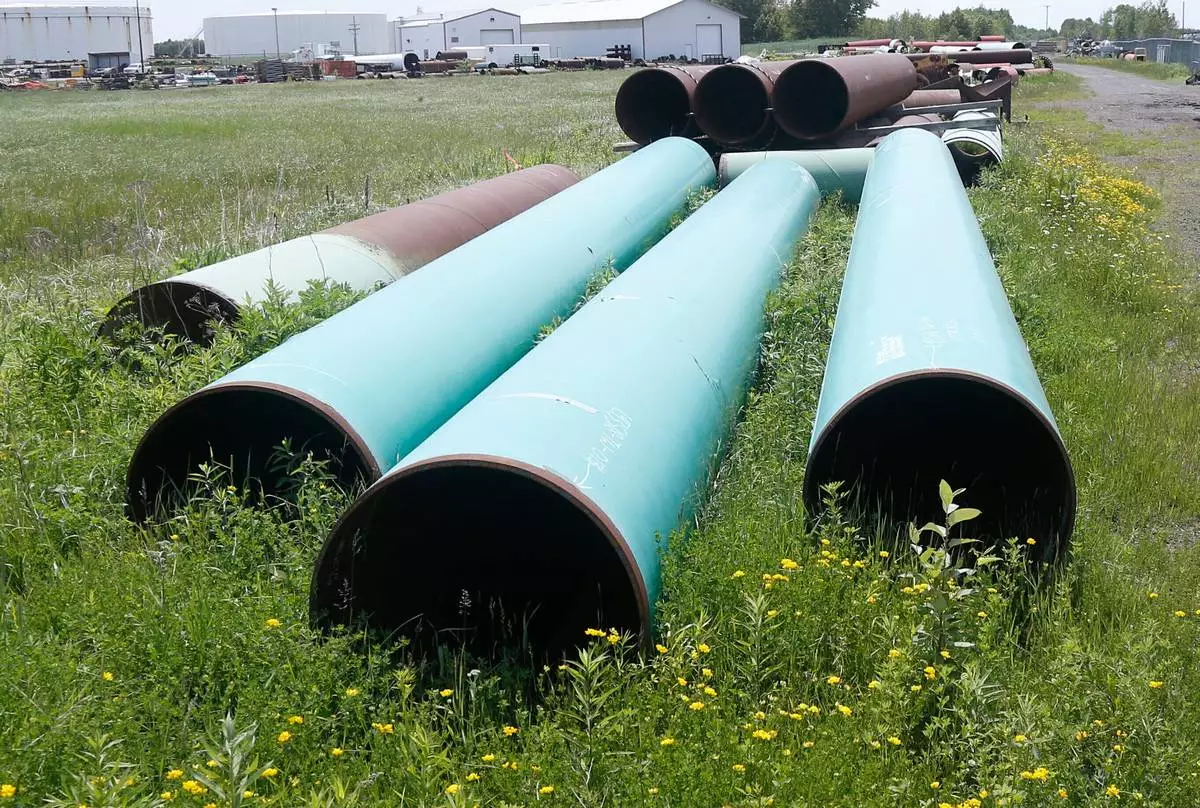
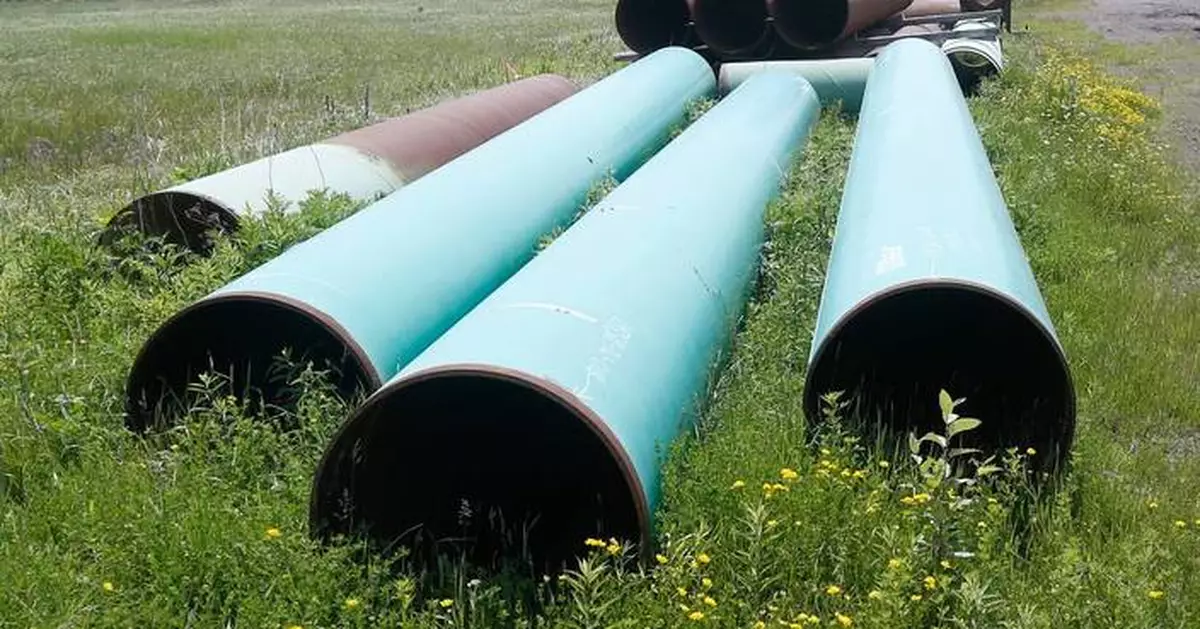
FILE - Pipeline used to carry crude oil sits at the Superior, Wis., terminal of Enbridge Energy, June 29, 2018. (AP Photo/Jim Mone, File)
CAIRO (AP) — The U.S. military pressed ahead Saturday in a frantic search for a missing pilot after Iran shot down an American warplane, as Iran called on people to turn the pilot in, promising a reward.
The plane, identified by Iran as a U.S. F-15E Strike Eagle, was one of two attacked on Friday, with one service member rescued and at least one missing. It was the first time the United States lost aircraft in Iranian territory during the war, now in its sixth week, and could mark a new turning point in the campaign.
The conflict, launched by the U.S. and Israel on Feb. 28, has rippled across the region. It has so far killed thousands, upended global markets, cut off key shipping routes, spiked fuel prices and shows no signs of slowing as Iran responds to U.S. and Israeli airstrikes with attacks across the region.
Missile and drone strikes continued Saturday with an apparent Iranian drone damaging the headquarters of the U.S. tech giant Oracle in Dubai. Israel’s military said Iran had launched missiles toward the country.
The downing of the military planes came just two days after President Donald Trump said in a national address that the U.S. has “beaten and completely decimated Iran” and was “going to finish the job, and we’re going to finish it very fast.” The U.S. and Israel had boasted recently that Iran's air defenses were decimated.
Also Saturday, the Atomic Energy Organization of Iran said an airstrike hit near its Bushehr nuclear facility, killing a security guard and damaging a support building. It is the fourth time the facility has been targeted during the war.
The agency announced the attack on social media.
Neither the White House nor the Pentagon released public information about the downed planes.
In an email from the Pentagon obtained by The Associated Press, meanwhile, the military said it received notification of “an aircraft being shot down” in the Middle East, without providing more details.
A U.S. crew member from that plane was rescued. But the Pentagon also notified the House Armed Services Committee that the status of a second service member on the fighter jet was not known. A U.S. military search-and-rescue operation continued Saturday.
In a brief telephone interview with NBC News, Trump declined to discuss the search-and-rescue efforts but said what happened would not affect negotiations with Iran.
Separately, Iranian state media said a U.S. A-10 attack aircraft crashed in the Persian Gulf after being struck by Iranian defense forces.
A U.S. official who spoke on condition of anonymity to discuss a sensitive military situation said it was not clear if the aircraft crashed or was shot down or whether Iran was involved. Neither the status of the crew nor exactly where it went down was immediately known.
An anchor on a TV channel affiliated with Iranian state television urged residents to hand over any “enemy pilot” to the police.
Throughout the war, Iran has made a series of claims about shooting down piloted enemy aircraft that turned out not to be true. Friday was the first time the Iranian public was urged to look for a downed pilot.
Iranian state media said in a post on the social platform X its military shot down a U.S. F-15E Strike Eagle. The aircraft is a variation of the Air Force fighter jet that carries a pilot and a weapons system officer.
An apparent Iranian drone damaged the Dubai headquarters of the American tech giant Oracle on Saturday after Iran’s paramilitary Revolutionary Guard threatened the firm.
The attack targeted the headquarters, which sits along Dubai’s main Sheikh Zayed Road highway. Footage verified by The Associated Press outside the United Arab Emirates showed damage to the building. A large hole could be seen in the building’s southwestern corner, with the “e” in “Oracle” on a neon sign damaged.
The sheikhdom’s Dubai Media Office, which speaks for its government, said a “minor incident caused by debris from an aerial interception that fell on the facade of the Oracle building in Dubai Internet City," adding there were no injuries.
Oracle, based in Austin, Texas, did not immediately respond to a request for comment.
The Guard has accused some of America’s largest tech companies of being involved in “terrorist espionage” operations against the Islamic Republic and said they were legitimate targets.
Earlier Iranian drone strikes hit Amazon Web Services facilities in both the UAE and Bahrain.
World leaders, meanwhile, have struggled to end Iran’s stranglehold on the waterway, which has had far-reaching consequences for the global economy and has proved to be its greatest strategic advantage in the war.
The U.N. Security Council is expected to take up the matter Saturday.
Trump has vacillated on America’s role in the strait, alternately threatening Iran if it does not open the strait and telling other nations to “go get your own oil.” On Friday, he said in a post on social media: “With a little more time, we can easily OPEN THE HORMUZ STRAIT, TAKE THE OIL, & MAKE A FORTUNE.”
More than 1,900 people have been killed in Iran since the war began. In a review released Friday, the Armed Conflict Location and Event Data, a U.S.-based group, said it found that civilian casualties were clustered around strikes on security and state-linked sites “rather than indiscriminate bombardment” of urban areas.
More than two dozen people have died in Gulf Arab states and the occupied West Bank, 19 have been reported dead in Israel and 13 U.S. service members have been killed. In Lebanon, over 1,300 people have been killed and more than 1 million displaced. Ten Israeli soldiers have also died there.
Mednick reported from Tel Aviv, Israel. Associated Press writers Jon Gambrell in Dubai, United Arab Emirates, Sylvie Corbet in Paris, Sarah El Deeb in Beirut, Tong-hyung Kim in Seoul, South Korea, and Will Weissert, Michelle L. Price, Lisa Mascaro and Ben Finley in Washington contributed.
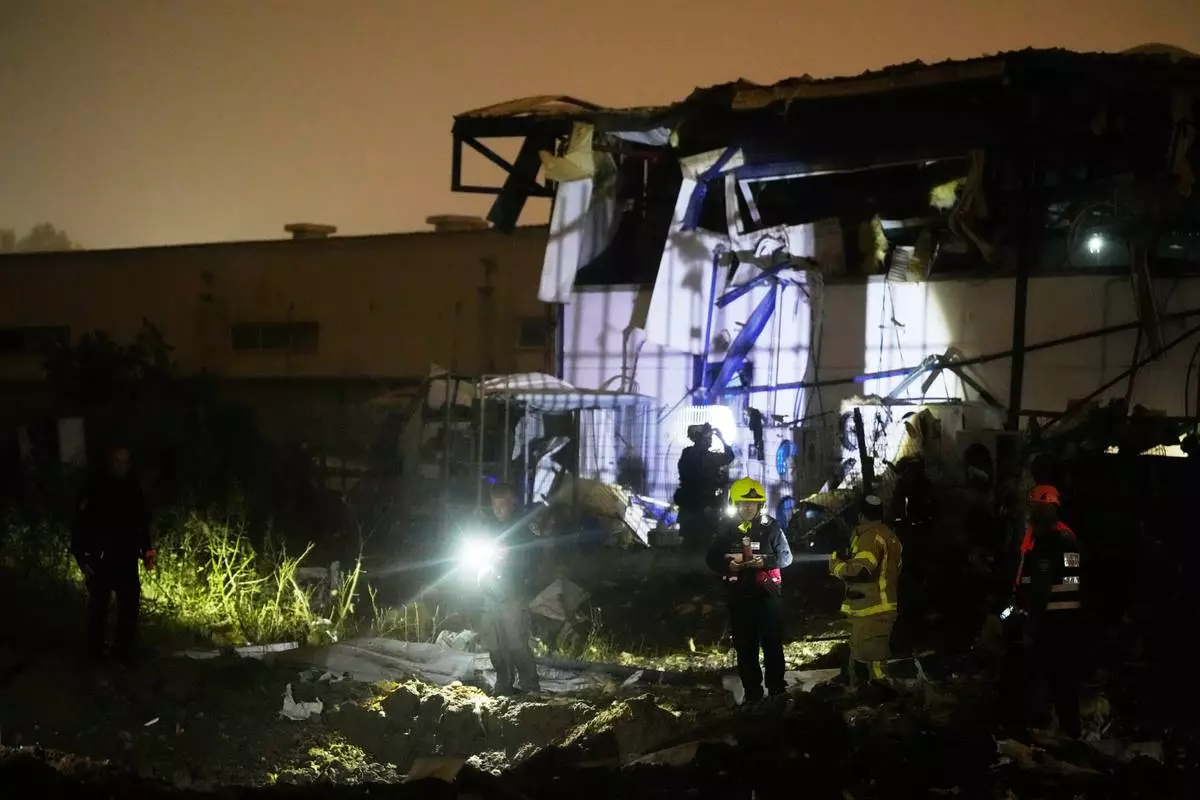
Israeli security forces and rescue teams inspect a site struck by an Iranian missile in Petah Tikva, Israel,Thursday, April 2, 2026. (AP Photo/Ohad Zwigenberg)
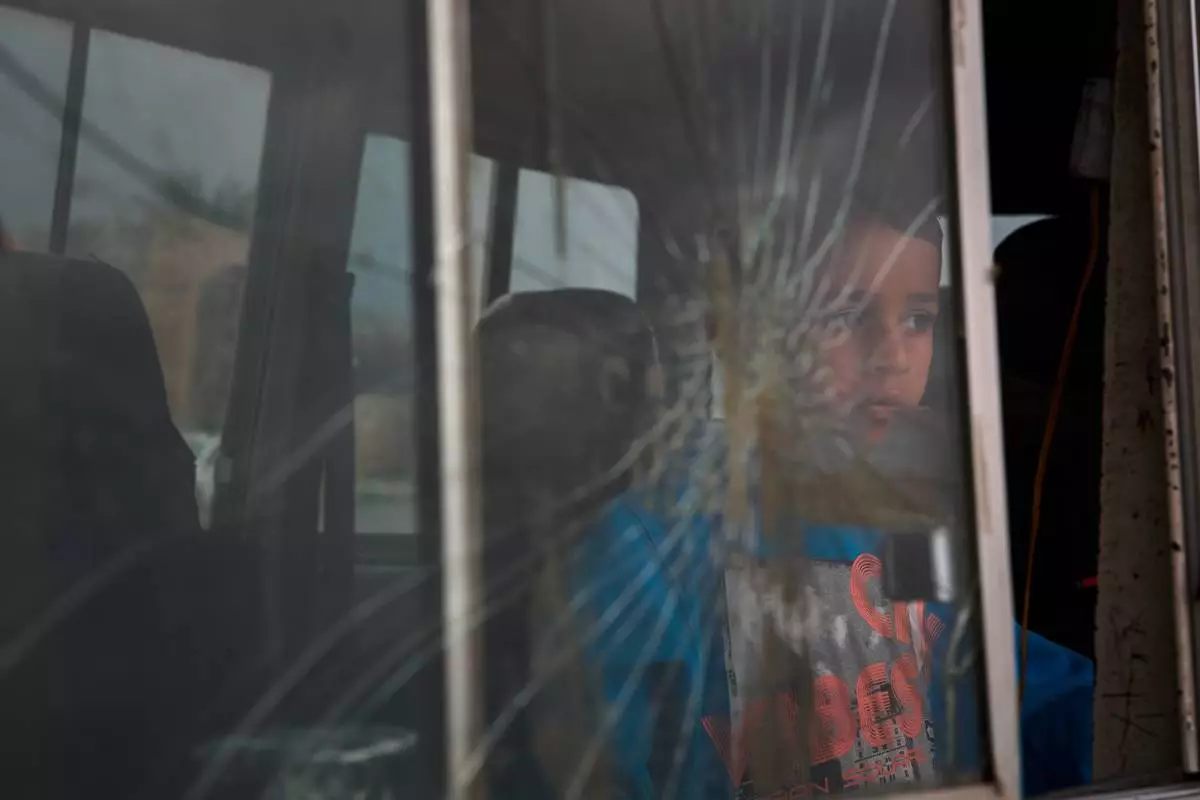
A boy who fled with his family following Israeli strikes in southern Lebanon sits inside the van they are using as shelter in Sidon, Lebanon, Thursday, April 2, 2026. (AP Photo/Emilio Morenatti)
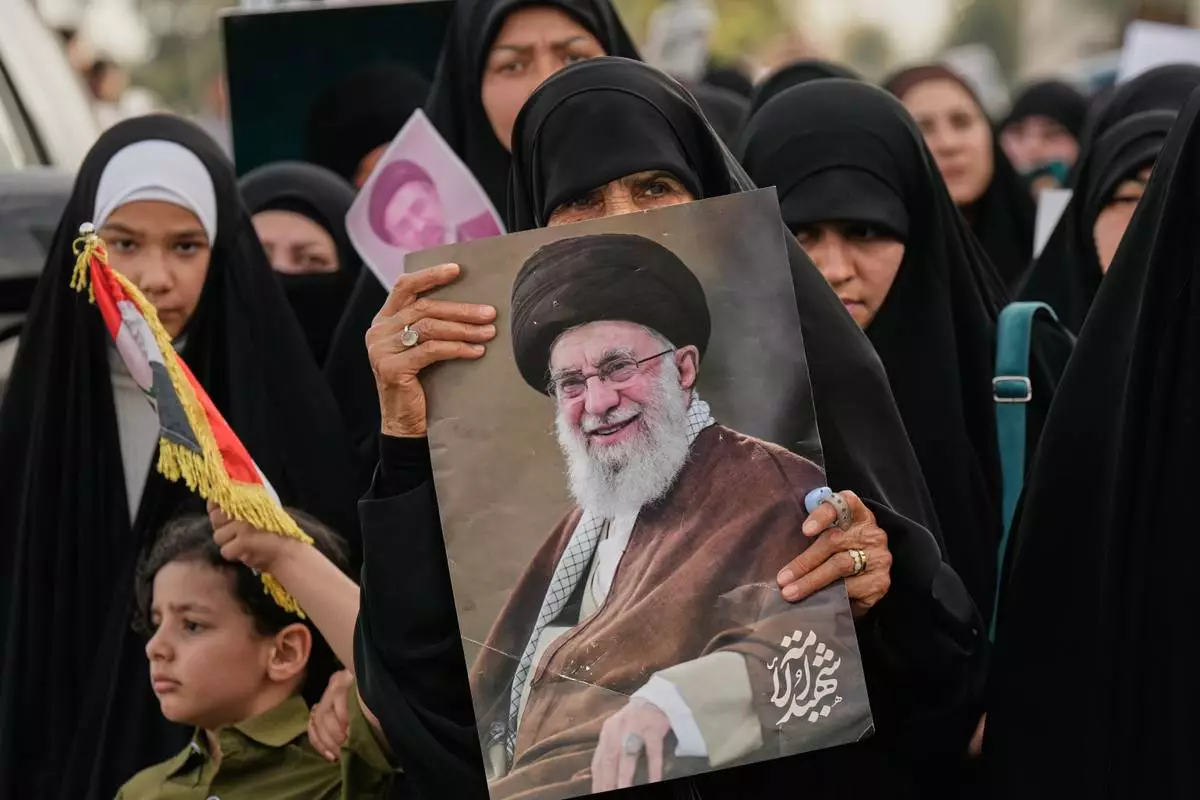
Iraqi women hold a portrait of Iran's late Supreme Leader Ayatollah Ali Khamenei and his son Ayatollah Mojtaba Khamenei, during a protest against U.S. and Israeli attacks on multiple cities across Iran, in the Shi'ite district of Kazimiyah in Baghdad, Iraq, Friday, April 3, 2026. (AP Photo/Hadi Mizban)
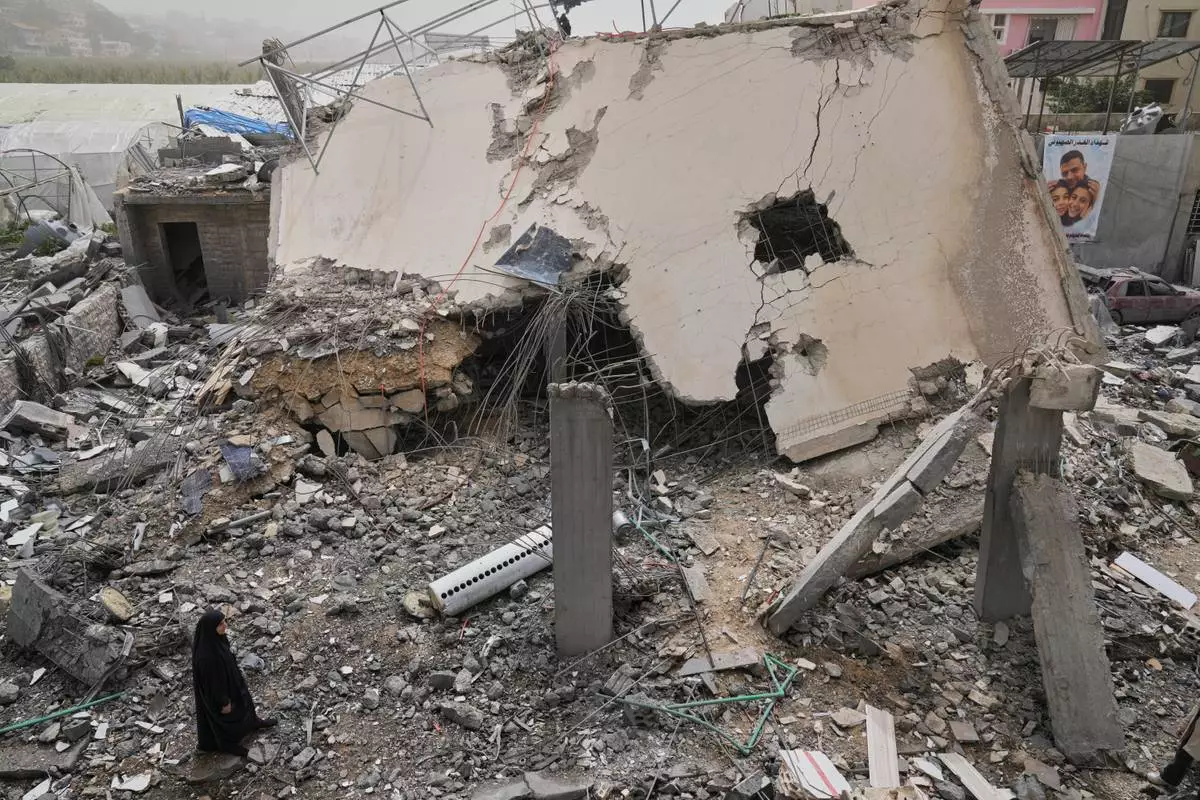
A woman checks a destroyed house that was hit in an Israeli airstrike in Saksakiyeh village, south Lebanon, Friday, April 3, 2026. (AP Photo/Hussein Malla)
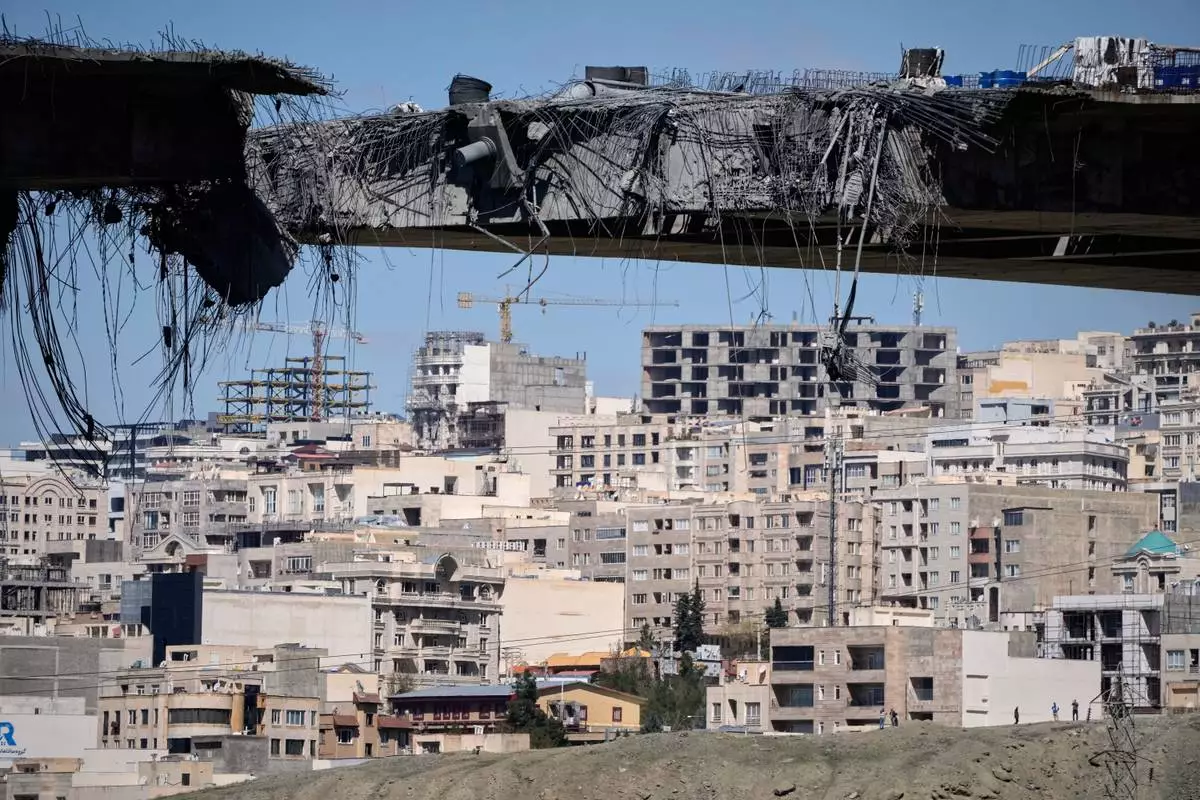
A bridge struck by U.S. airstrikes on Thursday is seen in the town of Karaj, west of Tehran, Iran, Friday, April 3, 2026. (AP Photo/Vahid Salemi)