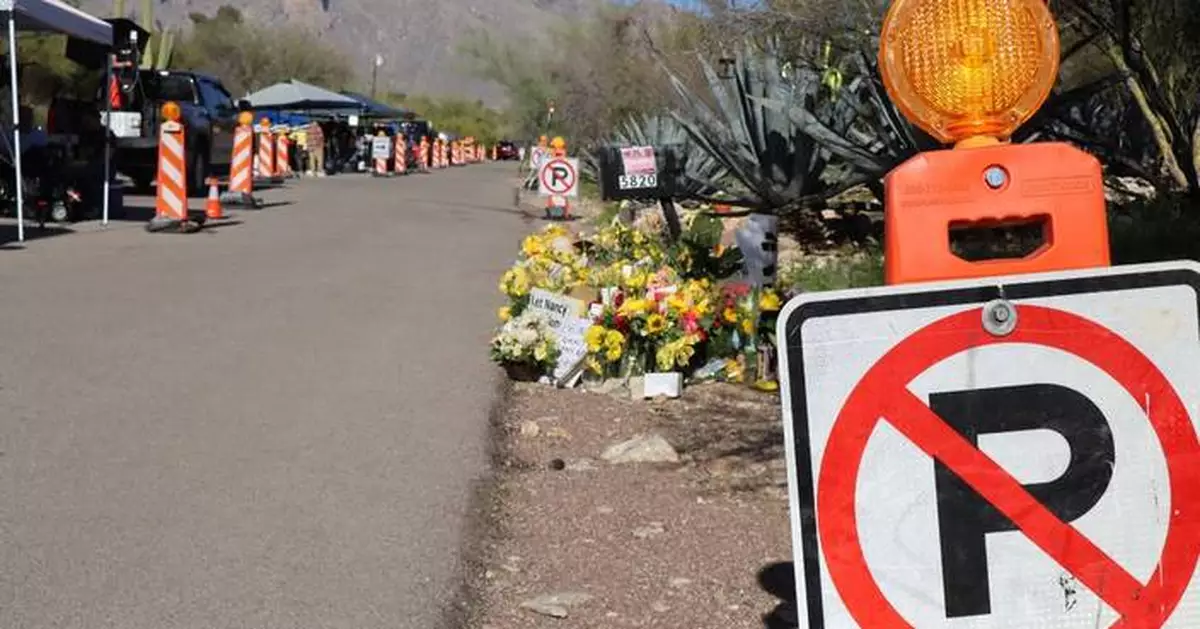
PHOENIX (AP) — The no-parking zone around the home of “Today” show host Savannah Guthrie’s mother where journalists and social media streamers have stationed themselves over the past three weeks since her disappearance is being widened in response to bitter complaints from neighbors about congested roads, trespassing and trash left alongside roadways.
Pima County officials say an effort over the weekend to have one-way traffic flow on the road in front of Nancy Guthrie’s house in the Catalina Foothills just outside Tucson hasn’t worked as they hoped, leading to expanded parking restrictions.
Click to Gallery
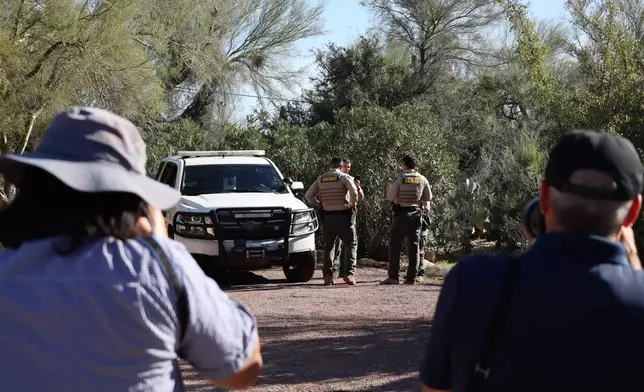
Photographers take images of sheriff's deputies outside the home of Nancy Guthrie in Tucson, Ariz., Sunday, Feb. 22, 2026. (AP Photo/Felicia Fonseca)
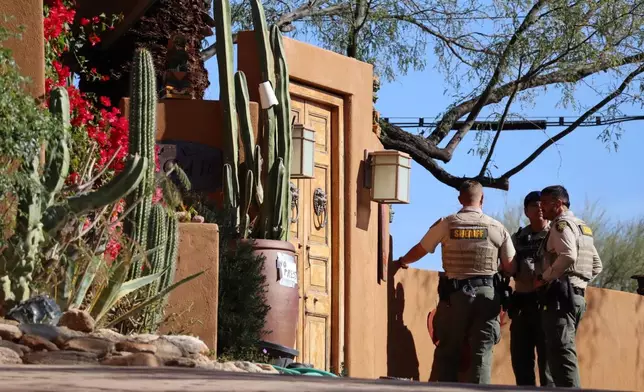
A sign that reads "No Press" is posted outside the home next door to Nancy Guthrie Sunday, Feb. 22, 2026, in Tucson, Ariz. (AP Photo/Felicia Fonseca)
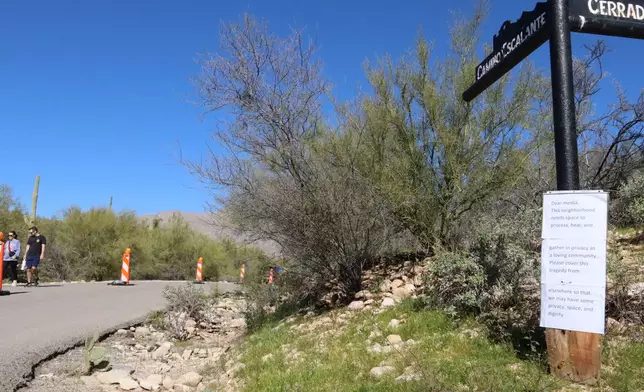
A sign posted along the road to Nancy Guthrie's home on Sunday, Feb. 22, 2026, in Tucson, Ariz., asks media to work elsewhere. (AP Photo/Felicia Fonseca)
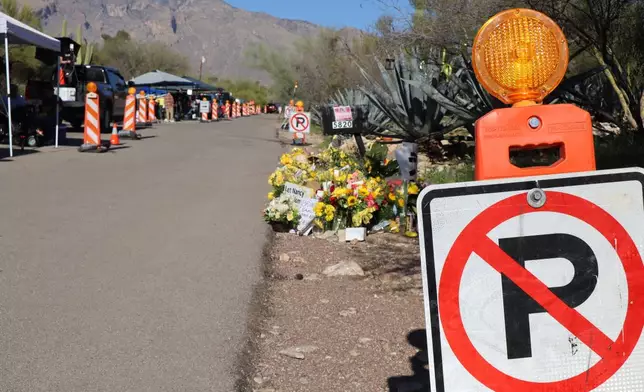
"No parking" signs stand along one side of the road that Nancy Guthrie lives on in Tucson, Ariz., Sunday, Feb. 22, 2026, while canopies and vehicles of people covering the investigation line the other side. (AP Photo/Felicia Fonseca)
The new restrictions take effect Thursday. Authorities say journalists and streamers can still have access to the area, but they will have to park elsewhere and get dropped off in the neighborhood. Violators would face a $250 fine. The constant presence of news crews, bloggers and curious onlookers has drawn mixed reaction from neighbors. Some appreciated the attention the case has been getting. Others have placed traffic cones and signs on their properties to keep people off.
Authorities say the tents, generators and satellite trucks set up along the road have created congestion and safety concerns.
Holly Vatter, who lives on a street perpendicular to the one Guthrie’s house sits on, said the neighborhood used to be peaceful but now looks like a parking lot. She said she used to see fewer than a handful of cars travel down her road in a day, but they now “constantly” pass through or park on her street.
She’s learned to keep her blinds down, avoids opening her screen door in the morning and afternoon to prevent hearing TV newscasters and doesn’t want to sit in her backyard because drones are flying overhead. She said it was stressful to wind through the traffic to get to and from a surgery she is now recovering from and that she paused hair appointments with her clients who planned to come to her home.
“Nobody wants to, like, drive through a media circus to come to an appointment,” Vatter said.
Vatter’s street will be impacted by the parking restriction, and she’s hopeful it’ll offer some reprieve from the “chaotic” environment.
Neighbor Laura Gargano said she doesn't mind the media presence because it creates a “safety cocoon" in addition to any law enforcement around for neighbors worried about crime. More people on the streets seems to be a good thing, she said.
“I think it’s a good thing to keep for the purposes of the investigation to keep the investigation front and center,” she said.
Nancy Guthrie, 84, was last seen at her home just outside Tucson on Jan. 31 and was reported missing the following day. Authorities believe she was kidnapped, abducted or otherwise taken against her will. Drops of her blood were found on the front porch, but authorities haven’t publicly revealed much evidence.
Despite the sheriff’s request for people not to search on their own, volunteers have continued to look. A small group reported finding a black backpack on Sunday, but it wasn’t the same brand as one identified in video surveillance that the FBI released of a masked person at Guthrie’s home the night she disappeared.
Journalists and streamers aren’t the only people to go into the neighborhood. Supporters of the Guthrie family have showed up outside of the home to drop off flowers, yellow ribbons, crosses and prayers.
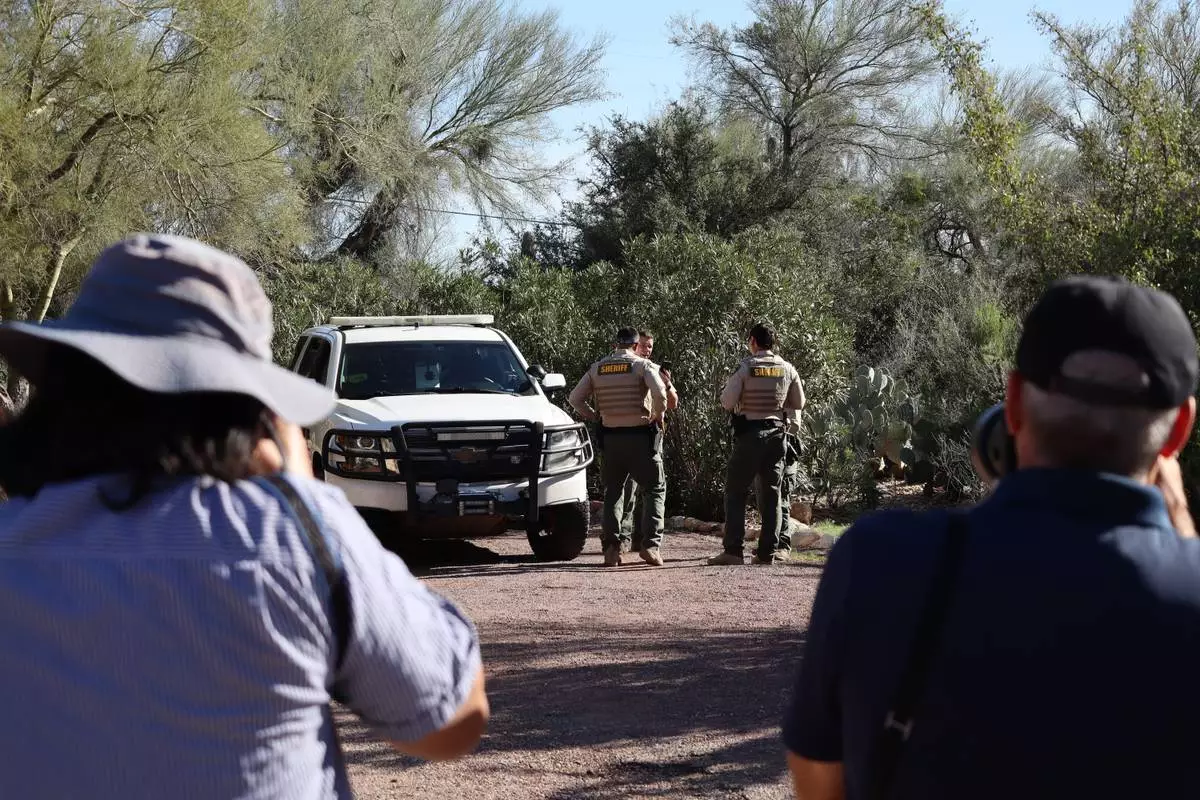
Photographers take images of sheriff's deputies outside the home of Nancy Guthrie in Tucson, Ariz., Sunday, Feb. 22, 2026. (AP Photo/Felicia Fonseca)
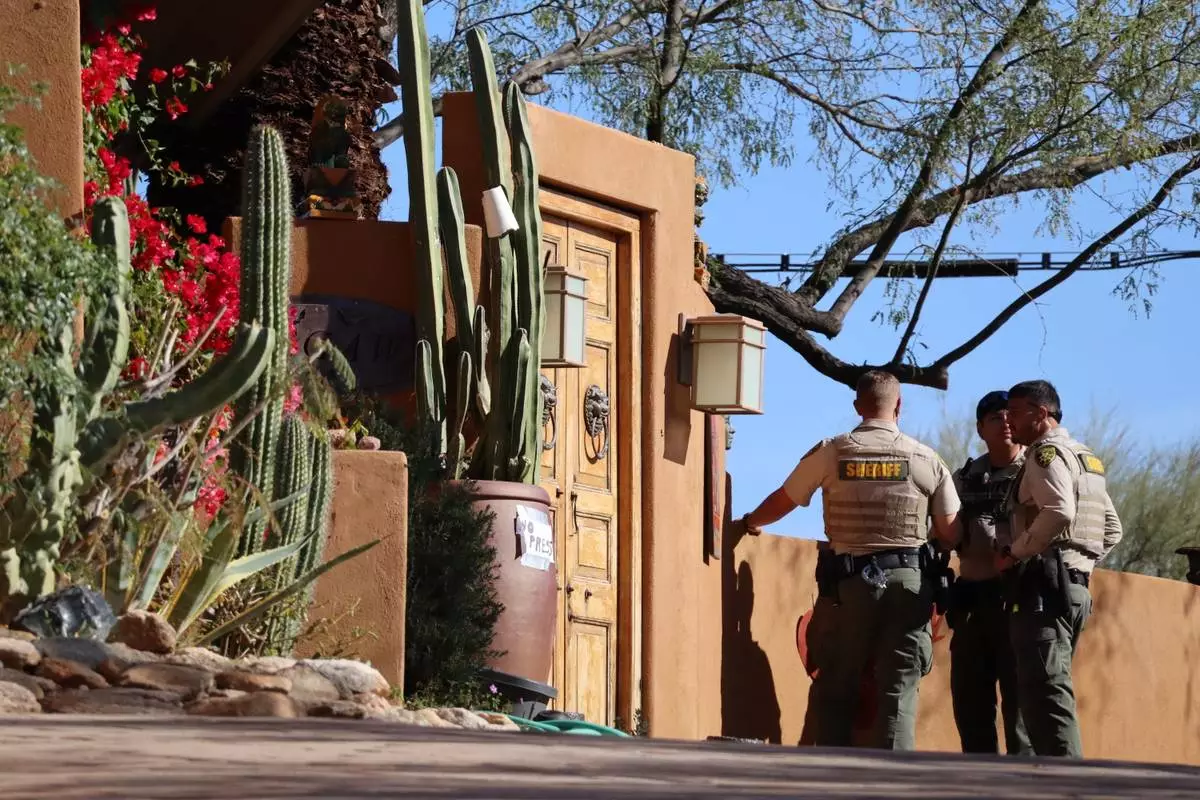
A sign that reads "No Press" is posted outside the home next door to Nancy Guthrie Sunday, Feb. 22, 2026, in Tucson, Ariz. (AP Photo/Felicia Fonseca)
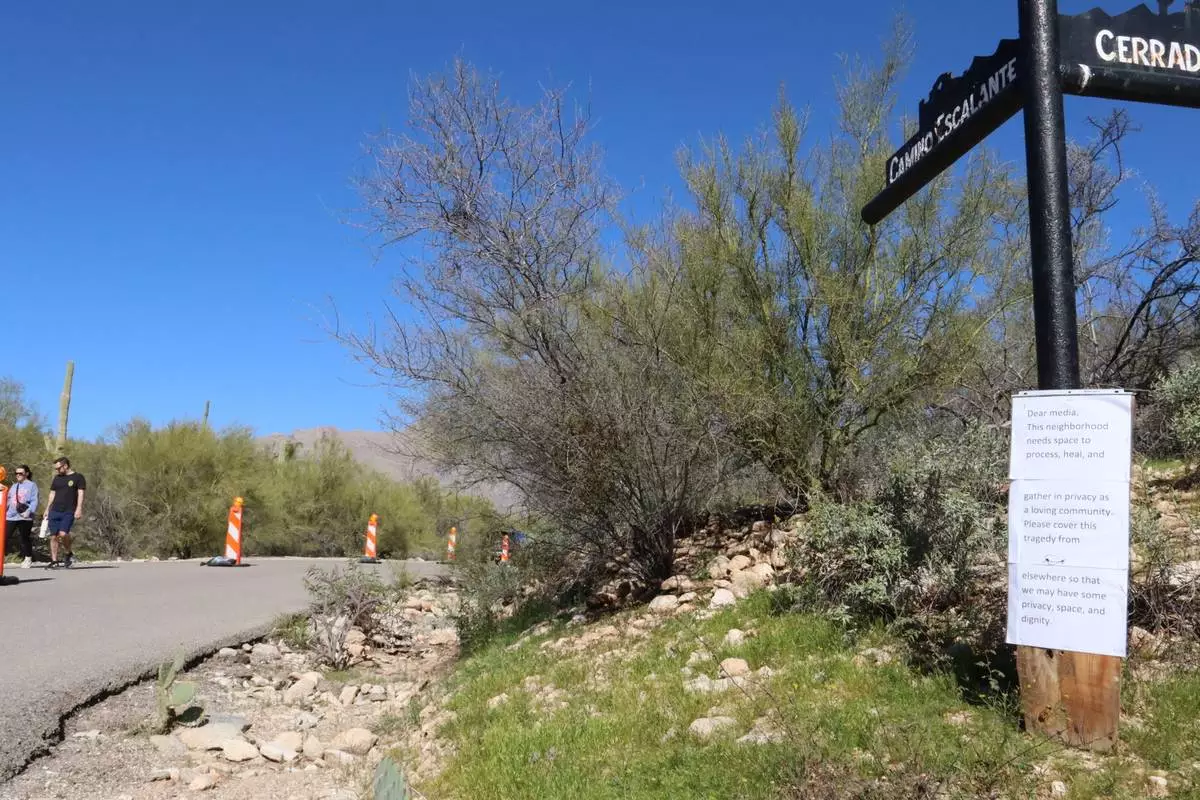
A sign posted along the road to Nancy Guthrie's home on Sunday, Feb. 22, 2026, in Tucson, Ariz., asks media to work elsewhere. (AP Photo/Felicia Fonseca)
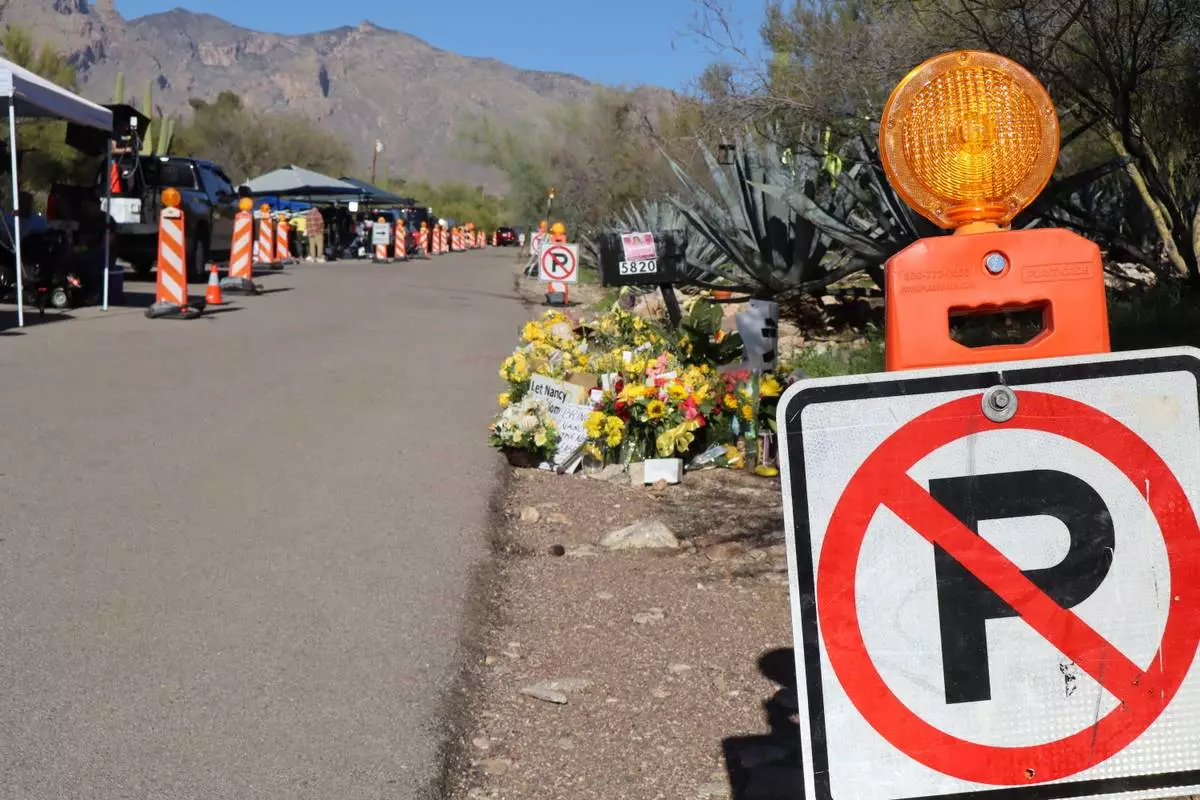
"No parking" signs stand along one side of the road that Nancy Guthrie lives on in Tucson, Ariz., Sunday, Feb. 22, 2026, while canopies and vehicles of people covering the investigation line the other side. (AP Photo/Felicia Fonseca)
BASSETERRE, St. Kitts and Nevis (AP) — U.S. Secretary of State Marco Rubio on Wednesday defended the Trump administration’s military operation to capture Venezuela's Nicolás Maduro, telling Caribbean leaders, many of whom objected to that move, that the country and the region were better off as a result.
Speaking to leaders from the 15-member Caribbean Community bloc at a summit in the country of St. Kitts and Nevis, Rubio brushed aside concerns about the legality of Maduro’s capture last month that have been raised among Venezuela’s island-state neighbors and others.
“Irrespective of how some of you may have individually felt about our operations and our policy toward Venezuela, I will tell you this, and I will tell you this without any apology or without any apprehension: Venezuela is better off today than it was eight weeks ago,” Rubio told the leaders in a closed-door meeting, according to a transcript of his remarks later distributed by the U.S. State Department.
Rubio said that since Maduro’s ouster and the effective takeover of Venezuela’s oil sector by the United States, the interim authorities in the South American country have made “substantial” progress in improving conditions by doing “things that eight or nine weeks ago would have been unimaginable.”
The Caribbean leaders have gathered to debate pressing issues in a region that President Donald Trump has targeted for a 21st-century incarnation of the Monroe Doctrine meant to ensure Washington’s dominance in the Western Hemisphere. The Republican administration has declared a focus closer to home even as Washington increasingly has been preoccupied by the possibility of a U.S. military attack on Iran.
His trip to the region came as Cuba’s government announced that its soldiers killed four people aboard a speedboat registered in Florida whose occupants it said opened fire on officers in Cuban waters.
“Suffice it to say, it is highly unusual to see shootouts in open sea like that. It’s not something that happens every day. It’s something, frankly, that hasn’t happened with Cuba in a very long time,” Rubio told reporters. He said that the U.S. is gathering its own information and that "we’ll be prepared to respond accordingly.”
In his remarks to the group, America's top diplomat tried to play down any antagonistic intent in what Trump has referred to as the “Donroe Doctrine.” Rubio said the administration wants to strengthen ties with the region following the Venezuela operation and ensure that issues such as crime and economic opportunities are jointly addressed.
“I am very happy to be in an administration that’s giving priority to the Western Hemisphere after largely being ignored for a very long time,” Rubio said. “We share common opportunities, and we share some common challenges. And that’s what we hope to confront.”
He said transnational criminal organizations pose the biggest threat to the Caribbean while recognizing that many are buying weapons from the United States, a problem he said authorities are tackling.
Rubio also said the U.S. and the Caribbean can work together on economic advancement and energy issues, especially because many leaders at the four-day summit have energy resources they seek to explore. “We want to be your partner in that regard,” he said.
Rubio said the U.S. recognizes the need for fair, democratic elections in Venezuela, which lies just miles away from Trinidad and Tobago at the closest point.
“We do believe that a prosperous, free Venezuela who’s governed by a legitimate government who has the interests of their people in mind could also be an extraordinary partner and asset to many of the countries represented here today,” he said.
Trump, in his State of the Union address Tuesday night, called the operation that spirited Maduro out of Venezuela to face drug trafficking charges in New York “an absolutely colossal victory for the security of the United States.”
The U.S. had built up the largest military presence in the Caribbean Sea in generations before the Jan. 3 raid. That has now been exceeded by the surge of American warships and aircraft to the Middle East as the administration pressures Iran to make a deal over its nuclear program.
In the Caribbean, Trump has stepped up aggressive tactics to combat alleged drug smuggling with a series of strikes on boats that have killed over 150 people and he has tightened pressure on Cuba. Regional leaders have complained about administration demands for nations to accept third-country deportees and to chill relations with China.
One regional leader who has backed the U.S. escalation is Trinidad and Tobago Prime Minister Kamla Persad-Bissessar, whom Rubio thanked for her public support, the State Department said.
Persad-Bissessar told reporters that her conversation with Rubio focused on “Haiti; we talked about Cuba, of course; we talked about engagements with Venezuela and the way forward.”
She was asked if she considered the latest U.S. military strikes in Caribbean waters as extrajudicial killings: “I don’t think they are, and if they are, we will find out, but our legal advice is they are not.”
Rubio had other one-on-one meetings with heads of government, including those from St. Kitts and Nevis, Haiti, Jamaica and Guyana.
Terrance Drew, prime minister of St. Kitts and Nevis and chair of the Caribbean Community bloc, said the region “stands at a decisive hour” and that “the global order is shifting.”
Drew and other leaders said Cuba's humanitarian situation must be addressed.
“It must be clear that a prolonged crisis in Cuba will not remain confined to Cuba,” Jamaican Prime Minister Andrew Holness warned. “It will affect migration, security and economic stability across the Caribbean basin.”
Rubio told reporters that he talked to Caribbean leaders about how the “Cuba status quo is unacceptable. Cuba needs to change.”
“What the Cuban people should know is this, that if they are hungry and they are suffering, it’s not because we’re not prepared to help them. We are. It’s that the people standing in the way of us helping them is the regime. It’s their communist party,” he said.
The U.S. Treasury Department on Wednesday slightly eased restrictions on the sale of Venezuelan oil to Cuba, which instituted austere fuel-saving measures in the weeks after the U.S. raid in Venezuela.
Coto reported from San José, Costa Rica. Associated Press reporter Anselm Gibbs in Port-of-Spain, Trinidad and Tobago, contributed to this report.
U.S. Secretary of State Marco Rubio, center front in red tie, poses for a group photo with other government officials attending the Caribbean Community (CARICOM) meeting in Basseterre, Saint Kitts and Nevis, Wednesday, Feb. 25, 2026. Also pictured are, Bahamas' Prime Minister Philip Edward Davis, left, Grenada's Prime Minister Dickon Mitchell, fourth from right, Antigua and Barbuda's Prime Minister Gaston Browne, second from right, Barbados' Prime Minister Mia Amor Mottley, second from left, Jamaica's Prime Minister Andrew Holness, front row third from left, and St. Kitts and Nevis Prime Minister Terrance Drew, third from right. (Jonathan Ernst/Pool photo via AP)
U.S. Secretary of State Marco Rubio, left, shakes hands with St. Kitts and Nevis Prime Minister Terrance Drew in Basseterre, Saint Kitts and Nevis, which is hosting the Caribbean Community (CARICOM) meeting, Wednesday, Feb. 25, 2026. (Jonathan Ernst/Pool photo via AP)
U.S. Secretary of State Marco Rubio waits to meet with St. Kitts and Nevis Prime Minister Terrance Drew in Basseterre, Saint Kitts and Nevis, which is hosting the Caribbean Community (CARICOM) meeting, Wednesday, Feb. 25, 2026. (Jonathan Ernst/Pool photo via AP)
U.S. Secretary of State Marco Rubio gives a thumbs up during the Caribbean Community (CARICOM) plenary session in Basseterre, Saint Kitts and Nevis, Wednesday, Feb. 25, 2026. (Jonathan Ernst/Pool photo via AP)
U.S. Secretary of State Marco Rubio, right, meets with Trinidad and Tobago Prime Minister Kamla Persad-Bissessar during the Caribbean Community (CARICOM) meeting in Basseterre, Saint Kitts and Nevis, Wednesday, Feb. 25, 2026. (Jonathan Ernst/Pool photo via AP)
U.S. Secretary of State Marco Rubio, front center, attends the Caribbean Community (CARICOM) plenary session in Basseterre, Saint Kitts and Nevis, Wednesday, Feb. 25, 2026. (Jonathan Ernst/Pool photo via AP)
Secretary of State Marco Rubio arrives before President Donald Trump delivers the State of the Union address to a joint session of Congress in the House chamber at the U.S. Capitol in Washington, Tuesday, Feb. 24, 2026. (AP Photo/Mark Schiefelbein)