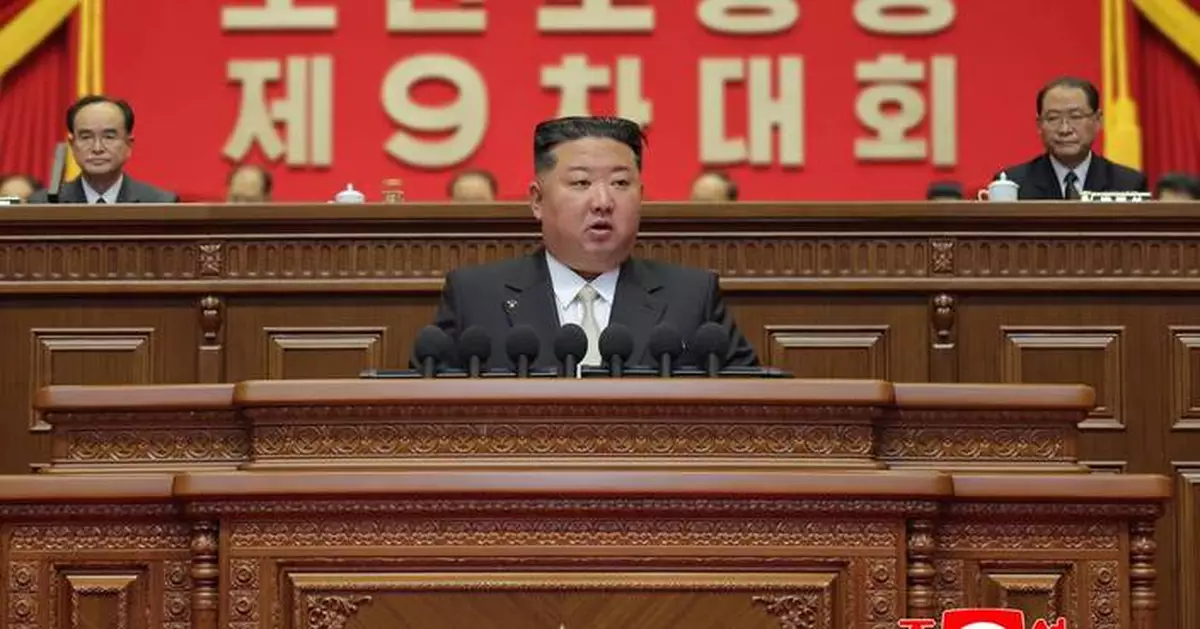
SEOUL, South Korea (AP) — North Korean leader Kim Jong Un claimed his nuclear-armed country could “completely destroy” South Korea if its security were threatened, reiterating his refusal to engage with Seoul, state media said Thursday. However, he left the door open to dialogue with Washington as he concluded a ruling party congress outlining his policy goals for the next five years.
Kim in recent years has sharpened his rhetoric toward Seoul and underscored his rejection of inter-Korean diplomacy. Experts say that most likely doesn’t presage military clashes, but is intended to advance a broader effort to assert a more forceful regional role backed by Kim’s nuclear arsenal and ties with Moscow and Beijing.
Click to Gallery
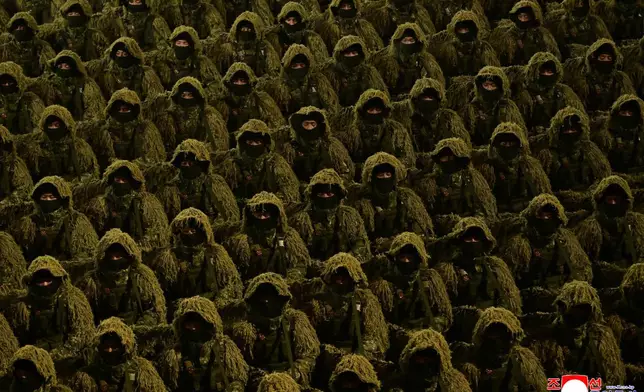
In this photo provided by the North Korean government, soldiers attend a parade at Kim Il Sung Square in Pyongyang, North Korea Wednesday, Feb. 25, 2026 as the North wrapped up the Workers’ Party congress. Independent journalists were not given access to cover the event depicted in this image distributed by the North Korean government. The content of this image is as provided and cannot be independently verified. Korean language watermark on image as provided by source reads: "KCNA" which is the abbreviation for Korean Central News Agency. (Korean Central News Agency/Korea News Service via AP)
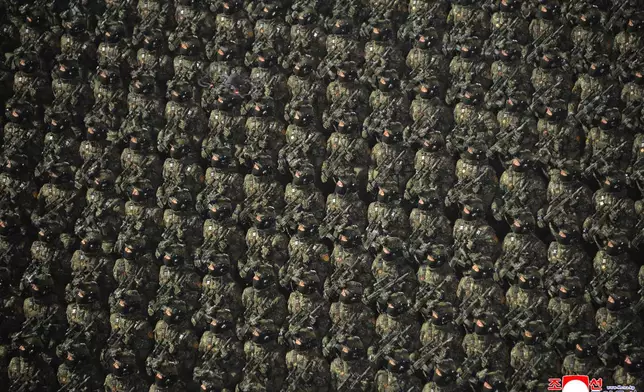
In this photo provided by the North Korean government, soldiers attend a parade at Kim Il Sung Square in Pyongyang, North Korea Wednesday, Feb. 25, 2026 as the North wrapped up the Workers’ Party congress. Independent journalists were not given access to cover the event depicted in this image distributed by the North Korean government. The content of this image is as provided and cannot be independently verified. Korean language watermark on image as provided by source reads: "KCNA" which is the abbreviation for Korean Central News Agency. (Korean Central News Agency/Korea News Service via AP)
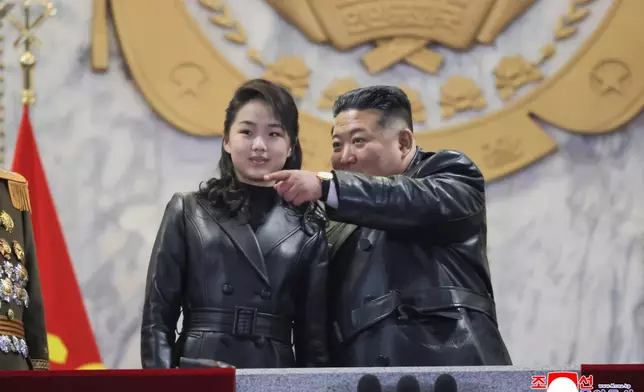
In this photo provided by the North Korean government, its leader Kim Jong Un attends a parade with his daughter in Pyongyang, North Korea Wednesday, Feb. 25, 2026 as the North wrapped up the Workers’ Party congress. Independent journalists were not given access to cover the event depicted in this image distributed by the North Korean government. The content of this image is as provided and cannot be independently verified. Korean language watermark on image as provided by source reads: "KCNA" which is the abbreviation for Korean Central News Agency. (Korean Central News Agency/Korea News Service via AP)
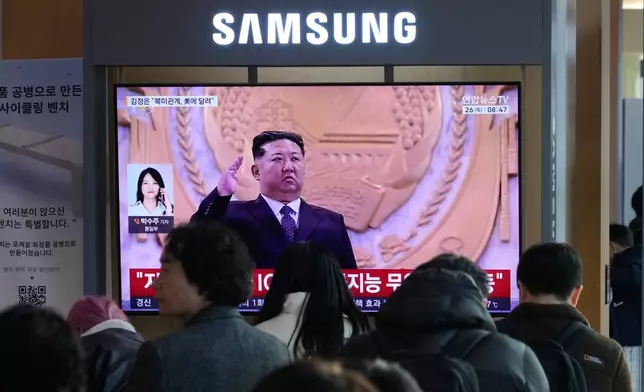
A TV screen shows a file image of North Korean leader Kim Jong Un during a news program at Seoul Railway Station in Seoul, South Korea, Thursday, Feb. 26, 2026. (AP Photo/Ahn Young-joon)
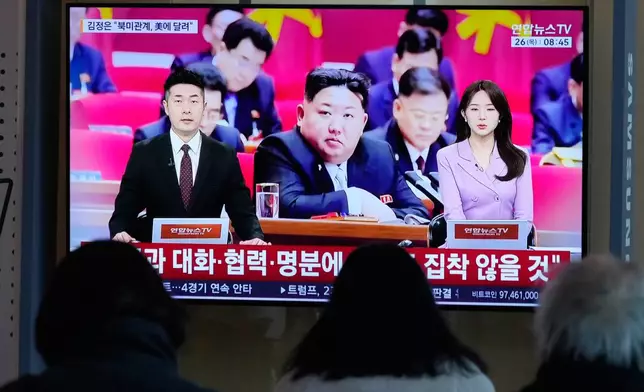
A TV screen shows a file image of North Korean leader Kim Jong Un during a news program at Seoul Railway Station in Seoul, South Korea, Thursday, Feb. 26, 2026. (AP Photo/Ahn Young-joon)
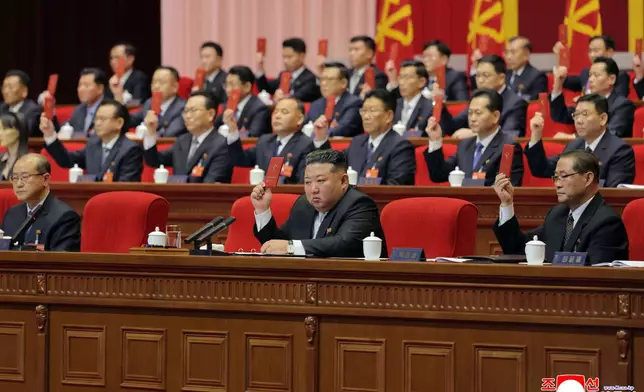
This photo provided Monday, Feb. 23, 2026, by the North Korean government, its leader Kim Jong Un, center, attends the ruling Workers’ Party Congress in Pyongyang, Sunday, Feb. 22, 2026. Independent journalists were not given access to cover the event depicted in this image distributed by the North Korean government. The content of this image is as provided and cannot be independently verified. Korean language watermark on image as provided by source reads: "KCNA" which is the abbreviation for Korean Central News Agency. (Korean Central News Agency/Korea News Service via AP)
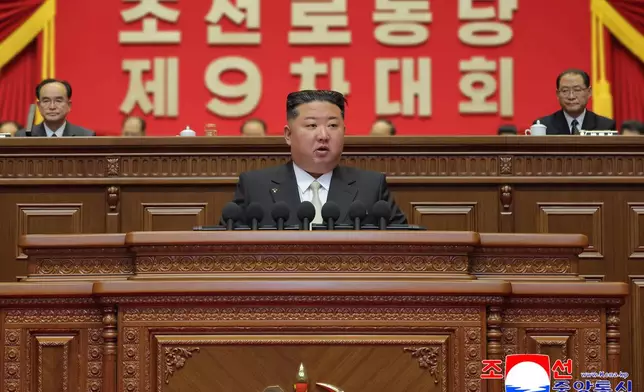
This photo provided on Friday, Feb. 20, 2026, by the North Korean government, North Korean leader Kim Jong Un delivers a speech during the ruling Workers’ Party Congress in Pyongyang, Thursday, Feb. 19, 2026. Independent journalists were not given access to cover the event depicted in this image distributed by the North Korean government. The content of this image is as provided and cannot be independently verified. Korean language watermark on image as provided by source reads: "KCNA" which is the abbreviation for Korean Central News Agency. (Korean Central News Agency/Korea News Service via AP)
The official Korean Central News Agency said that Kim also called for developing new weapons systems to bolster his nuclear-armed military, including intercontinental ballistic missiles that could be launched from underwater and an expanded arsenal of tactical nuclear weapons, such as artillery and short-range missiles, targeting South Korea.
The Workers’ Party congress, which ended its seven-day run on Wednesday in Pyongyang, is North Korea’s most significant political event and a carefully choreographed spectacle glorifying Kim’s leadership before thousands of delegates.
Kim capped the meetings with a nighttime military parade in the capital, sharing center stage with his increasingly prominent daughter — believed to be named Kim Ju Ae and about 13.
Wearing matching leather coats, the two chatted constantly, pointing at parade formations and singing along with performers. The girl watched as her father and senior military officials saluted fighter jets flying over the brightly illuminated Kim Il Sung Square, named after Kim Jong Un’s state-founding grandfather.
State media reports and visuals indicated that the parade omitted Kim’s largest weapons, including ICBMs potentially capable of reaching the U.S. mainland, fueling speculation that he was seeking to avoid antagonizing Washington ahead of possible dialogue.
At the congress, Kim said the accelerated development of his nuclear and missile program in recent years “permanently cemented” the country’s status as a nuclear weapons state, and called for the United States to discard what he perceives as “hostile” policies toward the North if it wants to resume long-stalled dialogue.
South Korea’s Unification Ministry said it was regrettable that the North continues to define inter-Korean relations as hostile and that Seoul will “patiently” pursue efforts to stabilize peace.
Kim has issued increasingly hard-line views toward South Korea since 2024, when he discarded the North’s long-standing goal of a peaceful reunification between the war-divided Koreas and declared the South as a permanent enemy. Analysts expected Kim to take a more measured approach toward Washington to preserve the possibility of future dialogue, with the long-term aim of securing U.S. sanctions relief and tacit recognition as a nuclear state.
Kim has recently been prioritizing Russia in his foreign policy, sending thousands of troops and large amounts of military equipment to support Moscow’s war in Ukraine, possibly in exchange for aid and military technology. But it would make sense to keep his options open as the war in Ukraine could wind down, potentially making North Korea less valuable to Moscow, experts say.
Kim told the congress his government was maintaining the “toughest stance” against Washington, but added there was “no reason we cannot get along” with the Americans if they withdrew their supposedly “hostile policy” toward the North. North Korea often uses the term to describe U.S.-led pressure and sanctions over Kim’s nuclear ambitions. Kim's government in recent months has repeatedly called for Washington to abandon its demands for the North’s denuclearization as a precondition for reviving talks.
The prospects of U.S.-North Korea relations “depends entirely on the U.S. attitude,” Kim said. “Whether it’s peaceful coexistence or permanent confrontation, we are ready for either, and the choice is not ours to make.”
North Korea has repeatedly rejected Washington and Seoul’s calls to resume diplomacy aimed at winding down its nuclear program, which derailed in 2019 following the collapse of Kim’s second summit with U.S. President Donald Trump during his first term.
Analysts say Kim’s vilification of South Korea reflects his view that Seoul, which helped set up his first meetings with Trump, is no longer a useful intermediary with Washington but an obstacle to his effort to establish a more assertive regional footing.
He has also shown a sensitivity to South Korean soft power, pushing aggressive domestic campaigns to block the influence of South Korean culture and language among his population as he looks to tighten his family’s authoritarian grip.
At the congress, Kim derided liberal South Korean President Lee Jae Myung’s calls for engagement as a deception, accusing successive governments in Seoul of seeking Pyongyang's collapse. He said there is “absolutely nothing to discuss” with an enemy state and that North Korea would “permanently exclude” the South from the notion of a shared nation.
“As long as the Republic of Korea cannot escape its geopolitical condition of sharing a border with us, the only way it can live safely is to abandon all ties with us and refrain from provoking us,” he said, disdainfully referring to South Korea’s formal name.
North Korea in recent years has developed or tested many of the weapons Kim called for at the previous congress in 2021, including solid-fuel ICBMs, tactical nuclear systems and purported hypersonic weapons. The country launched its first military satellite in 2023 and has recently claimed progress in building a nuclear-propelled submarine.
At this month's congress, Kim set new goals to advance his nuclear forces in the next five years while calling for faster production of nuclear warheads and a broader range of delivery systems.
He called for ICBMs that could be fired from underwater platforms, indicating potential plans to fit those weapons on the nuclear-propelled submarine being built. He called for developing artificial intelligence-equipped attack drones, stronger electronic warfare capabilities to disable enemy command centers, more advanced reconnaissance satellites and unspecified weapons to strike enemy satellites.
He also said the military will increase the deployment of nuclear-capable artillery systems against South Korea each year while speeding up efforts to “fortify” the border.
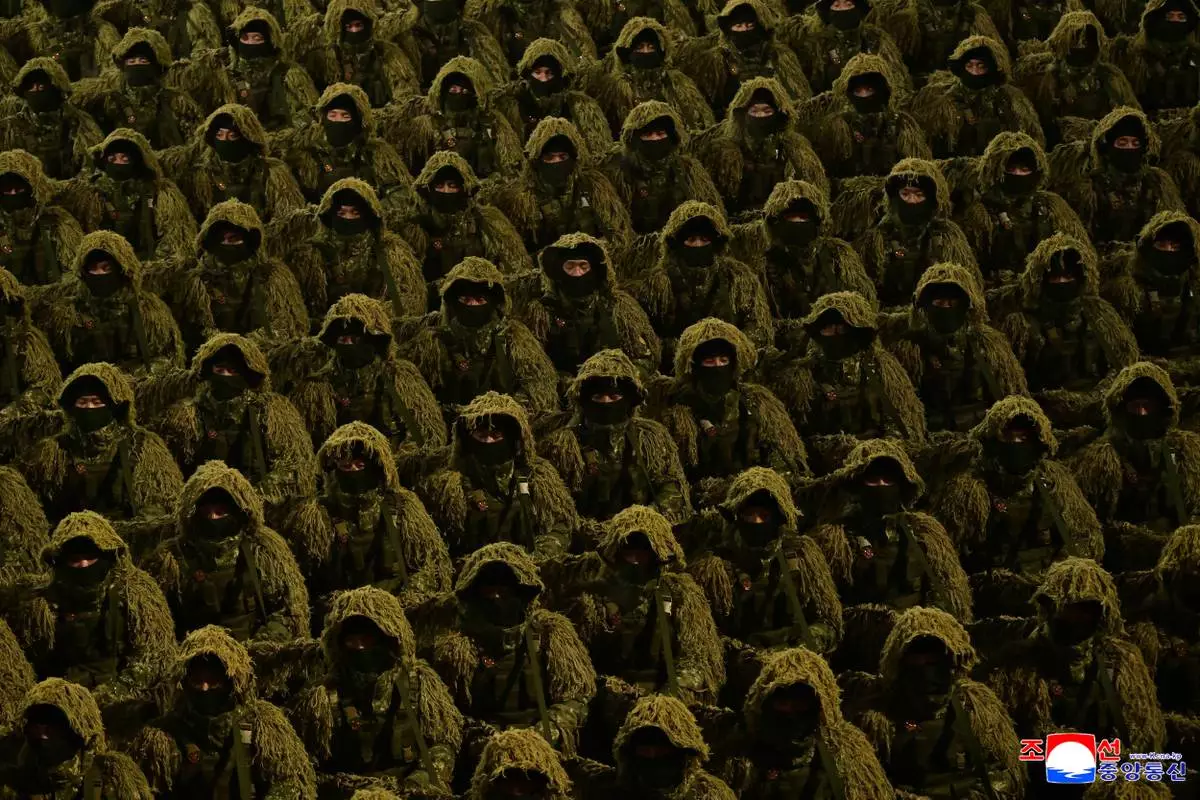
In this photo provided by the North Korean government, soldiers attend a parade at Kim Il Sung Square in Pyongyang, North Korea Wednesday, Feb. 25, 2026 as the North wrapped up the Workers’ Party congress. Independent journalists were not given access to cover the event depicted in this image distributed by the North Korean government. The content of this image is as provided and cannot be independently verified. Korean language watermark on image as provided by source reads: "KCNA" which is the abbreviation for Korean Central News Agency. (Korean Central News Agency/Korea News Service via AP)
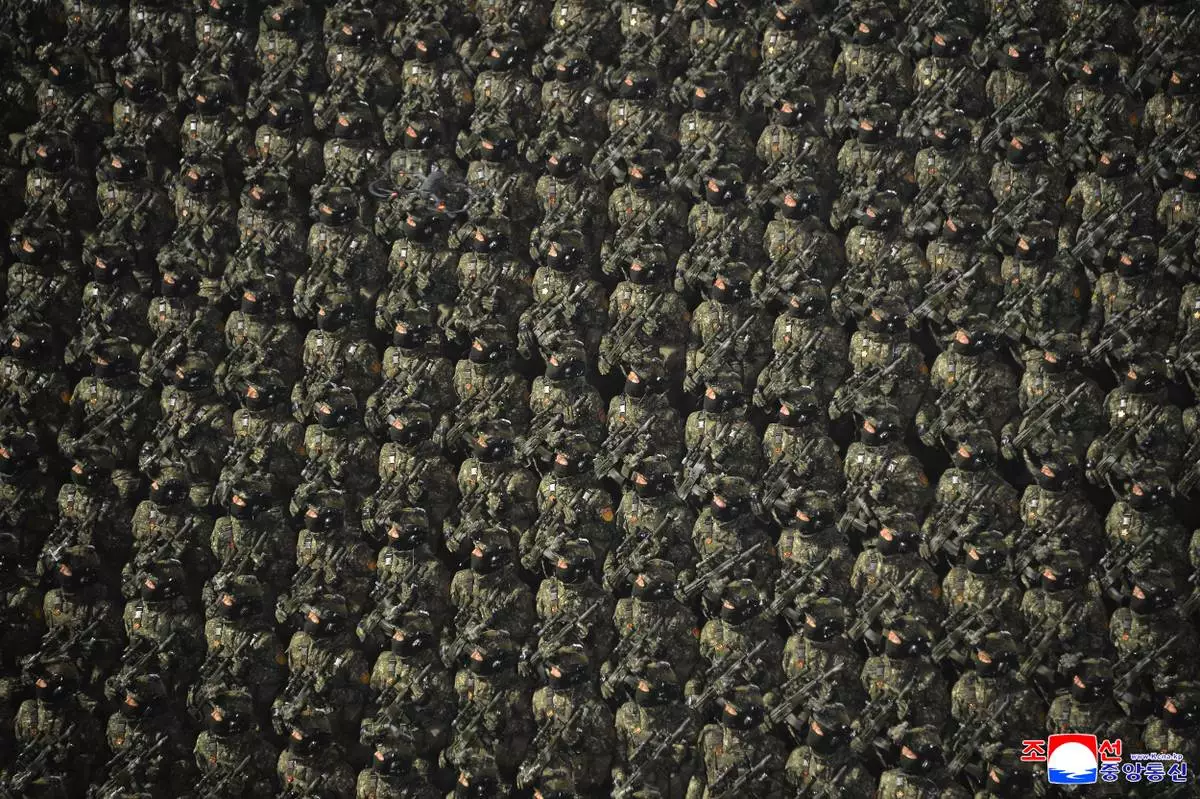
In this photo provided by the North Korean government, soldiers attend a parade at Kim Il Sung Square in Pyongyang, North Korea Wednesday, Feb. 25, 2026 as the North wrapped up the Workers’ Party congress. Independent journalists were not given access to cover the event depicted in this image distributed by the North Korean government. The content of this image is as provided and cannot be independently verified. Korean language watermark on image as provided by source reads: "KCNA" which is the abbreviation for Korean Central News Agency. (Korean Central News Agency/Korea News Service via AP)
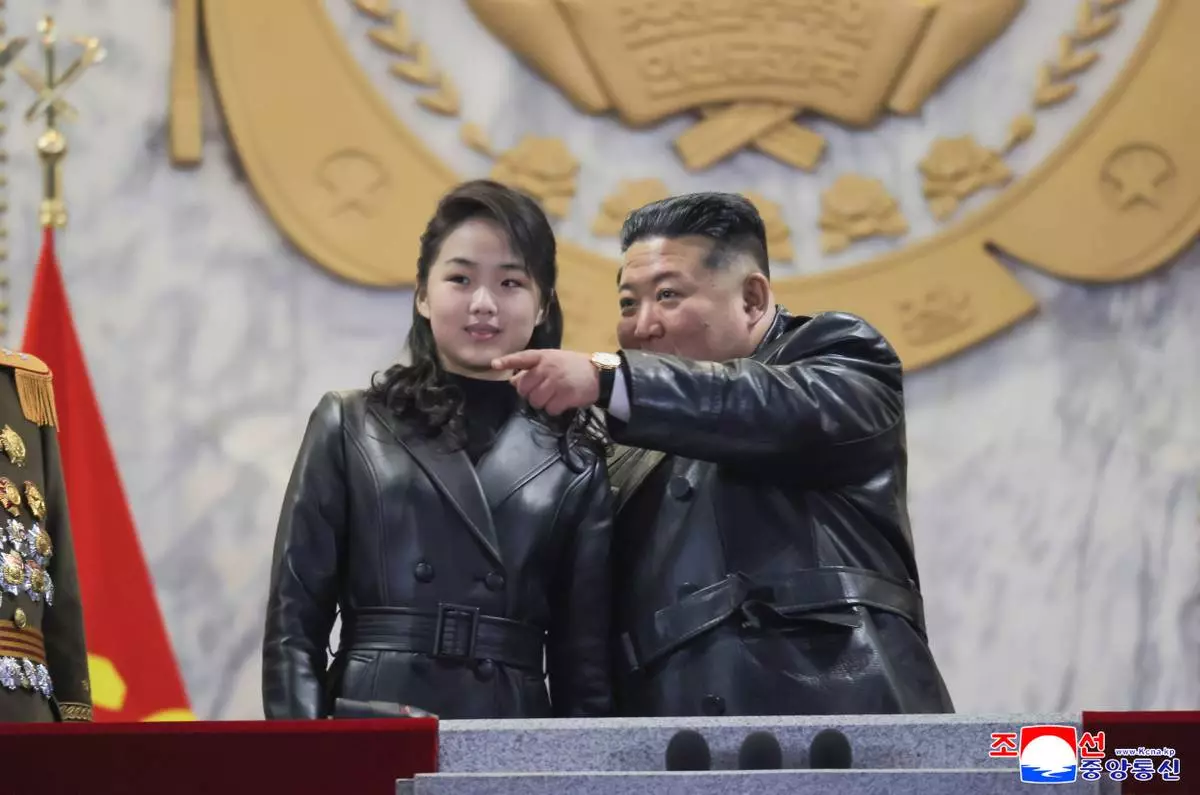
In this photo provided by the North Korean government, its leader Kim Jong Un attends a parade with his daughter in Pyongyang, North Korea Wednesday, Feb. 25, 2026 as the North wrapped up the Workers’ Party congress. Independent journalists were not given access to cover the event depicted in this image distributed by the North Korean government. The content of this image is as provided and cannot be independently verified. Korean language watermark on image as provided by source reads: "KCNA" which is the abbreviation for Korean Central News Agency. (Korean Central News Agency/Korea News Service via AP)
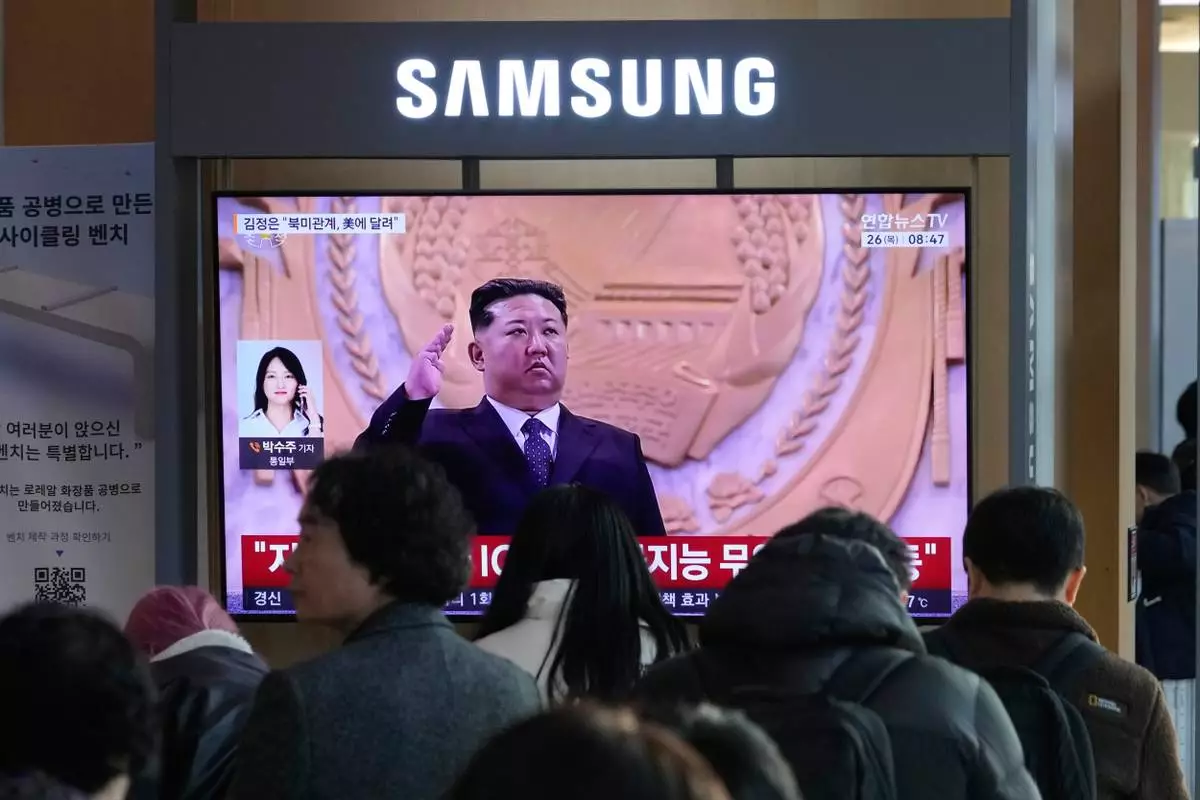
A TV screen shows a file image of North Korean leader Kim Jong Un during a news program at Seoul Railway Station in Seoul, South Korea, Thursday, Feb. 26, 2026. (AP Photo/Ahn Young-joon)
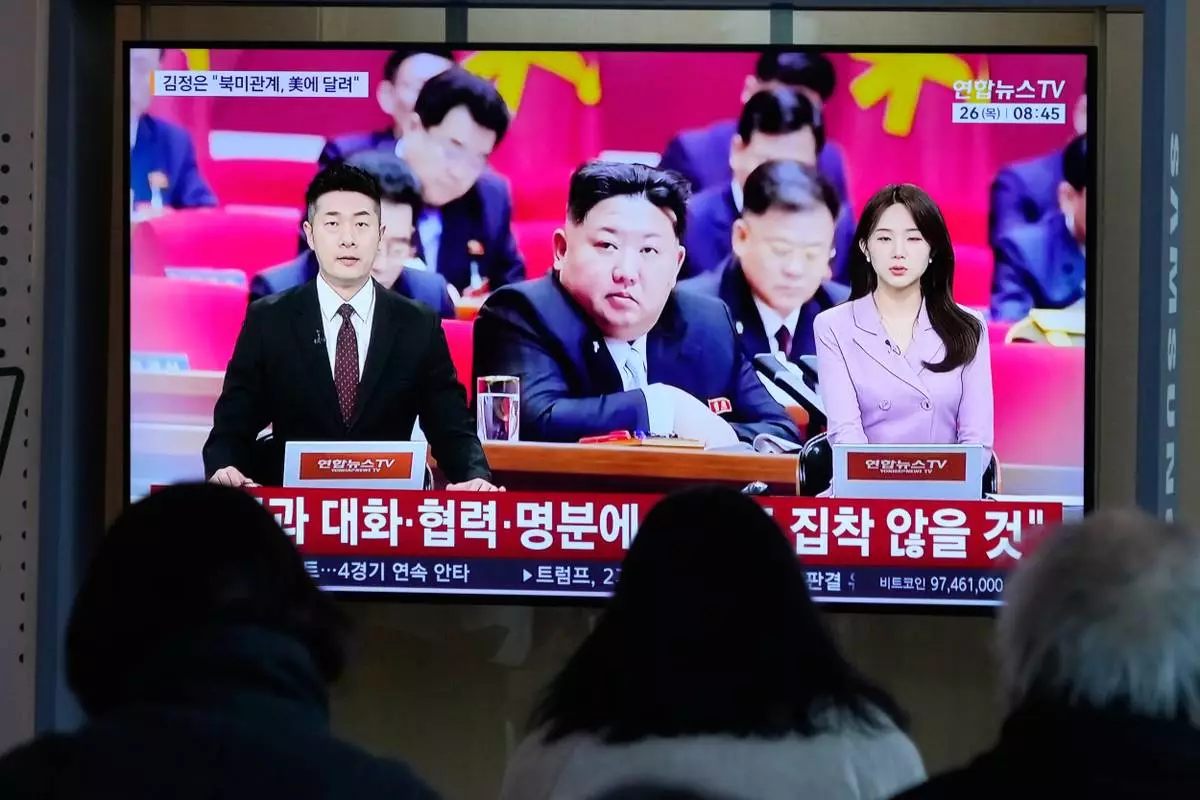
A TV screen shows a file image of North Korean leader Kim Jong Un during a news program at Seoul Railway Station in Seoul, South Korea, Thursday, Feb. 26, 2026. (AP Photo/Ahn Young-joon)
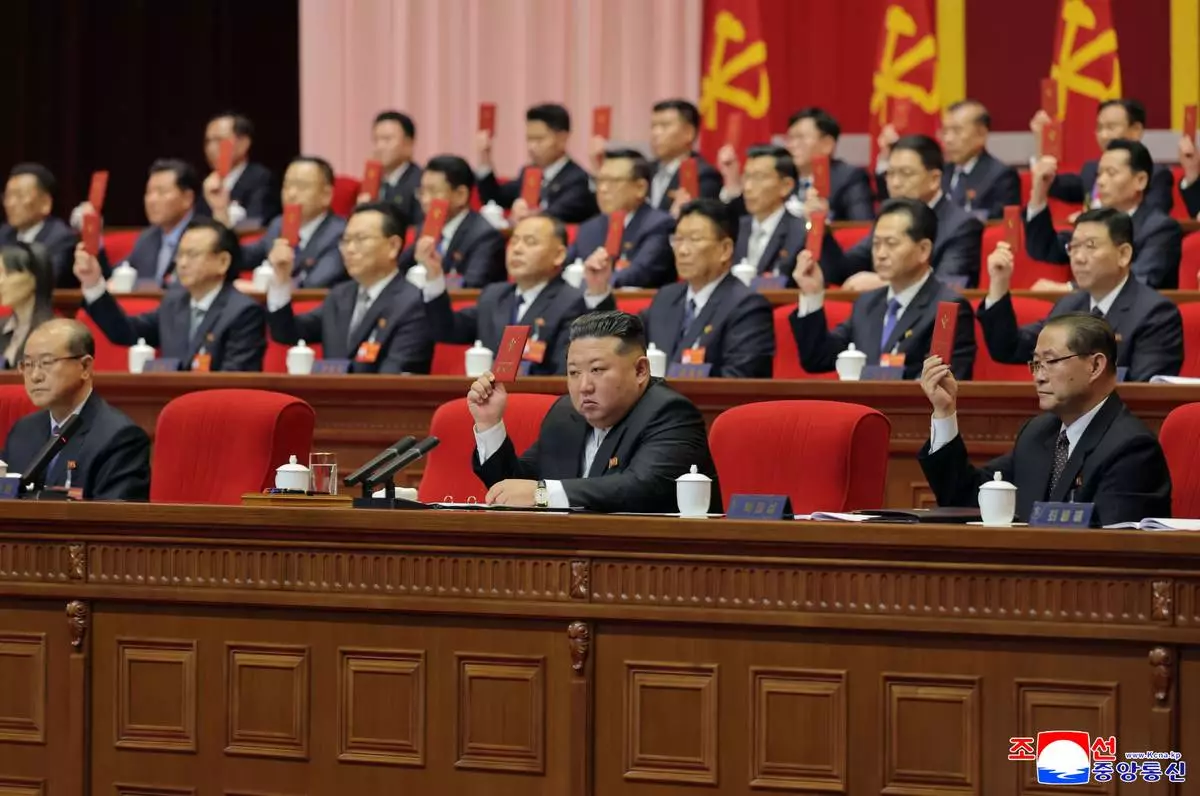
This photo provided Monday, Feb. 23, 2026, by the North Korean government, its leader Kim Jong Un, center, attends the ruling Workers’ Party Congress in Pyongyang, Sunday, Feb. 22, 2026. Independent journalists were not given access to cover the event depicted in this image distributed by the North Korean government. The content of this image is as provided and cannot be independently verified. Korean language watermark on image as provided by source reads: "KCNA" which is the abbreviation for Korean Central News Agency. (Korean Central News Agency/Korea News Service via AP)
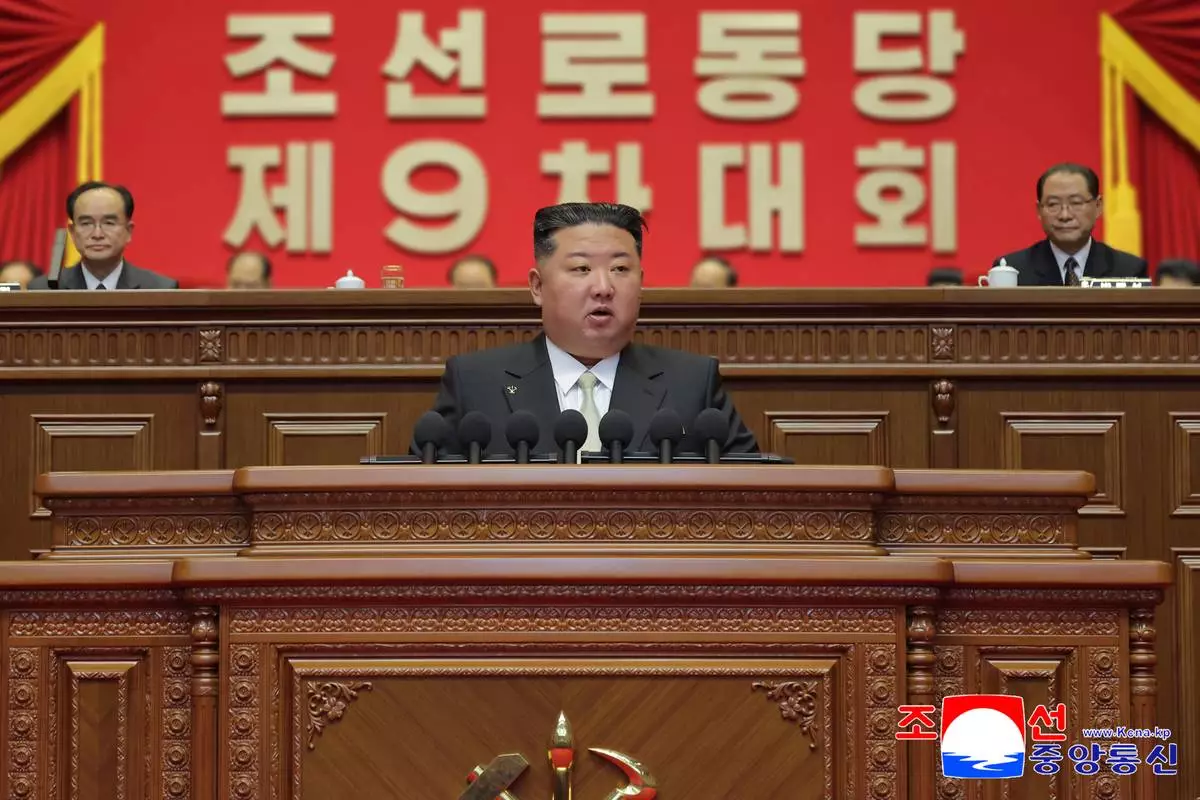
This photo provided on Friday, Feb. 20, 2026, by the North Korean government, North Korean leader Kim Jong Un delivers a speech during the ruling Workers’ Party Congress in Pyongyang, Thursday, Feb. 19, 2026. Independent journalists were not given access to cover the event depicted in this image distributed by the North Korean government. The content of this image is as provided and cannot be independently verified. Korean language watermark on image as provided by source reads: "KCNA" which is the abbreviation for Korean Central News Agency. (Korean Central News Agency/Korea News Service via AP)